
Réserve
Our Opus pattern, cut into Zambezi teak, a southern African wood far harder than oak, never planted and never felled, recovered only after it falls. Each floor is made from a single season of fallen trees, and then no more.
The Story
The Search
A forest few will ever reach. From the sky, by road, tree by tree: how each fallen tree is found, geolocalized and documented.
Edition and version
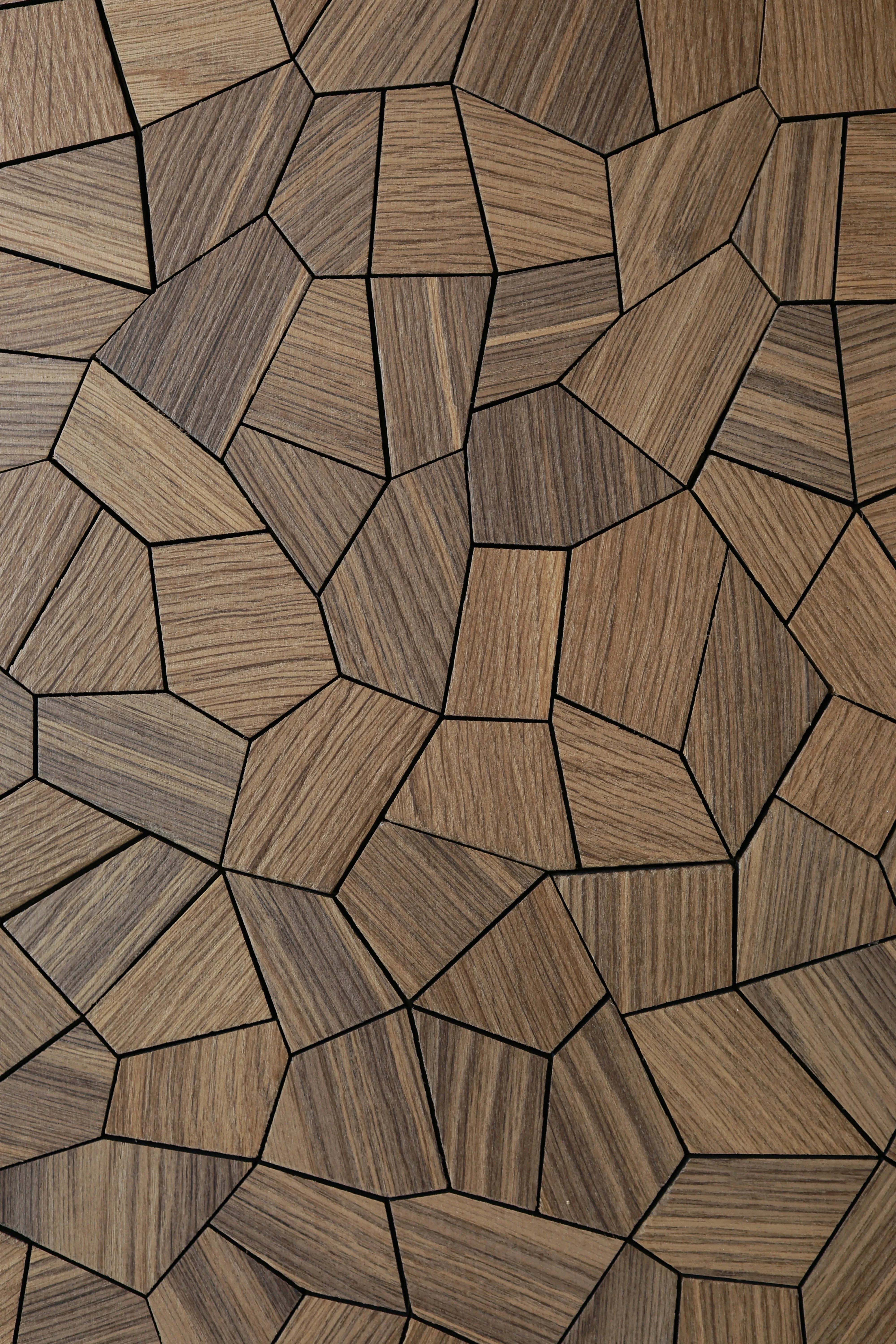
Opus Réserve
Opus, in Zambezi teak.
The Opus pattern, in Zambezi teak. Made from a single season of fallen trees, and then no more.
The facts
- Species
- Zambezi teak, Baikiaea plurijuga
- Origin
- Fallen trees only, southern Africa
- Hardness (Janka)
- approx. 2,990 lbf · oak approx. 1,300 lbf
- Finish
- Smoke
- Format
- Opus Réserve
- Traceability
- Each tree geolocalized, documented, certified
Zambezi teak grows slowly in the dry forests of southern Africa. It is dense and hard by nature, and the years only deepen it. Every tree we use is found where it fell, geolocalized, documented and certified before it leaves the forest.

Raphael Navot
Paris-based designer Raphael Navot approaches material as a living archive. His work with OscarOno Paris gives historic endgrain timber paving a contemporary language for refined interiors.