
An End Grain Oak Floor at the Hôtel de Crillon, Paris
Opus Natural at the Butterfly Pâtisserie, on the Place de la Concorde.
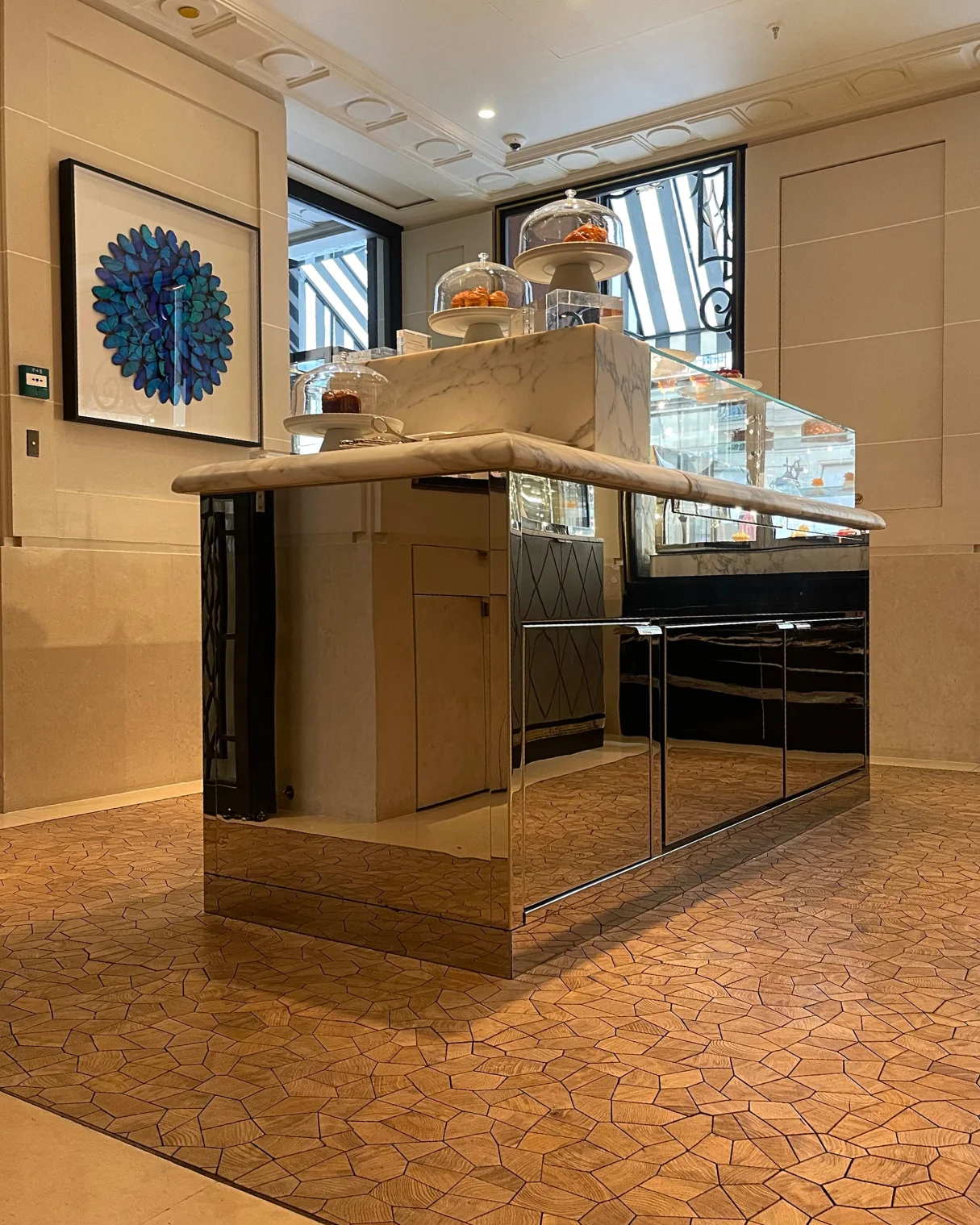
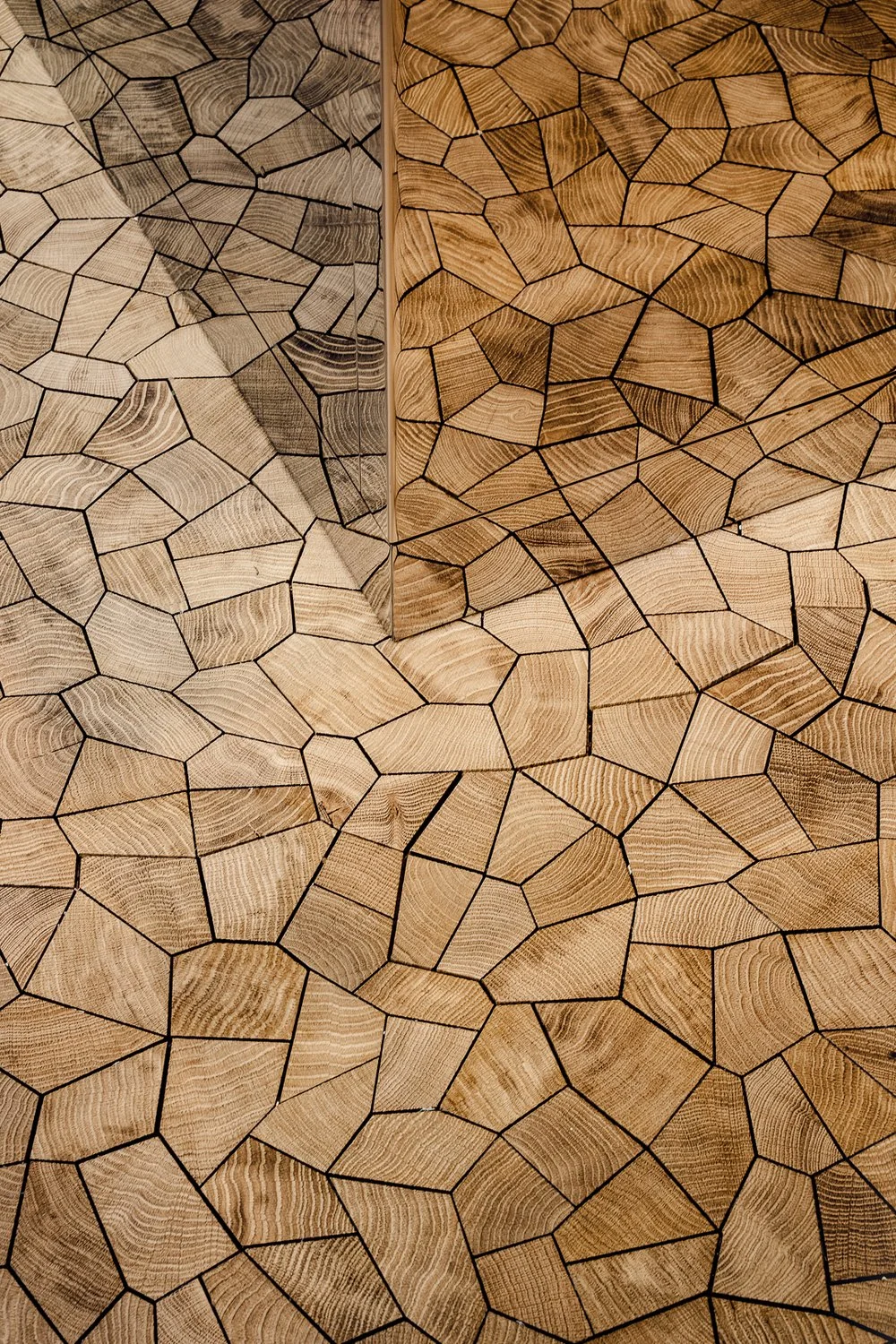
The Butterfly Pâtisserie at the Hôtel de Crillon, on the Place de la Concorde in Paris, is floored in Opus, OscarOno Paris's end grain oak, in the Natural finish. The oak is cut across the grain, so what you walk on is the growth rings of the tree, set in an organic pattern whose joins disappear into one continuous surface.
What is the floor at the Butterfly Pâtisserie?
It is Opus, an end grain oak floor, in Opus Natural. Natural leaves the oak its own pale, sandy color, so the rings and the small changes of tone from one block to the next stay visible. In a room of pastry counters and display cases, the floor reads as a warm, even ground with a fine texture when you look down.
More photos of the room are on the Hôtel de Crillon, Butterfly Pâtisserie project page.
Why end grain oak for a hotel pâtisserie?
A pâtisserie in a hotel sees steady foot traffic all day, chairs pulled in and out, and trolleys. End grain is the hardest-wearing face of a piece of wood: the fibers stand upright, so feet and furniture press on their ends rather than scraping along their length. Opus is rated usage class 34, for very heavy commercial traffic, and carries a Cfl-s1 fire rating, two figures that matter in any hotel.
End grain also changes how a room sounds and looks. Footsteps land softer than on hard stone, and because every block shows its rings at a slightly different angle, the floor catches the light differently as you cross it.
Where does the Opus pattern come from?
In the nineteenth century, many Paris streets were paved with blocks of wood set on end, because end grain stood up to heavy traffic and was quieter than stone under hooves and wheels. The craft disappeared from the streets, and Opus brings it indoors: oak cut on its end grain face and laid in an organic pattern rather than a grid, so the eye reads one surface rather than rows of tiles. For the Hôtel de Crillon, a building on one of the city's great squares, that link to Paris's own history is part of the point.
How is Opus built?
- Construction: an 8 mm endgrain oak top layer on 12 mm birch plywood.
- Joints: under 1 mm, left open or filled with LignoFusion in brown or black.
- Performance: usage class 34, very heavy commercial traffic; fire rating Cfl-s1.
- Certification: FSC and PEFC.
- Adjoining rooms: plain boards in the same finish, for back-of-house areas and transitions.
Opus in Natural, Smoke and Black
Opus comes in three finishes and is never stained. Natural, as at the Crillon, keeps the oak pale. Smoke is smoked through the full depth of the oak, so the color does not wear off with use. Black is charred, in the Japanese shou sugi ban tradition, for a deep, matte floor that makes the ring pattern more graphic.
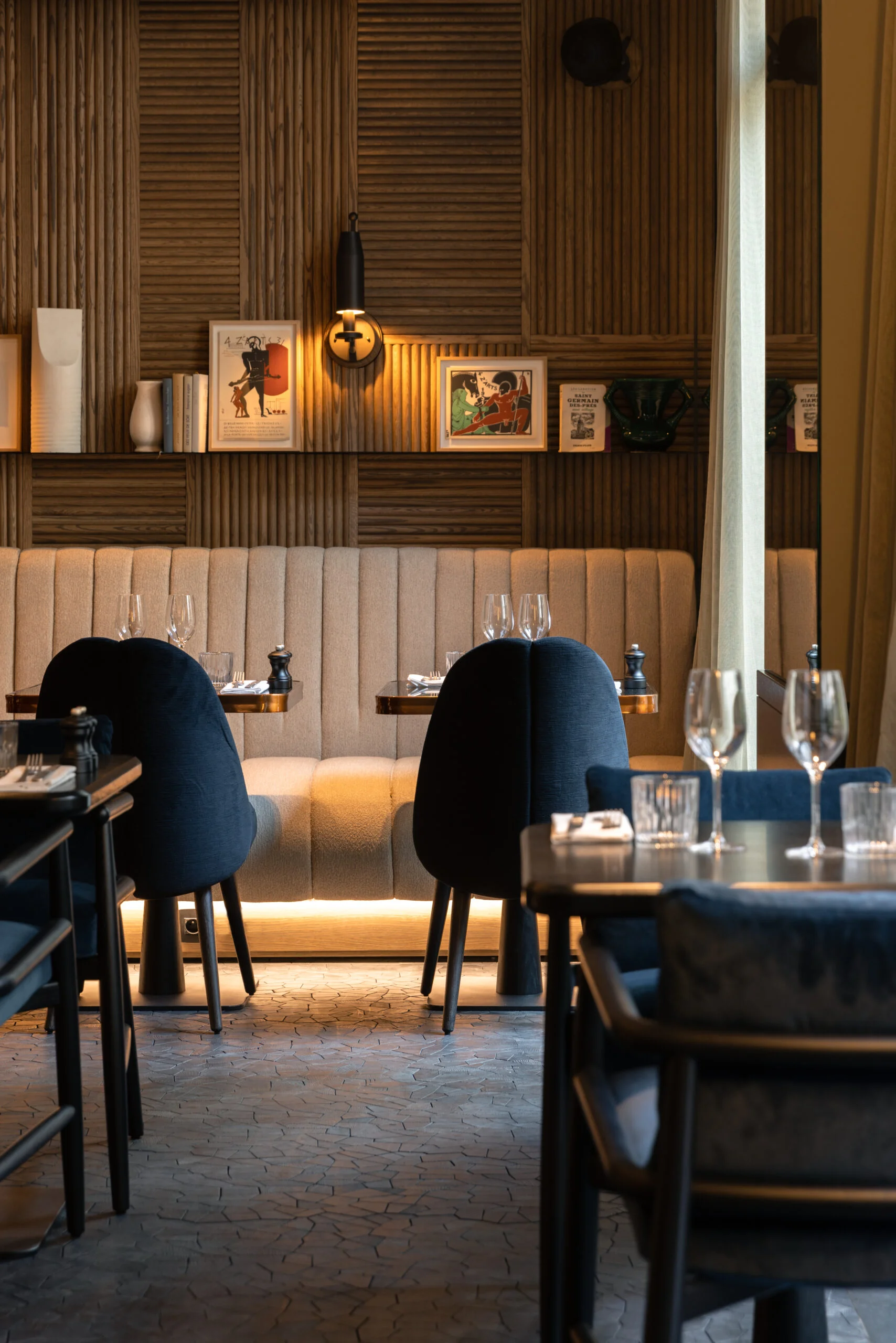
Elsewhere in Paris, the Hotel Dame des Arts is floored in Opus Black: the same pattern, in the darkest of the three finishes.
Frequently asked questions
What floor is in the Butterfly Pâtisserie at the Hôtel de Crillon?
Opus, an end grain oak floor by OscarOno Paris, in the Natural finish. The oak is cut across the grain so the growth rings form the surface, laid in an organic pattern.
What is end grain oak flooring?
A floor made from oak cut across the trunk, so you walk on the ends of the fibers and see the growth rings, as on a butcher block. It is the hardest-wearing face of the wood.
Is end grain flooring suitable for hotels and restaurants?
Yes. Opus is rated usage class 34, for very heavy commercial traffic, and carries a Cfl-s1 fire rating. End grain stands up to foot traffic and furniture better than oak boards laid with their side grain up.
What finishes does Opus come in?
Natural, Smoke and Black. Smoke is smoked through the full depth of the oak, and Black is charred in the shou sugi ban tradition. Opus is never stained.
Opus for your own project
The floor at the Butterfly Pâtisserie is the standard Opus in Natural, the same floor any architect or homeowner can specify. To see the rings and the three finishes in your own light, order samples. Spec sheets, CAD and 3D files are in the library.
More from the Atelier
Summer 2025
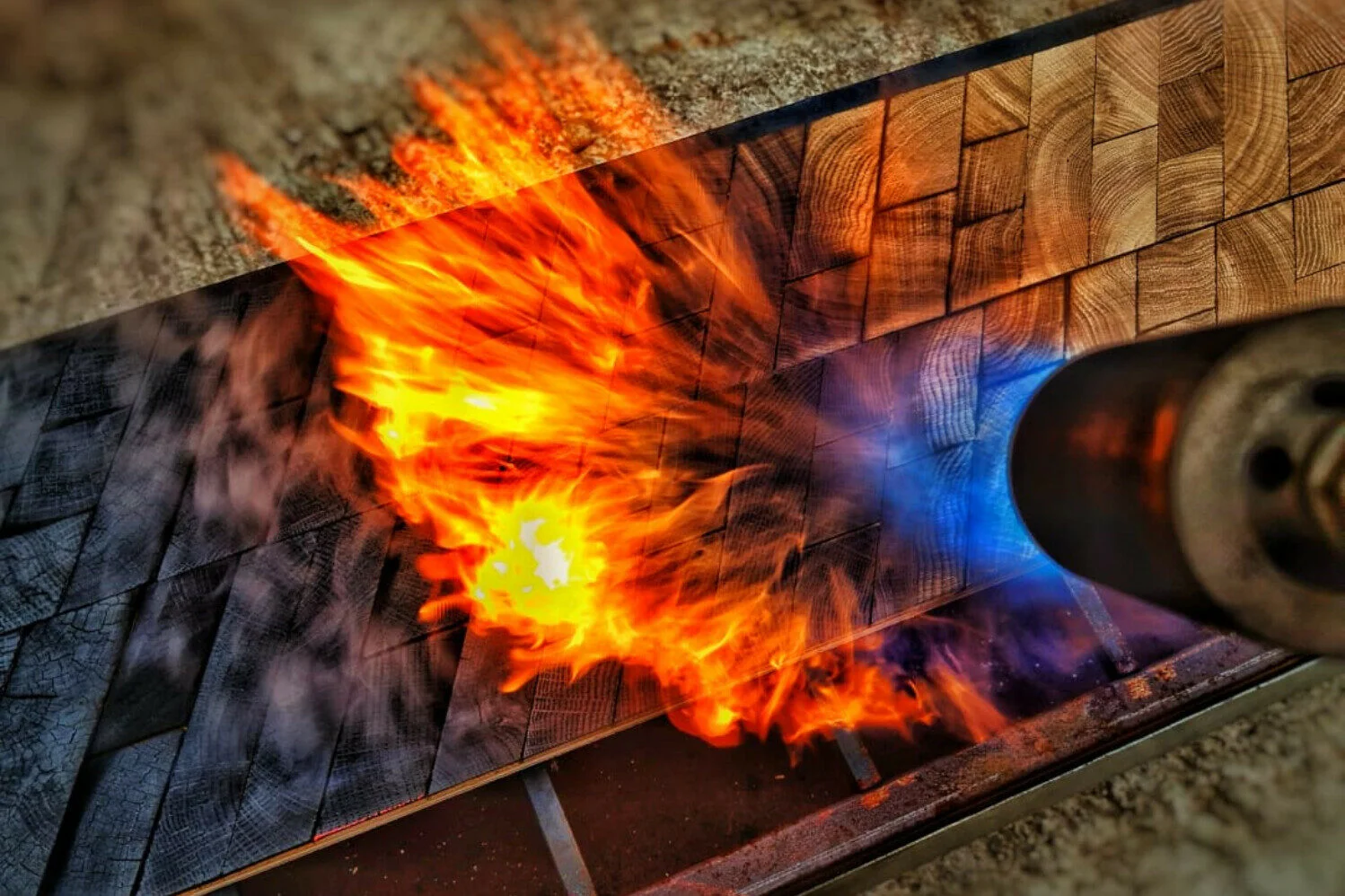
At OscarOno Paris, we’re drawn to materials that tell a story. Stories that reveal their beauty not despite their transformation, but because of it. Enter Shou Sugi Ban: the centuries-old Japanese...
Spring 2025
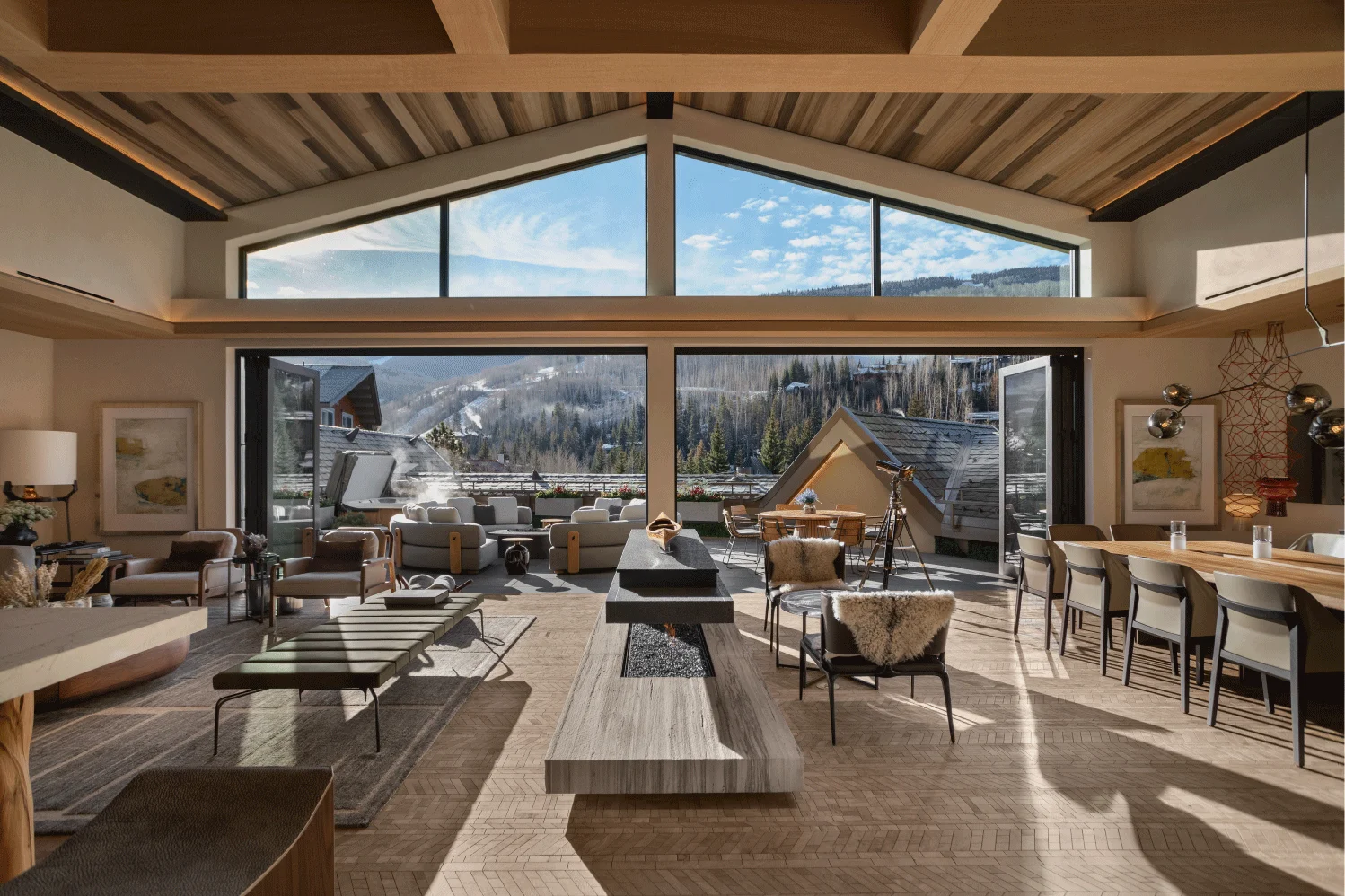
Perched amidst breathtaking mountain scenery, the Colorado Suite embodies the perfect synergy between architecture and nature. Designed by Simon Hamui, this refined retreat seamlessly blends natural...
Best of 2024
Parkline Place, designed by the internationally acclaimed Foster+Partners, is redefining Sydney’s skyline with its stunning architecture and forward-thinking design, setting a new standard for...