
Wood Floors and Underfloor Heating: What Works and What Doesn't
Layered boards, a full bond to a dry screed and a capped surface temperature: the three things that decide whether it works.
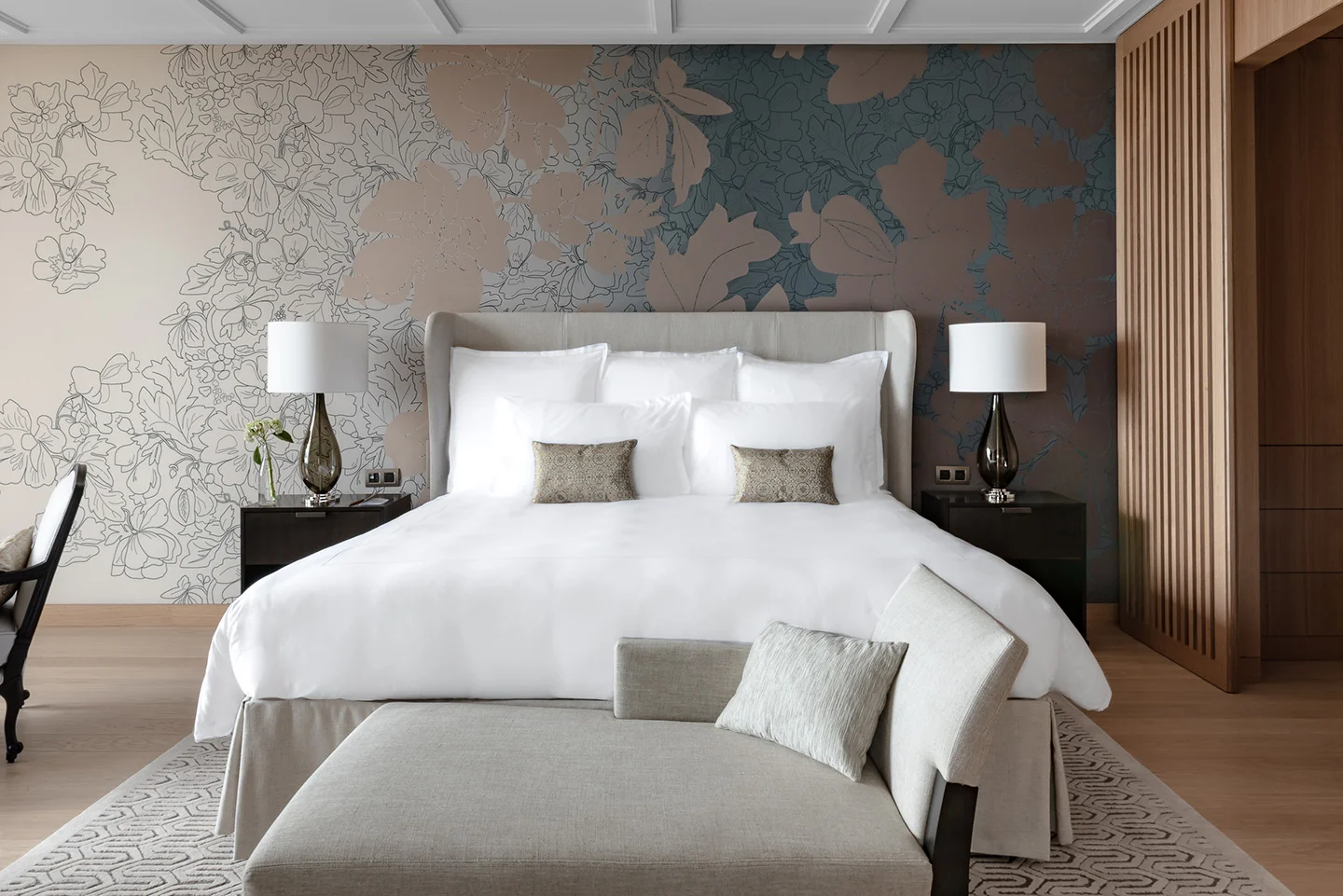
Yes, a wood floor can go over underfloor heating, and oak does it well. Three things decide whether it works: a layered board rather than thick solid planks, a floor glued fully to a dry screed, and a heating system that keeps the surface of the wood no warmer than about 27°C (81°F). Get those right and the floor warms evenly and stays flat; get them wrong and it shrinks, gaps or cups.
Which wood floors work best over underfloor heating?
Layered boards, often called engineered wood: a hardwood top layer bonded to a base whose layers run in different directions. The base holds the top layer still as the heating dries the air in winter and the humidity returns in summer. Solid planks move as one piece of wood, so over heat they tend to shrink and open gaps between boards. Narrow solid boards can work in careful hands, but the margin for error is much smaller.
Species matters too. Oak is the usual choice because it is dense and moves moderately with changes in humidity. Beech and maple move noticeably more, and most flooring makers advise against them over heating.
Board width plays a part as well: wood shrinks and swells in proportion to its width, so a narrower board opens a smaller gap than a wide one. Droit, OscarOno Paris's straight oak plank, is 12 mm thick with a 4 mm oak top layer and comes 150 mm or 190 mm wide; over a heated floor, the narrower width is the more forgiving of the two.
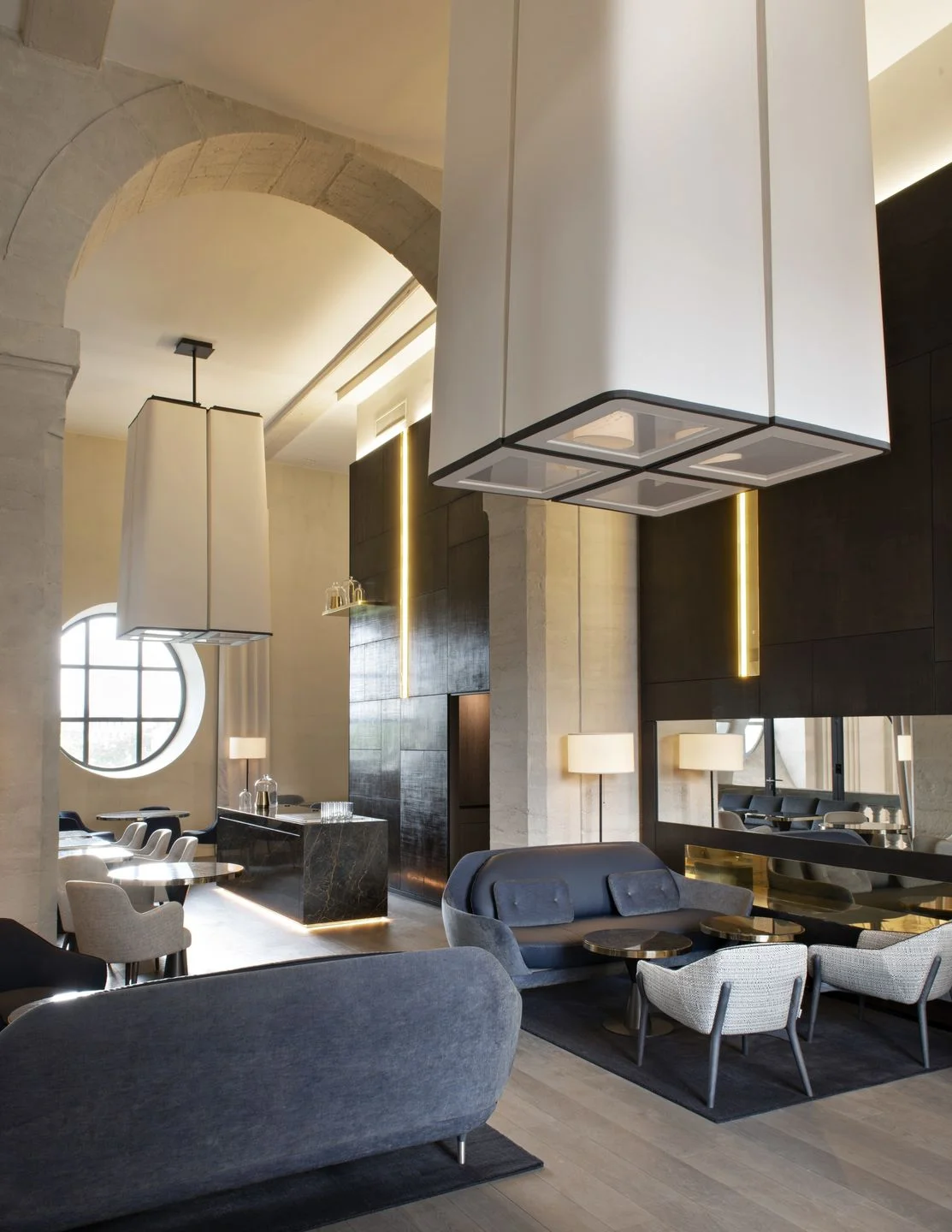
The Grand Hotel Dieu in Lyon, laid in Droit, shows the straight plank in a large interior.
How thick can a wood floor be over underfloor heating?
Wood insulates, so every millimeter between the pipes and the room slows the heat down. The guideline most heating manufacturers work to is a total thermal resistance of no more than 0.15 m²K/W for the floor and anything under it. A thinner layered floor glued straight to the screed sits comfortably inside that limit. A thicker floor still works, but the room takes longer to warm up and the system has to run warmer water to get there. The heating engineer can check the figure for a specific floor against its spec sheet.
Glue-down or floating?
Glued down, fully bonded to the screed. A floating floor on an underlay traps a layer of air, which insulates, and leaves the boards free to move on their own. A full bond puts the wood in direct contact with the heat source and holds it flat. Installers use an elastic adhesive, typically an MS polymer, which stays flexible enough to absorb the wood's small seasonal movement.
Can end grain flooring go over underfloor heating?
It can, and it has one advantage: in end grain the fibers of the wood stand upright, and wood carries heat more readily along its fibers than across them. The other side of that is movement. An end grain block swells and shrinks across its face in both directions, so it is always glued fully with an elastic adhesive and never floated, on a screed that is flat, dry and sound.
At OscarOno Paris, Opus, the paving pattern of nineteenth-century Paris, and Forêt, six planks and six patterns combined freely, both have an 8 mm endgrain oak top layer on 12 mm birch plywood, with joints under 1 mm. Check the requirements for underfloor heating on the spec sheet of the product you choose, and with your installer, before you commit.
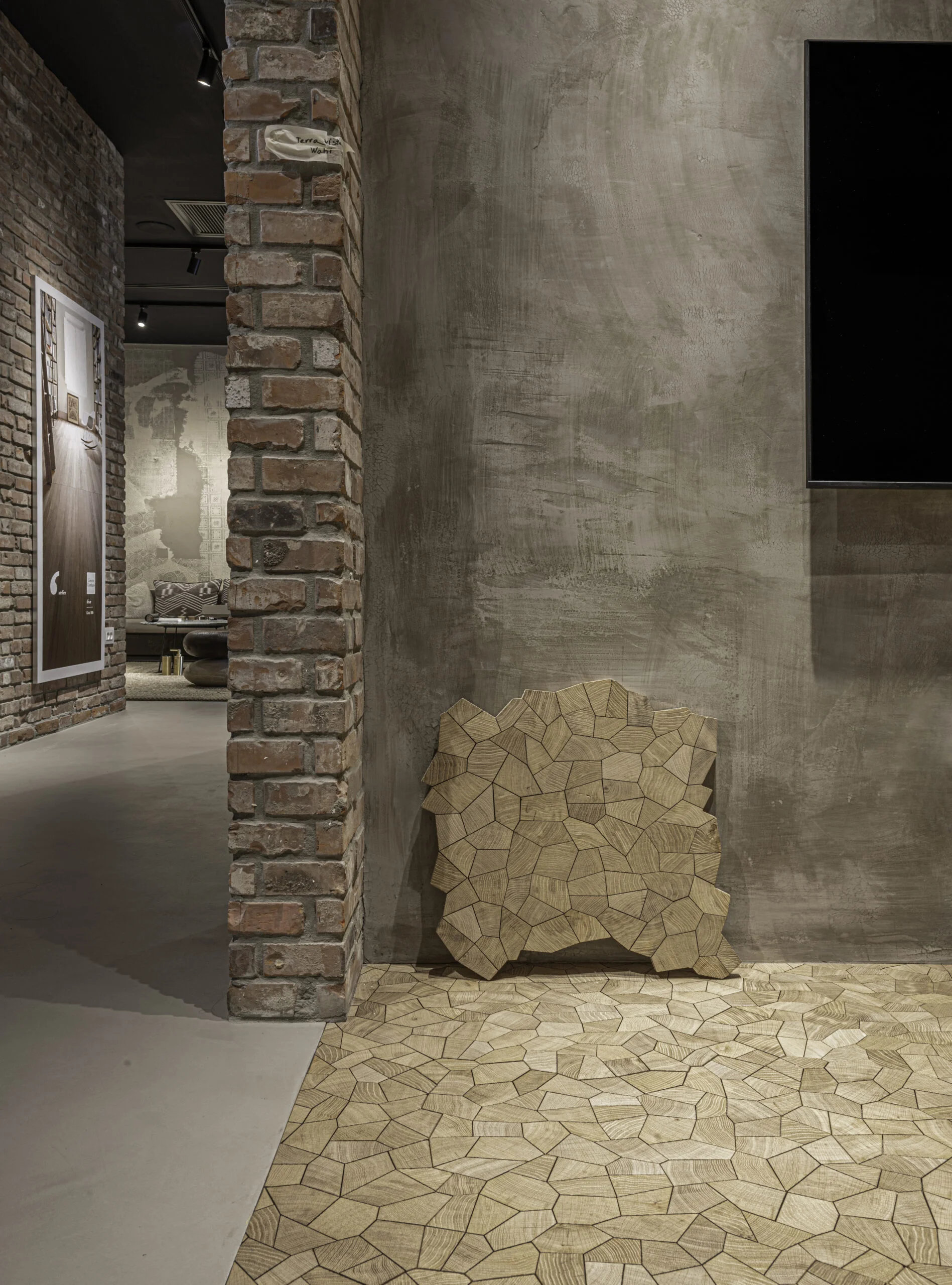
In the Parqueteam showroom, laid in Opus Natural, you can see the endgrain blocks fitting into one continuous surface.
What temperature should a heated wood floor run at?
The surface of the wood should stay at or below about 27°C (81°F). Above that, the wood dries out faster than it can settle, and gaps or cracks appear. A limiter on the heating manifold or controls stops the system overshooting by accident.
Steady heat is kinder than sudden heat. Bring the floor up to temperature slowly at the start of the heating season, avoid large swings from day to day, and keep the room's relative humidity roughly between 40 and 60 percent. In winter that often means a humidifier, which helps the people in the room as much as the floor.
Furniture and rugs matter more than they look. A thick, rubber-backed rug or a solid-based piece of furniture traps heat under it, and the wood beneath it runs hotter than the rest of the floor.
How should the screed be prepared?
Most problems with heated wood floors start below them. A new screed holds a lot of water, and wood laid on it too early will take it in. Before any floor goes down:
- The screed must be dry. Its moisture is measured, not guessed, and must be below the limit the flooring and adhesive makers set for that type of screed.
- The heating must be commissioned. The heating installer runs the system through a slow heat-up and cool-down cycle to drive out remaining moisture and settle the screed, following the screed maker's protocol.
- The heating is lowered for laying. The floor is laid on a cool screed and the heat is brought back up gradually over the following days.
Frequently asked questions
Can you use solid wood flooring with underfloor heating?
It is possible with narrow, stable boards, but it is riskier than a layered floor. Solid planks move as one piece of wood, so heat dries them out and gaps open between boards. A layered (engineered) floor, glued down, is the safer choice.
What is the maximum temperature for a wood floor with underfloor heating?
Keep the surface of the wood at or below about 27°C (81°F), and bring the heat up and down gradually. A limiter on the heating controls prevents it from overshooting.
Is glue-down or floating better over underfloor heating?
Glue-down. A full bond to the screed puts the wood in direct contact with the heat, removes the insulating air layer of a floating floor and holds the boards flat. An elastic adhesive absorbs the wood's small seasonal movement.
Which wood species should you avoid over underfloor heating?
Beech and maple move noticeably more than oak with changes in humidity, and most flooring makers advise against them over heating. Oak is the usual choice.
Can you put rugs on a heated wood floor?
Thin rugs are fine. Avoid thick or rubber-backed rugs and furniture with solid bases sitting flat on the floor, because they trap heat and the wood underneath runs hotter than the rest.
Underfloor heating and OscarOno Paris floors
The straight planks of Droit and the endgrain floors of Opus and Forêt are all built in layers, with an oak top layer. All three carry a Cfl-s1 fire rating and FSC and PEFC certification; Droit is rated usage class 33, Opus and Forêt usage class 34. Spec sheets, CAD and 3D files for each are in the library, to check against your heating system with your installer, and you can order samples to see the wood and the finish in your own room.
More from the Atelier
Protecting End Grain Wood Block Flooring from UV Fading
Discover the science of oak photodegradation and how to protect end-grain wood floors from UV fading using advanced varnishes and architectural design.

Parquet Floor Restoration: Is an Old Parquet Floor Worth Saving?
Loose blocks, gaps, stains and a worn finish can all be put right. How to tell whether an old parquet floor is worth restoring, what the work involves, and when it is not.
Squeaky Wood Floors: Why They Squeak and How to Fix Them
A squeak is friction: wood on wood, wood on a nail, or a subfloor moving on its joists. Find which one it is and the fix follows.