
Fire Rated Wood Flooring Commercial: The Cfl-s1 Guide
How endgrain oak achieves Euroclass Cfl-s1 fire compliance and Class 34 wear resistance.
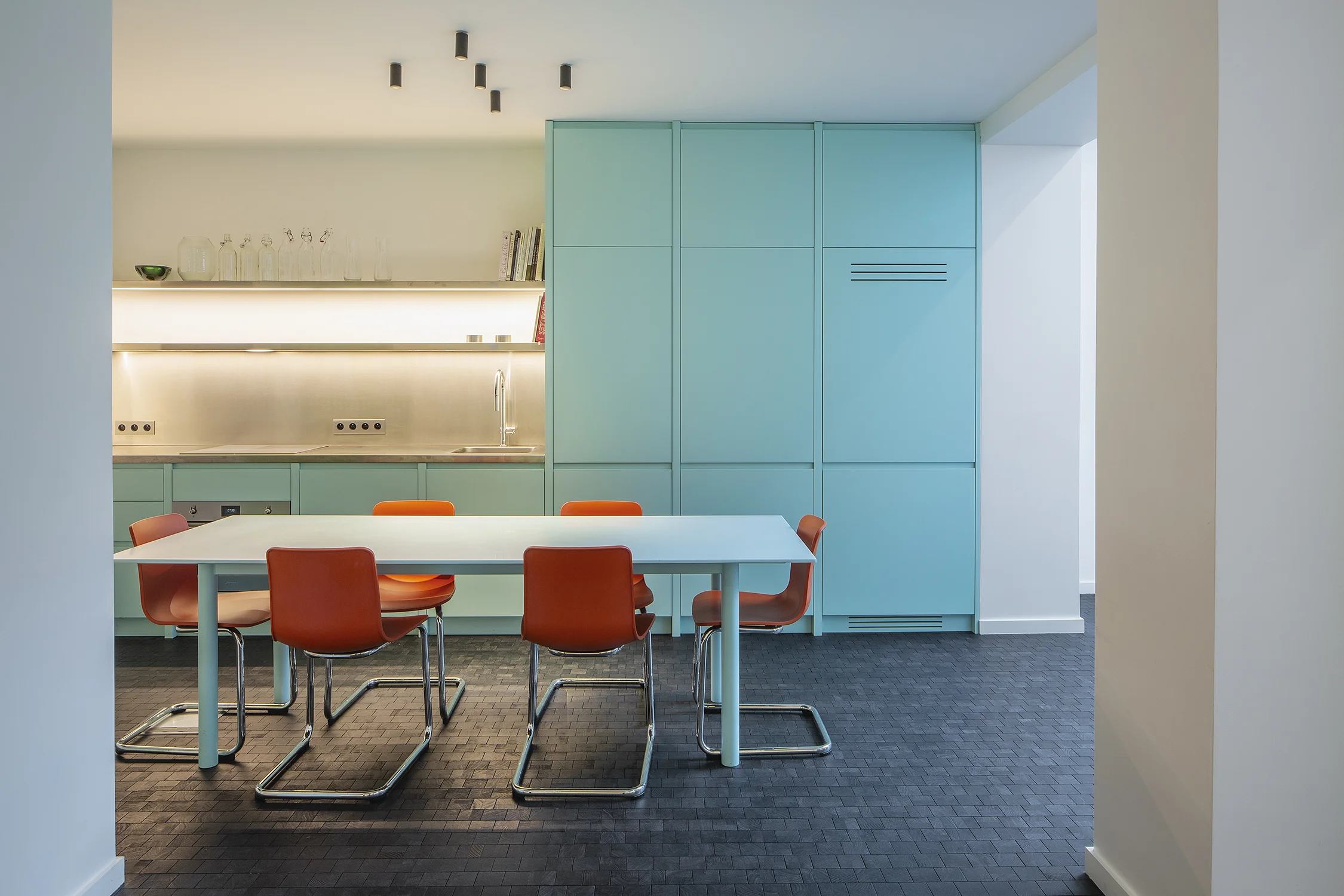
Specifying fire rated wood flooring commercial projects require demands an exact understanding of European reaction to fire criteria and mechanical wear standards. In public hospitality and high-traffic retail spaces, achieving Euroclass Cfl-s1 alongside Usage Class 34 ensures a floor can handle severe pedestrian footfall while satisfying mandatory safety mandates. By utilizing engineered endgrain oak, architects bring authentic timber surfaces into rigorous commercial environments without compromising code compliance or durability.
What does the Euroclass Cfl-s1 fire rating mean for timber floors?
The Euroclass system classifies the reaction to fire of construction materials under standard EN 13501-1. For flooring materials, indicated by the subscript fl, the classification assesses ignitability, heat release, lateral flame spread, and smoke production. A rating of Cfl-s1 indicates that the timber assembly provides limited contribution to fire, with critical heat flux levels meeting rigorous commercial egress requirements.
Smoke development is designated by the smoke rating, where s1 represents the safest performance level under European testing. To earn an s1 designation, the total smoke production and rate of smoke increase during testing must stay within strictly bounded limits. In escape corridors, luxury retail stores, and boutique hotels, controlling smoke emissions is essential for occupant evacuation and visibility.
Meeting Cfl-s1 requires examining the entire engineered assembly rather than the surface timber alone. The reaction to fire is governed by the combination of top wear layer, core substrate, and the protective finish. Engineered constructions pairing solid oak with multi-ply birch backing provide the thermal mass and structural stability necessary to prevent delamination during high thermal exposure.

Why is end grain oak durability class 34 suited for high traffic?
The standard EN ISO 10874 defines European usage classes based on mechanical resistance, assigning Class 34 to surfaces capable of withstanding very heavy commercial traffic. Traditional flatgrain boards place timber fibers parallel to foot traffic, where friction gradually shears and abrades the cellular structure. In contrast, end grain oak durability class 34 surfaces present vertical tree rings directly to point loads and rolling weight.
Because the vertical wood vessels act like a compact bundle of columns, endgrain oak withstands immense compression without splintering or premature wear. Heavy foot traffic in flagship boutiques, hotel lobbies, and cultural institutions compresses the exposed end fibers instead of peeling them back. Over decades, this vertical orientation builds a durable patina that resists indentation and gouging.
This structural resilience makes endgrain timber a natural choice for public installations. While flatgrain planks typically achieve Class 33 for heavy commercial use, engineered endgrain formats reliably attain Class 34. This makes them suitable for airport lounges, busy department stores, and grand restaurant dining rooms where daily traffic numbers in the thousands.
How do commercial timber floor ratings balance wear and fire safety?
Commercial timber floor ratings must address both physical degradation and thermal performance simultaneously, as a failure in either parameter renders an interior non-compliant. Specifiers often face a trade-off when selecting standard parquet, where thick topical coatings may boost surface abrasion resistance but degrade smoke ratings under combustion. Selecting an engineered system with certified properties resolves this conflict at the specification phase.
The density of European oak, combined with an engineered birch plywood base, naturally slows flame propagation across the floor plane. Oak carbonizes at predictable rates when subjected to fire, forming an insulating char layer that protects deeper substrate layers. In engineered endgrain blocks, this dense carbonization profile helps maintain structural integrity under standard EN 13501-1 radiant heat tests.
Finishing methods play an equally decisive role in safety evaluations. Finishes that rely on thick polyurethane build-ups can melt and produce volatile smoke gases during fire exposure. In contrast, deep core smoking techniques or carbonized surface treatments alter the timber itself without introducing flammable synthetic films, maintaining the critical s1 smoke suppression baseline.
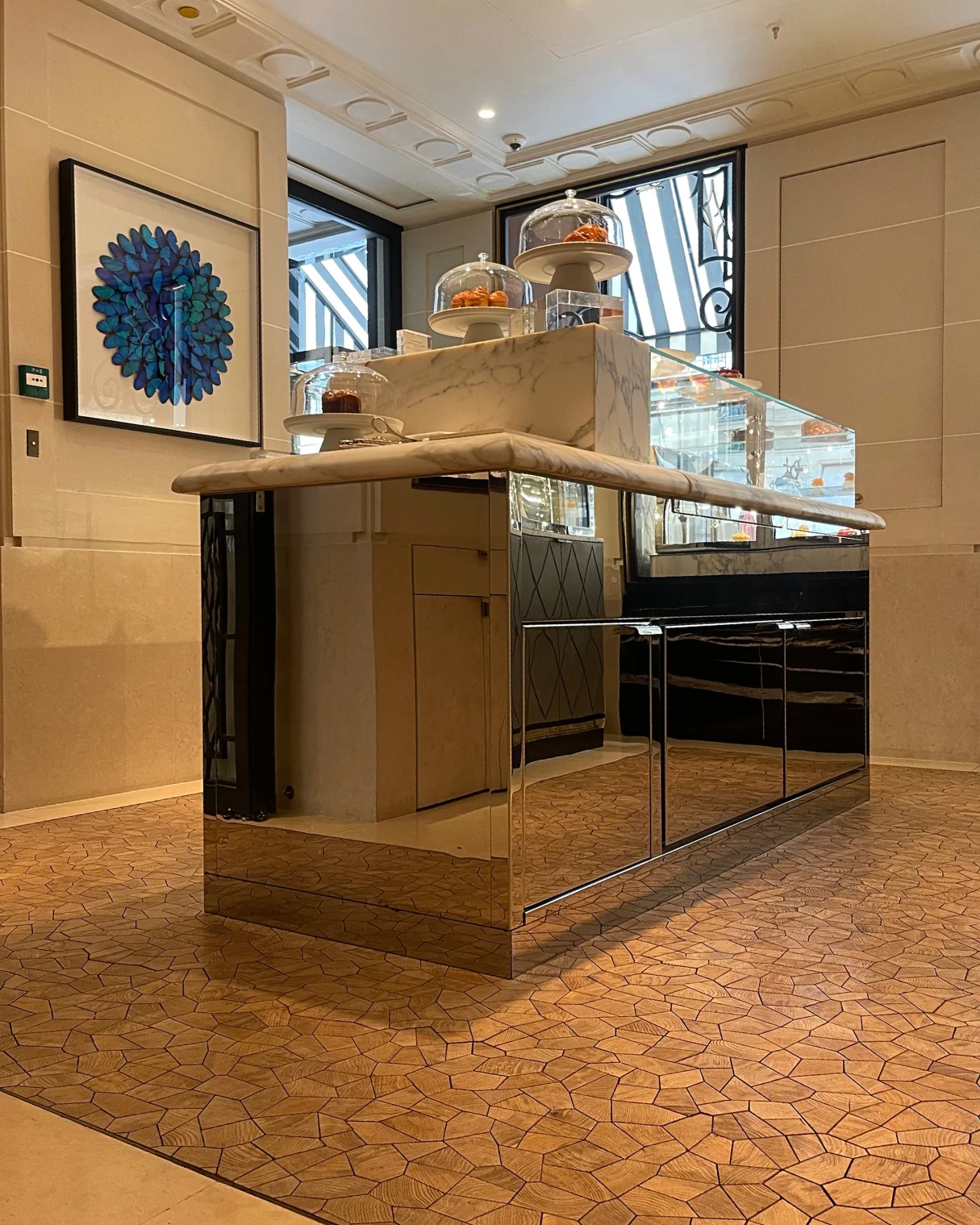
What is required for a Cfl-s1 parquet specification?
A rigorous Cfl-s1 parquet specification requires detailed technical schedules outlining construction depth, substrate pairing, adhesive compatibility, and certification credentials. Architects cannot rely on generic timber declarations; every project schedule must cite verified test evidence based on EN 13501-1 protocols. Specifying the installation system as a complete assembly ensures compliance on site.
When drafting specification documents, specifiers should incorporate these structural parameters:
- Reaction to Fire: Euroclass Cfl-s1 according to EN 13501-1, verified for floor assemblies.
- Durability Classification: EN ISO 10874 Class 34 for very heavy commercial traffic, or Class 33 for heavy commercial environments.
- Substrate Construction: Cross-laminated birch plywood backing engineered to resist shear stress and thermal movement.
- Dimensional Precision: Solid timber wear layers precision-milled with joints under 1 mm to minimize air pockets that accelerate ignition.
- Chain of Custody: FSC or PEFC certification ensuring sustainable and legally verified European forestry.
| Flooring Type | Cut & Structure | Usage Class (EN ISO 10874) | Fire Rating (EN 13501-1) | Typical Application |
|---|---|---|---|---|
| Endgrain Oak Blocks | Vertical rings, birch plywood backing | Class 34 (Very Heavy Commercial) | Cfl-s1 | Flagship retail, hotel lobbies, public pavilions |
| Flatgrain Oak Planks | Longitudinal grain, select grade oak | Class 33 (Heavy Commercial) | Cfl-s1 | Boutique offices, luxury suites, fine dining |
| Engineered Parquet Panels | Composed geometric panels, 4 mm oak top layer | Class 33 (Heavy Commercial) | Cfl-s1 | Private galleries, heritage restorations, executive suites |
Specifying end grain oak with OscarOno Paris
OscarOno Paris manufactures architectural oak surfaces engineered specifically to meet the stringent demands of international commercial developments. The endgrain collections, including Opus and Cube, feature a Cfl-s1 fire rating and Class 34 durability classification for very heavy commercial traffic. Constructed with high-density birch plywood and thick oak wear layers, these surfaces are designed for spaces where durability and safety are paramount.
In Opus, endgrain oak is cut to an 8 mm top layer mounted on 12 mm birch plywood, creating a total thickness of 20 mm. This floor has been selected by interior architects for rigorous hospitality settings, such as Raphael Navot's design for Hotel Dame des Arts in Paris. For minimalist geometric schemes, Cube provides an endgrain oak grid built with a 6 mm wear layer over 10 mm birch plywood, as showcased in public cultural settings like Maison du Danemark. Both collections are FSC and PEFC certified and available in Natural, Smoke, and Black finishes, using full-depth smoking and traditional shou sugi ban charring rather than topical stains.
To integrate certified endgrain and flatgrain oak surfaces into your project specifications, Order samples directly from the atelier or access spec sheets, CAD and 3D files in the Library.
Frequently asked questions
What does a Cfl-s1 Euroclass rating mean for commercial wood floors?
Euroclass Cfl-s1 indicates that the flooring material provides low flammability and minimal contribution to fire under EN 13501-1. The s1 classification signifies the lowest level of smoke production, making it suitable for commercial egress routes and public buildings.
Can end grain wood flooring handle high foot traffic in retail stores?
Yes, endgrain oak flooring carries an EN ISO 10874 Usage Class 34 rating for very heavy commercial traffic. Presenting the wood fibers vertically allows the surface to absorb heavy compression and foot traffic without splintering or wear.
What is the difference between Class 33 and Class 34 commercial timber floors?
Class 33 corresponds to heavy commercial traffic, suitable for typical offices, hotel rooms, and boutiques. Class 34 represents very heavy commercial traffic, engineered for spaces with extreme wear such as department stores, public lobbies, and busy hospitality venues.
Are OscarOno Paris endgrain oak floors certified for fire safety?
Yes, collections such as Opus, Cube, and Forêt achieve a certified Cfl-s1 reaction to fire rating and Class 34 durability rating. They are manufactured with birch plywood cores and solid oak wear layers to satisfy rigorous architectural codes.
More from the Atelier

Why Luxury Retail Wood Flooring Demands End Grain Oak
A technical guide to specifying end-grain oak flooring for high-traffic retail flagships, balancing vertical compression, acoustics, and atelier craft.
Protecting End Grain Wood Block Flooring from UV Fading
Discover the science of oak photodegradation and how to protect end-grain wood floors from UV fading using advanced varnishes and architectural design.
Parquet Floor Restoration: Is an Old Parquet Floor Worth Saving?
Loose blocks, gaps, stains and a worn finish can all be put right. How to tell whether an old parquet floor is worth restoring, what the work involves, and when it is not.