
Why Luxury Retail Wood Flooring Demands End Grain Oak
How vertical oak fibers provide wear resistance and acoustic calm in flagships.
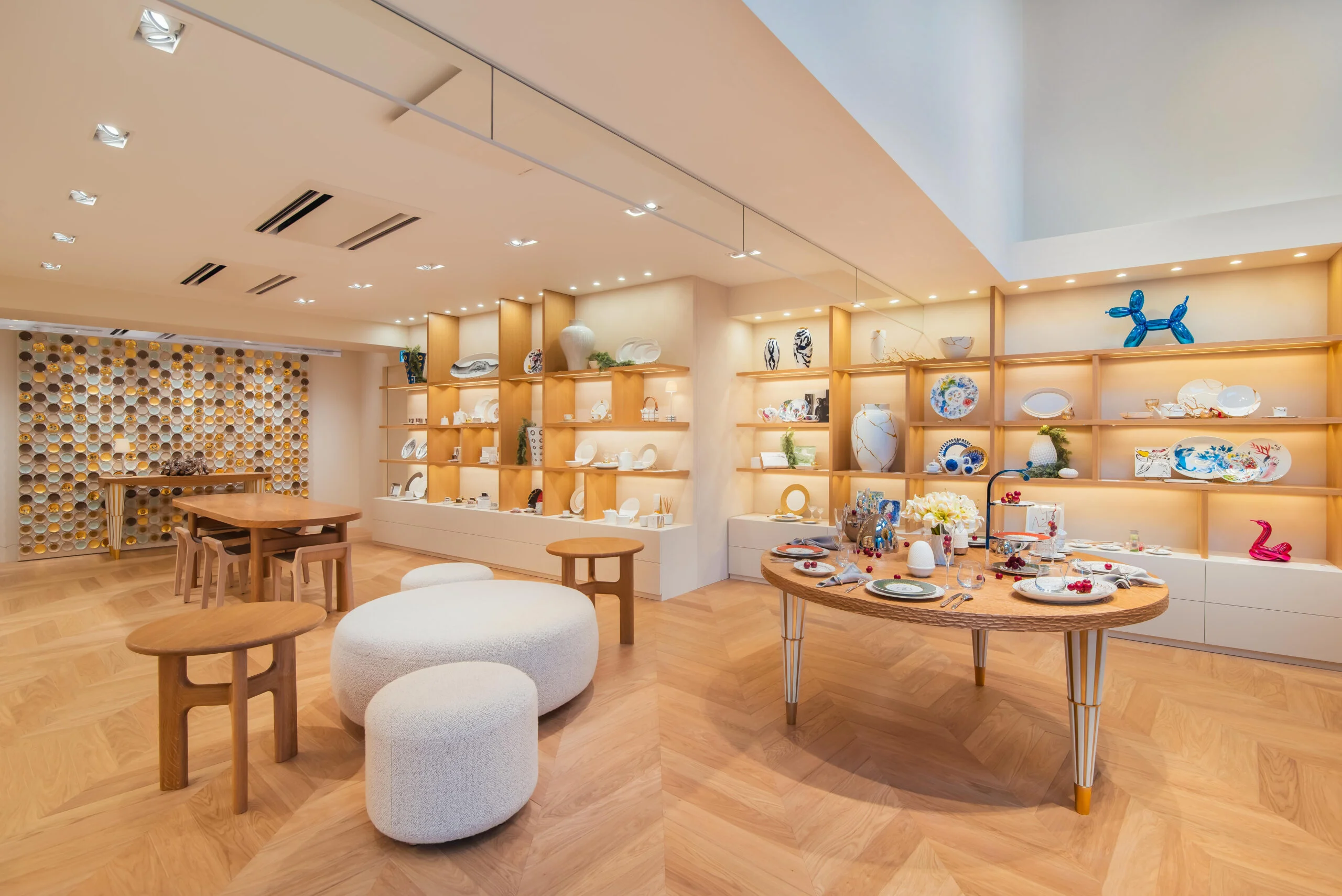
Specifying luxury retail wood flooring requires balancing refined interior architecture with materials capable of withstanding continuous commercial footfall. Unlike traditional flat-sawn planks that display wear through horizontal grain abrasion, end grain surfaces orient the timber fibers vertically like the bristles of a brush. This vertical orientation absorbs point loads under compression, preventing surface splintering while creating an acoustically muted atmosphere within flagship boutiques.
For retail architects and hospitality designers, flooring forms the physical foundation of the brand environment. In flagship stores, boutique visitors bring street dirt, stiletto heels, luggage wheels, and heavy daily foot traffic across thresholds and display corridors. When timber surfaces fail under these stresses, the entire retail concept loses its composure. Understanding the fiber mechanics of end grain oak allows specifiers to deliver warmth and historical pedigree without compromising commercial durability.
Why does end grain commercial flooring resist intense footfall?
Vertical fiber orientation makes end grain commercial flooring uniquely resistant to intense pedestrian compression. In standard flat-sawn oak boards, the wood cells run horizontally along the walking surface, meaning traffic friction shears across the growth rings and eventually frays the timber fibers. In end grain cuts, compressive forces travel parallel to the vascular tubes of the tree, which naturally compact and rebound rather than tearing apart under load.
This structural behavior has historic roots in nineteenth-century European city planning. Urban engineers in Paris, London, and New York paved bustling thoroughfares, factory floors, and courtyards with end grain oak blocks because the timber tolerated iron carriage wheels and heavy draft horses far better than stone paving. The same mechanical resilience allows end grain oak to absorb commercial retail foot traffic without the traffic lanes, cupping, or surface splintering that compromise standard planks over time.
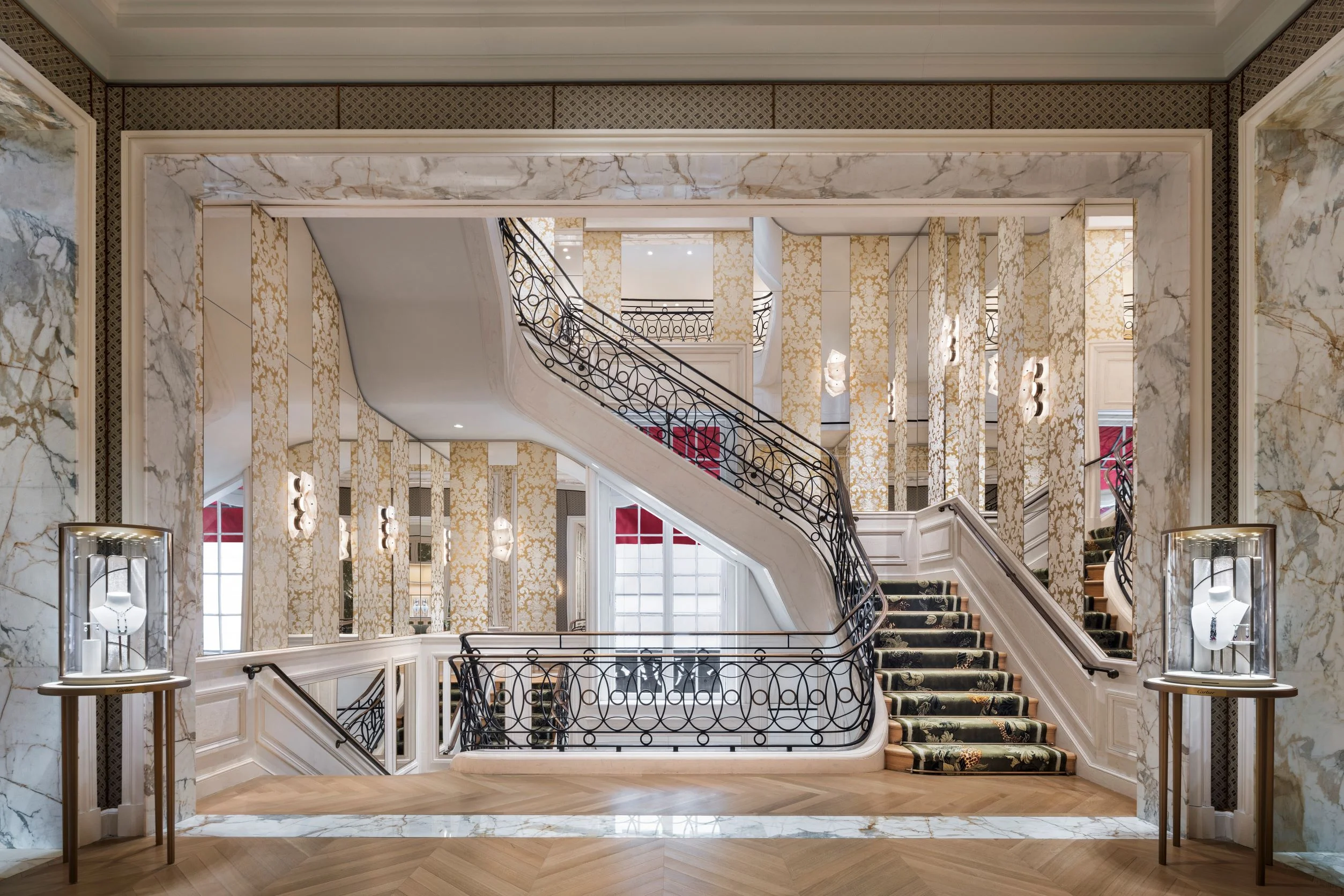
Across global luxury flagships, material choices define visitor pacing. While flat-sawn patterns remain classic choices, high-intensity retail programs often demand specialized construction. Projects showcased across our completed interior realisations highlight how heritage patterns and timber cuts respond to commercial circulation. For example, the Cartier boutique in New York relies on our Hongrie chevron parquet in Miel Doux to establish an elegant rhythm, proving that precision timber layouts anchor world-class retail architecture.
How does wood structure create acoustic comfort in flagships?
End grain timber creates acoustic comfort by dampening impact sounds at the point of contact. Hard surfaces such as polished marble, poured terrazzo, and ceramic tile reflect sound energy back into the retail envelope, causing reverberation, clatter, and elevated ambient noise. The porous cross-cut tracheids in end grain oak absorb vibrational shock, significantly lowering footstep clicks and rolling equipment resonance within open boutique volumes.
Flagship environments demand acoustic intimacy. When clients step across a luxury threshold, acoustic deceleration encourages them to slow their pace and focus on merchandise displays. By softening heel strikes and ambient store chatter, end grain flooring provides the acoustic luxury associated with upholstered spaces while delivering the clean visual permanence of solid architectural timber.
How do flat-sawn planks and end grain compare in high traffic boutique flooring?
Choosing high traffic boutique flooring involves balancing pattern aesthetics, traffic intensity, and maintenance requirements across different zones of a boutique. While flat-sawn planks offer fluid long-grain movement suited for curated display alcoves, end grain blocks provide unmatched compressive resistance across main corridors, entry vestibules, and cash desks.
| Performance Attribute | End Grain Oak Flooring | Flatgrain Oak Planks |
|---|---|---|
| Fiber Orientation | Vertical (cross-cut rings facing up) | Horizontal (longitudinal face facing up) |
| Primary Wear Dynamic | Fibers compress and self-heal under load | Fibers shear and abrade horizontally |
| Acoustic Impact Absorption | High impact dampening, muted footfall sound | Moderate sound absorption, sharper heel click |
| Traffic Suitability | Usage class 34 (very heavy commercial) | Usage class 33 (heavy commercial) |
| Surface Texture | Exposed growth rings, tactile transverse pores | Linear cathedral grain, smooth surface plane |
| Best Retail Placement | High-volume thresholds, walkways, open halls | Display salons, fitting suites, wall perimeters |
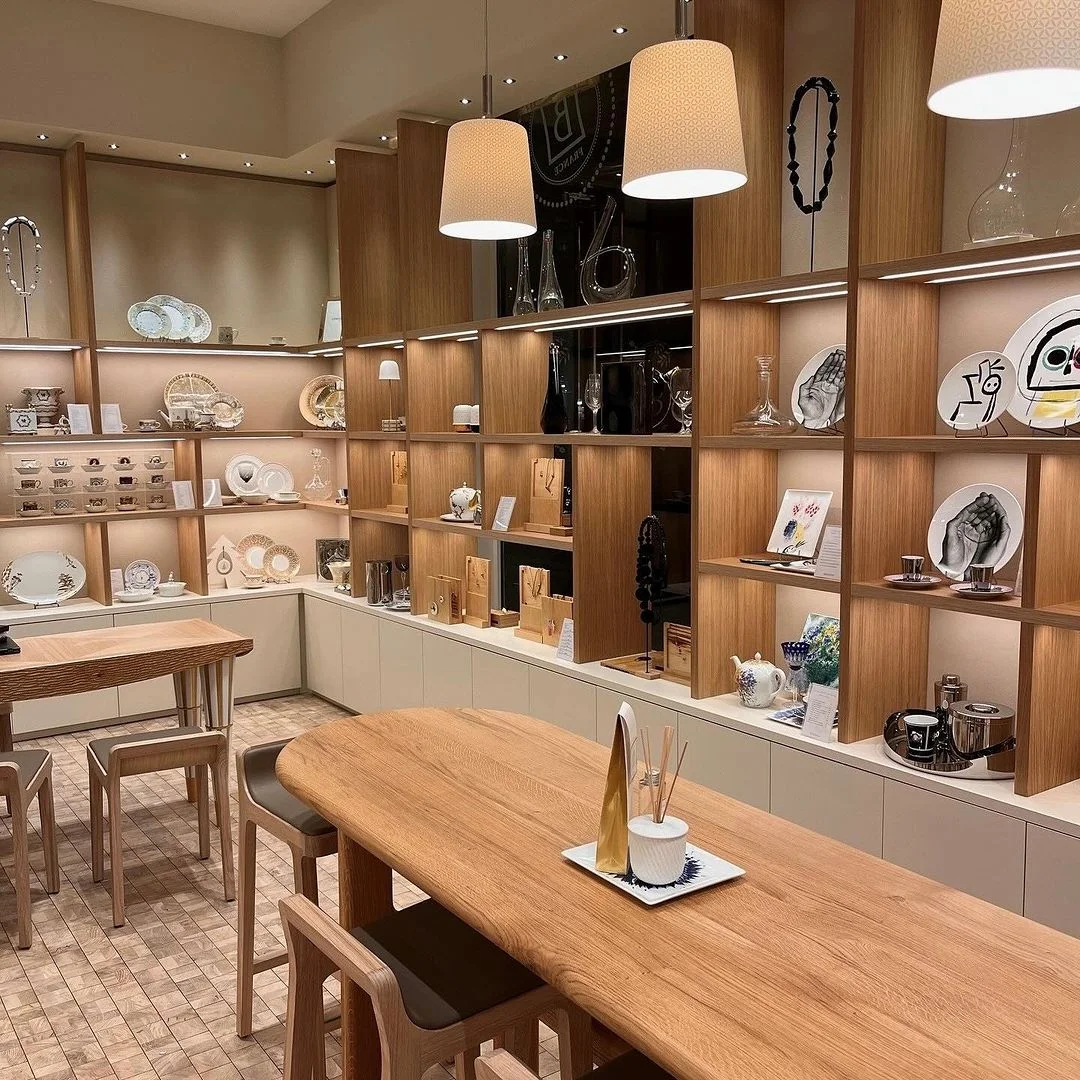
Architects frequently combine both approaches to delineate retail programming. A flagship boutique might utilize straight planks or chevron boards to frame dedicated product salons, transitioning to end grain blocks across primary circulation paths. At the Boutiques Caroll in Paris, our Droit straight oak planks in Naturel finish establish a luminous, tailored spatial flow that demonstrates the clean geometry possible with longitudinal boards in commercial spaces.
What technical factors govern end grain specification and moisture management?
Because end grain surfaces expose the open vascular tubes of the tree, moisture absorption occurs more rapidly across the cut face than through the side grain. Managing relative humidity and ensuring direct full-trowel adhesive bonding are essential technical steps when specifying end grain in commercial retail buildings. Engineered backings provide critical dimensional stability, allowing the oak top layer to breathe without lifting from the subfloor.
Surface sealing must protect the vascular pores while preserving the tactile character of the exposed growth rings. Rather than surface stains that scrape off under heavy footwear, deep smoke treatments or charred finishes integrate color directly into the timber structure. Smoked oak undergoes core reaction through its full depth, ensuring that ongoing foot traffic never reveals an untreated core beneath the top surface.
Joint design also influences long-term performance. End grain blocks installed with micro-joints under 1 mm can be filled with specialized compounds such as LignoFusion to seal microscopic gaps against dust, mop moisture, and retail spillages. This creates a continuous, hygienic surface that maintains structural cohesion across years of commercial retail service.
How does OscarOno Paris craft end grain floors for commercial interiors?
OscarOno Paris manufactures architectural end grain oak collections engineered specifically for demanding retail, hospitality, and residential environments. Our Opus collection revives the craft of nineteenth-century Parisian wood paving, combining an 8 mm end grain oak top layer with a 12 mm birch plywood backing to achieve usage class 34 durability for very heavy commercial traffic. For structured layouts, Cube sets square end grain blocks into a calibrated grid using a 6 mm oak top layer over 10 mm birch plywood, while Forêt pairs six plank dimensions and patterns into an organic, non-repeating floor.
Every OscarOno Paris end grain collection is FSC and PEFC certified, holds a Cfl-s1 fire rating, and comes in Natural, Smoke, and charred Black finishes without artificial stains. For brands pairing end grain corridors with classic boutique salons, our Essentiel patterns like Droit and Hongrie provide complementary flatgrain profiles engineered with a 4 mm oak top layer on a 12 mm base in usage class 33. To evaluate finishes for your next flagship project, Order samples directly from our Paris atelier, or visit the OscarOno Paris Library to download architectural spec sheets, CAD blocks, and 3D textures.
Frequently asked questions
Why is end grain wood harder wearing than regular wood flooring?
End grain wood positions the growth fibers vertically, meaning impact from shoes and equipment compresses the wood cells parallel to their grain rather than peeling or tearing them horizontally. This structural orientation prevents splintering and surface rutting under high-traffic commercial footfall.
How does end grain flooring affect boutique acoustics?
The open, vertical vascular pores of end grain oak absorb kinetic impact energy from foot traffic, significantly decreasing sharp heel clicks and ambient store reverberation compared to stone, ceramic tile, or flat-sawn planks.
What commercial traffic rating does OscarOno Paris end grain achieve?
OscarOno Paris end grain collections, including Opus, Cube, and Forêt, carry a European usage class 34 rating, certifying them for very heavy commercial traffic environments such as retail flagships and luxury hospitality interiors.
Can end grain oak floors be installed alongside standard planks?
Yes. Many luxury flagships specify end grain collections for high-volume entryways and corridors while using matching tandem boards or Essentiel patterns like Droit and Hongrie in display alcoves, maintaining tonal continuity across different timber formats.
More from the Atelier
Protecting End Grain Wood Block Flooring from UV Fading
Discover the science of oak photodegradation and how to protect end-grain wood floors from UV fading using advanced varnishes and architectural design.
Parquet Floor Restoration: Is an Old Parquet Floor Worth Saving?
Loose blocks, gaps, stains and a worn finish can all be put right. How to tell whether an old parquet floor is worth restoring, what the work involves, and when it is not.
Squeaky Wood Floors: Why They Squeak and How to Fix Them
A squeak is friction: wood on wood, wood on a nail, or a subfloor moving on its joists. Find which one it is and the fix follows.