
Biophilic Design Flooring: Why Natural Wood Makes Rooms Feel Better
Real material, natural pattern, texture and quiet: what biophilic design asks of a floor.
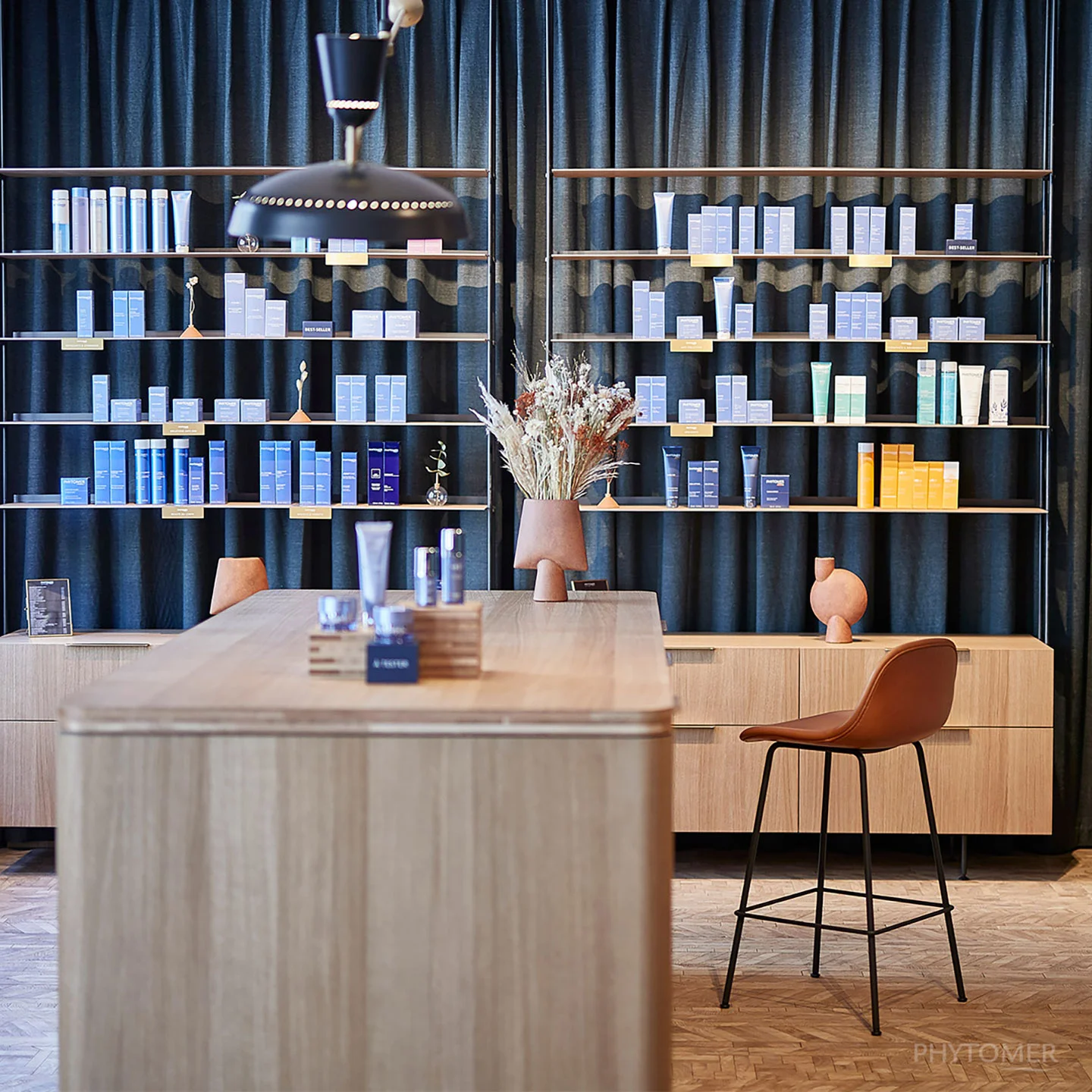
Biophilic design brings the materials, light and patterns of nature into buildings, on the idea that people feel calmer and work better when they are surrounded by them. The floor is the largest natural surface most rooms can have, and a real wood floor, especially end grain that shows the tree's rings, answers several of biophilic design's aims at once: a natural material, a natural pattern, warmth to the touch and a quieter room.
What is biophilic design?
The word comes from biophilia, the idea popularized by the biologist E. O. Wilson that humans have an inborn affinity for living things. Architects turned it into a design approach. The most widely used framework, Terrapin Bright Green's 14 Patterns of Biophilic Design, sorts the patterns into three groups: nature in the space (plants, water, daylight, fresh air), natural analogues (materials, shapes and patterns that come from or echo nature), and the nature of the space (views, refuge, a sense of discovery).
A wood floor belongs to the second group. It is not a plant or a view, but it is the material of a tree, and it carries the tree's own marks: grain, rings, knots and color shifts that never repeat exactly.
Do natural materials really reduce stress?
The evidence is encouraging but modest, and it is worth being honest about that. A number of studies, many from Japan and Austria, have found lower heart rate or blood pressure, or lower reported stress, in people who spend time in rooms with visible wood compared with rooms without it. Most of these studies are small and short, so they show a consistent tendency rather than a measured dose. Surveys agree on the simpler point: people describe rooms with wood as warmer, calmer and more welcoming.
A related idea comes from Japan's shinrin-yoku, or forest bathing, promoted there since the 1980s: slow, attentive time spent among trees. The research on it concerns real forests, not interiors, so a wood floor is not forest bathing. What interiors borrow from it is a set of cues: natural textures, filtered light, quiet and irregular, non-repeating patterns.
What makes a floor biophilic?
- Real material. A printed image of wood on vinyl or laminate copies the look but not the texture, the warmth under bare feet or the way the surface ages.
- Natural pattern without exact repetition. The eye relaxes on patterns that are ordered but never identical, like leaves or bark. Each piece of wood is different, and some floors are laid out to avoid an obvious repeat.
- Texture you can feel. Grain and rings give the surface a slight relief and the light a variation that flat, uniform materials lack.
- Quiet. Hard, reflective surfaces make a room echo; a floor that softens footsteps lowers the background noise of the whole space.
- Color from nature. Wood colored by light, smoke or fire, rather than by a stain, keeps its color through the depth of the material.
Why does end grain show nature most directly?
Most wood floors show the side of the tree: long grain lines running down each board. End grain is cut across the trunk, so the surface is made of the tree's growth rings, the record of its years, set side by side. It is the most literal way to put a tree underfoot.
Forêt takes the forest idea furthest: six planks and six patterns in endgrain oak, combined freely by the architect into a surface that holds together like a forest without ever repeating. Its projects include spas and hotels, where calm is the point.
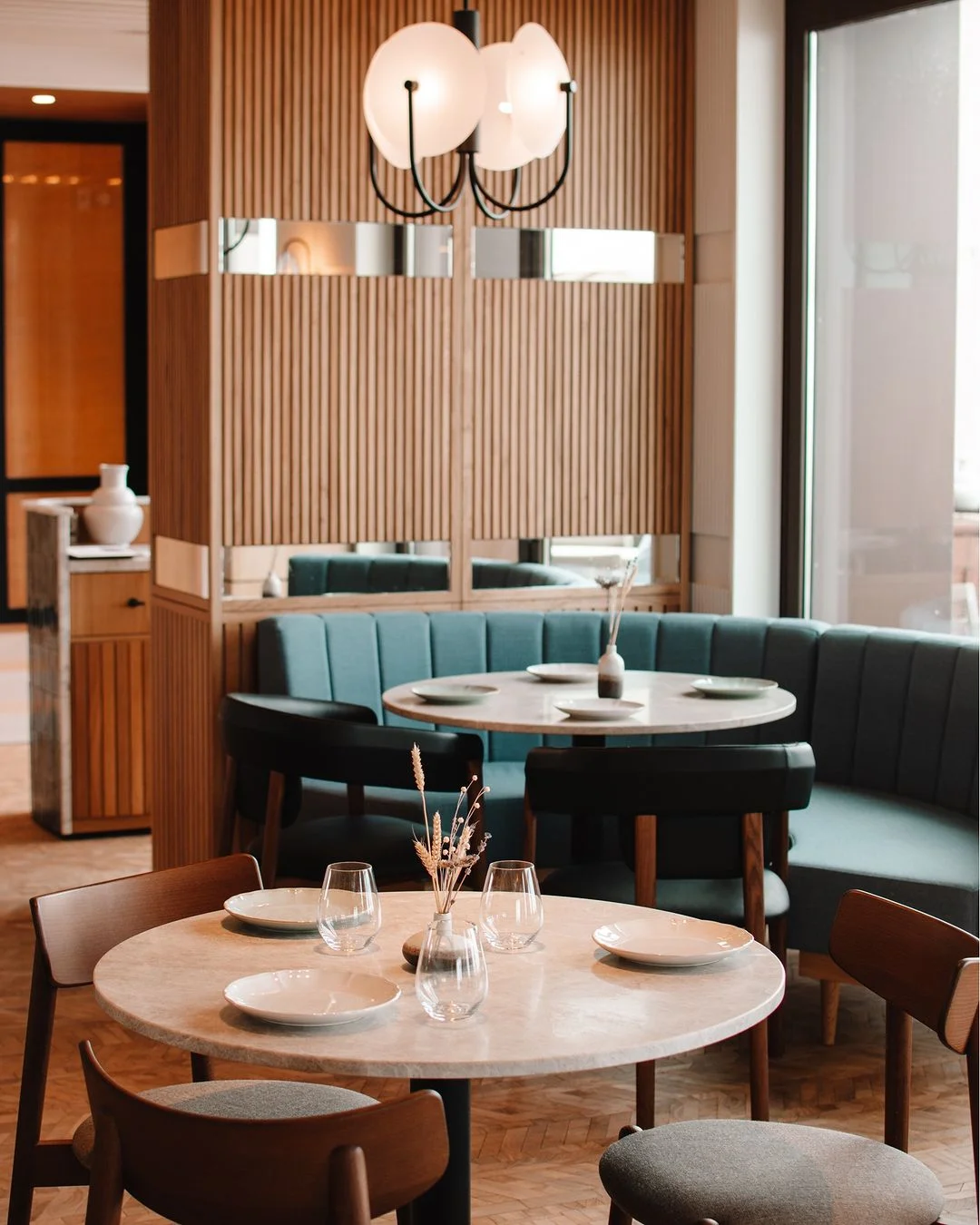
At the Aethos Ericeira Hotel in Portugal, Forêt Natural runs through the interior, the rings of each block visible at close range.
Opus takes a different route: endgrain oak in an organic pattern whose joins disappear, so the floor reads as one continuous natural surface rather than a set of tiles. Both come in three finishes and neither is ever stained: Natural, Smoke, smoked through the full depth of the oak, and Black, charred in the shou sugi ban tradition. The color comes from smoke and fire, not from a pigment.
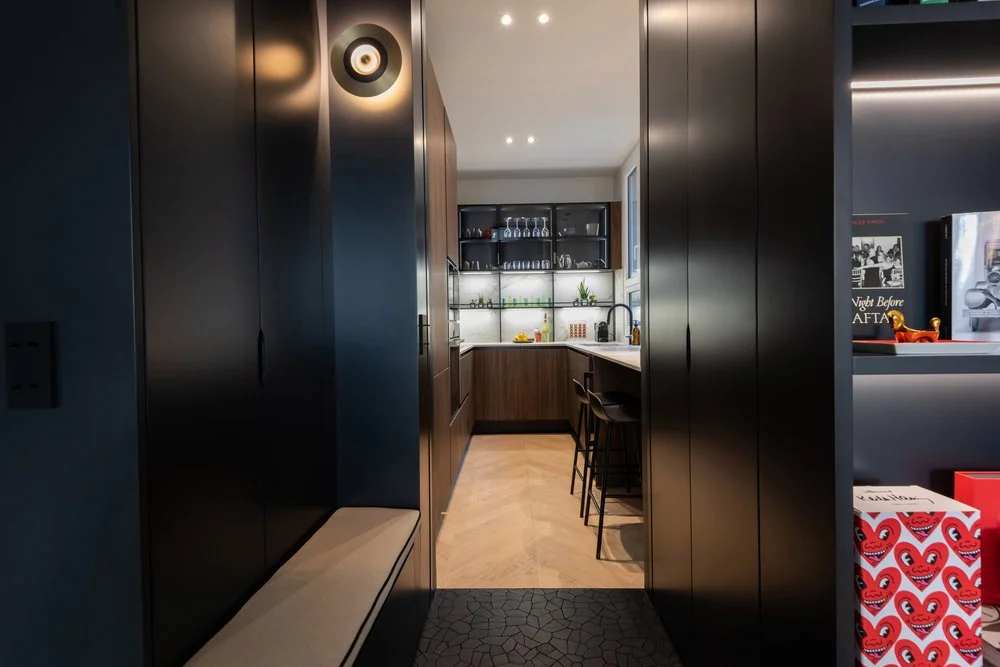
The private apartment in Paris by Real Design Paris uses Opus Black, where charring makes the ring pattern more graphic.
How does a wood floor change the sound of a room?
Noise is one of the quiet stresses of a building. Hard floors of stone, concrete or tile reflect sound, so footsteps and voices bounce around an open space. Wood is softer underfoot, and end grain in particular gives a duller, quieter footfall than boards laid on their side. A floor alone will not fix a loud room, but combined with soft furnishings and absorbent ceilings it makes a noticeable difference.
Building a biophilic room around the floor
The floor works best as part of a whole. Daylight matters most of all, then plants, views out and other materials with a natural origin: stone, clay plaster, linen and wool. Keep colors close to those of the materials themselves, and let the wood show its grain rather than covering it with a heavy, glossy coat.
Frequently asked questions
What is biophilic design?
An approach to architecture and interiors that brings nature into buildings: daylight, plants, water and views, and natural materials, shapes and patterns. The idea is that people feel calmer and more comfortable when surrounded by them.
What is the best flooring for biophilic design?
A real natural material that shows its origin: solid or layered wood with visible grain, stone, or cork. End grain wood is the most direct, because the surface is made of the tree's growth rings. Printed imitations copy the look but not the texture.
Is there scientific evidence for biophilic design?
Yes, but it is modest. Several studies have found lower heart rate, blood pressure or reported stress in rooms with visible wood, and people consistently describe such rooms as warmer and calmer. Most studies are small, so they show a tendency rather than a precise effect.
What is forest bathing and how does it relate to interior design?
Forest bathing, or shinrin-yoku, is a Japanese practice of slow, attentive time spent among trees. Interiors cannot reproduce a forest, but they borrow its cues: natural textures, filtered light, quiet and irregular, non-repeating patterns.
Biophilic floors by OscarOno Paris
OscarOno Paris's endgrain floors put the growth rings of European oak underfoot. Forêt and Opus share one construction, an 8 mm endgrain oak top layer on 12 mm birch plywood, come in Natural, Smoke and Black with no stain, are rated usage class 34 for very heavy commercial traffic, carry a Cfl-s1 fire rating and are FSC and PEFC certified. To feel the texture and see the rings in your own light, order samples. Spec sheets, CAD and 3D files are in the library.
More from the Atelier
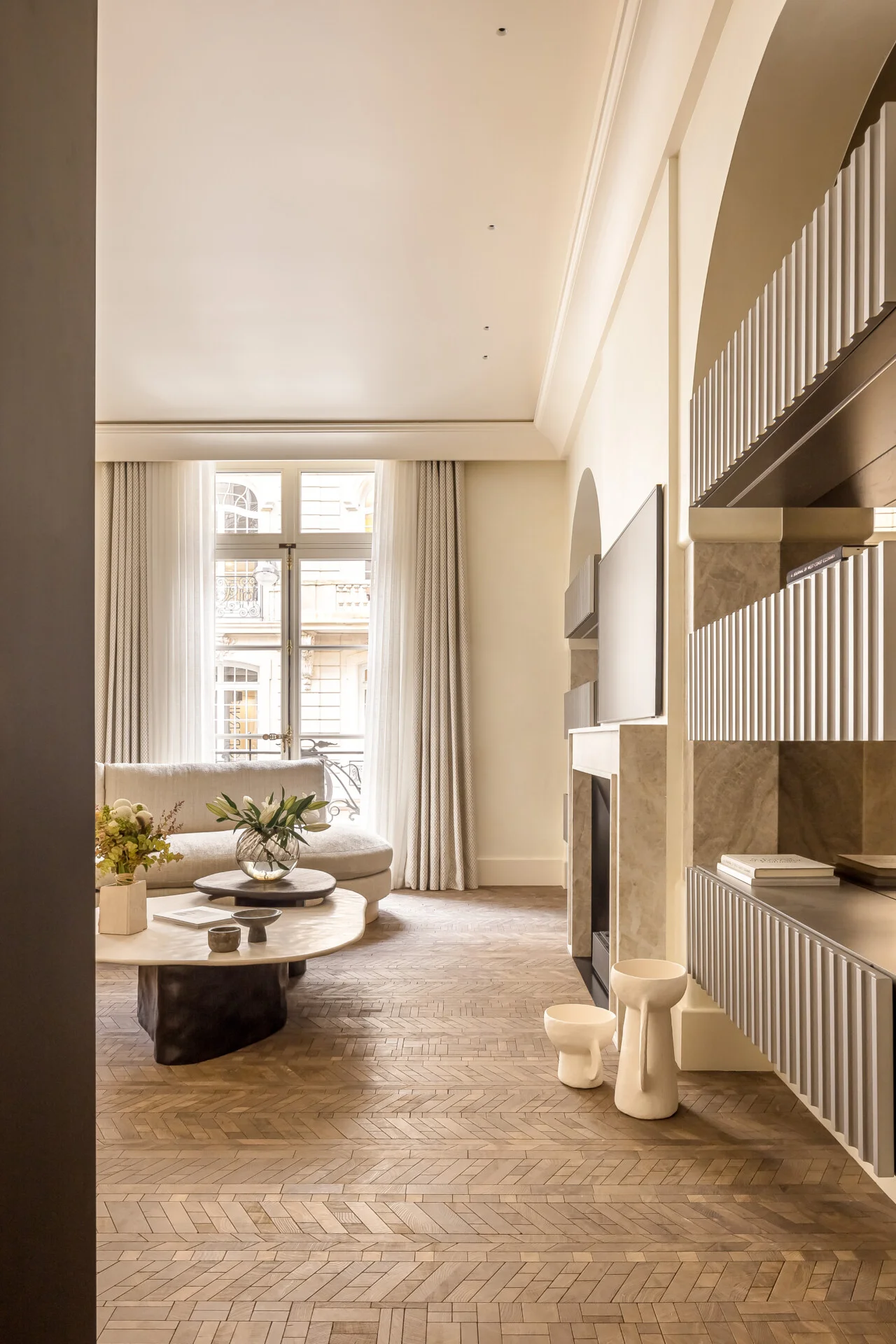
What Is Wood Terrazzo Flooring? An Architectural Guide
Wood terrazzo flooring unites reclaimed endgrain oak offcuts and mineral ground, creating continuous, tactile surfaces designed for circular luxury interiors.
Modern Versailles Parquet: The Classic Panel in Today's Interiors
The woven oak panel first laid in a palace still works in a contemporary room. What changes is the color, the construction and how freely the weave is drawn.
Wood Floor Interior Design: Pairing Oak with Linen, Stone and Brass
Start with the floor, then balance it: stone for weight, linen for softness, brass for light. A practical guide to designing a room around wood.