
What Is Wood Terrazzo Flooring? An Architectural Guide
How atelier oak offcuts and mineral binders create continuous circular surfaces
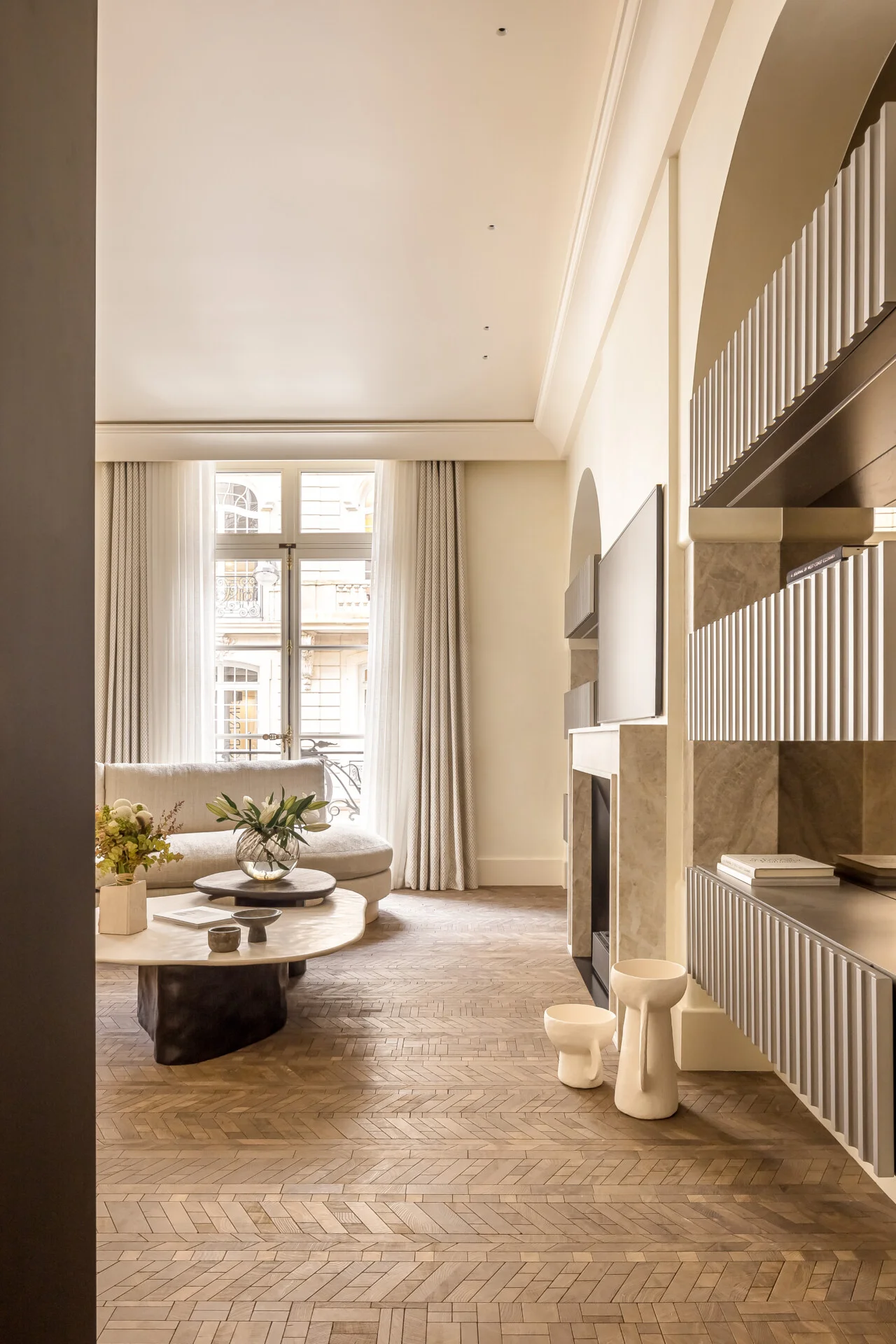
Wood terrazzo flooring is an architectural composite surface that suspends solid endgrain timber fragments within a continuous mineral matrix. Rather than pouring stone aggregate into cement or resin, this approach embeds precision timber offcuts into a binder, creating a smooth floor that unites the compressive strength of endgrain wood with the monolithic look of traditional terrazzo. Interior architects specify the material for high-traffic environments that demand tactile warmth alongside circular, low-waste timber craftsmanship.
How does wood terrazzo flooring differ from traditional terrazzo?
Wood terrazzo flooring replaces marble chips and stone aggregates with endgrain timber fragments. While mineral terrazzo creates a cool, rigid expanse, embedding wood fragments introduces natural acoustic softening and thermal warmth underfoot without sacrificing high traffic resistance.
Traditional terrazzo traces its heritage to sixteenth-century Venetian craftsmen who pressed discarded marble fragments into clay bases. Wood terrazzo reinterprets that historical logic for contemporary architecture. By substituting porous, organic timber for crystalline minerals, the floor develops a subtle give and a softer sound underfoot. Walking across timber terrazzo produces none of the sharp clatter typical of poured aggregate or polished concrete.
The orientation of the wood fragments is central to performance. Cutting wood across the growth rings yields endgrain blocks, where timber fibers stand vertically like the bristles of a brush. As detailed in our guide to what is end grain flooring, this vertical fiber structure withstands tremendous downward pressure. In a terrazzo composite, endgrain fragments resist compressive impact without splitting or splintering along the grain line.
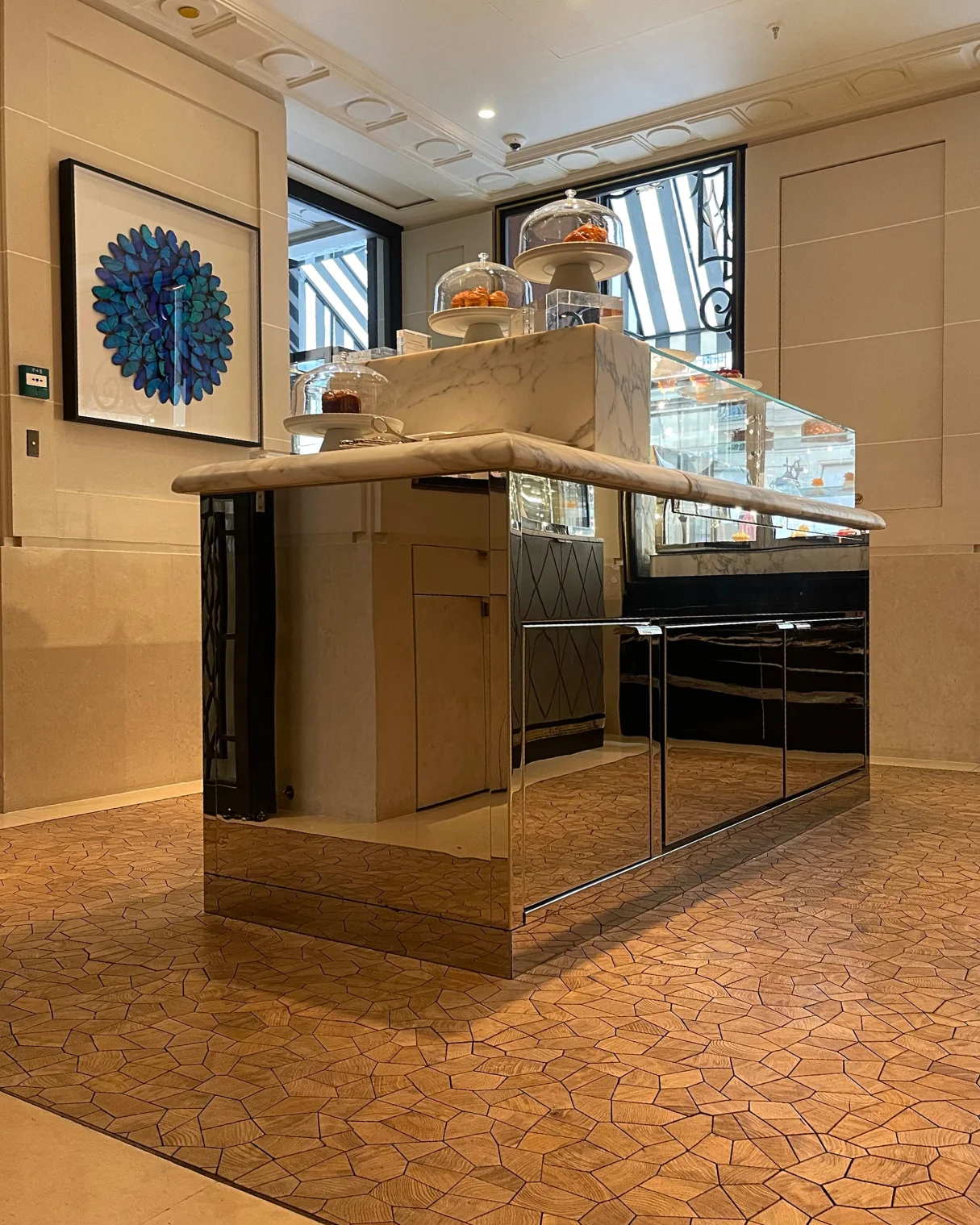
Why is reclaimed oak terrazzo gaining traction in luxury interiors?
Reclaimed oak terrazzo offers interior architects a circular alternative to virgin timber floors by repurposing atelier offcuts into refined architectural planes. Because endgrain cutting produces small, dense offcuts during the production of complex patterns, gathering these remnants into a mineral compound eliminates workshop waste while yielding an intricate surface pattern.
In standard parquet manufacturing, trimming irregular sections creates offcuts that are too small for standard planks but structurally flawless. Leading ateliers save these clean oak pieces rather than discarding them. Incorporating these offcuts into a mineral matrix treats production remnants as primary design elements rather than industrial scrap. This approach aligns directly with circular luxury, providing projects with authentic ecological provenance.
Beyond sustainability, reclaimed oak terrazzo provides an organic visual cadence that cannot be manufactured artificially. Each oak fragment preserves its distinct annual growth rings, medullary rays, and tonal shifts. When suspended in a neutral mineral ground, these ring patterns read as small geographical maps across the floor, breaking up large commercial expanses with quiet, natural variation.
How does wood terrazzo compare to conventional floor coverings?
Specifying composite surfaces requires comparing maintenance, acoustic response, and traffic tolerance against traditional options. The table below outlines how wood terrazzo performs relative to standard mineral terrazzo and conventional flatgrain oak planking.
| Performance Attribute | Wood Terrazzo Flooring | Traditional Mineral Terrazzo | Flatgrain Oak Planks |
|---|---|---|---|
| Surface Composition | Endgrain oak fragments in mineral matrix | Marble or granite chips in cementitious binder | Solid or engineered longitudinal oak boards |
| Acoustic Comfort | Naturally damped, soft footfall acoustics | Reflective, prone to audible resonance | Moderate acoustic absorption |
| Compressive Hardness | High vertical fiber compressive resistance | Extremely rigid, mineral hardness | Subject to indentation across soft grain fibers |
| Material Provenance | Circular upcycling of workshop timber offcuts | Quarried mineral aggregate | Harvested primary timber lengths |
| Visual Character | Continuous surface with exposed growth rings | Flecked stone aggregate matrix | Linear grain lines and board seams |
What technical considerations define sustainable architectural timber surfaces?
Sustainable architectural timber surfaces made from wood and mineral binders must balance the natural movement of timber with the rigidity of the matrix. Setting individual endgrain blocks by hand with controlled separation ensures that ambient humidity shifts do not cause surface cracking or dislodgement.
Wood absorbs and releases atmospheric moisture as seasons shift. Flatgrain timber expands primarily across its width, but endgrain wood breathes uniformly from its open vascular tubes. To prevent tension between the expanding wood and the surrounding binder, master craftsmen arrange every offcut manually rather than dumping aggregate into a wet slurry. Clean spacing lines between fragments absorb microscopic expansion without buckling.
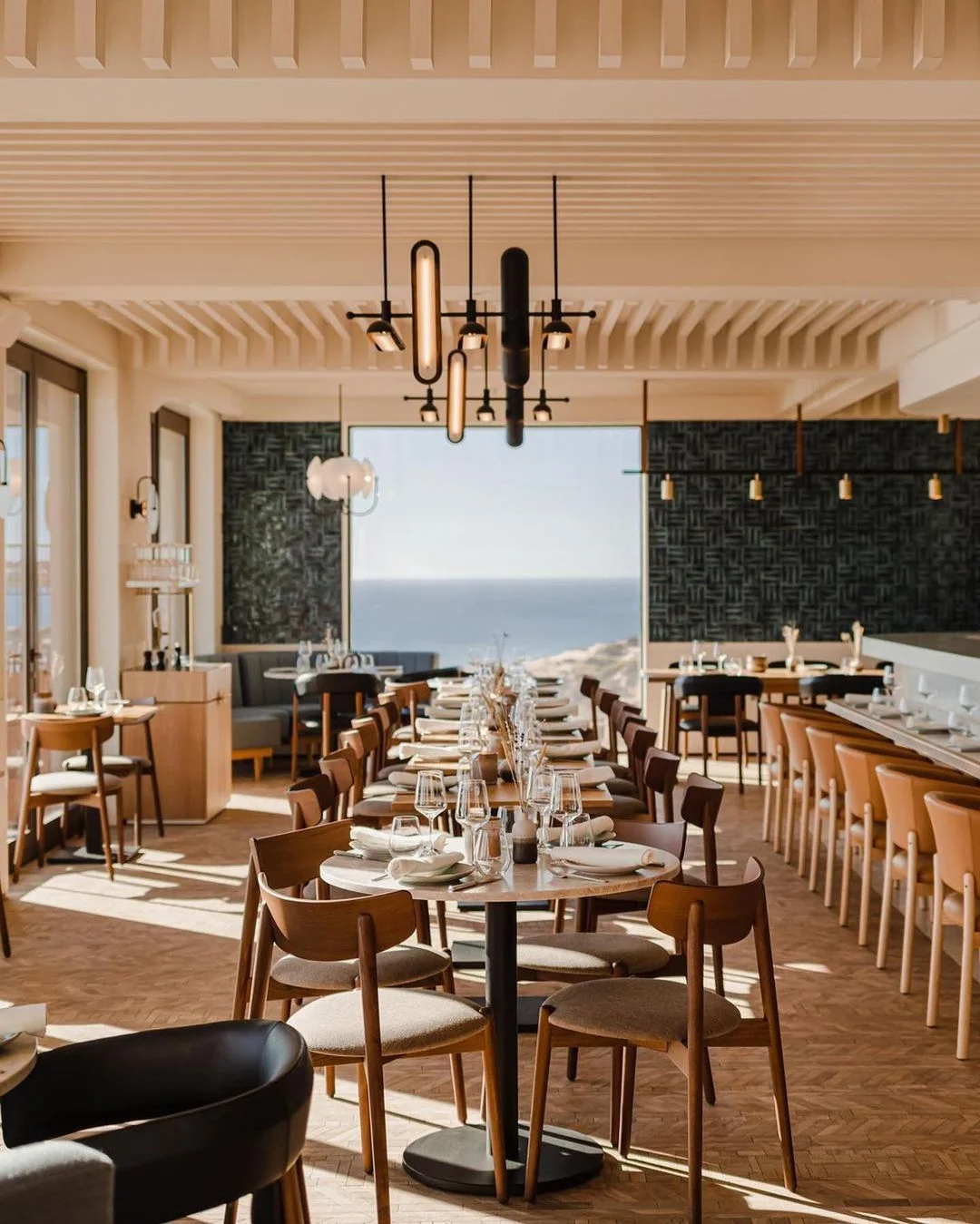
Once laid, the entire surface is ground flush and sealed to establish a uniform plane. The resulting floor provides exceptional commercial durability, qualifying for demanding hospitality and retail environments like those seen at Hotel Dame des Arts and Aethos Ericeira Hotel. Because the endgrain fibers run deep into each fragment, normal foot traffic polishes the surface over time rather than wearing through a fragile veneer.
How does OscarOno Paris build the Terra wood terrazzo collection?
OscarOno Paris crafts Terra as an architectural wood terrazzo composed entirely by hand from endgrain oak fragments. The pieces are reclaimed directly from the atelier production of our Opus and Forêt collections, transforming high-grade oak offcuts into a distinct, monolithic surface.
Each fragment of oak in Terra is placed individually, oriented, and set with a clean separation line before being ground in a mineral base. The current offering features the mineral finish Sable, with Noir joining the palette in the future. Terra achieves Usage class 33 for heavy commercial traffic, holds a Cfl-s1 fire rating, and is certified under both FSC and PEFC standards.
To explore how Terra integrates into commercial or private residential specifications, architects and designers can Order samples directly from the atelier. Full technical details, CAD blocks, and 3D textures are available in the Library.
Frequently asked questions
Is wood terrazzo flooring durable enough for commercial traffic?
Yes. By utilizing endgrain oak fragments set into a rigid mineral matrix, wood terrazzo withstands heavy commercial foot traffic and achieves Usage class 33 certification.
How are the endgrain fragments arranged in wood terrazzo?
Rather than pouring offcuts into an uncontrolled slurry, craftspeople position each oak fragment by hand to maintain even spacing lines that absorb natural timber expansion.
What finishes are available in the OscarOno Paris Terra collection?
Terra is currently available in the Sable finish, with a Noir mineral matrix option in development.
Where do the timber fragments in Terra originate?
Terra is built entirely from the solid endgrain oak offcuts generated during the production of the Opus and Forêt collections in the OscarOno Paris atelier.
More from the Atelier

Modern Versailles Parquet: The Classic Panel in Today's Interiors
The woven oak panel first laid in a palace still works in a contemporary room. What changes is the color, the construction and how freely the weave is drawn.
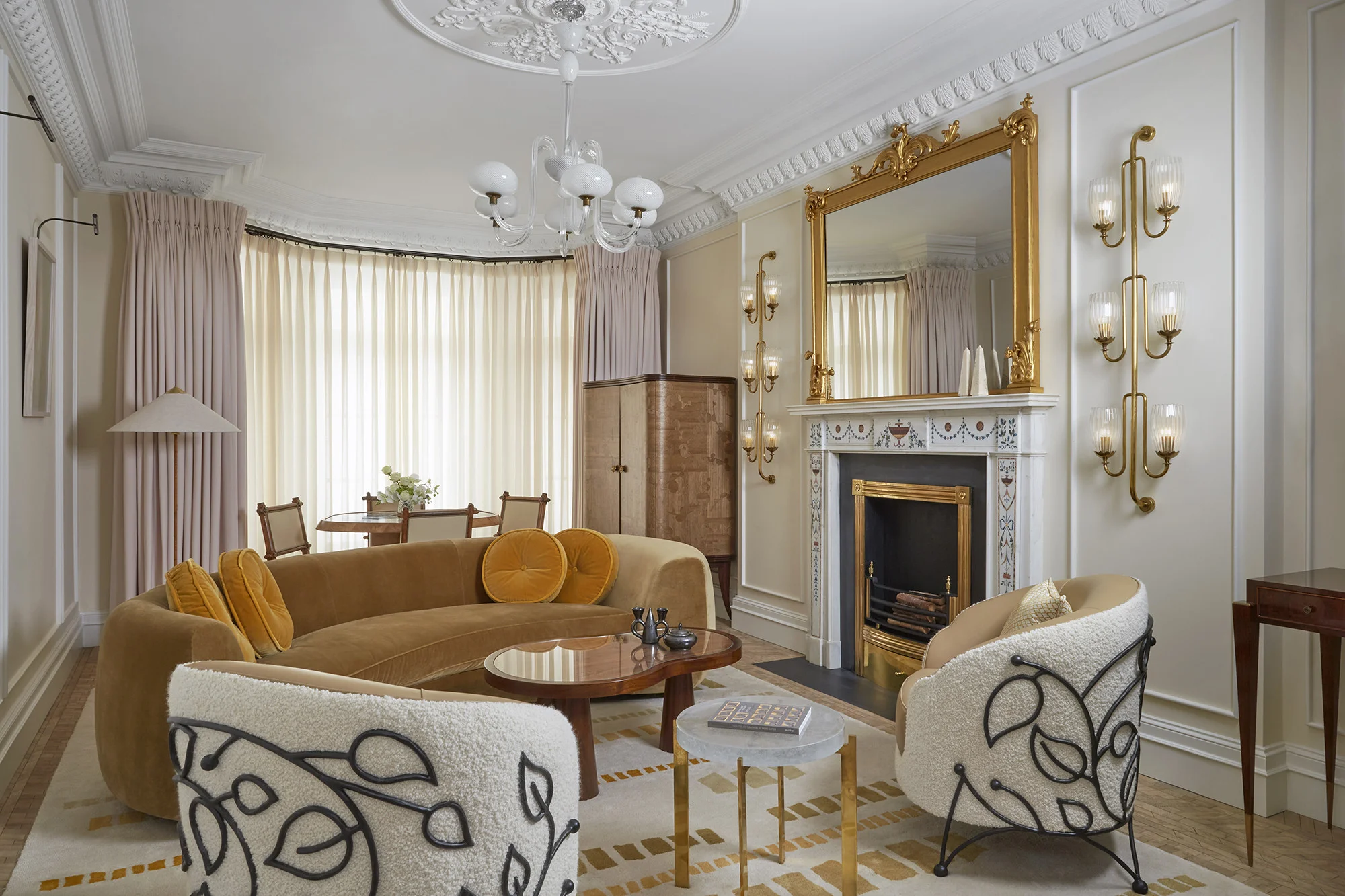
Wood Floor Interior Design: Pairing Oak with Linen, Stone and Brass
Start with the floor, then balance it: stone for weight, linen for softness, brass for light. A practical guide to designing a room around wood.
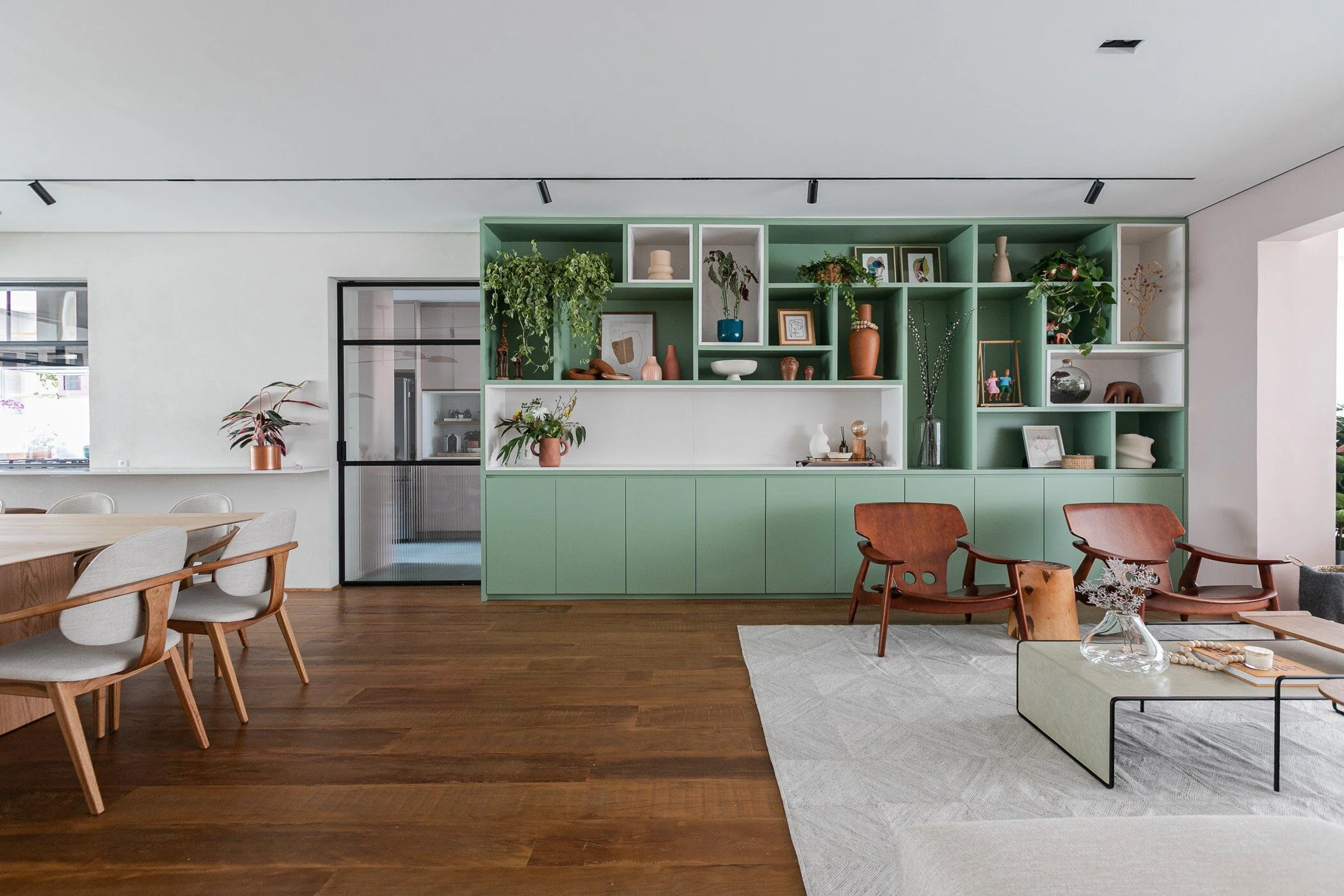
Wood Floor Direction: Which Way Should Boards Run?
Along the long wall and toward the light, in most rooms. How light, the entrance, room shape and structure decide which way wood floor boards run.