
Wood Floor Interior Design: Pairing Oak with Linen, Stone and Brass
One warm floor, one cool heavy material, one soft one, one bright accent.
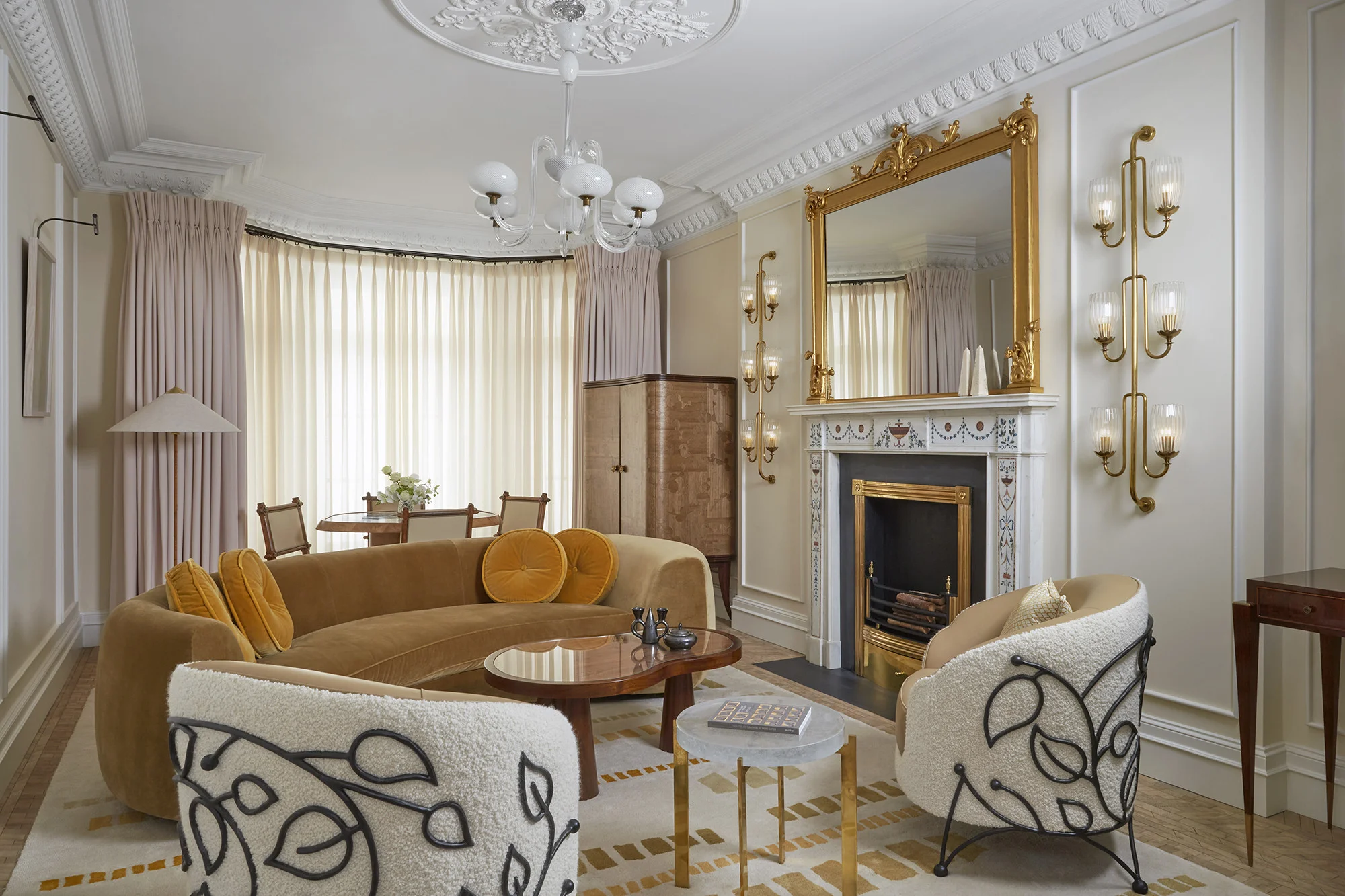
Good wood floor interior design starts with the floor itself, because it is the largest surface in the room and the hardest to change later. Choose its tone and pattern first, then add materials that contrast with it: stone for weight and coolness, linen for softness, and a little brass for reflection. One warm floor, one cool heavy material, one soft one and one bright accent is a combination that rarely fails.
Why design the room from the floor up?
A floor covers the whole room, it is in every view, and it decides how light moves around the space: a pale floor bounces daylight up onto the walls, a dark one absorbs it and makes the furniture stand out. Paint and fabric can be changed in a weekend; a floor is chosen for decades. Settling it first gives every other choice something fixed to answer to.
It also sets the temperature of the room. Wood reads warm next to almost anything, so the other materials are there to balance it: something cooler and heavier, something softer, and something that catches the light.
Choosing the floor: tone and pattern
Tone. Light floors make rooms brighter and calmer and suit pale stone and white walls. Mid-tone oak is the most forgiving and works with warm and cool palettes alike. Dark floors, smoked or charred, make a room more graphic and let light-colored furniture stand out.
Pattern. A straight plank is the quietest base; Droit, a straight oak plank in 150 mm or 190 mm widths and twelve lacquered colors, lets stone and textiles carry the room. A composed floor carries texture on its own: Forêt is built from six planks and six patterns in endgrain oak, combined freely, in Natural, Smoke or Black. With a floor like that, keep the other surfaces simpler so they do not compete.
Stone and wood: contrast the temperature, match the sheen
Stone brings what wood lacks: weight, coolness and a mineral surface. The pairing works best when the two contrast in temperature but agree in finish. A matte or lightly sheened floor sits well with honed stone; a polished marble next to a matte floor looks like it came from another room.
Let one of the two lead. If the stone is strongly veined, keep the floor calm and the grain even; if the floor is busy, choose a quiet stone. Where they meet, a straight, flush line looks deliberate; a thin metal profile can make the transition if the levels differ.
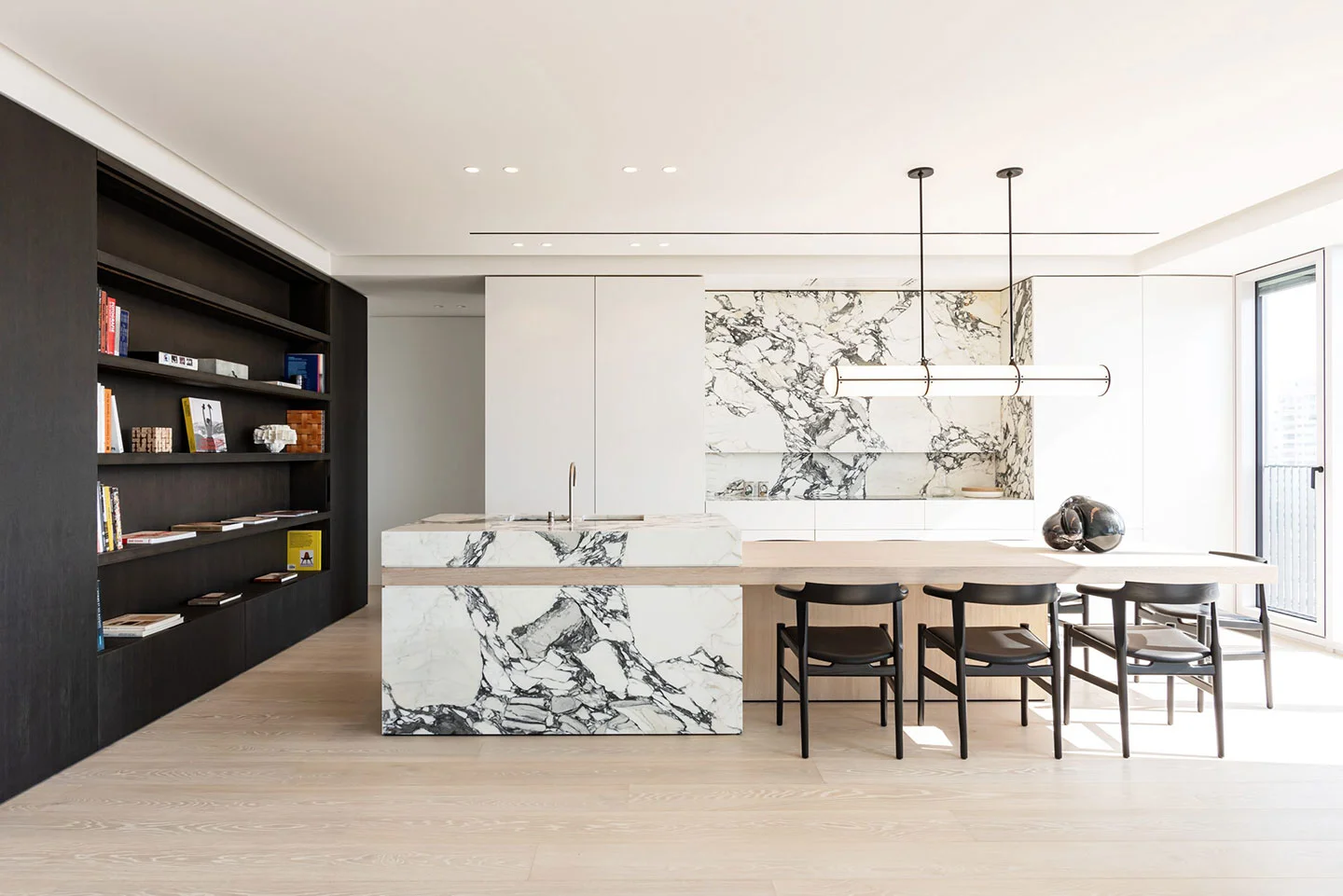
In this Tel Aviv apartment laid in Droit, a very pale oak floor lets a heavily veined marble island take the lead, with black joinery and chairs as the third tone.
Linen and wood: the soft layer
Wood and stone are both hard. A room made only of them looks severe and sounds it: footsteps and voices bounce. Linen curtains, upholstered seating and a rug over part of the floor absorb that sound and add a loose, irregular texture that contrasts with the order of boards and stone.
Keep the textiles in the same family of tones as the floor, a shade or two lighter or darker, and let the texture provide the interest rather than the color. Daylight filtered through linen also falls softly across the floor and brings out the grain.
Brass and wood: the accent
Brass works best in small doses: lamp bases, wall lights, door and cabinet hardware, a table frame, a slim profile where two floors meet. Its warm yellow reflection picks up the warm tones in oak, so on a natural or honey floor it reads as part of the same palette; on a smoked or black floor it stands out much more strongly.
Unlacquered brass darkens and changes with handling, as an oiled wood floor gathers a patina with use, so the two age together. Lacquered brass stays bright. Choose one and keep it consistent through the room.
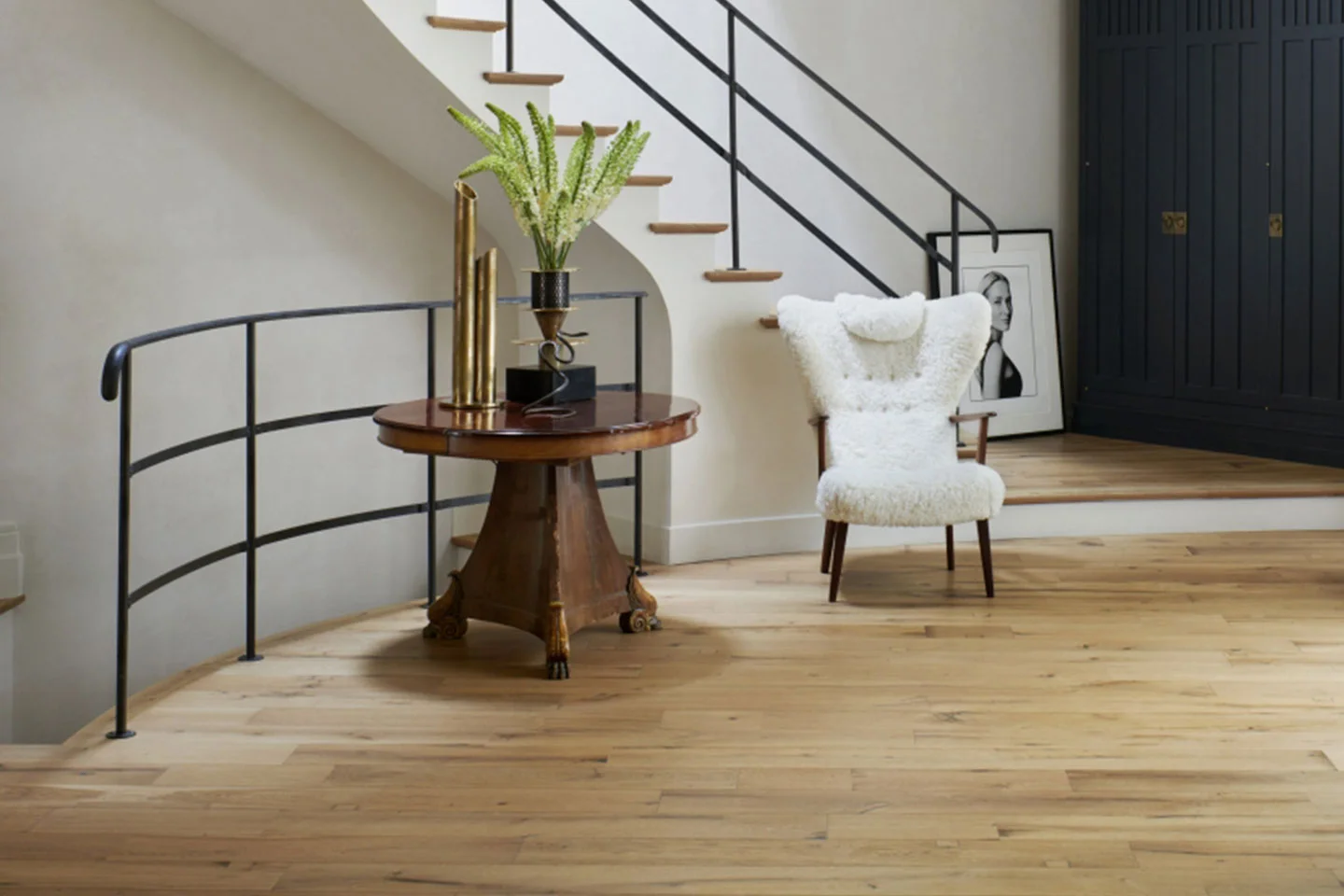
Here, in a Saint-Germain residence laid in Droit, brass vases, a sheepskin chair and black ironwork all sit on a warm, honey-toned oak floor: one soft, one bright and one dark accent against one warm base.
A quick pairing guide
| Floor | Stone | Textiles | Metal |
|---|---|---|---|
| Light natural oak | Limestone, pale travertine, white marble | Off-white and oatmeal linen | Brushed brass, pale bronze |
| Mid-tone or honey oak | Travertine, warm gray stone | Natural linen, wool in earth tones | Brass, aged bronze |
| Smoked oak | Gray limestone, dark-veined marble | Stone-colored linen, charcoal wool | Darkened brass, blackened steel |
| Black oak | Pale stone for contrast, or bluestone for a dark room | White and natural linen | Polished brass, steel |
Common mistakes
- Too many woods. Three or four wood tones in one room fight each other. Keep to the floor plus one or two clearly different woods.
- Furniture that matches the floor. A table in the exact tone of the floor disappears into it. Go lighter, darker or different.
- Everything shiny. Polished stone, gloss lacquer and polished brass together look hard. Let most surfaces be matte and keep the shine for the accent.
- No soft layer. Without textiles, a wood and stone room is loud and cold, however good the materials.
Frequently asked questions
What color wood floor goes with everything?
A mid to light natural oak with no strong orange or red cast is the easiest floor to design around. It sits between warm and cool, so it accepts both pale stone and dark furniture, and it shows less dust and wear than very dark or very white floors.
What stone goes with light oak floors?
Warm, honed stones such as limestone and travertine sit quietly with light oak because they share its tone. For more contrast, a white marble with gray or dark veining works well, as long as the floor itself stays calm.
Should wood furniture match the wood floor?
No. Furniture in exactly the floor's tone tends to disappear into it. Choose wood that is clearly lighter or darker, or a different species with a different grain, so each piece reads on its own.
How do you make a room with a wood floor feel warmer?
Add soft surfaces: linen curtains, upholstered seating and a rug over part of the floor. They absorb sound that bounces off wood and stone, and their texture contrasts with the hard surfaces. Warm, low lighting that rakes across the floor also brings out the grain.
Floors to design around, by OscarOno Paris
For a calm base, Droit is flatgrain select oak, 12 mm with a 4 mm oak top layer, in 150 mm or 190 mm widths and twelve lacquered colors. For a floor that carries the room's texture itself, Forêt is endgrain oak, an 8 mm top layer on 12 mm birch plywood, in Natural, Smoke, smoked through the full depth of the oak, or Black, charred in the shou sugi ban tradition. You can see Forêt in a room of linen, marble and brass at Claridge's in London. Stone, fabric and metal only make sense next to the real floor, so order samples and lay them out together, and find spec sheets, CAD and 3D files in the library.
More from the Atelier
What Is Wood Terrazzo Flooring? An Architectural Guide
Wood terrazzo flooring unites reclaimed endgrain oak offcuts and mineral ground, creating continuous, tactile surfaces designed for circular luxury interiors.
Modern Versailles Parquet: The Classic Panel in Today's Interiors
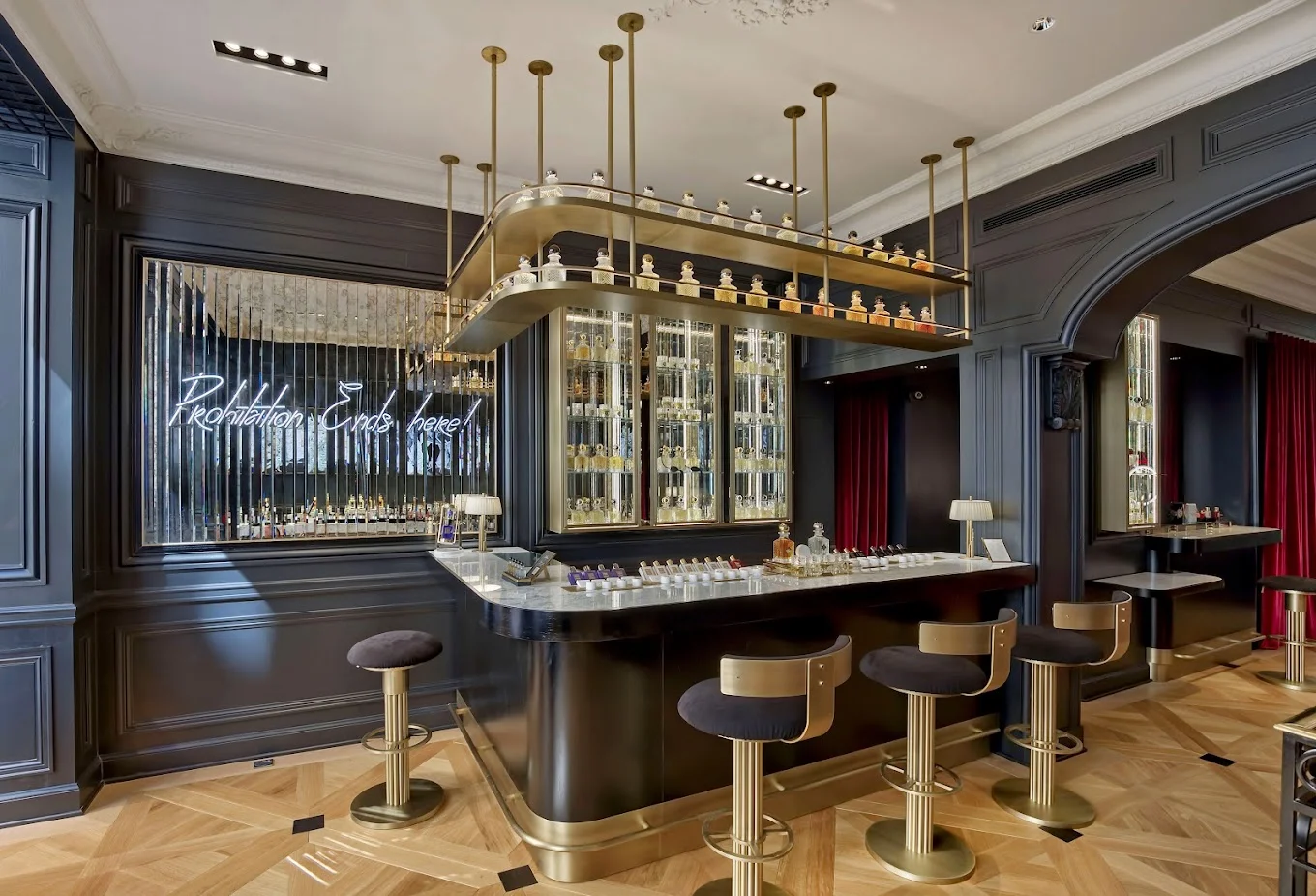
The woven oak panel first laid in a palace still works in a contemporary room. What changes is the color, the construction and how freely the weave is drawn.
Wood Floor Direction: Which Way Should Boards Run?
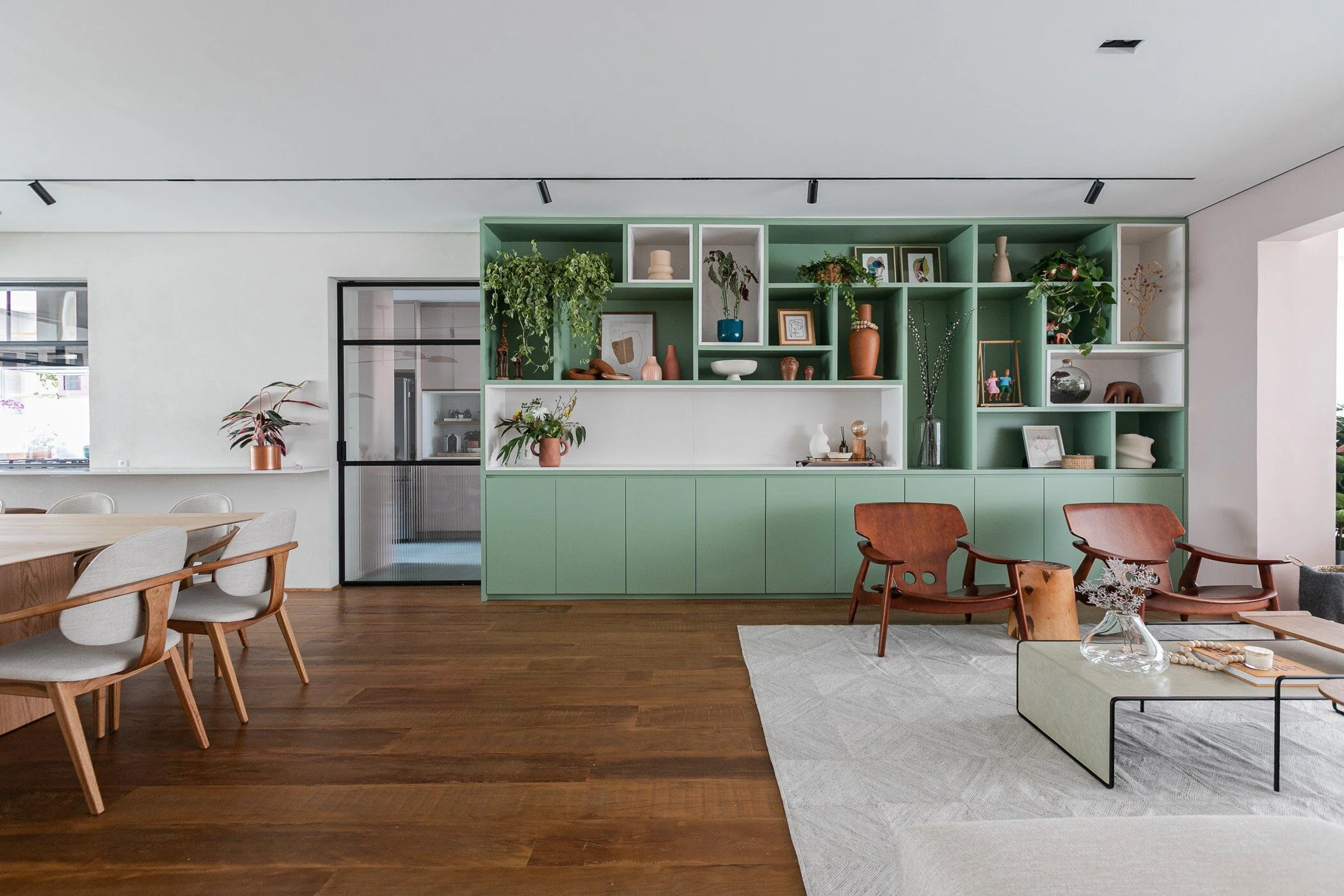
Along the long wall and toward the light, in most rooms. How light, the entrance, room shape and structure decide which way wood floor boards run.