
White Oak Flooring: Bleached, Limed and Whitewashed Finishes
Four ways to make oak paler, and what each does to the grain.
White oak flooring usually means one of two things: oak from the white oak group, which is naturally pale, or an oak floor finished to look paler still. The second is done in four main ways: whitewashing lays a thin white coat over the surface, liming packs white into the open grain, bleaching removes the wood's own color, and lye treatment keeps oak from yellowing. Each gives a different white, and each needs a finish that will not turn yellow on top.
What is white oak flooring?
Botanically, the white oaks are one group of oak species. American white oak is the one most North American readers mean, and the common European oaks belong to the same group. They are pale straw to light brown, with fine rays and a closed, tough structure. Red oak, the other large group, has a pinker tone that shows through white finishes. Most people searching for white oak flooring want a light, calm floor, and that comes as much from the finish as from the species.
Whitewashed, limed and bleached: what is the difference?
Whitewashed
A thin, translucent white coat over the whole surface. It was once made from slaked lime and chalk; today it is usually a diluted white paint, stain or white oil. Because the pigment sits on top, it softens the grain and gives the floor a milky, even look.
Limed
Liming works only on open-grained woods such as oak and ash. The surface is brushed to open the pores, a white paste is rubbed in, and the excess is wiped off the surface. The white stays in the grain and the wood around it keeps close to its own color, so the pattern of the grain is outlined in white. It is the most graphic of the four.
Bleached
Bleaching adds no pigment. A two-part wood bleach, usually sodium hydroxide followed by hydrogen peroxide, breaks down the wood's own color and leaves a pale, neutral base. It is the most aggressive treatment, wets the wood heavily, and is normally followed by a clear or lightly tinted finish.
Lye-treated
The Scandinavian method. Lye is alkaline and stops oak from yellowing, giving a cool, pale base; it is traditionally followed by a white soap finish that is renewed as the floor is cleaned. The result is soft and very matte, but it needs regular care.

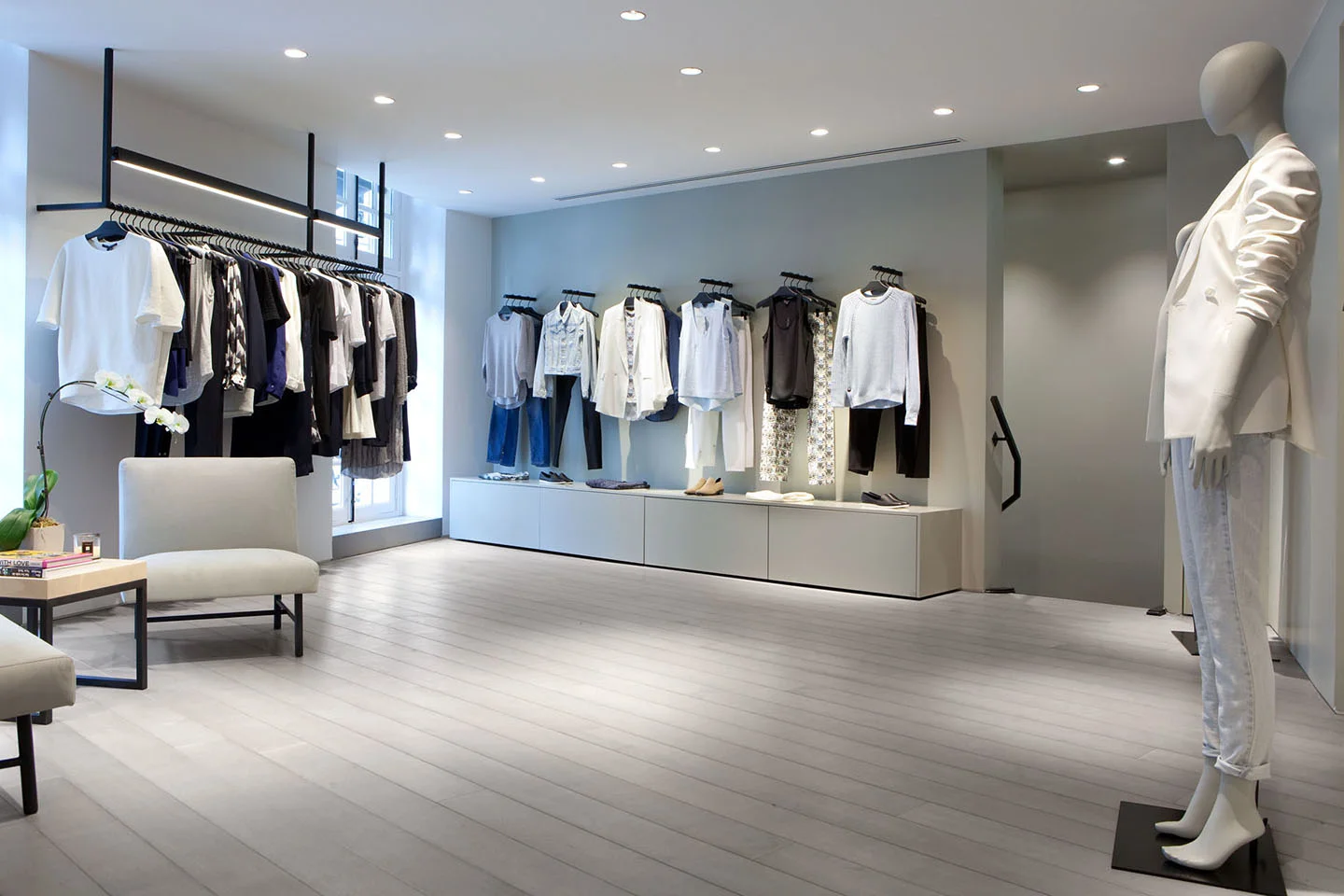
A pale floor can be calm enough for an office: the Christian Dior offices in Paris are laid in Droit in a soft, pinkish white.
Bleached, limed, whitewashed and lye compared
| Technique | How it works | What you see | Upkeep |
|---|---|---|---|
| Whitewash | Thin white coat over the surface | Milky, even; grain softened | Depends on the topcoat |
| Liming | White paste in brushed, open pores | Grain outlined in white | Needs a non-yellowing seal |
| Bleaching | Removes the wood's own color | Pale, neutral, no pigment | Depends on the topcoat |
| Lye and soap | Alkaline treatment, then white soap | Cool, very matte, soft | Regular soap washing |
Why do pale wood floors turn yellow?
Two reasons. Sunlight slowly changes the lignin in wood, and pale wood shows the shift more than dark wood. And some finishes, oil-based varnishes in particular, turn amber themselves as they age. A pale floor stays pale longest with a water-based or non-yellowing finish, ideally with UV inhibitors, and with strong sun filtered by blinds or sheer curtains. Moving rugs now and then keeps the color even.
Which woods take white finishes well?
Oak and ash are the classic choices: open-grained, pale and without a strong red tone, so white sits cleanly on them. Red oak tends to turn pinkish under white, and dark woods such as walnut look chalky and gray rather than pale. If you want a white floor, start from a pale oak.
Pale oak without on-site treatment
Bleaching and liming are skilled, wet, sometimes messy work. The alternative is a floor whose pale tone is part of its finish. OscarOno Paris's straight plank, Droit, and its herringbone, Rompu, come in the same twelve lacquered colors, from natural oak through several whites to dark tones, on flatgrain oak in select grade.
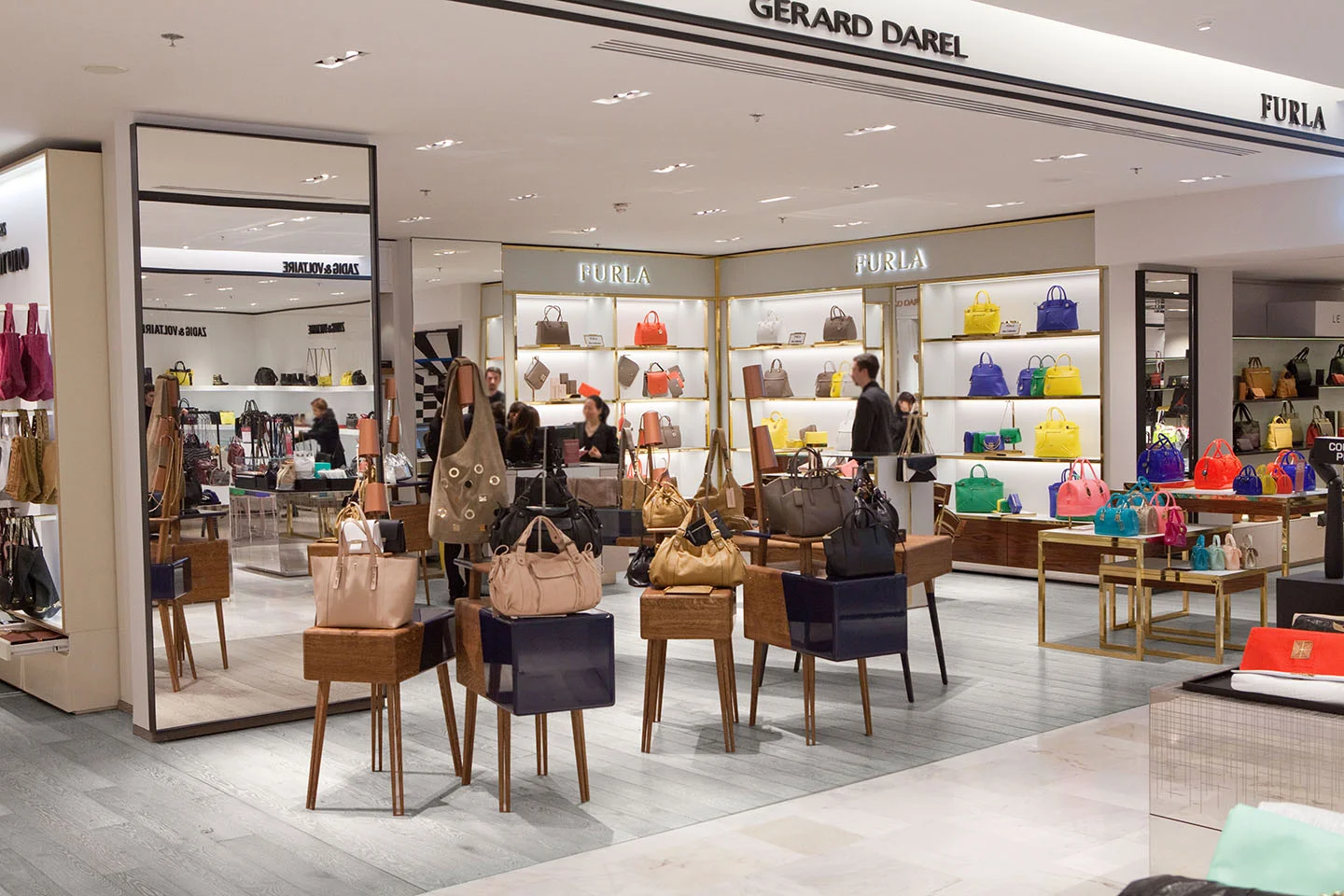
At Le Printemps in Paris, Rompu is laid in a whitened finish across a busy retail floor.
Frequently asked questions
What is the difference between limed and whitewashed oak?
Liming rubs white paste into the brushed, open pores of the oak and wipes the surface clean, so only the grain turns white. Whitewashing lays a thin white coat over the whole surface, which softens the grain rather than outlining it.
Can you use household bleach to lighten a wood floor?
No. Household chlorine bleach removes stains and dyes but does little to the wood's own color. Lightening the wood itself takes a two-part wood bleach, usually sodium hydroxide followed by hydrogen peroxide, and it is best done by a professional.
Will a white oak floor turn yellow?
All wood changes in daylight, and oil-based finishes amber as they age. A water-based or non-yellowing finish with UV inhibitors, plus filtered sun, keeps a pale oak floor pale for much longer.
Is European oak a white oak?
Yes. Botanically, the common European oaks belong to the white oak group, as does American white oak. Both are pale, closed-structured woods that take light finishes well.
Pale oak floors by OscarOno Paris
Droit and Rompu share one specification: flatgrain select oak, 12 mm with a 4 mm top layer, 150 mm or 190 mm wide, twelve lacquered colors. Both are rated usage class 33 for heavy commercial traffic, carry a Cfl-s1 fire rating and are FSC and PEFC certified. White tones change more with the light than any other color, so judge them in your own room: order samples, and find spec sheets, CAD and 3D files in the library.
More from the Atelier
Protecting End Grain Wood Block Flooring from UV Fading
Discover the science of oak photodegradation and how to protect end-grain wood floors from UV fading using advanced varnishes and architectural design.
Parquet Floor Restoration: Is an Old Parquet Floor Worth Saving?
Loose blocks, gaps, stains and a worn finish can all be put right. How to tell whether an old parquet floor is worth restoring, what the work involves, and when it is not.
Squeaky Wood Floors: Why They Squeak and How to Fix Them
A squeak is friction: wood on wood, wood on a nail, or a subfloor moving on its joists. Find which one it is and the fix follows.