
How to Clean a Parquet Floor: A Simple Care Routine
Most damage to a wood floor comes from grit and water, not from age. The routine is built around keeping both off it.

To clean a parquet floor, remove dry grit often with a vacuum on its soft-brush setting or a soft broom, and wash it no more than once a week with a microfiber mop wrung out until it is barely damp, using a pH-neutral cleaner made for wood floors. Never use a steam mop, standing water, bleach, ammonia or vinegar. The finish on your floor, lacquered or oiled, decides the rest.
That is the whole routine. The rest of this guide explains why each step matters and what changes from one kind of floor to another.
How do you clean a parquet floor day to day?
Dry cleaning does most of the work. Sand and grit carried in on shoes act like sandpaper under foot traffic, and they wear the finish long before anything else does. Vacuum with a soft-brush head, or sweep with a soft broom, as often as the room needs it: daily in a hallway or kitchen, weekly in a bedroom.
Turn off the beater bar or rotating brush if your vacuum has one, and avoid hard plastic wheels. Work along the boards, so the brush follows the joints. On a herringbone or chevron floor, sweep along the main axis of the room rather than chasing every board.
A straight plank floor such as Droit, our straight oak board, needs nothing more on most days. Patterned and endgrain floors have more joints, so a brush head that reaches into them helps.
How do you wash a parquet floor without damaging it?
Water is the one thing wood does not forgive. Washing is about using as little of it as possible:
- Vacuum first, so you are not dragging grit around with a wet mop.
- Dilute a pH-neutral wood floor cleaner, or the maintenance product recommended for your finish, in lukewarm water.
- Dip a microfiber mop and wring it until it feels almost dry to the touch.
- Mop along the grain, one area at a time, and do not leave a film of water behind.
- Let the floor dry fully before walking on it or putting rugs back.
Once a week is enough for most homes; less in quiet rooms. In between, wipe up marks with a damp cloth rather than washing the whole floor.
What should you never use on a parquet floor?
- Steam mops. They push heat and moisture into the joints and the finish, which is exactly what you are trying to keep out.
- A wet mop or a bucket of water. Standing water seeps into joints and can swell or stain the wood.
- Vinegar, bleach, ammonia and all-purpose cleaners. Acids and strong alkalis dull or break down lacquers and oils over time.
- Wax or polish sprays on a lacquered floor. They leave a slippery build-up that later has to be stripped.
- Abrasive pads and scouring powders. They scratch the finish.
Does the finish change how you clean a wood floor?
Yes, more than whether the floor is solid or engineered. The daily routine is the same for every finish; the difference is in how you renew it.
| Finish | Weekly cleaning | Renewing it |
|---|---|---|
| Lacquered | Barely damp mop with a pH-neutral cleaner | Never oiled or waxed. When the lacquer wears through in traffic lanes, a professional can sand lightly and recoat. |
| Oiled | Barely damp mop with a soap made for oiled floors | A thin coat of maintenance oil every few years, more often in heavy traffic, with no sanding. |
The Essentiel collections, Droit, Rompu, Hongrie and Dalle, are lacquered, in twelve colors. That keeps the routine simple: dry cleaning, a barely damp mop, and no oil or wax at any point.
How do you clean an end grain floor?
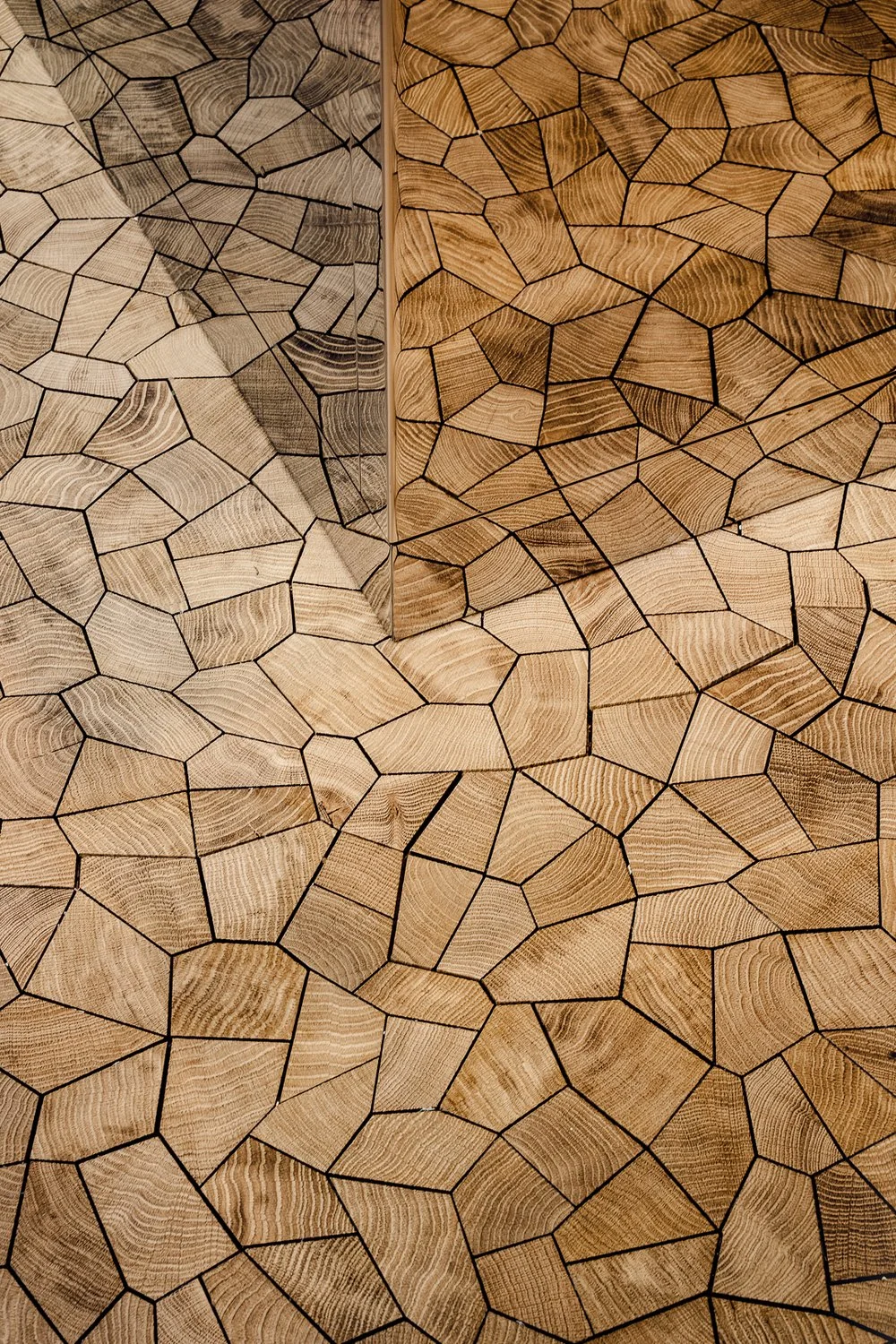
The same way, with two points to watch. End grain shows the open ends of the wood fibers, so it takes up moisture faster than a plank does: keep the mop even drier, and wipe spills at once. And it is made of many small pieces, so a soft brush head that reaches into the joints matters more.
The joints themselves are tight. On Opus, our endgrain oak floor, and on Forêt, they are under 1 mm, and they can be filled with LignoFusion in brown or black when the floor is laid. The endgrain collections are rated usage class 34, for very heavy commercial traffic, which is why they can be found in places such as the Butterfly Pâtisserie at the Hôtel de Crillon, where the floor is cleaned every day.
Color also behaves well under wear. In the Smoke finish the oak is smoked through its full depth, so a scuff does not reveal a pale layer underneath. Before buying a maintenance product for an endgrain floor, check the finish on its spec sheet and use a product made for that finish.
Why does humidity matter for a wood floor?
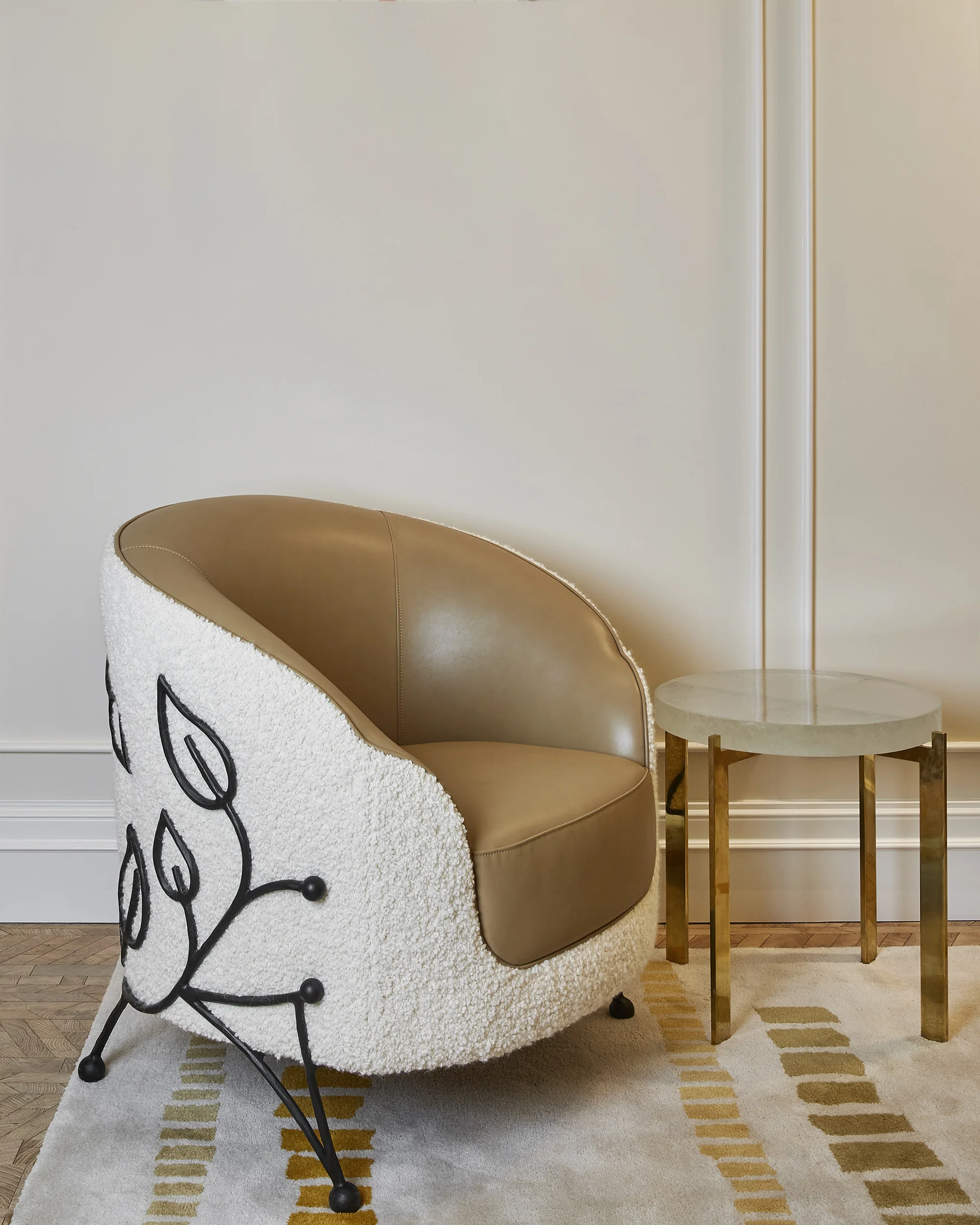
Wood takes on moisture from the air and gives it back. In a dry, heated winter it shrinks slightly and fine gaps can open; in a humid summer it swells. Keeping indoor relative humidity roughly between 40 and 60 percent all year limits that movement. A humidifier during the heating season does more for a floor than any cleaning product. The same applies in hotels and shops: Forêt at Claridge's Hotel in London lives with heavy footfall and central heating.
How do you protect a parquet floor from scratches?
- Put a good mat at every entrance, outside and inside, to catch grit before it reaches the wood.
- Fit felt pads to chair and table legs, and replace them when they wear thin or pick up grit.
- Lift furniture rather than dragging it.
- Use rugs with a backing suited to wood floors in the busiest paths.
- Keep pets' claws trimmed, and take off stiletto heels at the door if you can.
If a spill happens, blot it with a dry, absorbent cloth straight away rather than wiping it across the floor.
Frequently asked questions
What is the best way to clean a parquet floor?
Vacuum or sweep it often with a soft brush to remove grit, and wash it no more than about once a week with a microfiber mop wrung out until barely damp, using a pH-neutral cleaner made for wood floors. Dry the floor quickly and never leave standing water.
Can I use a steam mop on a wood floor?
No. A steam mop forces heat and moisture into the joints and the finish, which can swell the wood and damage lacquer or oil. Use a barely damp microfiber mop instead.
Is vinegar safe for cleaning parquet?
It is best avoided. Vinegar is acidic and can dull or break down lacquered and oiled finishes over time. A pH-neutral wood floor cleaner does the job without that risk.
How often should an oiled wood floor be re-oiled?
Usually every few years, and more often in rooms with heavy traffic. A thin coat of maintenance oil renews the protection without sanding. A lacquered floor is never oiled; when its lacquer wears, a professional can recoat it.
What should I do if water is spilled on my wood floor?
Blot it straight away with a dry, absorbent cloth. Standing water can seep into the joints and cause swelling or staining, and end grain floors take up moisture faster than planks.
Caring for an OscarOno Paris floor
Every OscarOno Paris floor is cleaned the same way: dry grit off often, a barely damp mop now and then, no steam and no harsh products. The Essentiel planks and patterns, including Droit, are lacquered, and the endgrain floors, including Opus and Forêt, come in Natural, Smoke and Black. Spec sheets for each collection are in the library, and you can order samples to see a finish in your own light before you choose.
More from the Atelier
Protecting End Grain Wood Block Flooring from UV Fading
Discover the science of oak photodegradation and how to protect end-grain wood floors from UV fading using advanced varnishes and architectural design.

Parquet Floor Restoration: Is an Old Parquet Floor Worth Saving?
Loose blocks, gaps, stains and a worn finish can all be put right. How to tell whether an old parquet floor is worth restoring, what the work involves, and when it is not.

Squeaky Wood Floors: Why They Squeak and How to Fix Them
A squeak is friction: wood on wood, wood on a nail, or a subfloor moving on its joists. Find which one it is and the fix follows.