
Chestnut Flooring: How It Compares to Oak (and Elm)
Two woods with a long history underfoot, a warmer look than oak, and a sourcing story you should know before you buy.
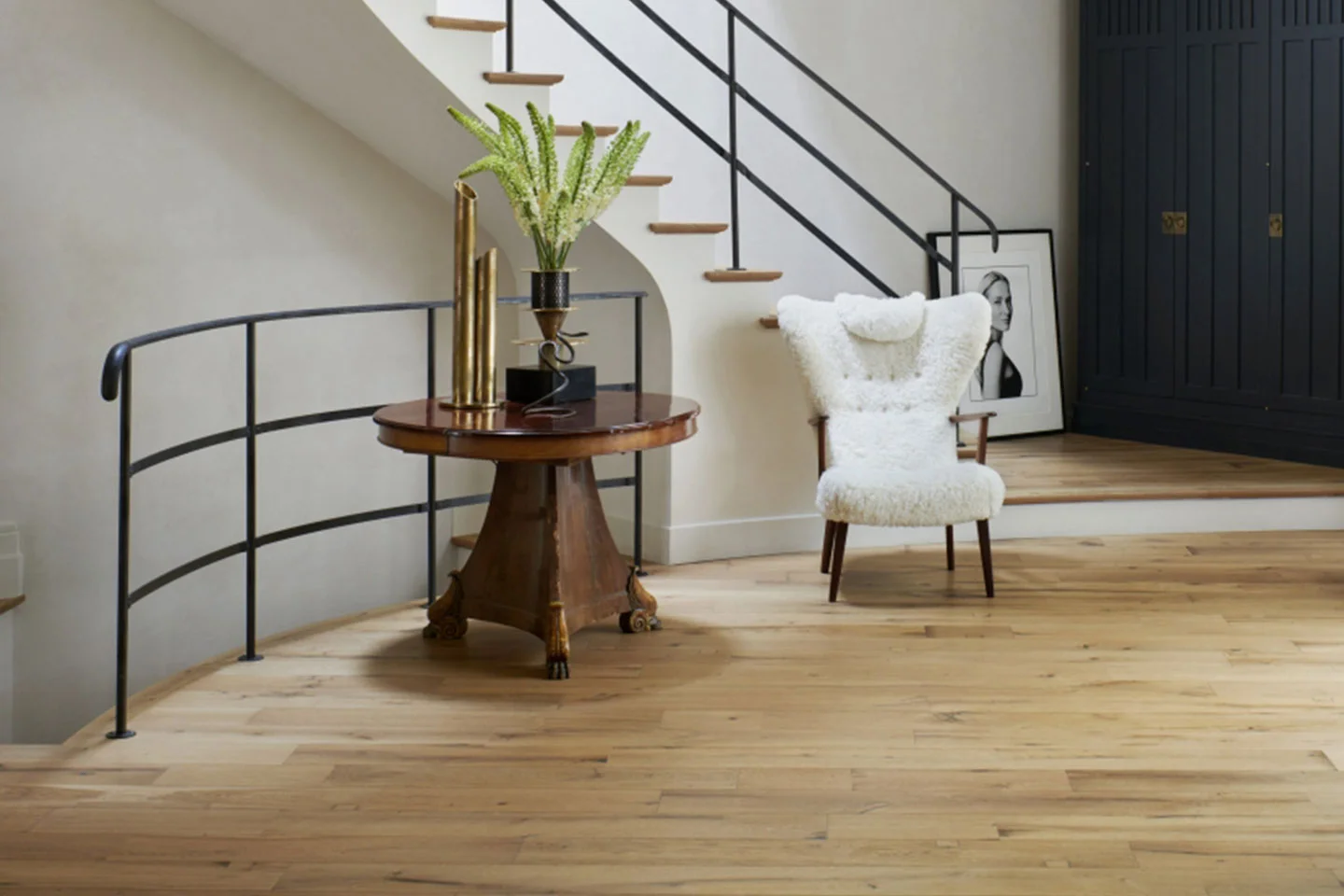
Chestnut flooring is made from sweet chestnut, grown in managed European forests, or from reclaimed American chestnut, a species almost wiped out by blight a century ago. It looks much like oak, with a similar open grain but without oak's silvery ray fleck, and it is warmer in tone and softer underfoot. Elm, its usual companion in "character wood" lists, has a wilder grain and is now scarce for a similar reason: disease.
What does chestnut flooring look like?
Sweet chestnut (Castanea sativa) is light honey to mid brown when new and mellows to a deeper amber with age. Its grain is close to oak's: clear growth rings and an open, slightly coarse texture. The difference is in the detail. Oak cut on the quarter shows ray fleck, the small silvery flashes across the grain; chestnut's rays are too fine to see, so the surface reads calmer and more fluid.
Like oak, chestnut is rich in tannin. That makes the heartwood naturally durable, and it also means the wood can stain blue-black where it touches iron and water, the same reaction oak shows. Narrow sapwood, which is paler, appears in lower grades.
Sweet chestnut vs American chestnut flooring
- Sweet (European) chestnut is harvested from managed forests and coppice in Europe. Boards are new, clean and long-grained, usually in rustic or character grades with knots and color variation.
- American chestnut (Castanea dentata) was once a major tree of the eastern United States until a fungal blight, introduced in the early twentieth century, killed most of it. Floors sold as American chestnut today are almost always reclaimed from old barns and buildings, often with nail holes, wormholes and a weathered, reddish-brown surface. Supply is limited and prices follow.
Is chestnut flooring durable? Chestnut vs oak
Chestnut is softer than oak, so it dents more readily under heels and furniture legs. It is stable for its density and its tannins resist decay, but a floor wears from the surface, and there oak has the edge. Chestnut suits bedrooms, studies and living rooms; for halls, kitchens and commercial spaces, oak is the safer choice.
| Oak | Sweet chestnut | Elm | |
|---|---|---|---|
| Hardness | Hard; the floor benchmark | Softer than oak | Softer than oak |
| Grain | Open, ray fleck on quarter-sawn faces | Like oak without visible rays | Interlocked, swirling, very active |
| Color | Pale to mid brown; takes any finish well | Honey to amber, warmer | Pale sapwood, olive to reddish brown heartwood |
| Supply | Plentiful from managed European forests | European supply steady; American mostly reclaimed | Scarce since Dutch elm disease; often reclaimed |
Why is elm flooring so rare?
Dutch elm disease, which spread through Europe and North America from the 1960s and 1970s, killed most mature elms in both regions. Elm boards today come from trees that escaped it, from smaller resistant stock or from reclaimed timber, so wide, clear elm is hard to find.
Elm's grain is the attraction. It is interlocked, which makes the wood hard to split and gives it the swirling, feathered figure that no other floor timber has. The same quality makes it move more as humidity changes, so elm floors need careful drying and a stable construction. Historically elm was valued where wood stayed permanently wet, for water pipes and piles, because it does not rot when kept fully submerged; on a floor that matters less than how it behaves in dry, heated air.
How do you design with a character wood floor?
Woods with strong grain carry a room on their own, so they work best with plain walls and few competing patterns. Long, wide boards let the grain run; a strict geometric layout, such as square panels, gives the movement a frame. Matte finishes keep the texture visible, while gloss flattens it and shows every scratch.
Can you get the warmth of chestnut in an oak floor?
OscarOno Paris does not make chestnut or elm floors; our floors are oak, apart from Réserve and Tweed, in Zambezi teak. If what draws you to chestnut is its warm, honeyed color and calm surface, oak can give a similar register with a harder floor, but it will read as oak, with its own grain.
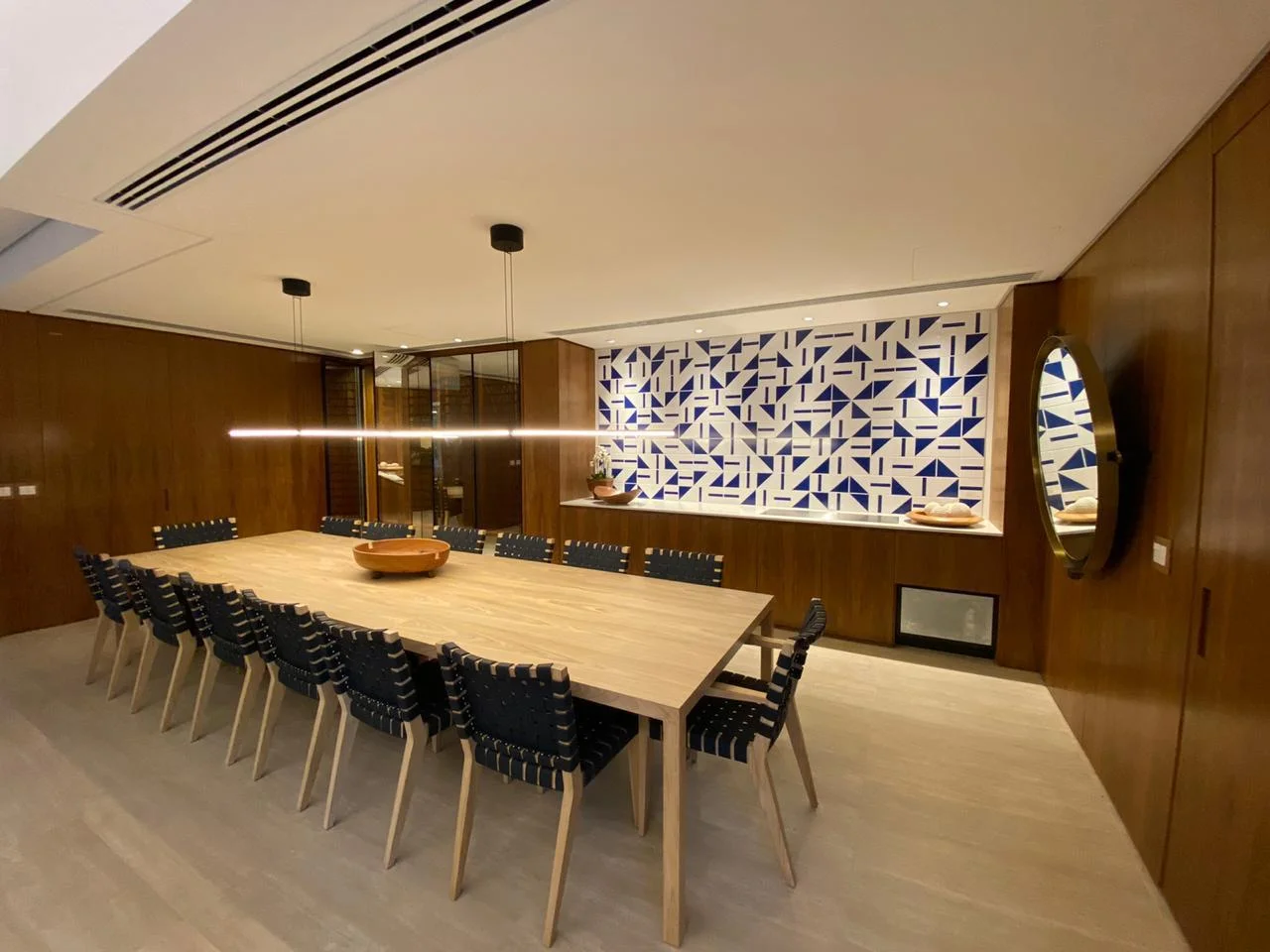
Droit, our straight oak plank, comes 150 mm or 190 mm wide in twelve lacquered Essentiel colors, including warm honey and brown tones. At the private residence at Fazenda Boa Vista in Brazil, Droit is laid in Miel Doux, a honey tone.
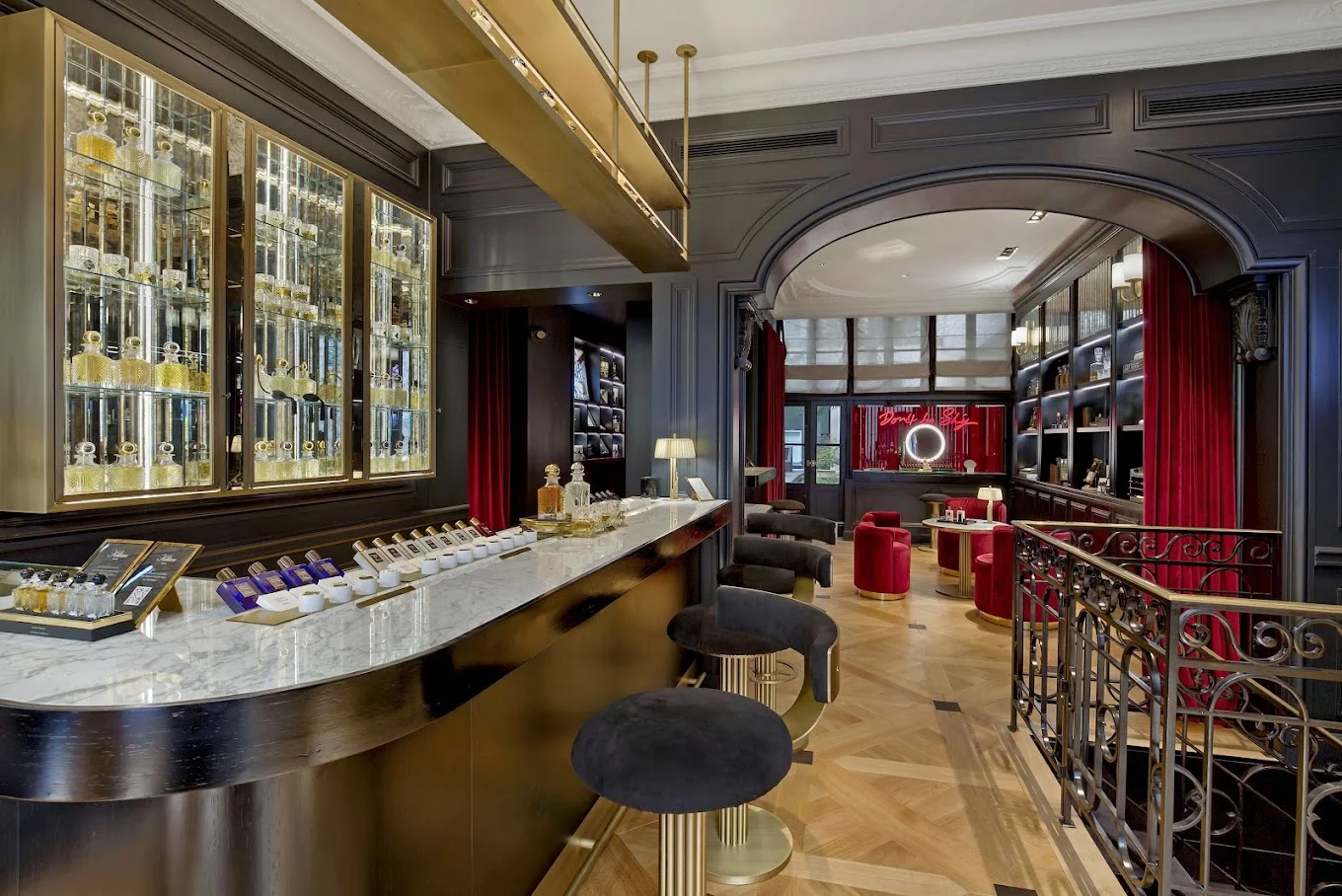
If you want the frame rather than the long run, Dalle, our oak panel floor, composes flatgrain oak into 800 x 800 mm panels, the format of the great Parisian floors, in the same twelve colors. See it at the By Kilian boutique in Paris.
Frequently asked questions
Is chestnut flooring harder than oak?
No. Chestnut is softer than oak, so it dents more easily under heels and furniture. Its tannin-rich heartwood resists decay, but for halls, kitchens and commercial spaces oak is the more hard-wearing choice.
What is the difference between chestnut and oak flooring?
They share a similar open grain, but chestnut lacks the silvery ray fleck that quarter-sawn oak shows, so it looks calmer. Chestnut is also warmer in tone, honey to amber, and softer underfoot.
Why is American chestnut flooring reclaimed?
A fungal blight introduced in the early twentieth century killed most American chestnut trees. Floors sold as American chestnut today are almost always made from timber reclaimed from old barns and buildings.
Why is elm flooring hard to find?
Dutch elm disease killed most mature elms in Europe and North America from the 1960s and 1970s onward. Elm boards now come from surviving or smaller trees and from reclaimed timber, so wide, clear elm is scarce.
Is there an oak floor with the warmth of chestnut?
Warm honey and brown finishes on oak give a similar warmth with a harder floor, though the grain still reads as oak. OscarOno Paris does not make chestnut floors; its Essentiel oak floors, such as Droit and Dalle, come in twelve lacquered colors including warm tones.
Warm oak floors by OscarOno Paris
Droit and Dalle are cut from flatgrain select oak, 12 mm with a 4 mm oak top layer, lacquered in twelve Essentiel colors. Both are rated usage class 33 for heavy commercial traffic, carry a Cfl-s1 fire rating and are FSC and PEFC certified. To compare a warm tone with the chestnut you have in mind, order samples; spec sheets, CAD and 3D files are in the library.
More from the Atelier
Reclaimed Teak Flooring: End-Grain Strength and Resilience
Explore how reclaimed teak flooring and end-grain timber provide extraordinary durability, natural silica protection, and stability for demanding spaces.
How to Prevent Fading on Hardwood Floors: Design Guide
An architectural approach to managing sun exposure on wood floors, from spectrally selective glazing to finish choices and uniform patina development.
The Craft of Marquetry Parquet Flooring and Panels
Marquetry parquet flooring bridges historical French palace geometry with contemporary minimalism, bringing architectural structure to luxury interiors.