
Wood Floor Colors: How Light, Warm and Dark Tones Change a Room
The color of the floor is the largest single block of color in a room. Choose it for the light you have, not the photo you saw.
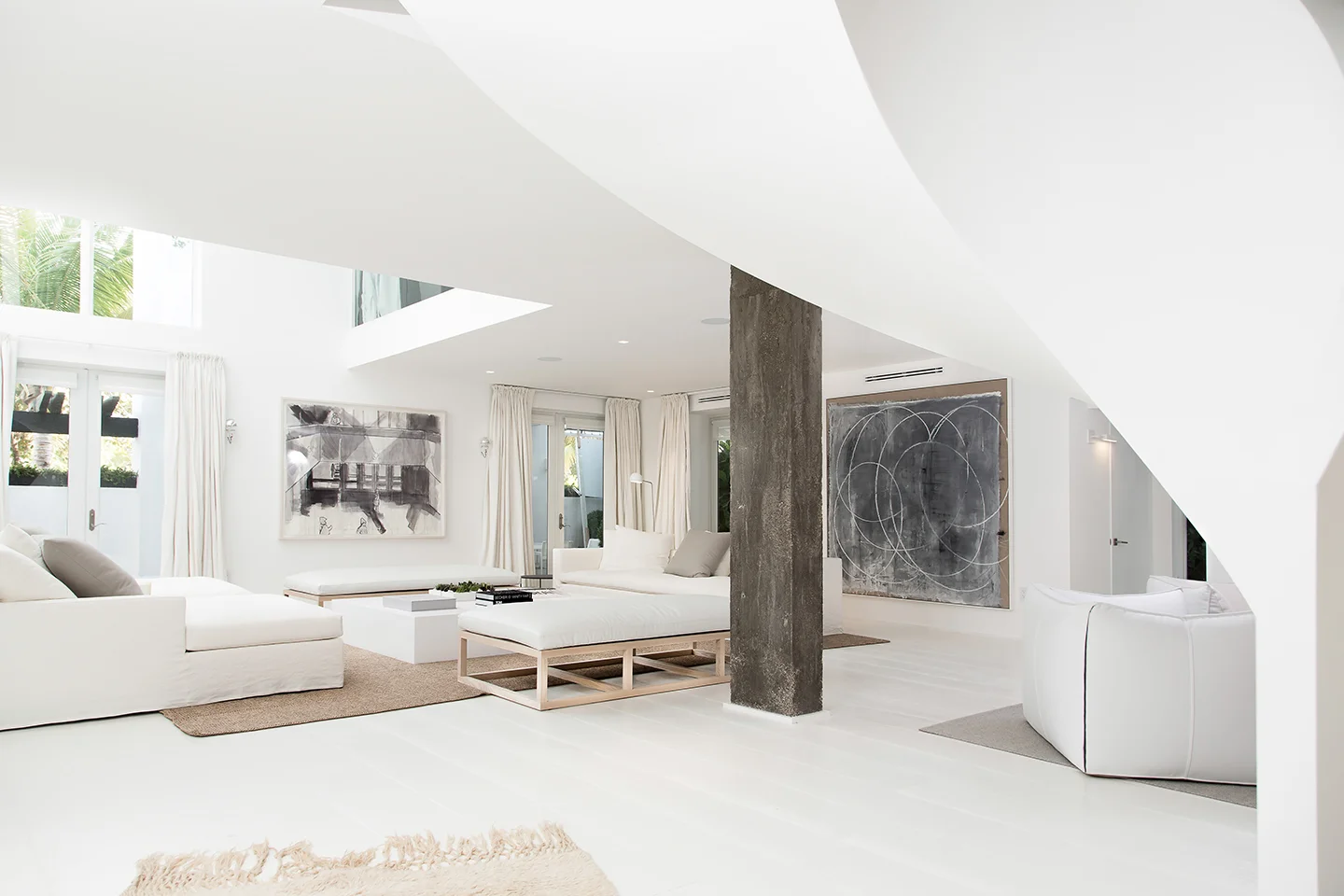
Wood floor colors fall into four broad families: light, warm, gray and dark. Light floors reflect daylight and make a room feel larger and brighter; warm honey tones make it feel settled and welcoming; gray tones read cool and calm; dark floors absorb light and draw a room in around you. The right color depends less on taste than on how much light the room gets and what will stand on the floor.
What do the main wood floor colors do to a room?
| Tone | Effect on space | Mood | Watch out for |
|---|---|---|---|
| Light (white, pale and natural oak) | Reflects light; room reads larger | Open, quiet, fresh | Can feel cold in north light; shows dark stains |
| Warm (honey, golden brown) | Neutral on size; ties furniture together | Settled, welcoming | Can turn orange next to other yellow woods |
| Gray (blue-gray, ashen) | Recedes slightly | Cool, calm, graphic | Needs warm lighting or textiles to avoid looking flat |
| Dark (smoked, charcoal, black) | Absorbs light; room feels smaller | Enclosing, intimate, dramatic | Shows dust, pet hair and fine scratches |
Light wood floors: when do they work best?
Pale and natural oak bounce daylight back into a room, so they help most where light is short: small rooms, deep floor plans, apartments facing a courtyard. They let furniture and art take the lead, which is why they suit galleries, shops and minimal interiors. Light and natural oak is also the fastest-growing look in searches for wood floors this year.
The catch is temperature. In cool northern light, a very white floor can look gray and chilly; a natural oak with a little warmth in it is safer there. In strong southern sun, almost any light floor works.
Warm wood floors: honey and golden tones
Honey and golden browns are the most forgiving floor colors. They hide everyday dust and wear, sit well with most other woods and with leather, linen and brass, and make a room feel lived in from the first day. They work in hotels and restaurants for the same reason: they make a large space feel welcoming. The thing to watch is undertone: next to yellow pine or orange cherry furniture, a honey floor can tip toward orange.
Dark wood floors: smoked, charcoal and black
A dark floor anchors a room and makes white walls, pale furniture and art stand out sharply. It narrows the sense of space, which can be exactly what a large, high-ceilinged room needs. Demand for black parquet and smoked oak is small but growing fast.
Two practical points. Dark floors show dust, crumbs and pet hair in a way mid tones never do, and they show fine scratches where a surface finish wears. A color that runs through the wood itself helps with the second: in the Smoke finish of Forêt, our endgrain oak floor, the oak is smoked through its full depth, so wear does not reveal pale wood underneath. Its Black finish is charred, in the shou sugi ban tradition, rather than stained.
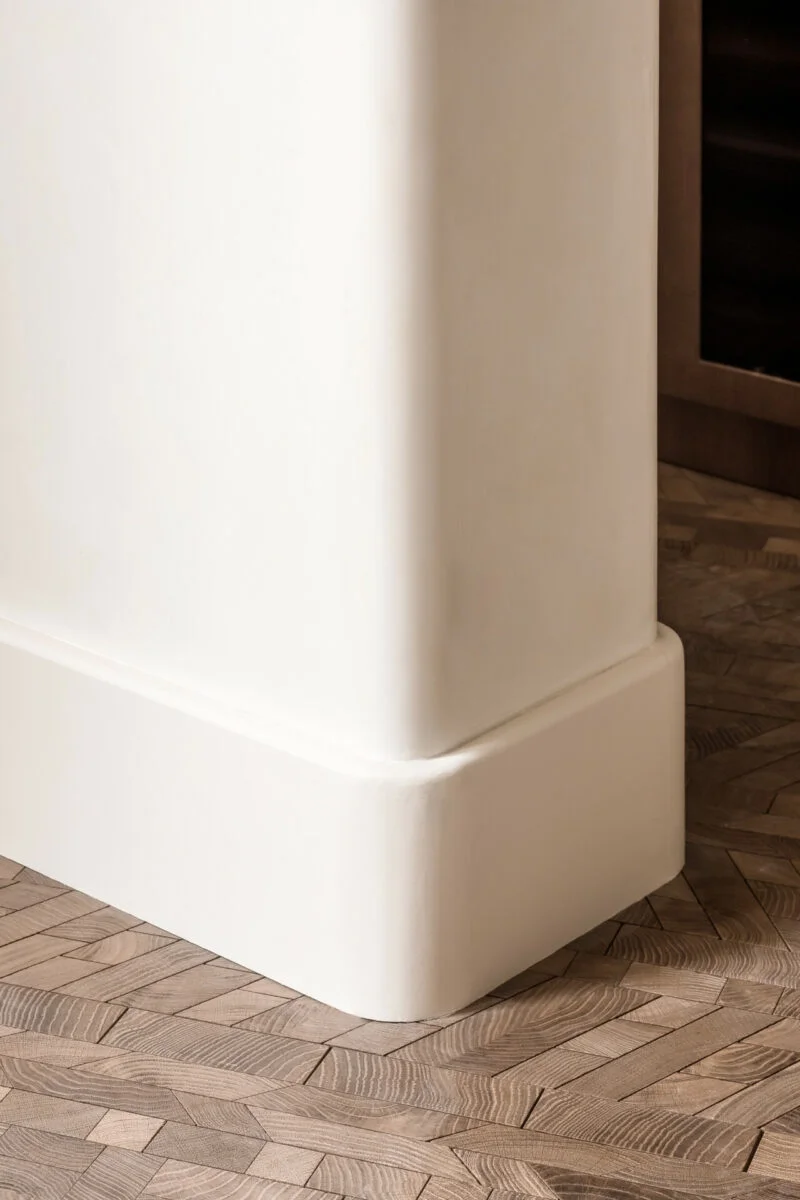
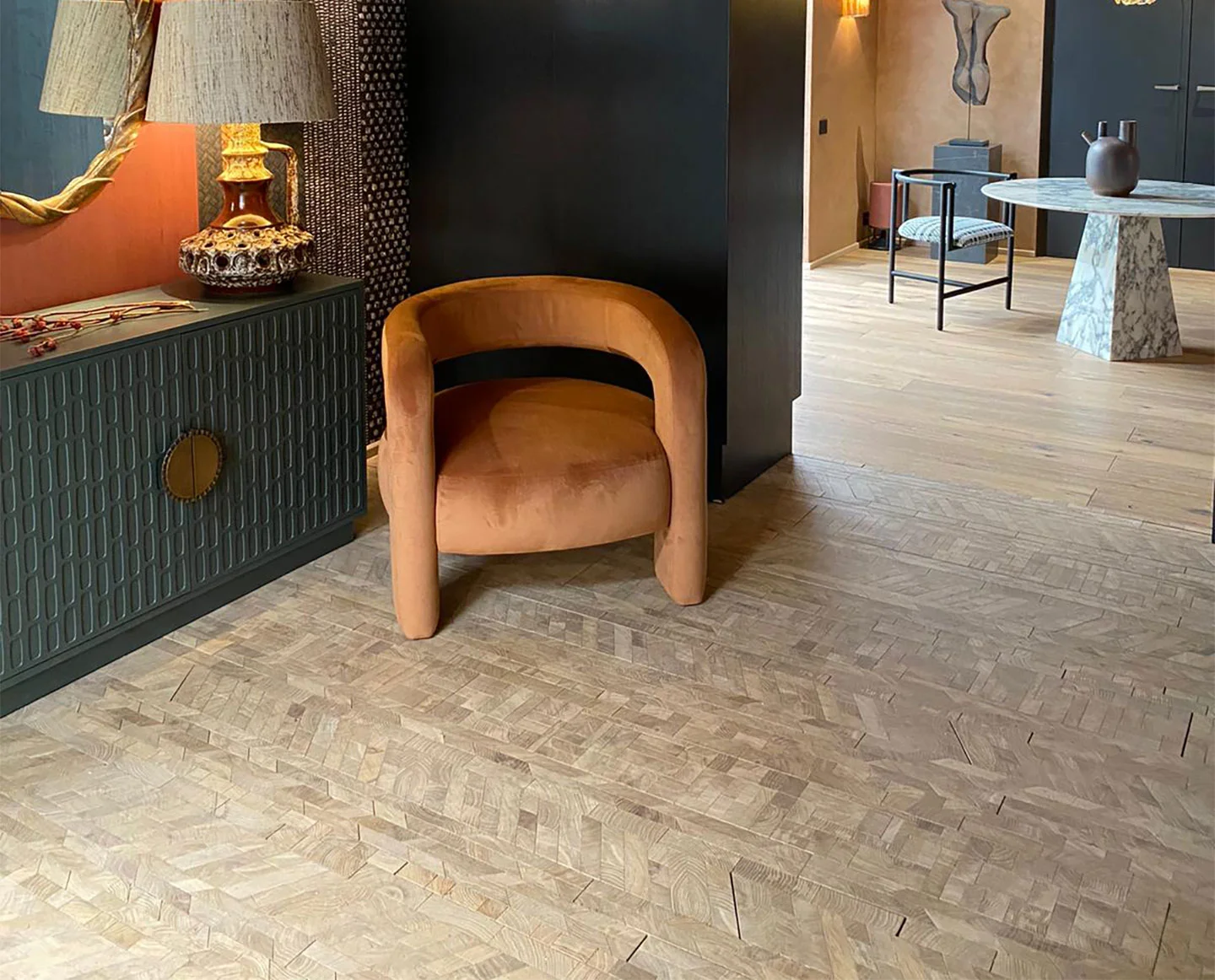
The apartment at Project Galilée in Paris is laid in Forêt Smoke: a dark floor, but one where the grain of every endgrain piece still shows.
How does daylight change a wood floor color?
A floor never has one color. North light is cool and even, and pulls a floor toward gray; south and west light is warm and makes the same boards look golden in the afternoon. Artificial light shifts it again: warm bulbs deepen honey tones, cool LEDs flatten them. Look at a sample on the floor of the actual room, at the times you use it most, before you choose. A small swatch held up to a window is not enough; lay it flat, where the light falls the way it will on the finished floor.
How do you choose a floor color with your walls and furniture?
- Decide on contrast. A floor close in tone to the walls makes a room feel calm and continuous; a strong contrast, light walls over a dark floor, makes it feel graphic and defined.
- Match the undertone, not the color. Woods of different depth sit together well when they share an undertone, warm with warm and cool with cool. Two woods that are almost but not quite the same color look like a mistake.
- Keep the floor continuous. One color running through connected rooms makes a home feel larger than a change at each door.
- Think about upkeep. Mid tones with visible grain hide dust and marks best; the very light and the very dark both show more.
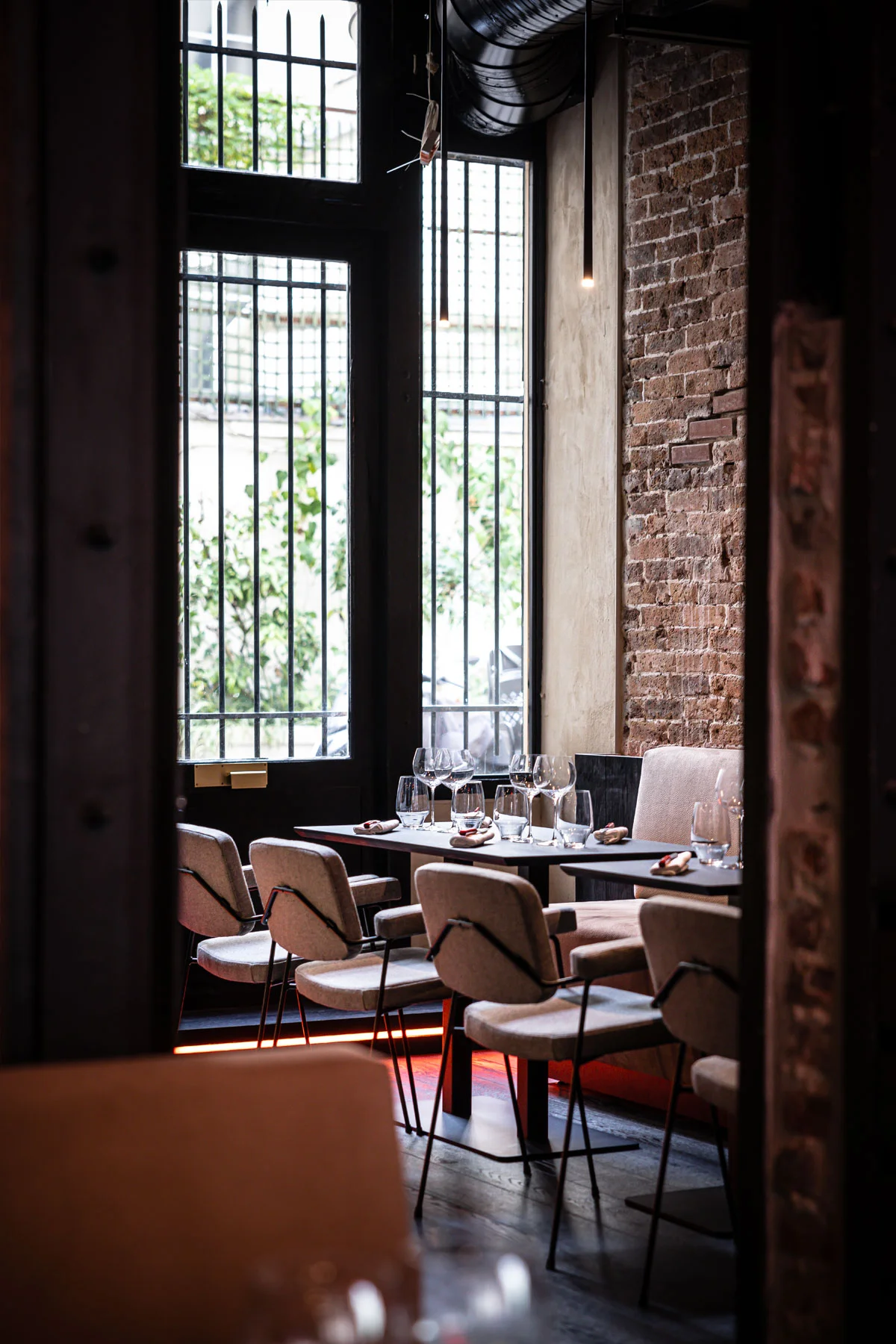
On a straight plank, color is most of the design. Droit, our straight oak plank, comes in twelve lacquered Essentiel colors, including the white Tout Blanc, warm honey and brown tones, and the charcoal Rocher Charbon. At Braise in Paris, Droit is laid in Rocher Charbon.
Frequently asked questions
What wood floor color makes a room look bigger?
Light colors, such as white, pale or natural oak, reflect daylight and make a room read larger and brighter. Running the same floor color through connected rooms also helps, because the eye does not stop at each doorway.
Do dark wood floors show dust and scratches?
Yes, more than mid tones. Dust, pet hair and fine surface scratches stand out against a dark floor. A finish whose color runs through the wood, such as oak smoked through its full depth, keeps wear from revealing paler wood underneath.
What wood floor color hides dirt best?
Mid tones with visible grain, such as natural or honey oak. They hide dust and small marks better than very light floors, which show dark stains, or very dark floors, which show dust and lint.
Should a wood floor be lighter or darker than the walls?
Either works; it depends on the effect you want. A floor close in tone to the walls feels calm and continuous, while a dark floor under light walls feels graphic and makes the room feel smaller and more defined.
Can you mix different wood tones in one room?
Yes, if they share an undertone, warm with warm or cool with cool, and differ clearly in depth. Woods that are nearly but not quite the same color tend to look like a mismatch.
Wood floor colors at OscarOno Paris
OscarOno Paris works color in two ways. The Essentiel planks and patterns, including Droit, are lacquered in twelve colors on flatgrain select oak, rated usage class 33. The endgrain floors, including Forêt, come in three finishes and no stain: Natural, Smoke, smoked through the full depth of the oak, and Black, charred in the shou sugi ban tradition, rated usage class 34. Color is the one thing a screen cannot show you, so order samples and look at them in your own room. Spec sheets, CAD and 3D files are in the library.
More from the Atelier
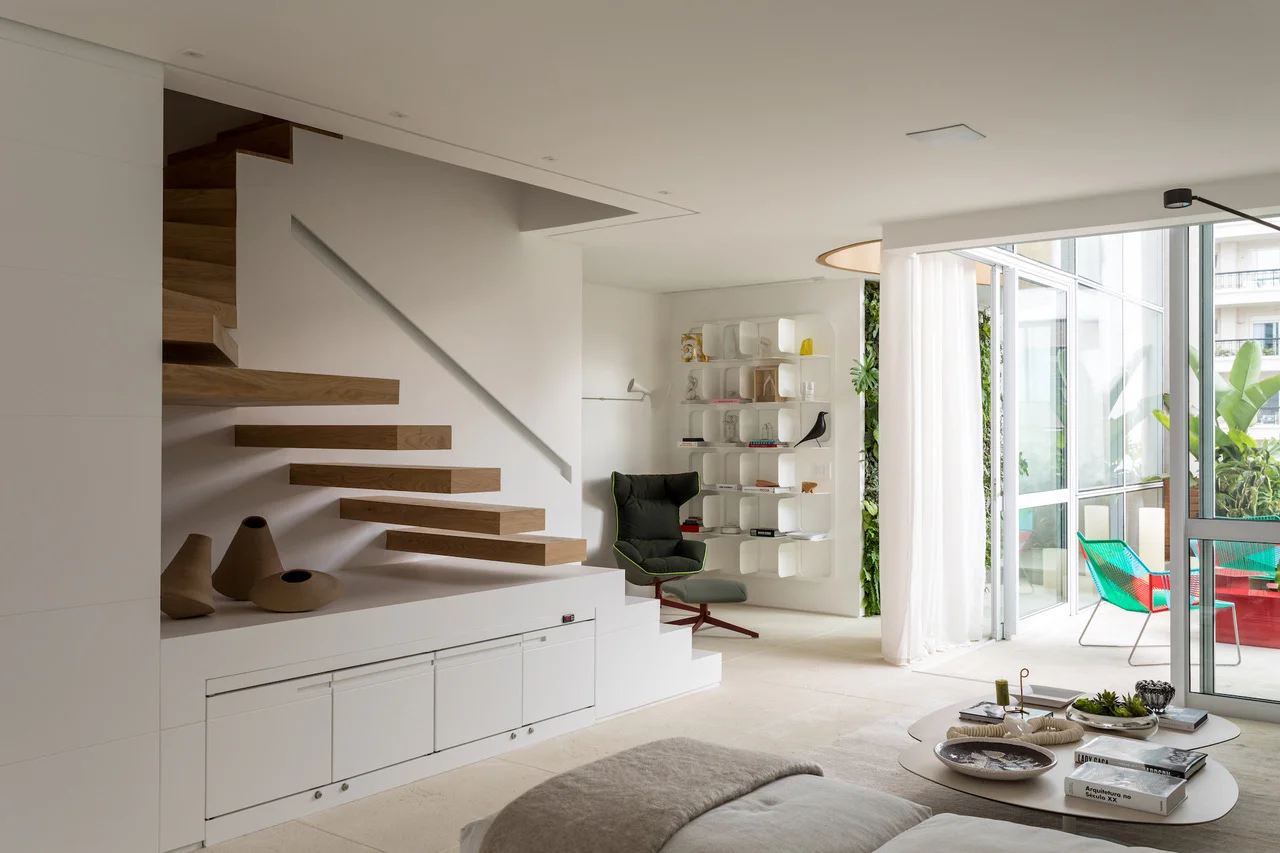
Wood Floors in the Bedroom: How to Choose a Calm, Quiet Floor
Wood is warm underfoot, easy to keep dust-free and lasts for decades in a low-traffic room. How to choose the color, finish, layout and acoustics of a bedroom floor.
Light Oak Flooring for Bright, Sunlit and Coastal Rooms
Pale oak suits sunlit and seaside rooms, if you get the finish right. How light oak changes in the sun, and what sand, humidity and glare mean for it.
Wide Plank Oak Flooring for a Minimalist Interior
Fewer joints, a clean grade, a low sheen and one direction through the house: how to choose wide plank oak for a minimalist interior, and when an end grain grid does the job better.