
Light Oak Flooring for Bright, Sunlit and Coastal Rooms
Pale oak reflects daylight and forgives sand, but sun, finish and texture decide how it ages.
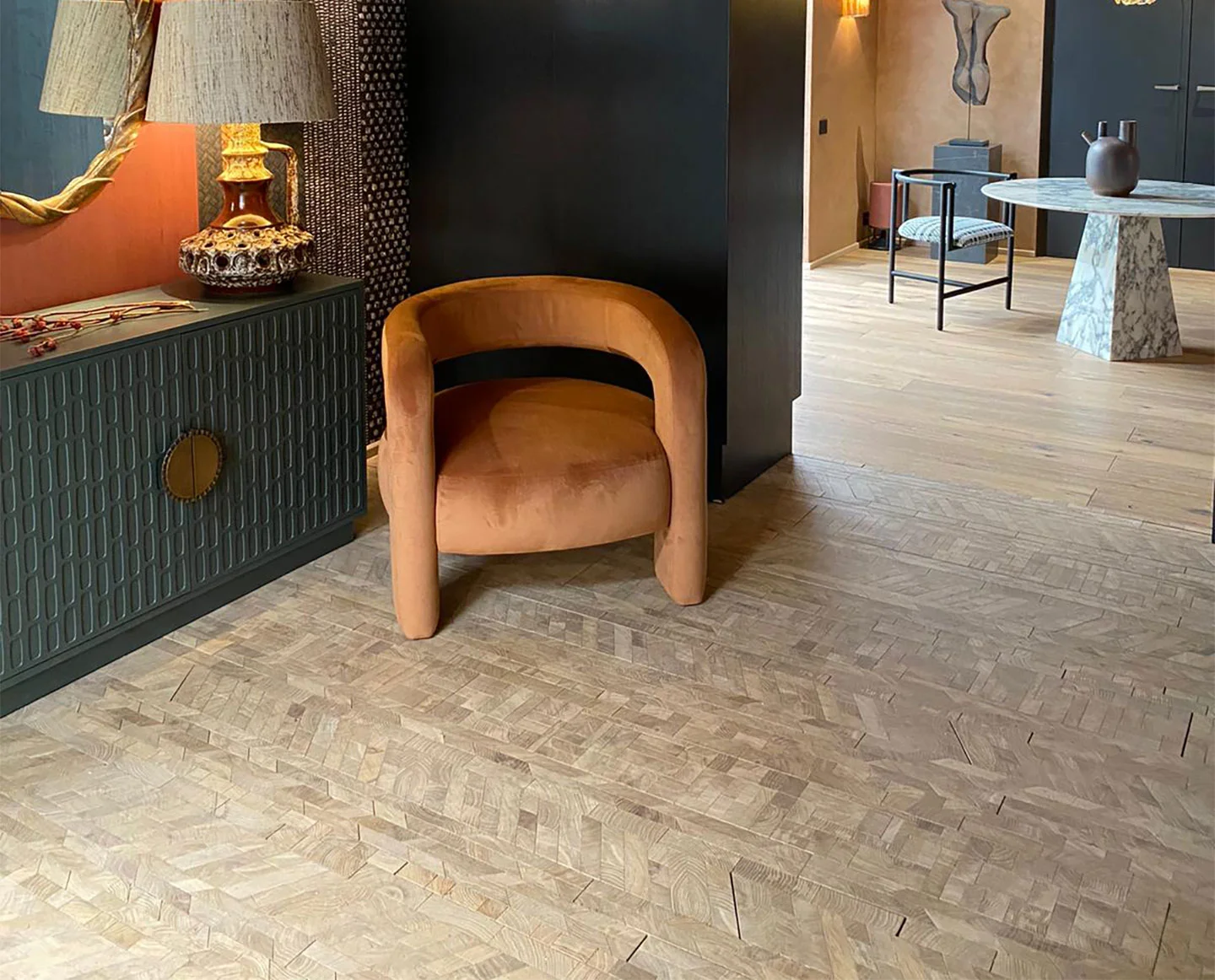
Light oak flooring is oak kept close to its natural pale straw color, or finished in a light, white or soft gray tone. It reflects daylight, makes rooms read larger and hides dust and sand better than dark wood, which is why it suits bright, coastal and open-plan rooms. What decides how well it lasts is the finish, how the oak reacts to sun, and the texture of its surface.
What counts as light oak flooring?
There are three ways to get a pale oak floor:
- Natural. A clear finish that shows oak's own color: pale straw with a warm cast. Clear matte finishes keep it closest to raw wood; many oils deepen it toward amber.
- White and pale finishes. A light pigment in the finish counters oak's natural warmth and the yellowing it picks up with age, for a whiter, Scandinavian look.
- Pale grays. Light gray finishes cool the oak down without making it white.
Light oak is a color, not a species. White oak is a species, Quercus alba, from North America; European oak can be finished just as pale, and most light oak floors in Europe are exactly that.
Does light oak change color in the sun?
Yes. Oak ambers with light and age: a natural floor slowly turns from pale straw toward honey, fastest in the first months and most where the sun falls. Rugs and furniture leave paler patches under them, so move them now and then in the first year, while the change is quickest.
White-pigmented finishes slow the yellow shift but do not stop the wood beneath from aging. In a very sunny room, sheer curtains or blinds at the brightest hours help any floor, and a sample left on a sunny sill for a few weeks will show you where your floor is heading.
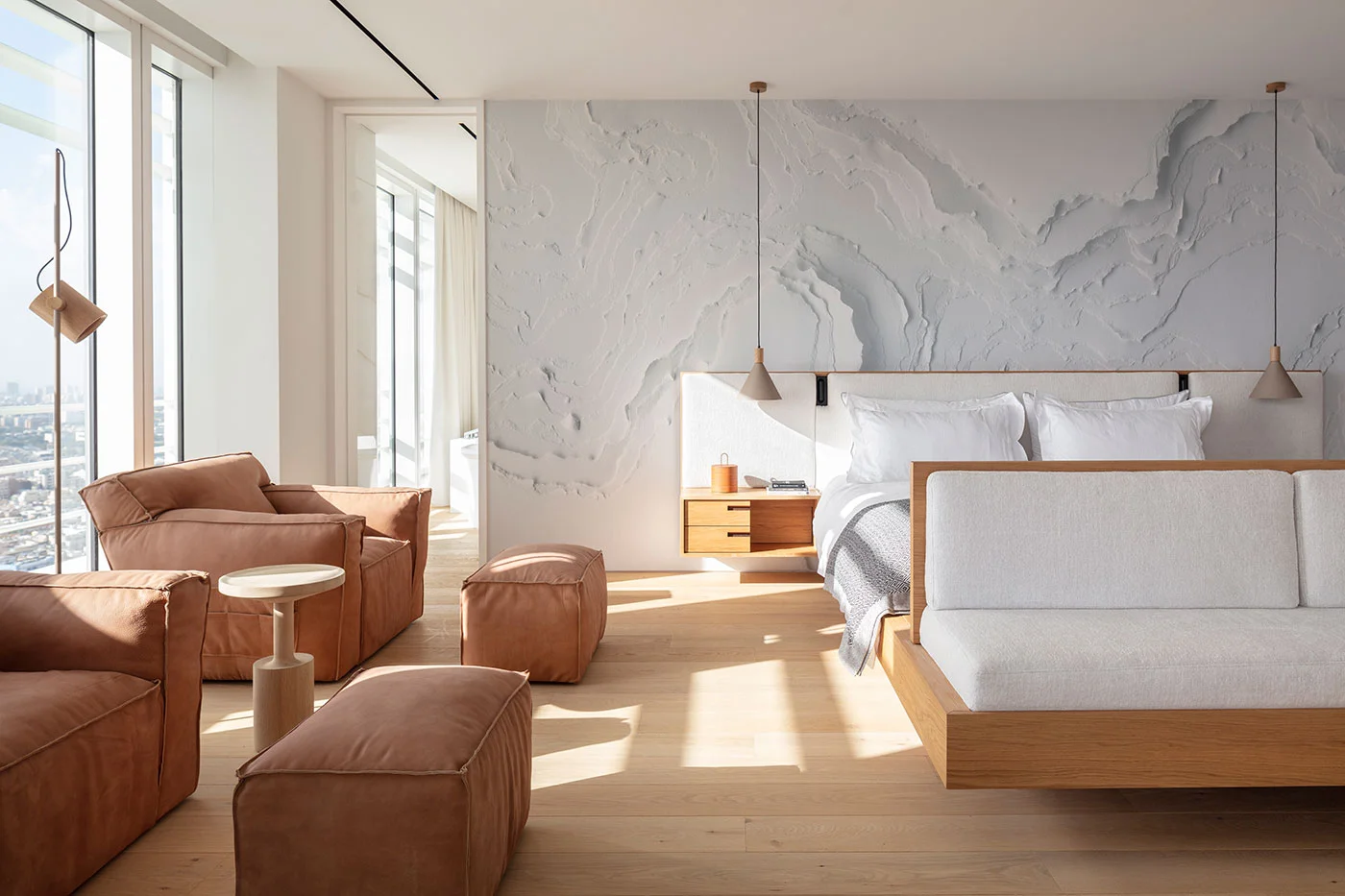
In the Beach Front Penthouse in Tel Aviv, Droit, our straight oak plank, in Naturel takes the full Mediterranean sun through tall windows, with pale walls and tan leather keeping the room light.
Light oak in coastal homes: what to watch
- Sand. It is abrasive. A pale floor hides it, but grit under shoes still dulls any finish. Put mats at every door to the outside and sweep often.
- Humidity. Sea air and humid summers make wood swell; dry, heated winters make it shrink. A layered, stable board copes better than solid wood, and steady ventilation helps.
- Glare. A gloss finish throws strong sun back into the room. A matte finish, or a textured surface, keeps reflections soft.
- Wet feet. Wipe up water from swimsuits and showers. A wood floor is for indoors: terraces and pool decks need a different material, and OscarOno Paris makes no outdoor floor.
At the Aethos Ericeira Hotel in Portugal, Forêt in Natural runs through a restaurant that looks straight out to the Atlantic.
Plank or end grain: which light oak floor?
A light plank floor is calm: long lines, few joints, the grain running the length of the room. An end grain floor is cut across the trunk, so it shows the growth rings of the oak, and its texture breaks up the light rather than reflecting it in one sheet. In a room full of sun, that makes a pale end grain floor look softer and less shiny.
Forêt, endgrain oak composed from six planks and six patterns, comes in Natural, which is the oak as it is, with no stain. It is rated usage class 34 for very heavy commercial traffic, which matters in a beach house where the floor sees sand, bare feet and luggage all summer.
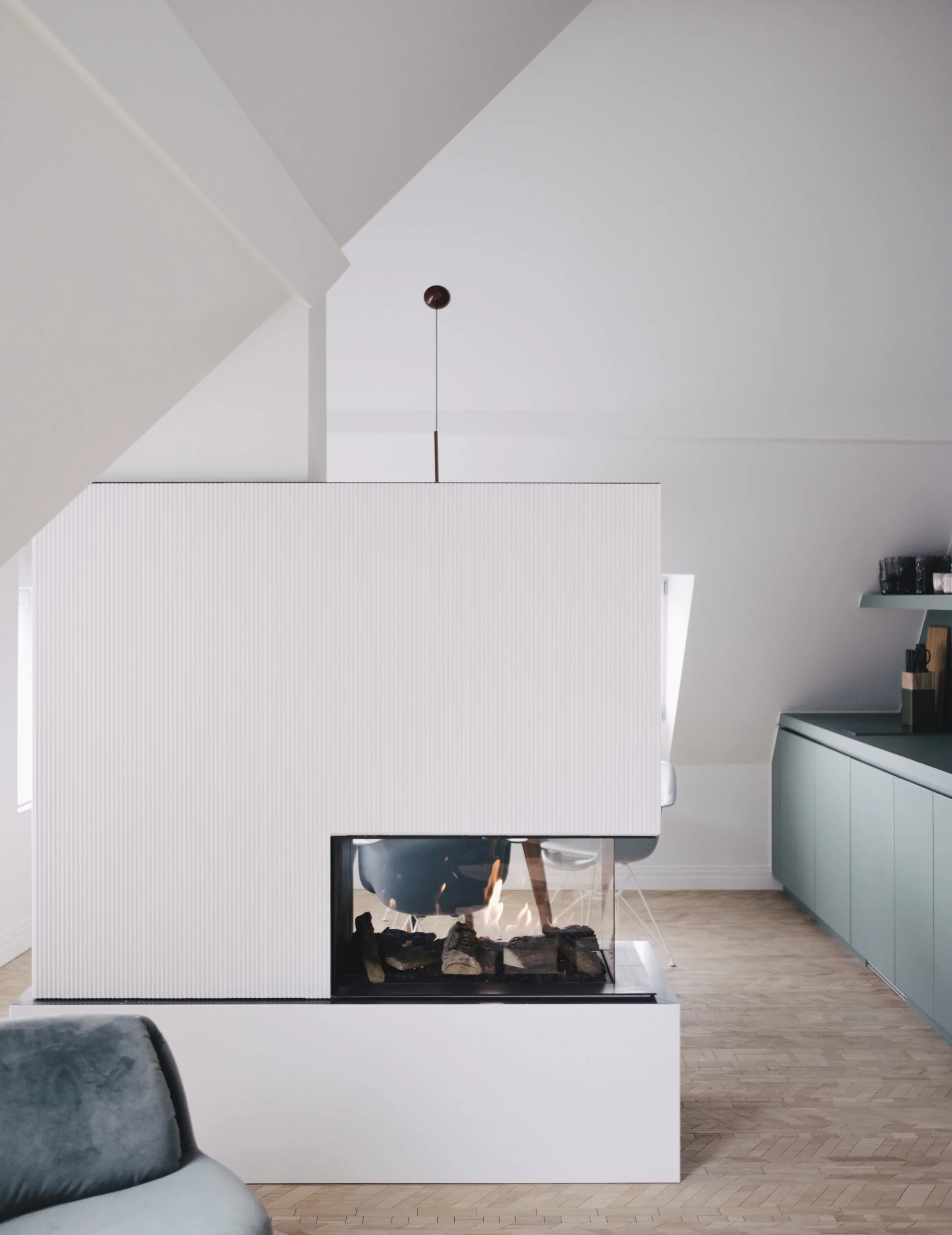
This private residence in Wenduine, on the Belgian coast, pairs pale Forêt with white walls and a white fireplace: the floor carries all the warmth in the room.
Which colors and materials go with light oak?
Light oak sits easily with linen, plaster, limestone, rattan and jute, and with sand, sage and soft blue on the walls. The risk is a room that goes flat when floor, walls and furniture are all pale. Add one or two darker notes: blackened metal, a deep blue, dark leather or stone, so the floor reads as a surface rather than disappearing.
Frequently asked questions
Does light oak flooring turn yellow?
Natural oak ambers with light and age, slowly moving from pale straw toward honey, most where the sun falls. White-pigmented finishes slow that shift. Moving rugs and furniture now and then in the first year keeps the color even.
Is light oak flooring good for a beach house?
Yes, indoors. It hides sand and dust well and keeps sunlit rooms bright. Use mats at the doors because sand is abrasive, choose a stable layered board for humid air, and prefer a matte finish to cut glare. Wood floors are not for terraces or pool decks.
Does light oak flooring show dirt?
It hides dust, sand and pet hair better than dark wood, which shows every pale speck. It shows dark marks more: spilled coffee or wine should be wiped up quickly, before it reaches the wood.
What is the difference between light oak and white oak?
Light oak describes a color. White oak is a species, Quercus alba, from North America. European oak can be finished just as pale as white oak, so a light oak floor can be either.
Light oak floors by OscarOno Paris
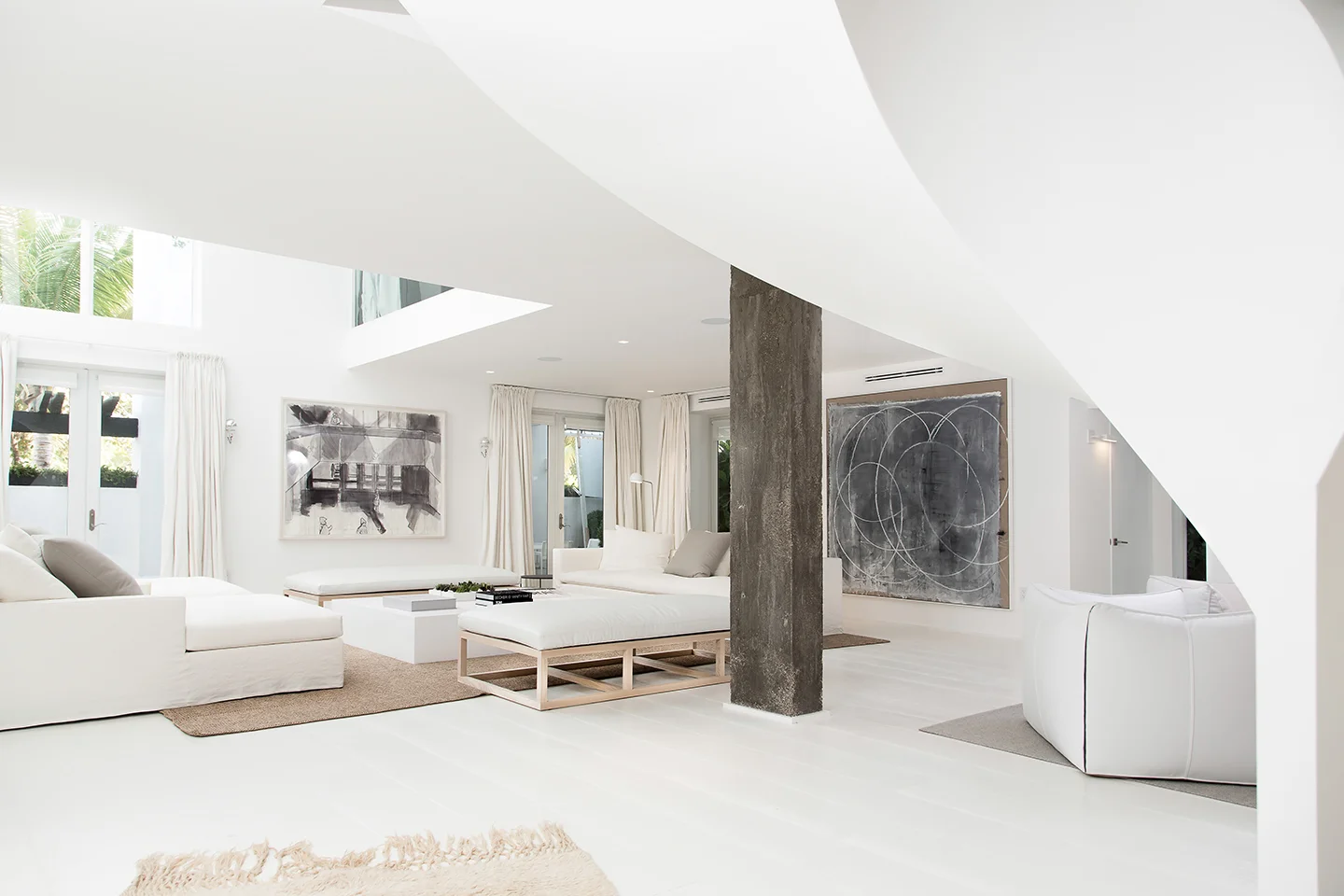
Forêt in Natural is endgrain oak, an 8 mm oak top layer on 12 mm birch plywood, rated usage class 34. Droit is the straight plank: flatgrain select oak, 12 mm with a 4 mm top layer, 150 mm or 190 mm wide, rated usage class 33, in twelve lacquered colors that include pale Naturel and Tout Blanc, the white floor of the Beach House in South Beach, Miami. Both carry a Cfl-s1 fire rating and are FSC and PEFC certified.
Pale finishes look different in every light, so see them at home: order samples. Spec sheets, CAD and 3D files are in the library.
More from the Atelier
Wood Floors in the Bedroom: How to Choose a Calm, Quiet Floor
Wood is warm underfoot, easy to keep dust-free and lasts for decades in a low-traffic room. How to choose the color, finish, layout and acoustics of a bedroom floor.
Wide Plank Oak Flooring for a Minimalist Interior
Fewer joints, a clean grade, a low sheen and one direction through the house: how to choose wide plank oak for a minimalist interior, and when an end grain grid does the job better.
Wood Floor Colors: How Light, Warm and Dark Tones Change a Room
Light floors open a room, warm ones settle it, dark ones close it in. How to choose a wood floor color for your light, your furniture and the way you live.