
Circular Wood Floor Medallion: Spiral Parquet Craft
Engineering expansive curved oak inlays and rotunda parquet centrepieces
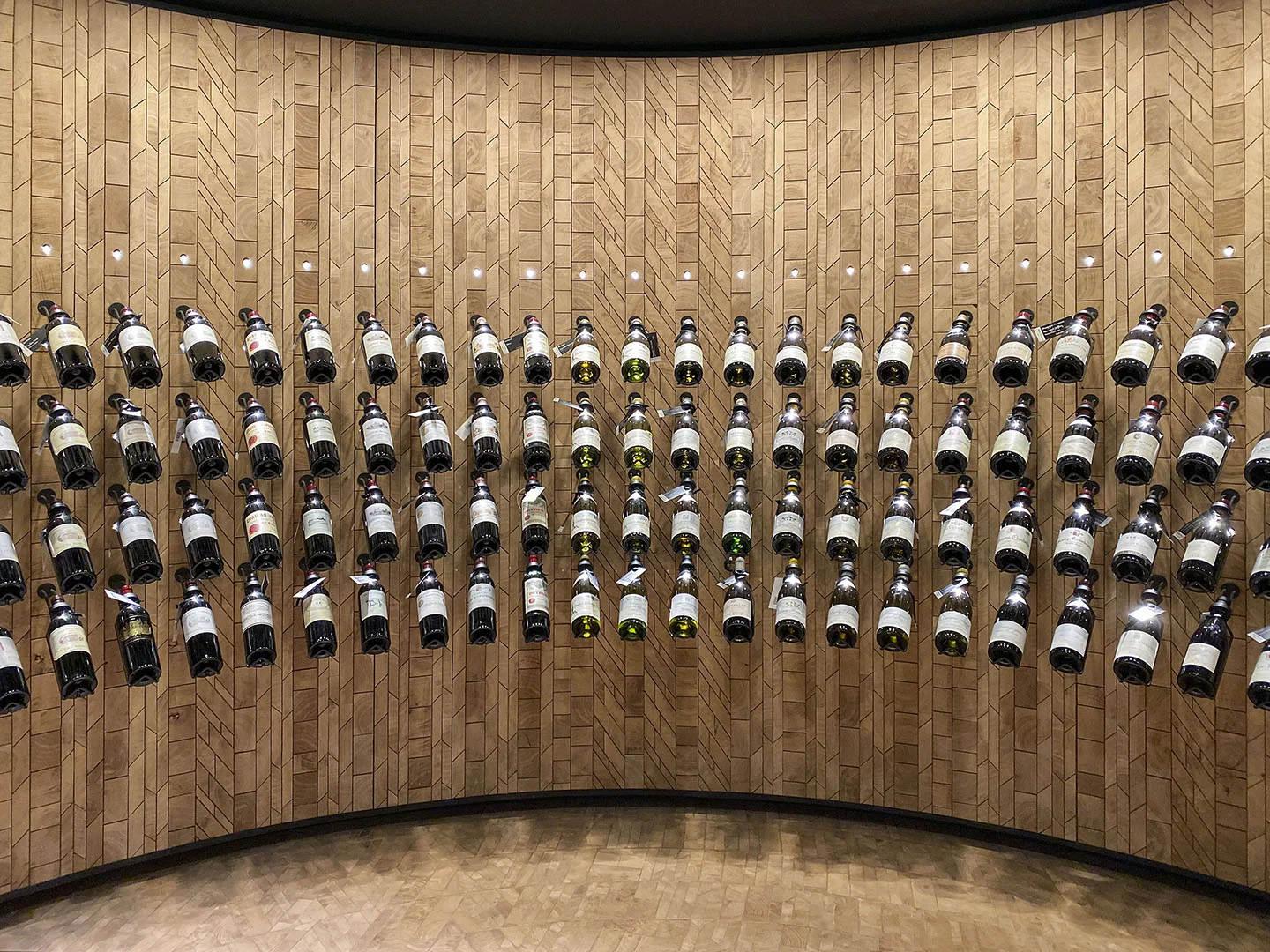
A circular wood floor medallion establishes an immediate architectural axis, anchoring entrance rotundas and grand foyers through radial geometry and curved joinery. Unlike conventional straight boards or directional patterns, a monumental wood medallion redirects movement outward from a defined center point, creating an intentional pause in the architecture. Executing these curved inlays at scale requires rigorous substrate preparation, deliberate moisture management, and meticulous craftsmanship to ensure the timber remains stable across decades of foot traffic.
What makes a circular wood floor medallion the natural anchor of a rotunda?
A circular floor medallion mirrors the classical proportions of overhead architecture, creating vertical harmony between the floor plane and ceilings. In an entrance rotunda, a domed ceiling, central chandelier, or circular oculus demands a floor pattern that reflects that radial symmetry rather than cutting across it with straight planks.
When entering a residence through a foyer defined by a curved wood centerpiece, the visual weight of the space aligns around a single focal point. Linear boards introduce directional momentum that urges movement forward, while concentric circles and spirals encourage stillness. This orienting effect establishes order in complex floor plans where multiple circulation paths diverge from a central hall.
How does curved oak inlay flooring handle radial movement and tension?
Curved oak inlay flooring must account for multidirectional hygrometric expansion, as wood naturally expands and contracts perpendicular to its grain lines. In a straight floor, movement occurs uniformly across the width of the boards, but in a radial layout, expansion forces press outward in all directions simultaneously.
Managing these radial forces requires an engineered foundation and precise joinery tolerances. Engineered construction pairs a solid oak wear layer with a multi-ply backing, such as birch plywood, which counteracts natural movement and distributes internal stresses evenly. The craft of bending oak components into continuous concentric rings or progressive spirals requires careful steam or mechanical tension bending, ensuring the wood fibers retain their structural integrity without splitting or crowning over time.
What is the difference between segmental joinery and bent spiral parquet inlay?
A standard circular medallion is constructed using segmented facets cut to fit a curve, whereas a true spiral parquet inlay bends long timber elements along continuous, flowing radiuses. Segmental joinery relies on small straight or curved blocks assembled like voussoirs in an arch, creating subtle visual facets along each ring.
In contrast, a bent spiral creates an unbroken gesture that travels outward from the center. Bending straight planks into a continuous circle demands extraordinary joinery precision, as each block must be shaped individually to its precise placement along the curve. The grain follows the arc of movement rather than being severed by faceted cuts, delivering an organic, seamless surface underfoot.
| Parquet Format | Structural Cut | Grain Orientation | Primary Application |
|---|---|---|---|
| Spiral Medallion | Endgrain oak | Vertical growth rings | Monumental foyers and grand rotundas |
| Segmented Medallion | Flatgrain oak | Horizontal radial grain | Classical geometric entry halls |
| Marquetry Panel | Flatgrain select oak | Cross-directional geometry | Salons and formal reception rooms |
| Linear Border Plank | Flatgrain select oak | Longitudinal grain | Perimeter transitions and framing |
How do architects achieve precise geometric centering with rotunda architecture?
Geometric centering begins with laser calibration before a single timber component is laid, establishing exact vertical alignment with ceiling domes or light fixtures. If a circular inlay is offset from the overhead axis by even a fraction of an inch, the entire spatial harmony of the rotunda is disrupted.
Installers establish true center by snapping perpendicular control lines across the subfloor, verifying diagonals against the room perimeter. From this datum point, the inner rings are dry-fit and set first, expanding outward toward the perimeter walls. Where the curved composition meets surrounding rooms, installers incorporate custom apron boards or delicate metal thresholds to provide a clean visual break and allow necessary expansion perimeter space.

What defines a bespoke wood medallion design in historic panel traditions?
A bespoke wood medallion design draws on centuries of French marquetry, translating the intricate geometry of historic palace panels into modern architectural scale. While classical French panels like Versailles celebrate woven squares and rectilinear interlocking lattices, medallion floors elevate the joiner art by introducing complex curves and radial symmetry.
At OscarOno Paris, this dialogue between panel craft and bespoke surface design informs both modular panels and monumental centerpieces. In the Dalle collection, oak is composed into 800 by 800 mm panels in the great tradition of Parisian parquet, offering twelve lacquered colors for expansive rooms. When a project demands circular continuity rather than a rectilinear grid, the same dedication to joinery and timber selection guides the fabrication of curved centerpieces.
Large-format circular parquetry at OscarOno Paris
OscarOno Paris manufactures architectural oak floors that resolve complex geometries with Parisian atelier craftsmanship. For grand foyers and rotundas, the Rosace collection represents the pinnacle of large-format curved woodwork. Rosace is an endgrain oak spiral bent from straight planks into a four-meter circle. Built with a 12 mm birch plywood backing and an 8 mm endgrain oak top layer, it achieves Usage Class 34 for very heavy commercial traffic and carries a Cfl-s1 fire rating.
Rosace is offered in Natural, Smoke (smoked through the total depth of the timber), and charred Black, crafted without artificial stains. Its joints stay under 1 mm, with optional filling using brown or black LignoFusion, as demonstrated in public installations like AD Intérieurs at Monnaie de Paris and La Grande Epicerie. Certified under FSC and PEFC standards, each piece is engineered to deliver acoustic calm and unmatched compressive strength.
To evaluate finishes and examine timber selections firsthand, architects and specifiers can Order samples directly. Detailed technical specifications, CAD files, and 3D modeling assets are accessible through the OscarOno Paris Library.
Frequently asked questions
How does a circular wood floor medallion differ from traditional panel parquet?
A circular medallion arranges timber radially around a single center point, whereas traditional panel parquet uses square or rectangular modules laid in repetitive grids. Circular designs require specialized curved joinery or steam-bent components to maintain fluid arcs across the floor plane.
Can a spiral parquet inlay withstand heavy commercial or foyer foot traffic?
Yes, especially when executed in endgrain oak. Endgrain cuts position the vertical wood fibers upward toward the surface, offering superior resistance to impact and wear compared to conventional flatgrain boards, achieving commercial usage ratings suitable for high-traffic entryways.
How are radial expansion joints managed in curved oak installations?
Radial movement is mitigated by bonding the wear layer to high-stability birch plywood and maintaining expansion perimeters at walls and transition borders. Tight joint tolerances under 1 mm are maintained, with flexible joint compounds accommodating subtle micro-movements throughout seasonal humidity shifts.
What finishes are available for OscarOno Paris circular and panel floors?
OscarOno Paris offers endgrain collections like Rosace in Natural, deep core-penetrating Smoke, and charred Black. Flatgrain panel collections like Dalle are finished in a shared palette of twelve lacquered colors.
More from the Atelier
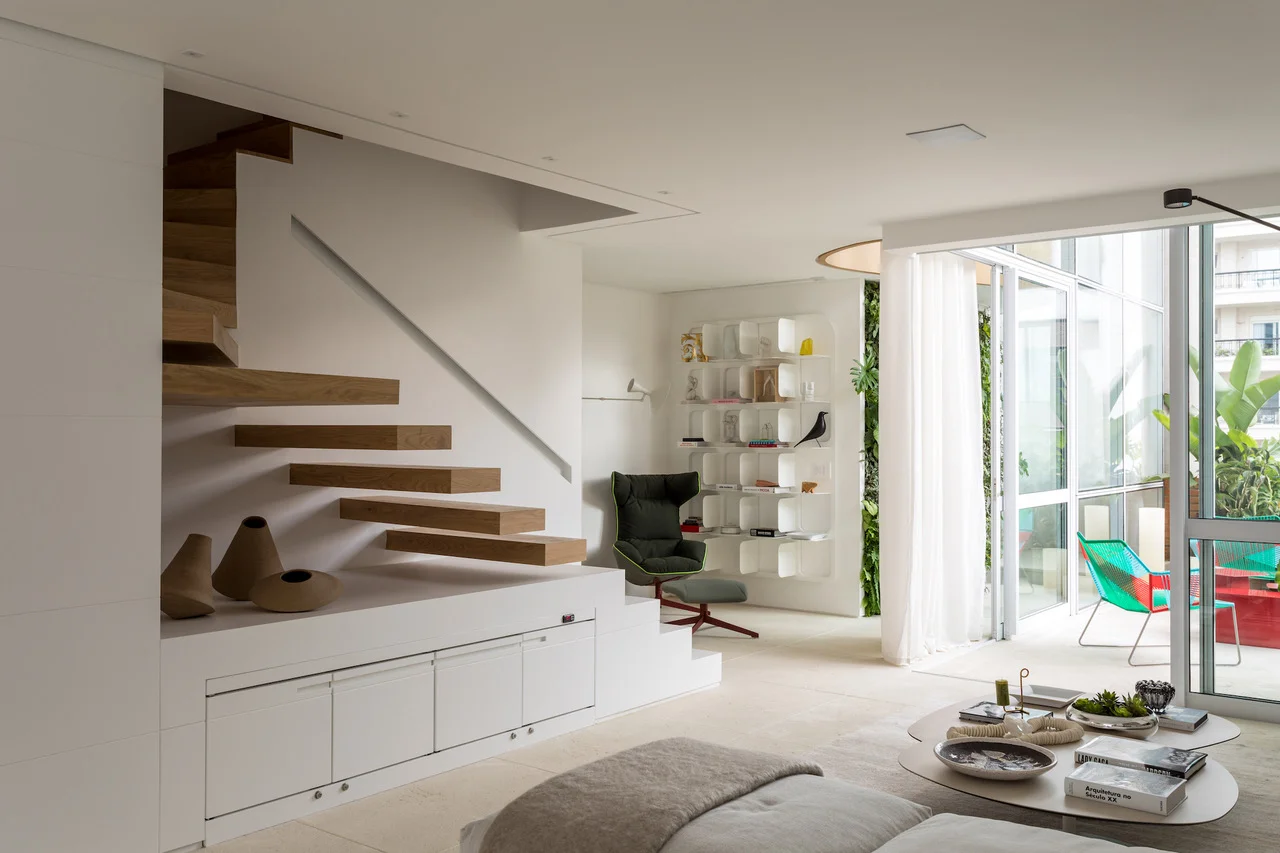
Wood Floors in the Bedroom: How to Choose a Calm, Quiet Floor
Wood is warm underfoot, easy to keep dust-free and lasts for decades in a low-traffic room. How to choose the color, finish, layout and acoustics of a bedroom floor.
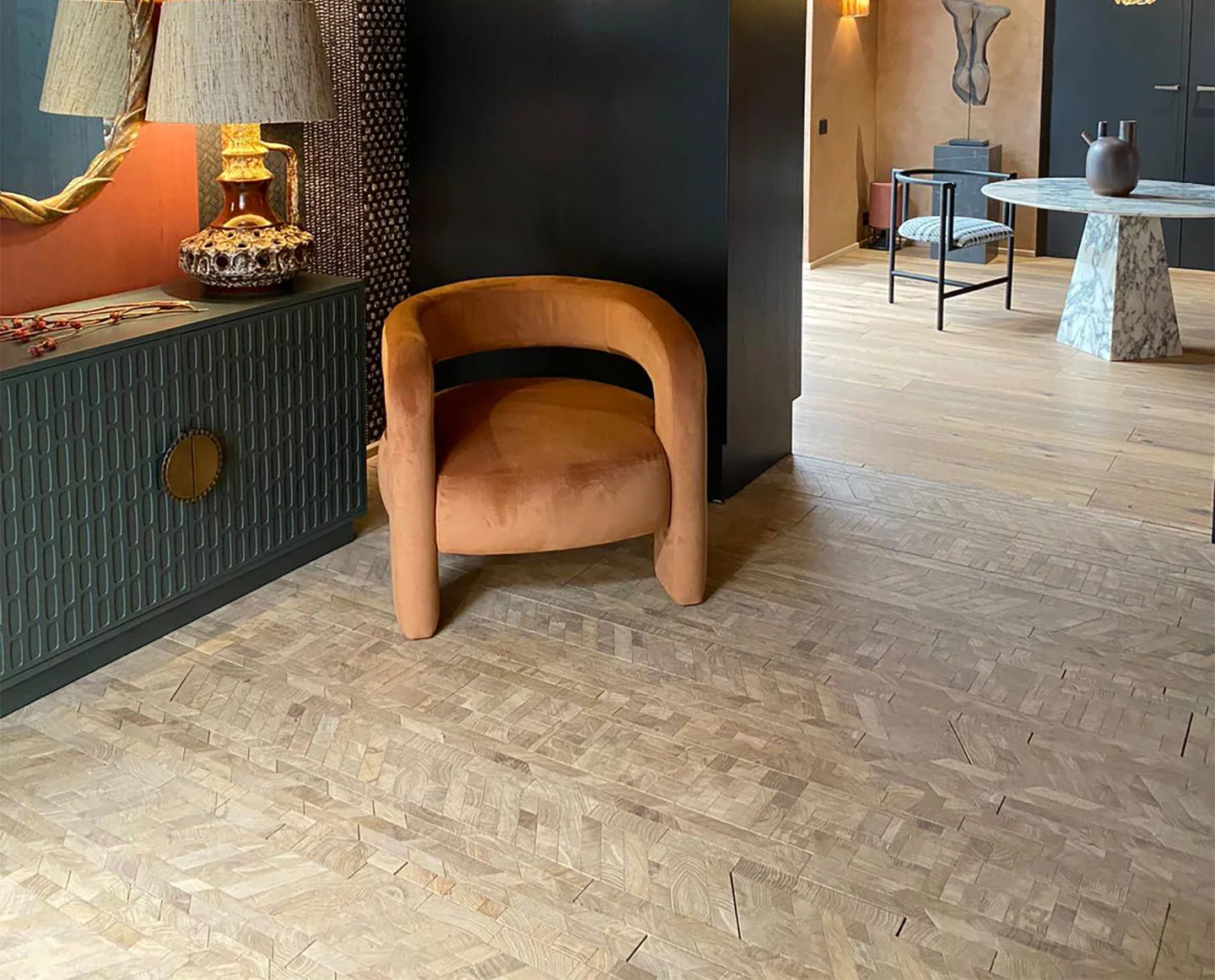
Light Oak Flooring for Bright, Sunlit and Coastal Rooms
Pale oak suits sunlit and seaside rooms, if you get the finish right. How light oak changes in the sun, and what sand, humidity and glare mean for it.

Wide Plank Oak Flooring for a Minimalist Interior
Fewer joints, a clean grade, a low sheen and one direction through the house: how to choose wide plank oak for a minimalist interior, and when an end grain grid does the job better.