
Wood Floors in the Bedroom: How to Choose a Calm, Quiet Floor
A bedroom asks less of a floor than any other room, and notices it more: bare feet, early light, every creak at night.
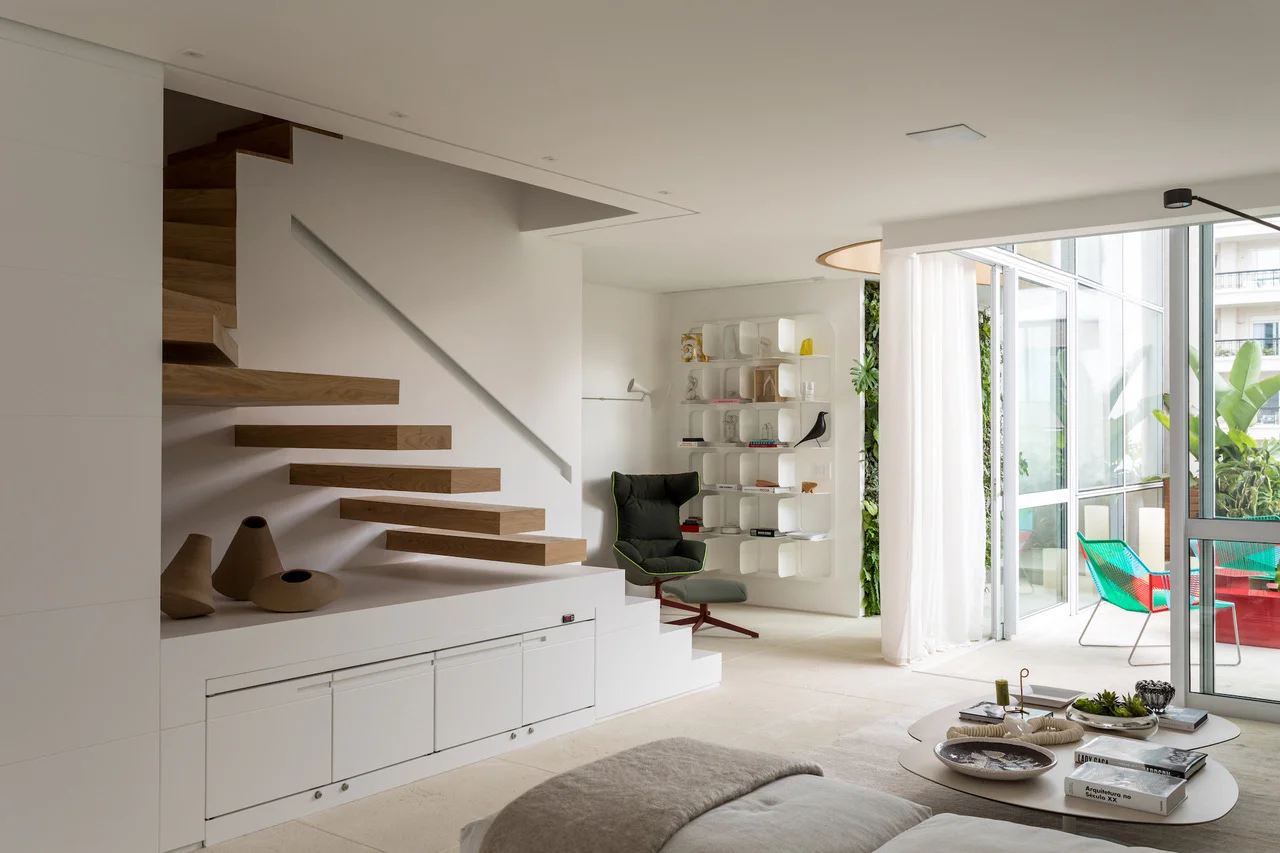
A wood floor suits a bedroom well: it is warm under bare feet, easy to keep free of dust, and in a room with little traffic it lasts for decades. For a calm room, choose a matte finish in a light or mid tone, keep one floor running in from the hallway, and handle sound with rugs and a good acoustic underlay rather than expecting the wood to absorb it.
Why is a wood floor good for a bedroom?
- Warm underfoot. Wood conducts heat slowly, so it does not pull warmth from bare feet the way stone or tile does. The first step out of bed feels mild even in winter.
- Easy to keep clean. Dust sits on the surface and is vacuumed away, instead of settling into fibers as it does in carpet.
- Long-lasting. A bedroom sees soft traffic, mostly bare feet and slippers, so the finish wears slowly.
- Calm to look at. Grain gives a floor quiet movement without pattern, which suits a room meant for rest.
Will a wood floor make the bedroom noisy?
Two different sounds matter here. The first is echo inside the room. Wood is a hard surface and reflects sound, so a bare bedroom with a wood floor and plaster walls can sound lively. Rugs, curtains, an upholstered headboard and the bed itself absorb most of it; a large rug around the bed does more than any choice of floor.
The second is impact noise, footsteps heard in the room below. That depends on the construction: a fully glued floor on a solid slab, or an acoustic underlay under a floating one. In apartment buildings, check the building's rules before you choose; many require a minimum acoustic performance.
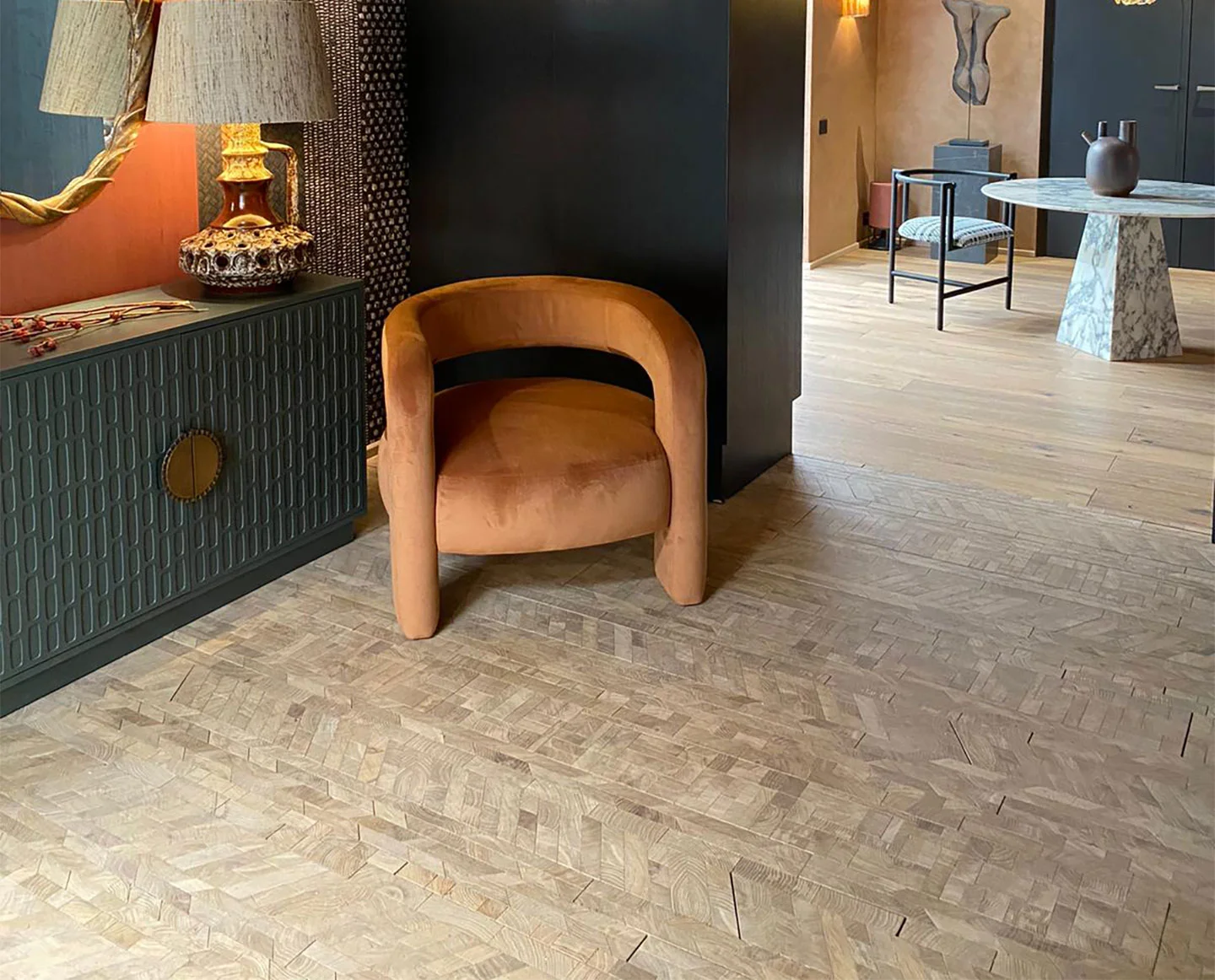
End grain behaves a little differently from plank. Footfall on endgrain blocks sounds softer and duller than on long boards, which is part of what people mean by the acoustic calm of endgrain. Cube, a grid of square endgrain oak blocks, shows it in its simplest form.

The Cube projects on our works pages are public spaces, such as the Carole Lambert Présente gallery in Paris, laid in Cube Black, but the quiet, even grid works just as well in a bedroom, where its Natural or Smoke finish can be continued into the next room with plain Tandem boards in the same finish.
What color wood floor is best for a bedroom?
There is no single answer, but a few rules hold:
- Light and natural oak keep a small or north-facing bedroom bright and make it feel larger.
- Honey and mid-brown tones feel warm and settled, and they hide dust better than very pale or very dark floors.
- Dark floors make a large bedroom feel enclosed and intimate, but show every bit of dust and lint, which is noticeable next to a bed.
- Low contrast between floor, walls and bedding reads calmer than strong contrast.
A matte finish matters as much as the color. Gloss throws back the morning sun as glare and shows every scratch; matte lets light spread softly across the grain.
Plank, pattern or end grain for a bedroom?
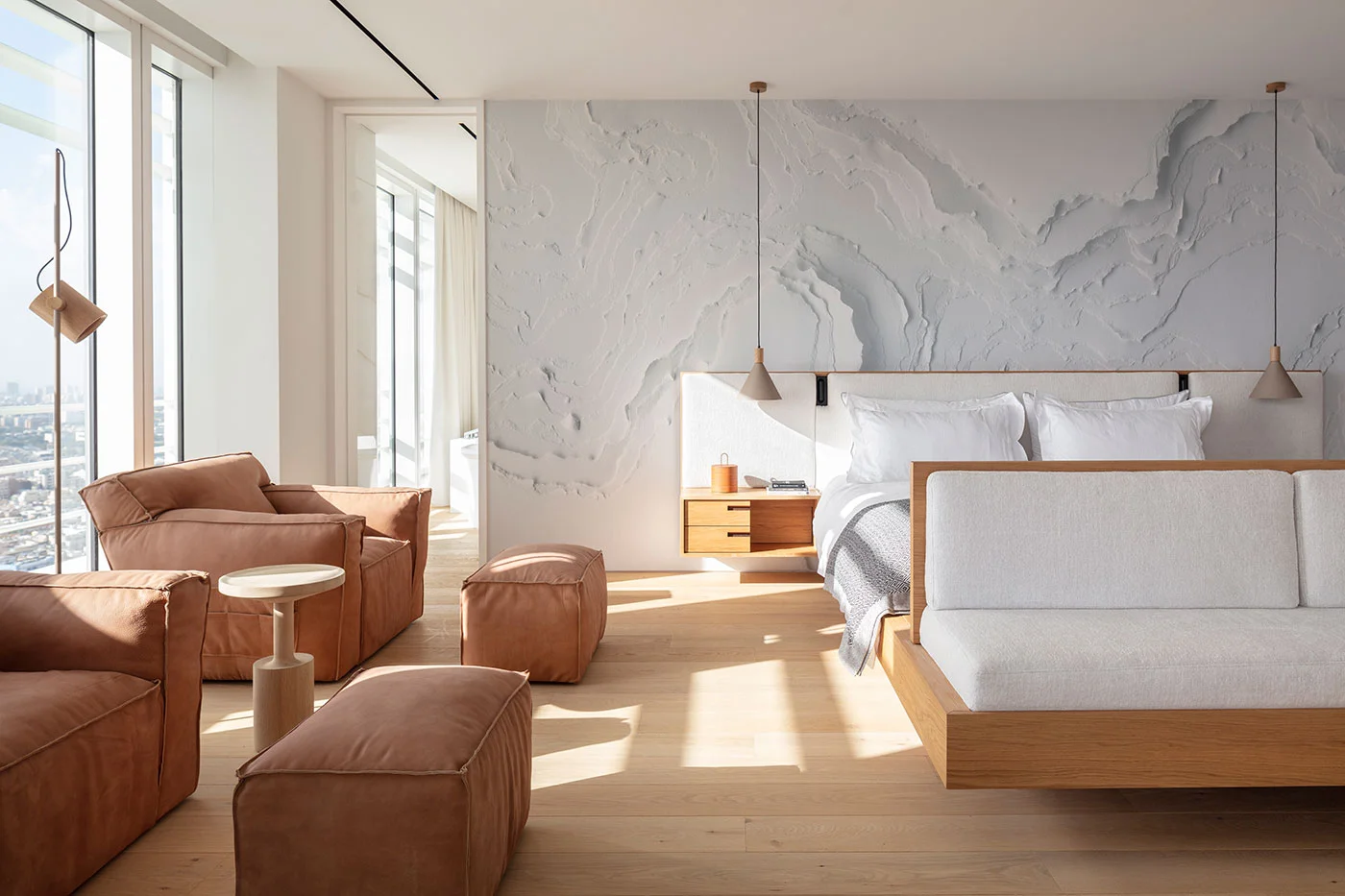
Straight planks are the quiet choice: few lines, one direction, nothing competing with the bed. Droit, our straight oak plank, comes 150 mm or 190 mm wide in twelve lacquered Essentiel colors, and the wider board keeps a bedroom floor especially calm. In this private apartment in Tel Aviv by Dieter Vander Velpen, Droit is laid in one of the pale Essentiel colors.
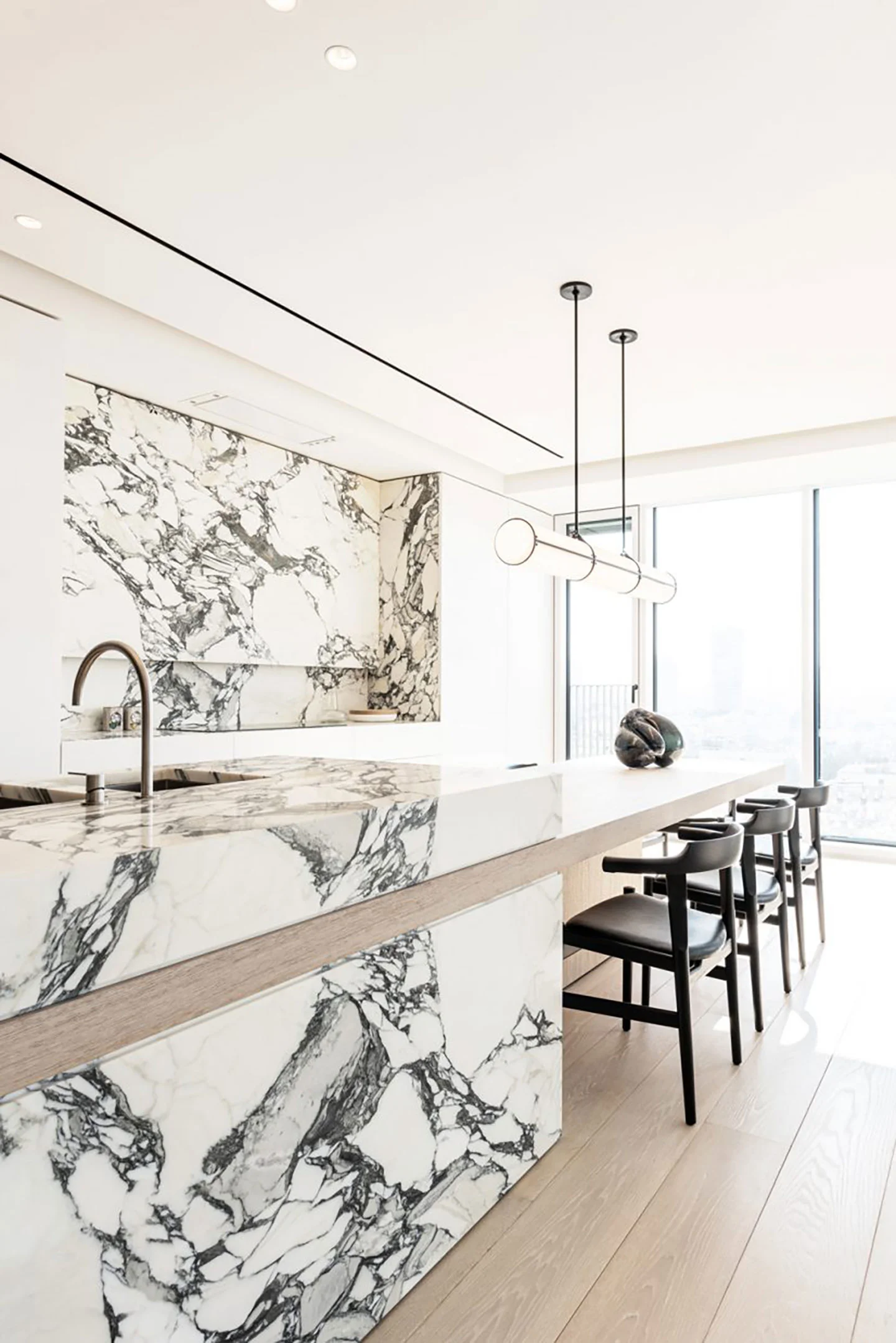
Herringbone or chevron gives a bedroom more character and suits period apartments. End grain gives texture and a softer footfall. In a bedroom the deciding factor is usually the rest of the home: one floor running through connected rooms looks calmer than a change at every door.
Which way should the boards run in a bedroom?
Toward the main window if you can, so daylight runs along the boards and the joints almost disappear. In a long, narrow bedroom, boards parallel to the long walls stretch the room. If the floor continues from the hallway, keep the hallway's direction rather than turning it at the door.
Can a bedroom wood floor go over underfloor heating?
Usually, yes. Bedrooms are often heated less than living rooms, which is easy on a wood floor. A floor glued to a well-prepared screed, with the surface temperature kept within the manufacturer's limit, is the usual approach. Check the spec sheet of the floor you choose, and keep indoor humidity reasonable through the heating season so the boards do not shrink and open small gaps.
Frequently asked questions
Is wood flooring a good choice for a bedroom?
Yes. Wood is warm under bare feet, easy to keep free of dust, and lasts for decades in a room with little traffic. A matte finish in a light or mid tone suits most bedrooms.
Does a wood floor make a bedroom noisy?
Wood reflects sound, so a bare room can echo, but rugs, curtains and the bed absorb most of it. Footstep noise heard below depends on the installation, such as a glued floor on a solid slab or an acoustic underlay, so check your building's rules.
What color wood floor is best for a bedroom?
Light and natural oak keep a small or north-facing bedroom bright; honey and mid-brown tones feel warm and hide dust well; dark floors feel intimate but show dust and lint. Low contrast with the walls and bedding reads calmest.
Which direction should wood flooring run in a bedroom?
Toward the main window where possible, so light runs along the boards. In a long, narrow room, run them parallel to the long walls, and if the floor continues from the hallway, keep the same direction.
Can you put a wood floor over underfloor heating in a bedroom?
Usually, yes, if the floor is suitable for it and glued to a properly prepared screed, with the surface temperature kept within the manufacturer's limit. Check the spec sheet of the floor you choose.
Bedroom floors by OscarOno Paris
Droit is flatgrain select oak, 12 mm with a 4 mm oak top layer, 150 mm or 190 mm wide, lacquered in twelve Essentiel colors and rated usage class 33. Cube is endgrain oak from the atelier's solid offcuts, 10 mm birch plywood with a 6 mm oak top layer, in Natural, Smoke or Black, rated usage class 34, with Tandem plain boards for the rooms around it. Both carry a Cfl-s1 fire rating and are FSC and PEFC certified. Order samples and look at them in the bedroom itself, in morning and evening light; spec sheets, CAD and 3D files are in the library.
More from the Atelier
Light Oak Flooring for Bright, Sunlit and Coastal Rooms
Pale oak suits sunlit and seaside rooms, if you get the finish right. How light oak changes in the sun, and what sand, humidity and glare mean for it.
Wide Plank Oak Flooring for a Minimalist Interior
Fewer joints, a clean grade, a low sheen and one direction through the house: how to choose wide plank oak for a minimalist interior, and when an end grain grid does the job better.
Wood Floor Colors: How Light, Warm and Dark Tones Change a Room
Light floors open a room, warm ones settle it, dark ones close it in. How to choose a wood floor color for your light, your furniture and the way you live.