
Wide Plank Oak Flooring for a Minimalist Interior
In a room with little in it, the floor is most of what you see. Here is how to choose it.
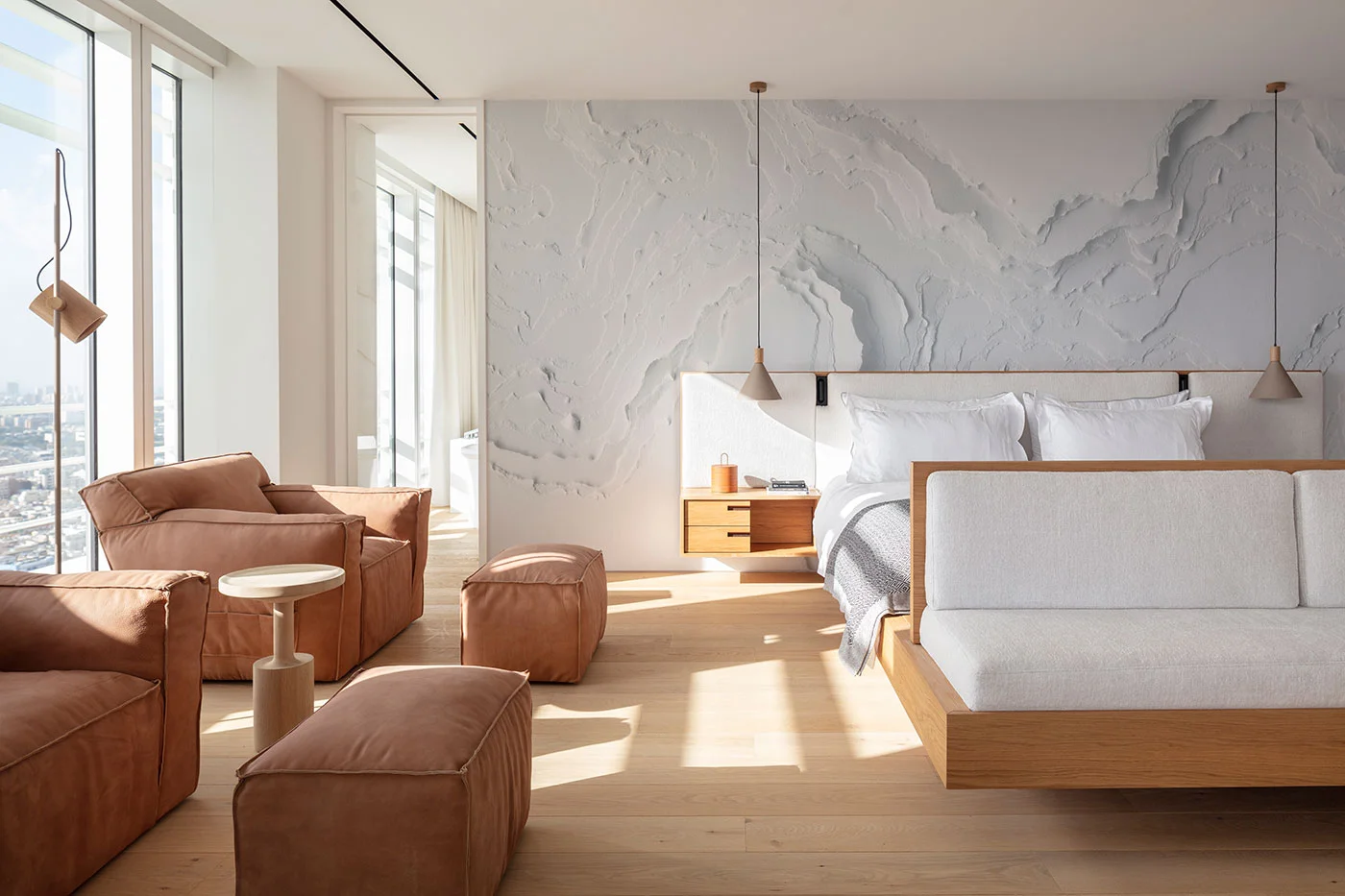
Wide plank oak flooring suits a minimalist interior because it has fewer joints, so the floor reads as one calm surface and the grain of the oak does the decorating. Choose a plain straight plank in a clean grade, a low-sheen finish and one direction through the whole space, then keep the details around it as quiet as the floor.
Why does wide plank oak suit a minimalist interior?
Every joint is a line, and a minimalist room has few lines to spare. A wide board covers the same floor with fewer of them, so the eye travels across the surface without being stopped. Each board also has room to show the full arch of the oak grain, which gives the floor life without adding anything to the room.
Oak itself is a good partner for reduced interiors. Its color is neutral, from pale straw to warm honey in its natural state, it takes light and dark finishes evenly, and it sits well beside plaster, stone and concrete, the other materials such rooms tend to use.
What counts as wide has no official cut-off, but the trade usually starts at about 5 inches, roughly 13 cm. Droit, OscarOno Paris's straight oak plank, comes 150 mm or 190 mm wide: the wider board is the calmer of the two in large rooms. Our guide to wide plank flooring and board size goes into widths in more detail.
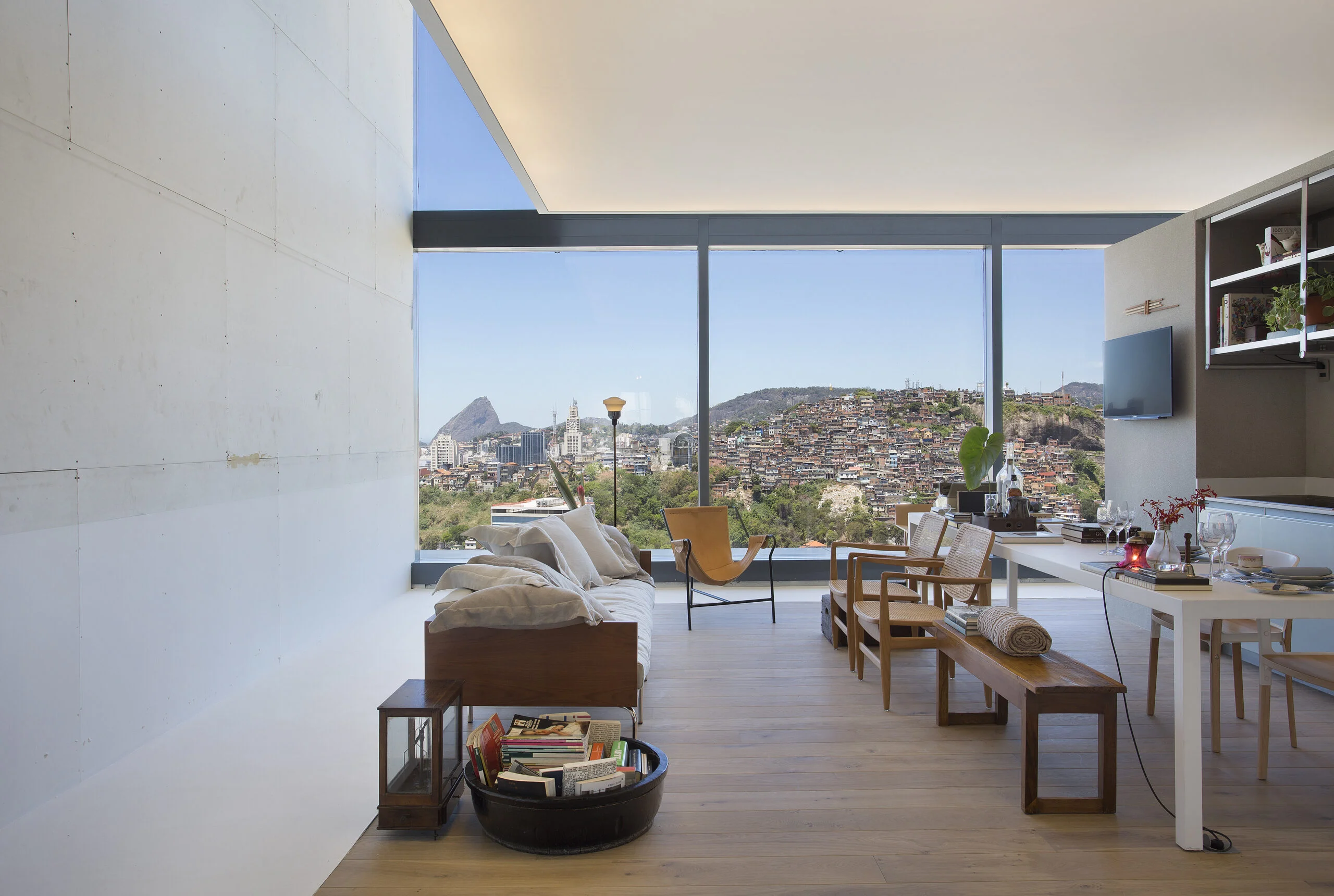
At CASACOR in Brazil, Droit in a natural finish runs under the whole room, and the long, pale boards are the background for everything else.
How do you choose wide plank oak for a minimalist room?
- A clean grade. Large knots and strong sapwood contrast make a floor busy. Select grade, which allows only small, sound knots and gentle color variation, keeps it quiet without looking artificial. Droit is cut from select-grade flatgrain oak. Our guide to oak flooring grades explains the differences.
- A low sheen. A matte surface shows the wood rather than reflections of the windows, and it hides wear, which matters on a floor with nothing on it. See matte vs gloss wood floor finishes.
- Long boards. End joints break a floor into a patchwork. A wide board needs length to keep its proportion.
- One direction. Run the boards toward the main window and keep that direction from room to room, so the floor reads as one surface.
- A color decided with the walls. Natural and pale tones are the obvious choice, but a dark floor under pale walls is just as reduced. Droit comes in twelve lacquered colors, so the tone can be chosen separately from the plank.
Can one wood run from the floor into the joinery?
Using one wood for the floor, the built-in cabinets and sometimes the walls is a common way to make a reduced interior feel whole. It works best when the floor is chosen first and the joinery is matched to a physical sample of it, in the room's own light. Oak cut a different way, or finished with a different product, can come out a shade apart, and next to a large floor that small difference shows. If an exact match is not possible, a clear contrast often looks more deliberate than a near miss.
Which details does a minimalist floor expose?
Taking away skirting boards, thresholds and trim leaves every junction on show. Three things deserve attention before the floor goes down:
- The edge. Wood needs a small expansion gap at the walls. Without a skirting board, it has to go somewhere: a shadow gap detailed into the wall, or a recessed skirting set flush with the plaster.
- Thresholds. Where wood meets stone or tile, the two finished surfaces should meet flush, which means planning the build-up of each material, adhesive included, before either is laid.
- The subfloor. A wide board bridges small dips rather than following them, so the base has to be flat and dry, and a fully glued installation is common.
Wide planks or an end grain grid?
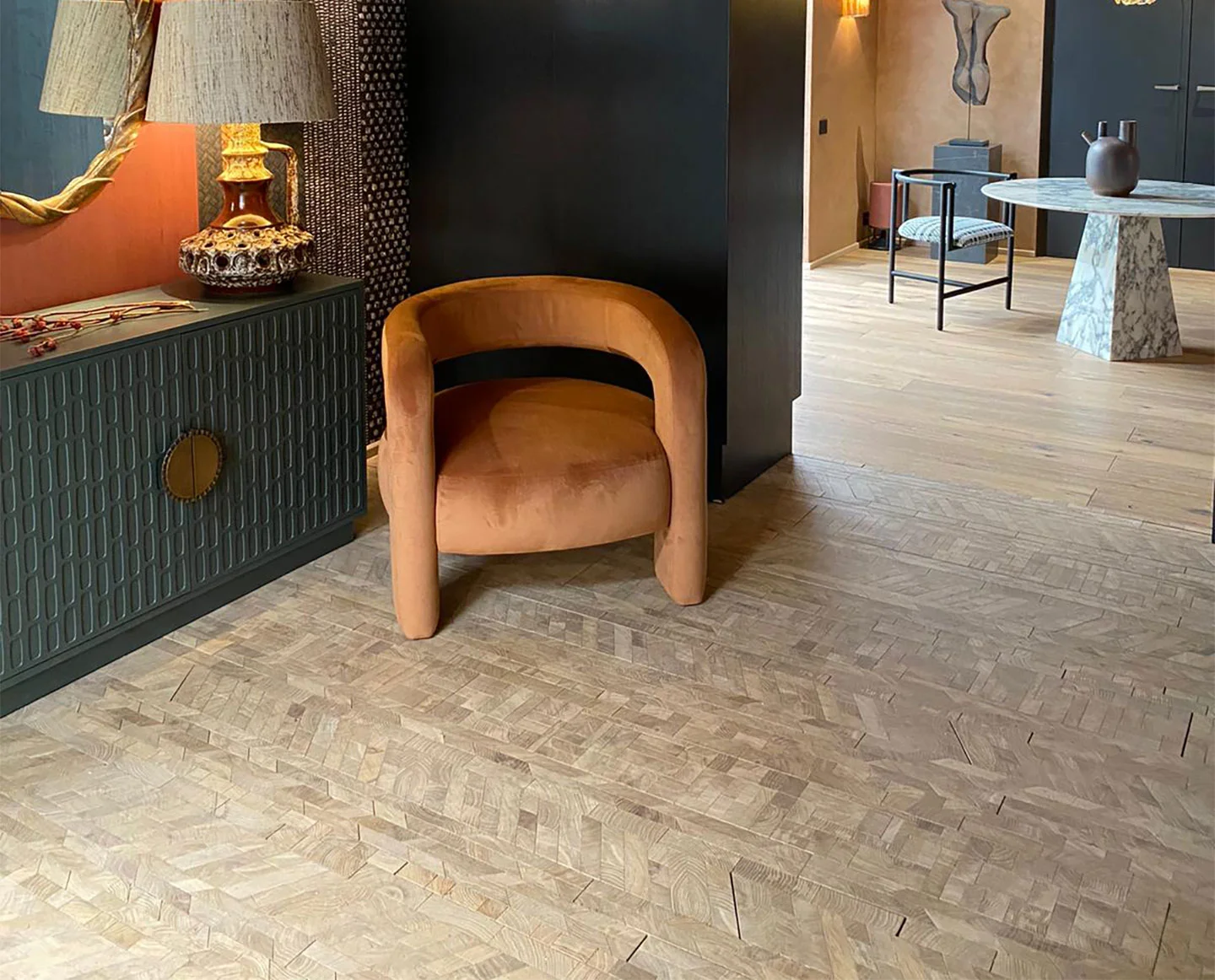
A minimalist floor does not have to be made of planks. An end grain floor is cut across the trunk, so you walk on the ends of the fibers and see the growth rings. Cube, a grid of square end grain oak blocks, is the simplest form of it: the blocks sit side by side in an open, even grid, built from the solid oak offcuts the atelier would otherwise set aside. It reads as a texture rather than as lines, it is very hard-wearing, and end grain brings an acoustic calm that plank floors do not.
| Wide plank (Droit) | End grain grid (Cube) | |
|---|---|---|
| What you see | Long lines and the arch of the grain | An even grid of growth rings |
| Cut | Flatgrain oak, select grade | End grain oak, solid offcuts |
| Construction | 12 mm thick, 4 mm oak top layer | 10 mm birch plywood, 6 mm oak top layer |
| Finishes | Twelve colors, lacquered | Natural, Smoke or Black, no stain |
| Usage class | 33, heavy commercial traffic | 34, very heavy commercial traffic |
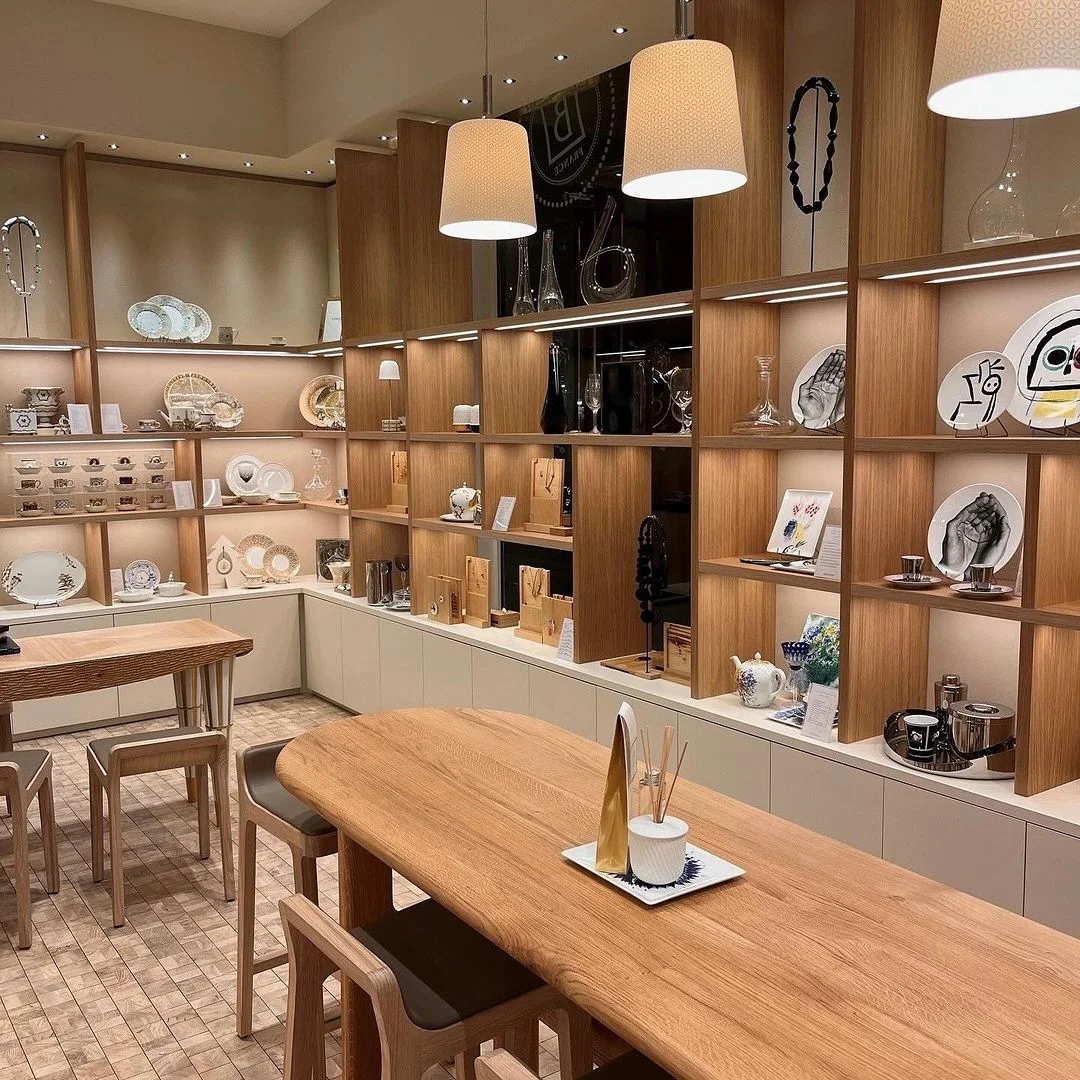
At Bernardaud in Bordeaux, Cube in its natural finish gives the room one even surface with no direction at all, which is the other way to make a floor recede.
Frequently asked questions
What width counts as wide plank oak flooring?
There is no official cut-off, but boards from about 5 inches, roughly 13 cm, are generally called wide plank. Droit, OscarOno Paris's straight oak plank, comes 150 mm or 190 mm wide, so both widths sit in that range.
Which oak grade suits a minimalist interior?
A clean grade such as select, which allows only small, sound knots and gentle color variation. It keeps the floor calm without making it look artificial. Rustic grades, with large knots and strong sapwood, make a floor much busier.
How do you keep a minimalist wood interior from feeling cold?
Let the floor carry the warmth. A natural or honey-toned oak in a low-sheen finish, textiles in warm neutrals and soft, low light keep a reduced room inviting. A gloss finish and cool, bright lighting do the opposite.
Is end grain flooring a good choice for a minimalist interior?
Yes, if you prefer a quiet texture to long lines. A grid of square end grain blocks has no direction, shows the growth rings instead of the long grain, and is very hard-wearing. It suits rooms where you do not want the floor to point anywhere.
Wide plank and end grain oak by OscarOno Paris
Droit is OscarOno Paris's straight plank: flatgrain select oak, 12 mm thick with a 4 mm oak top layer, 150 or 190 mm wide, lacquered in twelve colors, usage class 33 for heavy commercial traffic. Cube is its end grain grid: 10 mm birch plywood with a 6 mm oak top layer, in Natural, Smoke (smoked through the full depth of the oak) or Black (charred, in the shou sugi ban tradition), usage class 34, with joints under 1 mm. Cube can be paired with plain boards in the same finish for adjoining rooms, so one finish can run through a whole home. Both carry a Cfl-s1 fire rating and are FSC and PEFC certified.
Order samples to see the oak in your own light, and find spec sheets, CAD and 3D files in the library.
More from the Atelier
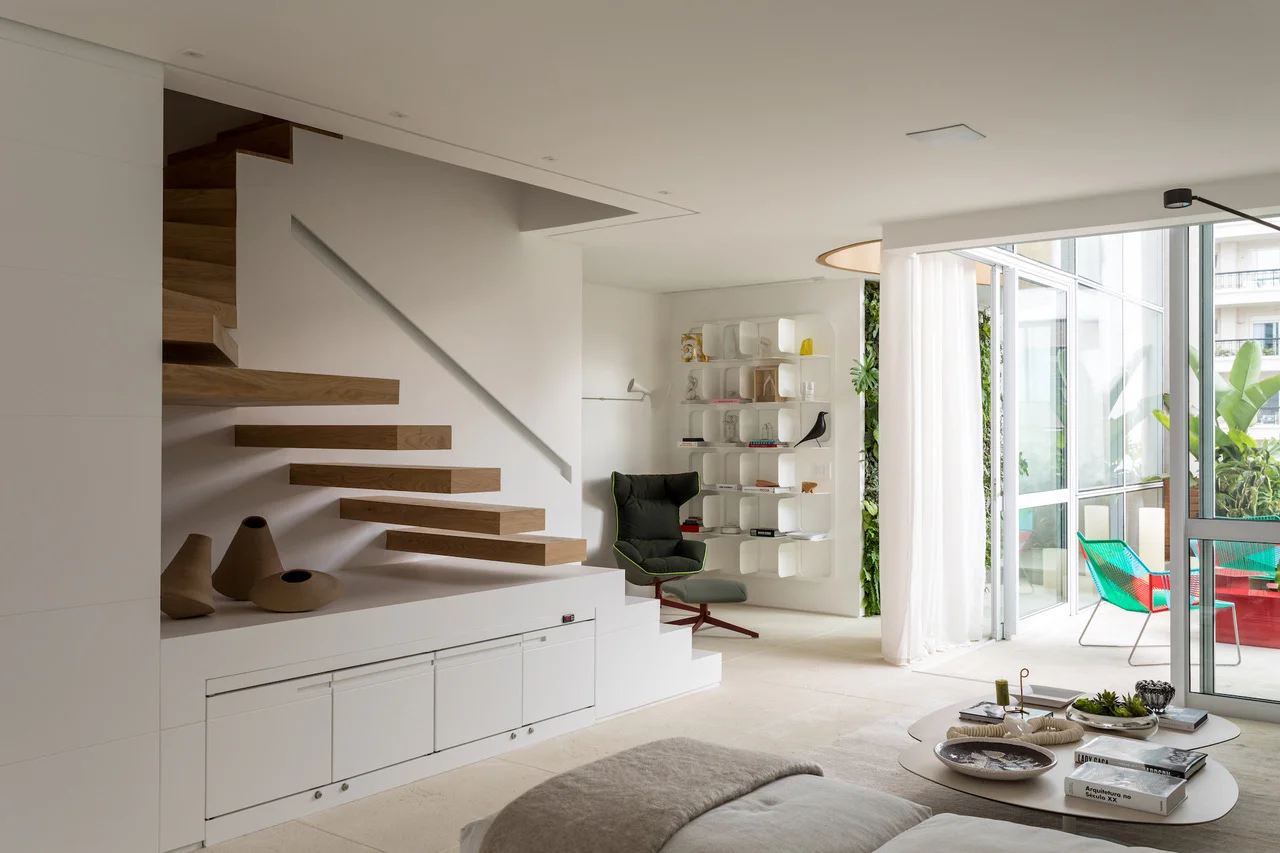
Wood Floors in the Bedroom: How to Choose a Calm, Quiet Floor
Wood is warm underfoot, easy to keep dust-free and lasts for decades in a low-traffic room. How to choose the color, finish, layout and acoustics of a bedroom floor.
Light Oak Flooring for Bright, Sunlit and Coastal Rooms
Pale oak suits sunlit and seaside rooms, if you get the finish right. How light oak changes in the sun, and what sand, humidity and glare mean for it.
Wood Floor Colors: How Light, Warm and Dark Tones Change a Room
Light floors open a room, warm ones settle it, dark ones close it in. How to choose a wood floor color for your light, your furniture and the way you live.