
Matte Wood Floor Finish vs Gloss: Choosing a Floor Sheen
Sheen decides how much a floor reflects and how much wear it shows. It does not decide how long the finish lasts.
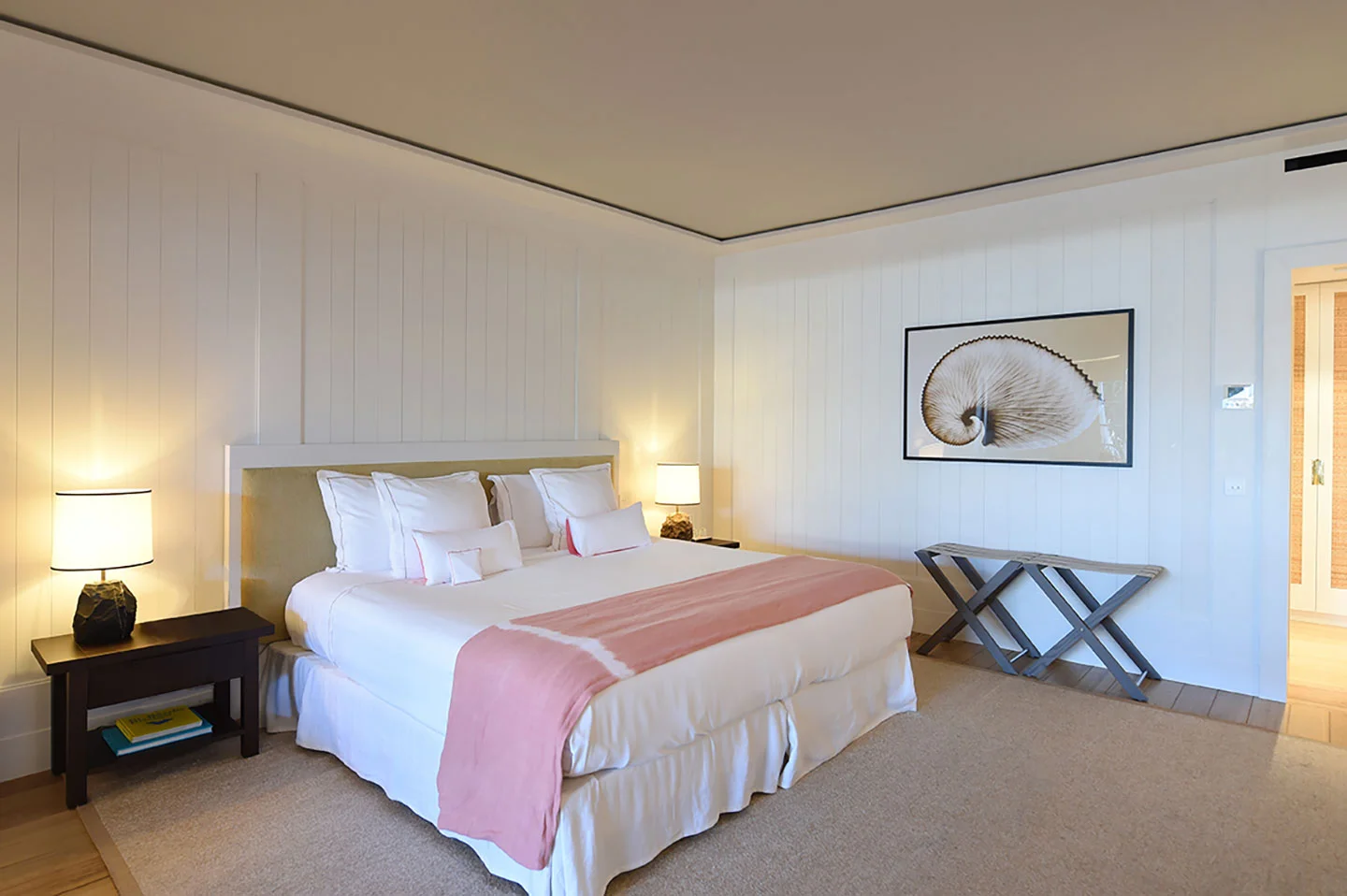
A matte wood floor finish reflects very little light, so the floor reads as wood rather than as a shiny coating, and scratches, dust and footprints show far less than they do on gloss. Gloss reflects windows and lamps almost like a mirror and shows every mark; satin sits in between. Sheen changes the look and how visible wear is, not how tough the finish is.
What is floor sheen and how is it measured?
Sheen is how much light the surface of a finish reflects. Finish makers measure it with a gloss meter, which shines light at the surface at a fixed angle, usually 60 degrees, and reads how much bounces straight back, in gloss units. The scale runs from close to zero for a dead-flat surface up to a mirror-like one at the top.
The names on the can are not standardized. One brand's matte is another brand's satin, so a label tells you less than you think. Ask for the gloss value if you are comparing products, and better still, look at a sample board in the room where the floor will go, in daylight and in the evening.
| Sheen | How it reflects | How it shows wear | Where it suits |
|---|---|---|---|
| Ultra-matte | Almost not at all; looks close to raw wood | Hides scratches and dust best | Busy homes, shops, contemporary interiors |
| Matte | A soft, low glow | Very forgiving | Most rooms and most floors |
| Satin | A gentle sheen, colors look a little richer | Forgiving of light wear | Classic interiors, dining rooms |
| Semi-gloss | Clear reflections of light sources | Fine scratches start to show | Low-traffic formal rooms |
| Gloss | Mirror-like | Shows every scratch, footprint and speck of dust | Rooms that are seldom walked on and well kept |
How does a matte finish change the look of a room?
A matte surface scatters light instead of bouncing it back, so what you see is the grain, the color and the texture of the oak, not the reflection of the windows. The floor sits quietly under the furniture, and the room tends to feel calmer.
Sheen also shifts color. A higher sheen saturates the wood and makes it look deeper and a little darker, as if wet. A matte finish keeps it closer to the color of the bare timber. That is worth remembering when you choose a color from a sample with a different sheen than the floor you will get.
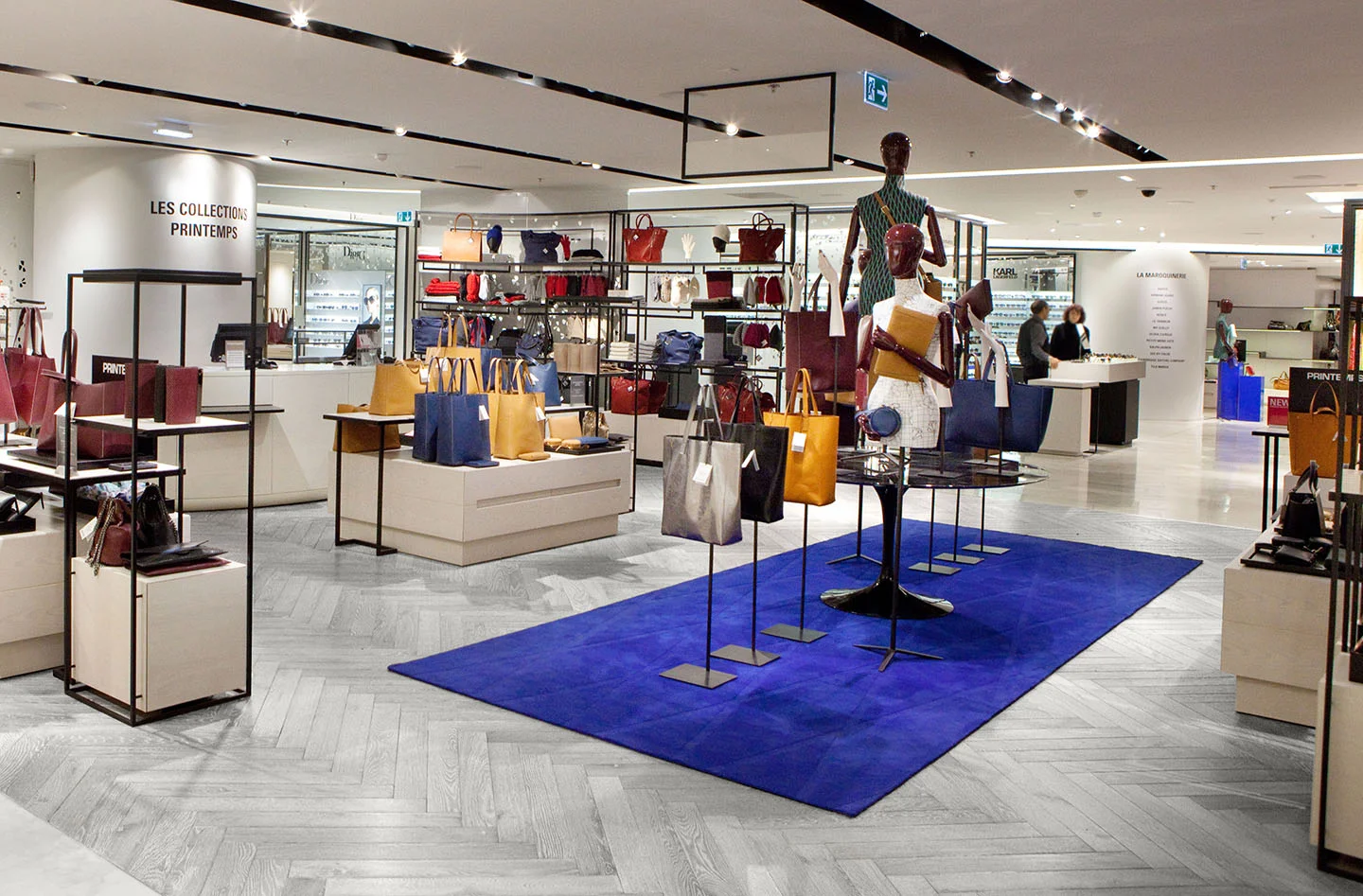
Pattern makes the difference larger. In a herringbone such as Rompu, OscarOno Paris's oak herringbone, the grain runs one way on one side of each zigzag and the other way on the other side, so the boards turn pale or dark as the light moves. A low sheen lets that play of the grain come through; gloss lays a reflection over it, and you see glare before you see the pattern. The pale herringbone at Le Printemps in Paris shows how much a light, low-reflection floor gives back to a room.
Which floor sheen hides scratches best?
Matte, then satin. A scratch becomes visible because it breaks an otherwise even reflection: on a gloss film, every fine scratch catches the light as a bright line, and dust and footprints show as dull patches on a shiny surface. A matte surface already scatters light, so small scratches, dust and paw prints blend into it.
That is why matte and satin are the usual choice for homes with children or dogs, entrance halls, kitchens and shops. One thing to know: in the main walking paths, feet and furniture can slowly polish a matte finish, so a well-used route may look slightly shinier than the edges of the room. Felt pads, doormats and the cleaning products the finish maker recommends keep this in check.
Is a matte finish less durable than gloss?
No. How long a finish lasts depends on what it is, a lacquer or varnish film or an oil, and how it is applied, not on how much it shines. The matte and the gloss version of the same lacquer protect the wood in much the same way. The matte one simply hides the wear better, so it looks good for longer.
How does oil or lacquer affect the sheen?
Oils and hardwax oils soak into the wood and leave little on the surface, so they are naturally matte and keep the feel of the timber underfoot. Lacquers and varnishes form a film on top, and makers add flattening agents to set that film anywhere from ultra-matte to gloss. A film is easier to wipe clean and keeps spills out better; an oil is easier to repair in one spot. Our guide to oiled vs lacquered wood floors goes through the trade-offs.
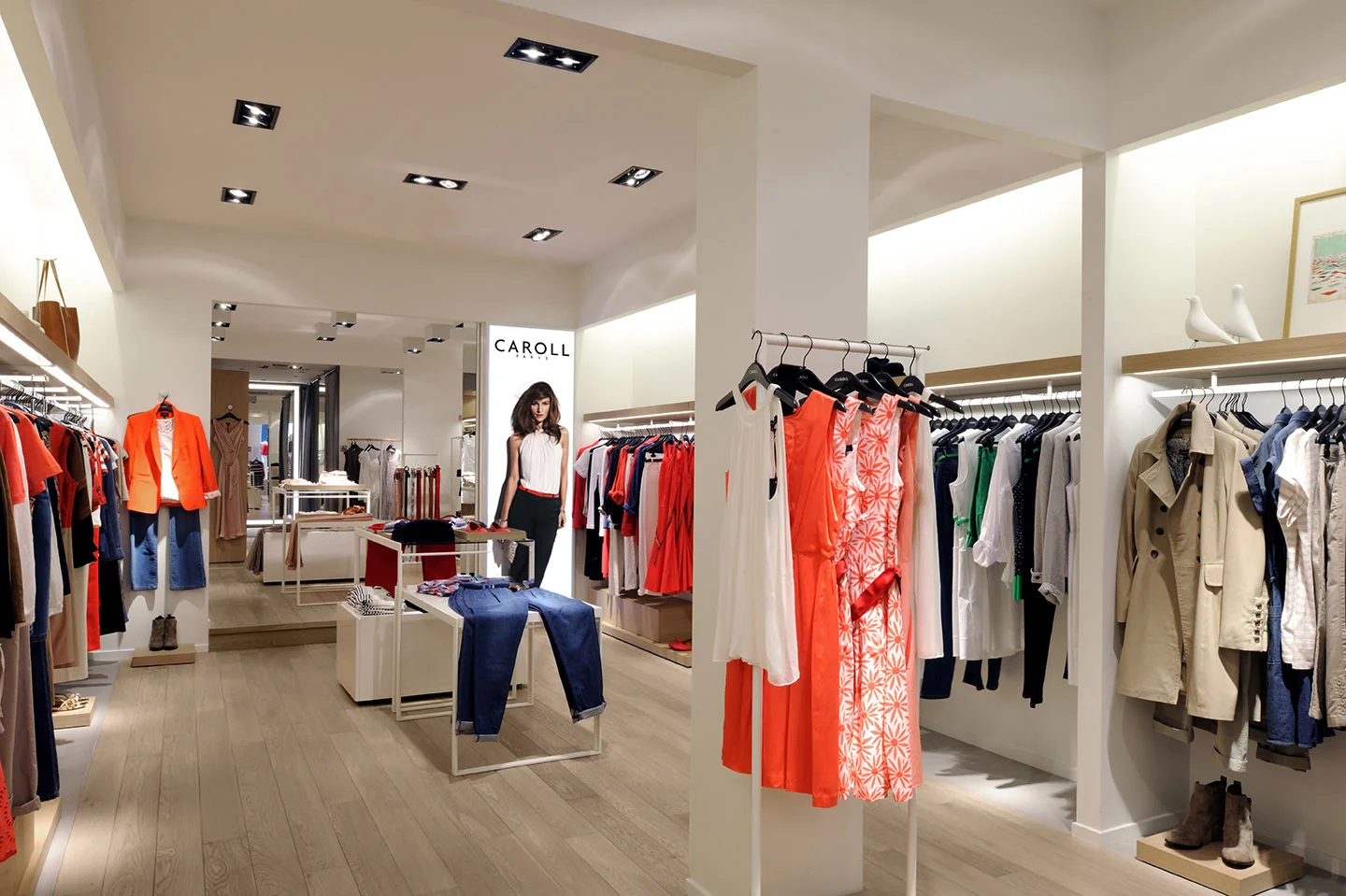
Droit, OscarOno Paris's straight oak plank, is lacquered, in twelve colors. A lacquered plank is a practical choice for a busy floor, which is why it suits shops like Boutiques Caroll in Paris as well as homes.
When does a gloss finish still make sense?
Gloss has its place: a formal room that is rarely walked on, a dark corridor that needs every bit of reflected light, or a period interior where a polished floor is part of the look. Choose it knowing that it will need more cleaning and will show its first scratches sooner.
Frequently asked questions
Does a higher gloss make a wood floor more durable?
No. Durability depends on the type of finish and how it is applied, not on its sheen. A matte and a gloss version of the same lacquer protect the wood in much the same way; the matte one just shows scratches and dust less.
Can I change the sheen of an existing wood floor?
Usually, yes. If the floor has a lacquer or varnish in good condition, it can be lightly abraded and given a new top coat in a different sheen, provided the products are compatible. Moving from lacquer to oil is different: the floor has to be sanded back to bare wood first.
Why does my matte wood floor look shiny in some places?
Traffic polishes it. In the paths people walk most, feet and furniture slowly buff the surface of a matte finish, so those areas can look slightly glossier than the rest. Felt pads, doormats and the cleaning products the finish maker recommends slow this down.
Is matte or satin better for homes with dogs and children?
Matte is the most forgiving, because it scatters light and hides claw marks, scuffs and footprints that would catch the eye on a shinier floor. Satin is a reasonable middle ground if you want a little more glow.
Choosing the finish of an OscarOno Paris floor
OscarOno Paris's straight plank, Droit, and its herringbone, Rompu, share one specification: flatgrain select oak, 12 mm thick with a 4 mm oak top layer, 150 or 190 mm wide, lacquered in the same twelve colors. Both are rated usage class 33 for heavy commercial traffic, carry a Cfl-s1 fire rating and are FSC and PEFC certified.
Sheen and color are judged with the eye, not on a screen. Order samples and look at them on your own floor, morning and evening, and find spec sheets, CAD and 3D files in the library.
More from the Atelier
What Is Wood Terrazzo Flooring? An Architectural Guide
Wood terrazzo flooring unites reclaimed endgrain oak offcuts and mineral ground, creating continuous, tactile surfaces designed for circular luxury interiors.
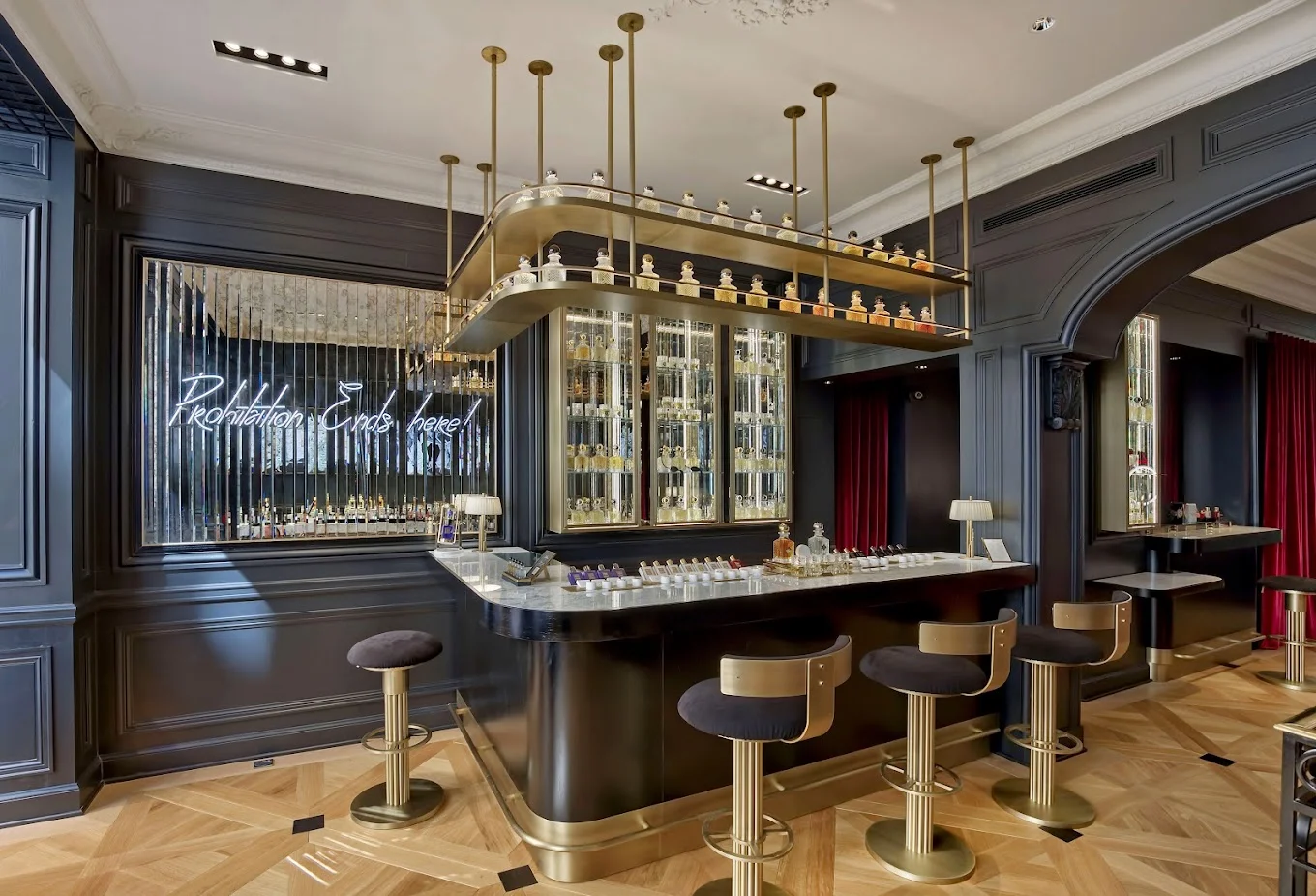
Modern Versailles Parquet: The Classic Panel in Today's Interiors
The woven oak panel first laid in a palace still works in a contemporary room. What changes is the color, the construction and how freely the weave is drawn.
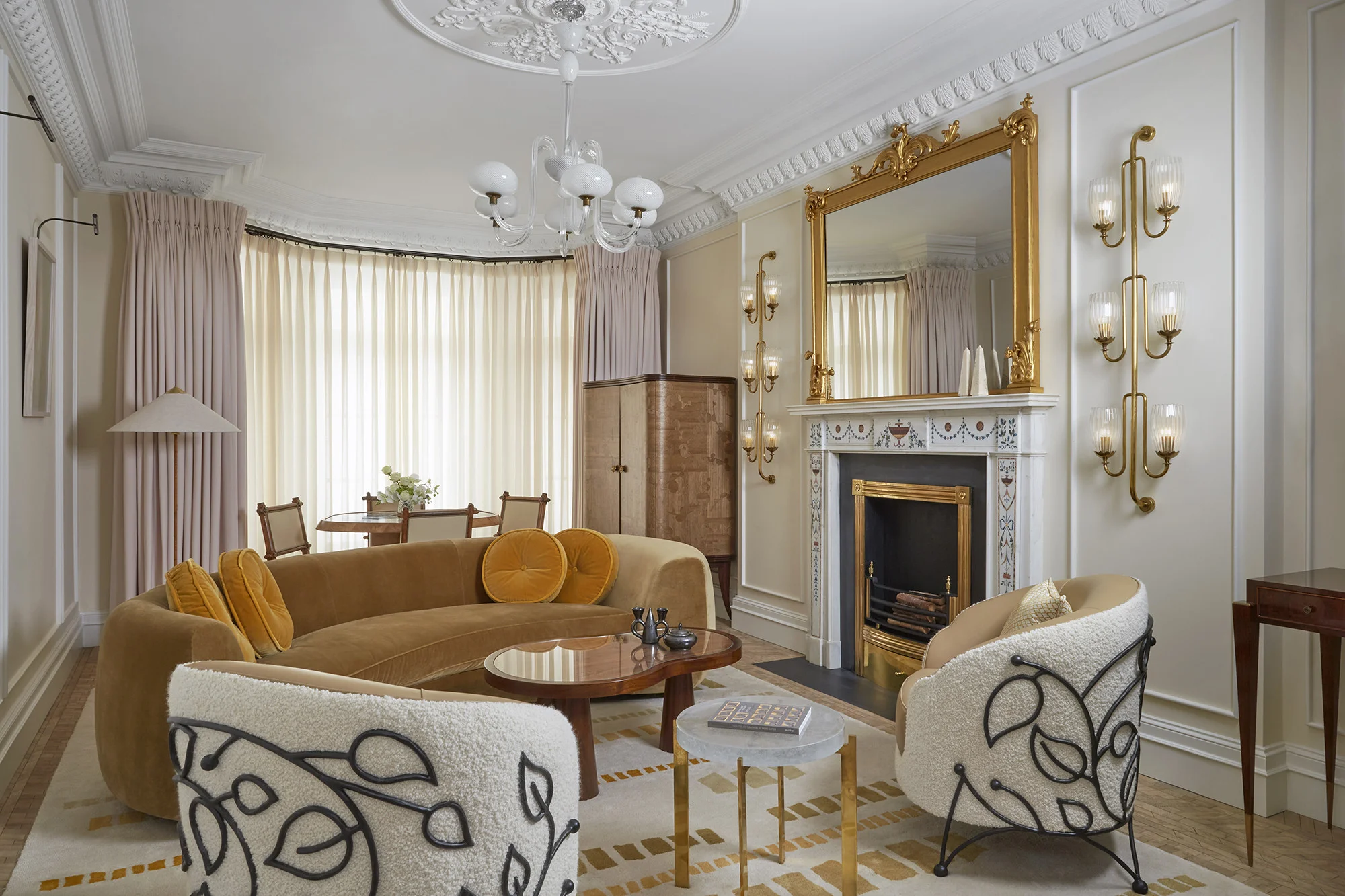
Wood Floor Interior Design: Pairing Oak with Linen, Stone and Brass
Start with the floor, then balance it: stone for weight, linen for softness, brass for light. A practical guide to designing a room around wood.