
Oak Flooring Grades Explained: Prime, Select and Rustic
A grade tells you how a floor will look. It says nothing about how long it will last.
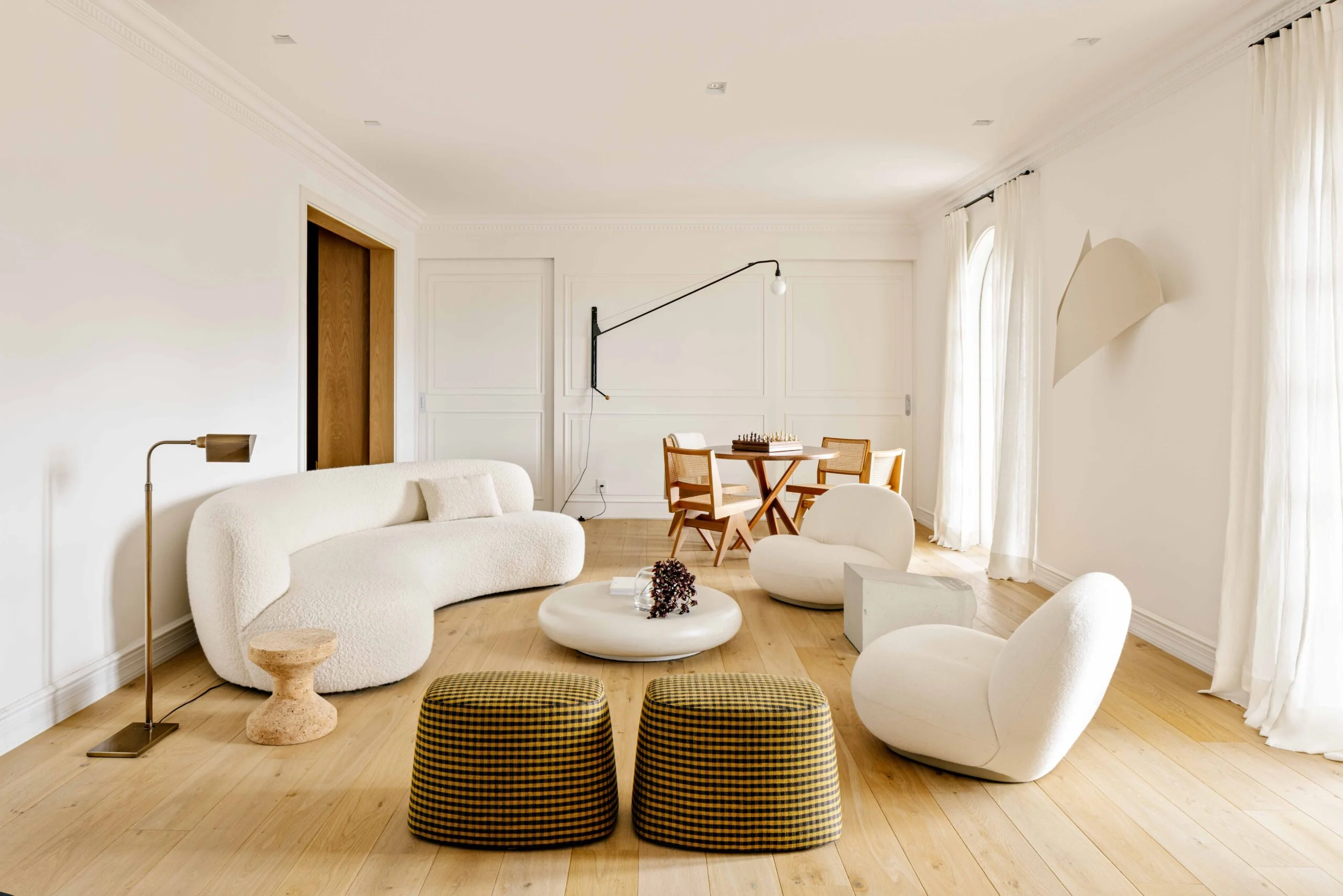
Oak flooring grades sort boards by appearance: how many knots they have and how big, how much pale sapwood shows, and how much the color varies. Prime is the cleanest, select allows small sound knots and gentle variation, and rustic, also called character, allows large knots, sapwood and strong contrast. A grade describes looks, not strength: a rustic board is as hard and durable as a prime board of the same oak and construction.
What are oak flooring grades?
When a log is sawn, every board comes out different. Boards from near the heart are usually more even; boards from near the bark carry sapwood; boards cut where branches grew carry knots. Grading is the sorting that follows, so that one floor can be laid from boards that look alike.
European standards define appearance classes for parquet, but the names you meet in showrooms, prime, select, natural, rustic, character, or letters such as AB, ABC and CD, are trade terms. Each mill draws its limits a little differently, so one maker's select can look like another's prime. Compare samples or the maker's own grading rules, never the name alone.
On a layered board, only the visible oak top layer is graded. The base underneath does not change the grade, so a layered floor can be had in any of them.
Prime vs select vs rustic: what is the difference?
| Prime | Select | Rustic or character | |
|---|---|---|---|
| Knots | None, or very rare pin knots | Small, sound knots, scattered | Large and frequent, often filled |
| Sapwood | None on the face | Little or none | Allowed, shows as pale streaks |
| Color variation | Very even | Gentle | Strong |
| How the floor reads | Calm, uniform, almost one surface | Natural but quiet | Lively, textured, rustic |
| Relative price | Highest | Middle | Usually lowest |
Prime grade
Prime is the most uniform selection: straight, even grain, almost no knots and no sapwood. Because only a small share of each log qualifies, it costs the most. It suits rooms where the floor should step back entirely, galleries and very reduced interiors, though in a large room it can look a little too perfect.
Select grade
Select allows small, sound knots and gentle shifts of color, while keeping the floor calm. It is the grade most people picture when they think of a good oak floor: clearly natural wood, but nothing that pulls the eye. OscarOno Paris's straight plank, Droit, and its herringbone, Rompu, are both cut from select-grade flatgrain oak.

The floor at Comptoir des Cotonniers in Paris shows what select grade looks like in a straight plank: the grain is visible from board to board, but no knot or color patch interrupts the room.
Rustic or character grade
Rustic takes almost everything the log offers: large knots, pale sapwood, strong color differences and sometimes small checks. Open knots and cracks are filled and sanded flat, so the floor is as easy to clean as any other. It brings a lot of texture and warmth, and it is usually the least expensive grade, although heavily hand-worked rustic floors can cost as much as prime.
What are knots, sapwood and medullary rays?
- Knots are the bases of branches. A sound knot is grown into the surrounding wood and stays put; a loose or open one is filled during manufacture. Size and number of knots are the main thing a grade controls.
- Sapwood is the young outer wood of the trunk, paler than the heartwood. It is not a defect, but it makes the color uneven, so the cleaner grades leave it out.
- Medullary rays run from the center of the trunk outward. On quarter-sawn oak they show as silvery flecks across the board; on flatgrain oak, sawn the other way, you see the arched "cathedral" figure of the growth rings instead. Both are features of the wood, not faults.
Does a lower grade mean a lower-quality floor?
No. A rustic board and a prime board cut from the same oak have the same density and hardness, and if they are built the same way, they wear the same. What changes is how much of the tree's history you see. Quality lies elsewhere: in the drying, the accuracy of the milling, the construction of the board and the finish. Check those before you compare grades.
How do you choose the right oak grade?
- Think about the pattern. Herringbone and chevron cut the floor into short pieces that already create movement. Add large knots and strong sapwood and the pattern gets noisy, which is why select grade is the usual choice for patterned floors.
- Think about the room. A large, simple room can carry a livelier grade; a small or busy one usually looks better with a calmer one.
- Think about the color. Darker finishes soften the contrast between knots, sapwood and heartwood. Pale and natural finishes show every difference, so the grade matters most there.
- Keep one grade throughout. Mixing grades between rooms can work, but where floors meet at a doorway the difference shows, so most projects keep a single grade.
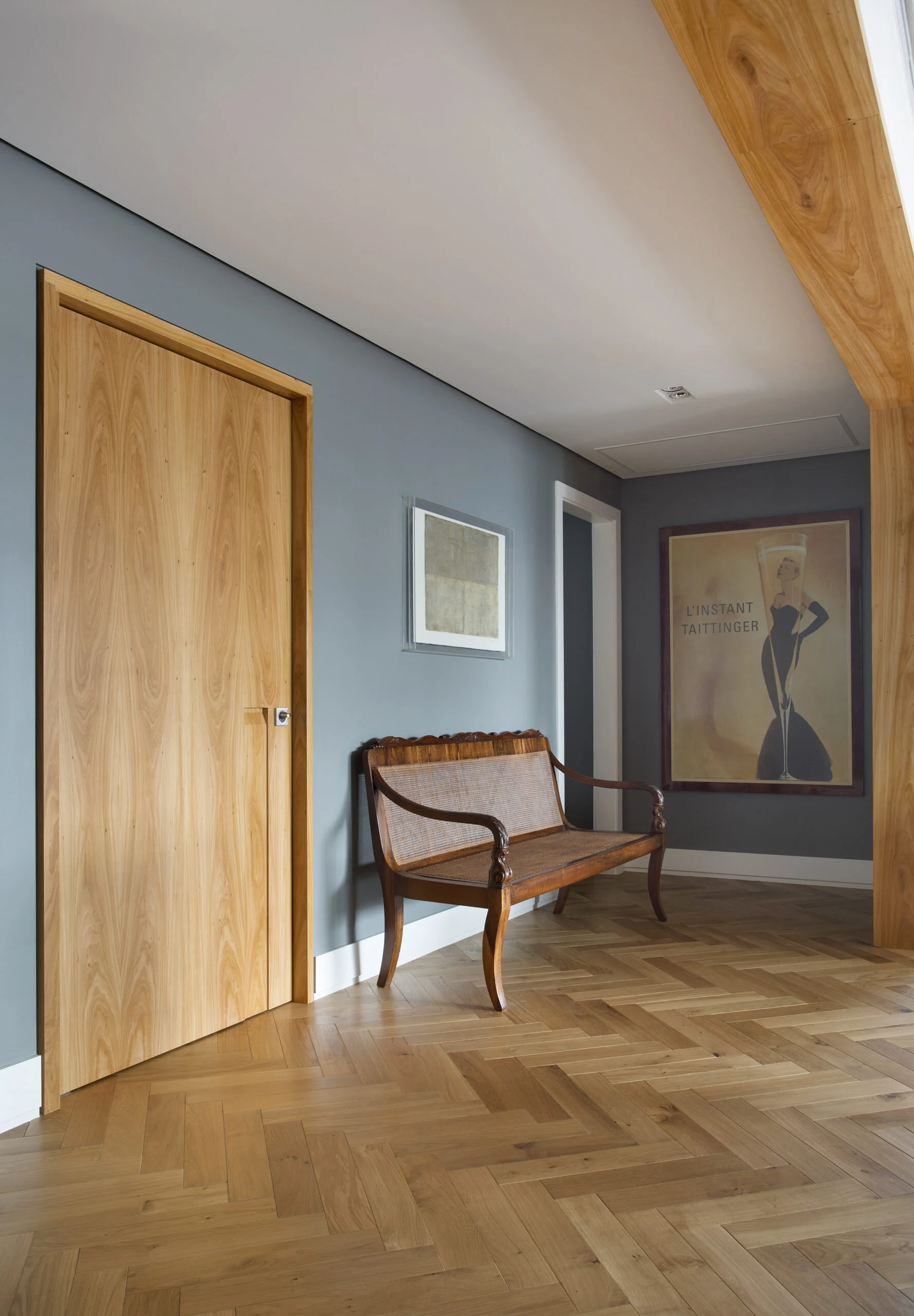
In this private residence in Rio de Janeiro, Rompu herringbone in a warm honey tone shows how a select grade keeps a patterned floor calm enough to live with.
Frequently asked questions
Does the grade affect how durable an oak floor is?
No. Grading sorts boards by appearance only. A rustic board and a prime board of the same oak and construction are equally hard and wear the same way; durability depends on the species, the construction of the board and the finish.
Why is prime grade oak more expensive?
Because only a small share of each log is clean enough: almost no knots, no sapwood and even color. The rarer the board, the higher the price. Select and rustic use more of the log, so they usually cost less.
What is the difference between select and rustic oak?
Select allows small, sound knots and gentle color variation, so the floor looks natural but calm. Rustic, or character grade, allows large and frequent knots, pale sapwood and strong contrast, so the floor is much livelier.
Is sapwood a defect in an oak floor?
No. Sapwood is the young outer wood of the trunk and is paler than the heartwood. It makes the color less even, so prime and select grades leave it out, while rustic grades accept it as part of the look.
What do AB, ABC and CD mean on oak flooring?
They are trade letters some mills use for grades: A or AB is the cleanest selection, ABC sits in the middle, and CD is the most rustic. The exact limits vary from one maker to another, so look at samples rather than relying on the letters.
The grade of an OscarOno Paris floor
OscarOno Paris's plank and pattern floors are made from select-grade flatgrain oak. Droit, the straight plank, and Rompu, the herringbone, share one specification: 12 mm thick with a 4 mm oak top layer, 150 or 190 mm wide, lacquered in twelve colors. Both are rated usage class 33 for heavy commercial traffic, carry a Cfl-s1 fire rating and are FSC and PEFC certified.
Grade is easiest to judge with real boards in your hands. Order samples, and find spec sheets, CAD and 3D files in the library.
More from the Atelier
Reclaimed Teak Flooring: End-Grain Strength and Resilience
Explore how reclaimed teak flooring and end-grain timber provide extraordinary durability, natural silica protection, and stability for demanding spaces.
How to Prevent Fading on Hardwood Floors: Design Guide
An architectural approach to managing sun exposure on wood floors, from spectrally selective glazing to finish choices and uniform patina development.
The Craft of Marquetry Parquet Flooring and Panels
Marquetry parquet flooring bridges historical French palace geometry with contemporary minimalism, bringing architectural structure to luxury interiors.