
French Oak Provenance: Silviculture, Density, and Ecology
How centuries of French forestry tradition yield tight rings and structural calm.

French oak provenance represents the intersection of centuries-old silvicultural discipline and exceptional structural performance in interior architecture. Oak shaped by slow, uniform high-forest growth develops exceptionally tight annular rings that reduce internal tension and deliver predictable dimensional stability. For architects and specifiers evaluating chain of custody, third-party certifications like FSC and PEFC confirm that this timber heritage meets contemporary environmental standards.
Why does Tronçais oak flooring set the benchmark for timber density?
The Tronçais forest in central France exemplifies the high-forest management method, known historically as futaie régulière. Initiated systematically in the seventeenth century under Jean-Baptiste Colbert to supply timber for naval construction, this system cultivates trees close together over cycles lasting two centuries or more. Canopy competition forces oaks to stretch straight toward sunlight, suppressing low branches and preventing wide, irregular growth spurts.
Because the trees grow at a slow, measured rate, each annual ring forms with narrow spacing. Wide rings contain larger proportions of earlywood, which is porous and prone to moisture exchange. Tight rings contain a higher density of fibrous latewood, resulting in wood that resists crushing loads, holds milling profiles cleanly, and minimizes radial and tangential movement in finished surfaces.
Specifying timber inspired by the Tronçais model means choosing timber with a uniform cellular structure. While Tronçais itself stands as a protected benchmark rather than an industrial quarry, its silvicultural model defines the best forestry throughout France, producing oak revered for fine grain, structural cohesion, and refined texture.

How does sustainable French timber architecture ensure ring density?
Sustainable French timber architecture relies on rigorous forest management administered through public entities like the Office National des Forêts alongside certified private forests. Rather than clear-cutting large parcels, selective thinning allows premier canopy specimens to mature gradually while naturally regenerating the understory. This continuous cycle balances forest ecology with the production of dense, architectural timber.
Uniform annular rings provide direct engineering benefits once the timber is milled into planks or parquet components. Wood expands and contracts across its cell walls in response to ambient relative humidity. Tight, compact rings absorb and release ambient vapor more gradually than wide-ringed alternatives, blunting the impact of seasonal climate fluctuations inside modern buildings.
When flatgrain timber is cut from select grade logs, this tight growth translates into smooth, calm grain patterns without wild grain deviations or structural knots. The wood takes finishes uniformly, providing architects with an unblemished, cohesive foundation across vast interior expanses.
Can certified oak secure LEED credit wood flooring points?
Specifying certified oak can directly contribute to project accreditations under green building frameworks like LEED v4 and BREEAM. Within the LEED Materials and Resources category, points are available under the Sourcing of Raw Materials credit for projects utilizing products certified by the Forest Stewardship Council or the Programme for the Endorsement of Forest Certification. However, points depend on a project-wide Chain of Custody audit verifying that certified custody was maintained from stump to installation.
European forestry governance enforces strict chain-of-custody protocols that simplify documentation for sustainability consultants. Each harvest batch traces back through regional processing to responsibly managed tracts where replanting rates equal or exceed harvesting volumes. This traceability guards against illegal logging while providing verifiable data for life cycle assessments and embodied carbon calculations.
In addition to raw material credits, engineered constructions that utilize sustainable timber top layers bonded to stable plywood backing optimize fiber yield. Premium logs yield several times more surface area when sliced into select top layers than when milled into thick solid lumber, maximizing the architectural value of each mature tree.

How do forestry models compare in density and architectural performance?
Architects evaluate timber performance across structural consistency, visual grain density, and traceability. The silvicultural history of a forest directly dictates how the milled wood behaves inside climate-controlled commercial and residential spaces.
| Forestry Model | Growth Rate & Annular Spacing | Dimensional Behavior | Traceability Framework |
|---|---|---|---|
| Managed French High-Forest | Slow; narrow, uniform annual rings | High stability; minimal micro-checking | FSC and PEFC certified regional chains |
| Commercial Plantation Oak | Rapid; wide, porous annual rings | Higher seasonal movement; lower fiber density | Variable; dependent on regional regulations |
| Unmanaged Second-Growth | Irregular; shifting grain density | Uneven internal tension across plank widths | Often mixed; limited harvest documentation |
Which OscarOno Paris collections specify certified oak?
OscarOno Paris manufactures architectural oak surfaces adhering to select grade standards and certified forestry principles. Every oak collection in the atelier catalogue is FSC and PEFC certified, providing architects with independent environmental verification alongside precise Parisian joinery. Explore our atelier craftsmanship to understand our material values.
For straight-laid planks, the Droit collection provides flatgrain oak in widths of 150 mm or 190 mm. Featuring a 12 mm oak construction with a 4 mm top layer, Droit carries a Usage class 33 commercial rating and a Cfl-s1 fire rating, finished in eleven lacquered colors. The floor was specified by Rodolphe Parente for the ‘Beaumarchais’ 108 residential realisation in Paris.
Where heritage patterns are required, the Dalle collection interprets classical panel geometry into 800 x 800 mm engineered modules. Built with select flatgrain oak with a 12 mm base and 4 mm wear layer, Dalle brings acoustic substance and Class 33 durability to projects like the Private Residence by After Bach in Paris.
Specifiers can review environmental declarations, CAD blocks, and BIM data directly through our technical Library, or order samples to examine the tight grain structure of our oak firsthand.
Frequently asked questions
What makes French oak provenance distinct from other European sources?
Centuries of regulated high-forest silviculture in France produce tall, straight trees with dense, slow-growing annular rings. This consistent cellular density delivers greater dimensional stability and a fine, uniform grain texture compared to trees harvested from rapid-growth or unmanaged stands.
Does Tronçais oak flooring always come from the Tronçais forest?
The term Tronçais refers to the historic gold standard of high-forest management developed in central France. While the specific forest is closely guarded and limited in yield, premier French sawmills apply identical silvicultural criteria across certified regional oak forests.
How does tight annular ring density improve wood floor stability?
Narrow growth rings contain a higher ratio of dense latewood fibers and smaller vascular pores than wide rings. This tight structure slows moisture transfer, reducing the rate and extent of seasonal expansion and contraction across plank widths.
Can FSC and PEFC certified wood floors qualify for LEED v4 credits?
FSC and PEFC certified timber products can contribute toward LEED v4 Materials and Resources credits under Sourcing of Raw Materials. Compliance requires maintaining documented Chain of Custody throughout the manufacturing and installation chain.
More from the Atelier
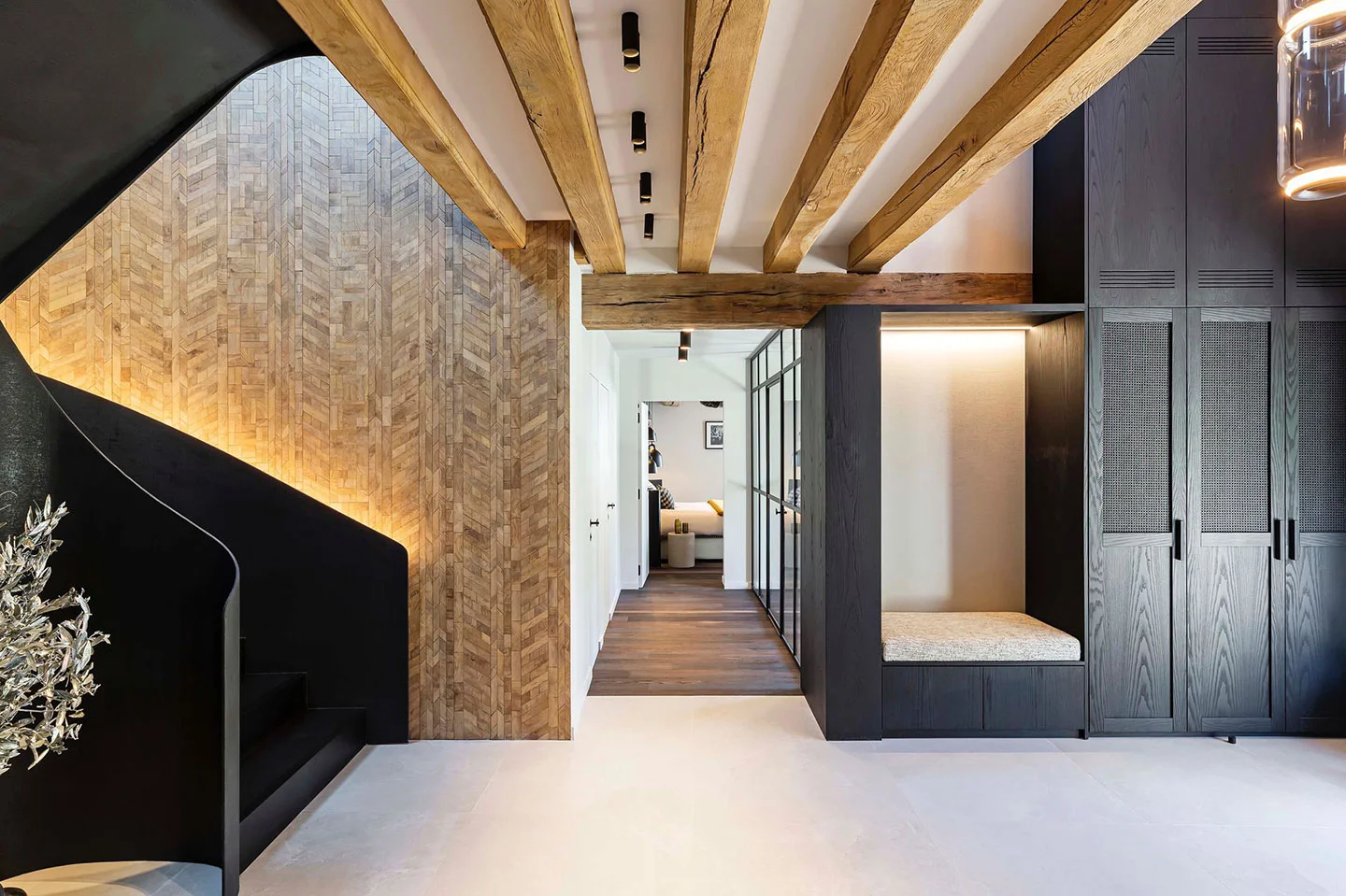
Bespoke Parquet Flooring: What It Means and What to Expect
Bespoke parquet is a floor composed for one room: its pattern, layout and finish decided by the designer. How a project runs, step by step, and what to check.
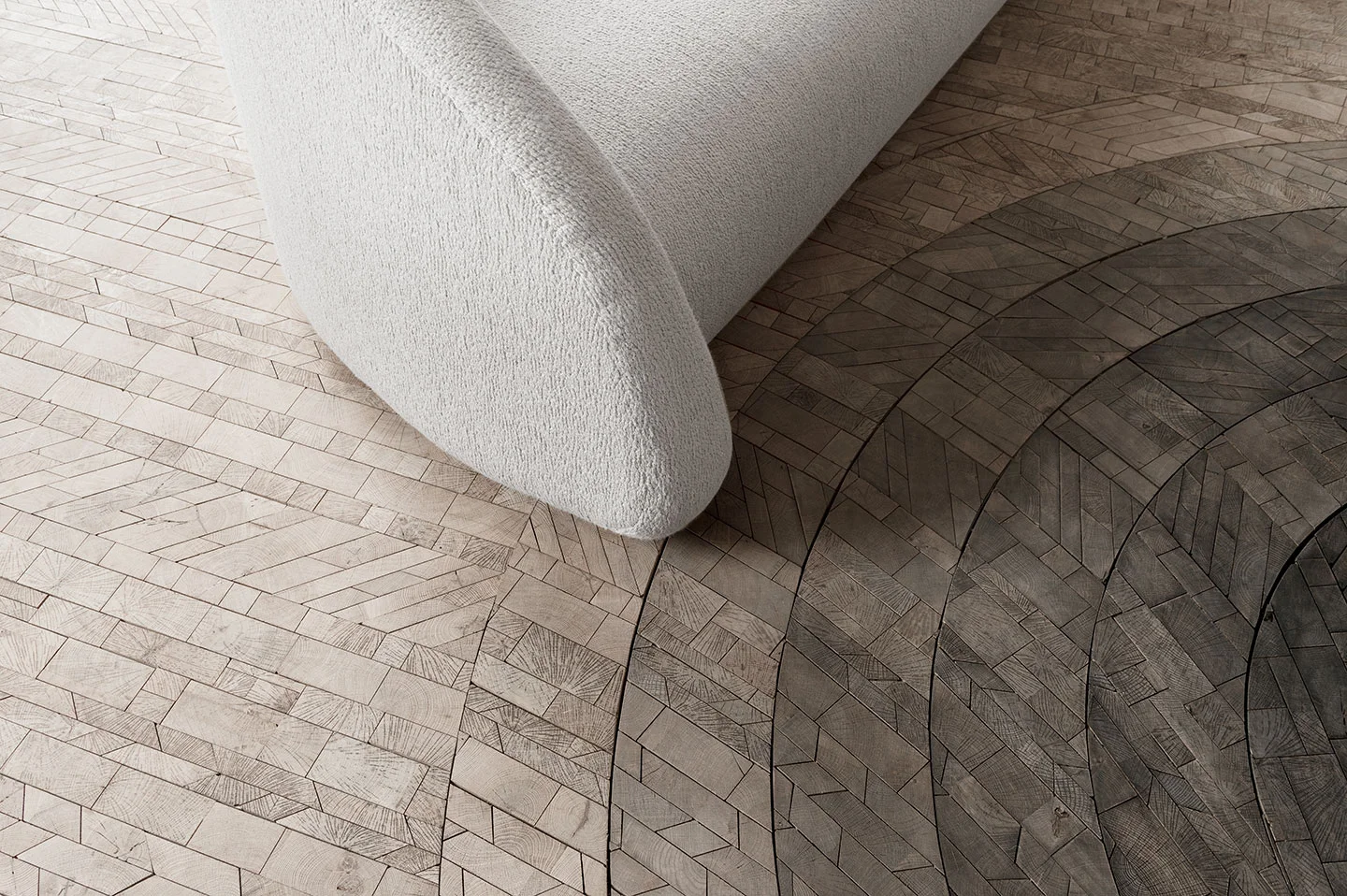
How Bespoke Parquet Flooring Is Made: From Endgrain Cut to Joint
From oak cut on its endgrain to a spiral bent four meters across: how a bespoke parquet floor is made, finished and laid, and what you decide along the way.
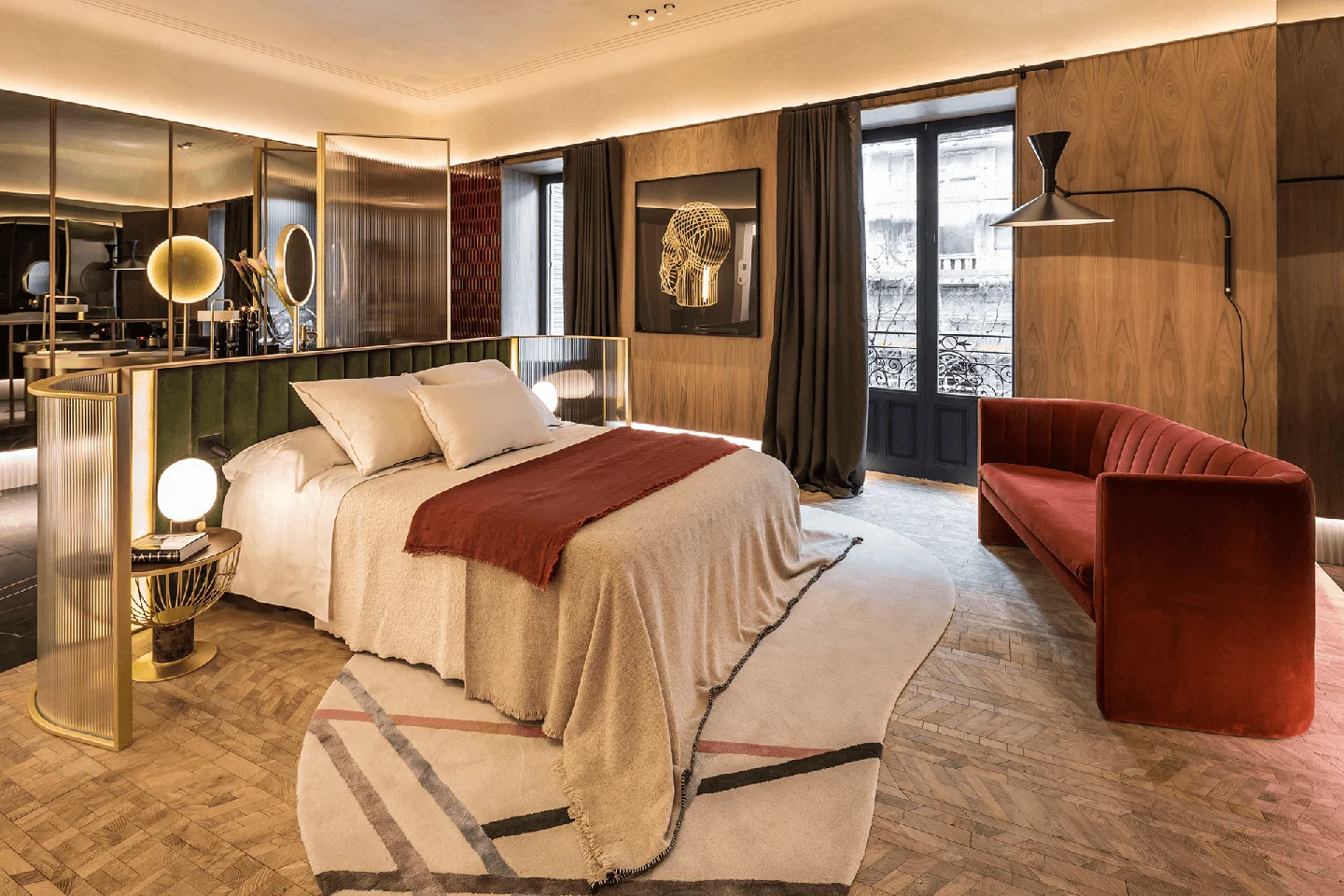
What Makes Luxury Wood Flooring Different?
Not the price tag: the cut of the wood, how the floor is built, where the color comes from and what it is rated for. Here is how OscarOno Paris answers each one.