
How Bespoke Parquet Flooring Is Made: From Endgrain Cut to Joint
A bespoke floor is drawn for one room. Here is what happens between the first drawing and the last joint.
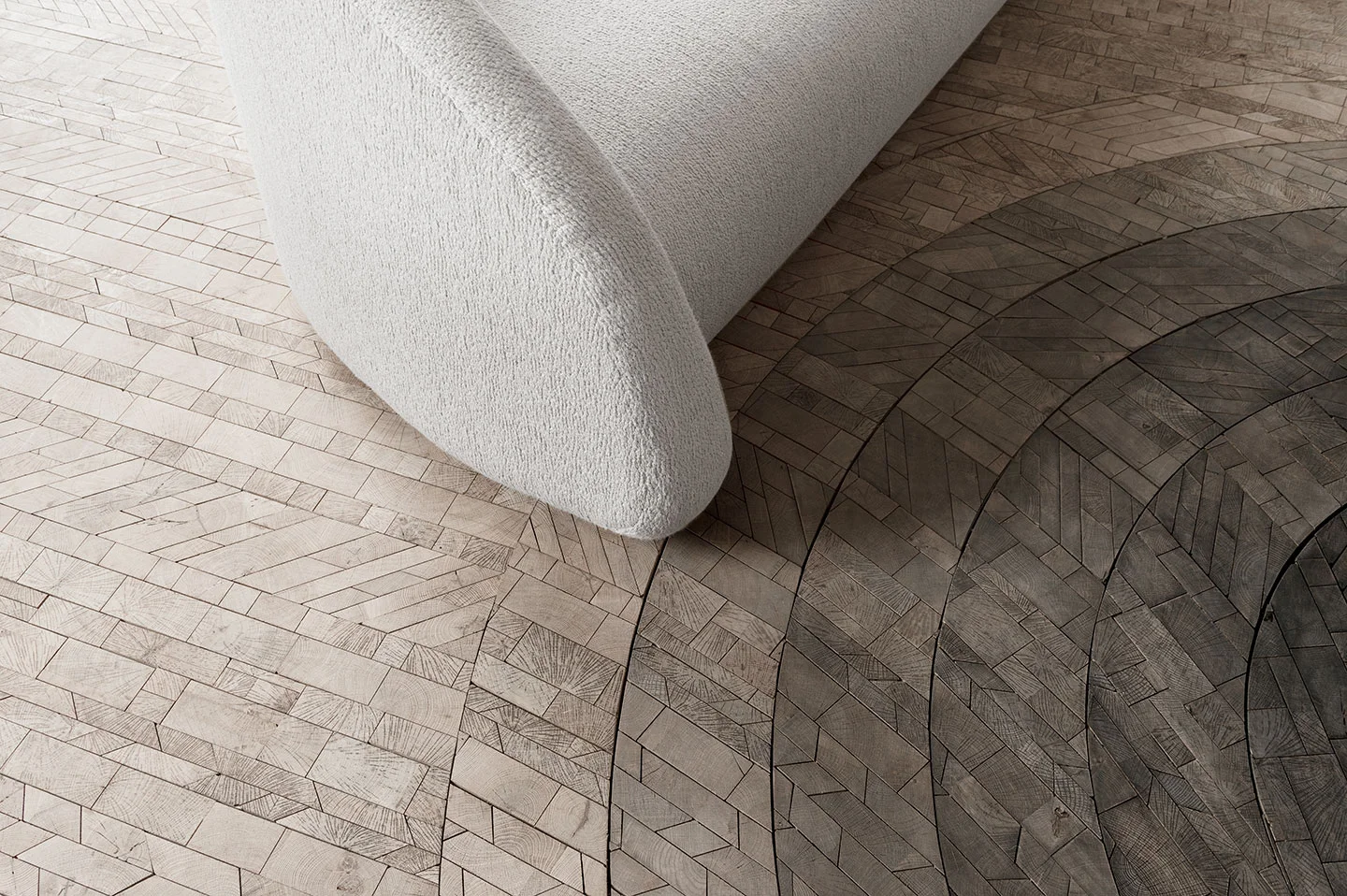
Bespoke parquet flooring is a floor made to order for one project: the pattern, the layout, the finish and the way it meets walls and thresholds are decided for that room rather than taken from stock. The making follows a clear sequence: the wood is cut and built into stable panels or planks, finished, laid out on a drawing, produced to that drawing, and then laid and jointed on site.
Here is what each step involves, using endgrain oak, the most demanding kind of parquet, as the example.
What makes a parquet floor bespoke?
Three things are decided for the room, not the catalogue. The pattern, and how it is set out: where it starts, which way it runs, how it ends at the walls. The finish, chosen from samples in the room's own light. The details: borders, thresholds, how the floor meets stone or a staircase, and what the adjoining rooms are laid in.
Some floors are bespoke by their nature. Forêt is built from six planks and six patterns in endgrain oak that the architect combines freely, so no two Forêt floors are composed the same way. Rosace is a spiral bent from straight planks into a circle four meters across: it is the slowest floor in the collection, and the room is usually arranged around it.
How is endgrain parquet made?
Most parquet shows the long face of the board. Endgrain parquet turns the wood the other way: the oak is cut across the trunk, so you walk on the ends of the fibers and see the growth rings. That face is the hardest the wood has, which is why endgrain was used to pave streets and workshops before it came indoors.
Cut this way, wood would split and move if it were laid as loose blocks. So the endgrain oak is built onto a stable base. In Forêt, Opus and Rosace, an 8 mm endgrain oak top layer sits on a 12 mm birch plywood base. The plywood keeps each piece flat and true; the oak gives the surface.
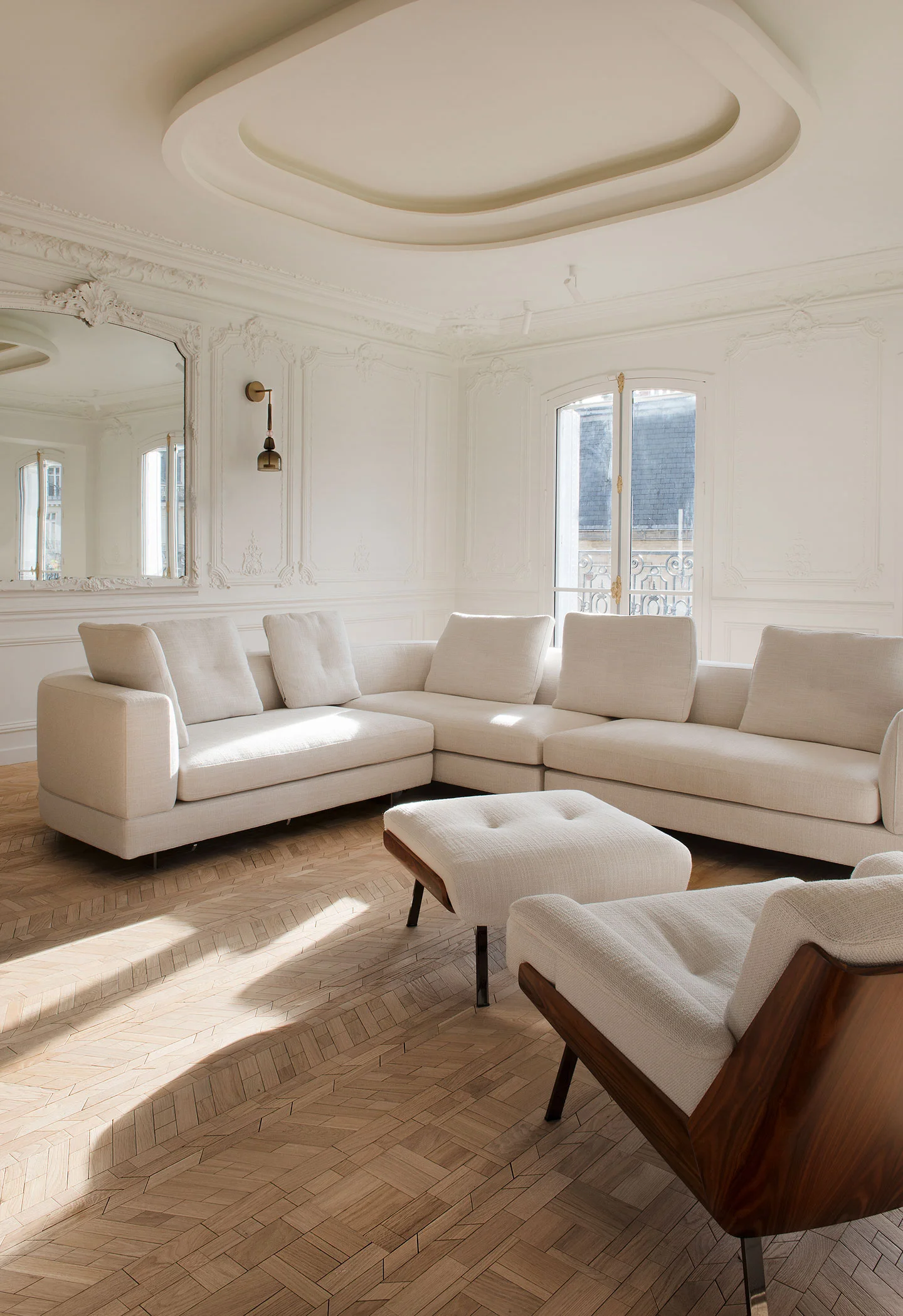
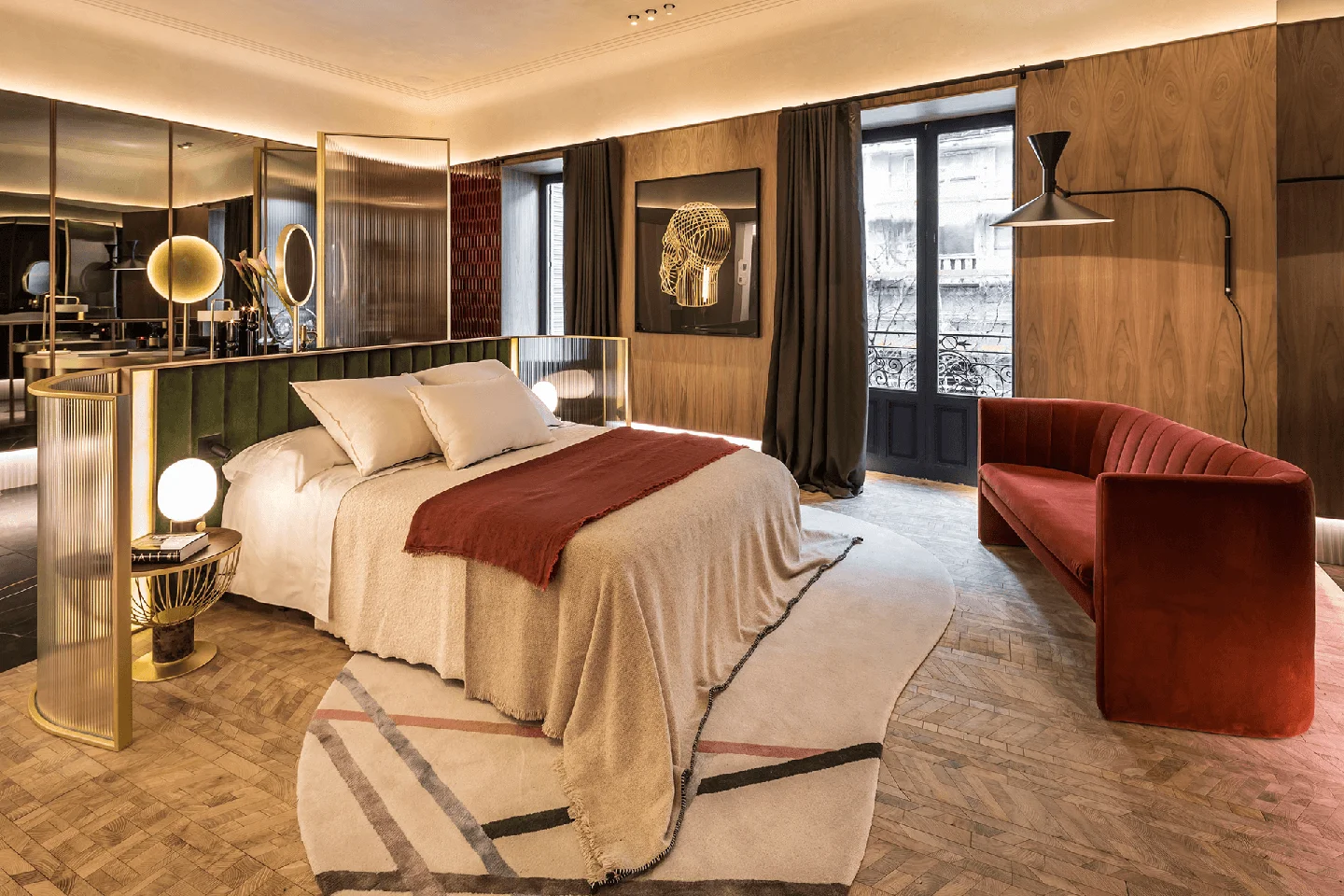
In this private apartment in Paris by Virginie Renaut, Forêt in Natural runs through the living room: the planks and patterns are combined so the floor reads as one composed surface rather than a repeating module.
How is the finish made?
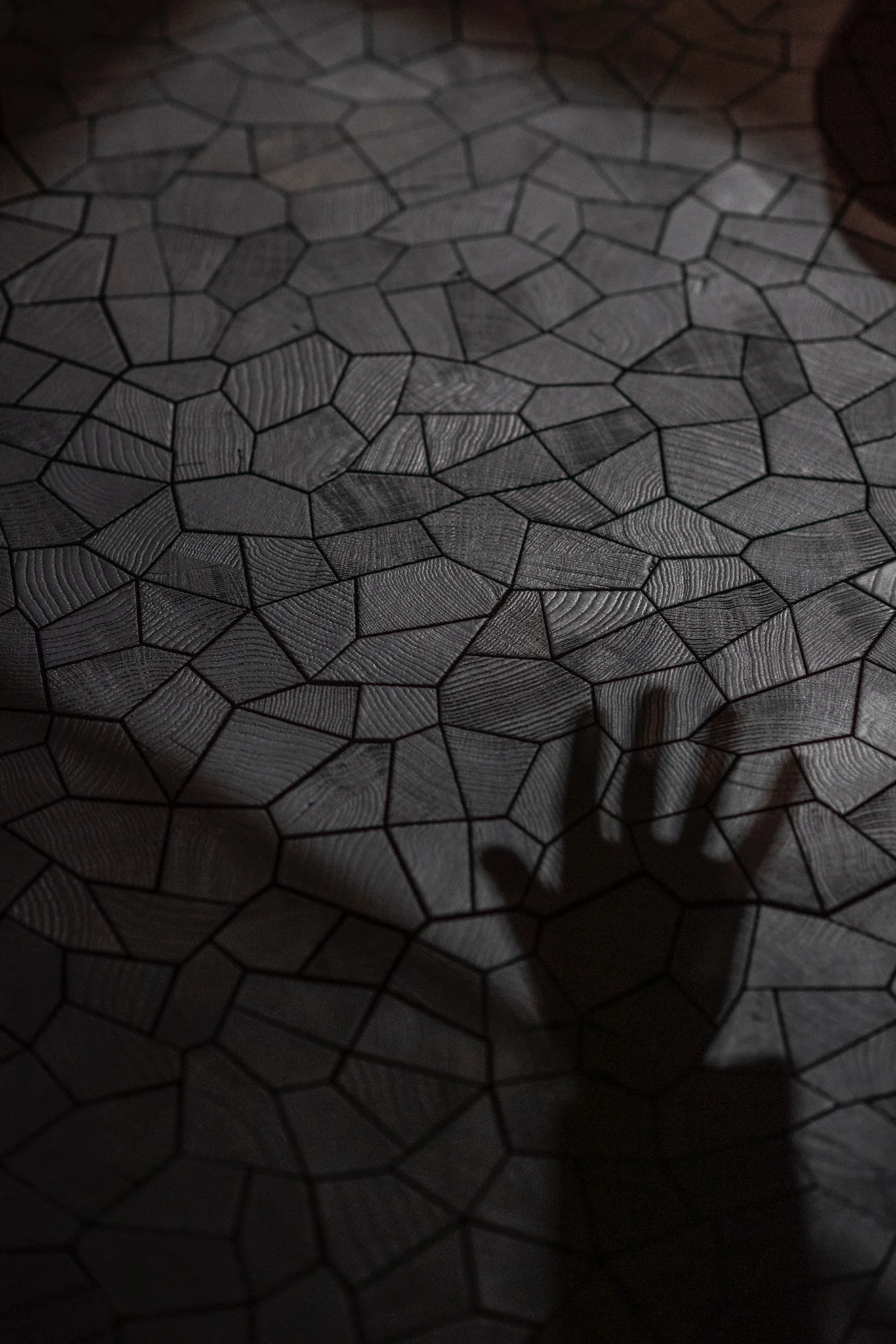
A bespoke finish should go into the wood, not sit on it as a coat of color. The endgrain collections come in three finishes and none is a stain. Natural keeps the oak's own color. Smoke is smoked through the full depth of the oak, so wear never reveals a lighter layer underneath. Black is charred, in the shou sugi ban tradition from Japan, where wood is darkened with fire.
Choose the finish from real samples, laid on the floor where it will go and looked at morning and evening. A finish that looks right under showroom light can read very differently beside a north window.
How is the layout drawn?
Before anything is produced, the floor is drawn on the plan. The drawing fixes where the pattern is centered, how it meets each wall and doorway, and where it changes to another floor. A spiral like Rosace has to be centered on something, a table, a light, the axis of a room; a free composition like Forêt is arranged so the dense and quiet areas fall where they should.
The drawing is also where adjoining rooms are settled. The endgrain collections have Tandem, plain boards in the same finish, for rooms next door and for transitions, so a hall or a bedroom can carry the same color without the full pattern.
How is it laid and finished on site?
The pieces are glued to a sound, level screed by an experienced fitter. Endgrain is laid with joints under 1 mm. Those joints can be left as they are, or filled with LignoFusion in brown or black, which makes the joints either disappear or read as a fine drawn line. There is a professional video tutorial for fitters.
With Opus, which revives the nineteenth-century Parisian craft of oak paving, the aim is for the joins to disappear: the organic pattern of cut oak reads as one continuous surface.
Why does handwork still matter?
A floor assembled and checked by hand varies the way wood varies: growth rings, color and density change from piece to piece, and the eye reads that variation as depth. It also lasts. A floor made to be repaired and refinished is kept for decades instead of replaced.
Making by hand also changes what counts as waste. Cube is built entirely from solid oak offcuts the atelier would otherwise set aside, and Terra, a wood terrazzo set by hand, is made from the endgrain fragments left over from Opus and Forêt.
The Rosace spiral at AD Intérieurs, Monnaie de Paris, shown at the top of this page, is the clearest example of what all this adds up to: straight planks bent into a circle, laid around a center, in a floor no machine could have repeated.
Frequently asked questions
How is endgrain parquet different from ordinary parquet?
Ordinary parquet shows the long face of the board. Endgrain parquet is cut across the trunk, so you walk on the ends of the fibers and see the growth rings. It is the hardest face of the wood, and it needs a stable base, such as birch plywood, to stay flat.
Is bespoke parquet more expensive than standard flooring?
Usually, yes. It takes more hand work, a layout drawing and more careful fitting, and complex patterns use more time and wood than straight boards. A spiral or a free composition costs more than a simple repeating pattern.
Can I design my own pattern?
Within a collection built for it, yes. Forêt is made of six planks and six patterns in endgrain oak that the architect combines freely, so each floor is composed for its room. Other patterns are set out on the plan to suit the space.
What is LignoFusion?
An optional filling for the joints of OscarOno Paris endgrain floors, which are laid with joints under 1 mm. It comes in brown or black, so the joints either recede or read as a fine line, and there is a professional video tutorial for fitters.
Can endgrain parquet go over underfloor heating?
That depends on the product's construction and on how it is installed, not on the pattern. Check the spec sheet of the collection you are considering and agree the installation method with your fitter before you commit.
Bespoke endgrain floors by OscarOno Paris
Forêt, Opus and Rosace share one construction, an 8 mm endgrain oak top layer on a 12 mm birch plywood base, and three finishes: Natural, Smoke and Black. They are rated usage class 34 for very heavy commercial traffic, carry a Cfl-s1 fire rating and are FSC and PEFC certified.
Order samples to see the finishes in your own light, and find spec sheets, CAD and 3D files for the layout drawing in the library.
More from the Atelier
Bespoke Parquet Flooring: What It Means and What to Expect
Bespoke parquet is a floor composed for one room: its pattern, layout and finish decided by the designer. How a project runs, step by step, and what to check.
What Makes Luxury Wood Flooring Different?
Not the price tag: the cut of the wood, how the floor is built, where the color comes from and what it is rated for. Here is how OscarOno Paris answers each one.
How Parquet Flooring Is Made: From Tree to Floor
From log to finished floor in seven steps: sawing, drying, grading, building the board, cutting the pattern and finishing, and what each step changes in the floor you walk on.