
How Parquet Flooring Is Made: From Tree to Floor
Seven steps between a standing oak and a finished floor, and what each one decides.
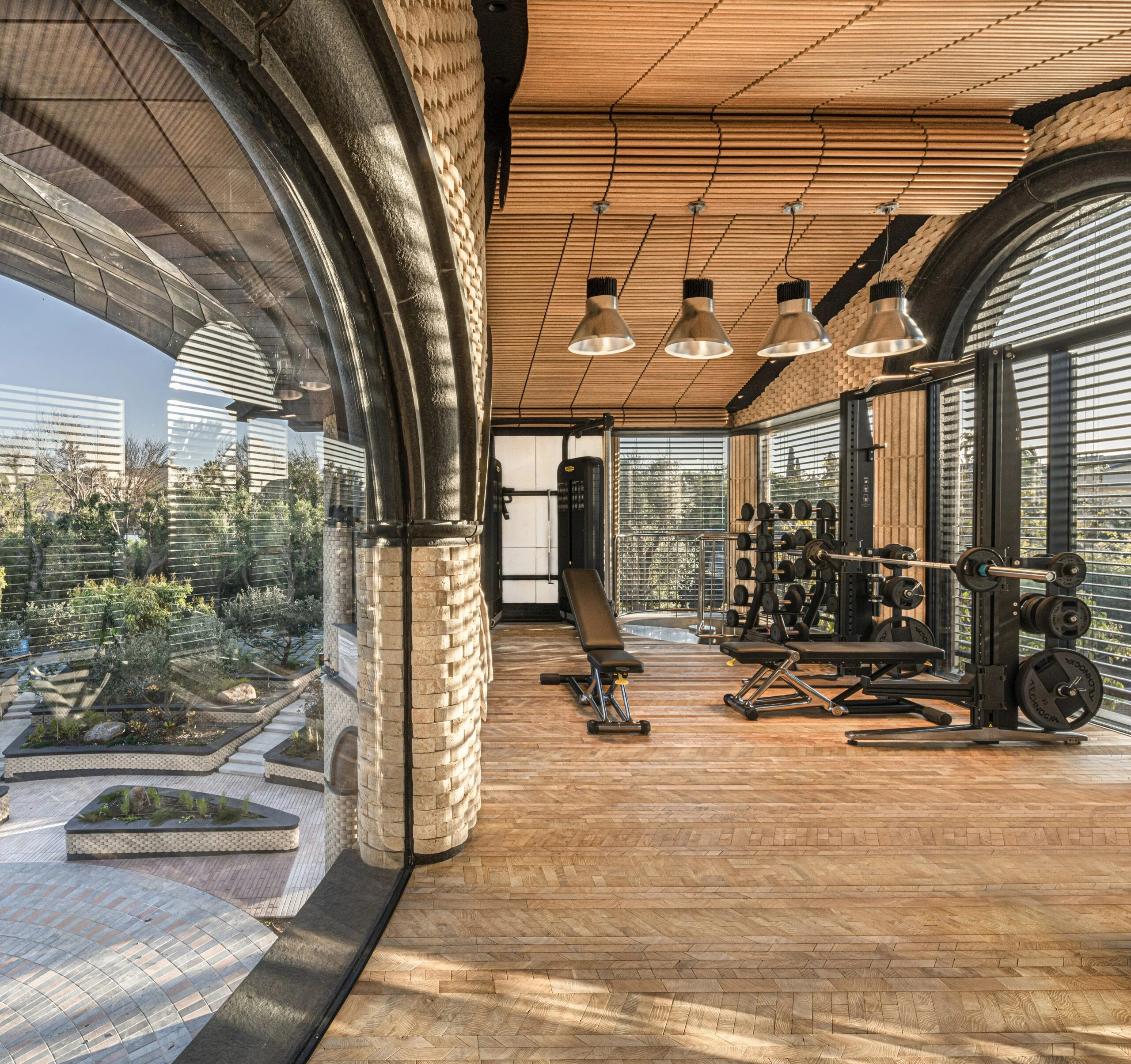
Parquet flooring is made by sawing logs into boards, drying them slowly to a stable moisture content, sorting them by grade, and cutting them into the pieces of a pattern. Most parquet today is built in layers, a hardwood top layer bonded to a stable base, then machined so the pieces lock or fit together and finished with lacquer, oil or a color treatment. Each step changes how the floor looks and how long it lasts.
1. The forest
Most parquet is oak. An oak grown for timber takes many decades to reach a usable size, and the slow growth of a forest tree gives straighter, more even wood than a fast-grown one in the open. Responsible sourcing matters here: FSC and PEFC are the two main certification schemes that check a forest is managed so it keeps growing, and that the wood can be traced from the forest to the finished product.
2. Sawing the log
How the log is sawn sets the figure of every board cut from it.
- Flatgrain (plain-sawn): boards cut along the log, tangent to the growth rings. They show the arched "cathedral" figure and give the best yield from the log.
- Quartersawn and rift: boards cut across the rings, showing straight lines and, in oak, the silvery flecks of the rays. They move less across their width but waste more of the log.
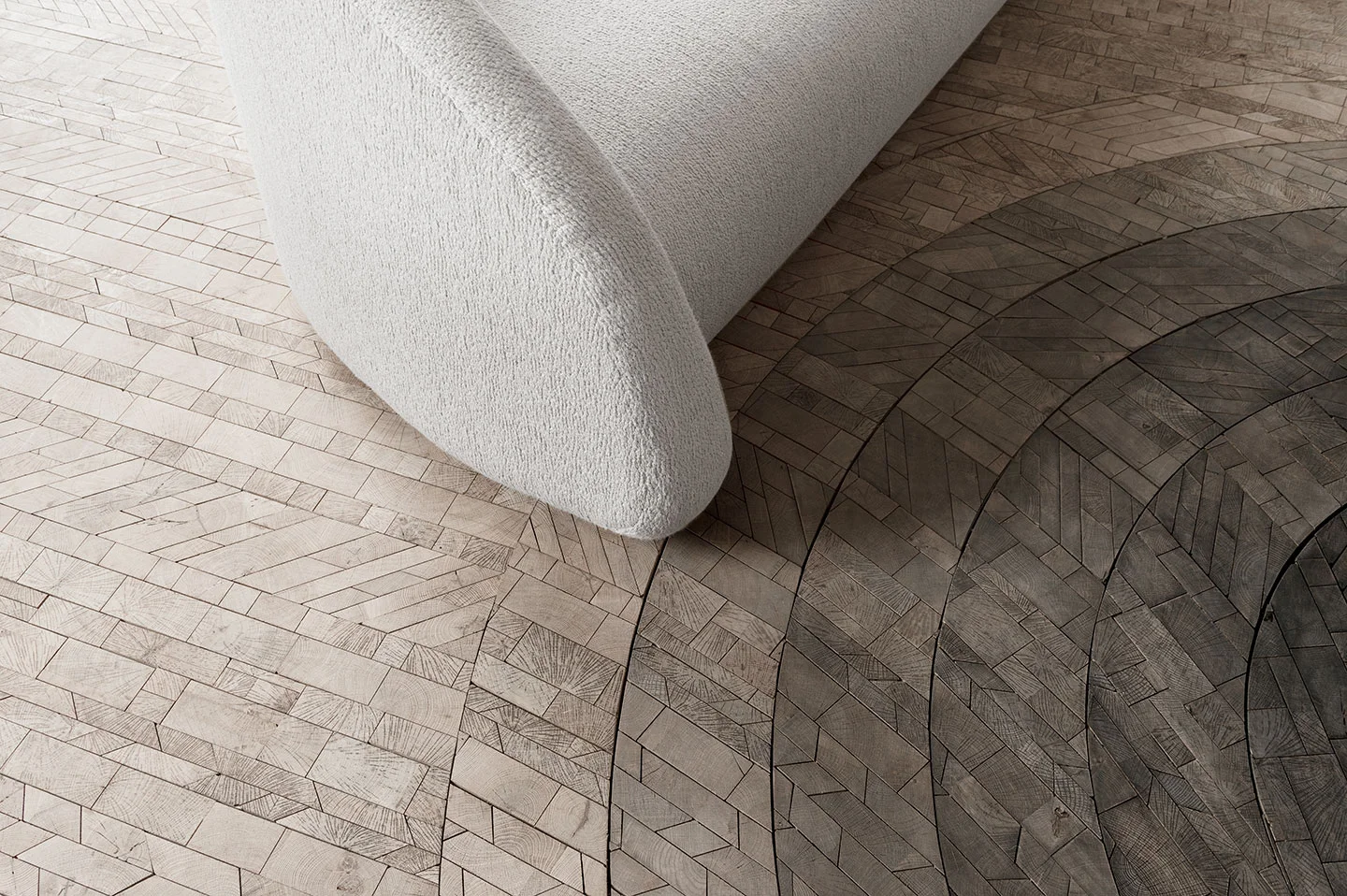
- Endgrain: the wood is cut across the trunk into slices or blocks, so the surface shows the growth rings themselves. It is the hardest-wearing face of the wood.
3. Drying
Fresh-sawn oak is full of water and shrinks as it dries. If it were laid green, it would shrink, split and twist on the floor. So the sawn timber is dried, often first in open air and then in a kiln, until its moisture content is close to what it will meet indoors. Oak dries slowly, and hurrying it causes cracks inside the wood, so this is one of the longest steps in the whole process.
Drying does not stop wood from moving. A finished floor still takes up and gives off moisture with the seasons, which is why the next steps, and a stable room climate after installation, matter as much.
4. Grading
The dried boards are sorted by appearance. Grade rules set how many knots, how much sapwood and how much color variation each piece may show. A select grade keeps knots small and color fairly even; rustic grades allow more of both. Grade changes the look of a floor far more than most people expect, and it is worth checking before comparing prices.
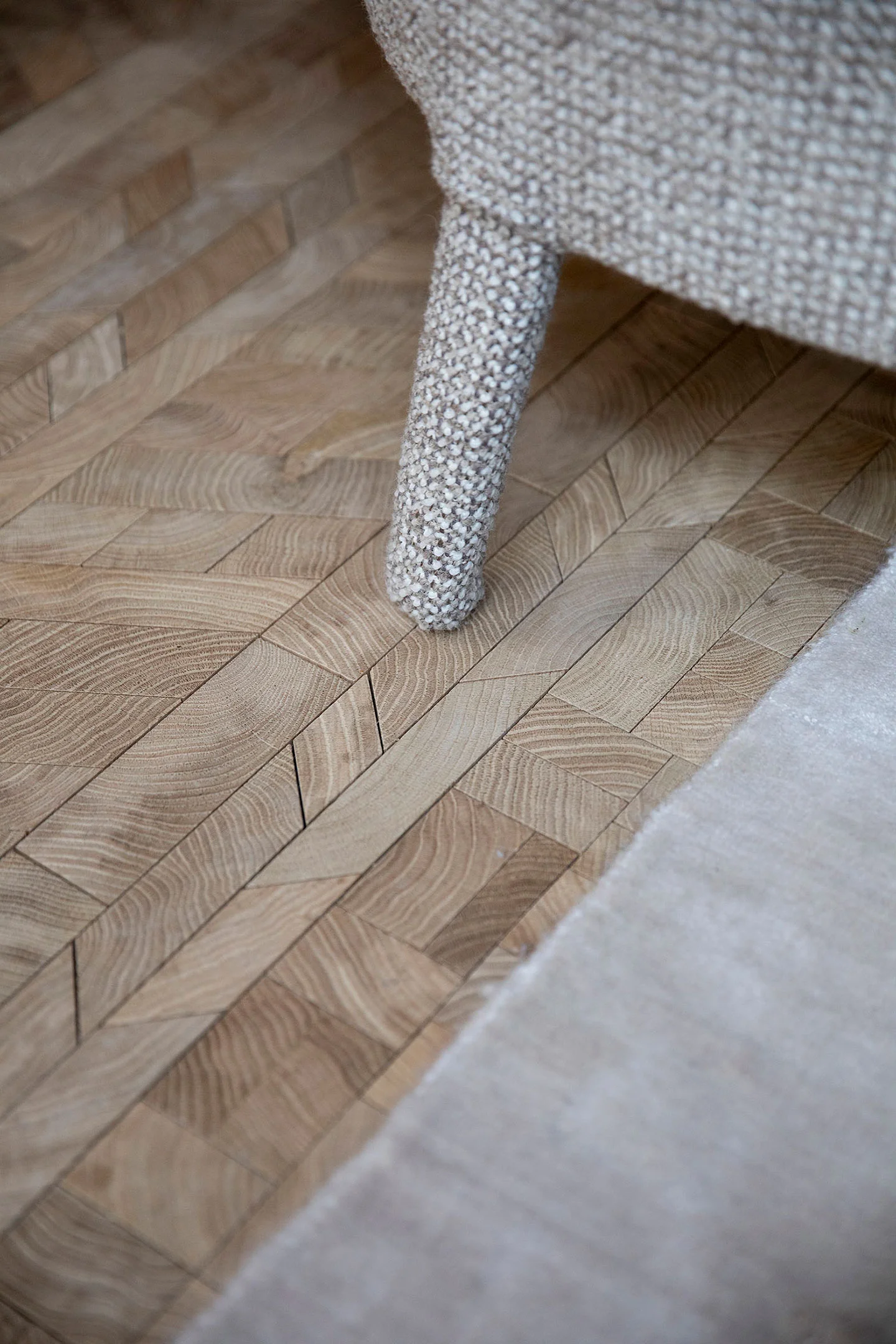
In this private residence in Paris, the floor is Forêt, built from six planks and six patterns in endgrain oak: every block shows the rings of the tree it was cut from.
5. Building the board
A solid parquet piece is oak through its whole thickness. A layered (often called engineered) piece has an oak top layer bonded to a base, which may be oak, softwood or plywood. The base holds the oak flat and limits how much it can move, and the thickness of the top layer decides how many times the floor can be sanded and refinished over its life.
OscarOno Paris's floors are built both ways. Its plank and pattern floors, such as Droit and Rompu, are 12 mm of oak with a 4 mm top layer. Its endgrain floors put a thicker layer of endgrain oak on birch plywood: 8 mm on 12 mm for Forêt and Opus, 6 mm on 10 mm for Cube.
6. Cutting the pattern
The boards are then machined into the pieces of the pattern. A straight plank needs a tongue and a groove along its edges. Herringbone and chevron need boards in two hands, a left and a right, and chevron pieces are cut to an angle at both ends. Endgrain floors are a different craft: blocks or shapes are cut, oriented and assembled so that their rings and tones sit well together.
The accuracy of this step shows on the finished floor. On OscarOno Paris's endgrain floors, joints are under 1 mm, and can be filled with LignoFusion in brown or black. In Opus, the pattern is organic and the joins are meant to disappear into one continuous surface.
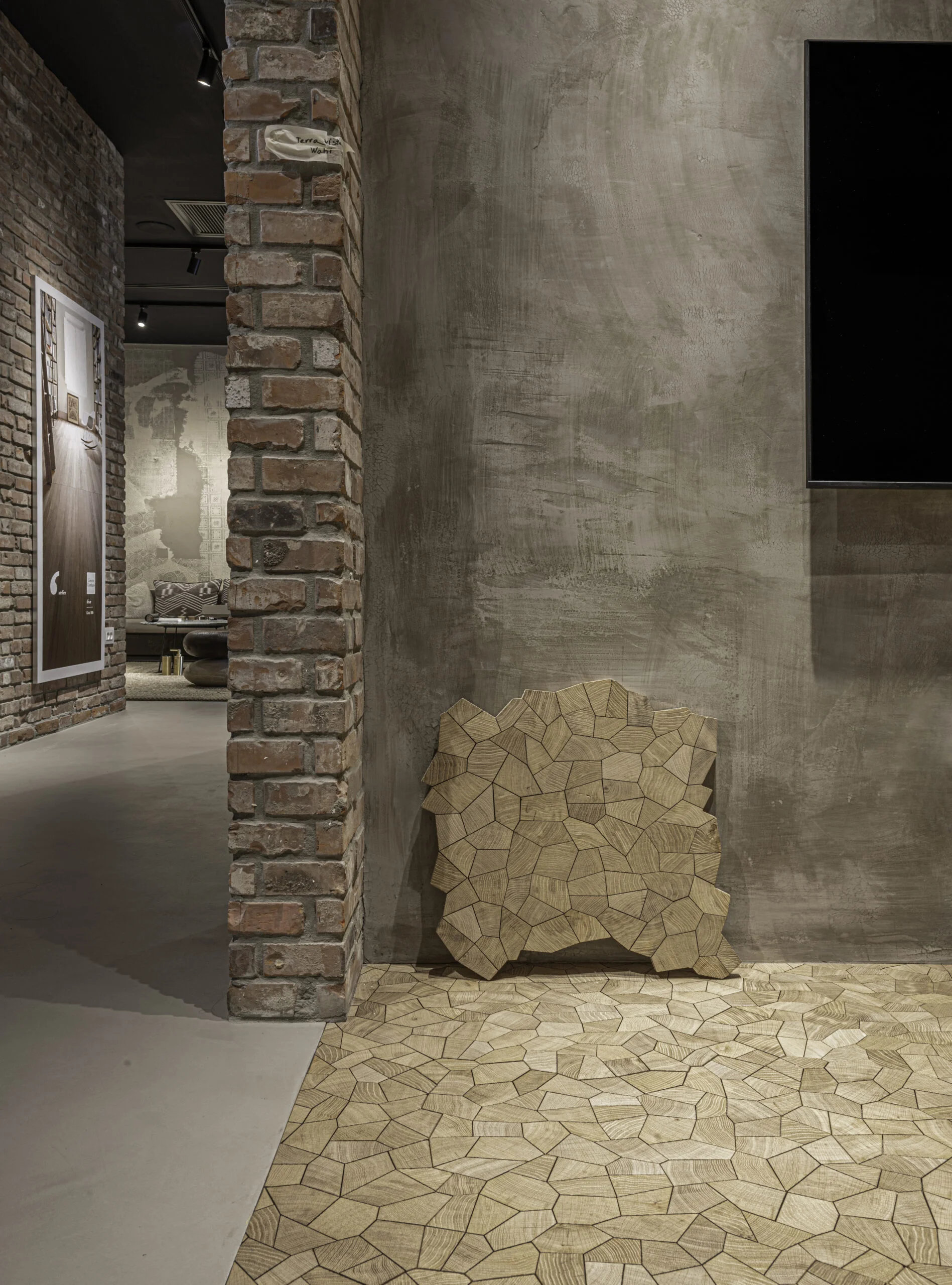
The Parqueteam showroom in Israel is laid in Opus Natural, where the irregular endgrain pieces read as one surface rather than a grid.
7. Finishing
Last comes the surface. A lacquer forms a protective film and can carry a color; an oil soaks in and leaves a more natural, matte look; smoking (fuming) darkens oak with ammonia reacting with its own tannins; charring burns the surface black. OscarOno Paris's Essentiel patterns, Droit, Rompu, Hongrie and Dalle, are lacquered in twelve colors. Its endgrain floors come in Natural, Smoke, smoked through the full depth of the oak, and Black, charred in the shou sugi ban tradition, with no stain.
What happens to the offcuts?
Every step leaves offcuts: the ends of boards, short pieces, the blocks that do not fit a pattern. In many factories they become fuel. Some of OscarOno Paris's floors are built from them: Cube is made entirely from solid endgrain offcuts, and Terra, a wood terrazzo set by hand, from the endgrain fragments left over from Opus and Forêt production.
Frequently asked questions
How is parquet flooring made?
Logs are sawn into boards, dried slowly to a stable moisture content, sorted by grade and cut into the pieces of a pattern. Most parquet is then built in layers, with an oak top layer bonded to a stable base, machined so the pieces fit together, and finished with lacquer, oil or a color treatment such as smoking.
What is engineered parquet?
Parquet built in layers: a hardwood top layer bonded to a base of oak, softwood or plywood. The base keeps the wood flat and limits movement, and the thickness of the top layer decides how often the floor can be sanded and refinished.
Why does wood have to be dried before it becomes a floor?
Fresh-sawn wood is full of water and shrinks as it dries. Laid too wet, it would shrink, split and twist on the floor. Drying it slowly to a moisture content close to the indoor conditions it will meet keeps the finished floor stable.
How is end grain flooring made?
The wood is cut across the trunk instead of along it, so each block shows its growth rings on the surface. The blocks are dried, cut to shape, assembled into a pattern and usually bonded to a stable base before finishing.
What do FSC and PEFC certification mean for a wood floor?
They are the two main forest certification schemes. Each checks that the forest is managed responsibly and that the wood can be traced from the forest to the finished product.
How OscarOno Paris floors are made
OscarOno Paris's endgrain floors, Forêt and Opus among them, are cut from oak on its endgrain face, an 8 mm top layer on 12 mm birch plywood, with joints under 1 mm. They come in Natural, Smoke and Black, are rated usage class 34 for very heavy commercial traffic, carry a Cfl-s1 fire rating and are FSC and PEFC certified.
To see the result of each step up close, order samples, and find spec sheets, CAD and 3D files in the library.
More from the Atelier
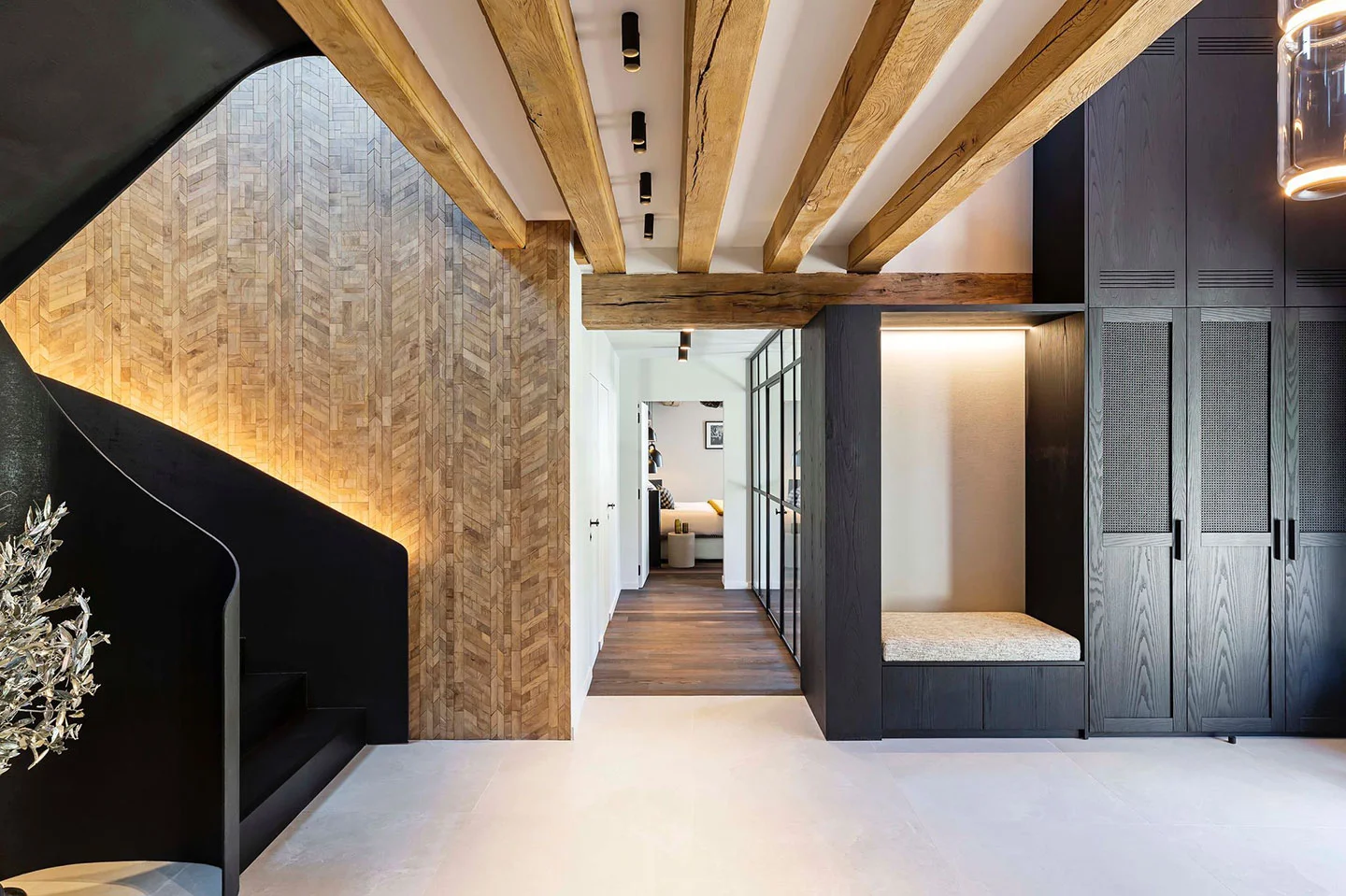
Bespoke Parquet Flooring: What It Means and What to Expect
Bespoke parquet is a floor composed for one room: its pattern, layout and finish decided by the designer. How a project runs, step by step, and what to check.
How Bespoke Parquet Flooring Is Made: From Endgrain Cut to Joint
From oak cut on its endgrain to a spiral bent four meters across: how a bespoke parquet floor is made, finished and laid, and what you decide along the way.
What Makes Luxury Wood Flooring Different?
Not the price tag: the cut of the wood, how the floor is built, where the color comes from and what it is rated for. Here is how OscarOno Paris answers each one.