
Bespoke Parquet Flooring: What It Means and What to Expect
A bespoke floor is designed like the rest of the room: drawn, sampled and specified before a single piece is glued down.
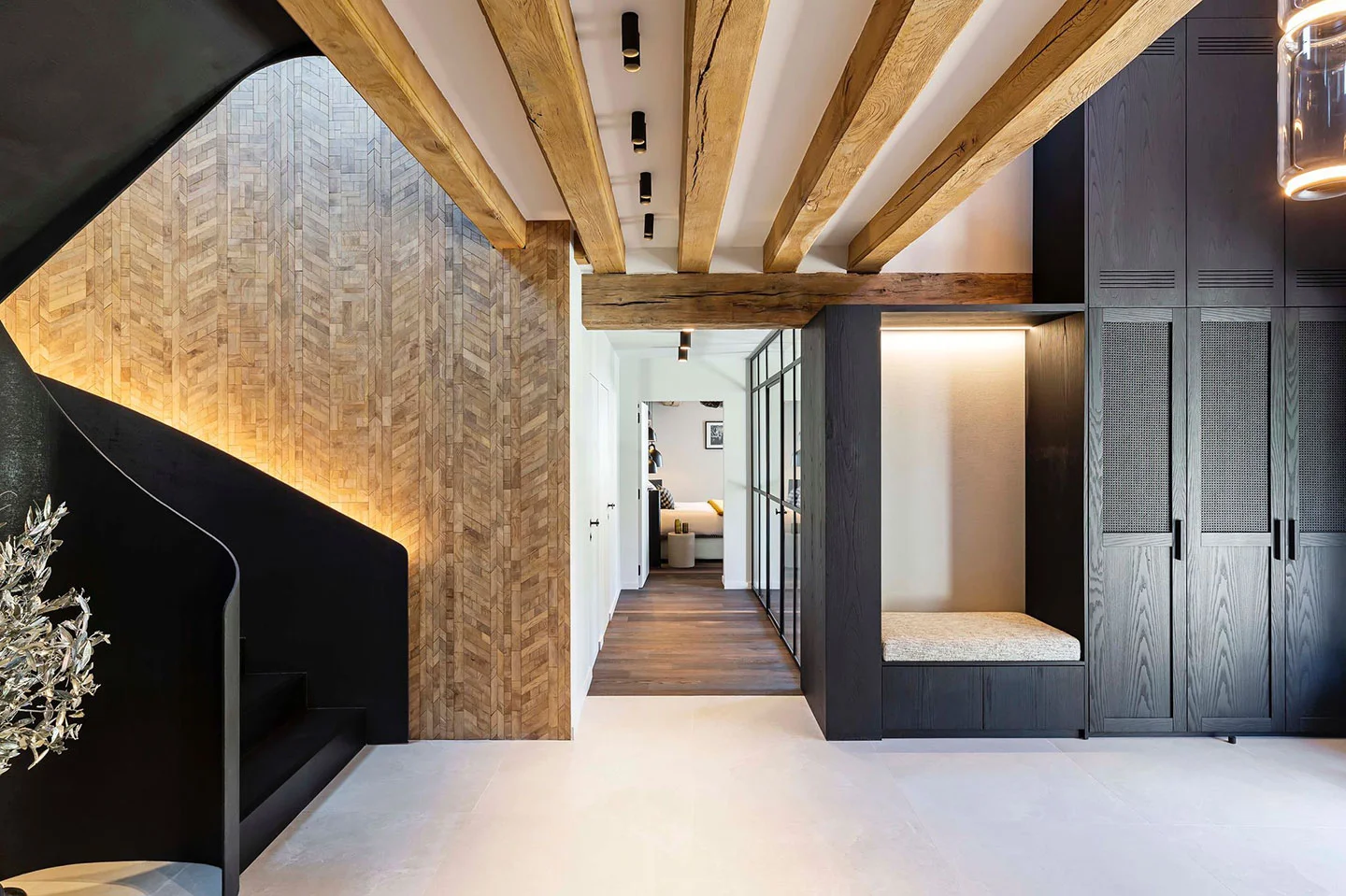
Bespoke parquet flooring is a wood floor composed for a specific space: its pattern, the way the pieces are arranged, the finish and the transitions are decided by the designer for that room, rather than chosen from a fixed layout in a catalog. In practice most bespoke floors are built from a defined set of pieces and finishes that can be combined freely. What you should expect is a design process, samples in your own light, a layout drawing and a specialist installation.
What makes a parquet floor bespoke?
A standard floor repeats one module in one direction. A bespoke floor gives the designer choices that change the result from one room to the next:
- Composition. Which pieces go where, and how often. Forêt, our endgrain oak floor, is built from six planks and six patterns that the architect combines freely, so the surface reads as composed rather than laid, and no two rooms come out the same.
- Placement. Where a feature sits in the room. Rosace, a spiral in endgrain oak, is bent from straight planks into a circle four meters across, and the room is arranged around it.
- Pattern and cut. End grain or flatgrain, an organic pattern or a strict geometry. Opus cuts oak on its endgrain face into an organic pattern whose joins disappear into one continuous surface.
- Finish and transitions. The color, and how the floor meets the rooms beside it.
How does a bespoke parquet project work?
The steps are much the same whoever makes the floor. Allow time for each one; the design stages are what make the result worth the wait.
- Brief. Plans of the rooms, how they are used (a home, a shop or a hotel lobby need different performance), the subfloor and whether there is underfloor heating.
- Pattern and layout. Choose the floor and draw it on the plan: where the pattern starts, how it is centered on the room or its main axis, how it meets doorways and walls. CAD and 3D files make this possible before anything is ordered.
- Samples. Look at the finish on the floor of the actual room, in morning and evening light. Color on a screen is never reliable.
- Specification. Check the spec sheet against the brief: usage class, fire rating, certification, construction and heating compatibility.
- Site preparation. A flat, dry, sound subfloor. Moisture is tested before the floor goes down, and the wood is acclimatized as the installation instructions specify.
- Installation. Endgrain and patterned floors are fully glued by a specialist fitter, working to the layout drawing.
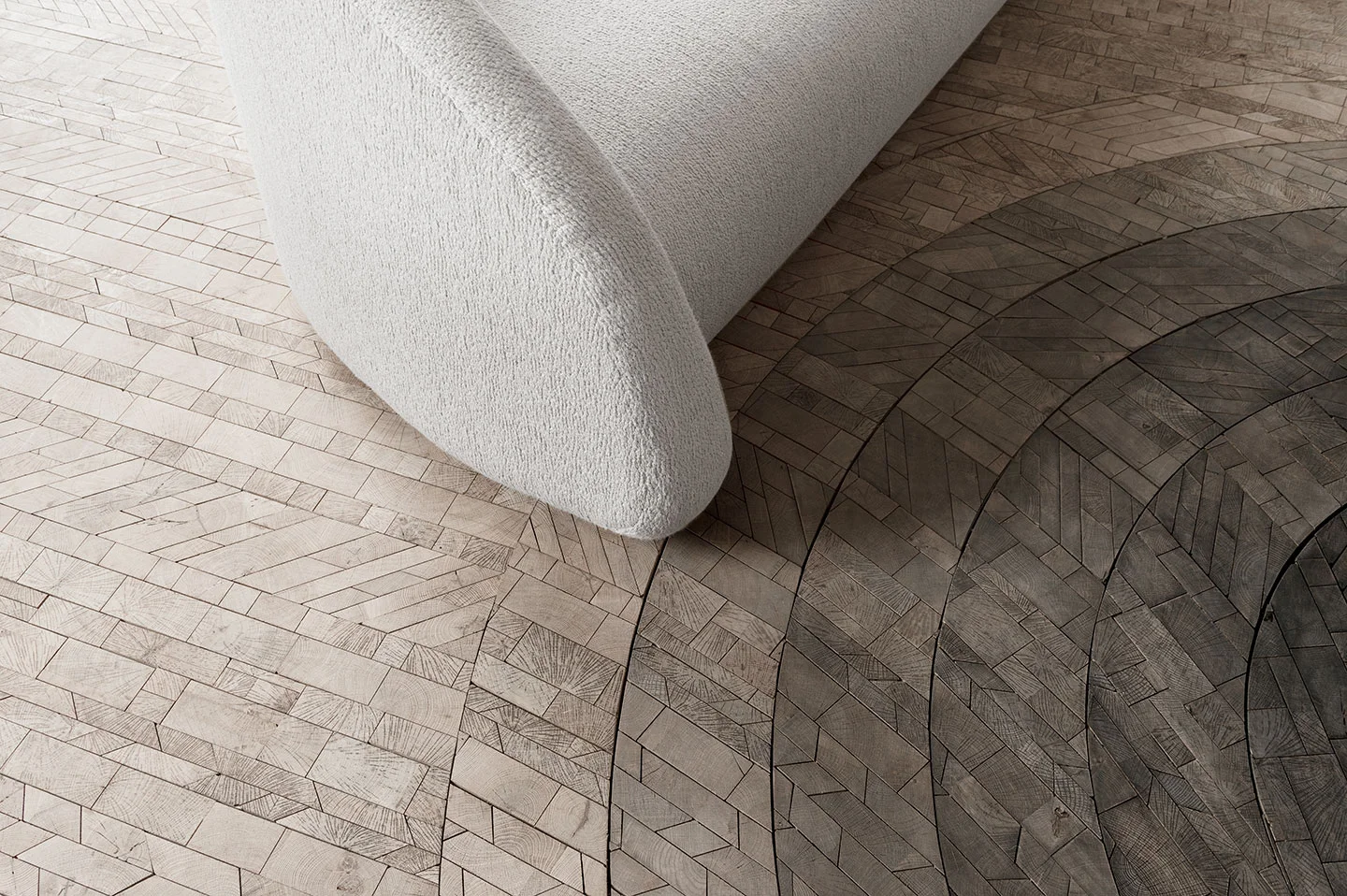
At AD Intérieurs at the Monnaie de Paris, Rosace and Forêt were laid together, which is the kind of decision a bespoke floor leaves to the designer.
What should a bespoke floor specification include?
A beautiful sample is not a specification. Before you sign off, make sure you know:
| Item | Why it matters | Example: OscarOno Paris endgrain floors |
|---|---|---|
| Construction | Stability and how the floor is installed | 12 mm birch plywood with an 8 mm oak top layer (Opus, Forêt, Rosace) |
| Usage class | Whether it can take the traffic | Class 34, very heavy commercial traffic |
| Fire rating | Required for hotels, shops and public spaces | Cfl-s1 |
| Finishes | Color and how it wears | Natural, Smoke (smoked through the full depth), Black (charred, shou sugi ban); no stain |
| Joints | How the surface reads and is cleaned | Under 1 mm, optionally filled with LignoFusion in brown or black |
| Certification | Where the wood comes from | FSC and PEFC |
Ask also how the floor meets the next room. Opus and Forêt have Tandem plain boards in the same finish, so a patterned room can open into a quieter one without a change of color at the threshold.
How long does a bespoke parquet floor take?
Longer than a stock floor, and the time depends on the pattern, the finish, the quantity and the site. Ask for the lead time with the quote, and plan the floor early in the project, not after the walls are painted: the subfloor, the heating and the door heights all depend on it. Rosace, for instance, is the slowest floor we build. A realistic schedule leaves room for samples and for the subfloor to dry, which is where most delays come from.
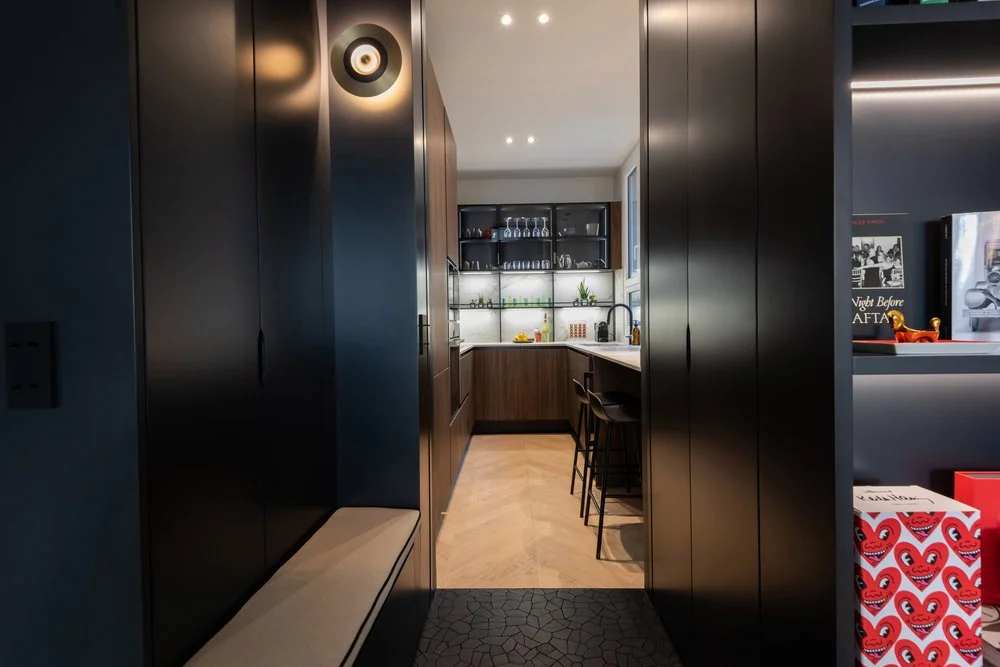
In this private apartment in Paris by Real Design Paris, Opus is laid in Black, the charred finish.
Can a bespoke floor go over underfloor heating?
Often, yes. What matters is the construction of the floor and the installation: a fully glued floor on a well-prepared screed is the usual approach, with the heating commissioned and run before the floor goes down and the surface temperature kept within the manufacturer's limit. Check the spec sheet of the floor you choose, and involve the heating engineer early.
Frequently asked questions
What is bespoke parquet flooring?
A parquet floor composed for a specific space, where the pattern, the arrangement of the pieces, the finish and the transitions are decided by the designer for that room rather than taken from a fixed catalog layout.
How is bespoke parquet different from standard parquet?
Standard parquet repeats one module in one direction. A bespoke floor leaves the composition to the designer: which pieces go where, where a feature such as a spiral sits, and how the floor meets the next room.
How long does a bespoke parquet floor take?
Longer than a stock floor, and it depends on the pattern, finish, quantity and site. Ask for the lead time with the quote and plan the floor early, leaving time for samples, layout drawings and a dry, prepared subfloor.
Who installs a bespoke parquet floor?
A specialist parquet fitter. Endgrain and patterned floors are normally fully glued to a flat, dry subfloor, working to a layout drawing so the pattern is centered and the borders fall where the designer intended.
Can bespoke parquet go over underfloor heating?
Often, yes, if the floor is fully glued to a properly prepared screed and the surface temperature stays within the manufacturer's limit. Check the spec sheet of the floor you choose before you commit.
Designing a floor with OscarOno Paris
OscarOno Paris floors are made to be composed: Forêt combined freely by the architect, Rosace placed as a centerpiece, Opus as one continuous endgrain surface. Spec sheets, CAD and 3D files for every collection are in the library, so the floor can be drawn into the plans from the start. To see a finish in the room it is meant for, order samples.
More from the Atelier
How Bespoke Parquet Flooring Is Made: From Endgrain Cut to Joint
From oak cut on its endgrain to a spiral bent four meters across: how a bespoke parquet floor is made, finished and laid, and what you decide along the way.
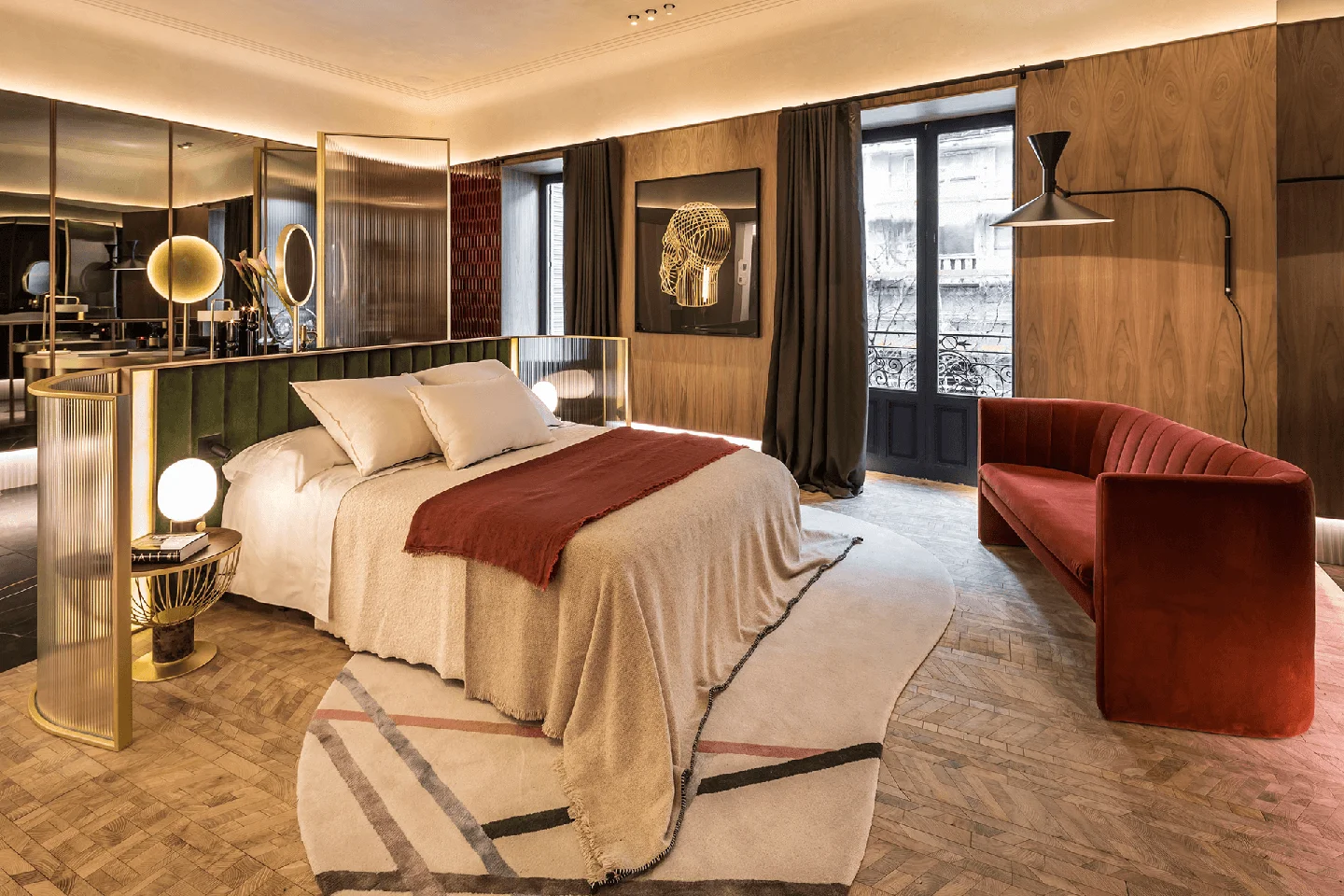
What Makes Luxury Wood Flooring Different?
Not the price tag: the cut of the wood, how the floor is built, where the color comes from and what it is rated for. Here is how OscarOno Paris answers each one.
How Parquet Flooring Is Made: From Tree to Floor
From log to finished floor in seven steps: sawing, drying, grading, building the board, cutting the pattern and finishing, and what each step changes in the floor you walk on.