
Fumed Oak: The Material Science of Darkening Wood Naturally
How an organic chemical reaction with ammonia gas transforms oak from within.
Fumed oak is a highly durable, visually deep architectural surface created through a natural chemical reaction between the wood's inherent tannic acid and airborne ammonia gas. Unlike stained wood, which simply coats the surface, fuming darkens the timber entirely from within, resulting in permanent, rich shades of charcoal, espresso, and warm gray. This organic process highlights the natural grain pattern while celebrating the unique, variegated characteristics of the wood.
- Fumed oak relies on a gaseous reaction with wood's natural tannins rather than liquid stains or pigments.
- The process permanently alters the wood's chemistry, rendering the dark color deep and highly resistant to surface scratches.
- Variations in tannin levels between heartwood and sapwood create a naturally variegated, mosaic-like appearance.
- The technique has historical roots in nineteenth-century English stables and was popularized by the Arts and Crafts movement.
- Fuming is exceptionally effective on end-grain wood due to the open vertical fiber structure that allows deep gas penetration.
What is fumed oak flooring?
Fumed oak flooring, often referred to as smoked oak flooring, is a premium timber surface that has undergone a specialized gaseous treatment to darken its natural color. Instead of applying liquid dyes or surface-level stains, craftspeople place raw oak boards or blocks inside a sealed, pressurized chamber filled with ammonium hydroxide vapor. This process allows the gas to penetrate deep into the cellular structure of the wood, permanently changing its hue from within.
The resulting aesthetic is highly prized by contemporary architects and interior designers. Because the color change occurs through a reaction with the wood's internal chemistry, the surface retains a remarkable transparency. The natural grain lines remain sharp and visible, offering a three-dimensional depth that synthetic stains cannot replicate. This makes a fumed oak finish a favorite for minimalist, Japandi, and high-end residential interiors.
How does ammonia darken wood naturally?
The chemical process of fuming wood relies on the presence of tannic acid, a natural polyphenol found in high concentrations within European Oak (Quercus robur). When raw oak is exposed to airborne ammonia (NH₃) gas, the ammonia molecules react with these tannic acids to form dark, insoluble organo-metallic complexes. According to materials research on timber treatments, this chemical reaction permanently alters the cellular structure of the wood, changing its color profile without damaging its structural integrity.
Because the reaction depends entirely on the natural, organic distribution of tannins within each individual tree, the results are beautifully non-uniform. Heartwood, which is dense and rich in tannins, darkens deeply to shades of espresso, charcoal, and warm grayish-brown. In contrast, sapwood—the younger, outer portion of the tree trunk—contains significantly fewer tannins. As a result, sapwood resists the fuming process and remains lighter, creating a rich visual contrast and a variegated, mosaic-like floor with natural highlights and shadows.
Fumed vs stained oak — what is the difference?
The primary difference between fumed oak and stained oak lies in how the color is introduced to the wood fibers. Staining is a mechanical process where liquid pigments or dyes are applied to the surface of the wood, sitting on top of the fibers and often obscuring the natural grain. Fuming, on the other hand, is an organic chemical transformation where ammonia gas penetrates deep into the cellular walls, altering the color of the wood itself while keeping the grain completely clear.
This structural difference has significant practical implications for durability and maintenance. When stained wood is scratched or worn down by heavy foot traffic, the pale raw wood underneath is immediately exposed. In contrast, fumed oak flooring maintains its dark, rich color deep beneath the surface, ensuring that minor scratches and daily wear remain virtually invisible. This makes fumed oak an exceptionally resilient option for demanding environments.
| Feature | Fumed Oak Finish | Stained Oak Finish | Carbonized Oak (Shou Sugi Ban) |
|---|---|---|---|
| Color Source | Chemical reaction with natural tannins | Surface pigments or liquid dyes | Direct surface charring by fire |
| Color Depth | Deep cellular penetration | Superficial surface layer | Shallow charred surface layer |
| Grain Clarity | Excellent; natural grain is highlighted | Moderate; pigments can cloud the grain | Textured; grain is deeply embossed |
| Wear Resistance | Very high; scratches do not expose pale wood | Low; scratches easily reveal raw wood | High; protected by charred layer and sealants |
| Color Uniformity | Variegated; organic variation based on tannins | Highly uniform and predictable | Uniformly dark with dramatic texture |
What are the historical origins of smoked oak flooring?
The technique of fuming wood has its roots in nineteenth-century England, where stable owners noticed that the oak beams directly above horse stalls turned a deep, rich brown over time. This natural transformation was caused by the ammonia vapor rising from horse urine, which reacted with the high tannin content of the raw oak beams. This accidental discovery was later refined into a deliberate, controlled decorative process.
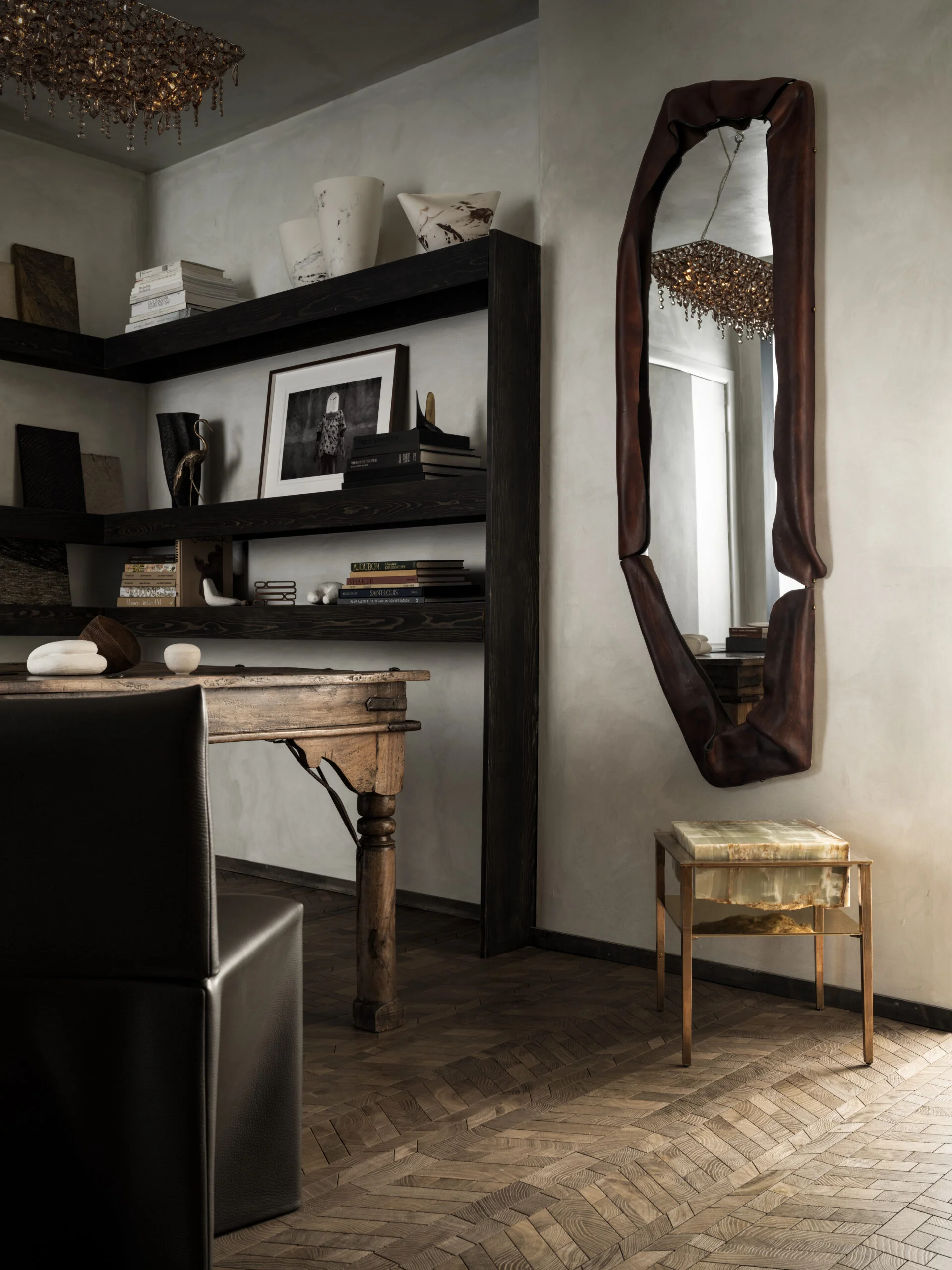
By the early twentieth century, the fuming process was embraced by Gustav Stickley, a leading figure of the American Arts and Crafts movement. Stickley formalized the technique to highlight the natural beauty of wood without the muddy look of heavy Victorian stains. Today, this technique has undergone a modern revival, with minimalist designers utilizing smoked oak to bring dramatic, sensory warmth to contemporary architectural spaces. For example, contemporary designers frequently pair fumed oak with cold stainless steel, raw brass, and tactile linens to balance its dark warmth.
Why is fuming exceptionally suited for end-grain wood?
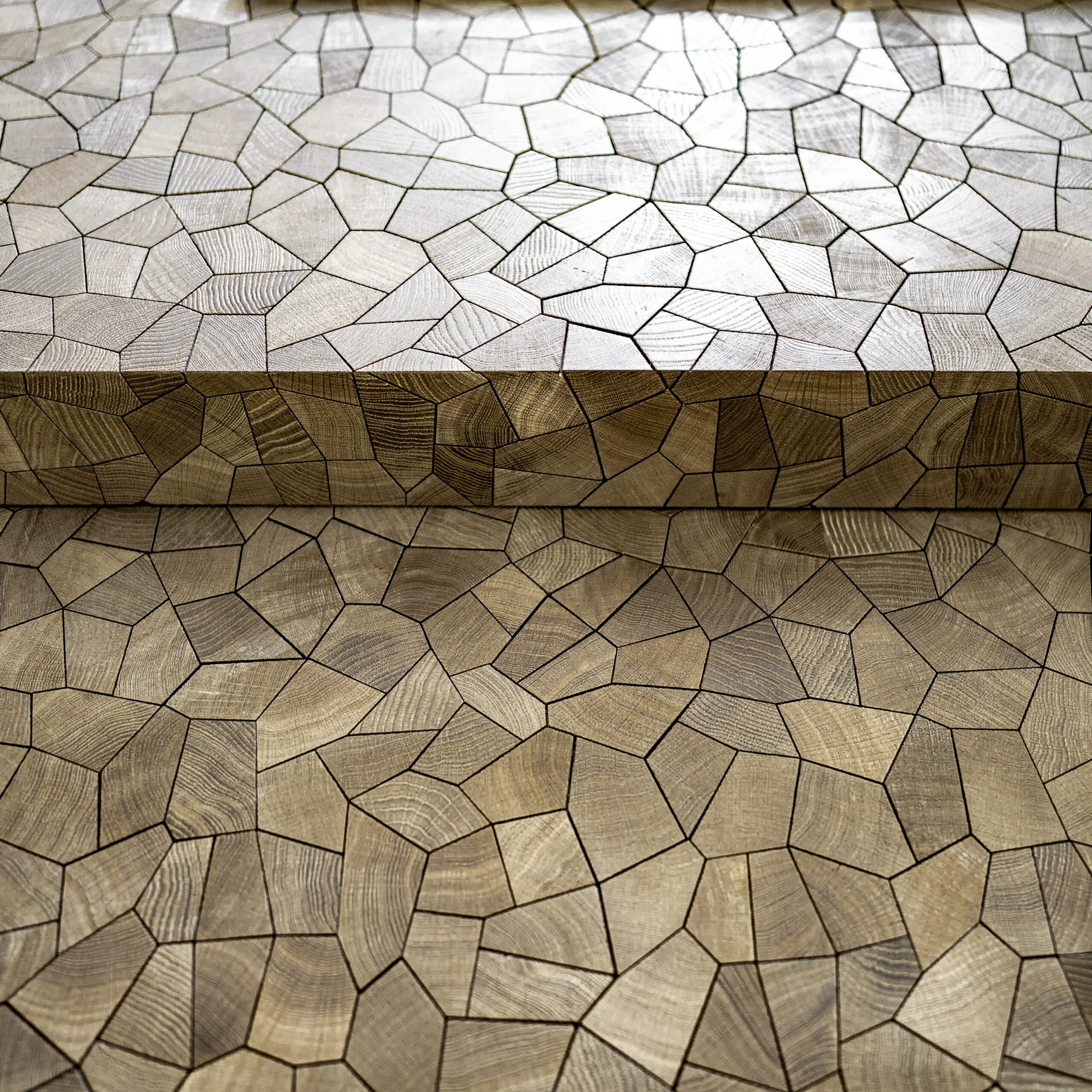
Fuming is exceptionally suited for end-grain wood flooring because of the unique cellular orientation of end-grain blocks. In standard flat-grain boards, the wood fibers run horizontally along the surface, presenting a tight barrier to gas penetration. In end-grain blocks, however, the wood is cut transversely, exposing the vertical capillaries of the tree—essentially acting like millions of microscopic straws open to the air.
This open vertical structure allows the ammonia gas to travel deep into the heart of the wood blocks during the fuming process. As a result, the deep, smoky color penetrates almost entirely through the depth of the end-grain tile. This creates an incredibly resilient surface that can be sanded and refinished multiple times without losing its rich, dark aesthetic, making it ideal for high-traffic commercial spaces, luxury retail boutiques, and busy residential entrance halls.

How do you care for a fumed oak finish?
Caring for a fumed oak floor requires preservation techniques that respect the natural, breathable character of the treated timber. Because fuming does not seal the wood on its own, the surface must be finished with a protective coating, typically a natural oil or a hardwax oil. These penetrative finishes bond with the wood fibers, locking in the deep, smoky tones while maintaining the matte, tactile texture that makes fumed oak so desirable.
For daily maintenance, avoid harsh chemical cleaners or steam mops, which can strip away the protective oils and dry out the wood. Instead, use a soft broom or microfiber vacuum to remove loose dust and grit. When damp-mopping is required, always use a pH-neutral wood soap formulated specifically for oiled surfaces, which gently cleans while replenishing the protective lipids of the floor.
Frequently Asked Questions
Does fumed oak fade in sunlight?
While fumed oak is highly resistant to wear because the color penetrates deep into the wood, like all natural timbers, it can experience subtle color shifts when exposed to prolonged, direct ultraviolet sunlight. Applying an oil finish with UV-inhibitors helps slow this natural patination process.
Is fumed oak safe for residential interiors?
Yes, professionally fumed oak is entirely safe for residential interiors. While the fuming process uses industrial ammonia gas, the finished wood is thoroughly off-gassed and sealed at the atelier, leaving no chemical residue, smell, or harmful emissions behind.
Can you fume wood species other than oak?
Fuming relies on high tannic acid content to produce a dark color. While European oak is the ideal candidate, other species with moderate tannin levels, such as chestnut or walnut, can be fumed, though the color change is typically less dramatic than in oak.
Does fumed oak have a strong smell?
Once the fuming process is complete and the wood has been properly off-gassed and sealed with natural oils or varnishes, fumed oak carries no ammonia odor. It retains only the warm, earthy scent of natural timber and oils.
More from the Atelier

Restoring an Old Parquet Floor: Is It Worth Saving?
Discover how to assess, repair, and preserve historical parquet floors. Learn the difference between aggressive modern sanding and furniture-grade conservation.
Why Does a Squeaky Wood Floor Happen, and How Do You Fix It?
A deep dive into why wood floors squeak, exploring the physics of timber friction, seasonal humidity, and the structural remedies that restore quiet luxury.

How Is Parquet Installed? Glue-Down vs Floating Floors
Demystify the choice between glue-down and floating parquet installations. Explore how these fitting methods impact acoustics, thermal efficiency, and longevity.