
Parquet Floor Restoration: Is an Old Parquet Floor Worth Saving?
Most old parquet floors look worse than they are. A few checks tell you which kind you have.

An old parquet floor is usually worth restoring. If the wood is sound and there is still enough of it above the tongues to sand, loose blocks can be re-glued, missing ones replaced, gaps filled and the finish renewed. It is past saving when rot, long-standing water damage or too many past sandings have destroyed much of it.
A restored floor also keeps something a new one cannot have on day one: the color and wear of decades, matched to the house it was laid in.
Is it worth restoring an old parquet floor?
In most cases, yes, for three reasons. Old oak parquet has a depth of color that new oak only reaches with time. Restoring keeps the original pattern, block size and direction, which in a period house are part of the architecture. And sanding, repairing and refinishing an existing floor often costs less than laying a new patterned one, although a floor that needs many replacement blocks narrows the gap.
The exceptions are floors where too little sound wood is left, or where so many blocks need replacing that the restored floor would be mostly new anyway.
How do you tell if a parquet floor can be saved?
A few checks, most of which you can do yourself before calling anyone:
- How much wood is left. Lift a block at a doorway, a threshold or a floor vent and look at its edge. What matters is the thickness of wood above the tongue and groove: that is what sanding eats into. A fitter can tell you how many more sandings it allows.
- Loose or hollow blocks. Tap the floor. A hollow sound usually means the adhesive under that block has failed. That is common and repairable: the blocks are lifted, cleaned and glued back.
- Rot and insects. Soft, spongy patches or small round holes with fresh dust around them need looking at before anything else, and so does the cause.
- Water damage. Black stains from long exposure to water often go deep into the wood. Sanding may not remove them, and those blocks usually have to be replaced.
- Past sanding. If nail heads or the edges of tongues already show at the surface, the floor has been sanded as far as it can go.
If the parquet has been under carpet, linoleum or tiles, lift a corner first. Covered floors are often in better condition than exposed ones. Old black bitumen adhesive can contain asbestos, so have it tested before anyone scrapes or sands it.
What does parquet floor restoration involve?
The work goes in a fixed order. Loose blocks are lifted, cleaned of old adhesive and glued back. Missing or ruined blocks are replaced with matching ones. Gaps are filled. Then the floor is sanded, through progressively finer grades, and finished.
Patterned floors need a fitter who sands them often. On herringbone and chevron the grain runs in two directions, so the floor is sanded at an angle to both rather than along one, and it is easy to leave marks or dish soft wood. The aim is to remove as little wood as possible: just enough to get below the old finish and the damage, and no more. On a very thin floor, a careful fitter will scrape or sand by hand in places rather than run a heavy machine over it.
How do you match replacement blocks?
With reclaimed blocks of the same species, size and cut, ideally from the same house. A common trick is to take blocks from under a fitted cupboard or a built-in bookcase, where nobody will see the new ones that go in their place. Reclaim yards are the next best source.
New or reclaimed blocks rarely match the color at first. A good restorer will tone them carefully, and the difference softens as the wood ages in the same light as the rest of the floor.
Which finish should a restored parquet floor get?
Either an oil or a lacquer, and the choice is about upkeep more than authenticity. An oiled or hardwax-oiled floor has a matte, open surface and can be repaired in one spot without sanding the whole room; it needs a maintenance coat from time to time. A lacquered floor carries a tougher protective film and needs less routine care, but when the lacquer wears through in a busy area, that area is usually sanded and recoated. Either way, choose a matte or low sheen if the floor should look its age.
When is an old parquet floor beyond saving?
When rot or long water damage has spread through large areas, when past sanding has reached the tongues, when most of the blocks are missing, or when the floor was buried under a self-leveling compound that has bonded to it. Then the honest answer is a new floor, laid in the pattern the house had.
That usually means one of three patterns. Herringbone, bâtons rompus in French, which OscarOno Paris makes as Rompu, an oak herringbone. Chevron, point de Hongrie, made as Hongrie, an oak chevron. And panel parquet, Versailles and its relatives, made as Dalle, oak composed into 800 x 800 mm panels.

At Goutal Paris, laid in Hongrie, a natural chevron gives a new floor the classic Paris pattern.

At By Kilian in Paris, laid in Dalle, oak panels in a natural finish carry on the tradition of the great Paris floors.
Frequently asked questions
Is it worth restoring an old parquet floor?
Usually, yes, if the wood is sound and there is still enough of it above the tongues to sand. Loose blocks can be re-glued, missing ones replaced and a worn finish renewed, and the result keeps a color and character a new floor takes years to gain. It is not worth it when rot, long water damage or past sanding has destroyed much of the floor.
How many times can a parquet floor be sanded?
It depends on how much wood is left above the tongue and groove, not on the age of the floor. Each full sanding removes a little, and a floor that has been sanded many times may have little left. A fitter can check by lifting a block at a doorway or a vent and looking at its edge.
Can parquet covered by carpet or linoleum be restored?
Often, yes, and covered floors are sometimes in better condition than exposed ones. The work is removing the old adhesive, tacks and underlay without gouging the wood. Old black bitumen adhesives can contain asbestos, so have them tested before anyone scrapes or sands.
How much does parquet floor restoration cost?
It depends on the area, the condition, how many blocks need re-gluing or replacing, the pattern and the finish chosen. A floor that only needs a sand and a new finish costs far less than one needing many replacement blocks. Get quotes from fitters who restore parquet regularly and compare them with the cost of a new patterned floor.
When a new floor is the answer
If a floor cannot be saved, or one room has lost its parquet while the next has kept it, the new floor should match what the house already has: the pattern, the board width and the tone. Rompu and Hongrie come in 150 mm or 190 mm widths and Dalle in 800 x 800 mm panels, all in flatgrain select oak, 12 mm with a 4 mm top layer, in twelve lacquered colors, rated usage class 33, Cfl-s1, and FSC and PEFC certified.
Order samples and hold them against the surviving floor in its own light, and find spec sheets, CAD and 3D files in the library.
More from the Atelier
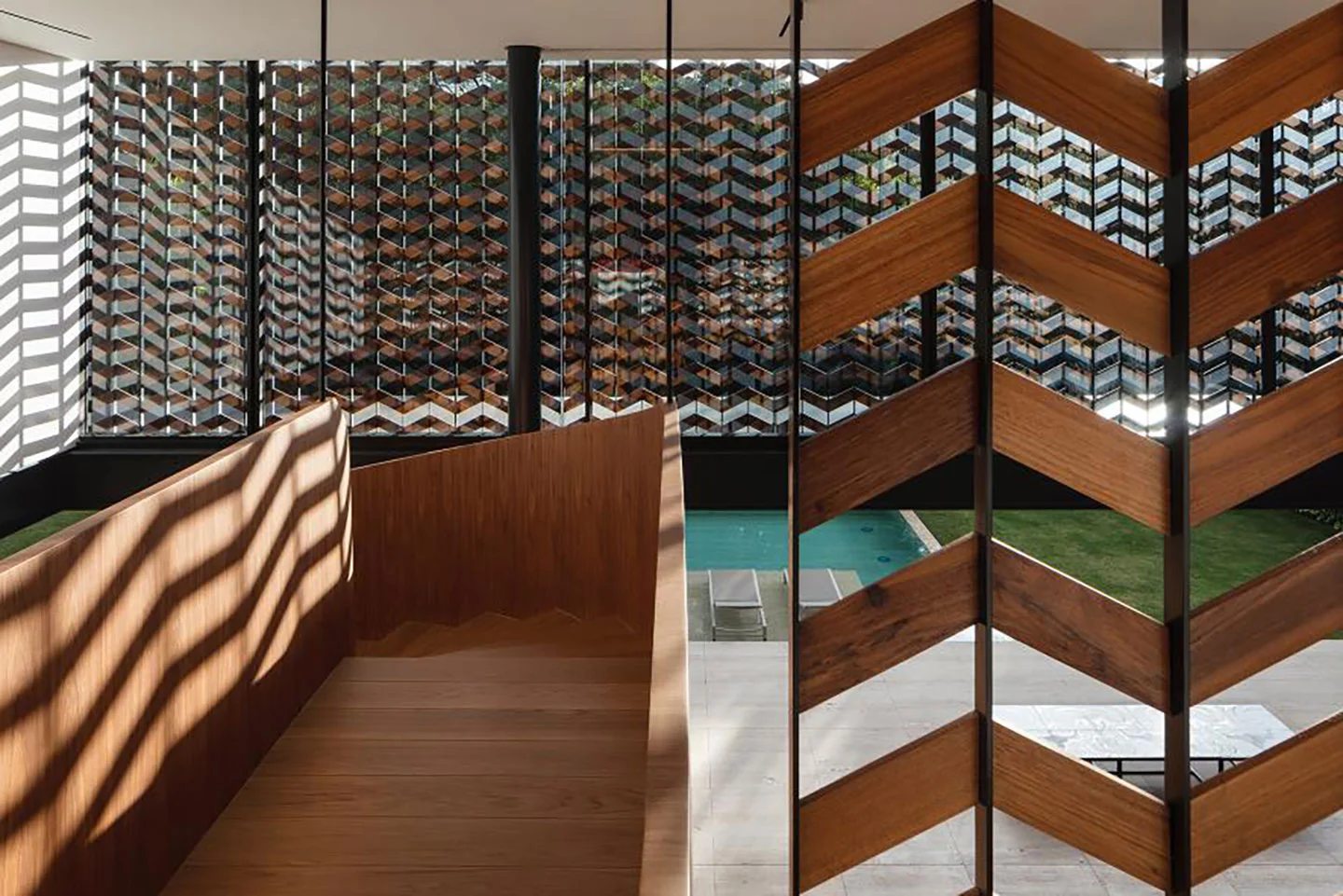
Protecting End Grain Wood Block Flooring from UV Fading
Discover the science of oak photodegradation and how to protect end-grain wood floors from UV fading using advanced varnishes and architectural design.

Squeaky Wood Floors: Why They Squeak and How to Fix Them
A squeak is friction: wood on wood, wood on a nail, or a subfloor moving on its joists. Find which one it is and the fix follows.
Parquet Flooring Installation: Glue-Down vs Floating Floors
Glued, floated or nailed: how parquet flooring is installed, why herringbone, chevron and end grain are glued down, and what a good fitter checks first.