
Squeaky Wood Floors: Why They Squeak and How to Fix Them
Most squeaks are harmless and fixable. The trick is finding out what is rubbing against what.

Wood floors squeak because something is moving and rubbing: one board against the next, a board against a loose nail, or the subfloor shifting on its joists when you step on it. Changes in humidity make the gaps open and close, which is why a squeak can come and go with the seasons. Find which of these is happening and the right fix is usually simple.
Why do wood floors squeak?
- Boards rubbing together. Tongue and groove edges rub when the boards shrink slightly and have room to move. This gives a light, high squeak along a joint.
- Loose nails or staples. A board nailed down slides up and down on a nail that has loosened over the years. This gives a sharp squeak in one spot.
- A moving subfloor. Gaps between the subfloor and the joists let the whole surface flex under a step. This gives a deeper creak over a wider area.
- A hollow spot. On a glued floor, a patch where the adhesive did not fully bond, or a dip in the screed, leaves the board unsupported. It flexes, clicks and sometimes sounds hollow when tapped.
Why do squeaks come and go with the seasons?
Wood takes on moisture from the air and gives it back. In winter, when heating dries the air, boards shrink, gaps open at the joints and around fixings, and squeaks appear. In humid months the wood swells, the gaps close and many squeaks fade. If the air gets very damp, boards can also press too hard against each other and creak for the opposite reason.
A steady indoor humidity, roughly 40 to 60 percent, keeps this movement small. A humidifier in winter is often the cheapest squeak fix there is.
How do you find the source of a squeak?
Walk the area slowly and mark each noisy spot with tape. Then listen to the kind of noise:
- A squeak exactly on a joint between two boards points to boards rubbing.
- Squeaks in a row at regular intervals often sit over the joists and points to a loose nail or subfloor.
- A creak over a wide area, with a bit of bounce, points to the subfloor.
- A hollow click on a glued floor points to a spot that has lost its bond.
If there is an unfinished ceiling below, have someone walk on the floor while you watch the joists and the underside of the subfloor for movement.

How do you fix a squeaky wood floor?
| Cause | Fix | Who |
|---|---|---|
| Boards rubbing at a joint | Work talc or powdered graphite into the joint, step on it to push it in, vacuum the excess. No oils or liquids. | Do it yourself |
| Loose subfloor, access from below | Glue thin wood shims into the gaps between joist and subfloor, or screw up through the subfloor (short enough not to come through the floor). | Do it yourself or a carpenter |
| Loose board or subfloor, no access from below | Screw down through the board into a joist, countersink and fill. Squeak-repair kits use screws whose heads snap off below the surface. | Carpenter or fitter |
| Hollow spot in a glued floor | Inject floor adhesive through small holes drilled in the joint, weight the board until it cures, fill the holes. | Floor fitter |
| Floating floor over an uneven base | Lift the affected area, level the subfloor, relay. | Floor fitter |
Fix the cause, not the noise. Talc on a joint will not help if the subfloor is flexing, and screwing into a floor that only squeaks in winter may be overkill when stable humidity would do.
Which wood floors squeak least?
The quietest wood floor is a stable board fully glued to a flat, dry, solid subfloor. With no nails to loosen and no air gap beneath, there is nothing to rub and nowhere to move. Layered boards help too: a real oak top layer on a stable base moves far less with the seasons than a solid plank, so joints stay tight.
Floating floors can be quiet, but only if the base is properly leveled; any dip lets the boards flex and click. Nailed solid floors are the most traditional and the most likely to squeak as they age.
Droit, a straight oak plank floor, is a layered board: flatgrain select oak, 12 mm thick with a 4 mm oak top layer, 150 mm or 190 mm wide, rated usage class 33 for heavy commercial traffic. Its spec sheet sets out how it should be installed; follow it, and start with a subfloor that is flat and dry.
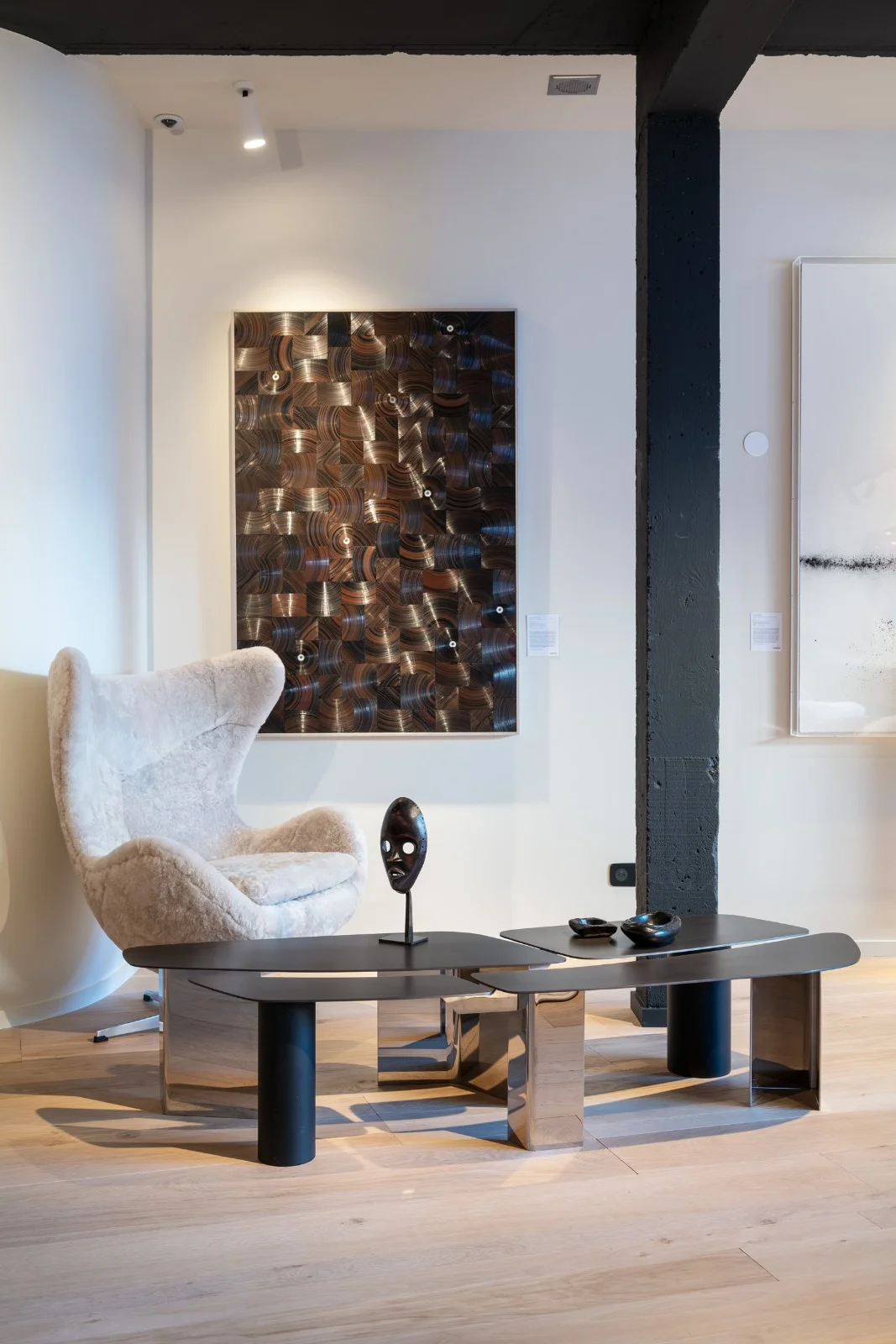
At Le Chalet in Megève, Droit in a natural finish runs through a house in the Alps, where heated rooms and dry winter air make stable boards matter. In Private House La Varenne, the same planks run under a double-height living room.
When is a squeak a sign of something more serious?
Most squeaks are a nuisance, not a defect. Call a professional if the floor feels soft or springy, if boards are sinking, cupping, lifting or splitting, if a squeak appears suddenly near a bathroom, kitchen or outside wall, or if you see staining. Those point to water or a structural problem that a screw will not solve.
Frequently asked questions
Will a squeaky wood floor fix itself?
Sometimes, for a while. Many squeaks fade in humid months, when the wood swells and closes small gaps, and come back when the heating dries the air in winter. A squeak caused by a loose subfloor or a hollow spot under the boards will not go away on its own.
Is a squeaky floor a sign of structural damage?
Rarely. Most squeaks come from boards, nails or a subfloor moving slightly. Have it checked if the floor feels soft or bouncy, if boards are sinking, lifting or splitting, or if the noise appears suddenly with signs of water.
How do you stop a floor squeaking under carpet?
Fix the subfloor to the joists. From below, drive screws up through the joists into the subfloor or glue shims into the gaps. From above, special squeak-repair screws can be driven through the carpet into a joist; their heads snap off below the surface.
Which wood floors squeak the least?
Floors fully glued to a flat, dry, solid subfloor, because there are no nails to rub on and no gaps for the boards to move into. Floating floors are quieter when the subfloor is properly leveled. Nailed solid floors are the most likely to develop squeaks as the nails loosen over the years.
A quiet floor starts with the right board
Squeaks are easier to prevent than to fix: a stable board, a flat and dry subfloor, and an installation that follows the spec sheet. Droit comes in twelve lacquered colors, with a Cfl-s1 fire rating and FSC and PEFC certification.
Order samples, and find the spec sheet, CAD and 3D files in the library.
More from the Atelier
Protecting End Grain Wood Block Flooring from UV Fading
Discover the science of oak photodegradation and how to protect end-grain wood floors from UV fading using advanced varnishes and architectural design.

Parquet Floor Restoration: Is an Old Parquet Floor Worth Saving?
Loose blocks, gaps, stains and a worn finish can all be put right. How to tell whether an old parquet floor is worth restoring, what the work involves, and when it is not.
Parquet Flooring Installation: Glue-Down vs Floating Floors
Glued, floated or nailed: how parquet flooring is installed, why herringbone, chevron and end grain are glued down, and what a good fitter checks first.