
Herringbone vs Chevron: How to Tell Them Apart
One detail separates the two classic parquet patterns: the cut at the end of each board.
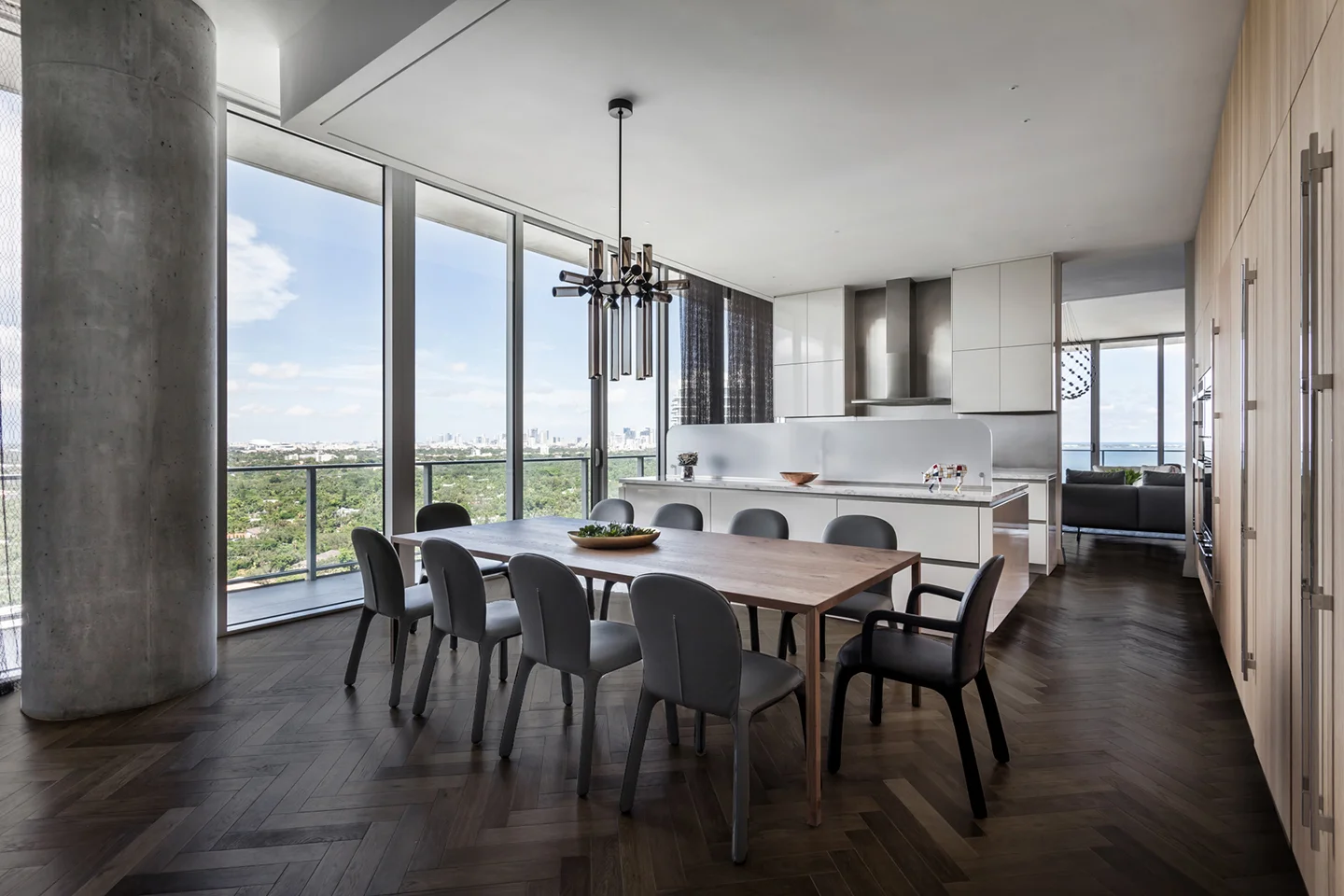
Herringbone and chevron differ in one detail: the ends of the boards. Herringbone uses rectangular boards with square ends, so each board butts against the side of the next and the pattern steps along in a broken zigzag. Chevron boards have their ends cut at an angle, so they meet point to point along a straight line and form a clean row of V shapes.
If you remember nothing else, look at the center of each row. A straight, unbroken seam running down the floor means chevron. A seam that steps from side to side means herringbone.
How do you tell herringbone and chevron apart?
Three quick checks work on any floor, in a photo or in person:
- The board ends. Square ends that stop against the long edge of a neighbor are herringbone. Ends cut on a slant that meet another slanted end are chevron.
- The center line. Chevron has a crisp, continuous spine where the points meet. Herringbone has no single seam; the joints are staggered.
- The shape you see. Chevron reads as a column of arrows. Herringbone reads as a woven, stepped texture, like the bones of a fish, which is where the name comes from.
What makes a floor herringbone?
In herringbone, every board is a plain rectangle. The short end of one board sits flush against the long side of the next, at a right angle, and the rows lock into one another. Nothing is cut on a diagonal in the factory, so the full length of each board stays visible and the pattern has a stepped, slightly irregular rhythm.
The layout is older than wood floors. Roman builders laid bricks and stones the same way, a technique called opus spicatum, and the pattern moved into French parquet in the great houses of the Renaissance and after. In Paris it is called bâtons rompus, "broken sticks", and it is still the pattern of countless apartments there. OscarOno Paris makes it as Rompu, a herringbone in oak.
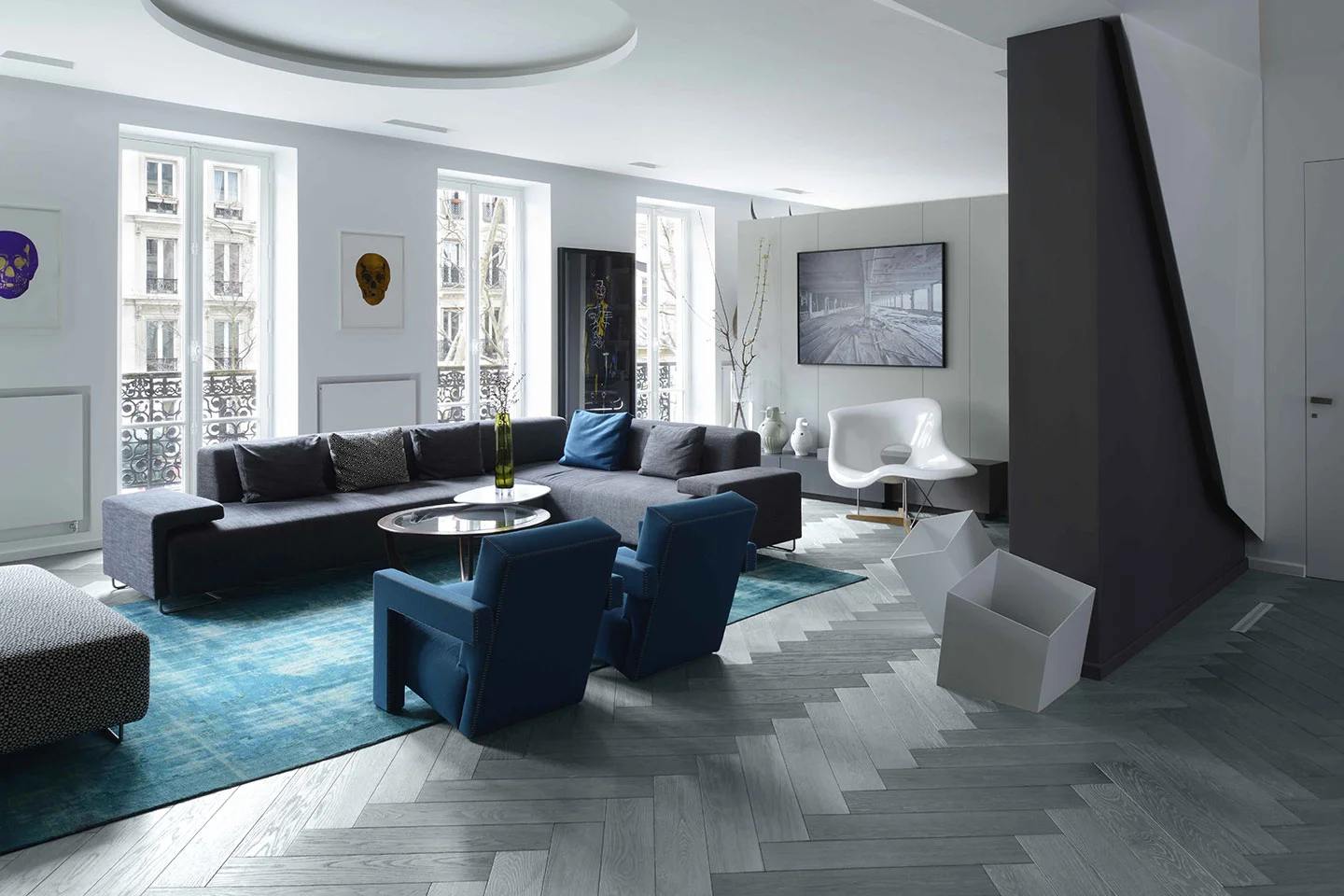
You can see the stepped joints clearly in this private residence in Paris laid in Rompu: each board stops against the side of the next, and there is no straight seam down the middle.
What makes a floor chevron?
Chevron boards are parallelograms rather than rectangles. Both ends are cut at an angle, usually 45 degrees and sometimes 30 or 60, and the boards meet tip to tip so the joint forms one straight, continuous line. The steeper or shallower the angle, the sharper or flatter the V.
In French it is point de Hongrie, "Hungarian point", and it became one of the defining floors of nineteenth-century Paris apartments, where it runs in long, straight lines through enfilades of rooms. OscarOno Paris makes it as Hongrie, a chevron in oak.
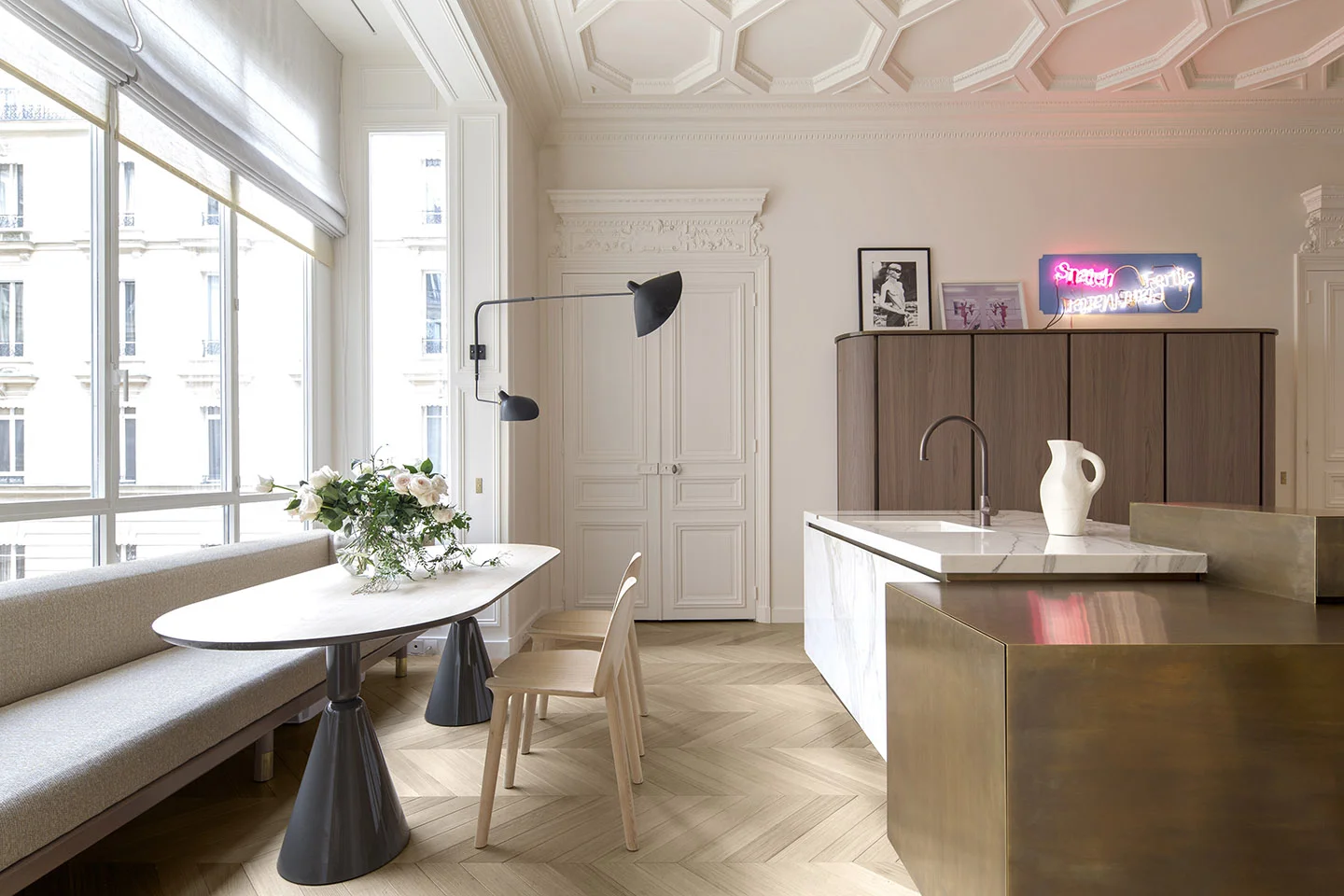
In the Trocadero private apartment in Paris, laid in Hongrie, the points line up on one straight spine, which is the giveaway for chevron.
Herringbone vs chevron at a glance
| Feature | Herringbone (bâtons rompus) | Chevron (point de Hongrie) |
|---|---|---|
| Board shape | Rectangle, square ends | Parallelogram, ends cut at an angle |
| Joint | End against side, staggered | End against end, on one straight line |
| What you see | Stepped, woven zigzag | Rows of clean V shapes |
| Direction | Present but soft | Strong, like arrows |
| Waste at the walls | Moderate | Higher |
| Fitting | Exacting, but forgiving of small errors | Most exacting: the center line shows every error |
One detail they share: both patterns need boards that come in two hands, a left and a right, so the tongue and groove line up on each side of the zigzag.
How does each pattern change a room?
Chevron points. Laid along the length of a hallway or a narrow room, its V shapes lead the eye toward the far end, and the room reads longer. Run it toward a window, a fireplace or a doorway and it frames that point. Because the effect is strong, it is worth deciding the direction before anything else.
Herringbone has a direction too, but a softer one. The staggered joints break up the lines, so it suits squarer rooms and open-plan spaces where furniture is arranged in several directions and no single axis should dominate.
Both patterns play with light in the same way. The grain runs one way on one side of each zigzag and the other way on the other side, so in raking light one set of boards looks pale and the other darker. On chevron that shows as clean alternating bands; on herringbone it is a finer, broken shimmer. The effect changes with the time of day and as you walk across the floor.
Which costs more, herringbone or chevron?
Chevron, as a rule. Every board needs an accurate angled cut, the fitter has to keep the center line perfectly straight across the whole room, and the angled rows leave more offcuts at the walls. Herringbone is more work and more waste than straight boards, but less than chevron. On either pattern, a careful layout before the first board goes down, centered on the room or on its main axis, saves both wood and disappointment.
Board size and finish
The same pattern changes character with the size of the board. Short, narrow boards give a busy, traditional floor; longer and wider boards calm the pattern down and let the grain show. Rompu and Hongrie both come in two widths, 150 mm or 190 mm: the narrower board keeps the classic Paris rhythm, the wider one gives a bolder, quieter zigzag. Both are cut from flatgrain oak in select grade, 12 mm thick with a 4 mm oak top layer.
Color does the rest. Natural and light finishes put the wood forward, while darker finishes make the geometry more graphic. Both patterns are offered in the same twelve lacquered Essentiel colors, so the choice of pattern and the choice of tone can be made separately.
Frequently asked questions
What is the difference between herringbone and chevron?
The cut of the board ends. Herringbone uses rectangular boards with square ends, laid so the end of one board butts against the side of the next, which makes a stepped zigzag. Chevron boards have their ends cut at an angle, so they meet point to point along a straight center line and form a clean row of V shapes.
Is herringbone or chevron more expensive?
Chevron usually costs more. Every board needs an accurate angled cut, the center line leaves no room for error when fitting, and more wood is cut away at the walls. Herringbone is still more work than straight boards, but less than chevron.
What are the French names for herringbone and chevron?
Herringbone is bâtons rompus, literally "broken sticks", after the stepped joints. Chevron is point de Hongrie, "Hungarian point". Both are the classic parquet patterns of Paris apartments.
Which pattern makes a small room look bigger?
Chevron laid along the length of a narrow room or hallway draws the eye down it and makes it read longer. Herringbone has a softer, less insistent direction, so it tends to suit squarer rooms where you do not want a single strong axis.
Can herringbone and chevron go over underfloor heating?
The pattern itself makes no difference. What matters is the construction of the boards and how they are installed: patterned floors over underfloor heating are normally engineered boards glued to the screed. Check the product's spec sheet for its heating compatibility before you commit.
Herringbone and chevron by OscarOno Paris
OscarOno Paris makes both patterns in oak: Rompu herringbone and Hongrie chevron. They share one specification: flatgrain select oak, 12 mm with a 4 mm top layer, 150 mm or 190 mm wide, twelve lacquered colors. Both are rated usage class 33 for heavy commercial traffic, carry a Cfl-s1 fire rating and are FSC and PEFC certified, so the same floor can run from an apartment into a shop or a hotel lobby.
The surest way to choose between them is to see them side by side in your own light. Order samples, and find spec sheets, CAD and 3D files in the library.
More from the Atelier
Reclaimed Teak Flooring: End-Grain Strength and Resilience
Explore how reclaimed teak flooring and end-grain timber provide extraordinary durability, natural silica protection, and stability for demanding spaces.
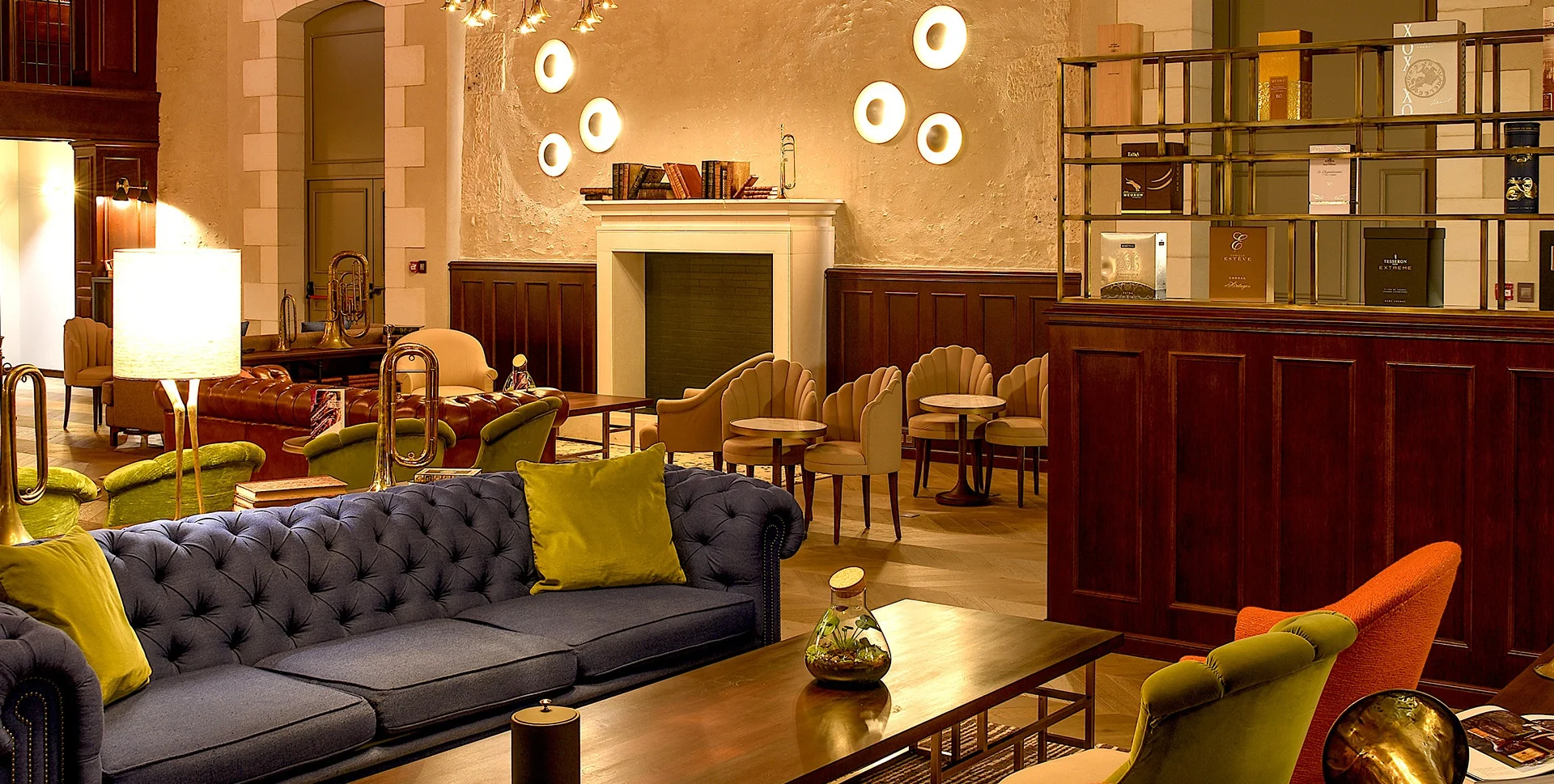
How to Prevent Fading on Hardwood Floors: Design Guide
An architectural approach to managing sun exposure on wood floors, from spectrally selective glazing to finish choices and uniform patina development.
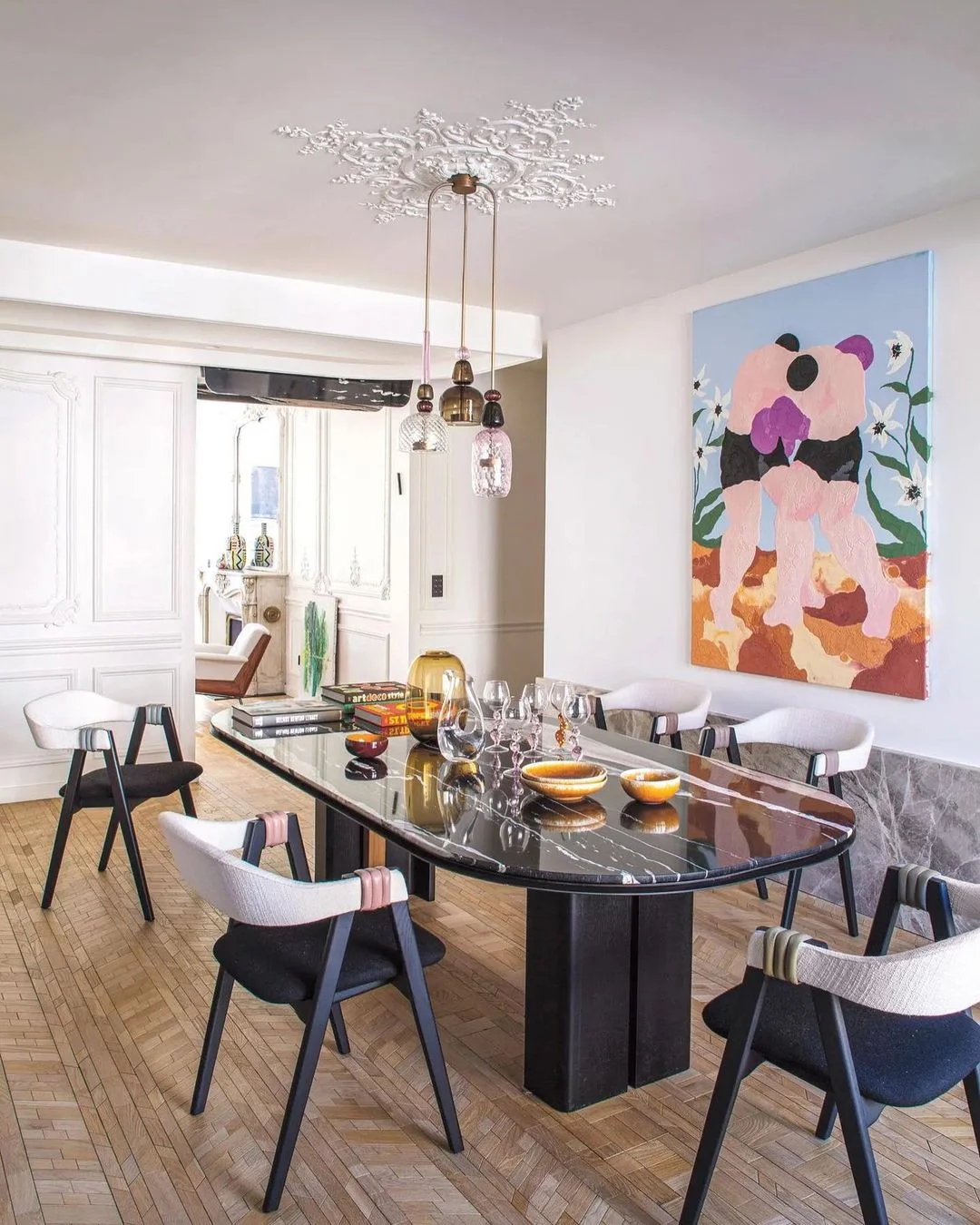
The Craft of Marquetry Parquet Flooring and Panels
Marquetry parquet flooring bridges historical French palace geometry with contemporary minimalism, bringing architectural structure to luxury interiors.