
Herringbone vs Chevron: How to Tell These Classic Parquet Patterns Apart
A geometric, historical, and architectural guide to choosing the right pattern for your space.
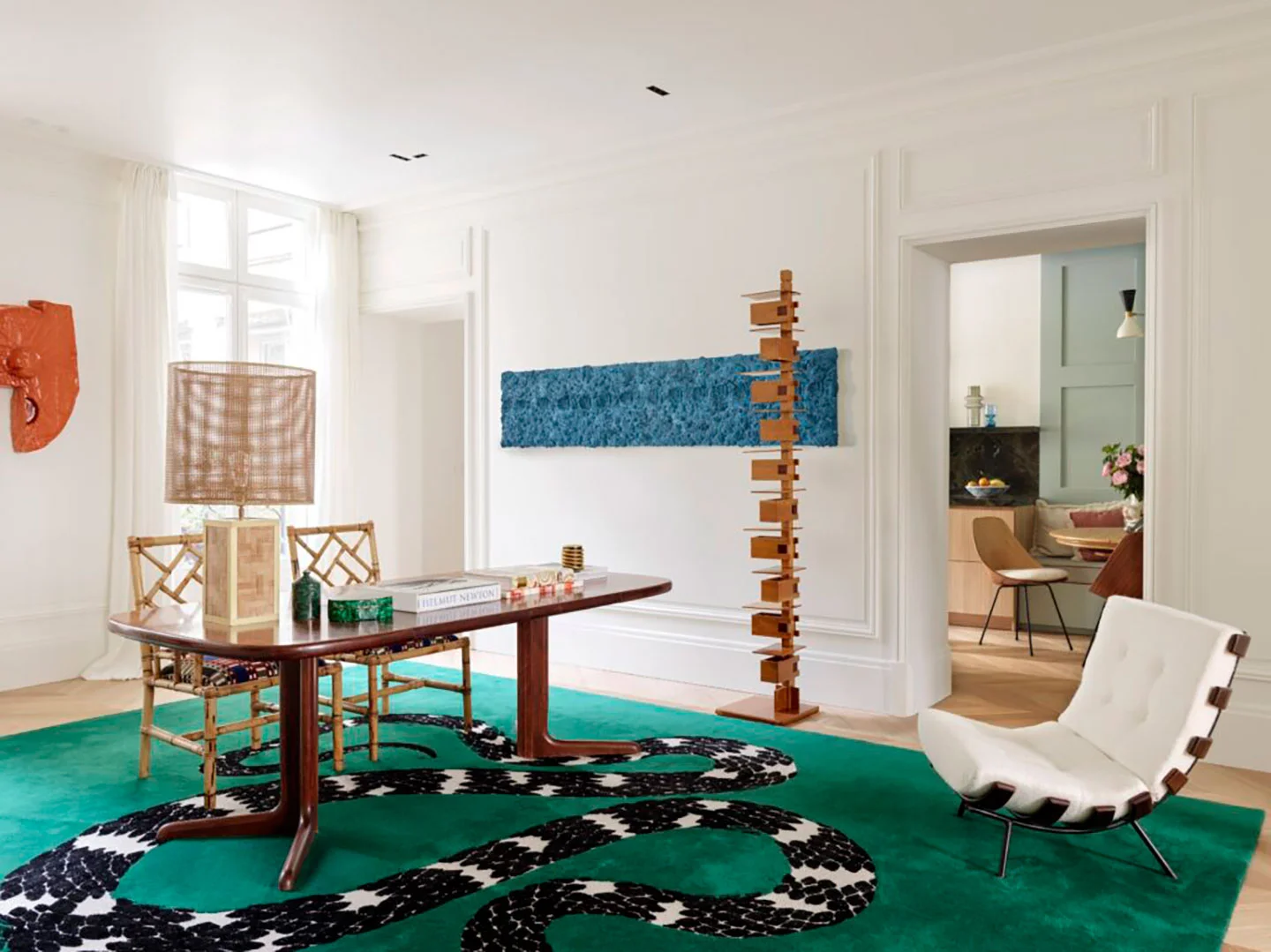
Herringbone and chevron are two distinct parquet flooring designs separated by the cut of their planks and how they meet. Herringbone flooring uses rectangular planks laid at a 90-degree angle to create a staggered, zigzag pattern where the end of one board butts against the side of another. In contrast, chevron parquet features planks cut at a precise angle (usually 45 or 60 degrees) that meet end-to-end to form a continuous, unbroken center seam.
- Geometric Cut: Herringbone planks are rectangular and meet at 90 degrees; chevron planks are mitered at the ends to join along a straight spine.
- Visual Direction: Chevron forms a continuous "V" shape or arrow that draws the eye forward, while herringbone creates a woven, multi-directional texture.
- Historical Roots: Herringbone emerged from Roman brickwork and entered French palaces in 1539, whereas chevron became the defining floor of 19th-century Parisian apartments.
- Spatial Impact: Chevron visually elongates rooms and creates a dynamic play of light, while herringbone grounds larger spaces with balanced warmth.
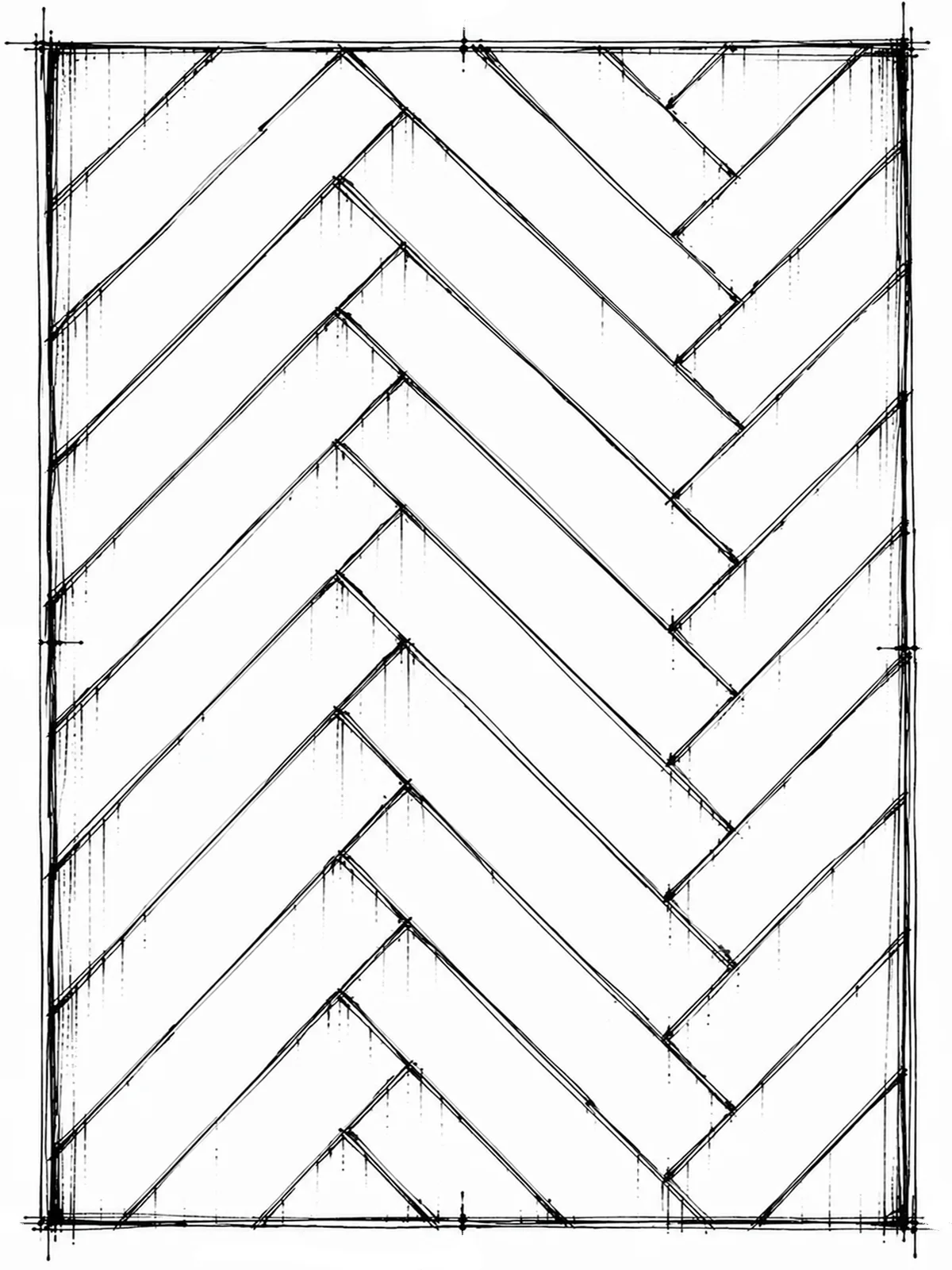
What is the exact geometric difference between herringbone and chevron flooring?
The geometric difference between herringbone and chevron flooring lies entirely in the shape of the individual planks and the joints where they meet. Herringbone planks are standard rectangles with 90-degree corners, laid so that the short end of one plank rests flush against the long side of the next to form a staggered pattern. Chevron planks are cut at an angle—typically 45 or 60 degrees—at both ends, allowing them to join end-to-end along a straight line to create a continuous mitered seam.
In herringbone flooring, the joint is interlocking. It mimics a woven textile underfoot, where the pattern appears to step forward and backward. Because herringbone uses standard rectangular planks, it can be installed with minimal cutting at the edges of the room. Chevron parquet, conversely, requires every single board to be cut precisely. The resulting mitered joint creates a series of continuous "spines" or lines running down the length of the room, producing a clean, geometric visual rhythm.
What are the historical origins of herringbone and chevron parquet?
The historical origins of herringbone and chevron parquet trace back centuries, moving from ancient masonry to the grandest palaces of the French monarchy. Herringbone pattern flooring emerged in Europe during the 16th century, famously installed in the Château de Fontainebleau in 1539 under King Francis I. Chevron flooring, historically referred to as point de Hongrie, gained widespread popularity in the 17th and 18th centuries, later becoming the signature flooring of 19th-century Haussmannian architecture in Paris.
While the herringbone pattern mimics the ancient Roman opus spicatum brick paving method used for structural durability in roads, its transition to interior wood surfaces represented a massive shift in luxury design. According to architectural history studies, early parquet installations replaced cold stone and tile floors in royal residences, offering both warmth and artistic expression. The chevron pattern, or point de Hongrie, is named after a 13th-century Hungarian queen who popularized a similar zigzag pattern in embroidery. During Baron Haussmann’s massive renovation of Paris in the mid-1800s, chevron became the standard floor pattern for grand salons, designed to align perfectly with symmetrical fireplaces and high-ceilinged doorways.
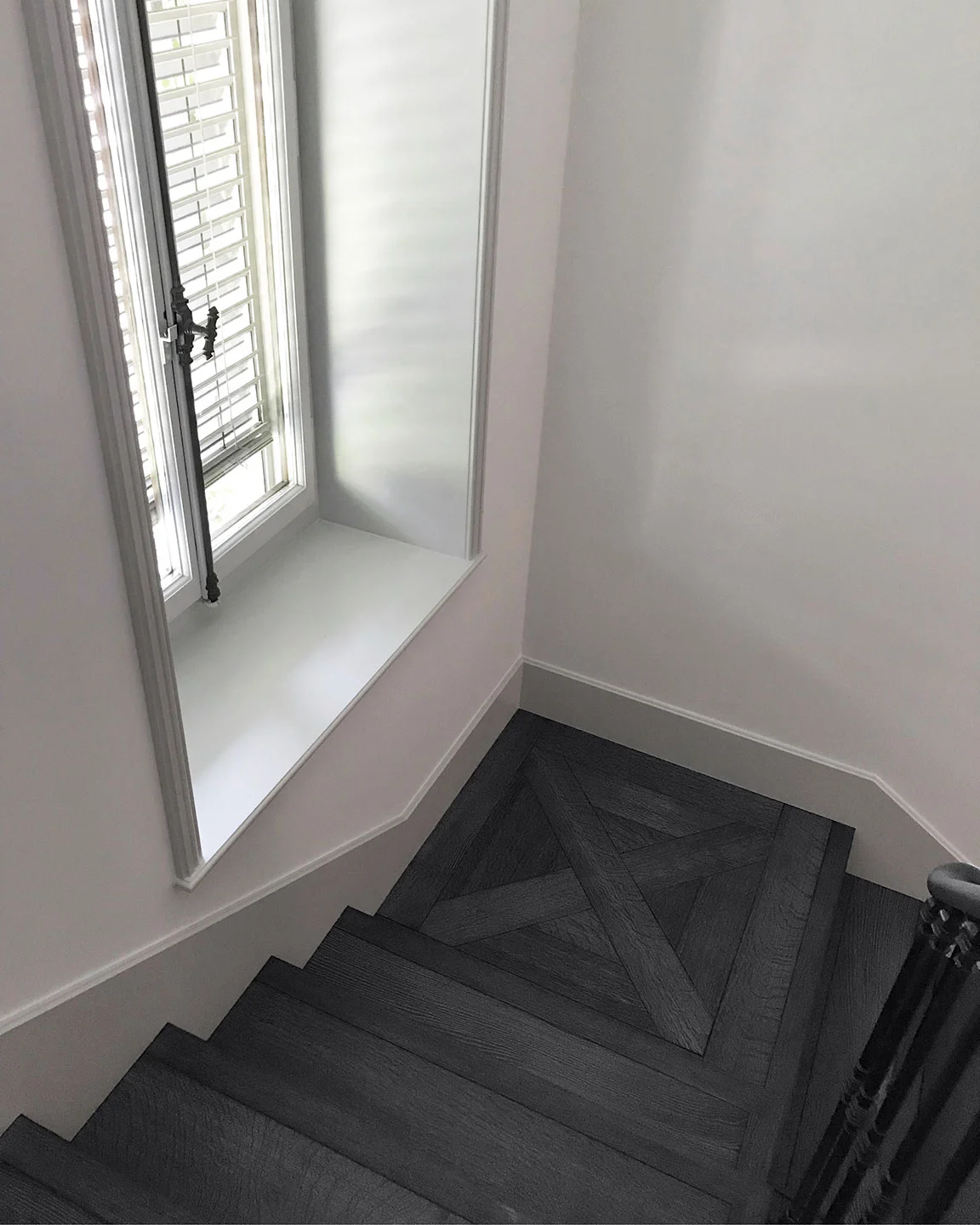
Comparing Herringbone and Chevron Flooring
To help designers and homeowners distinguish between these two classic parquet patterns, this comparative table outlines their technical specifications, visual traits, and historical context.
| Feature | Herringbone Flooring (Bâtons Rompus) | Chevron Parquet (Point de Hongrie) |
|---|---|---|
| Plank Shape | Standard rectangular boards (90° corners) | Parallelogram boards (mitered ends at 45° or 60°) |
| Joint Type | Interlocking, staggered butt joints | Mitered joints meeting at a continuous straight seam |
| Visual Effect | Woven, staggered, non-directional texture | Sharp "V" arrows, continuous linear spines |
| Light Reflection | Scattered uniformly in multiple directions | Contrasting light and shadow on opposing sides of the spine |
| Installation Complexity | Moderate; requires precise layout planning | Very high; requires laser-precise miter alignment |
| Historical Peak | 16th-century Renaissance (Fontainebleau, 1539) | 19th-century Parisian Haussmann apartments |
How do herringbone and chevron patterns change the feel of a room?
Herringbone and chevron patterns alter the visual volume and spatial psychology of a room by manipulating light reflection, perspective, and directional flow. Herringbone flooring diffuses light softly across its interlocking grid, creating a warm, grounded, and textural atmosphere that suits transitional or expansive spaces. Chevron parquet acts as a series of architectural arrows, using its continuous, mitered seams to visually elongate a room and guide the viewer's eye toward specific focal points.
The play of light on a chevron floor is particularly dramatic. Because the wood fibers run in opposing directions on either side of the mitered spine, light hitting the surface reflects differently on each side. This creates an optical illusion where one side of the chevron "V" appears highly reflective and pale, while the opposing side looks deep, saturated, and shadowed. This shifting perspective changes dynamically as a person walks across the room. Herringbone, with its multi-directional layout, scatters light in a more balanced, uniform manner, making it ideal for spaces where a softer, more integrated look is desired.
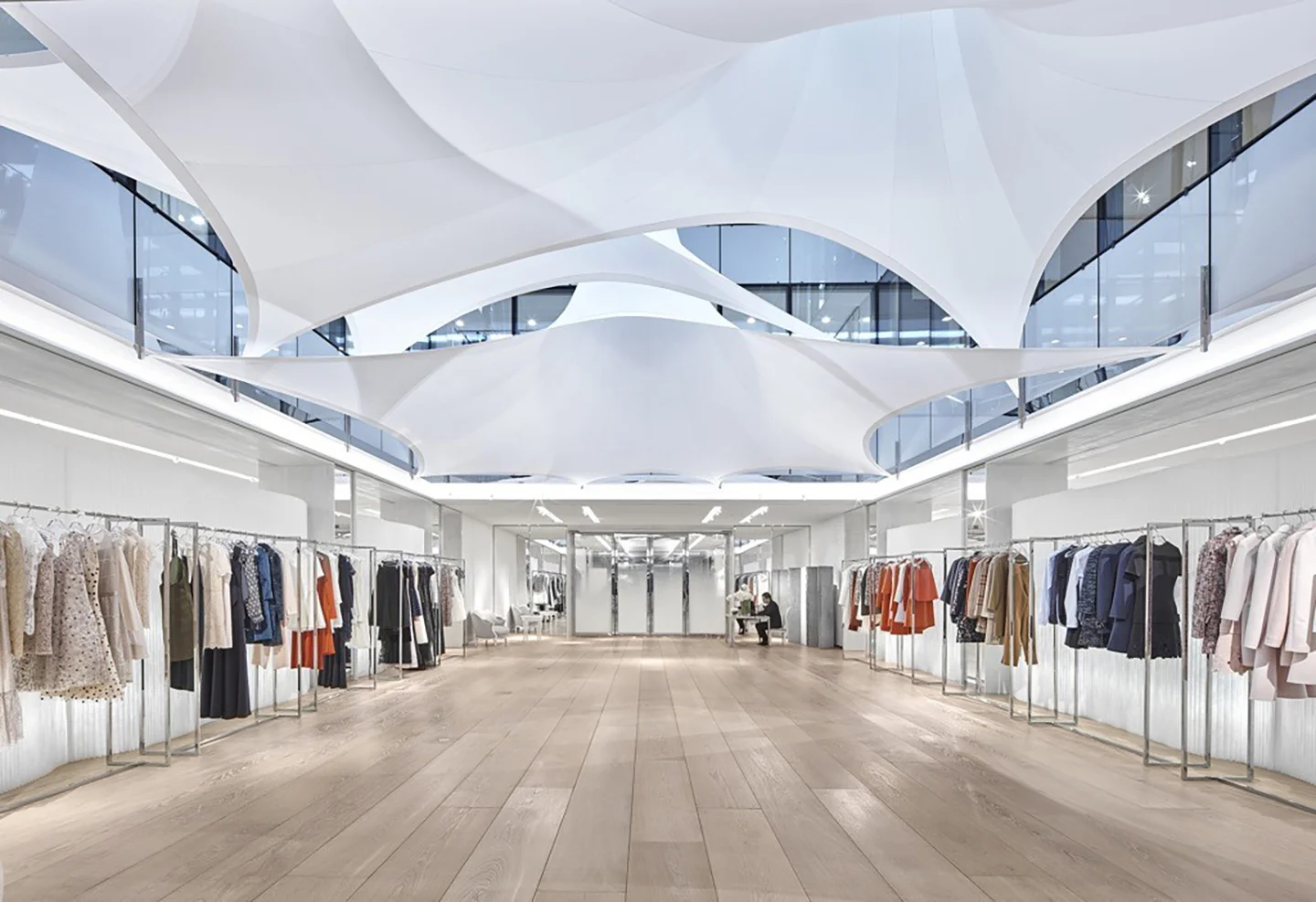
Solid vs engineered parquet — which is more stable for patterned floors?
Engineered parquet is significantly more stable than solid wood flooring for herringbone and chevron installations due to its multi-layer construction. High-quality engineered wood resists the natural expansion and contraction caused by changes in relative humidity, ensuring that the intricate mitered joints of chevron and the tight alignments of herringbone remain seamless over time. Solid wood planks are highly susceptible to dimensional movement, which can lead to gapping, cupping, or warping in patterned layouts.
Patterned parquet installations require absolute dimensional precision. Even a fraction of a millimeter of seasonal movement in a single board can compound across a room, throwing the entire layout out of alignment. Modern engineered flooring typically features a wear layer of natural oak bonded to cross-laminated birch plywood or a stable composite core. This structural cross-lamination counteracts the natural tension of the wood grain, reducing movement by up to 70% compared to solid timber. For underfloor heating systems, engineered parquet is the industry standard, offering superior thermal conductivity alongside geometric stability.
How do you select the right wood grain and finish for classic patterns?
Selecting the right wood grain and finish for herringbone or chevron parquet depends on whether you want to emphasize the geometric pattern or highlight the organic character of the timber. Modern interior designers favor wire-brushed finishes, chalky white-oiled tones, and deep fumed or smoked oaks to bring texture to these classic patterns. Select or prime grades of oak present a clean, minimalist canvas, while rustic grades with natural knots and sapwood introduce a rich, tactile complexity.
In contemporary tactile minimalism, pairing an oversized, wide-plank herringbone with a matte, low-sheen finish allows the natural beauty of the wood to shine without competing with the pattern. Smoked or fumed finishes, which darken the wood through its entire depth rather than just staining the surface, add incredible warmth to a chevron layout. This smoking process emphasizes the natural tannins in the oak, resulting in rich, varied tones of bronze, dark brown, and charcoal that shift beautifully under natural sunlight.
Frequently Asked Questions
Which is more expensive to install, herringbone or chevron?
Chevron is generally more expensive to install than herringbone. Because chevron parquet requires every single plank to be cut at a precise mitered angle to align along a continuous spine, it demands more labor-intensive preparation, highly skilled craftsmanship, and yields slightly more wood waste during the installation process.
What are the French terms for herringbone and chevron flooring?
In classical French parquet design, herringbone is known as bâtons rompus, which translates literally to "broken sticks," describing the staggered 90-degree joints. Chevron is known as point de Hongrie, or "Hungarian point," referencing its sharp, mitered alignment that resembles historical embroidery patterns.
Does chevron flooring make a small room look bigger?
Yes, chevron flooring can make a small room look visually larger. The continuous mitered spines of a chevron pattern act as directional lines that draw the eye along the room's longest axis, creating an optical illusion of greater length and architectural depth.
Can herringbone and chevron parquet be used with underfloor heating?
Herringbone and chevron parquet can be used with underfloor heating, provided you choose an engineered wood construction. High-quality engineered parquet offers the dimensional stability required to handle temperature fluctuations without warping, while allowing heat to transfer efficiently into the room.
More from the Atelier
Pine and Fir: Are Softwood Floors a Good Idea?
Discover why architects and minimalist designers are choosing pine and fir over traditional hardwood, embracing a living canvas of light and historic patina.
Chestnut and Elm: Underrated Woods for Character Floors
Explore why chestnut flooring and elm wood floors are emerging as the ultimate character wood species, offering rich histories and striking organic patterns.
Cherry Wood Flooring: Warmth That Deepens with Age
Discover how cherry wood flooring is stepping out of the 1990s and into modern minimalist architecture, celebrated for its unique light-reactive patina.