
Luxury Wood Flooring and Quiet Luxury: Why Texture Matters
Restraint leaves the materials to do the talking, and the floor is the largest material in the room.
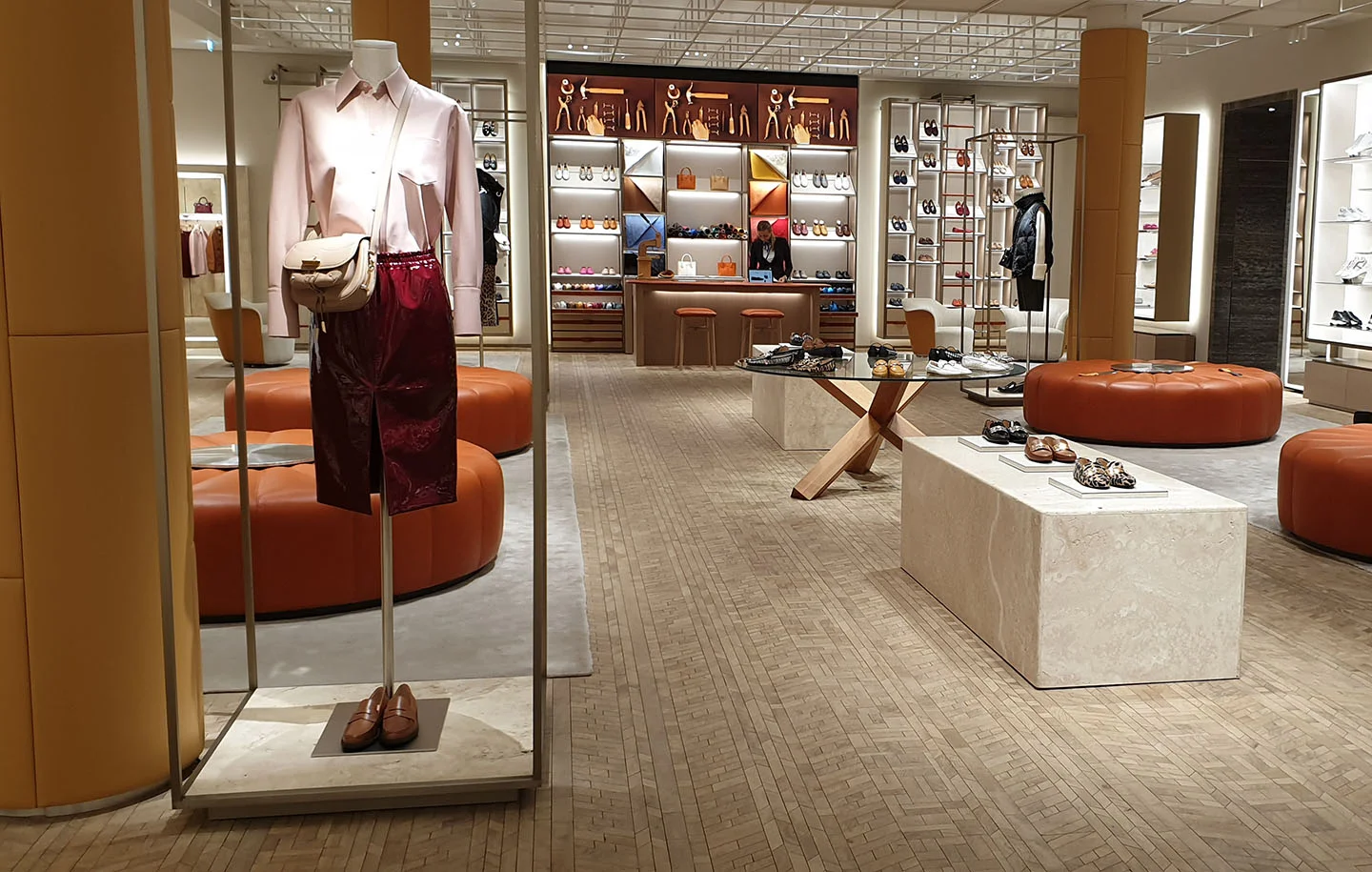
In a quiet luxury interior, luxury wood flooring is defined by texture and material rather than shine: real wood you can feel, a surface with depth, color that goes into the wood rather than sitting on it, and a floor that is quiet underfoot. The floor is the largest surface in the room, so when everything else is held back, it sets the tone.
What is quiet luxury in interior design?
Quiet luxury is restraint applied to rich materials. Instead of logos, gloss and bold pattern, it relies on good materials, careful making and a narrow, low-contrast palette, so a room reads as calm at first sight and rewards a closer look. The idea is not new: the Paris interiors of Jean-Michel Frank in the 1930s used straw marquetry, parchment and plaster in place of gilding, and the Japanese word shibui describes a beauty that is simple and unobtrusive.
When color and ornament step back, texture does the work. The grain of a floor, the matte chalk of a plaster wall, the slub of a linen curtain: these are what the eye and the hand find.
What makes a wood floor feel luxurious?
- Real wood at the surface. A top layer of genuine timber thick enough to be sanded and renewed, not a printed image of wood.
- Texture you can see in low light. Grain, growth rings and the small variation from one piece to the next.
- Color that goes into the wood. A smoked or charred finish changes the oak itself, so wear never reveals a different color underneath.
- A pattern made by hand. Herringbone, panels or end grain show the hours of fitting in a way straight boards cannot.
- A quiet footfall. A floor glued to the slab, and end grain in particular, sounds solid rather than hollow.
Why does end grain suit a quiet luxury interior?
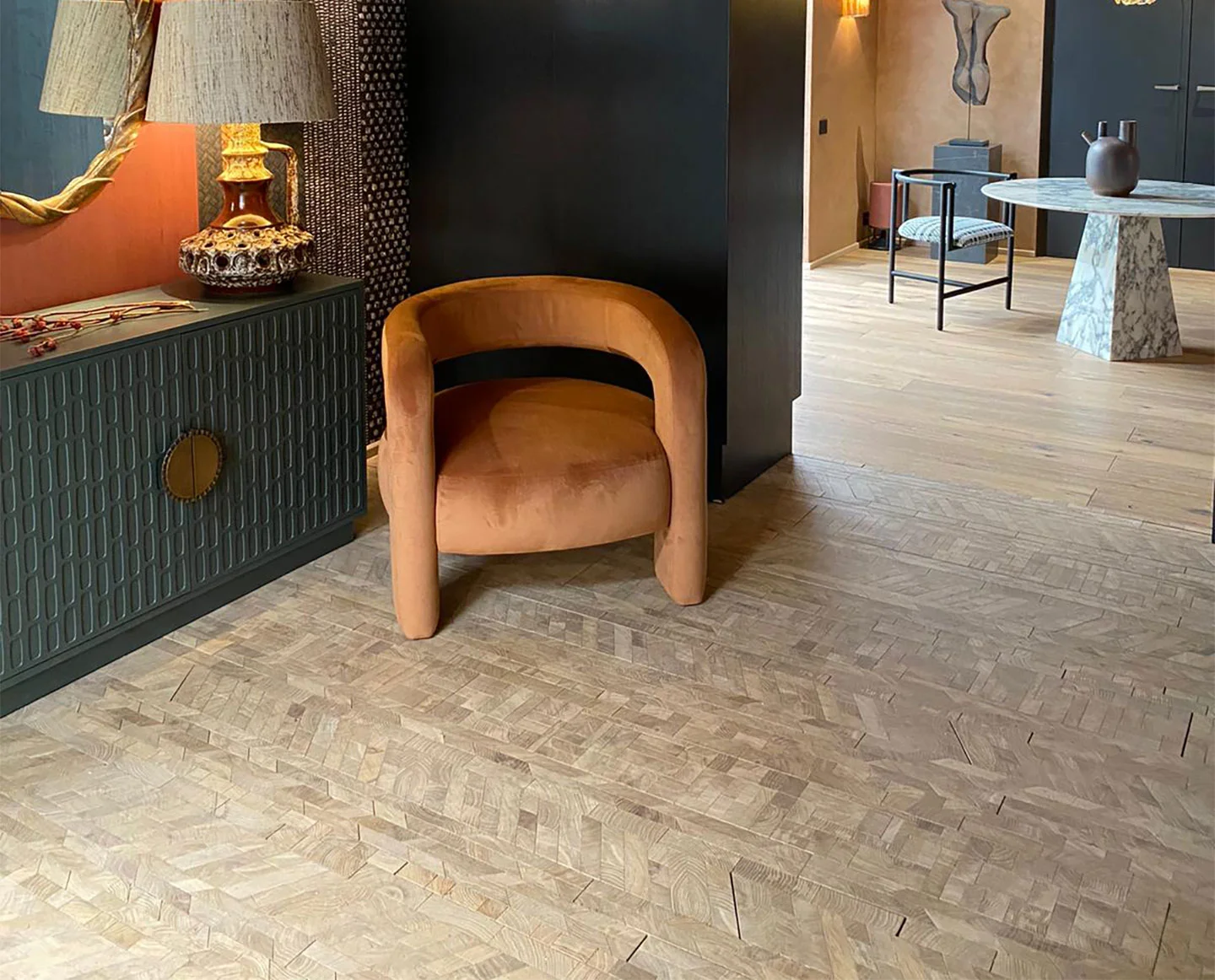
End grain flooring is cut across the trunk, so the surface is made of growth rings rather than long grain lines. Each piece is slightly different, and the floor takes on a soft, mottled depth that changes as light moves across it. It is also the hardest-wearing face of the wood and gives a softer, quieter footfall than boards.
Forêt is built from six planks and six patterns in endgrain oak, combined freely by the architect so the floor holds together without ever repeating; at the Tod's flagship in Milan it runs through the shop in a natural finish. Opus cuts oak on its endgrain face into an organic pattern whose joins disappear into one continuous surface, a revival of nineteenth-century Parisian oak paving.
Both come in three finishes and none of them is a stain. Natural is the oak as it is. Smoke is smoked through the full depth of the oak. Black is charred, in the shou sugi ban tradition.
How does light change a textured floor?
Flat overhead light hides texture. Low light from the side, a window at floor level or a lamp set low, catches every ring and joint and casts tiny shadows across the surface. That is why textured floors look their best in the late afternoon and in rooms lit by several low sources rather than one ceiling fitting.
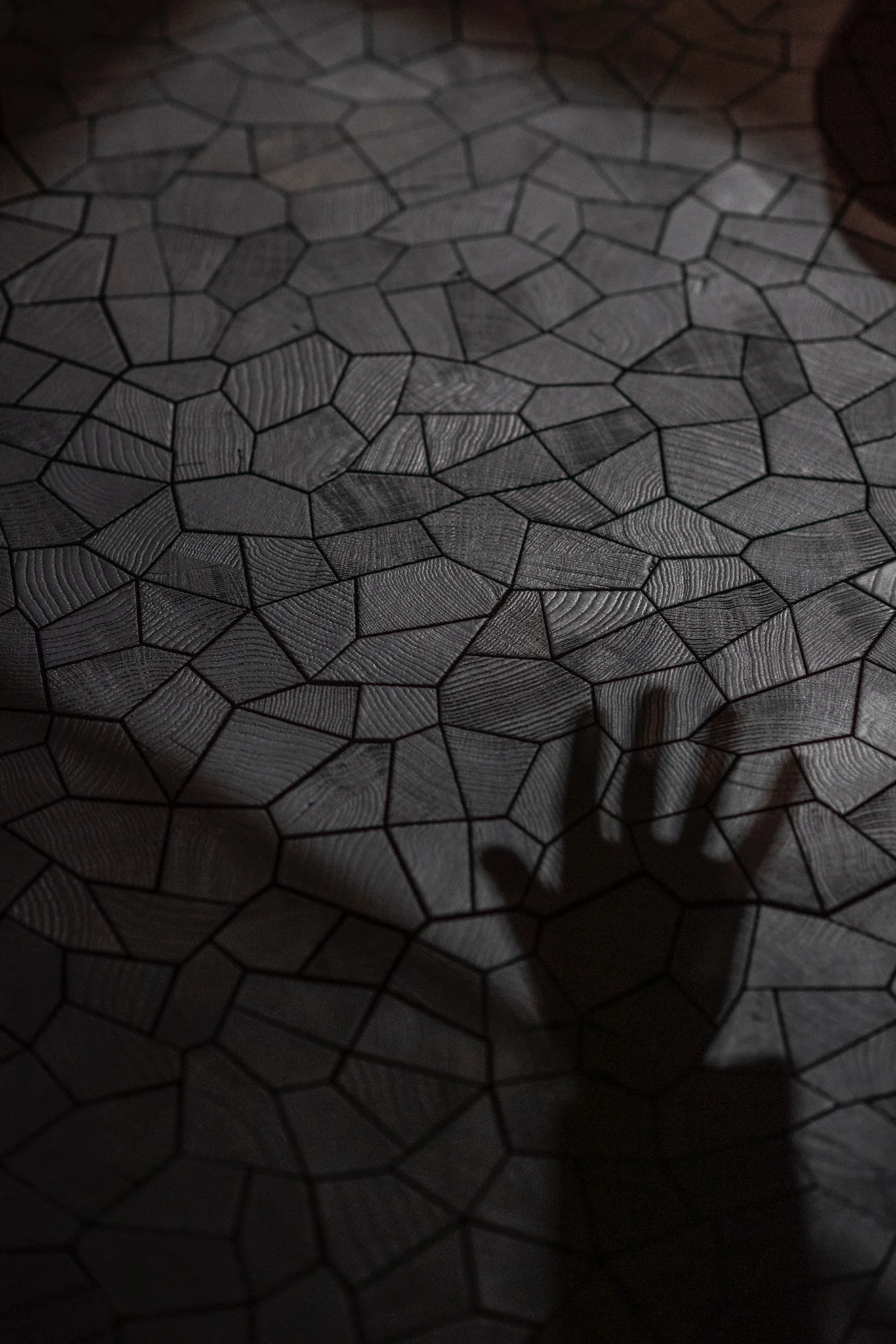
At Maison et Objet 2023 in Paris, Opus in the Black finish shows how side light turns a dark floor into a relief of separate pieces, each catching the light at its own angle.
Sheen matters as much as direction. A matte or low-sheen finish lets the texture read; a high gloss reflects the room back and flattens the wood.
Which materials pair with a textured wood floor?
| Material | What it adds next to wood |
|---|---|
| Marble and limestone | A cool, smooth contrast that makes the wood feel warmer |
| Lime or clay plaster | Matte walls that soften light and match a matte floor |
| Linen and wool | Softness, and a weave that echoes the grain |
| Brass and bronze | Warm metal that darkens with handling, as wood does with use |
| Leather | A surface that, like oak, looks better worn |
The rule is contrast of texture within a narrow range of color: rough against smooth, matte against a soft sheen, all in tones close enough that nothing shouts.
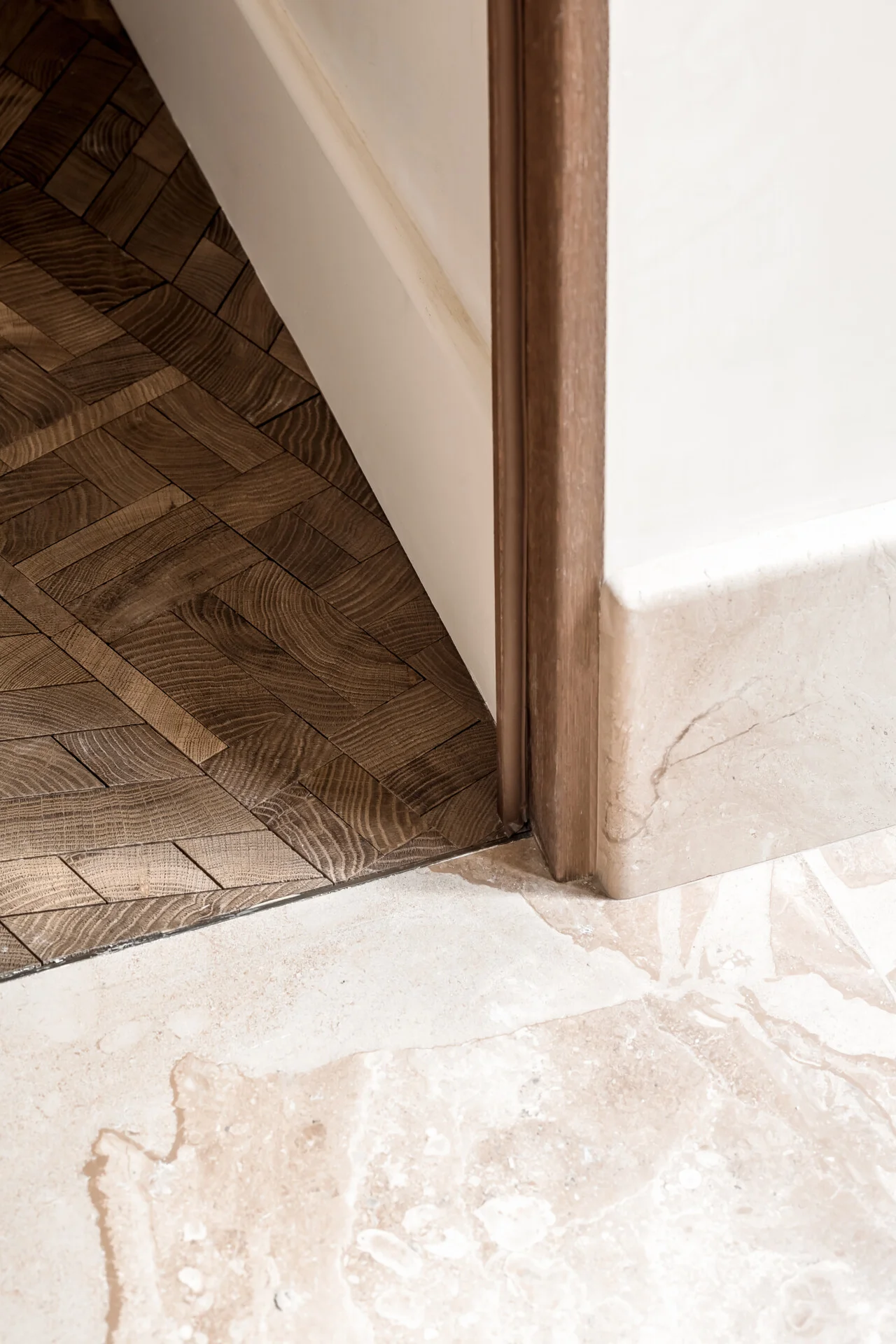
In Project Galilée in Paris, Forêt in the Smoke finish meets pale marble at a threshold: two textures, one quiet palette.
Tweed: a wood floor that reads like cloth
Some floors push texture further. Tweed is woven the way cloth is: strips of smoked Zambezi teak in different widths and textures, set by hand into a close, irregular weave. It is teak rather than oak, and it is made from the offcuts of the Réserve floors, so the rare wood is never wasted. It comes in one finish, Smoke, and is rated usage class 33 for heavy commercial traffic.
Why does patina matter in quiet luxury?
Quiet luxury favors materials that look better with time. A textured wood floor takes small marks into its grain and variation, where a glossy, uniform surface shows every scratch. Color that goes through the wood, as with a smoked or charred finish, keeps the floor looking like itself as the surface wears. The result is a room that feels lived in rather than new, which is much of the point.
Frequently asked questions
What is quiet luxury in interior design?
An approach that relies on good materials, careful making and a narrow, low-contrast palette instead of logos, gloss or bold pattern. Rooms look calm at first sight and reveal their quality through texture and detail.
What is the most luxurious type of wood flooring?
There is no single answer, but the most luxurious floors share a few things: real wood thick enough to be renewed, a pattern made by hand, such as herringbone, panels or end grain, and color that goes into the wood rather than sitting on top. End grain is among the most demanding floors to make and lay.
How do you add texture to a neutral room?
Combine surfaces that feel different but sit in a similar color range: a grained or end grain wood floor, matte plaster walls, linen and wool, a little stone and warm metal. Light the room from low, side sources so the texture shows.
Does a luxury wood floor have to be dark?
No. Quiet luxury depends on low contrast between floor, walls and furniture more than on a particular color. Natural oak, smoked oak and black charred oak all work, as long as the rest of the palette is close in tone.
Textured floors by OscarOno Paris
Forêt and Opus are endgrain oak, rated usage class 34 for very heavy commercial traffic, with joints under 1 mm that can be left open or filled with LignoFusion in brown or black. Tweed is hand-woven smoked Zambezi teak, usage class 33. All three carry a Cfl-s1 fire rating and are FSC and PEFC certified. Texture is hard to judge on a screen, so order samples and look at them in low light. Spec sheets, CAD and 3D files are in the library.
More from the Atelier
Wood Floors in the Bedroom: How to Choose a Calm, Quiet Floor
Wood is warm underfoot, easy to keep dust-free and lasts for decades in a low-traffic room. How to choose the color, finish, layout and acoustics of a bedroom floor.
Light Oak Flooring for Bright, Sunlit and Coastal Rooms
Pale oak suits sunlit and seaside rooms, if you get the finish right. How light oak changes in the sun, and what sand, humidity and glare mean for it.
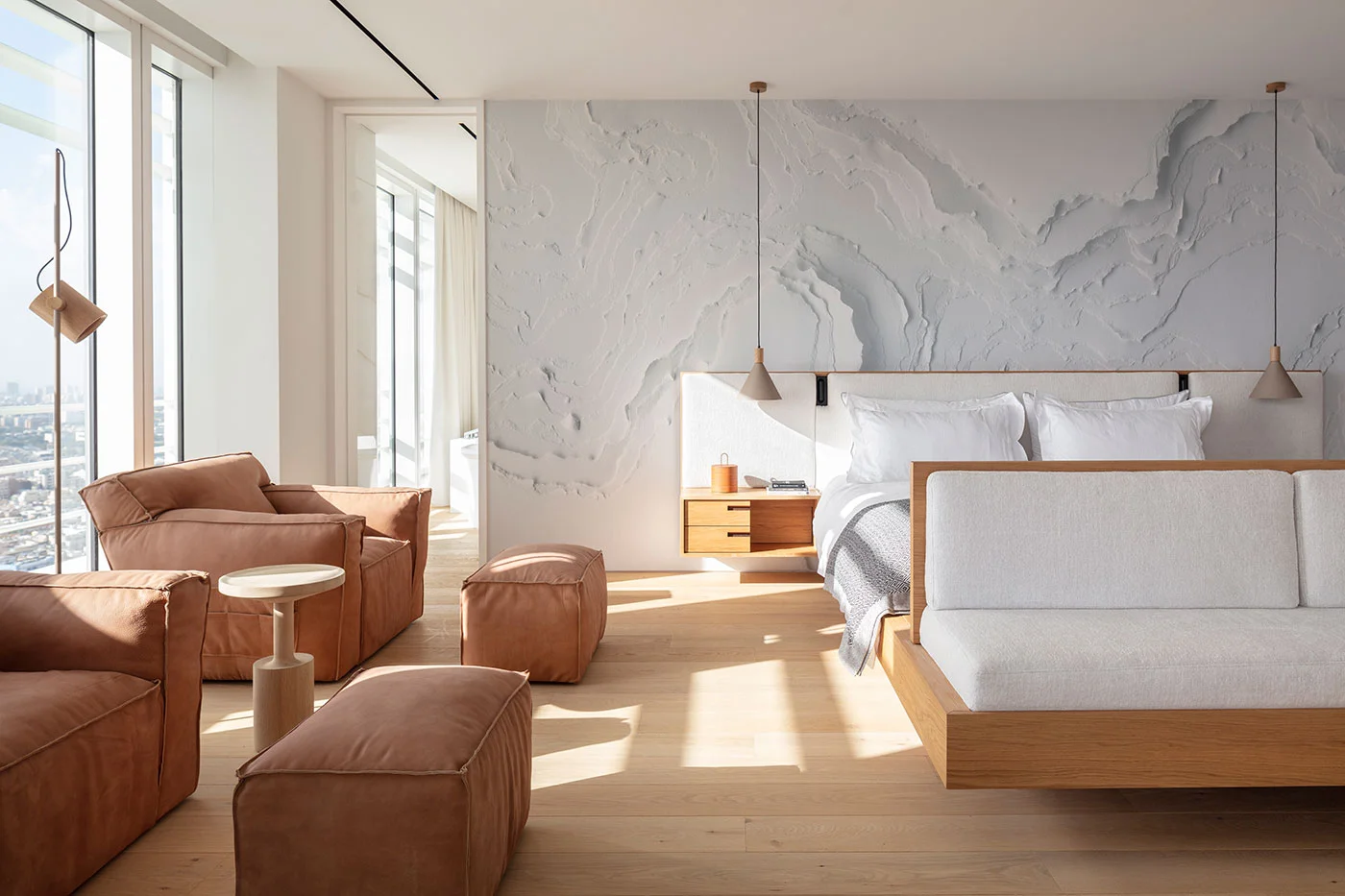
Wide Plank Oak Flooring for a Minimalist Interior
Fewer joints, a clean grade, a low sheen and one direction through the house: how to choose wide plank oak for a minimalist interior, and when an end grain grid does the job better.