
Luxury Wood Flooring: How to Choose the Right Collection
Cut, pattern, finish and traffic, in that order, and the collection usually chooses itself.
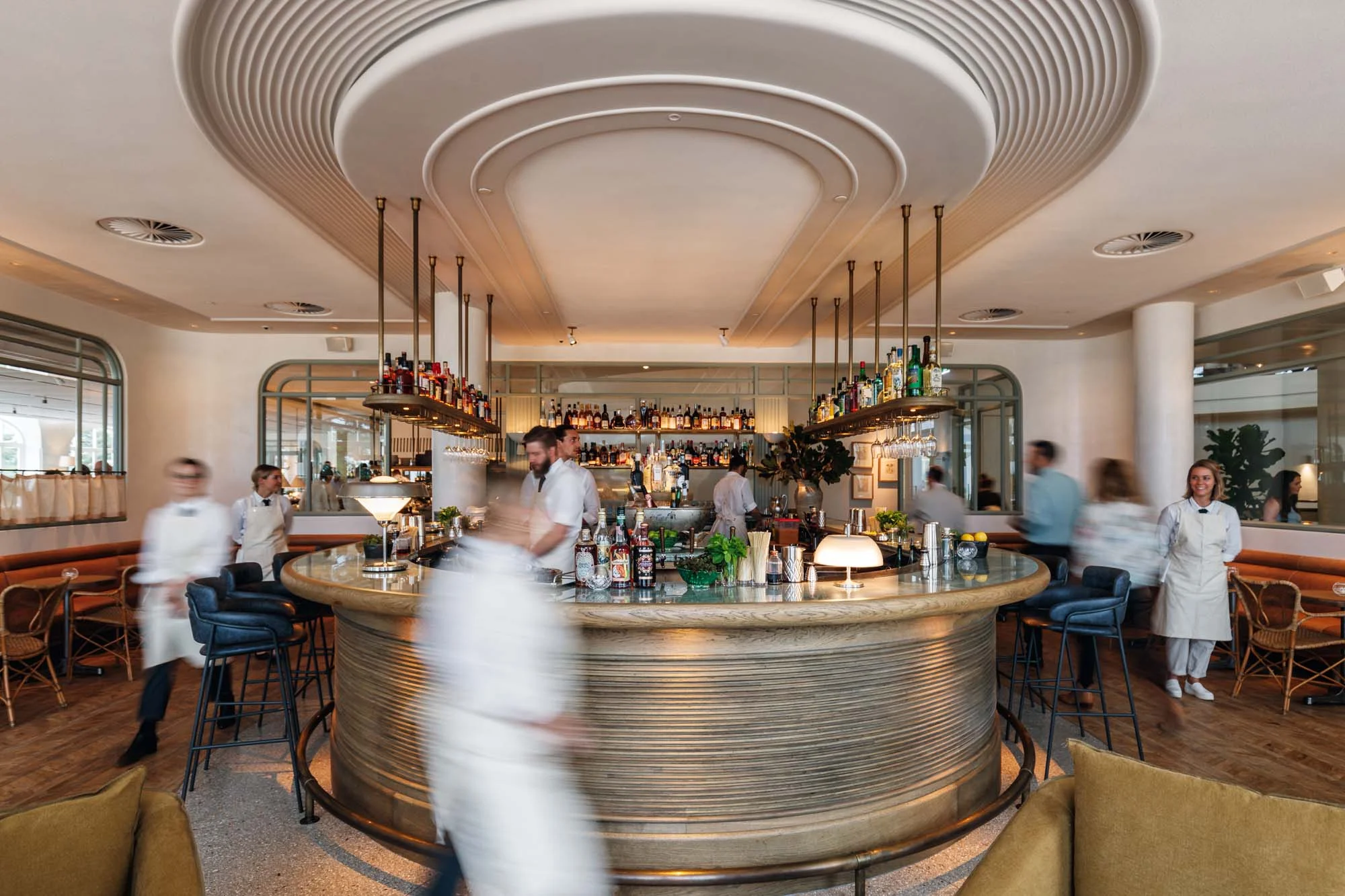
Choosing luxury wood flooring comes down to four decisions: the cut of the wood, end grain or flatgrain; the pattern; the finish; and the traffic the floor has to carry. Take them in that order and the choice narrows to one or two collections. This guide walks through each decision using the OscarOno Paris range as the example.
End grain or flatgrain: which do you need?
Flatgrain floors are cut along the length of the log, so you see long lines of grain, the classic look of a plank or a herringbone. End grain floors are cut across the trunk, so you walk on the growth rings: the surface is a mosaic of small pieces, harder-wearing and quieter underfoot, with a deeper texture.
| End grain oak | Flatgrain oak, Essentiel | |
|---|---|---|
| Collections | Opus, Forêt, Cube, Élément, Rosace | Droit, Rompu, Hongrie, Dalle |
| Look | Growth rings, a mosaic of pieces | Long grain lines in a classic pattern |
| Finishes | Natural, Smoke, Black; no stain | Twelve lacquered colors |
| Usage class | 34, very heavy commercial traffic | 33, heavy commercial traffic |
| Construction | Endgrain oak top layer on birch plywood | 12 mm oak with a 4 mm top layer |
Between the two sit flatgrain designs with a contemporary line, such as Tresse, a loosened Versailles weave, and Néon, planks with rounded corners, in the same Natural, Smoke and Black finishes as the endgrain floors.
Which pattern suits the room?
Pattern decides how the floor moves the eye. Droit, the straight board, is the calmest: it runs cleanly down the room and lets furniture and walls lead. Rompu, the Paris herringbone, adds movement without a single strong direction, which suits square rooms and open plans. Hongrie, the chevron, points: its V shapes draw the eye down a hallway or through a run of rooms. Dalle composes the oak into 800 by 800 mm panels, in the manner of the great Parisian floors.
Droit, Rompu and Hongrie share one specification: flatgrain select oak, 12 mm with a 4 mm top layer, 150 mm or 190 mm wide. The narrow board keeps a traditional rhythm; the wide one calms the pattern down.
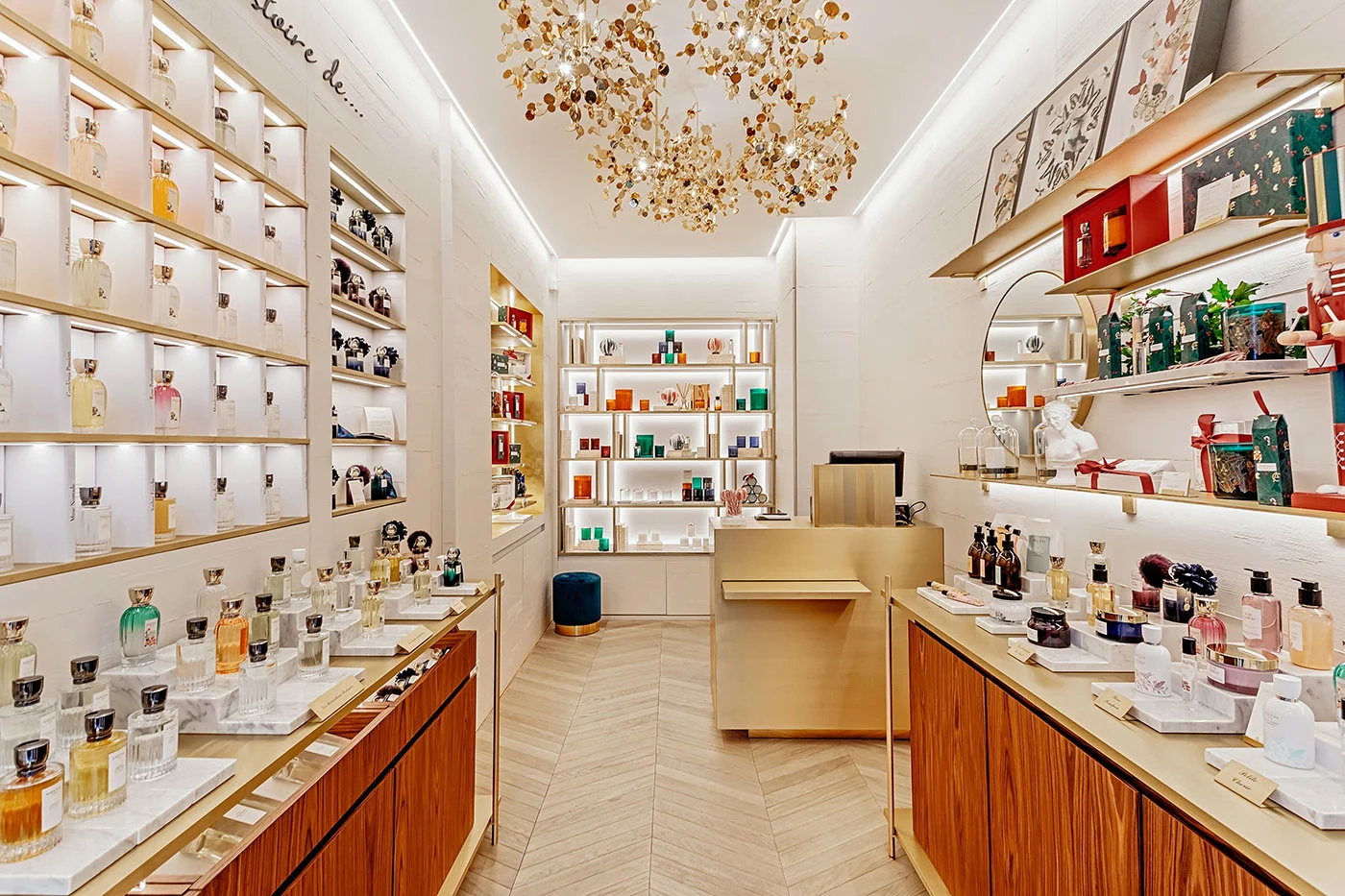
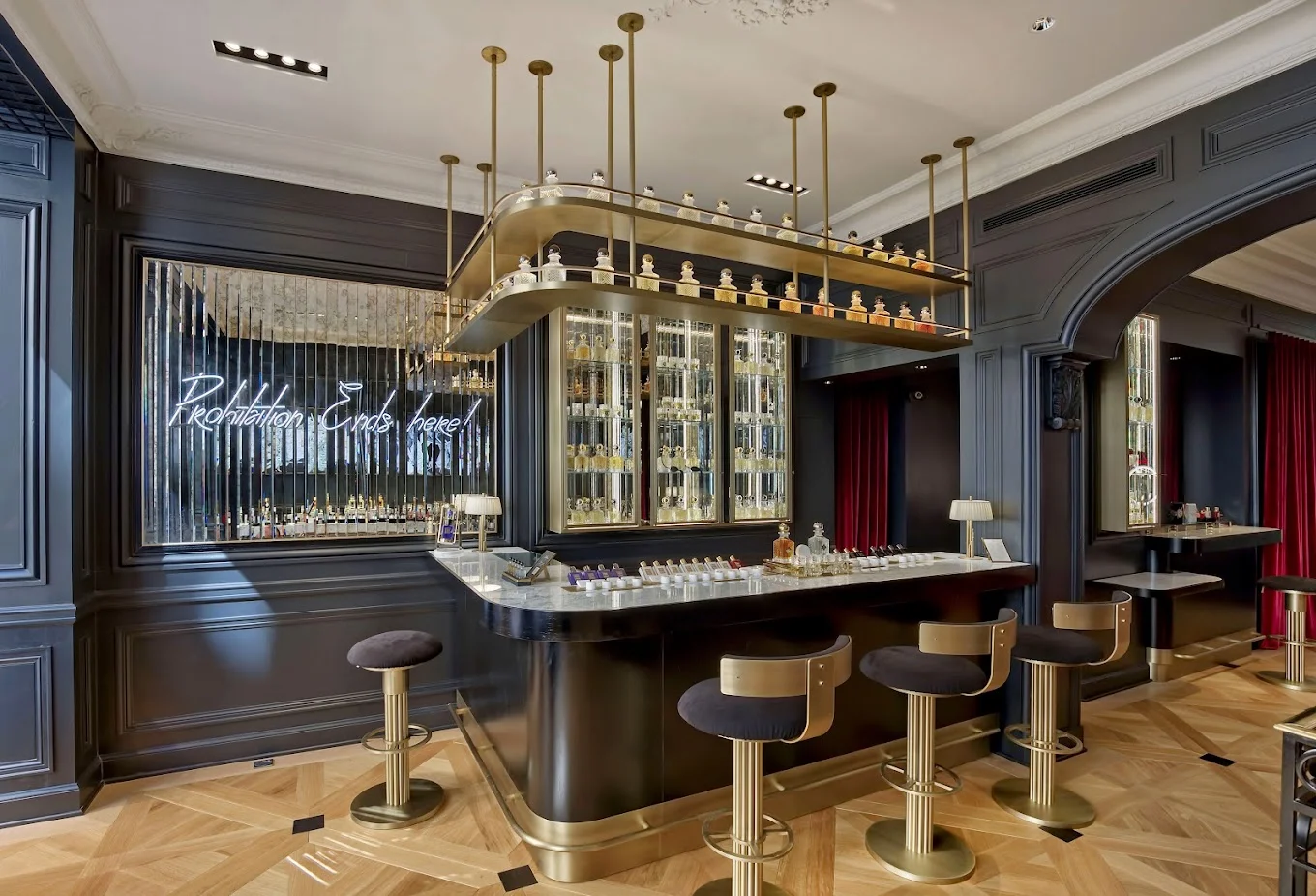
In the Goutal Paris boutique, Hongrie in a natural finish runs down the length of a narrow shop and leads the eye to the back wall, which is what chevron does best.
When should you choose Opus or Forêt?
Both are endgrain oak with an 8 mm top layer on 12 mm birch plywood, and both are rated for very heavy commercial traffic. The difference is in how the surface is composed. Opus cuts the oak into an organic pattern whose joins disappear, so the floor reads as one continuous surface, a revival of nineteenth-century Parisian oak paving. Forêt is built from six planks and six patterns that the architect combines freely, so the floor holds together like a forest without ever repeating.
Choose Opus when the floor should feel like a single material running wall to wall. Choose Forêt when you want to compose the floor yourself, room by room.
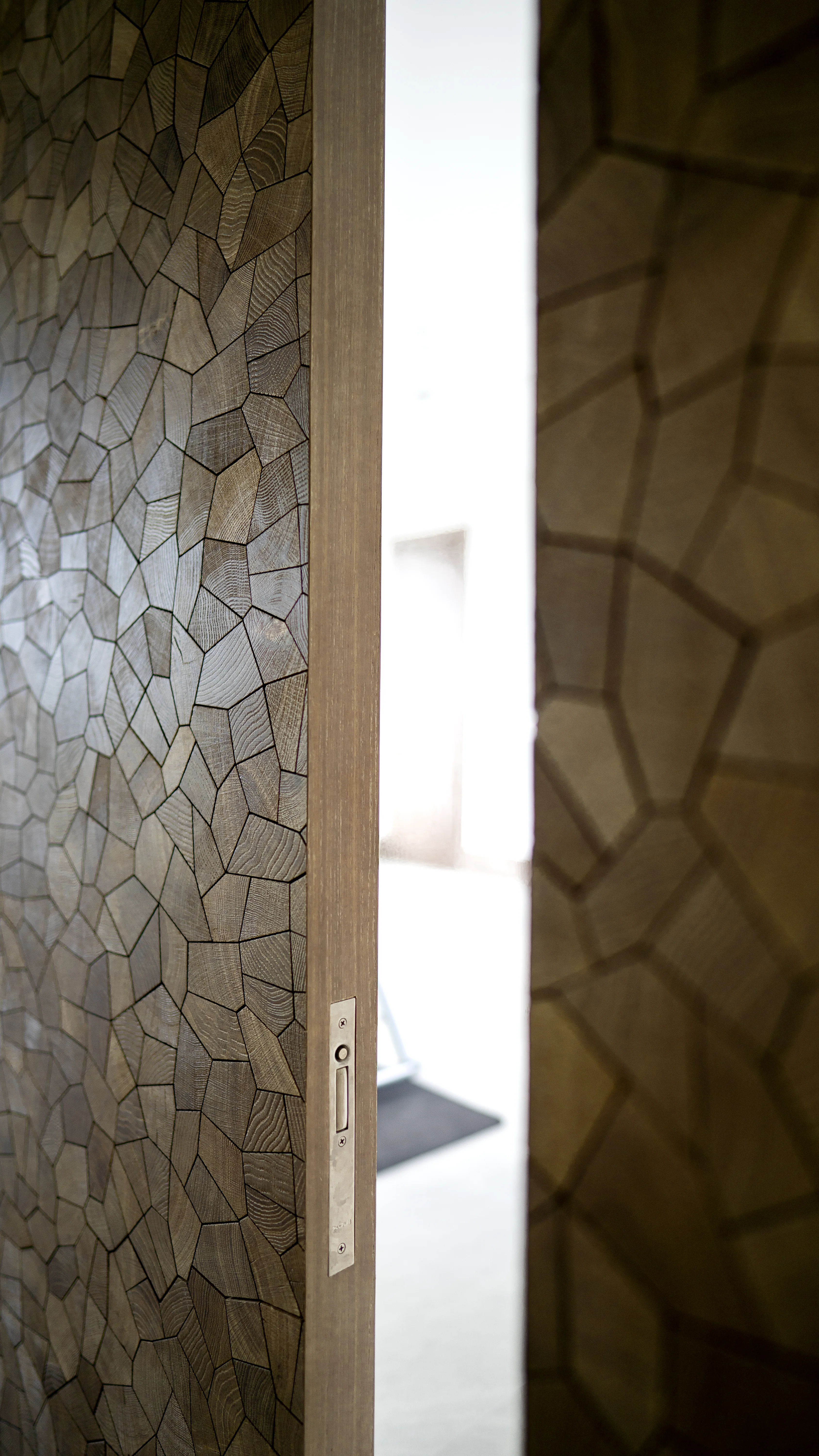
In this private residence in Miami, Opus in the Smoke finish shows how the irregular pieces lock together with barely visible joints.
Three other endgrain floors answer narrower briefs. Cube is the plainest: square blocks in an even grid, made from solid offcuts the atelier would otherwise set aside. Élément reduces the chevron to a single endgrain component that can be arranged in countless ways, from quiet to intricate. Rosace is a spiral four meters across, a centerpiece the room is arranged around.
How do you choose the finish?
The Essentiel floors, Droit, Rompu, Hongrie and Dalle, come in the same twelve lacquered colors, so the pattern and the color can be chosen separately and matched across rooms. The endgrain floors come in three finishes, and none is a stain: Natural is the oak as it is; Smoke is smoked through the full depth of the oak, so wear never reveals a lighter color; Black is charred, in the shou sugi ban tradition.
Look at finishes in the room where they will be laid, morning and evening. Oak changes more with light than most people expect, and a color chosen under a showroom spotlight can read very differently by a north-facing window.
How much traffic will the floor carry?
Every OscarOno Paris floor is rated for commercial use, so the question is how hard. The flatgrain floors are usage class 33, for heavy commercial traffic: apartments, boutiques, offices, hotel rooms. The endgrain floors are usage class 34, for very heavy commercial traffic: hotel lobbies, restaurants, flagship stores. All carry a Cfl-s1 fire rating and are FSC and PEFC certified, which covers most specifications for public spaces.
Frequently asked questions
What is the difference between Opus and Forêt?
Opus cuts endgrain oak into an organic pattern whose joins disappear, so the floor reads as one continuous surface. Forêt is made of six planks and six patterns in endgrain oak that the architect combines freely, so the floor never repeats. Both are usage class 34 and come in Natural, Smoke and Black.
What is the difference between Rompu and Hongrie?
Rompu is herringbone: square-ended boards laid in a stepped zigzag. Hongrie is chevron: boards with angled ends that meet on a straight center line in clean V shapes. They share the same oak, sizes and twelve lacquered colors.
Is end grain flooring difficult to install?
It is a job for an experienced fitter. The pieces are fully glued to a flat, dry subfloor, then sanded and finished in place. On OscarOno Paris's endgrain floors the joints are under 1 mm and can be left open or filled with LignoFusion in brown or black.
Which OscarOno Paris floors suit hotels and restaurants?
All of them are rated for commercial use. For the busiest areas, such as lobbies, restaurants and flagship stores, the endgrain floors are rated usage class 34, for very heavy commercial traffic; the flatgrain floors are class 33, for heavy commercial traffic. All are Cfl-s1 for fire.
Narrowing it down
Once you have two or three candidates, see them side by side in your own light: order samples. Spec sheets, CAD and 3D files for every collection are in the library, and a dealer near you can help with quantities and a price through Where to find us.
More from the Atelier
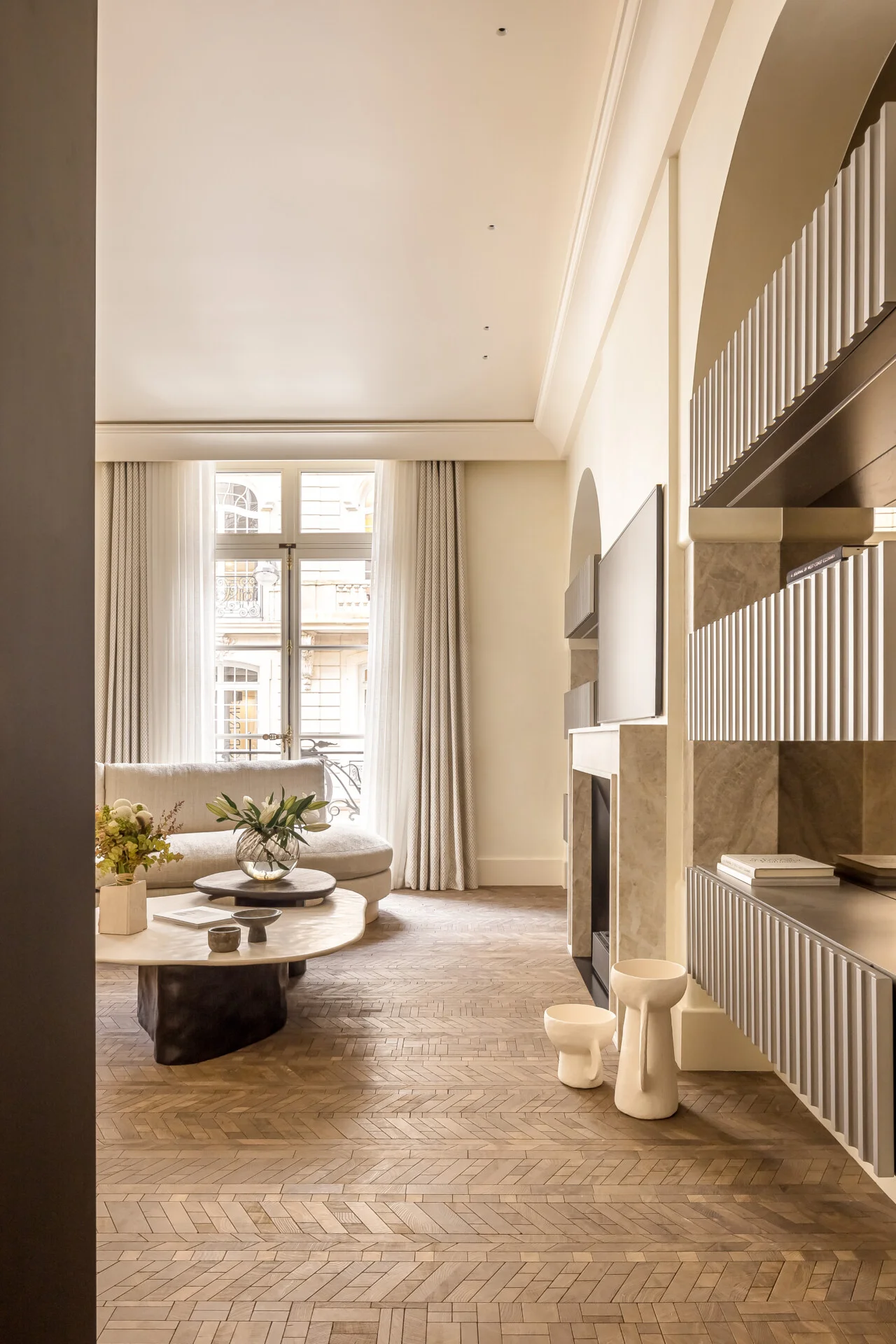
What Is Wood Terrazzo Flooring? An Architectural Guide
Wood terrazzo flooring unites reclaimed endgrain oak offcuts and mineral ground, creating continuous, tactile surfaces designed for circular luxury interiors.
Modern Versailles Parquet: The Classic Panel in Today's Interiors
The woven oak panel first laid in a palace still works in a contemporary room. What changes is the color, the construction and how freely the weave is drawn.
Wood Floor Interior Design: Pairing Oak with Linen, Stone and Brass
Start with the floor, then balance it: stone for weight, linen for softness, brass for light. A practical guide to designing a room around wood.