
Wood and Marble Floors: How to Pair Them and Join Them Flush
Two natural materials that move differently: plan the heights, the joint and the sheen, and the pairing looks intentional.
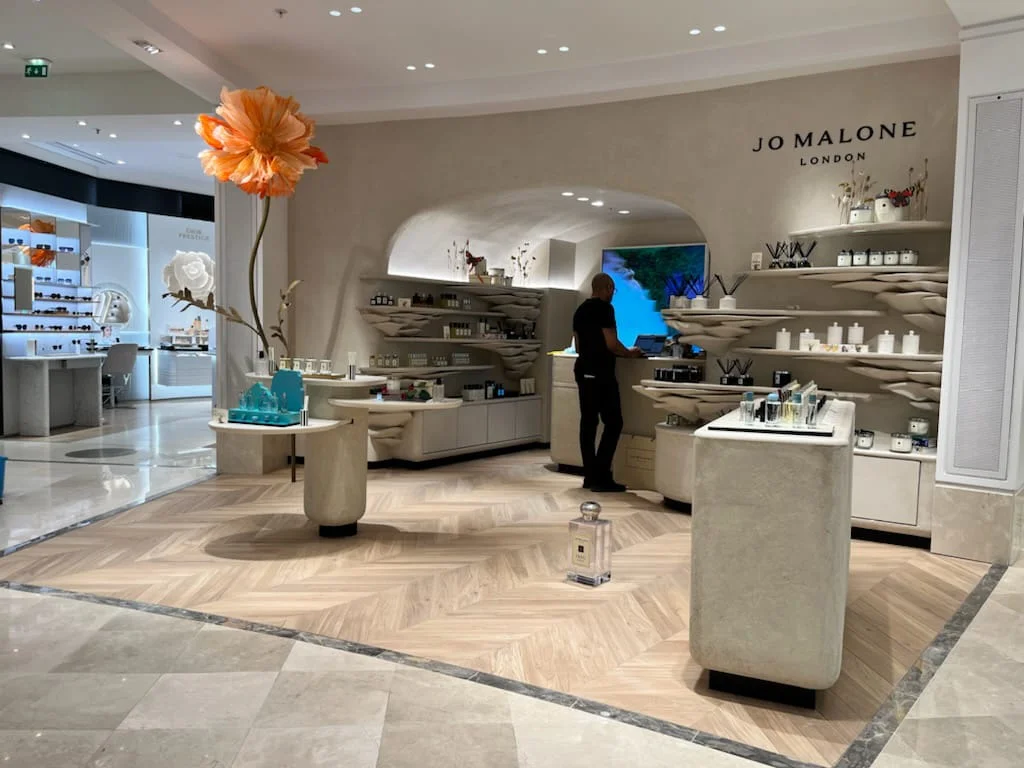
A wood and marble floor works when each material goes where it performs best and the two meet at exactly the same height. Put stone where there is water, grit or heavy wear, such as entrances, bathrooms and the area around a kitchen sink, and wood where people sit, walk barefoot and spend time. Join them flush, with a narrow flexible joint that lets the wood move while the stone stays still.
The rest is a design decision: whether you want contrast or calm, which wood pattern sits well beside veined stone, and how to match the sheen of the two surfaces.
Why combine wood and marble in one floor?
Mostly to zone a space without walls. A band of stone at the entrance, a marble kitchen floor that runs into a wooden living area, or a stone surround around a fireplace marks out each use while keeping the plan open.
The two materials also feel and sound different. Stone is cool underfoot and hard, so footsteps ring on it; wood feels warmer and quieter. That contrast is part of the appeal: you notice the change as you cross from one to the other, which makes the transition feel planned rather than accidental.
How do you join wood and marble flush?
A flush joint, with no ramp or strip, has to be planned before the screed is poured. Stone and wood are almost never the same thickness, and each needs its own bed of adhesive or mortar, so the screed is set at different levels on each side to bring both finished surfaces to one height. Fixing a difference afterwards is expensive.
Then decide how the edge is made. There are three common ways:
| Method | What you see | What it needs | Where it suits |
|---|---|---|---|
| Flush butt joint | One continuous floor plane, a fine line between materials | Exact levels, a narrow flexible joint in a matching color | Open kitchens and living areas |
| Metal profile | A thin brass, bronze or steel line between the two | A profile set into the adhesive bed at floor level | Lobbies, shops, borders around a stone inlay |
| Stone threshold | A single slab across a doorway | The slab leveled to the wood on one side and the stone on the other | Doorways, bathroom entrances |
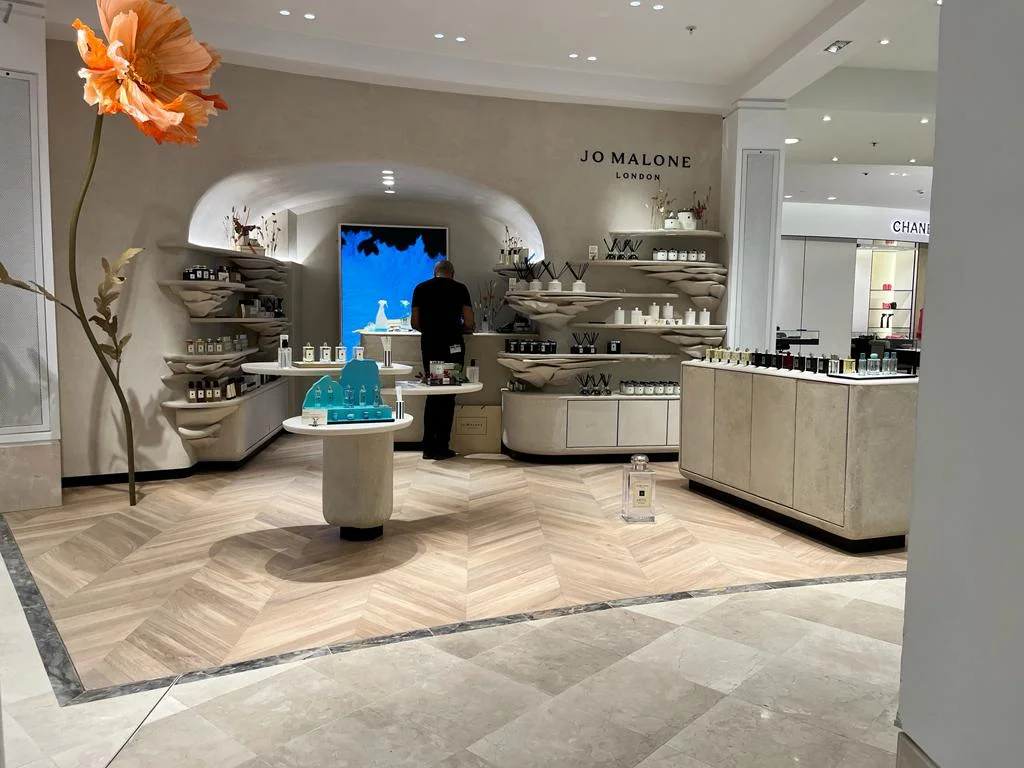
In the Jo Malone shop at Le Bon Marché in Paris, a field of Hongrie chevron oak sits inside the store's stone floor, edged by a darker stone border. The border does the work a metal strip would do: it gives the wood a frame and makes the change of material read as a rug of oak laid into stone.
Where should the wood stop and the stone start?
On a line the architecture already gives you. Under a door, in line with the face of a wall, at the edge of a kitchen island or along a step in the ceiling, the change of material looks deliberate. In the middle of an open floor, with nothing to relate to, it looks like the floor ran out. In a doorway, the joint usually goes under the closed door so neither material shows in the other room.
Which wood pattern works best next to marble?
Marble already has movement in its veins, so the wood should either stay quiet or answer it with clear geometry. Straight boards are the quietest choice: Droit, straight oak boards, let a strongly veined stone take the lead. A chevron gives the wood a direction of its own and is good at framing a stone inlay or pointing toward a marble fireplace. Endgrain is the strongest counterpoint: Opus, an endgrain oak paving laid in irregular cells, has a texture of growth rings that reads against the long sweep of marble veining.
Whatever you choose, let one material lead. A busy pattern next to a busy stone, both in strong colors, fights for attention.
Tone and sheen: matching wood to stone
There are two ways to go. Contrast: dark oak against white or gray veined marble gives a graphic, high-energy floor. Tone on tone: a natural or pale oak beside travertine, limestone or a warm, softly veined marble gives a calm floor where the change of material is felt more than seen.
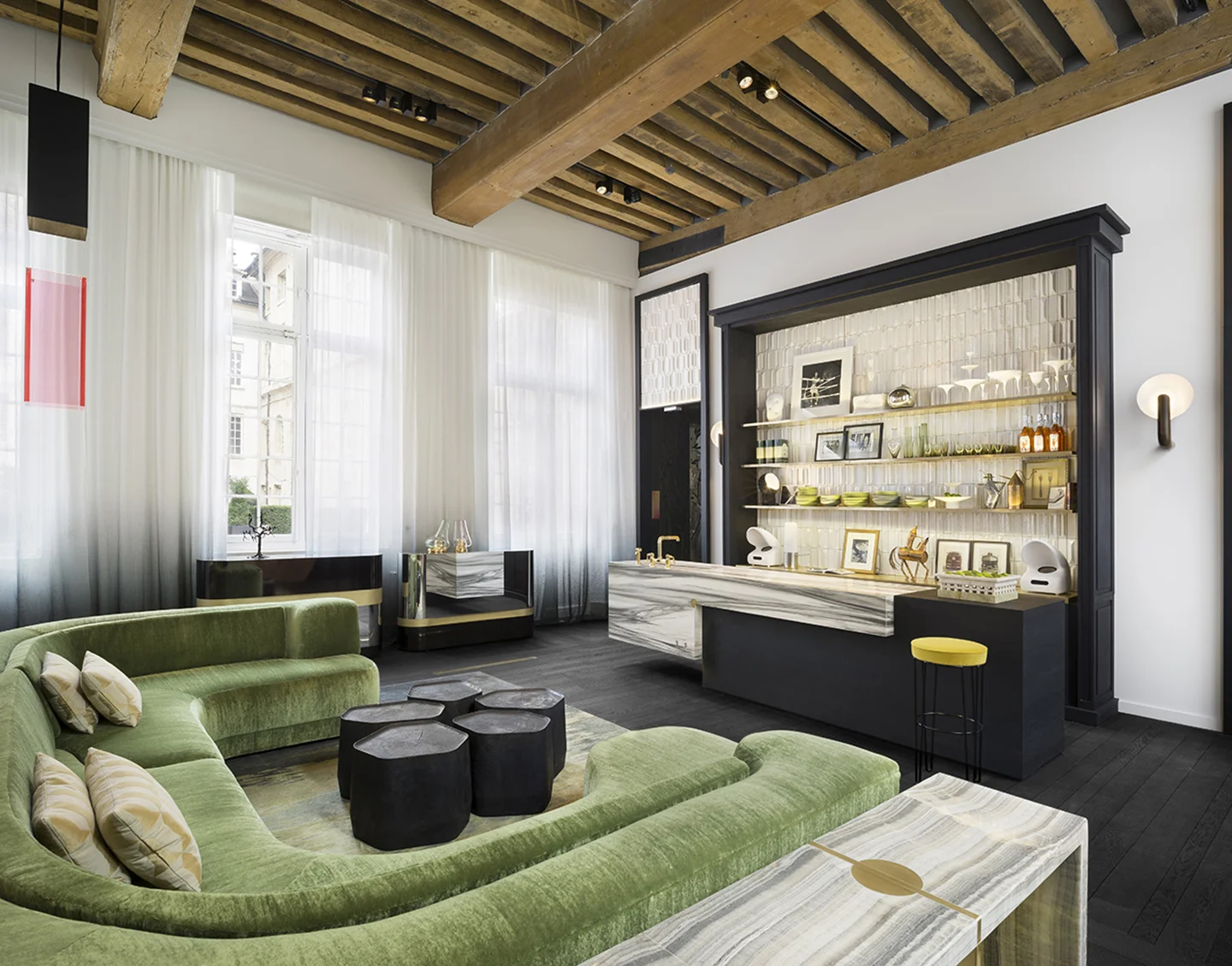
The Private Mansion in Paris takes the contrast route: straight oak boards in a near-black finish against a pale, veined stone island.
Sheen matters as much as color. Honed or brushed stone looks best beside a matte wood finish; a mirror-polished marble next to a matte floor can look as if one of them is unfinished, and a glossy wood next to honed stone throws glare. Look at both samples together, on the floor, in the room's own light.
How do you handle the movement between wood and stone?
Wood takes up and gives off moisture with the seasons and moves slightly as it does; stone hardly moves at all. If the two are locked together with rigid grout, the wood has nowhere to go: it can lift or push on the stone edge. That is why the joint between them is flexible, why the wood is acclimatized to the room before it is laid, and why both are bonded to a sound, dry, level screed. Underfloor heating makes all of this more important, not less.
Frequently asked questions
Can you put wood and marble floors next to each other without a transition strip?
Yes. A flush butt joint leaves no strip at all, but it has to be planned before the screed is poured so that both finished surfaces end at the same height. The narrow gap between the two is filled with a flexible sealant in a matching color so the wood can move.
Do wood and stone expand at different rates?
Yes. Wood takes up and releases moisture with the seasons and moves slightly as it does, while stone is almost stable. The joint between them must be flexible, never rigid grout, or the wood can lift or push against the stone.
What wood finish looks best next to marble?
One that matches the stone's sheen. Honed or brushed marble sits best beside a matte wood finish, while a glossy floor next to honed stone throws glare. Compare samples of both side by side in the room's own light before deciding.
Where should the wood stop and the marble start?
On a line the architecture gives you: under a door, in line with a wall, along the edge of a kitchen island or a change in the ceiling. A change of material in the middle of an open floor, with nothing to relate to, tends to look unplanned.
Wood floors to pair with stone, by OscarOno Paris
For a quiet floor beside strongly veined stone, Droit straight boards; for a pattern that frames a stone inlay, Hongrie chevron. Both are flatgrain select oak, 12 mm with a 4 mm oak top layer, 150 mm or 190 mm wide, in twelve lacquered colors, rated usage class 33 for heavy commercial traffic. For an endgrain counterpoint, Opus is built from a 12 mm birch plywood base under an 8 mm endgrain oak top layer, in Natural, Smoke or Black, usage class 34. All carry a Cfl-s1 fire rating and FSC and PEFC certification.
Because construction differs between collections, check the spec sheet before setting screed levels for a flush joint. Order samples to lay beside your stone, and find spec sheets, CAD and 3D files in the library.
More from the Atelier
What Is Wood Terrazzo Flooring? An Architectural Guide
Wood terrazzo flooring unites reclaimed endgrain oak offcuts and mineral ground, creating continuous, tactile surfaces designed for circular luxury interiors.

Modern Versailles Parquet: The Classic Panel in Today's Interiors
The woven oak panel first laid in a palace still works in a contemporary room. What changes is the color, the construction and how freely the weave is drawn.
Wood Floor Interior Design: Pairing Oak with Linen, Stone and Brass
Start with the floor, then balance it: stone for weight, linen for softness, brass for light. A practical guide to designing a room around wood.