
How to Prevent Fading on Hardwood Floors
You cannot stop light from changing wood, but you can make the change slow, even and free of rug-shaped shadows.
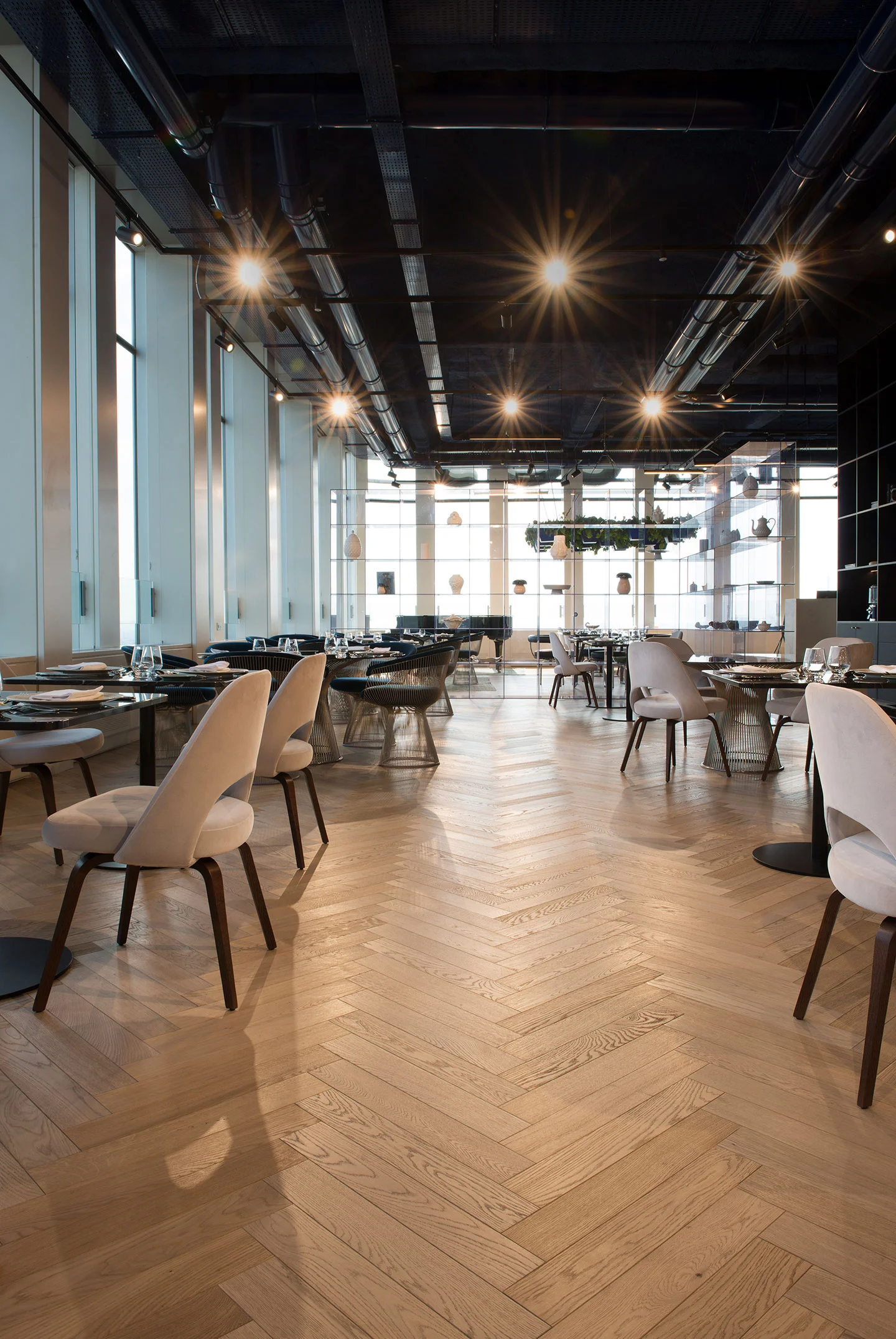
You cannot stop sunlight from changing a hardwood floor, but you can slow it down and keep it even. The measures that work, in order of impact: filter light at the window with laminated glass or film, shade the floor in the hours the sun lands on it, keep the finish intact, move rugs and furniture during the first months, and choose a species and color that change in a direction you like. This guide explains why each one works, and where it stops working.
What actually fades a hardwood floor?
Wood gets its color from lignin, the polymer that binds the fibers, and from natural extractives. Light reacts with both. Ultraviolet light does it fastest, but only in the first fraction of a millimeter of the surface. A 2007 study in Holzforschung on sugi, a Japanese softwood, found that violet light, the shortest visible wavelength, travels deeper into wood than UV and degrades lignin beyond the zone UV reaches. Blue light went deeper still and bleached the wood without significantly changing its lignin. It is one species and one experiment, so read it as a principle, not a measurement for your oak: ultraviolet is not the only problem, and blocking it alone will not freeze a floor's color.
Heat is a separate effect. It does not change the color, but a patch of floor that bakes behind a large window every afternoon dries out, and that can open gaps or cup the boards.
The change is also fastest at the start. A new floor does most of its moving in the first months, then slows. That matters for every tip below: the early period is when your choices count most.
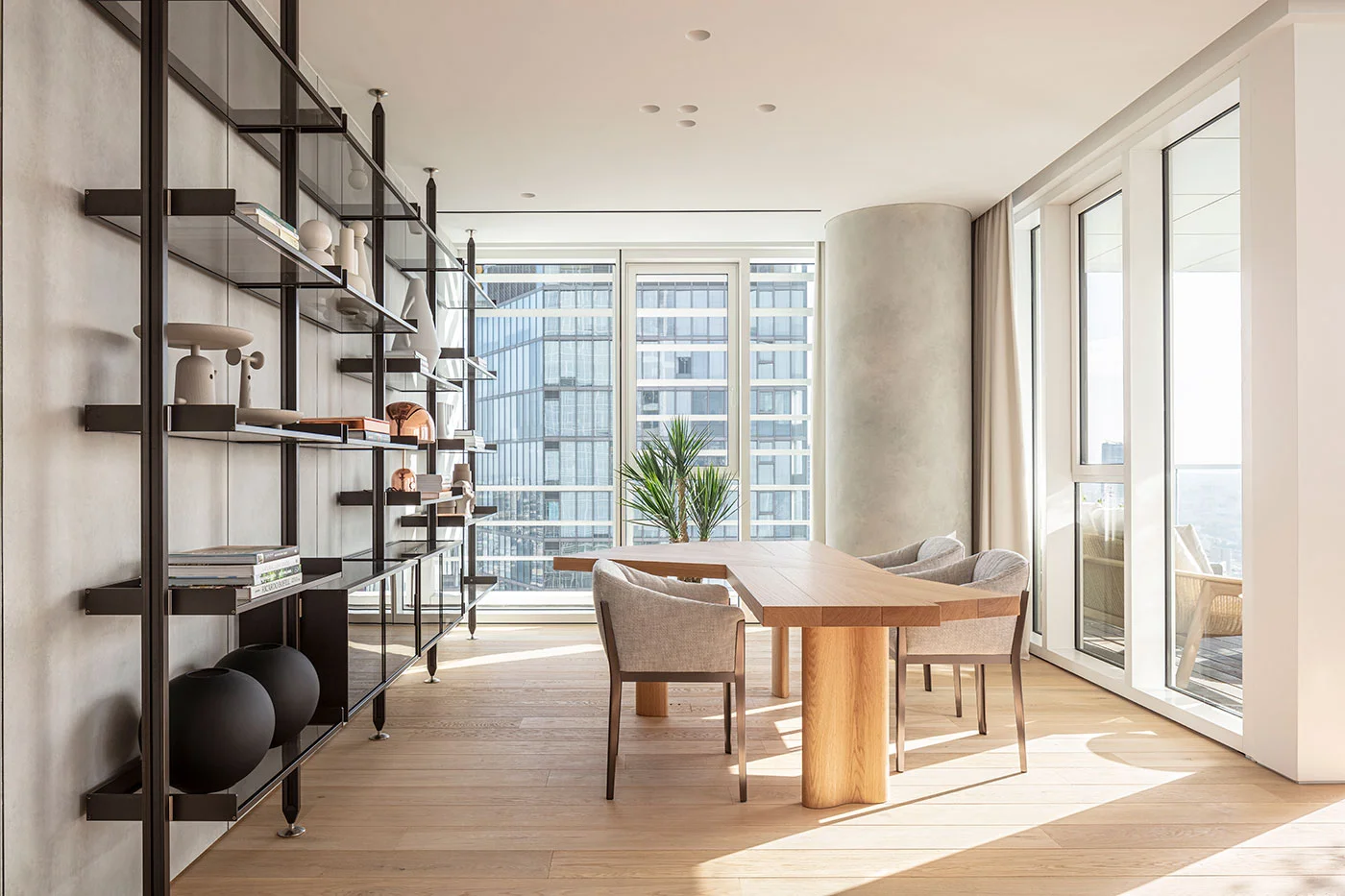
A room like this beach front penthouse in Tel Aviv, with pale Droit straight oak boards under tall windows, is where it pays to plan for light: the sun lands in the same patches every day.
Which measures work best, and where do they stop?
| Measure | What it does | Where it stops |
|---|---|---|
| Laminated or low-e glass | Cuts most UV and part of the heat at the source | Visible light still passes; performance varies by product |
| UV window film | Adds UV and heat filtering to existing windows | Does not stop violet and blue light; a retrofit, not a cure |
| Blinds, sheers, shutters, exterior shades | Cut all light, UV and heat, when the sun is on the floor | Only work when closed; exterior shading is the most effective because it stops heat before the glass |
| Finish | Protects the surface and, with UV absorbers, slows the reaction | Slows, never stops; some finishes yellow in the sun |
| Moving rugs and furniture | Keeps the whole floor changing at the same pace | Does not reduce total change; only evens it out |
| Species and color | Decides how visible the change is | Decided at purchase; cannot be changed later |
How do you filter light at the window?
Stopping light before it reaches the floor is the most effective single step. Standard clear glass lets a good part of the UV spectrum through. Laminated glass, with its plastic interlayer, stops nearly all UV, and many low-emissivity coatings cut UV and heat to different degrees, so ask for the figures on the product data sheet: UV transmission, visible light transmission and solar heat gain.
For existing windows, UV-filtering film is the practical retrofit. Film makers quote blocking of up to 99% of UV, which is a vendor figure, so ask for the tested data on the exact film. What no film does is stop all visible light, and the violet and blue part of it is the part that reaches deeper into the wood. That is why film works best as one layer in a set, not as the only protection.
When should you shade the floor?
Sun is rarely a problem all day. It is a problem for the hours it falls directly on the boards, and in the northern hemisphere that is typically south and west facing rooms in the afternoon, plus any room with large glazing. Blinds, shutters, louvers and sheer curtains closed during those hours do more than any coating. They also keep the heat off, which protects against drying and gaps. Exterior shading, such as awnings or external blinds, goes further because it stops heat before it enters the glass.
Which finish slows fading?
The finish is the floor's first line of defense, and it makes a real difference:
- Clear waterborne finishes stay clear in sunlight. Traditional oil-based polyurethanes amber with age and pull a pale floor toward yellow.
- UV absorbers in a finish slow the reaction in the wood beneath. They do not stop it, and they are used up over time, so a worn finish protects less than a fresh one.
- Natural oiled floors change more visibly than varnished or lacquered ones, according to flooring maker JOKA, because the wood itself carries more of the light.
- Color in the finish shields the wood to a degree and masks part of the change, though the oak underneath still reacts. The closer a color is to raw oak, the more of the wood's change shows.
The four Essentiel floors, including Rompu herringbone and Droit straight boards, are lacquered in twelve colors: the lacquer protects the surface from wear, and the color you choose decides how visible any shift will be. The endgrain collections, such as Forêt, come in Natural, Smoke and Black, never stained. Smoke is smoked through the full depth of the oak, so the color is in the wood rather than a surface layer. Oak under strong light still changes slowly, so the same measures apply.
How do different woods react to sunlight?
| Species | What sunlight does | How it ends up |
|---|---|---|
| Oak | Warms | A more golden, amber tone |
| Walnut | Lightens | From dark chocolate toward a softer brown |
| Cherry | Darkens strongly, within weeks in direct sun | From pinkish to deep red-brown |
| Maple | Warms toward yellow | From creamy white toward pale gold |
The general rule is that light woods darken and naturally dark woods go paler. OscarOno Paris works in oak, which changes slowly and in a direction most people like: a natural oak floor warms a little in its first years, then settles.
How do you avoid rug outlines on a new floor?
Lift a rug after a year on a new floor and you may find its exact shape in paler wood underneath. The change under a rug lags behind the exposed floor, so there is a visible line. In the first months, leave the floor uncovered where you can, and move rugs and low furniture from time to time so the whole surface sees the same light. Keep rugs out of the sunniest strip by the windows if you can. If an outline does appear, take the rug away and the covered area will usually catch up.
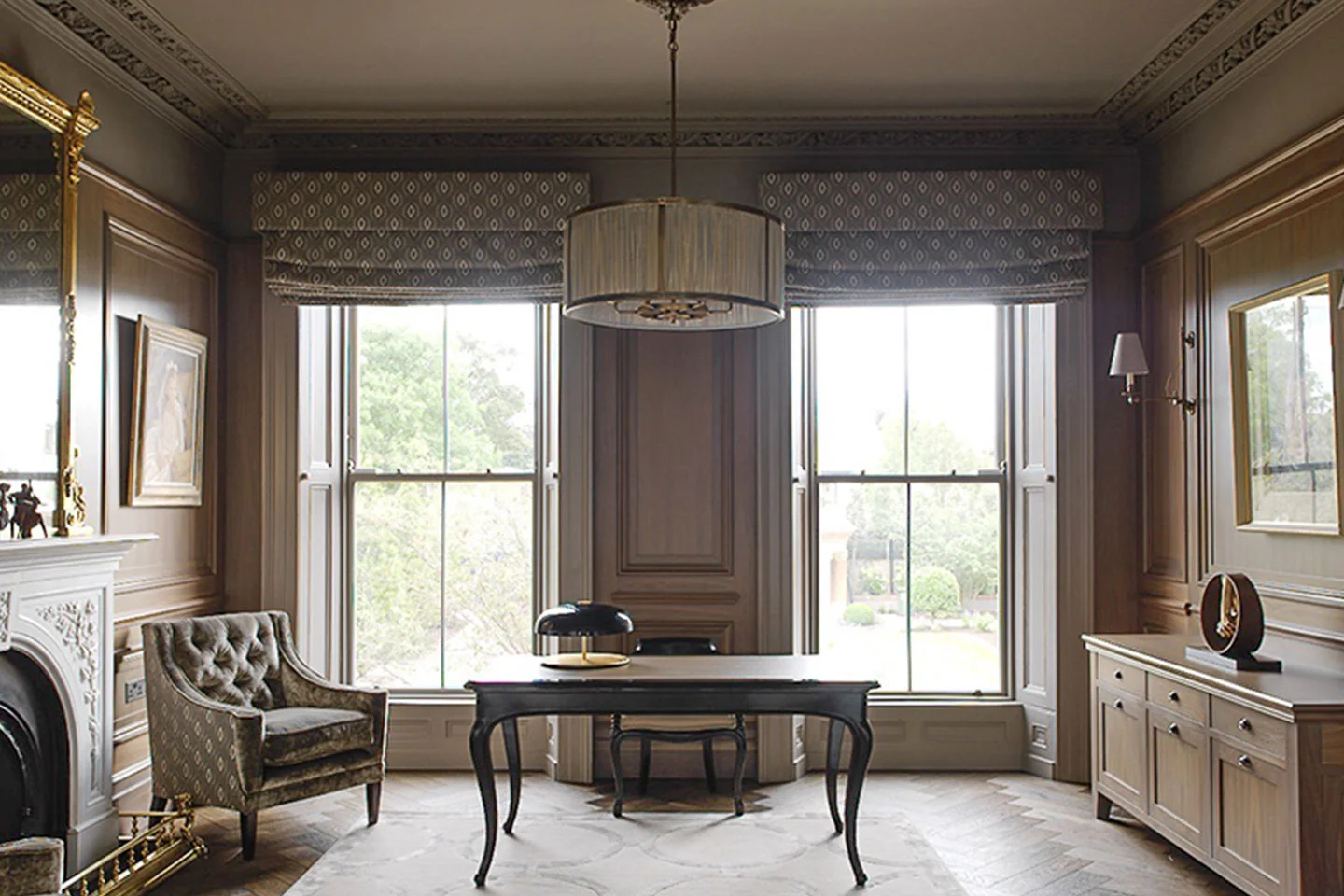
In this Victorian residence in Dublin, laid in Rompu, a rug sits in a room lit by tall sash windows: the classic case where moving the rug now and then early on keeps the floor one color.
What if the floor has already faded?
Start by waiting. A patch that was covered usually darkens and blends in over the following months once it is exposed. If a clear difference remains, sanding and refinishing is the only way to restore a uniform color, since it removes the changed layer of wood.
That is worth knowing before you buy. Sanding takes wood off, so the thickness of the top layer limits how many times you can do it. The Essentiel floors (Droit, Rompu, Hongrie, Dalle) have a 4 mm oak top layer. Cube and Élément have a 6 mm one, and Opus, Forêt and Rosace have an 8 mm one. After sanding, finish again with a protective coat so the fresh wood is not left exposed.
How do you check your room's light before choosing a floor?
Look at where the sun falls on the floor and for how long, at different times of day. South and west facing rooms and rooms with tall glazing see the most direct light. Then put a sample on the floor in that spot rather than looking at it in a showroom, because color reads differently in strong light. A pale color near a large window will show any change more than a mid or dark one.
Frequently asked questions
Can you completely stop a hardwood floor from fading?
No. Light changes wood chemically, so the color will always move. You can slow it a great deal and keep it even: cut the light at the glass, keep the finish intact, and move rugs and furniture while the floor is new.
Does window film really protect hardwood floors?
It helps, but it is not a cure. Film and laminated glass stop most ultraviolet light, which does the fastest damage at the surface. Research on wood shows that violet and blue visible light also reach into the wood, and film does not stop those, so pair it with blinds, sheers or shutters where sun lands directly on the floor.
Do area rugs prevent fading or cause it?
Both. A rug shields the wood beneath it, which then stays paler while the exposed floor changes, leaving a sharp outline when you lift it. On a new floor, move rugs now and then in the first months, or keep them off the sunniest strip.
Which hardwood floors fade the most?
Cherry changes fastest, darkening within weeks in direct sun. Walnut lightens, maple warms toward yellow, and oak warms toward amber. A pale, natural, oiled floor shows the change more than a dark or lacquered one.
Does engineered wood fade faster than solid wood?
No. The change happens in the top layer of wood and its finish, so an oak top layer reacts to light the way solid oak does. What differs is how much wear layer you have if you later want to sand a faded patch.
Can you fix a floor that has already faded?
Often you only need to wait. Remove the rug or furniture and the covered patch usually catches up over the following months. If a clear difference remains, sanding and refinishing is the only way to restore a uniform color, so check your top layer thickness first.
Sources
- Kataoka, Kiguchi, Williams and Evans, Violet light causes photodegradation of wood beyond the zone affected by ultraviolet radiation, Holzforschung, 2007.
- JOKA, Colour changes in wood and cork floors.
Choosing a floor for a sunny room with OscarOno Paris
Droit straight boards and Rompu herringbone share one specification: flatgrain select oak, 12 mm with a 4 mm top layer, 150 mm or 190 mm wide, twelve lacquered colors, usage class 33 for heavy commercial traffic, Cfl-s1, FSC and PEFC certified. In a very bright room, the color you choose is your main lever: look at it in that room's light before you decide.
Order samples and leave them by the window for a few days, and find spec sheets, CAD and 3D files in the library.
More from the Atelier
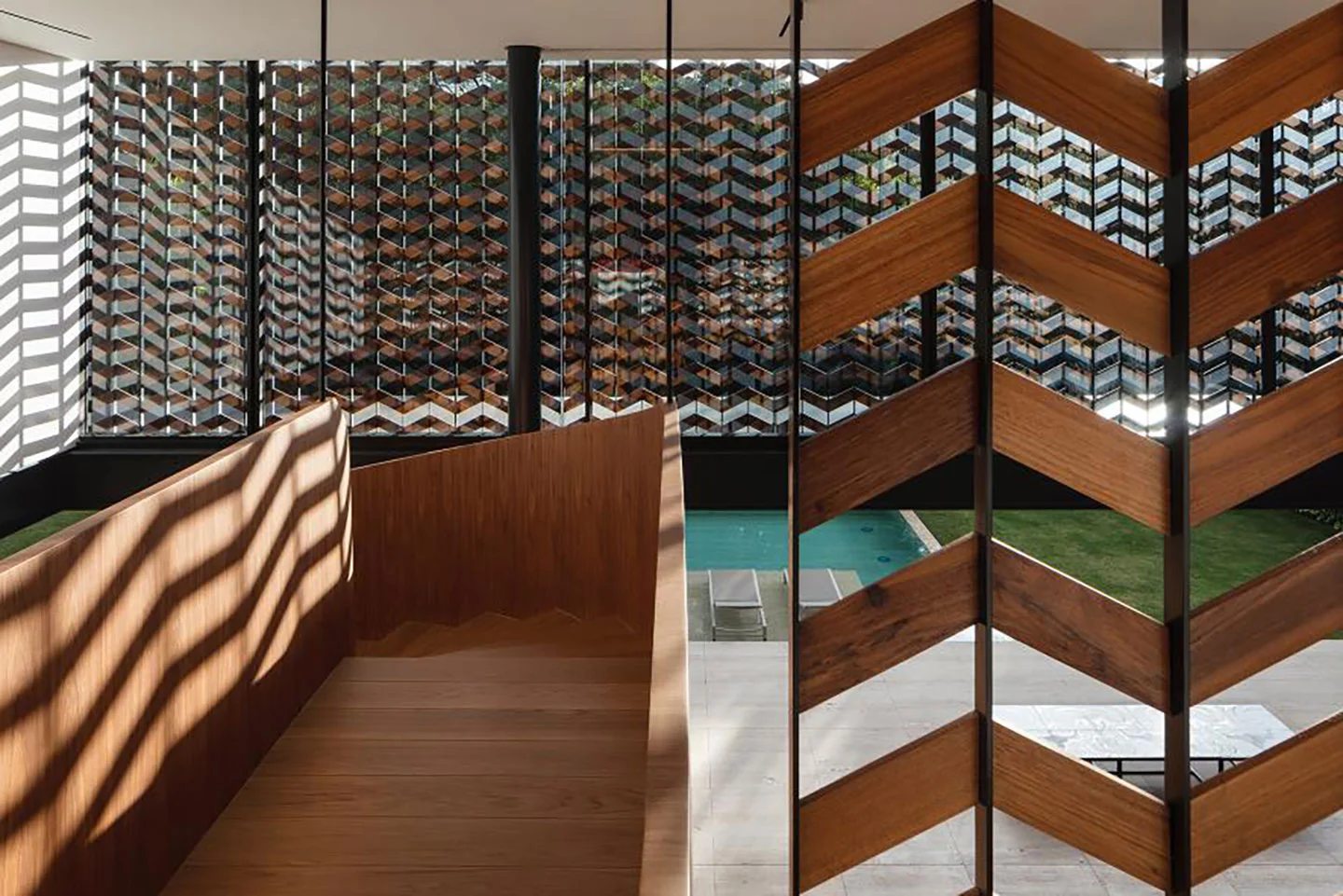
Protecting End Grain Wood Block Flooring from UV Fading
Discover the science of oak photodegradation and how to protect end-grain wood floors from UV fading using advanced varnishes and architectural design.
Parquet Floor Restoration: Is an Old Parquet Floor Worth Saving?
Loose blocks, gaps, stains and a worn finish can all be put right. How to tell whether an old parquet floor is worth restoring, what the work involves, and when it is not.
Squeaky Wood Floors: Why They Squeak and How to Fix Them
A squeak is friction: wood on wood, wood on a nail, or a subfloor moving on its joists. Find which one it is and the fix follows.