
How to Read a Design Exhibition Like a Professional Curator
Beyond the sensory spectacle, design shows are systems of materials, heritage, and space.
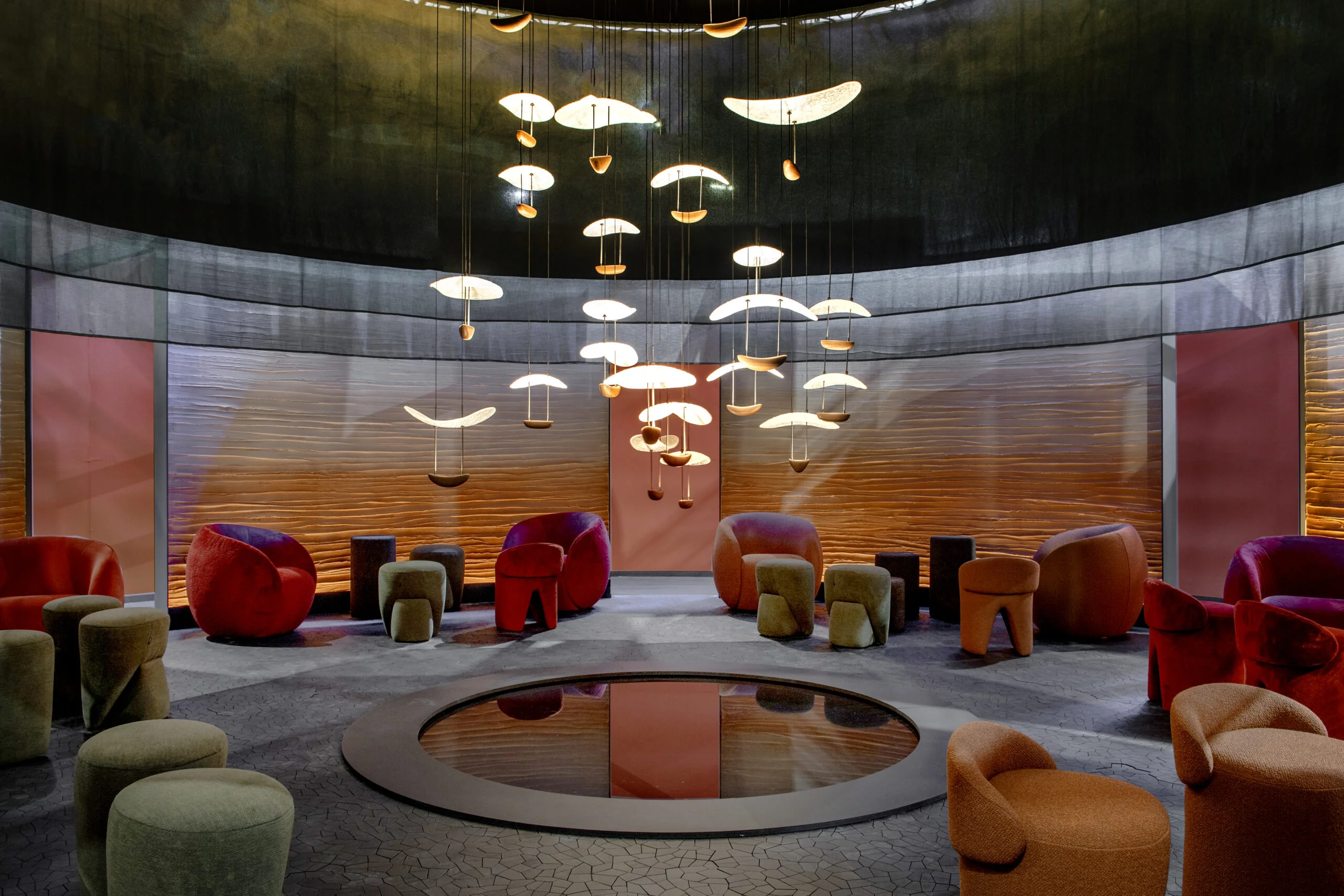
Reading a design exhibition like a curator means looking past styled spectacles and photogenic vignettes to analyze the underlying systems, material provenance, and spatial dialogue. Curators evaluate design by decoding how raw elements interact with historical context and how structural logic dictates form.
- Analyze systemic ecology over cosmetic sustainability, focusing on supply chains, transport, and disassembly rather than superficial labels.
- Observe spatial dialogue by examining how contemporary objects respond to the history, geometry, and texture of adaptive reuse venues.
- Identify the honest unit of making, evaluating the raw, unadorned materials—like raw timber planks or local stone—that anchor the work's craftsmanship.
- Confront the architecture of stripping away, where the absence of domestic styling highlights true structural logic and form.
Why should we look past the visual spectacle of a design exhibition?
Visual spectacle in a design exhibition often functions as a cosmetic layer that masks a lack of structural or systemic innovation. Curators ignore the photogenic styling of modern fairs to focus on the raw material choices, production pathways, and the core conceptual logic of the work. By bypassing superficial styling, one can evaluate whether an exhibition offers genuine design intelligence or merely temporary visual amusement.
In contemporary design curation, leading studios are shifting away from decorative presentations toward systemic critique. For instance, the research-led practice Formafantasma has frequently advocated for exhibition designs that emphasize systemic ecology. Instead of constructing elaborate, single-use drywall partitions that end up in landfills, curators assess the spatial infrastructure. They ask: How easily can these display structures be disassembled, recycled, or returned to their natural cycles? Stripping away the ornamental styling forces a direct confrontation with the physical and ethical reality of production.
How does spatial dialogue transform our reading of a design show?
Spatial dialogue is the intellectual tension created when contemporary design objects are placed inside historically layered environments. Curators look at how modern designers negotiate, complement, or disrupt the architectural history of the host space rather than relying on neutral gallery walls. This relationship reveals how contemporary objects sit within the broader timeline of human craftsmanship and architecture.
A prime example of this curatorial strategy is the activation of adaptive reuse sites by platforms like Alcova Milano. Founded by Valentina Ciuffi and Joseph Grima, Alcova has consistently staged exhibitions in historically complex environments, such as the post-WWI Baggio Military Hospital or modern architectural landmarks like Franco Albini’s Villa Pestarini. Reading these exhibitions requires observing how the decay of abandoned plaster or the highly controlled rationalism of Albini’s geometry framing modern timber, glass, and metal creates a dialogue across time. The architecture acts as a sounding board, testing the weight, scale, and material integrity of contemporary interventions.
What is the "honest unit of making" in design curation?
The honest unit of making is the fundamental, unadorned material component—such as a single timber plank or a raw block of stone—that reveals a design's true craftsmanship and utility. Curators isolate this basic element to evaluate how a designer balances heritage with contemporary manufacturing. Focusing on this unit exposes the baseline quality of the workmanship before any complex joinery or finishing occurs.
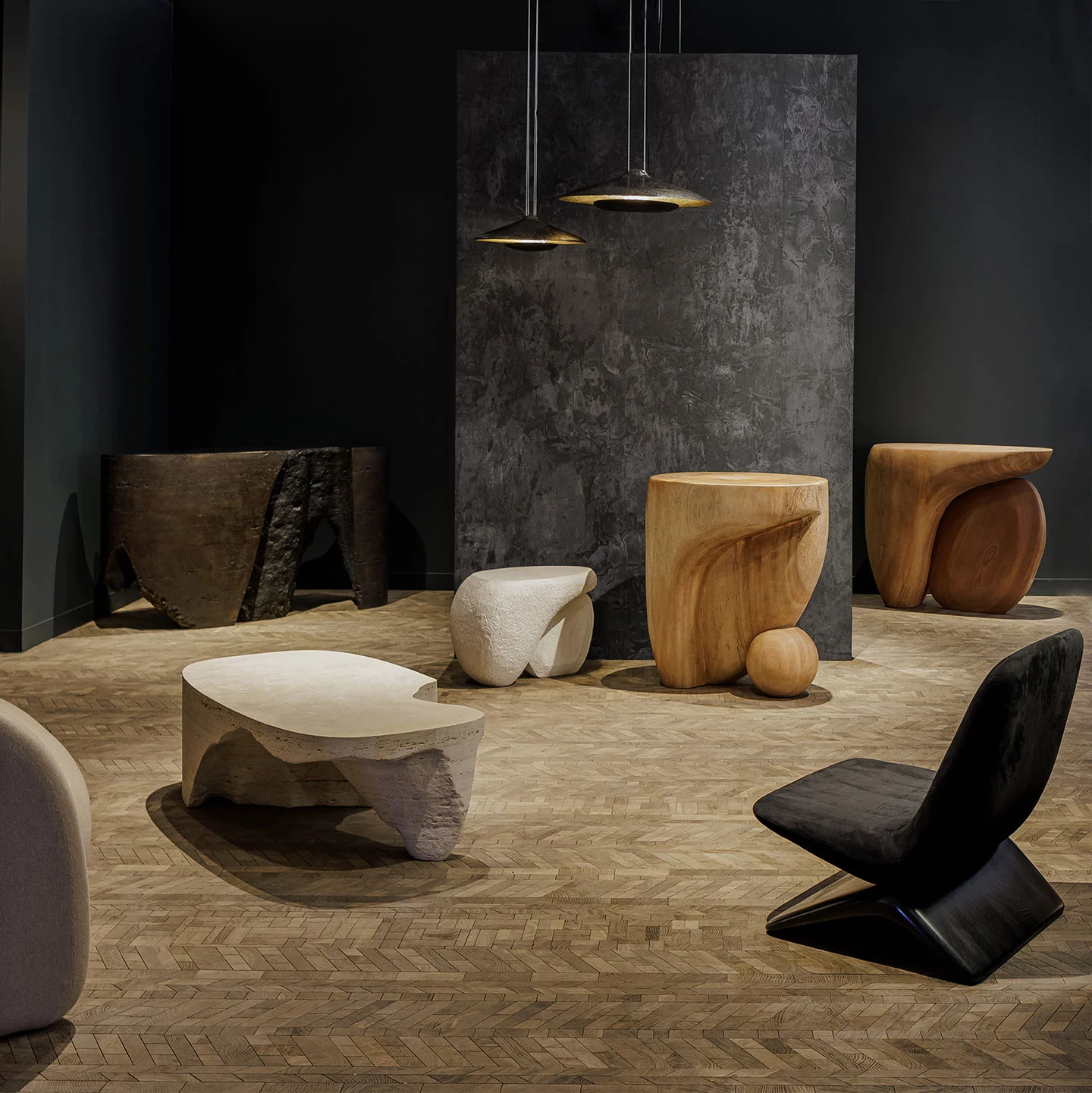
During exhibitions such as Formation at TEFAF Maastricht, curated by Formafantasma, the focus was intentionally narrowed to the humble cherry wood plank. By treating this basic unit of cabinetmaking as the primary subject, the exhibition explored utility, resource management, and the tension between raw nature and human refinement. A curator reads a timber surface by looking at its grain direction, cut, and natural imperfections, understanding that the purest expression of design lies in how respectfully a creator treats the raw material in its most basic state.
Systemic ecology vs cosmetic sustainability — what is the difference?
Systemic ecology in design addresses the entire lifecycle of an exhibition, from raw material sourcing and transport to disassembly and reuse. Cosmetic sustainability simply swaps conventional materials for eco-labeled alternatives without altering the high-waste, linear production models of typical temporary installations. Curators prioritize systemic intelligence over superficial branding.
| Curatorial Criteria | Cosmetic Sustainability | Systemic Ecology |
|---|---|---|
| Material Lifecycle | Recyclable labels on single-use composite displays. | Raw, untreated elements designed for complete reclamation. |
| Exhibition Architecture | Staged domestic room sets built from painted drywall. | Stripped-back, modular armatures that require no adhesives. |
| Sourcing & Logistics | Importing finished pieces from global supply chains. | Utilizing local quarry stone, regional timber, and native sediments. |
| Longevity Focus | Focus on the immediate visual impact of the event. | Focus on the post-exhibition path of every structural component. |
How do curators use raw materials as narrative anchors?
Raw materials act as narrative anchors by physicalizing abstract thematic concepts through local textures, weights, and geological realities. Curators display unrefined elements like regional stone or raw pigments to ground design arguments in the physical constraints of a specific place. This tactile grounding prevents conceptual design from drifting into pure abstraction.
In the Coalescence exhibition at Alcova, curated by Nichola Barrington-Leach, this approach was manifested through a central display table constructed from reclaimed local quarry stone. The heavy, cold stone base supported a floating surface of raw, powdery ochre pigment ground from regional sediment. This choice of materials created a powerful sensory experience—the dry, earthy fragrance of the pigment contrasting with the dense, cold weight of the stone. By choosing materials that spoke of local geology and historic building traditions, the curation grounded the contemporary design pieces in a profound narrative of regional identity and deep time.
What does the "architecture of stripping away" reveal about design?
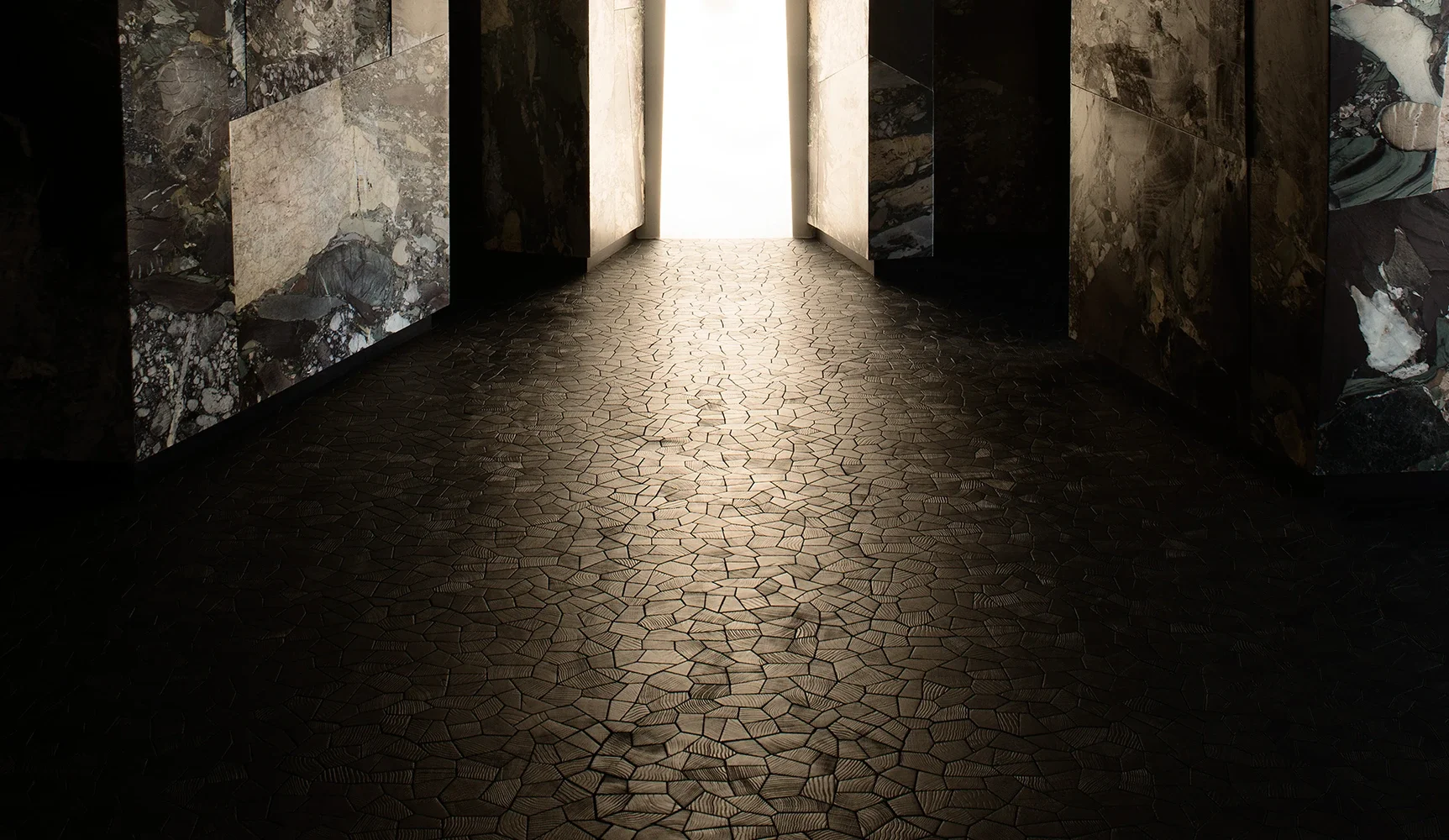
The architecture of stripping away removes domestic styling, narrative distractions, and ornamental cues to reveal the true structural honesty and material logic of a design object. Curators use minimalist, raw configurations to force viewers to confront the form, joinery, and manufacturing systems directly. This subtraction highlights the authentic quality of a piece, leaving no room for decorative camouflage.
At the Salone del Mobile, Formafantasma’s exhibition stand for B&B Italia beautifully demonstrated this philosophy. They stripped away the typical domestic-style styling, wallpaper, and decorative props that populate commercial design fairs. Instead, the furniture was set within a stark, honest architectural framework that highlighted the internal logic, materials, and form of the works. To read an exhibition of this nature, a curator observes the joins, the thickness of the timber, the tension of the textile, and the honesty of the assembly. Stripping away the excess reveals whether a design has the integrity to stand entirely on its own.
Critical questions for reading design shows
To develop a curatorial eye when visiting design exhibitions and architectural showcases, train yourself to ask these vital structural questions:
- How will this installation be dismantled? Look at the connections. Are they glued, nailed, or dry-jointed for easy reclaiming?
- Where did the raw materials originate? Seek out the geological and botanical history of the wood, stone, or clay on display.
- How does the object respond to its architectural host? Notice whether the design respects the historic textures of the venue or fights against them.
- What is the primary unit of craftsmanship? Identify the fundamental material block and evaluate how much of the design relies on the natural beauty of that raw resource.
Frequently Asked Questions about Reading a Design Exhibition
More from the Atelier
Calm Bedroom Design: How Wood Floors Create Restful Interiors
Learn how natural wood bedroom floors, acoustic balancing, and soft timber textures combine to transform your bedroom into a quiet, restorative sanctuary.
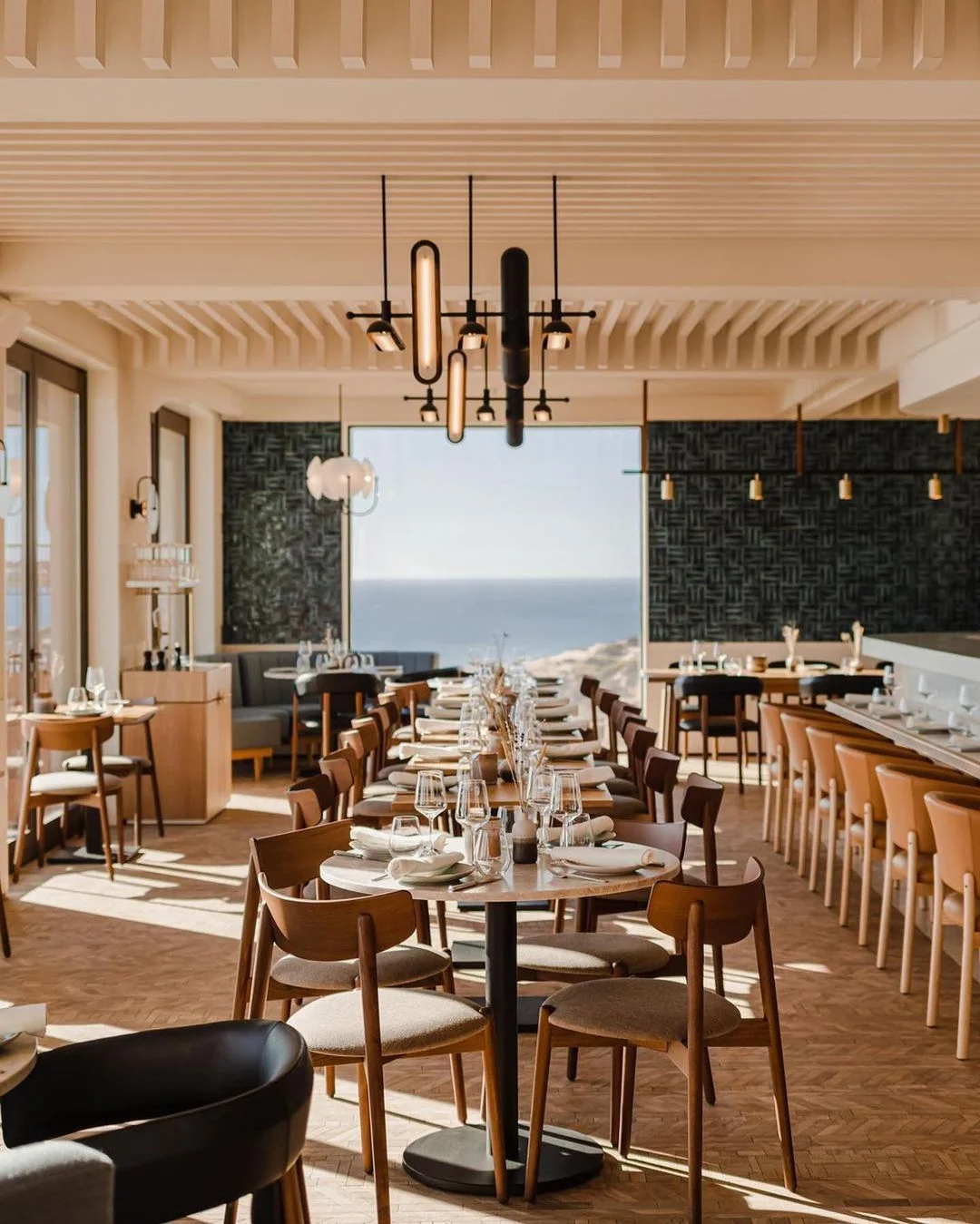
Summer Light & Organic Grids: Coastal Sanctuaries
Discover how the raw, organic grids of end-grain wood and pale timber tones ground bright, modern seaside properties into peaceful sensory retreats.
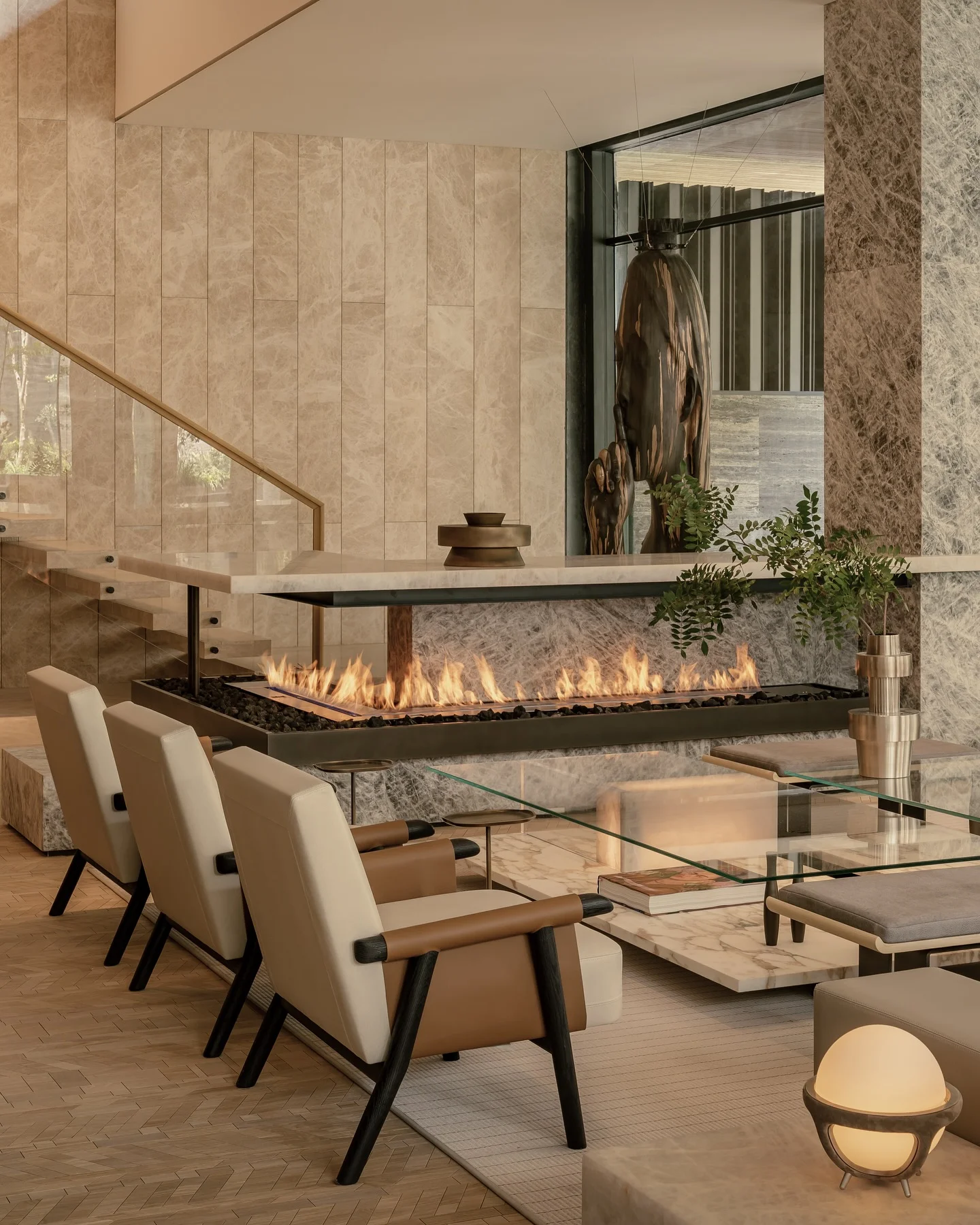
Minimalism and Wood: Doing More with Less Material in Design
Discover how warm minimalism replaces stark white spaces with tactile timber. Learn how a monomaterial approach creates serene, acoustically quiet luxury.