
Japandi Flooring: Choosing a Wood Floor for a Japandi Interior
Japandi asks the floor to stay calm so the room can breathe. Here is how to choose one that does.
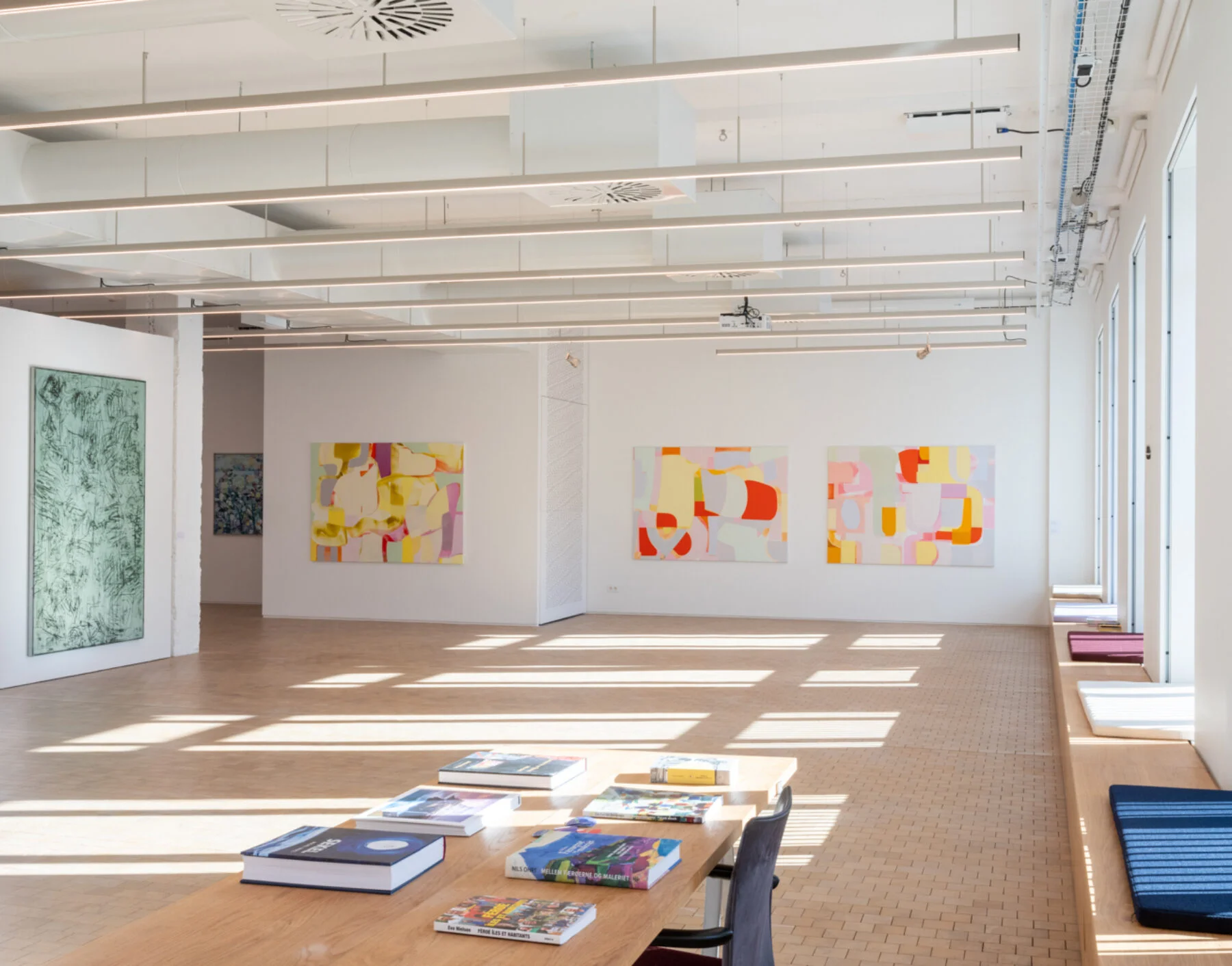
The best Japandi flooring is a pale or natural wood with a quiet grain and a low sheen, laid in long straight boards or a simple, even grid. Japandi mixes Japanese restraint with Scandinavian warmth, so the floor should be calm enough to let a few good pieces of furniture, plaster walls and linen do the talking. Light oak is the most common choice; a charred or smoked dark floor also works, closer to the Japanese side of the style.
What is Japandi style?
Japandi is the meeting of two traditions that share a respect for natural materials and simple, useful objects. From Japan it takes order, low furniture, empty space and an eye for wear and imperfection, the idea known as wabi-sabi. From Scandinavia it takes light woods, soft textiles and comfort, the feeling Danes call hygge. The affinity is not new: Scandinavian furniture makers of the mid twentieth century looked closely at Japanese craft, and the two traditions have admired each other since.
In a room, it means few objects, natural textures, earthy and muted colors, and a lot of wood, starting with the floor.
| Japanese side | Scandinavian side | Japandi | |
|---|---|---|---|
| Wood | Cedar, cypress, darker tones | Ash, birch, pine, pale oak | Mostly pale oak, with dark accents |
| Finish | Raw, oiled or charred | Pale, matte, washed | Low sheen, never glossy |
| Light | Soft, filtered, shadowed | As much daylight as possible | Soft daylight with long shadows |
Which wood floor suits a Japandi interior?
Three choices decide it. Tone: pale and natural oak tones are the classic base, warm enough to stop the room feeling clinical and light enough to keep it open. Board: long, straight boards, the wider the calmer, because fewer joints mean fewer lines. Sheen: low. A glossy floor reflects windows and lamps and breaks the quiet; a matte or satin surface lets the grain read.
Japandi rooms built in Japan or Scandinavia often use ash, maple, pine or larch. OscarOno Paris works in oak, which gives the same calm, pale look with a slightly stronger grain. Droit, straight oak boards, are the plank in its purest form, 150 mm or 190 mm wide, and come in twelve lacquered colors from very pale to dark, so the tone can be matched to the walls and furniture.
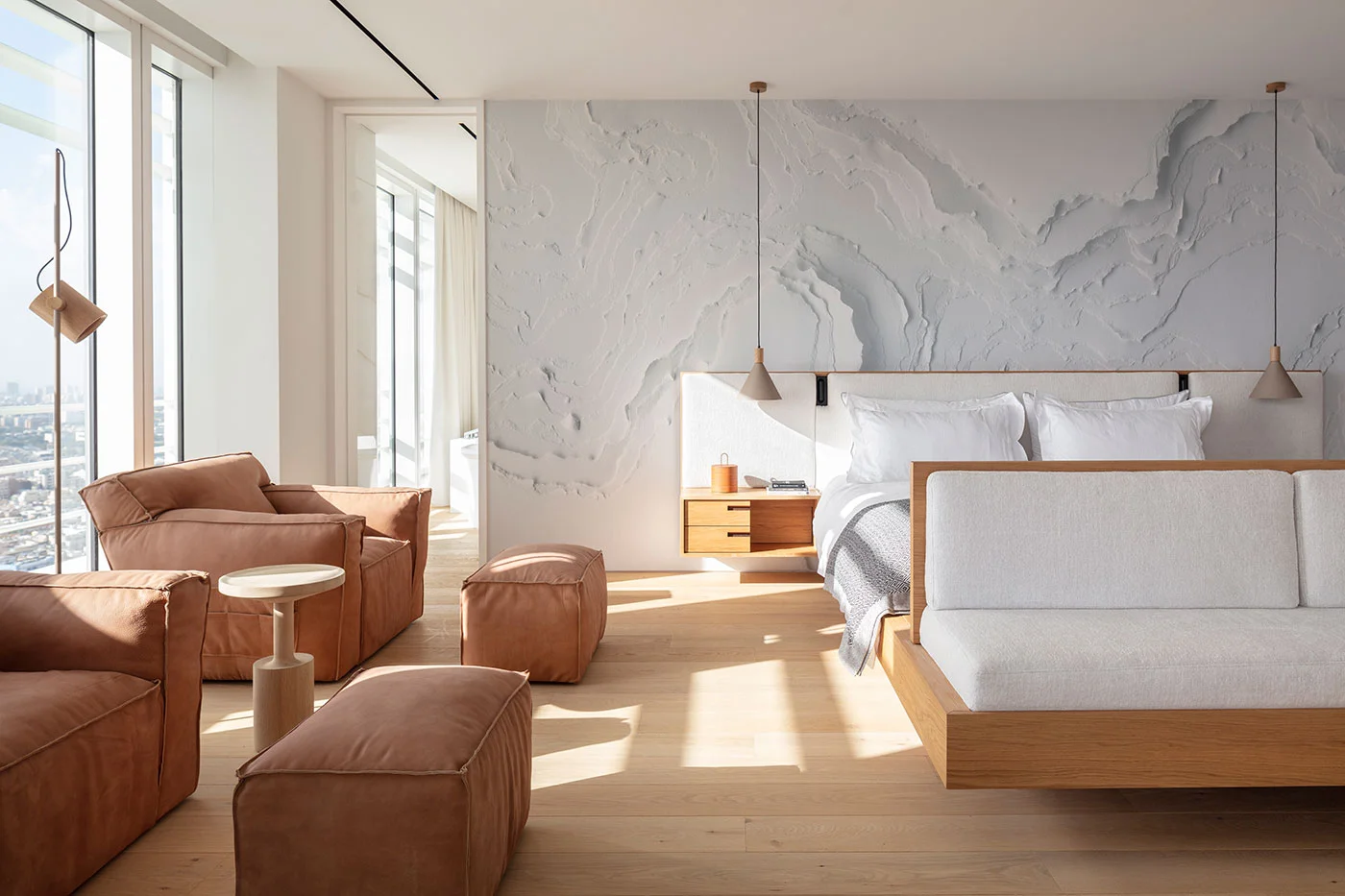
The bedroom of the Beach Front Penthouse in Tel Aviv is close to a Japandi room: pale Droit boards, a low wooden bed, a plaster wall and almost nothing else.
Do patterns work in Japandi?
Simple ones do. A busy herringbone or a strongly contrasting parquet pulls attention to the floor, which is the opposite of what Japandi wants. An even grid is different: it is ordered and quiet, more like a tatami room or a stone courtyard than a decorative parquet.
Cube is endgrain oak in its simplest form, square blocks set side by side in an open, even grid. It is built entirely from solid offcuts the atelier would otherwise set aside, which sits well with the wabi-sabi respect for material that is not wasted.
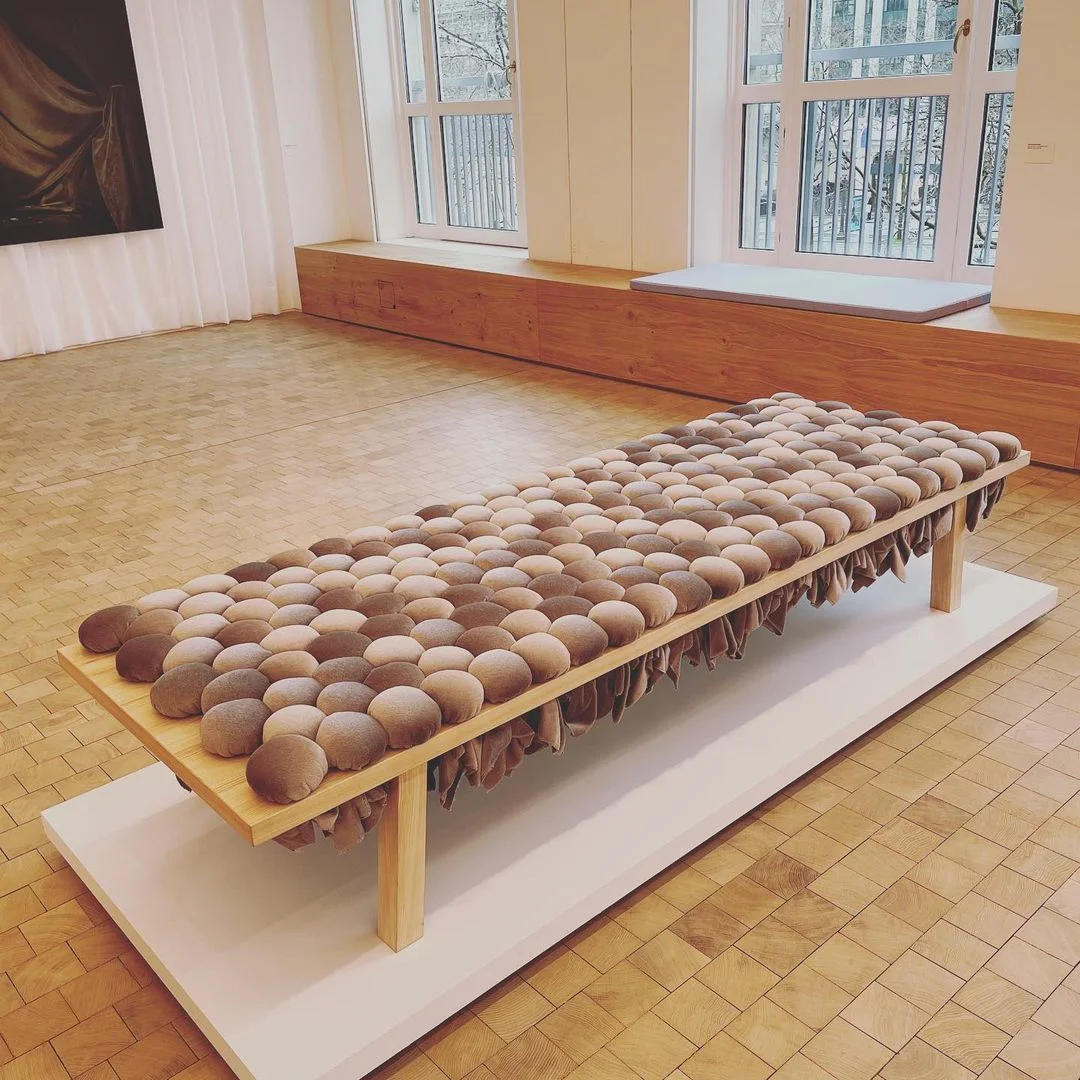
At Maison du Danemark in Paris, Cube in Natural runs through a bright gallery: the grid is regular, the light does the rest.
Can a Japandi floor be dark?
Yes, and it brings the room closer to its Japanese roots. Dark floors in Japandi work best with pale walls and plenty of light, so the room stays calm rather than heavy. Charring is the Japanese way to darken wood: in the shou sugi ban tradition, the surface is blackened with fire. Cube, like the other endgrain collections, comes in Black, which is charred in that tradition, and in Smoke, which is smoked through the full depth of the oak. Neither is a stain.
What goes with a Japandi wood floor?
Materials with texture and no shine: lime or clay plaster, linen and wool, paper lamps, handmade ceramics, stone and a little black metal. Keep the palette to a few earthy, muted colors, and let one dark element, a table, a frame, a single chair, give the room an anchor.
Frequently asked questions
What flooring is best for Japandi style?
A pale or natural wood with a quiet grain and a low sheen, laid in long straight boards or a simple, even grid. Light oak is the most common choice, because it is warm without being busy and suits the plaster, linen and pale furniture Japandi uses.
Can you use a dark wood floor in a Japandi interior?
Yes. A dark floor brings the room closer to the Japanese side of the style, especially a charred finish in the shou sugi ban tradition. Balance it with pale walls, good daylight and light textiles so the room stays calm rather than heavy.
Is herringbone Japandi?
It can be, in a pale tone with little contrast between boards, but it is busier than the style usually wants. Straight boards or a simple grid are the more typical Japandi floor, because they keep attention on the room rather than the floor.
What is the difference between Japandi and Scandinavian style?
Scandinavian style leans toward bright, cozy rooms with pale woods and soft textiles. Japandi adds Japanese restraint: fewer objects, lower furniture, more empty space, earthier colors and an appreciation of wear, with the occasional dark wood accent.
Is Japandi style sustainable?
It favors durable natural materials and fewer, better objects, which helps. For the floor, look for wood from certified forests: OscarOno Paris's oak collections are FSC and PEFC certified, and a solid surface that can be maintained for decades beats one replaced every few years.
Japandi floors by OscarOno Paris
For a pale, quiet base, Droit: flatgrain select oak, 12 mm with a 4 mm top layer, 150 mm or 190 mm wide, twelve lacquered colors, usage class 33. For an ordered grid with more depth, Cube: endgrain oak on a 10 mm birch plywood base with a 6 mm oak top layer, in Natural, Smoke or Black, usage class 34. Both carry a Cfl-s1 fire rating and are FSC and PEFC certified.
Order samples to see the tones beside your walls and textiles, and find spec sheets, CAD and 3D files in the library.
More from the Atelier
What Is Wood Terrazzo Flooring? An Architectural Guide
Wood terrazzo flooring unites reclaimed endgrain oak offcuts and mineral ground, creating continuous, tactile surfaces designed for circular luxury interiors.
Modern Versailles Parquet: The Classic Panel in Today's Interiors
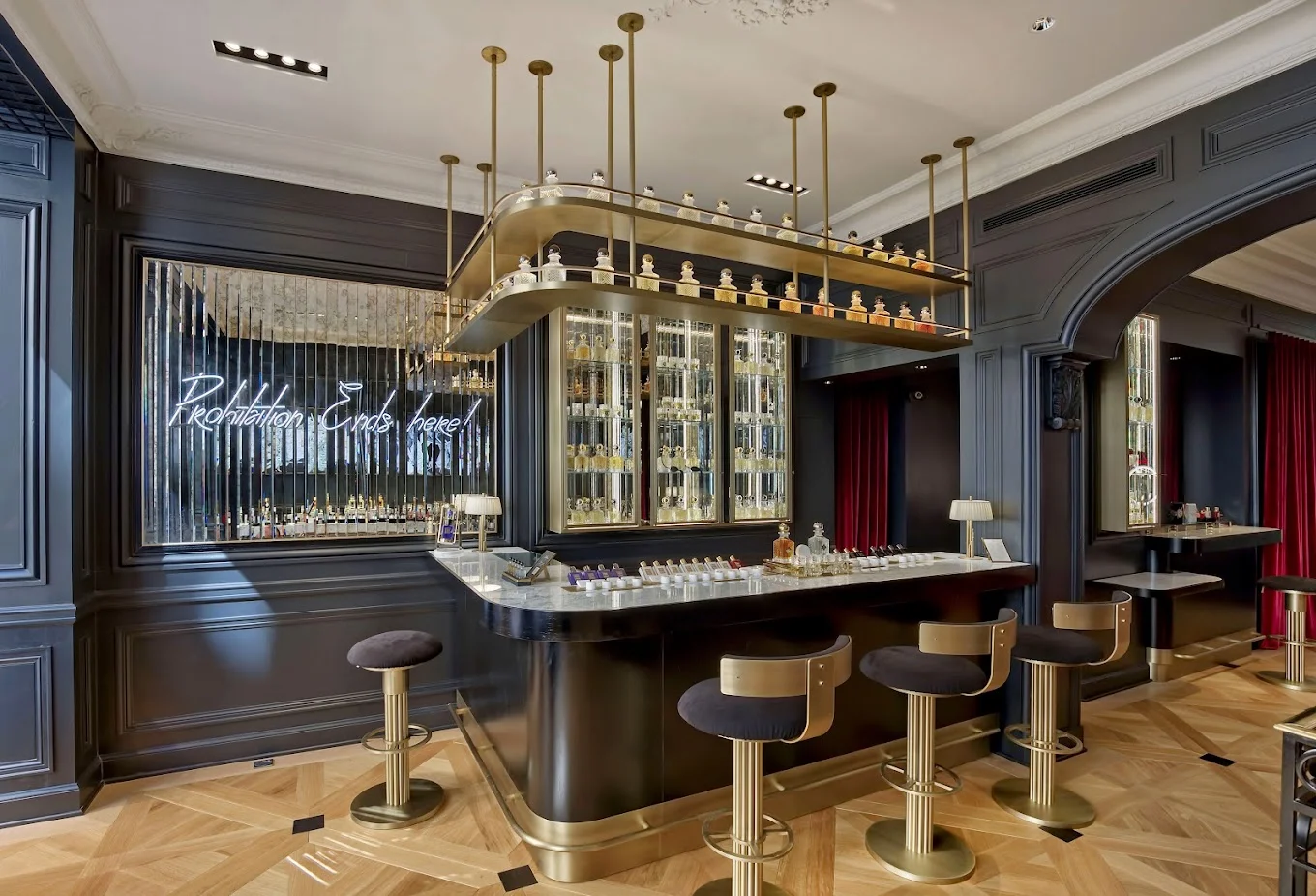
The woven oak panel first laid in a palace still works in a contemporary room. What changes is the color, the construction and how freely the weave is drawn.
Wood Floor Interior Design: Pairing Oak with Linen, Stone and Brass
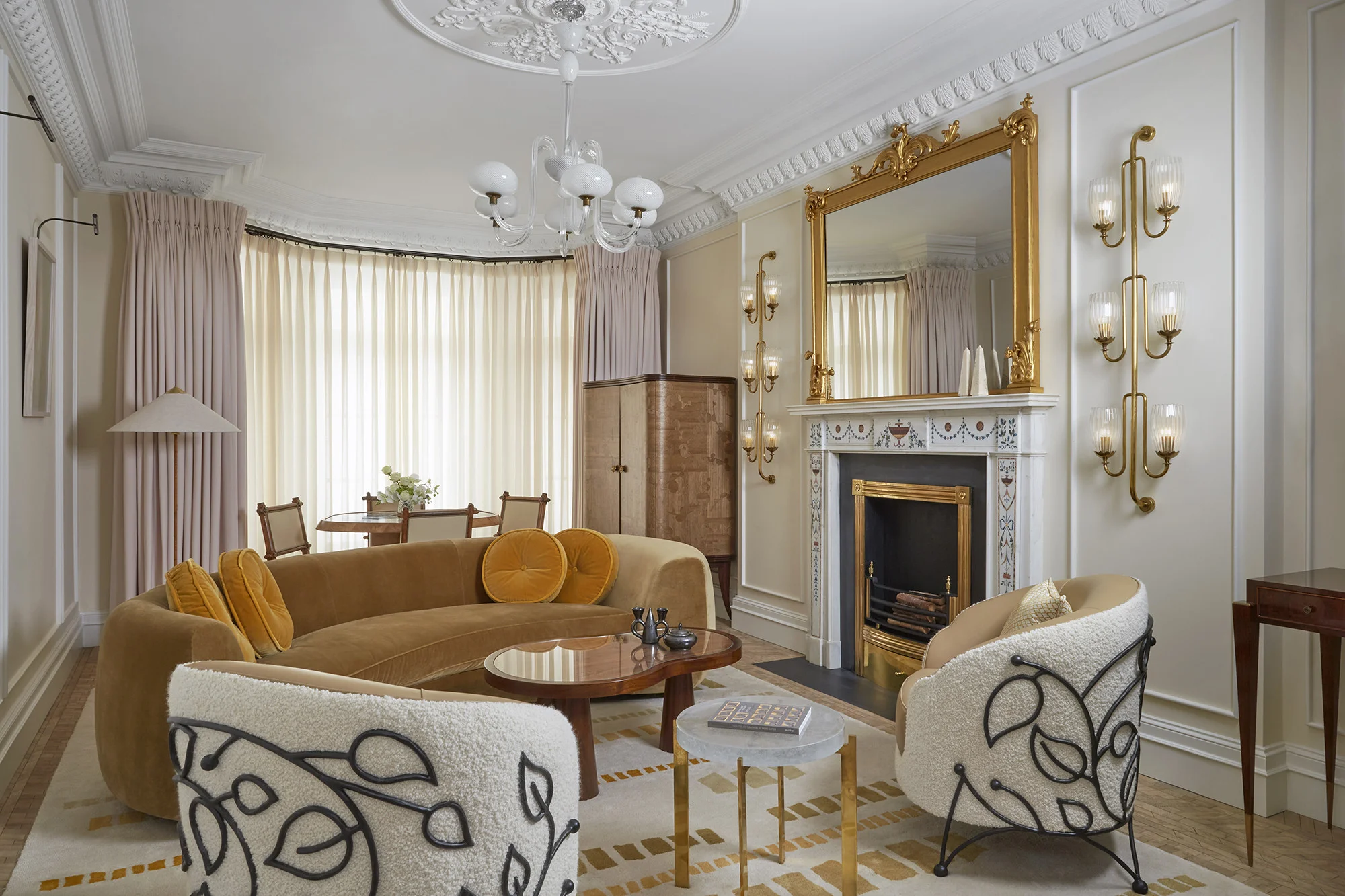
Start with the floor, then balance it: stone for weight, linen for softness, brass for light. A practical guide to designing a room around wood.