
Warm Wood Floor Colors: How to Choose and Pair Them
The undertone, the depth and the light in the room decide how warm a wood floor really looks.
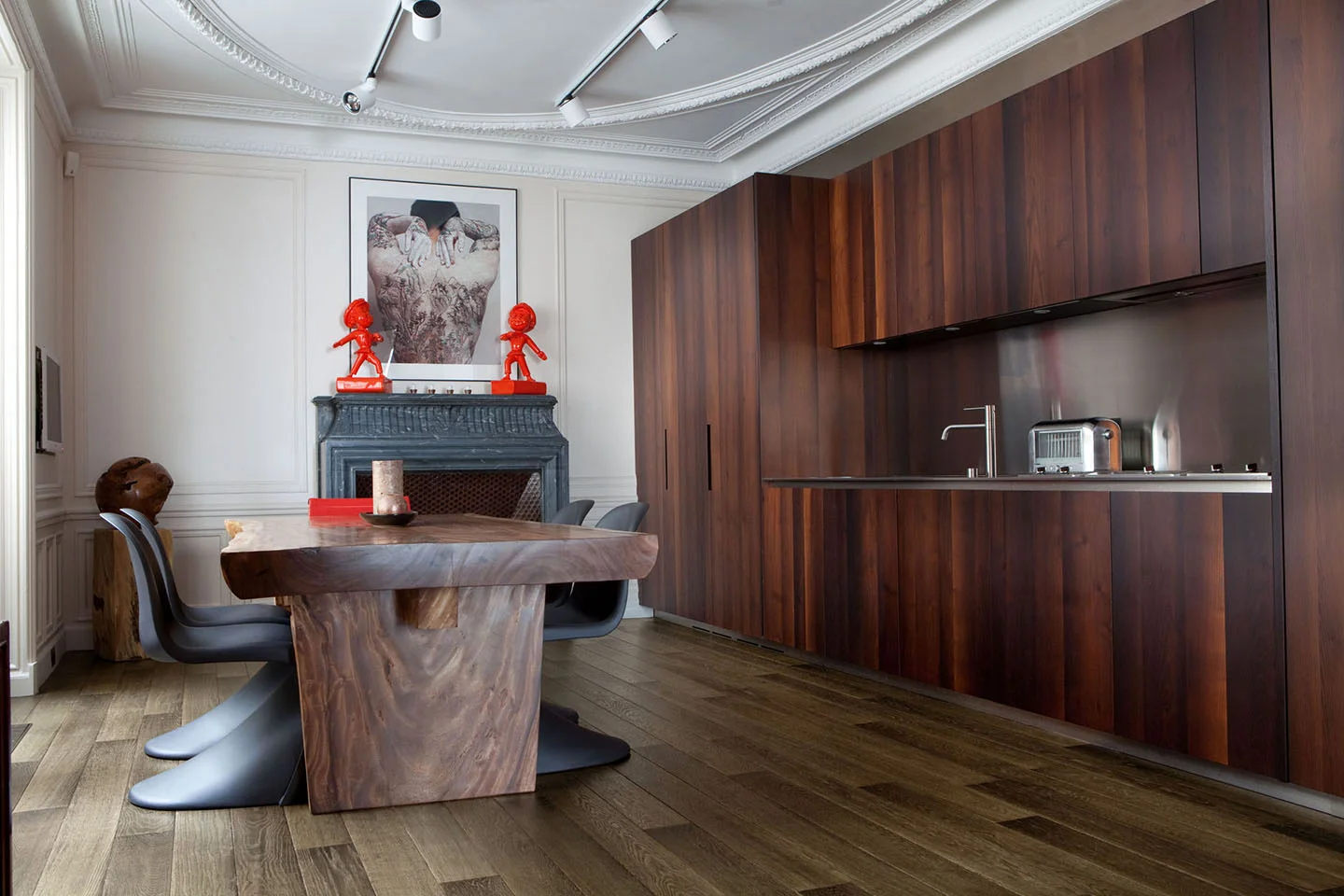
Warm wood floor colors are the tones with a yellow, orange or red undertone: pale honey and amber oak, golden mid browns, and the deep chocolate browns of smoked oak. They make a room feel warmer and more enclosed than gray or whitewashed floors, and they look their best in the low, golden light of autumn and winter.
Choosing one comes down to three things: how light or dark the floor should be, its undertone, and the light the room actually gets.
What makes a wood floor color warm?
The undertone. Oak starts out warm: freshly cut it is a pale straw color, and with light and time it deepens toward honey. Finishes push it one way or the other. Gray, white and bleached finishes cool it down; honey tones, browns and smoking warm it up.
A simple test: lay a sample on a sheet of white paper in daylight. If it casts yellow, orange or pink, it is warm. If it reads gray or slightly green, it is cool. Do the test in the room itself, because the same board can look quite different by a north window and a south one.
| Tone | What it looks like | Pairs well with | Watch out for |
|---|---|---|---|
| Pale honey | Light oak with a golden cast | Cream, warm white, sage, terracotta | Can turn yellow under very warm bulbs |
| Amber and golden brown | A mid tone with visible grain | Ochre, olive, rust, linen | Little; mid tones hide dust and wear best |
| Warm dark brown | Chocolate to coffee | Ivory, camel, deep green, brass | Shows pale dust, grit and scratches |
| Smoked brown | Deep brown that varies from board to board | Plaster, warm gray, leather, stone | Needs good light to show its depth |
Light or dark: which warm floor suits your room?
Light warm tones bounce daylight back into the room, so they suit small rooms, north-facing rooms and low ceilings. Dark warm tones absorb light and make walls, furniture and art stand out against them; they work best in large, bright rooms where that contrast has space.
Mid tones are the practical middle: dark enough to feel warm and grounded, light enough not to show every footprint. A dark floor shows pale dust and grit; a very pale one shows dark marks. Neither is wrong, but it is worth knowing which you would rather see.
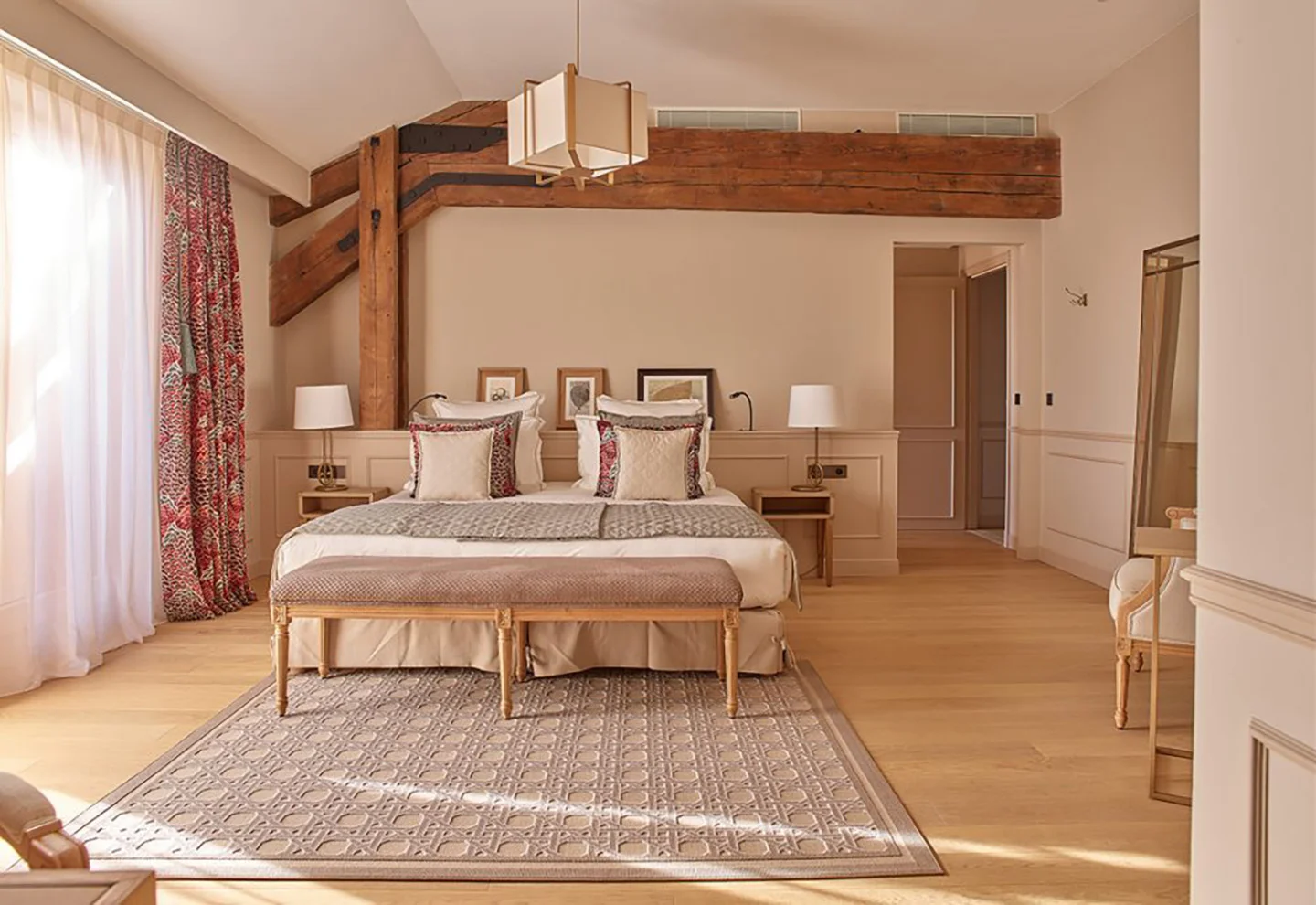
At Hotel Chais Monnet in Cognac, the bedrooms are floored in Droit, the straight oak plank, in Miel Doux, one of the twelve lacquered Essentiel colors: a pale honey floor that keeps the rooms light under old timber beams.
How does light change a warm wood floor?
North light is cool and even, so it calms warm floors down and can make a mid brown read flatter than expected. South and west light is warmer and pushes the same floor toward gold. In autumn and winter the sun sits low and rakes across the floor, picking out grain, texture and every change of tone between boards.
Artificial light matters as much. Very warm bulbs push honey and amber floors toward orange; a slightly cooler warm white keeps them closer to their daylight color. If a floor looked right in the showroom and too yellow at home, the bulbs are often the reason.
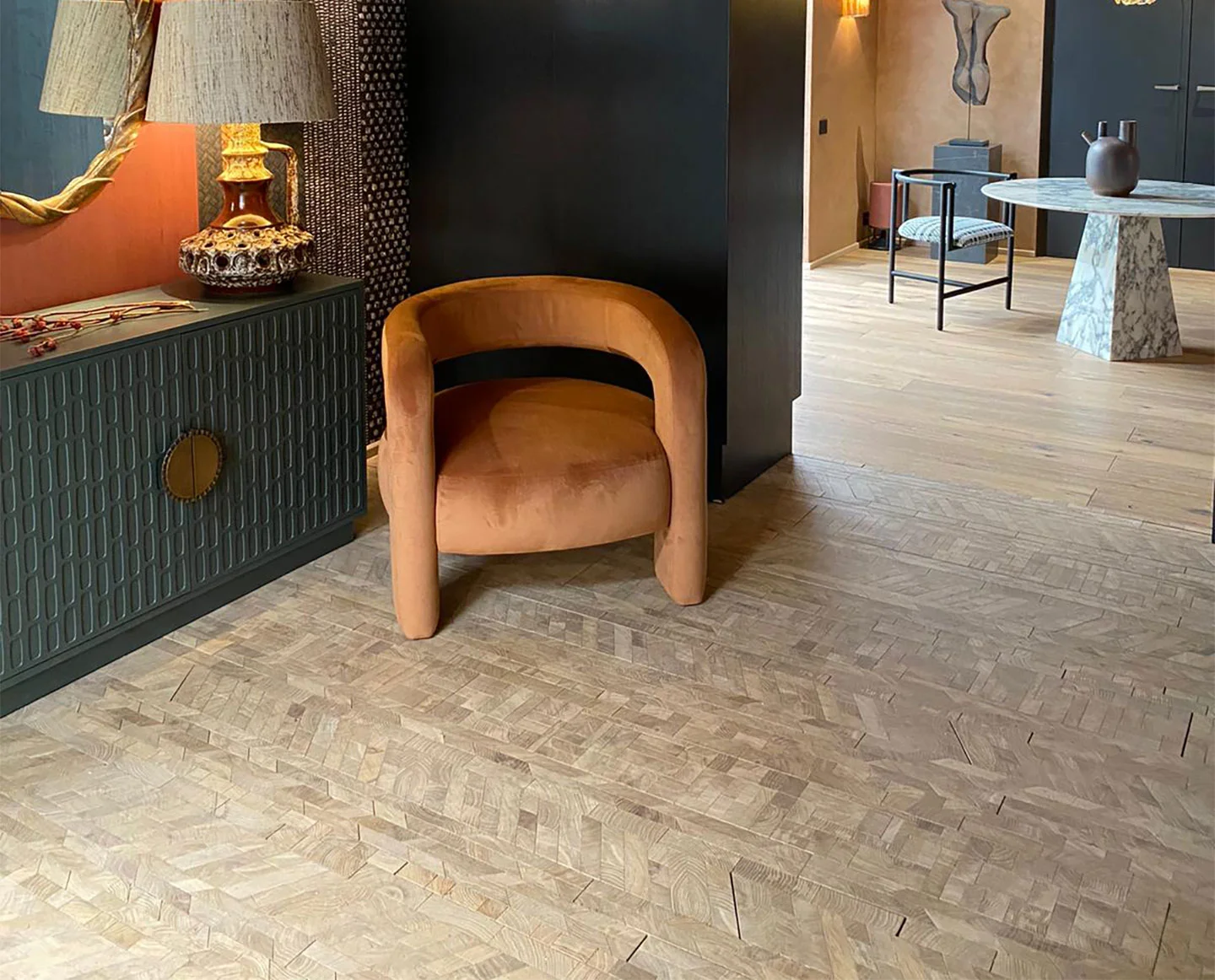
Texture plays its part too. An endgrain floor such as Forêt, composed from endgrain oak planks and patterns, shows the growth rings of the oak, and low light catches them unevenly, so the floor looks warmer and deeper than a smooth plank in the same tone.
Which wall colors go with warm wood floors?
- Cream and warm white. The safe choice. A very cool, blue-white can make a honey floor look yellow by contrast.
- Terracotta, clay and sand. They sit in the same warm family and give a soft, enveloping room.
- Sage, olive and moss. Muted greens balance orange undertones without fighting them.
- Deep green or blue. For contrast: they make a warm floor glow, especially a mid or dark brown.
Materials follow the same logic. Linen, wool, bouclé, leather, limestone and brushed brass all sit comfortably on warm wood; high-gloss surfaces and chrome pull the room colder.
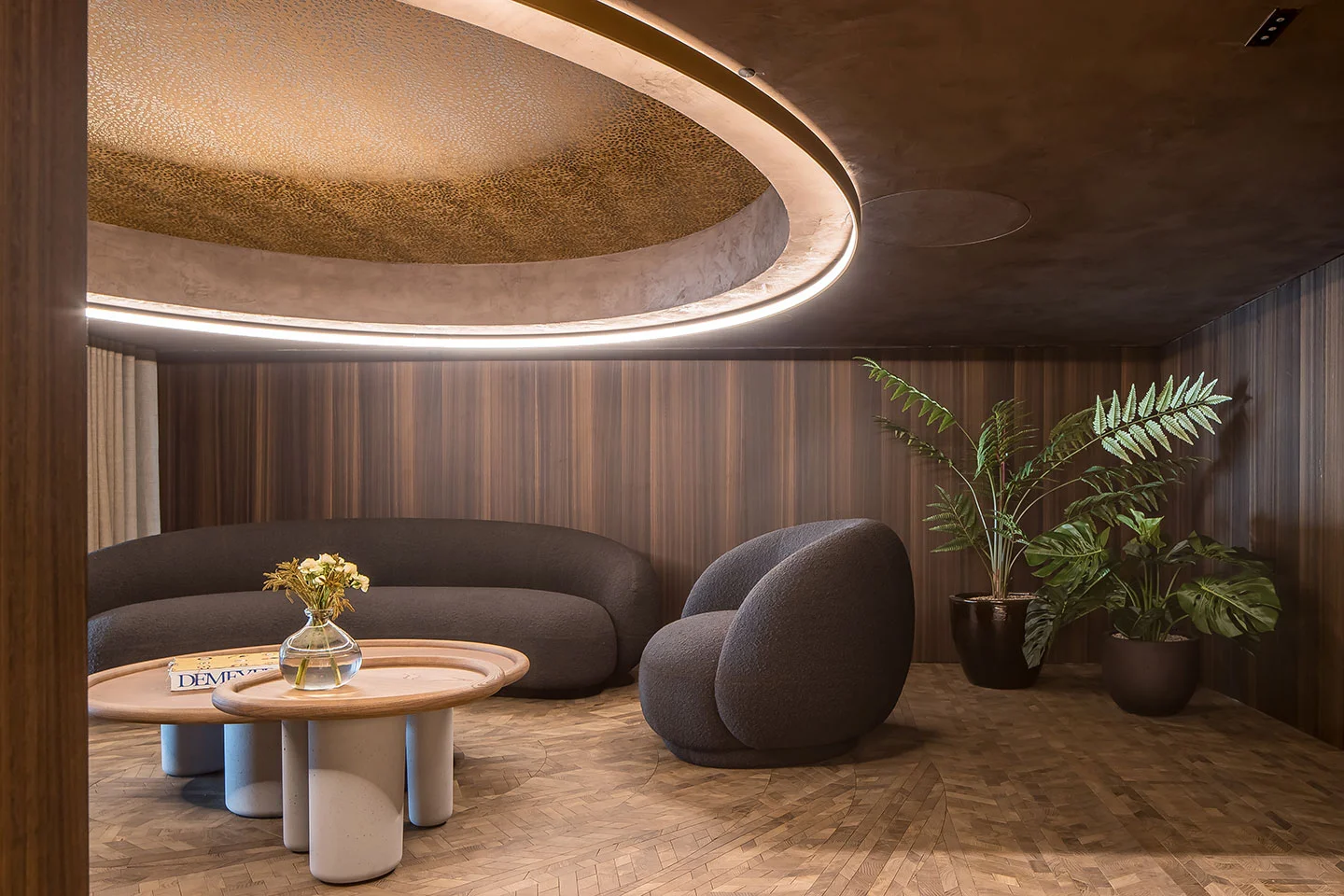
The Hub in Antwerp shows the darker end of the range: Forêt in Smoke, smoked through the full depth of the oak, with wood-paneled walls and a ceiling in the same brown family, softened by gray upholstery and green plants.
How do you mix wood tones in one room?
Start with the floor, because it is the largest wood surface, then match the undertone of everything else to it: warm with warm. Within that, make furniture clearly lighter or darker than the floor rather than almost the same, which tends to look like a near miss. Repeat each wood at least twice in the room so it looks chosen, and use a rug or textile to separate two woods that sit side by side.
Frequently asked questions
What are warm wood floor colors?
Wood tones with a yellow, orange or red undertone: pale honey and amber oak, golden and mid browns, and deep smoked browns. Gray, white and bleached finishes are the cool side of the range.
What wall colors go with warm wood floors?
Cream and warm white are the safe choice. Terracotta, clay and sand stay in the same warm family, muted greens such as sage and olive balance the orange undertone, and deep green or blue give contrast. Very cool, blue-white walls can make a honey floor look yellow.
Is smoked oak a warm or a cool color?
Usually warm. Smoked oak is a deep brown, and because the color comes from the tannins in the wood it varies from board to board, some leaning toward gray brown and some toward chocolate. Look at a sample in the room's own light before deciding.
Do dark wood floors make a room look smaller?
They can in a small or dim room, because they absorb light. In a large, bright room a dark warm floor anchors the space and makes walls and furniture stand out. For small rooms, a light or mid warm tone is the safer choice.
Warm oak floors by OscarOno Paris
Droit is our straight oak plank: flatgrain oak in select grade, 12 mm with a 4 mm oak top layer, in 150 mm or 190 mm widths and the twelve lacquered Essentiel colors, from pale Naturel and honey Miel Doux to deeper browns. It is rated usage class 33 for heavy commercial traffic.
Forêt is endgrain oak in three finishes and no stain: Natural, Smoke, smoked through the full depth of the oak, and Black, charred in the shou sugi ban tradition. It is rated usage class 34 for very heavy commercial traffic. Both carry a Cfl-s1 fire rating and are FSC and PEFC certified.
Warm tones shift more with light than any others, so judge them at home. Order samples, and find spec sheets, CAD and 3D files in the library.
More from the Atelier
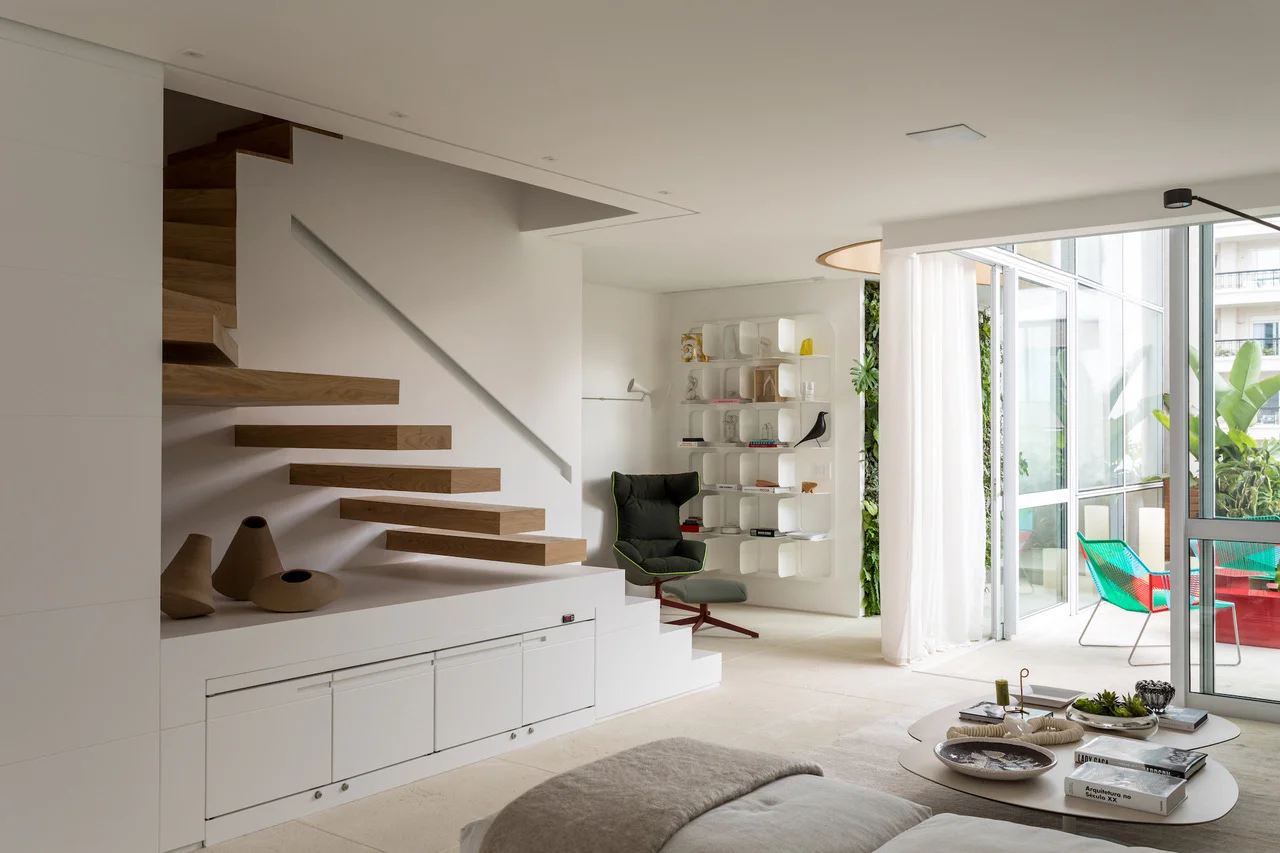
Wood Floors in the Bedroom: How to Choose a Calm, Quiet Floor
Wood is warm underfoot, easy to keep dust-free and lasts for decades in a low-traffic room. How to choose the color, finish, layout and acoustics of a bedroom floor.
Light Oak Flooring for Bright, Sunlit and Coastal Rooms
Pale oak suits sunlit and seaside rooms, if you get the finish right. How light oak changes in the sun, and what sand, humidity and glare mean for it.
Wide Plank Oak Flooring for a Minimalist Interior
Fewer joints, a clean grade, a low sheen and one direction through the house: how to choose wide plank oak for a minimalist interior, and when an end grain grid does the job better.