
Engineered vs Solid Wood Flooring: Which Should You Choose?
Both look the same once laid. The difference is underneath, and it decides where each floor works.
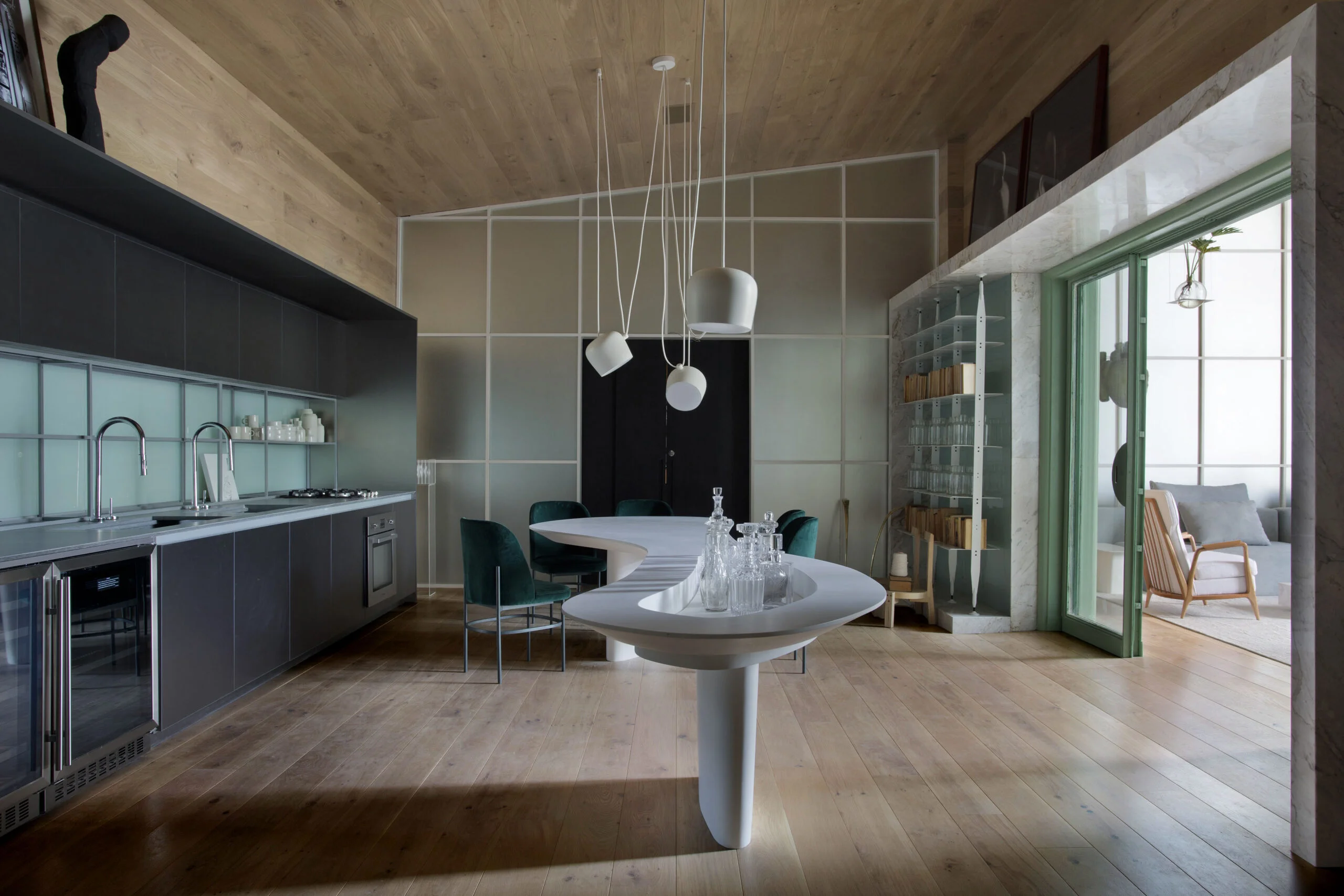
Solid wood flooring is one piece of timber through its full thickness. Engineered wood flooring is a layer of real hardwood bonded to a core whose layers run crosswise, usually plywood. Once laid they look the same; engineered is far more stable and suits underfloor heating, concrete slabs and wide boards, while thick solid boards can be sanded back more times over their life.
For most new floors, especially over heating or a concrete screed, engineered is the sensible choice. Solid still makes sense when you are matching or restoring an old floor, or laying over timber joists.
What is solid wood flooring?
A solid board is milled from a single piece of hardwood, with a tongue and groove cut into its edges. It is usually nailed or glued to a timber subfloor. Most of the old parquet in Paris apartments is solid oak.
Solid wood takes up and gives off moisture with the seasons, and it moves mostly across its width. In damp months boards swell and can cup; in dry, heated winters they shrink and gaps open between them. The wider the board, the more it moves, which is why solid floors were traditionally laid in narrow boards.
What is engineered wood flooring?
An engineered board has a top layer of hardwood, called the wear layer or lamella, glued to a core of thinner layers laid with their grain at right angles to each other, often birch plywood. Each layer restrains the movement of the next, so the board stays much flatter and more stable as humidity changes.
It is real wood all the way through, which is the difference from laminate: laminate is a printed image of wood on a fiberboard core. What you walk on in an engineered floor is the same oak you would walk on in a solid one.
Engineered vs solid wood flooring at a glance
| Solid wood | Engineered wood | |
|---|---|---|
| Construction | One piece of hardwood | Hardwood top layer on a cross-layered core |
| Stability | Moves more with humidity: cupping and gaps | Much more stable |
| Underfloor heating | Possible but riskier; many makers advise against it | The usual choice |
| Over concrete | Usually needs a timber subfloor or a careful glue-down | Glued straight to a dry, flat screed |
| Wide boards | The wider, the more it moves | The standard way to make wide planks |
| Sanding | Down to the tongue: many times on a thick board | Limited by the thickness of the top layer |
| Patterns | Herringbone, chevron and panels | The same patterns |
Which is better for underfloor heating?
Engineered. Heat dries the air and the wood above it, and a solid board reacts by shrinking, so gaps open each heating season and close again in summer. The cross-layered core of an engineered board resists that movement, and a thinner board puts less wood between the heat and the room.
Whatever the floor, the heating should come up to temperature slowly and keep the surface within the limit set by the flooring maker. That limit, and whether the product is approved over heating at all, is on its technical sheet: check it before you choose rather than relying on a general rule.
Which lasts longer?
Both can last for decades; old solid parquet in Paris has lasted well over a century. The difference is how many times the floor can be sanded back to fresh wood. Each full sanding takes off a thin slice, so on a solid board the limit is the wood above the tongue, and on an engineered board it is the top layer. A thin veneer may take one light sanding or none; a thick top layer can take several.
In practice most floors are fully sanded rarely, and how long a floor lasts depends at least as much on care: grit kept off, water wiped up, finish maintained. So compare the thickness of the top layer, not just the words solid or engineered.
Can patterned floors be engineered?
Yes. Herringbone and chevron are made engineered as well as solid, in boards that come in a left and a right so the tongue and groove line up on each side of the zigzag. Rompu, our oak herringbone, is built in layers: flatgrain select oak, 12 mm thick with a 4 mm oak top layer, the same construction as Droit, our straight plank.
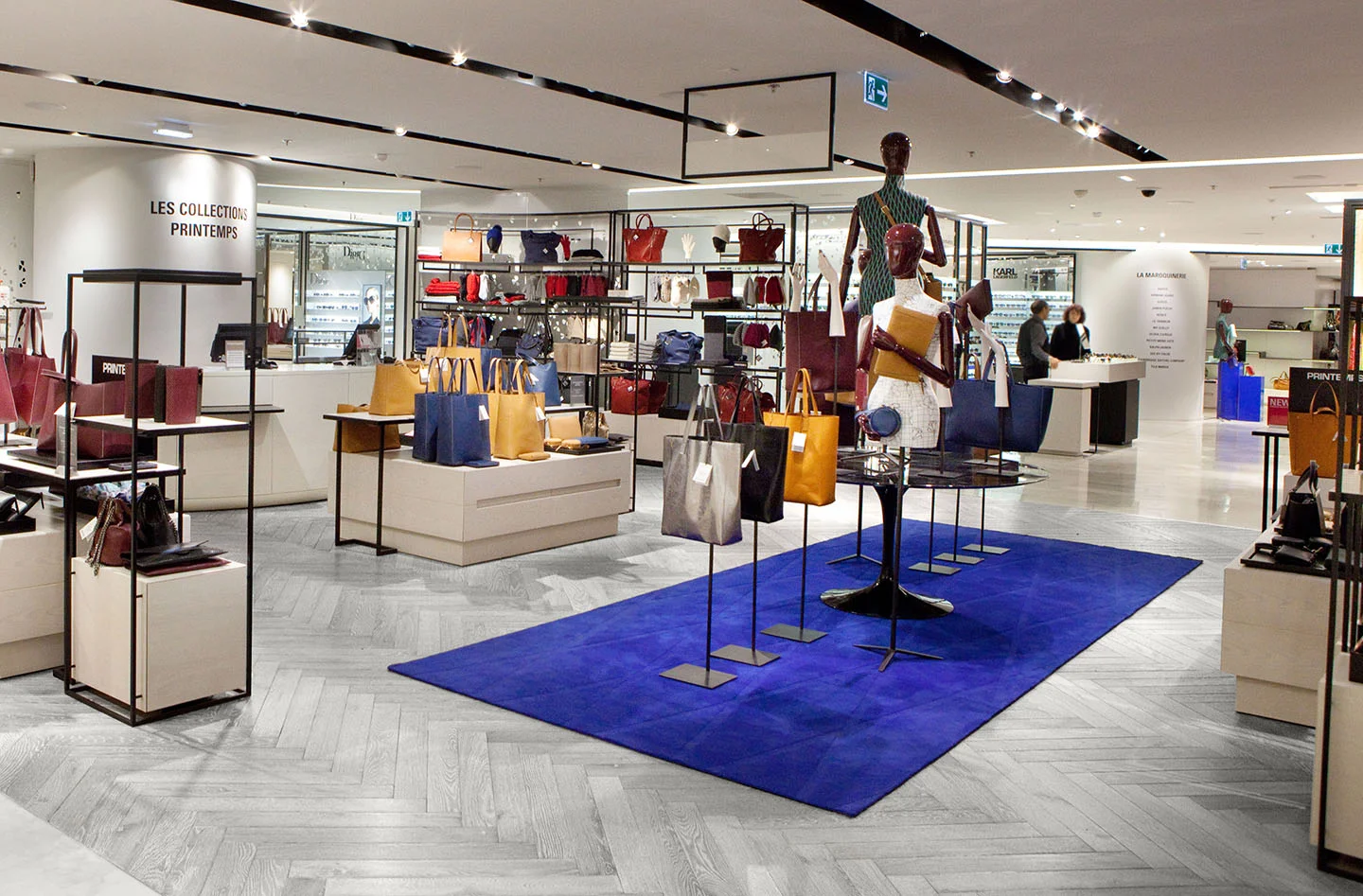
At Le Printemps in Paris, Rompu in Rocher Blanc runs across a busy shop floor, the kind of space where a stable, glued-down construction matters.
What about end grain floors?
End grain blocks, cut across the trunk, take up and give off moisture faster than planks, so modern end grain floors are almost always built on a stable backing. Opus, our endgrain oak paving pattern, is an 8 mm endgrain oak top layer on 12 mm birch plywood, with joints under 1 mm.
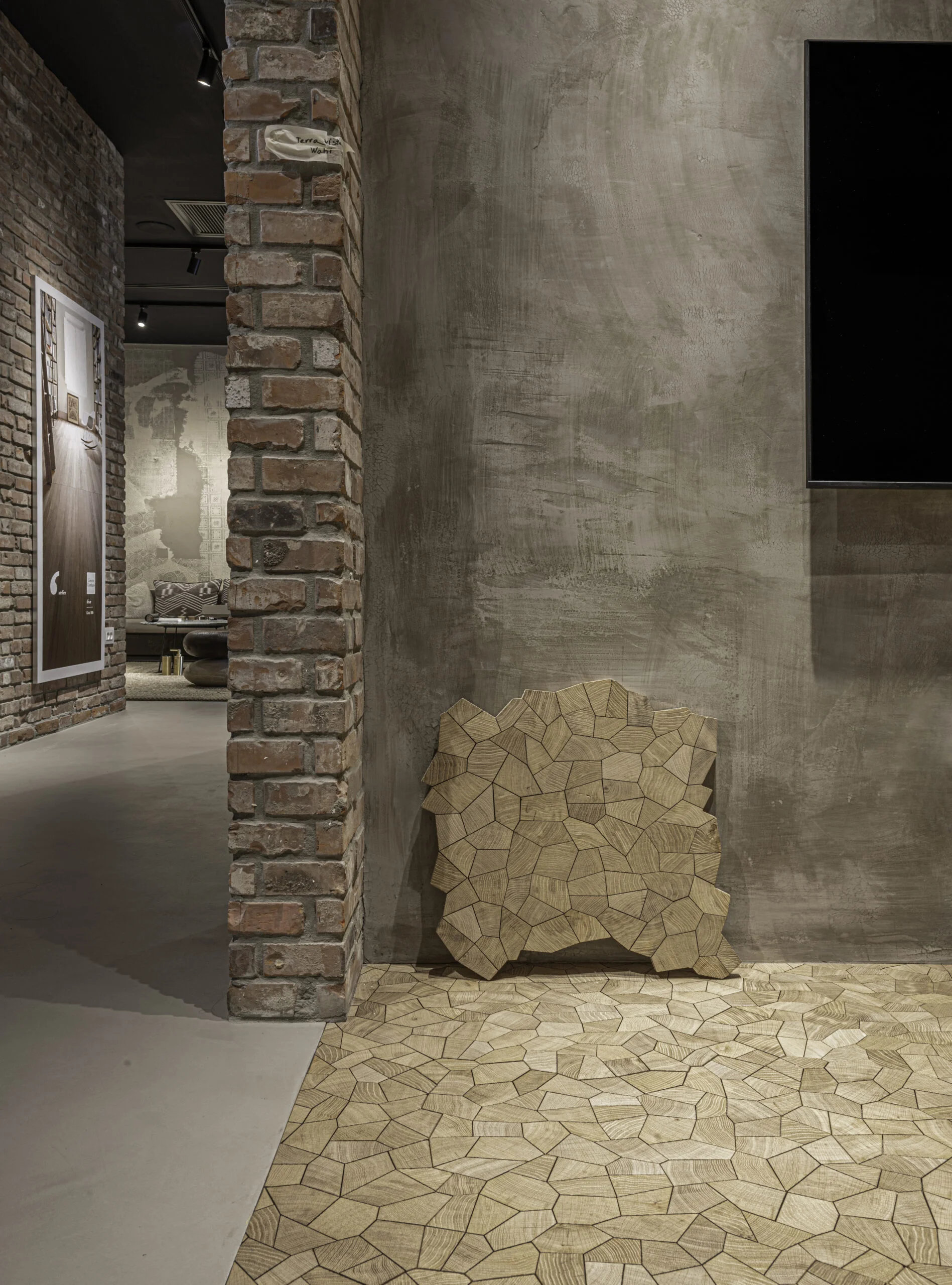
In the Parqueteam showroom in Israel, a panel of loose Opus pieces stands against the wall above the laid floor, showing the irregular shapes that lock together into one surface.
Is engineered flooring cheaper than solid?
Not necessarily. Budget engineered boards with a thin veneer cost less than solid wood, but a thick oak top layer on a birch plywood core can cost as much as solid or more. Installation changes the sum too: engineered glued straight to a screed can avoid the timber subfloor that solid often needs over concrete. Compare like with like: the species, grade and thickness of the wood you will actually walk on.
Frequently asked questions
Is engineered wood flooring real wood?
Yes. The top layer is solid hardwood and the core is made of wood layers, usually plywood. That is the difference from laminate, which is a printed image of wood on a fiberboard core.
Can you sand engineered wood flooring?
Yes, if the top layer is thick enough. Each full sanding removes a thin slice of wood, so the thickness of the top layer sets how many times it can be done. A thin veneer may take one light sanding or none; a thick top layer can take several.
Which is better over underfloor heating, solid or engineered?
Engineered. Its cross-layered core resists the shrinking that heat causes, so it stays flatter and gaps less. Check the product's technical sheet for its maximum surface temperature and whether it is approved over heating.
Why does solid wood flooring gap in winter?
Heating dries the indoor air, and wood gives up moisture and shrinks across its width. In a solid floor that opens small gaps between boards, which usually close again as humidity returns in spring and summer.
Is engineered flooring cheaper than solid?
Not always. Thin-veneer engineered boards cost less than solid, but a thick hardwood top layer on a birch plywood core can cost as much as solid or more. Installation over concrete can tip the balance toward engineered.
How OscarOno Paris floors are built
The floors discussed here are all built in layers. Droit and Rompu are flatgrain select oak, 12 mm with a 4 mm oak top layer, in 150 mm or 190 mm widths and twelve lacquered colors, rated usage class 33 for heavy commercial traffic. Opus is an 8 mm endgrain oak top layer on 12 mm birch plywood, in Natural, Smoke or Black, rated usage class 34 for very heavy commercial traffic. All three carry a Cfl-s1 fire rating and are FSC and PEFC certified.
Spec sheets, with installation and heating details, plus CAD and 3D files are in the library. To compare constructions and colors in your own light, order samples.
More from the Atelier
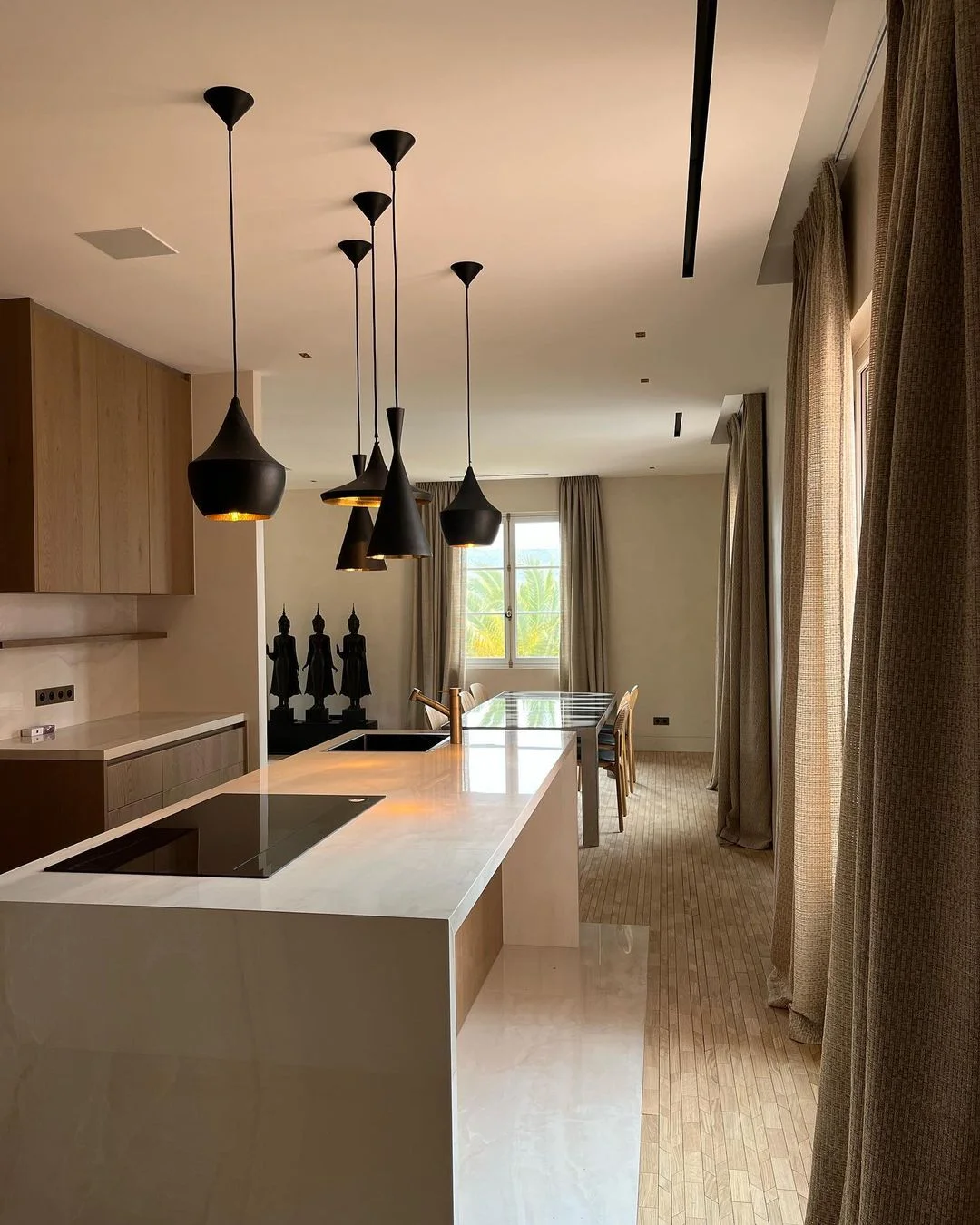
Reclaimed Teak Flooring: End-Grain Strength and Resilience
Explore how reclaimed teak flooring and end-grain timber provide extraordinary durability, natural silica protection, and stability for demanding spaces.
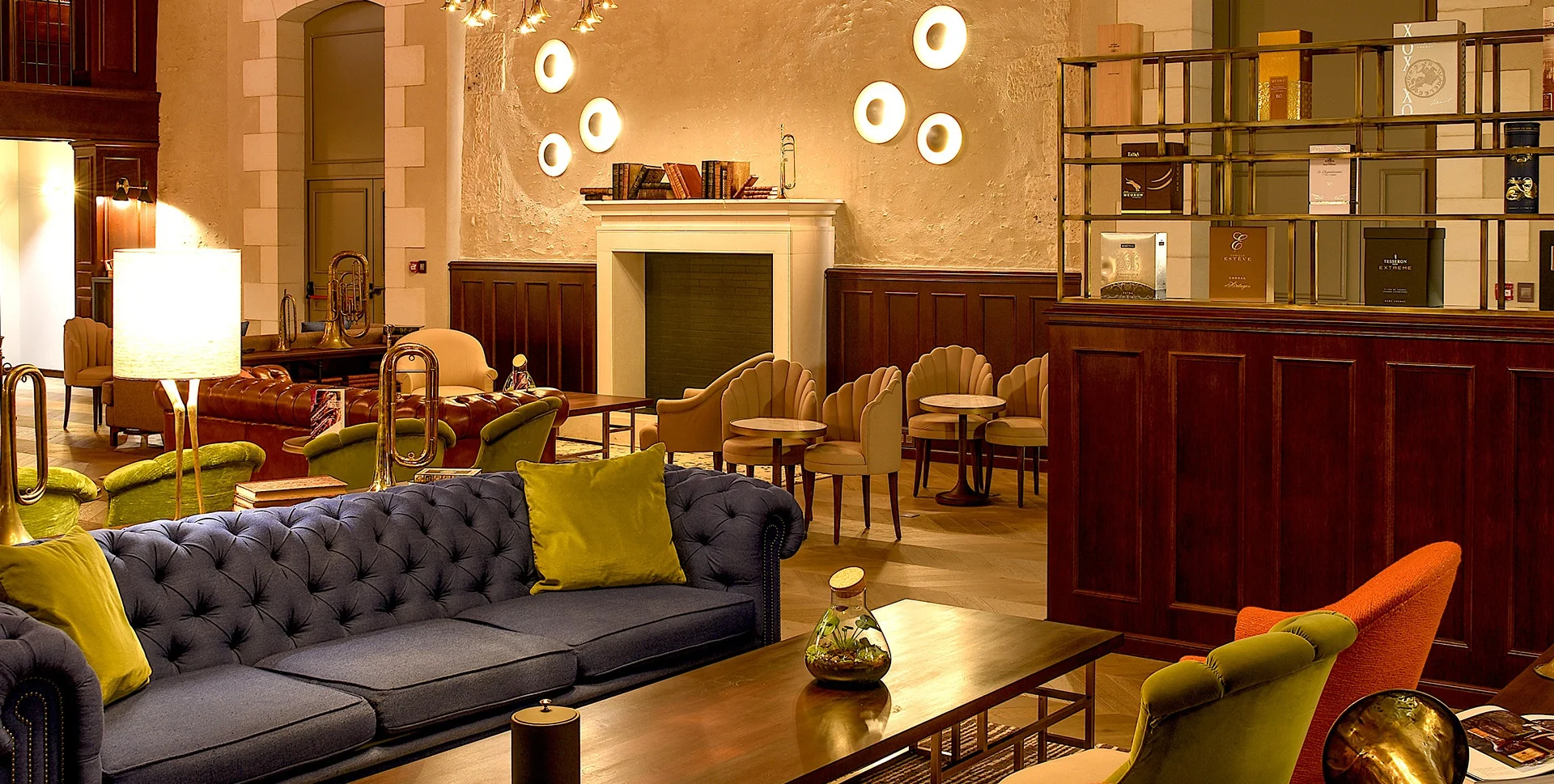
How to Prevent Fading on Hardwood Floors: Design Guide
An architectural approach to managing sun exposure on wood floors, from spectrally selective glazing to finish choices and uniform patina development.
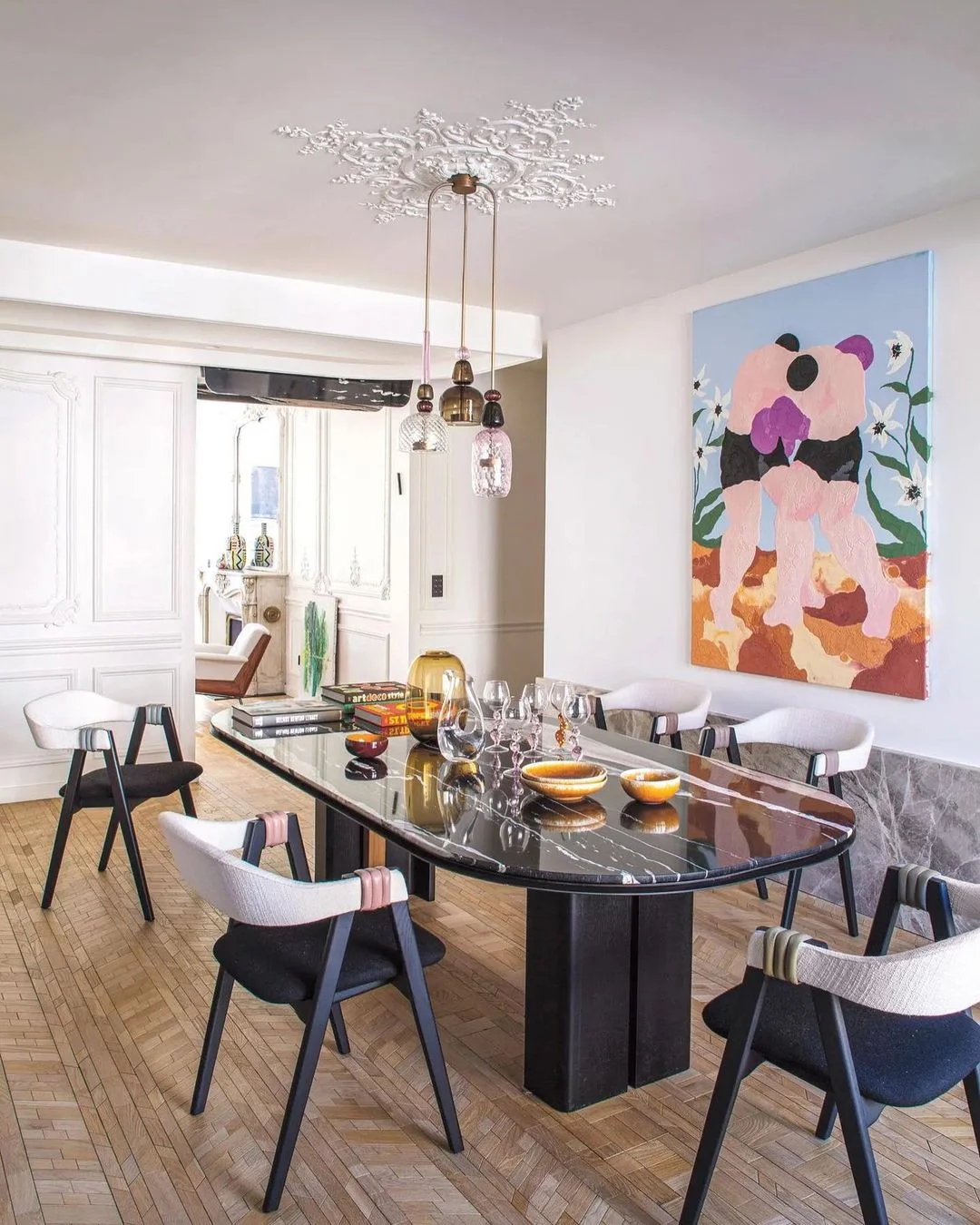
The Craft of Marquetry Parquet Flooring and Panels
Marquetry parquet flooring bridges historical French palace geometry with contemporary minimalism, bringing architectural structure to luxury interiors.