
Figured Wood: Burl, Fiddleback and Bird's-Eye Explained
Wood whose grain refuses to run straight, and why it mostly ends up as veneer rather than floors.
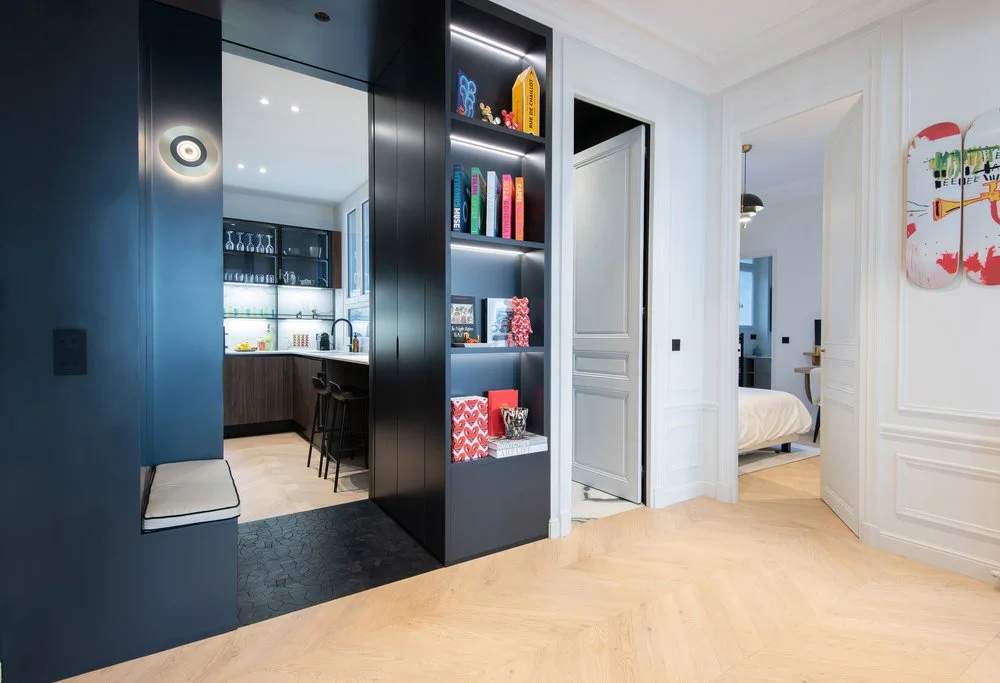
Figured wood is timber whose grain does not run straight, so its surface shows a pattern beyond ordinary grain: the swirls of burl, the rippled stripes of fiddleback, the small "eyes" of bird's-eye maple. The figure comes from irregular growth, and because the fibers change direction, they reflect light unevenly and the pattern seems to move as you walk past. That shimmer is called chatoyancy, after the cat's-eye gemstone.
Most figured wood is sliced into veneer for furniture, paneling and instruments. Floors show figure differently, as the end of this article explains.
What causes figure in wood?
Figure appears wherever the fibers of a tree grow out of line: around clusters of buds, where the trunk has been stressed, or in fibers that grow in waves. Genetics and growing conditions both play a part, but nobody can make a tree produce it on demand, which is why highly figured logs are rare and expensive. Often the figure only shows once the log is sawn.
What is burl wood?
A burl, or burr, is a rounded outgrowth on a trunk or root, packed with dormant buds. Inside, the grain twists around each bud, giving a dense, swirling pattern dotted with small dark knots. Walnut, elm, maple, redwood and oak all produce burls. Because the wood is irregular and often full of small voids, it is almost always sliced into veneer and laid on a stable panel, for furniture, paneling and the dashboards of classic cars.
What is fiddleback figure?
Fiddleback is a tight ripple running across the grain, caused by fibers that grow in waves. Seen at an angle it looks like a row of light and dark stripes that swap places as you move. It appears mostly in maple and sycamore, and it takes its name from the backs of violins, where makers have prized it for centuries. Curly and flame maple are close relatives of the same figure.
What is bird's-eye maple?
Bird's-eye maple is covered in small, round marks, like tiny eyes, scattered across the surface. It comes mostly from sugar maple, and its cause is still not fully understood: theories range from buds that never developed to the conditions the tree grew in. It is rare, and it was a favorite of Art Deco furniture makers.
Figured wood types compared
| Figure | What you see | Typical woods | Usual use |
|---|---|---|---|
| Burl | Dense swirls and small dark knots | Walnut, elm, maple, redwood, oak | Veneer for furniture and paneling |
| Fiddleback | Tight stripes across the grain | Maple, sycamore | Instruments, veneer |
| Bird's-eye | Small round "eyes" | Sugar maple | Veneer, small furniture |
| Quilted | Soft, cloud-like bulges | Maple | Veneer, instruments |
| Ray fleck | Silvery flecks and ribbons | Quartersawn oak | Furniture and floors |
Why is figured wood hard to work?
Because the fibers change direction every few millimeters, a plane or saw is always cutting against the grain somewhere, and it tears pieces out of the surface. Craftsmen work figured wood with very sharp, low-angle tools, scrapers and patient sanding. In solid form it is also weaker and less stable than straight-grained wood, which is the other reason it is usually used as veneer.
Veneer has a second advantage: consecutive slices from the same log can be opened like the pages of a book and laid side by side, so the figure mirrors itself. This is called book-matching.
Can a wood floor be figured?
Rarely in the burl or fiddleback sense: veneer is too thin to walk on, and solid figured boards would move, crack and cost a great deal across a whole room. Floors show their own kinds of figure instead. Quartersawn oak shows ray fleck, the silvery ribbons of the wood's rays. End grain shows the most: cut across the trunk, each piece reveals its growth rings and rays, and no two pieces match.
Opus, our endgrain oak paving pattern, is built on that. The oak is cut on its endgrain face into irregular pieces that lock together, so the whole floor reads as a field of rings.
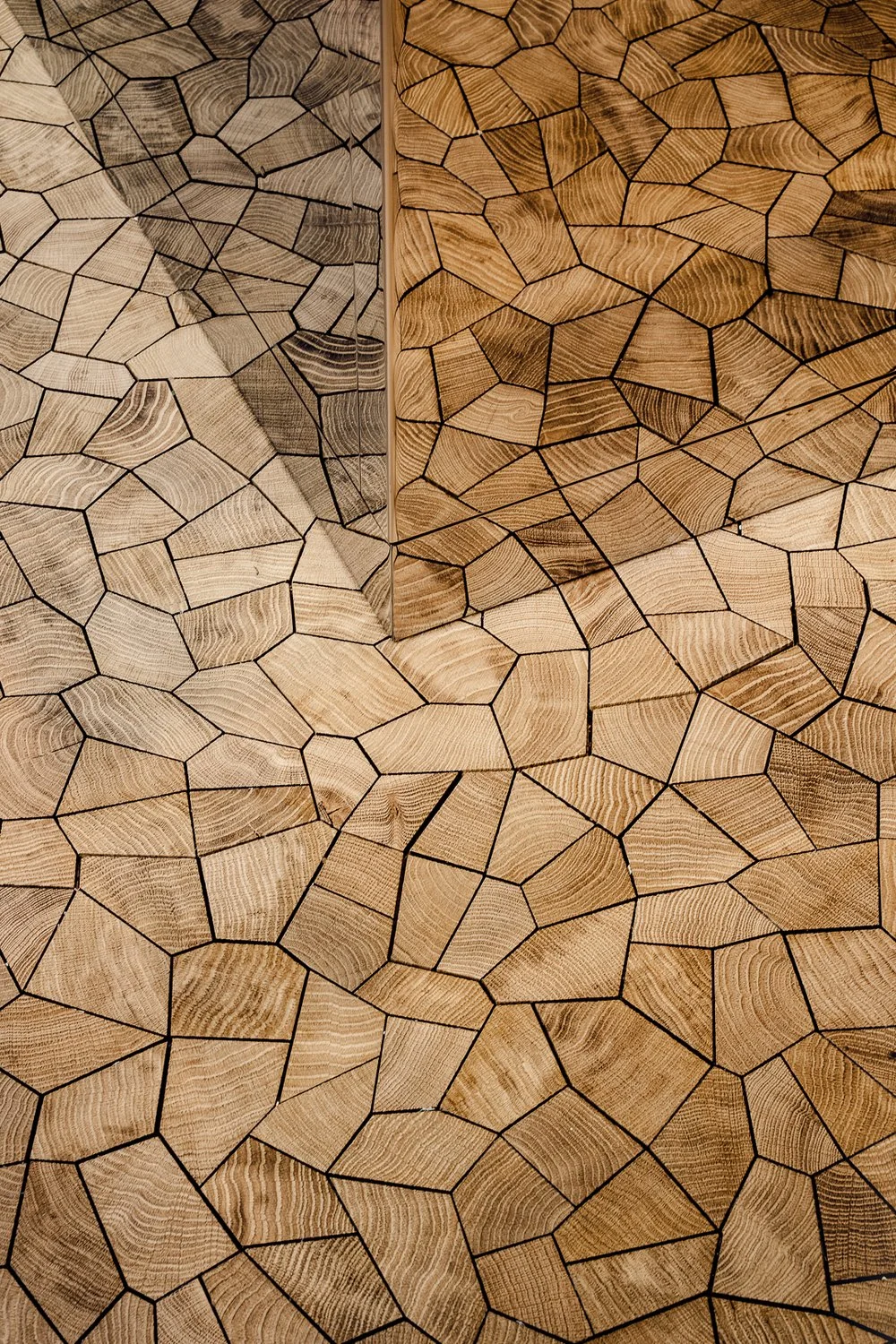
At the Butterfly Pâtisserie at the Hôtel de Crillon in Paris, Opus in Natural runs across the floor and up the wall, and every piece shows its own pattern of rings.
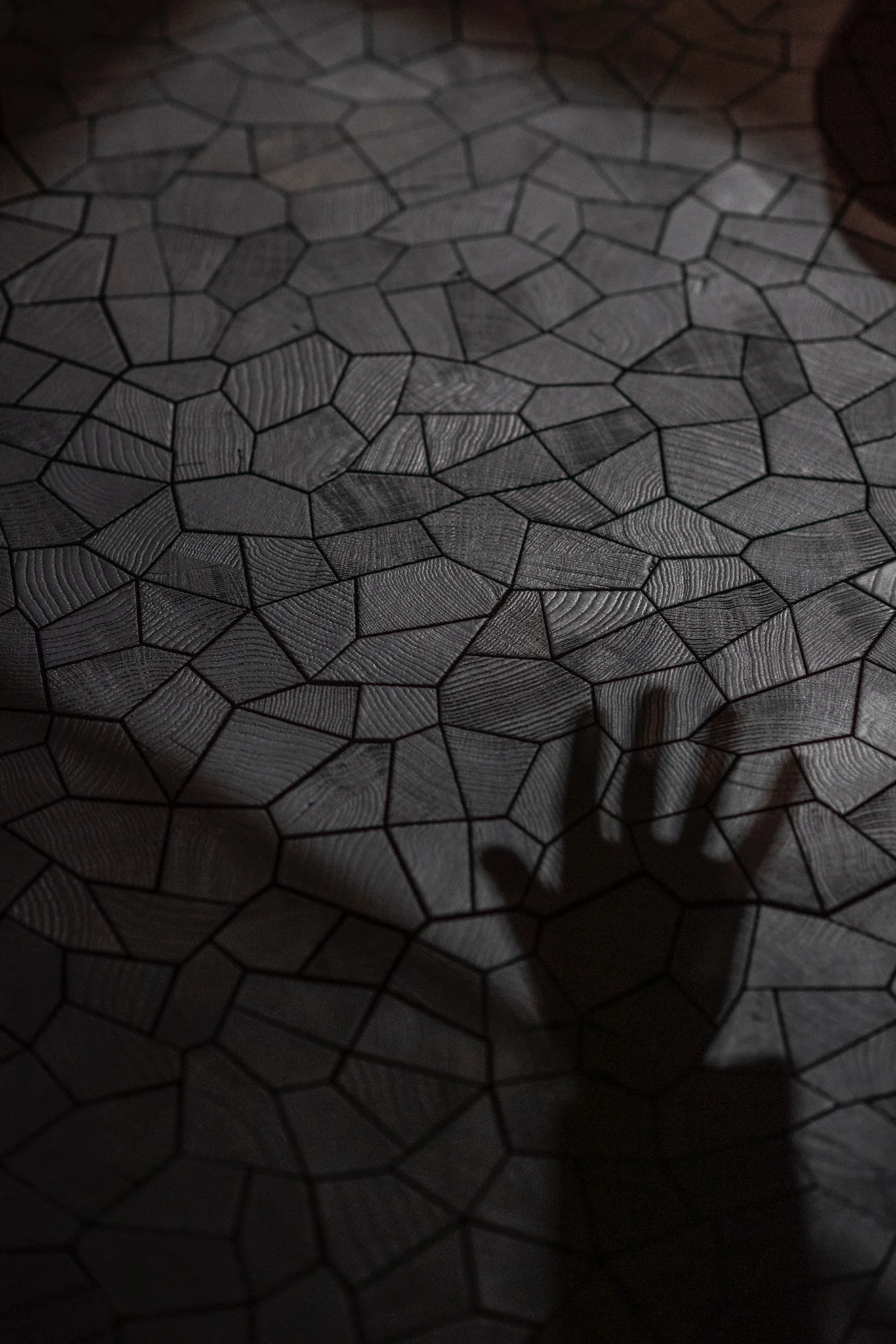
Finish changes how the figure reads. In Black, charred in the shou sugi ban tradition, the rings show as texture rather than color, as on the Opus floor shown at Maison et Objet 2023.
Rare wood without the figure: Réserve
Réserve is rare in a different way. It is the Opus pattern cut in Zambezi teak, Baikiaea plurijuga, a southern African hardwood that, despite its name, is not related to true teak. The trees are never planted and never felled: the wood is recovered only after they fall, and each tree is geolocalized, documented and certified. It is far harder than oak, around 2,990 lbf on the Janka scale against roughly 1,300 for oak. Each floor is made from a single season of fallen trees, finished in Smoke, and then no more.
Frequently asked questions
What is figured wood?
Timber whose fibers grow out of line, so the surface shows a pattern beyond ordinary grain, such as burl, fiddleback, bird's-eye or quilted figure. The changing fiber direction reflects light unevenly, so the pattern seems to move as you walk past.
Can figured wood be grown on purpose?
No. Genetics and growing conditions both play a part, but no one can make a tree produce figure on demand, and it often only shows once the log is sawn. That is why highly figured wood is rare and expensive.
Is figured wood weaker than straight-grained wood?
Usually, yes. Its fibers run in many directions, so in solid form it is weaker, less stable and prone to tear-out when machined. That is why it is mostly sliced into veneer and laid on a stable panel.
Can you get a figured wood floor?
Rarely in the burl or fiddleback sense, because veneer is too thin to walk on and solid figured boards are unstable and costly. Floors show figure in other ways: ray fleck in quartersawn oak, and the growth rings of end grain, where no two pieces match.
Figure underfoot at OscarOno Paris
Opus is endgrain oak, an 8 mm oak top layer on 12 mm birch plywood, in Natural, Smoke, smoked through the full depth of the oak, or Black, charred in the shou sugi ban tradition, with no stain. It is rated usage class 34 for very heavy commercial traffic, carries a Cfl-s1 fire rating and is FSC and PEFC certified. Réserve is the same pattern in Zambezi teak, in Smoke.
Every endgrain piece is different, so judge the figure in person: order samples. Spec sheets, CAD and 3D files are in the library.
More from the Atelier
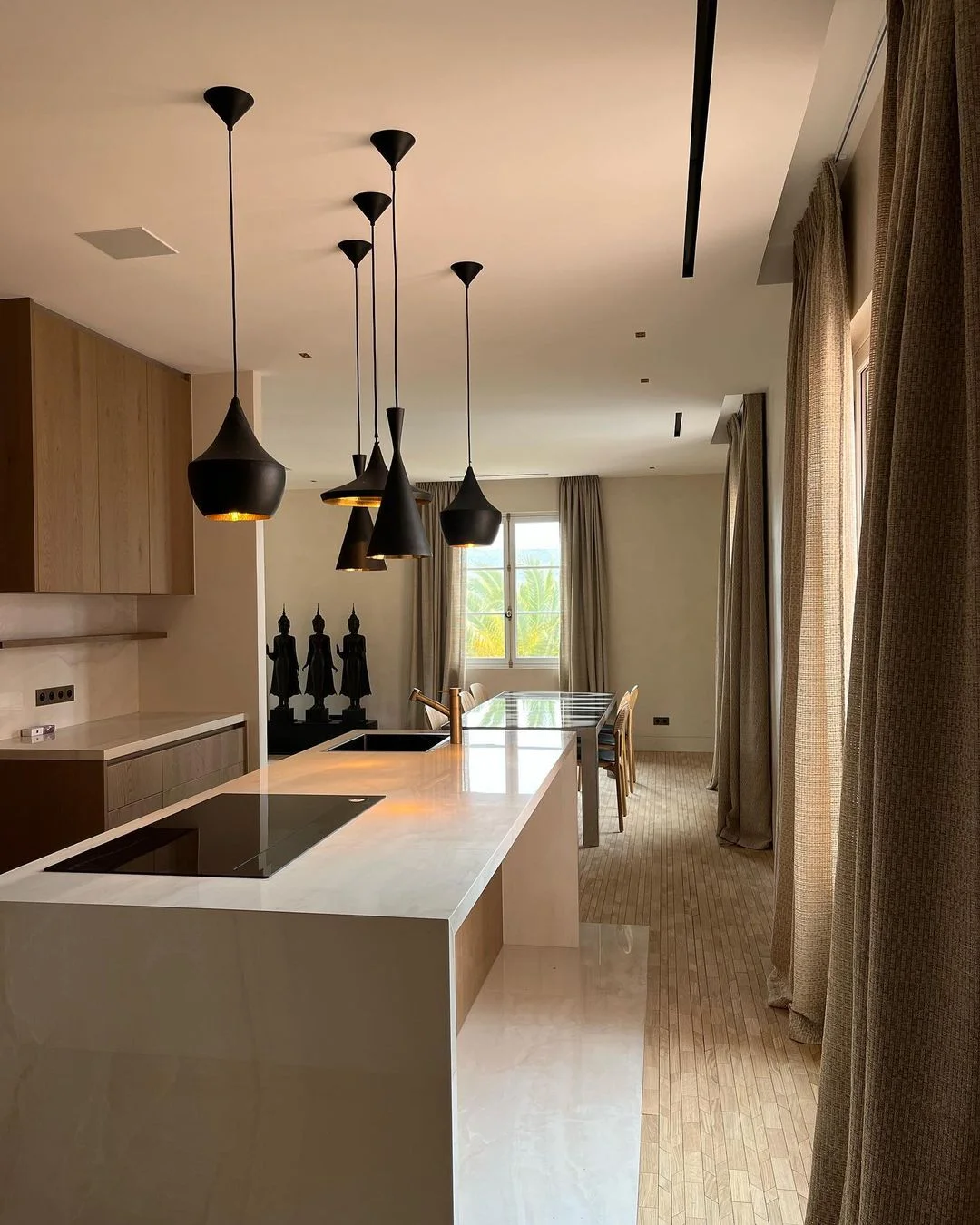
Reclaimed Teak Flooring: End-Grain Strength and Resilience
Explore how reclaimed teak flooring and end-grain timber provide extraordinary durability, natural silica protection, and stability for demanding spaces.
How to Prevent Fading on Hardwood Floors: Design Guide
An architectural approach to managing sun exposure on wood floors, from spectrally selective glazing to finish choices and uniform patina development.
The Craft of Marquetry Parquet Flooring and Panels
Marquetry parquet flooring bridges historical French palace geometry with contemporary minimalism, bringing architectural structure to luxury interiors.