
The Craft of Marquetry Parquet Flooring and Panels
How historical wood panel geometry shapes contemporary architectural interiors
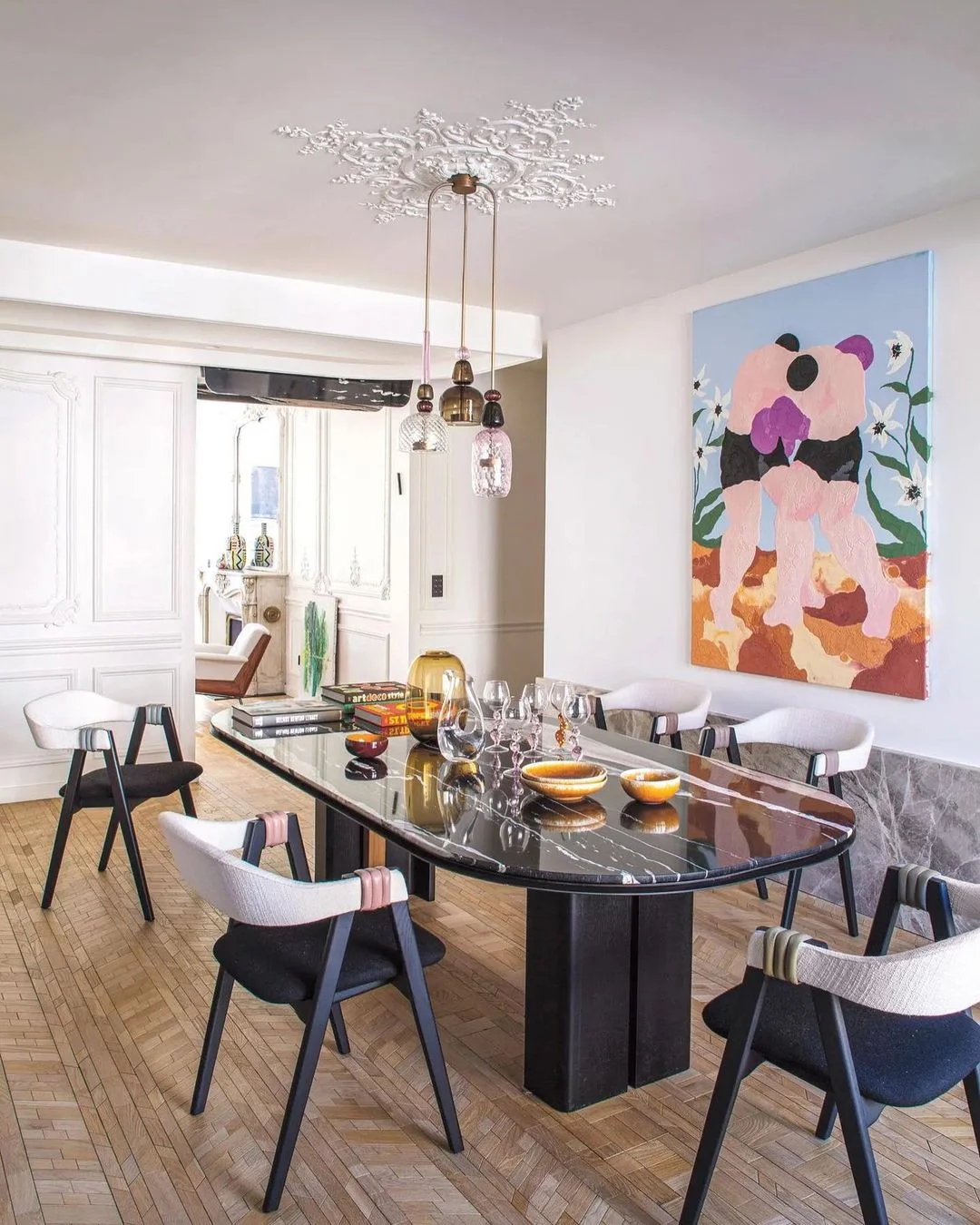
Marquetry parquet flooring brings structured architectural geometry and historical depth to modern interiors without resorting to period pastiche. By composing European oak into framed panels such as the classic parquet de Versailles, this method transforms the floor into an orderly grid of timber. In contemporary spaces, these traditional panels provide tactile balance and acoustic calm against minimalist surfaces of stone, plaster, and glass.
What is marquetry parquet flooring and how does it differ from parquetry?
Marquetry parquet flooring refers to the assembly of timber into decorative panel compositions, whereas standard parquetry focuses on recurring modular patterns such as herringbone or straight boards. While traditional cabinet marquetry historically relied on thin veneers to create pictorial motifs, architectural floor marquetry uses structural oak elements fitted into repeating geometric panels.
Parquetry as a broader category encompasses any floor made from small wooden blocks arranged in geometric figures. Within that tradition, panel designs represent the most intricate expression of the craft. Rather than running boards from wall to wall, artisans assemble stiles, rails, and diagonal fillets into self-contained squares. When laid edge to edge across an expansive room, these squares establish a balanced grid that frames the interior volume.
In modern architectural practice, the distinction between fine marquetry and structural parquetry has converged on panel craftsmanship. Designers value the discipline of panel construction because it treats timber as an architectural framework rather than a simple floor covering. You can read more about how these traditions evolved in our editorial on what Versailles parquet is.
What is the history of the parquet de Versailles pattern?
The parquet de Versailles pattern originated in 1684 at the Palace of Versailles as a functional, elevated replacement for damp-prone marble floors. King Louis XIV commissioned the square panels to protect the palace joists while establishing a grand rhythm of diagonally set frames and interlacing oak stiles.
Prior to this innovation, the royal apartments featured marble flags that required constant washing, which seeped water into the structural timbers below. The introduction of oak panels solved the moisture problem and introduced warmth underfoot. The design itself, often called parquet de feuilles, centered on a diagonal square framed by interlocking fillets, assembled entirely without metal nails using traditional mortise and tenon joinery.
Throughout the eighteenth century, variations on this motif spread across French châteaux and Parisian mansions, including patterns named after Chantilly and Arenberg. Each design established its own internal geometry, but the Versailles panel remained the definitive benchmark. Its enduring appeal lies in its mathematical proportion: the diagonals break the rigid rectangular box of a room while the outer frame preserves structural order.
How does panel geometry compare to standard parquet layouts?
Choosing between panel formats and directional plank arrangements depends on the proportions of the room and the desired visual cadence. While linear boards draw the eye toward an exterior view, panel flooring distributes visual interest evenly across the entire surface.
| Flooring Pattern | Structural Format | Visual Rhythm | Architectural Function |
|---|---|---|---|
| Versailles Panel | 800 x 800 mm framed square | Centering, non-directional grid | Grounds expansive living spaces and grand salons |
| Rompu (Herringbone) | Staggered rectangular blocks | Stepped directional zigzag | Guides movement down hallways and open corridors |
| Hongrie (Chevron) | Angled point-to-point boards | Sharp, continuous chevron lines | Elongates rooms toward natural light sources |
| Droit (Straight Plank) | Parallel running planks | Quiet, uninterrupted grain run | Emphasizes floor plane simplicity and horizontal span |
Why does the parquet de Versailles pattern suit contemporary minimalism?
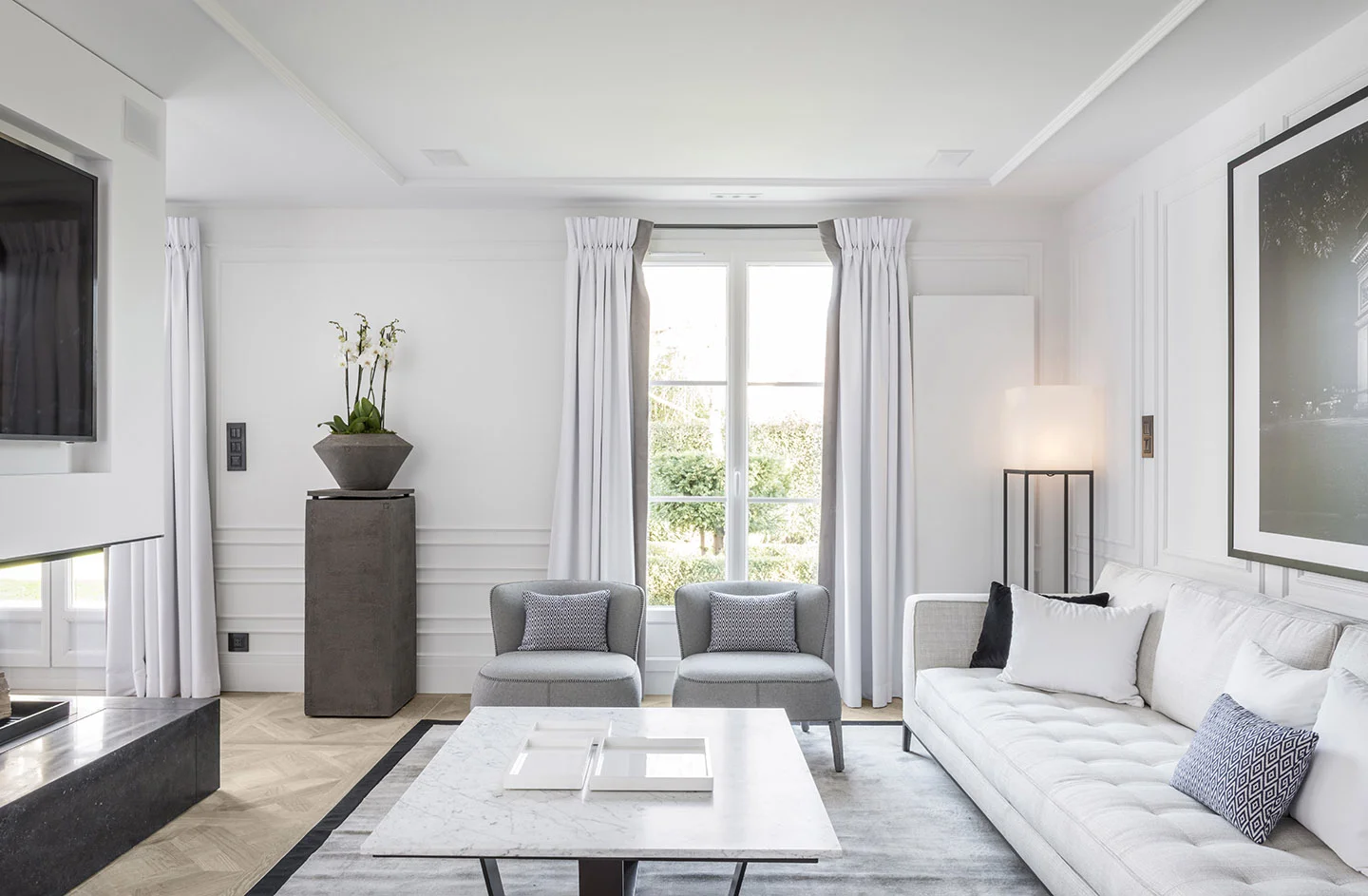
Contemporary minimalist interiors rely heavily on unadorned surfaces, making the natural texture and geometry of panel flooring an essential counterweight. When walls are rendered in smooth lime wash and openings are framed without heavy architraves, a patterned oak floor provides tactile warmth without visual clutter.
Rather than feeling nostalgic, the diagonal stiles within each panel introduce soft shadow lines that shift as natural daylight moves across the room. The square boundary of each module creates a deliberate rhythm that anchors low-slung, contemporary furniture. Pieces from modern designers sit comfortably on these panels because the floor acts as a disciplined geometric foundation rather than an ornate decoration.
Furthermore, contemporary finishing techniques have transformed how panel floors read in modern lighting. Matte lacquered surfaces in desaturated tones subdue high-contrast grain patterns, allowing the architectural joinery to speak quietly. In projects featuring raw concrete, brushed steel, or honed limestone, oak panels introduce natural texture that prevents the architecture from feeling cold.
How does OscarOno Paris build architectural oak panels?
OscarOno Paris crafts panel flooring through the Dalle collection, reinterpreting the historic craft of composing oak into panels for contemporary spaces. Built as calibrated 800 x 800 mm panels, Dalle pairs historic French floor geometry with modern dimensional stability.
Every Dalle panel features a flatgrain oak select grade construction with a 12 mm oak base and a 4 mm top layer. Engineered for demanding environments, the collection carries a Usage class 33 rating for heavy commercial traffic, a Cfl-s1 fire rating, and FSC and PEFC certification. OscarOno Paris offers Dalle in twelve lacquered colors, providing tones ranging from pale sand to deep smoked nuances that integrate into modern interior palettes.
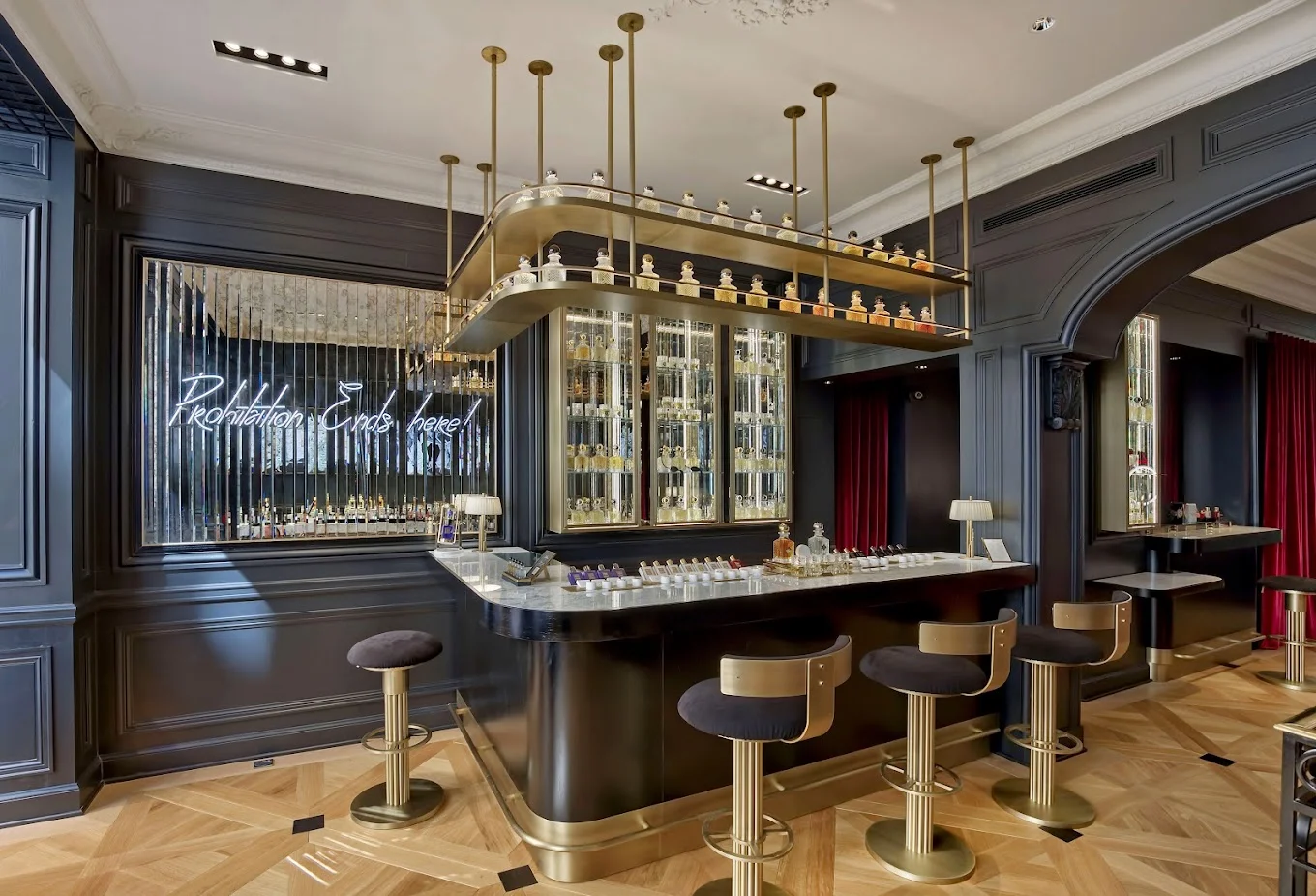
This panel format can be seen in refined interior schemes such as the Private Residence by After Bach in Paris, where natural panels establish a quiet, sculptural dialogue with contemporary art. In high-traffic commercial spaces like By Kilian, the panels provide an elegant, resilient surface under intense retail footfall. For projects seeking a looser interpretation of woven panel geometry, the Tresse collection takes the historic Versailles panel and breaks it open into continuous woven oak strips.
Explore technical documentation, CAD files, and 3D textures in the Library, or request physical finish samples directly through Order samples.
Frequently asked questions
What is the difference between parquet and marquetry flooring?
Parquet refers to the broad practice of laying wooden pieces into repeating geometric figures like herringbone or chevron. Marquetry in architectural flooring refers specifically to self-contained panels or framed compositions assembled from multiple timber components into an intricate grid.
What dimensions are standard for modern Versailles panels?
The Dalle collection by OscarOno Paris is built in square panels measuring 800 x 800 mm. This scale preserves the historical proportions of the classic French palace panel while aligning cleanly with contemporary room dimensions.
Can Versailles panel flooring be used in commercial projects?
Yes, the Dalle collection is certified for heavy commercial traffic under Usage class 33. With a durable lacquered finish and a Cfl-s1 fire rating, it withstands demanding hospitality and retail environments.
What wood species is used for OscarOno Paris panels?
OscarOno Paris crafts the Dalle collection exclusively from select grade European flatgrain oak. The panels are offered in twelve refined lacquered colors to suit varied architectural palettes.
More from the Atelier
Types of Parquet Floor: Architectural Patterns and Cuts
Discover the principal types of parquet floor, from chevron and herringbone geometries to Versailles panels, endgrain cuts, and engineered plank constructions.
Reclaimed Teak Flooring: End-Grain Strength and Resilience
Explore how reclaimed teak flooring and end-grain timber provide extraordinary durability, natural silica protection, and stability for demanding spaces.
How to Prevent Fading on Hardwood Floors: Design Guide
An architectural approach to managing sun exposure on wood floors, from spectrally selective glazing to finish choices and uniform patina development.