
Smoked Oak Flooring: What It Is and How It Differs from Stain
The color comes from the oak's own tannins, not a pigment laid on top. That changes how the floor wears.
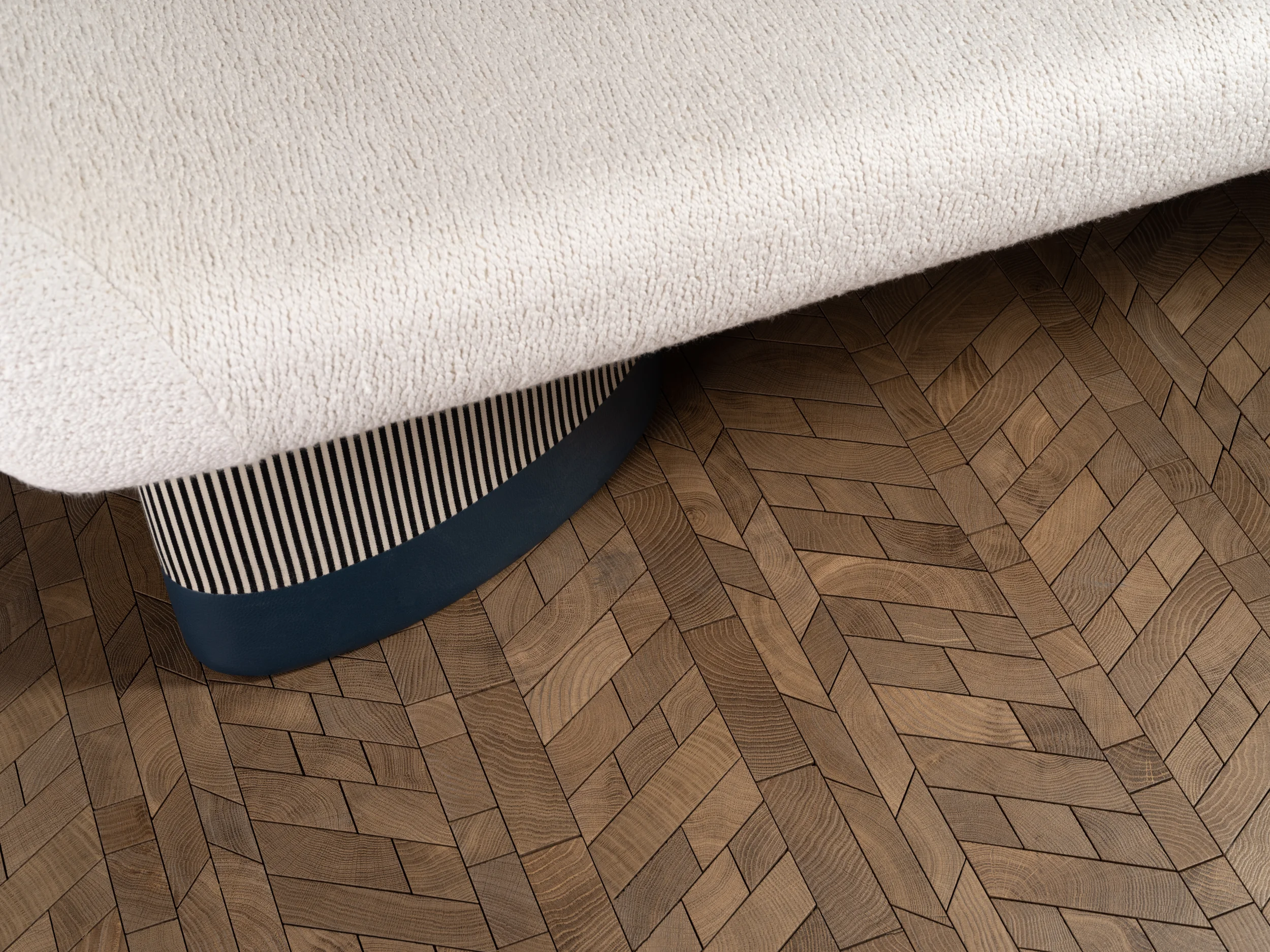
Smoked oak flooring is oak darkened by a chemical reaction with the tannins in the wood rather than by a pigment. Traditionally the boards are fumed in a closed chamber with ammonia, which reacts with the tannins and turns the oak from pale straw to anything from soft gray brown to deep chocolate. Because the color is in the wood rather than on it, a smoked floor wears better than a stained one, as long as the smoking goes deep enough.
How is oak smoked?
Oak is rich in tannins, and ammonia gas darkens them. The longer and stronger the fuming, the darker the wood and the deeper the color reaches. The technique is old: furniture makers used fumed oak in the late nineteenth and early twentieth centuries, notably in the Arts and Crafts movement, because it darkened oak without hiding its grain.
Depth is the detail to ask about. Some smoked boards are colored only a few millimeters into the surface; others are smoked right through. The deeper it goes, the more the floor can be worn, scratched or sanded without paler wood showing.
Smoked vs stained oak: what is the difference?
| Smoked oak | Stained oak | |
|---|---|---|
| Where the color is | In the wood, from a reaction with its tannins | In a pigment absorbed into the top fibers |
| Look | Grain stays clear; tone varies board to board | More uniform; heavy stains can cloud the grain |
| Scratches and wear | Show the same color, if smoked deep enough | Show paler wood beneath |
| Sanding | Same color returns, if smoked through | Removes the stain; the floor must be re-stained |
Why does smoked oak vary in color?
Tannin content varies from tree to tree and even within one board, so the same smoking gives different results. Some boards come out gray brown, others a warm chocolate, and the sapwood, which holds fewer tannins, stays paler. That variation is what gives a smoked floor its depth; if you want a perfectly even color, smoked oak is the wrong choice. Always look at several samples, or a large panel, rather than a single piece.
Smoked oak is also more stable in color than stained oak, but no wood is fixed: sunlight slowly shifts any oak over the years.
Why smoking suits end grain floors
On an end grain floor, cut across the trunk, smoking darkens the growth rings and the softer wood between them differently, so the pattern of rings reads more strongly. End grain floors are also sanded and finished in place after laying, so color that goes through the full depth of the wood is what keeps them even.
That is how OscarOno Paris's endgrain floors are made. Forêt, endgrain oak composed from six planks and six patterns, comes in Smoke, smoked through the full depth of the oak.
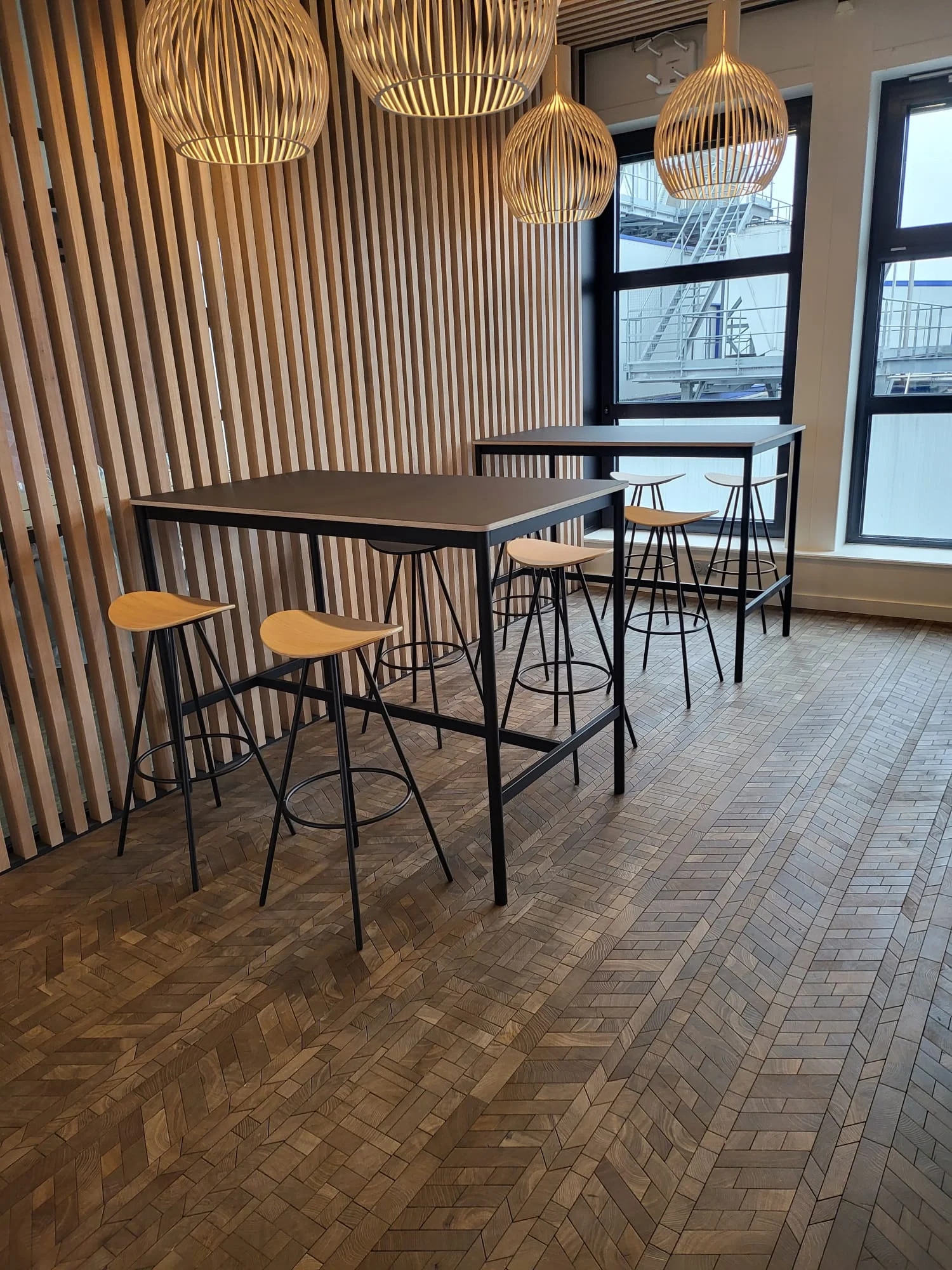
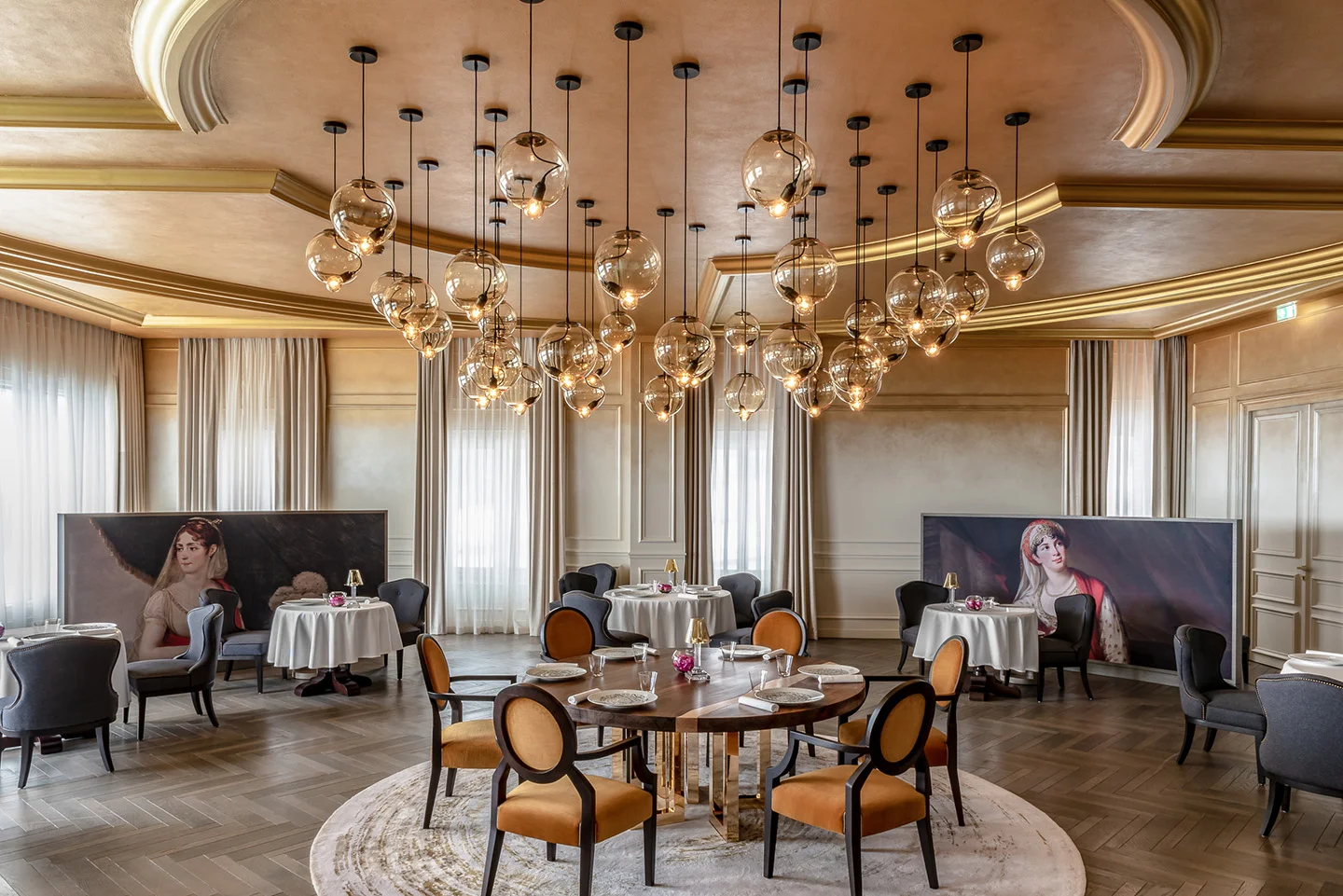
In the Octapharma staff restaurant in Strasbourg, Forêt in Smoke takes the daily traffic of a company canteen.
Opus, our endgrain oak paving pattern, comes in the same Smoke finish, and can run up walls as well as across floors.
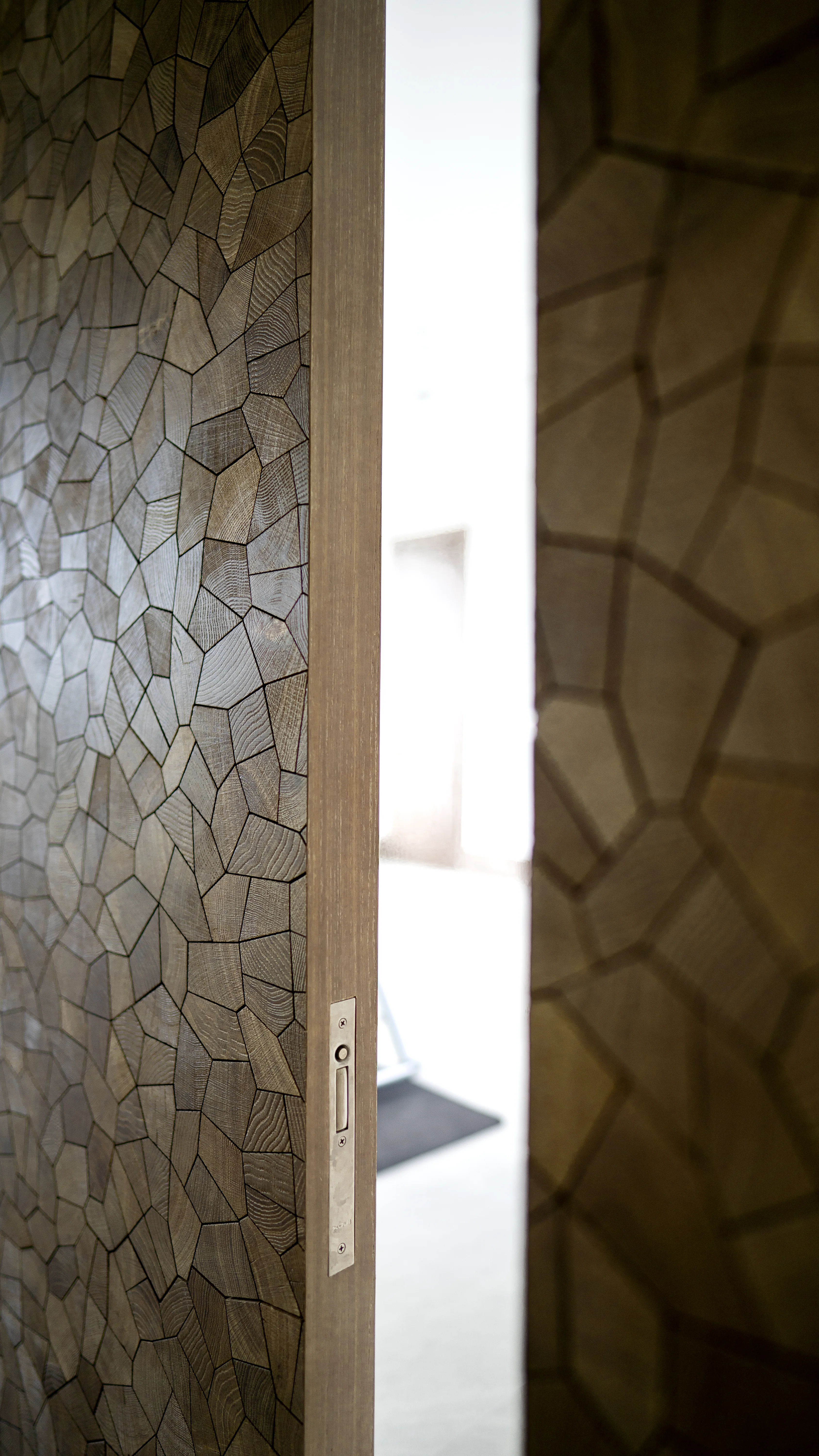
In this private residence in Miami, Opus in Smoke lines the wall around a sliding door, the irregular pieces each a slightly different brown.
Smoked, charred or lacquered: three ways to darken oak
- Smoked. Color from a reaction with the tannins. OscarOno Paris's Smoke finish is smoked through the full depth of the oak.
- Charred. The surface is burned, the shou sugi ban technique from Japan, for a deep black with a textured surface. OscarOno Paris's Black finish is charred in that tradition.
- Lacquered color. The color comes with the finish. Droit, our straight oak plank, comes in twelve lacquered Essentiel colors, including deep browns, rather than a Smoke finish; if the through-color of smoked oak is what you want, compare samples side by side.
None of OscarOno Paris's endgrain floors is stained: they come in Natural, Smoke and Black only.
How do you care for a smoked oak floor?
The same way as any wood floor. Keep grit off with mats and regular sweeping or vacuuming, clean with a well-wrung mop and a cleaner suited to the finish, and never leave water standing. Dark floors show pale dust more than light ones, so expect to sweep a little more often. When the finish eventually wears, a floor smoked through can be sanded and refinished without losing its color.
Frequently asked questions
What is smoked oak flooring?
Oak darkened by a reaction with its own tannins, traditionally by fuming the boards with ammonia, rather than by a pigment. The result ranges from gray brown to deep chocolate, with the grain still clearly visible.
Is smoked oak the same as fumed oak?
Yes. Both names describe oak darkened by a reaction with its tannins. Fumed is the older term; smoked is common in flooring.
Is smoked oak better than stained oak?
It wears better when it is smoked deep enough, because the color is in the wood rather than in a surface pigment, so scratches and sanding show the same color. Stain gives a more uniform color but shows paler wood when it wears through.
Why does smoked oak vary in color?
The amount of tannin varies between trees and within a single board, so the same smoking produces different shades, and the sapwood stays paler. Judge a smoked floor from several samples or a large panel, not one piece.
Can smoked oak flooring be sanded?
Yes. If the oak is smoked through its full depth, sanding reveals the same color. If it is smoked only near the surface, deep sanding can expose paler wood, so check how far the color goes before refinishing.
Smoked oak floors by OscarOno Paris
Forêt and Opus come in Smoke, smoked through the full depth of the oak, as well as Natural and Black, charred in the shou sugi ban tradition. Both are endgrain oak, an 8 mm oak top layer on 12 mm birch plywood, rated usage class 34 for very heavy commercial traffic, with a Cfl-s1 fire rating and FSC and PEFC certification. For a darker straight plank, Droit comes in twelve lacquered colors, 150 mm or 190 mm wide.
Smoked oak varies by nature, so see it in your own light: order samples. Spec sheets, CAD and 3D files are in the library.
More from the Atelier
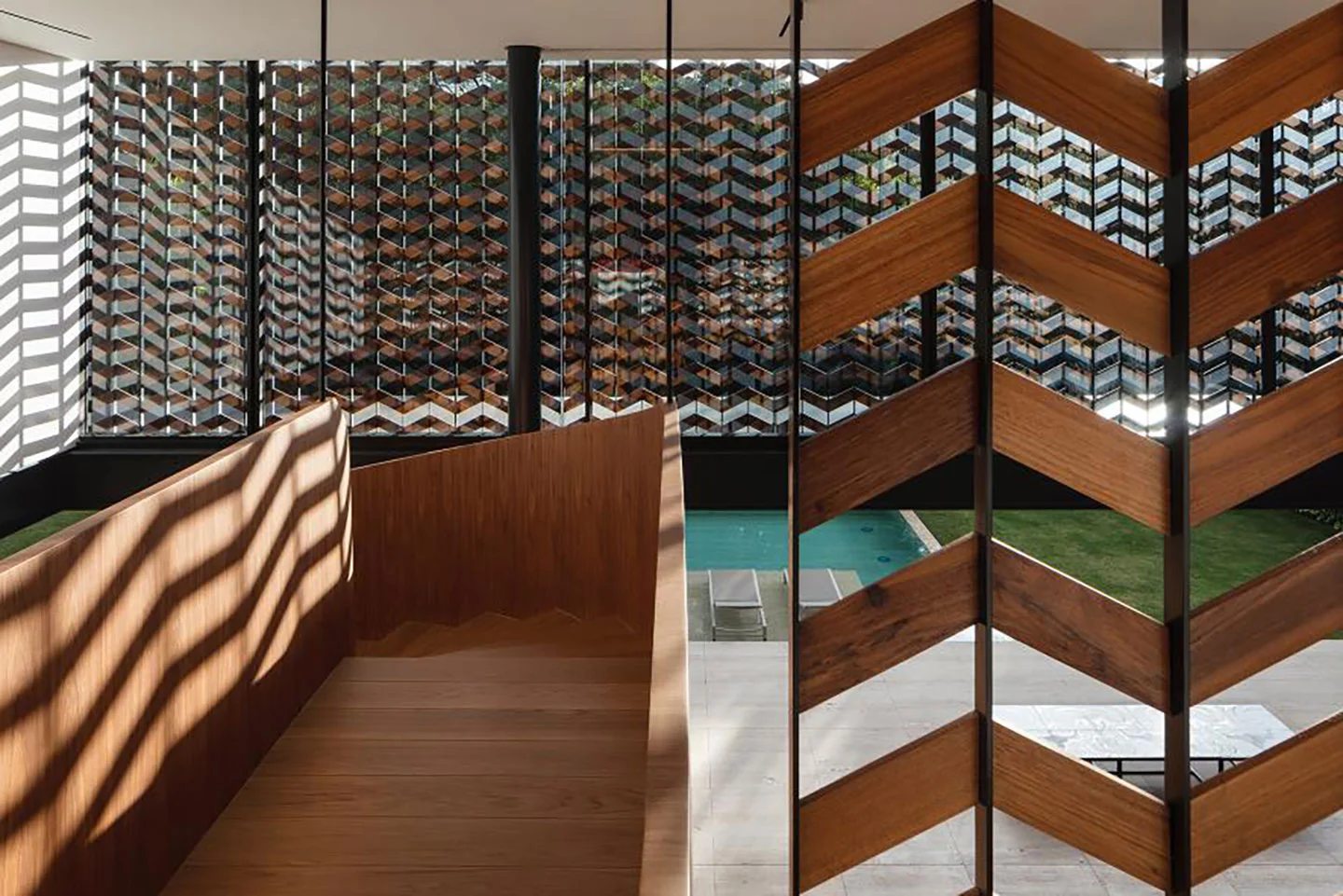
Protecting End Grain Wood Block Flooring from UV Fading
Discover the science of oak photodegradation and how to protect end-grain wood floors from UV fading using advanced varnishes and architectural design.
Parquet Floor Restoration: Is an Old Parquet Floor Worth Saving?
Loose blocks, gaps, stains and a worn finish can all be put right. How to tell whether an old parquet floor is worth restoring, what the work involves, and when it is not.
Squeaky Wood Floors: Why They Squeak and How to Fix Them
A squeak is friction: wood on wood, wood on a nail, or a subfloor moving on its joists. Find which one it is and the fix follows.