
French Oak Flooring: What It Is and What Really Matters
The name points to a forest. The floor you get depends on the grade, the cut and the finish.
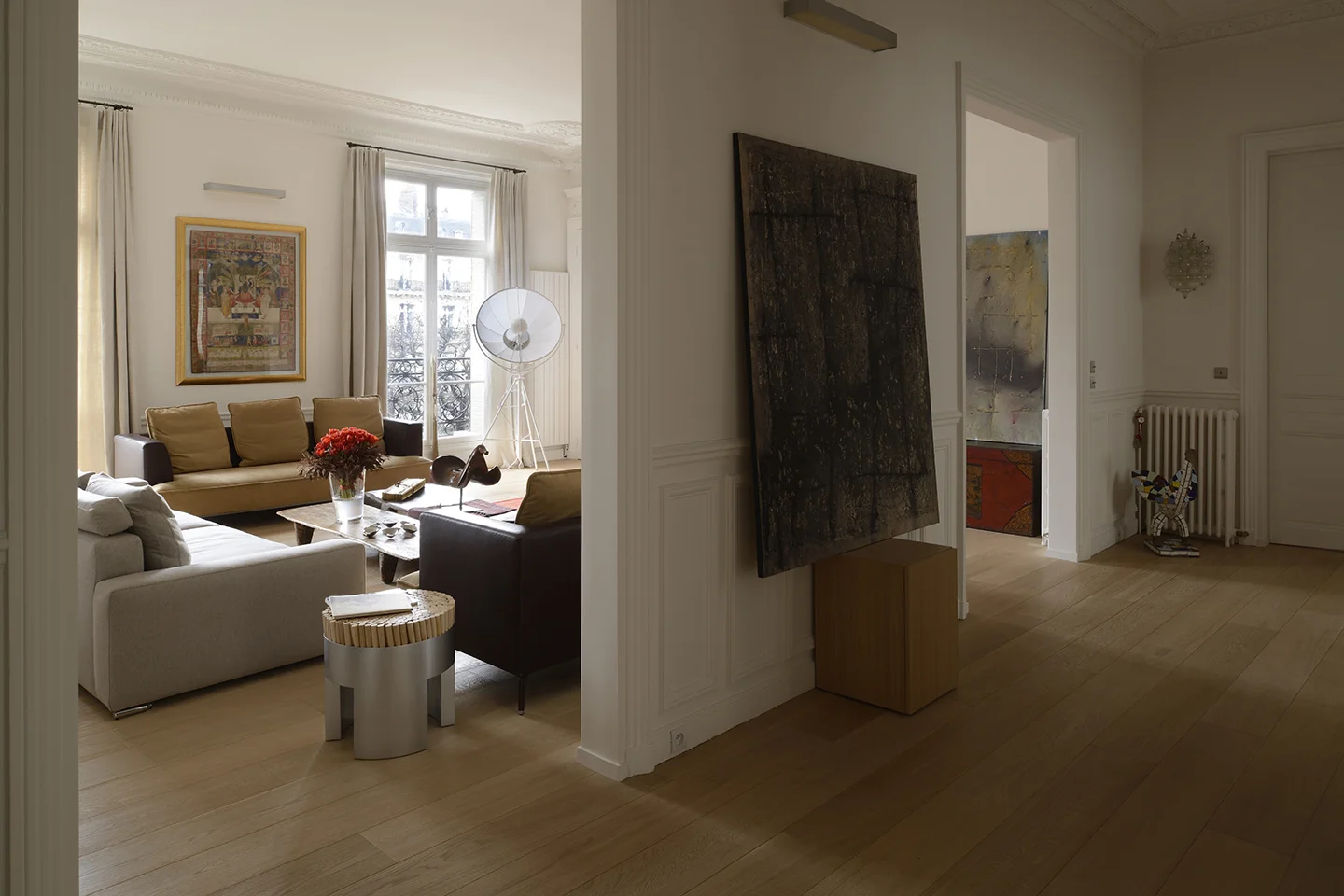
French oak flooring is oak that grew in French forests, almost always one of Europe's two native oaks: sessile oak (Quercus petraea) or pedunculate oak (Quercus robur). France grows a great deal of both, much of it in public forests managed on rotations of a century or more, which is why the name has become shorthand for straight, even, warm-toned oak. In practice the grade, the cut and the finish decide how a floor looks far more than the passport of the tree.
What is French oak flooring?
Strictly, it is a floor made from oak grown in France. Commercially, the term is looser: "French oak" is often used for any European oak with a golden tone and a quiet grain, wherever in Europe it was felled. Neither use is wrong, but they are not the same thing, so if the origin matters to you, ask for it in writing along with the certification.
What buyers are usually after when they search for French oak is a look: a pale to honey-colored floor, long boards with a straight grain, few knots and no orange cast. That look comes from how the trees were grown and how the boards were graded, and it can be specified directly.
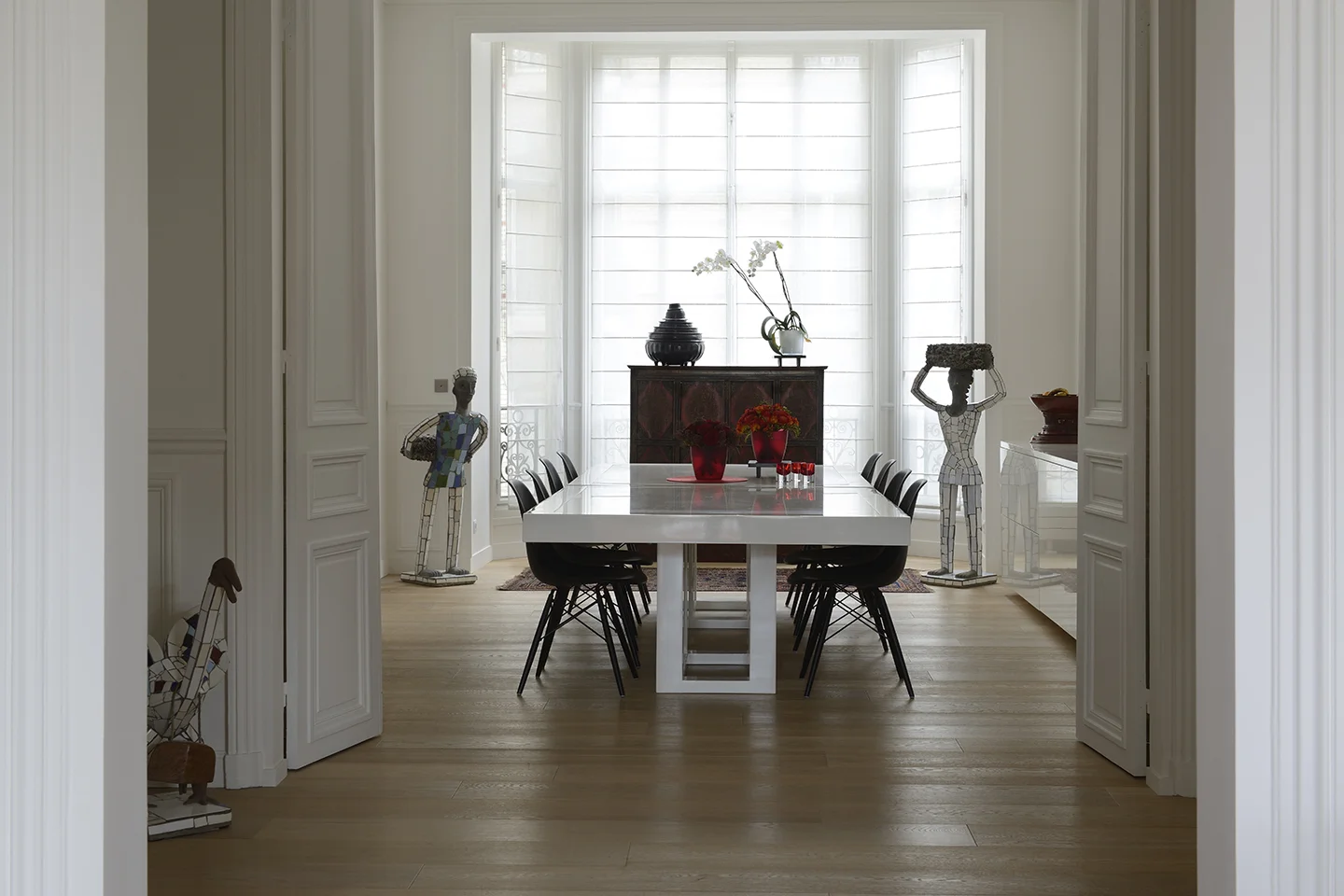
This Paris apartment laid in Droit shows the classic result: long, straight oak boards in a natural tone, running through a sequence of white-paneled rooms.
Why do French forests grow such straight, even oak?
Much of France's oak grows in state forests that have been managed for timber for centuries. In the seventeenth century, under Colbert, the crown reorganized its forests to secure oak for the navy, and forests such as Tronçais in central France are still associated with that history. Today the public forests are run by the Office National des Forêts.
The method matters more than the history. Oaks grown close together in dense stands reach for the light, so they grow tall and straight and shed their low branches early. That leaves a long, clear trunk with few knots. Harvested after a long rotation, often well over a century, the trees give wide, straight-grained boards with narrow, regular growth rings, which is what gives the wood its even texture and calm figure.
French oak vs other European oak
French, Slavonian (Croatian), German and Central European oak are the same two species growing in different places. Soil, climate and how densely the stands are managed change the growth rate, and the growth rate changes the width of the rings and the character of the wood. Slavonian oak, from the river plains of Croatia, is known for large, straight logs; slow-grown oak from poorer upland soils tends to have tighter rings.
Those differences are real at the sawmill, but in a finished, graded floor they are smaller than marketing suggests. Two boards of the same grade and cut from different European forests are often hard to tell apart; two boards from the same French tree, one select and one rustic, look like different floors.
What matters more than origin: grade, cut and finish
Grade. Grading sorts boards by knots, sapwood and color variation. A select grade keeps knots small and few and the color even, which is the "French oak" look most people picture. Rustic grades keep more knots and more contrast, for a livelier floor.
Cut. Most floors are flatgrain: the board is sawn along the trunk, so the face shows the long grain. Endgrain is cut across the trunk, so the face shows the growth rings in cross-section, each ring a pale band of fast spring growth and a darker band of slower summer growth. Endgrain is the hardest face of the wood and carries the history of the tree on its surface.
Finish. Oak is rich in tannins, which is why it takes smoking so well: the tannins react and darken the wood itself rather than coating it. A clear oil or lacquer keeps the natural tone; a colored lacquer changes it; smoking or charring changes the wood.
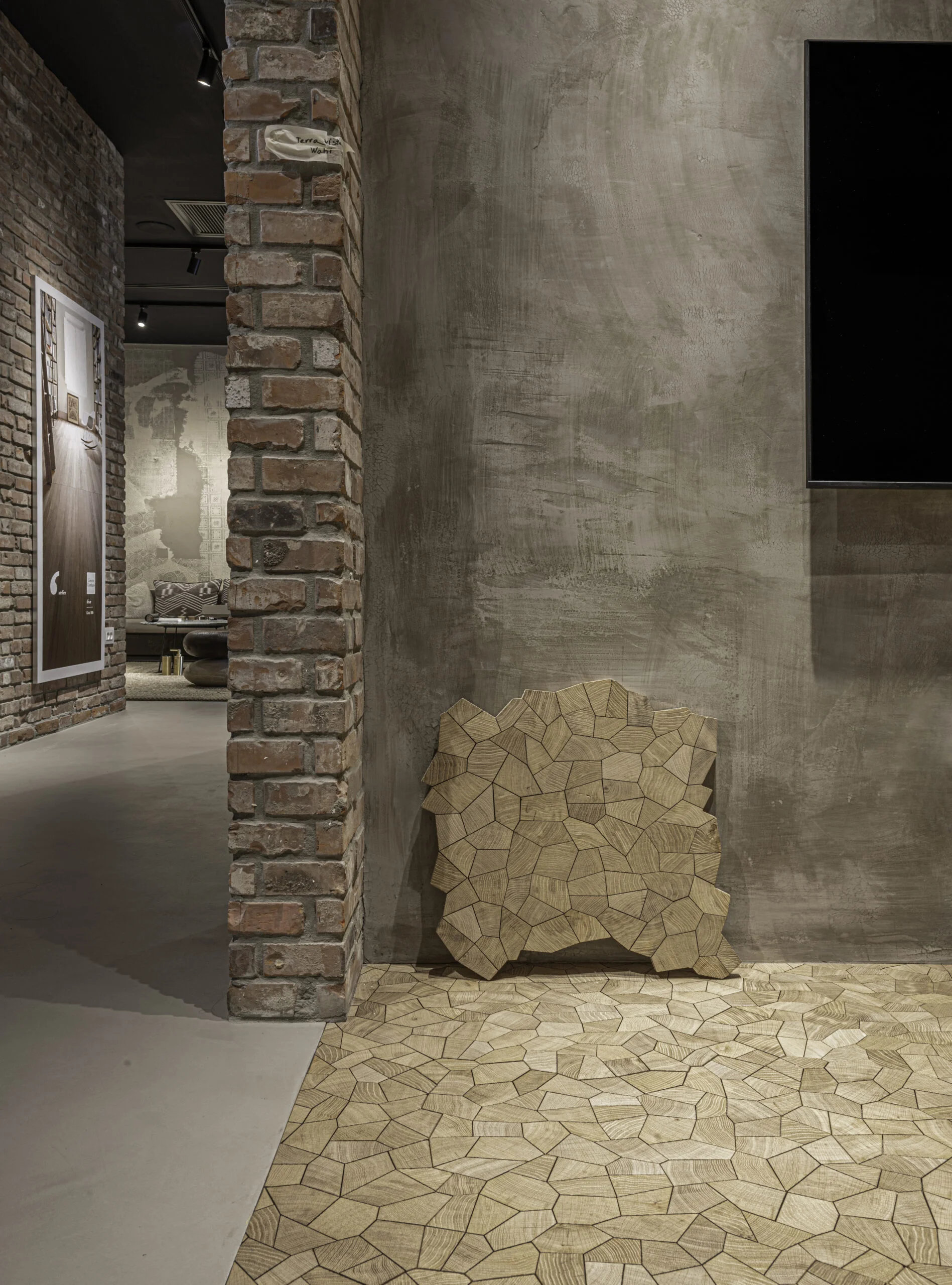
In the Parqueteam showroom, laid in Opus, the same oak is cut on its endgrain face, and the growth rings of every block become the texture of the floor.
How OscarOno Paris uses oak
Two collections show the two ends of the range. Droit, the straight oak plank, is cut from flatgrain oak in select grade: 12 mm thick with a 4 mm oak top layer, in 150 mm or 190 mm widths, finished in twelve lacquered colors. It is rated usage class 33 for heavy commercial traffic.
Opus, an endgrain oak paving, revives nineteenth-century Parisian oak paving: an 8 mm endgrain oak top layer on 12 mm birch plywood, with joints under 1 mm. It comes in Natural, Smoke, smoked through the full depth of the oak, and Black, charred in the shou sugi ban tradition, never stained. It is rated usage class 34 for very heavy commercial traffic.
How to check what you are buying
- Species and origin. Ask which oak and which country or region. "French oak" on its own describes a look as often as a source.
- Certification. FSC or PEFC certification traces the wood back to a managed forest.
- Grade. Ask to see the grade in a real sample, not a photo, so you know how many knots and how much color variation to expect.
- Construction. Ask for the thickness of the oak top layer: it decides how many times the floor can be sanded over its life.
- Finish. Find out whether the color sits on the surface or goes into the wood, because that decides how wear will show.
Frequently asked questions
Is French oak the same as European oak?
French oak is European oak that grew in France. Botanically it is the same two species found across much of Europe, sessile oak and pedunculate oak. In flooring the name is often used loosely for any European oak with a warm tone and a calm grain, so ask the supplier where the wood actually comes from.
What is the difference between French oak and American white oak?
They are different species. European oak, French oak included, is sessile or pedunculate oak; American white oak is Quercus alba. Both belong to the white oak group and make hard, stable floors. European oak usually reads warmer and more golden, while American white oak tends toward a paler, cooler tone.
Why is French oak flooring expensive?
Slow-grown oak from long-rotation forests yields long, straight, clear logs, and only part of each log makes a select grade board with few knots and even color. Long rotations, careful grading and certification all add cost. A rustic grade from the same tree costs less because more of the log can be used.
Is French oak good for flooring?
Yes. Oak is hard, holds its shape well when properly dried and built into a stable board, and takes oil, lacquer and smoking well. How well a particular floor wears depends on its grade, its construction and its finish more than on the country the tree grew in.
Oak floors by OscarOno Paris
Every OscarOno Paris oak collection is FSC and PEFC certified and carries a Cfl-s1 fire rating. Choose Droit for a straight select-grade plank in one of twelve lacquered colors, or Opus for endgrain oak in Natural, Smoke or Black. Oak changes with the light it sits in, so judge it at home: order samples, and find spec sheets, CAD and 3D files in the library.
More from the Atelier

Wood Floors in the Bedroom: How to Choose a Calm, Quiet Floor
Wood is warm underfoot, easy to keep dust-free and lasts for decades in a low-traffic room. How to choose the color, finish, layout and acoustics of a bedroom floor.
Light Oak Flooring for Bright, Sunlit and Coastal Rooms
Pale oak suits sunlit and seaside rooms, if you get the finish right. How light oak changes in the sun, and what sand, humidity and glare mean for it.

Wide Plank Oak Flooring for a Minimalist Interior
Fewer joints, a clean grade, a low sheen and one direction through the house: how to choose wide plank oak for a minimalist interior, and when an end grain grid does the job better.