
Design Fairs Worth Knowing: Milan, Paris, Copenhagen and Beyond
A calendar of the fairs that set the year in furniture, craft and materials, and how to visit them well.
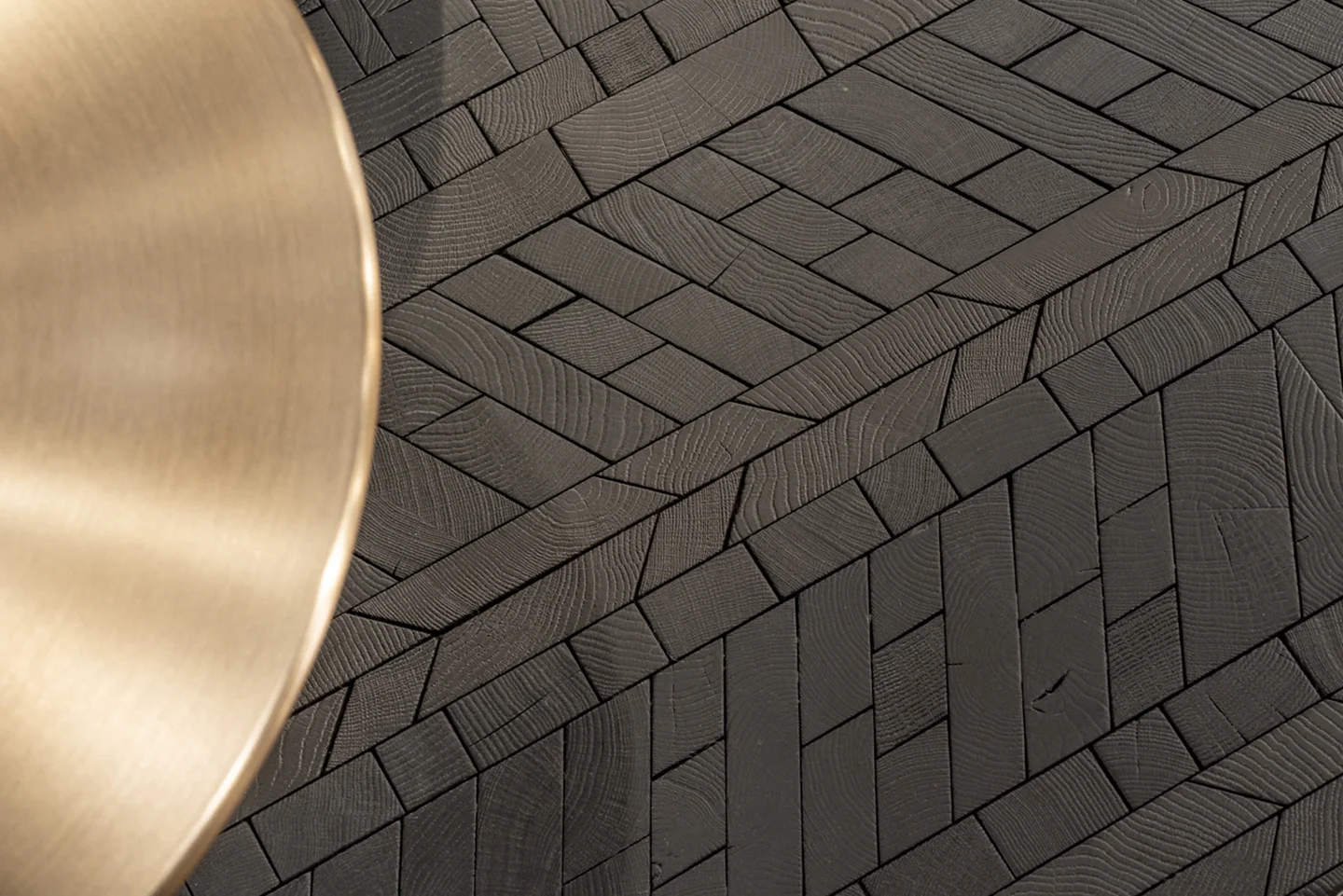
The design fairs that matter most are Salone del Mobile in Milan, held every April during Milan Design Week; Maison&Objet in Paris, held twice a year; and 3daysofdesign in Copenhagen each June. Around them sit fairs with a narrower focus: Design Miami for collectible design, the city design weeks of London and Eindhoven, show houses such as Casa Decor and CASACOR, and Domotex for floors. Which ones are worth your time depends on whether you go to source, to spot what is coming, or to see work at its best.
Why design fairs matter
Most furniture, lighting and material launches are timed to a fair. For architects and designers, that makes the fair the one place where a year of new work can be seen, touched and compared in a few days, and where the people who make it are in the room to answer questions.
For materials, being there in person matters even more than for furniture. A photograph cannot tell you how a floor feels underfoot, how a finish takes raking light, or how a texture reads from across a room. Stands and installations are built to be walked through, so they are the closest thing to a finished project you can see before specifying.
Salone del Mobile and Milan Design Week
Salone del Mobile.Milano is the largest furniture and design fair in the world, held each April at Fiera Milano Rho, just outside the city. Around it, Milan Design Week, often called the Fuorisalone, fills showrooms, palazzi, courtyards and former industrial sites across the city with exhibitions and launches. The fair is where the industry does business; the city is where most of the experiments are.
Plan Milan by district rather than by name. Brera, Tortona and the old industrial venues each have a character, and trying to see everything in a week is how most visitors end up seeing very little well.
Maison&Objet and Paris Design Week
Maison&Objet is held twice a year in Paris, traditionally in January and September, at Paris Nord Villepinte. It is broader than Milan, spanning furniture, decorative objects, textiles, tableware and gifts, and its curated halls are a good place to see craft and collectible work alongside the trade. In September, Paris Design Week opens showrooms and galleries across the city at the same time.
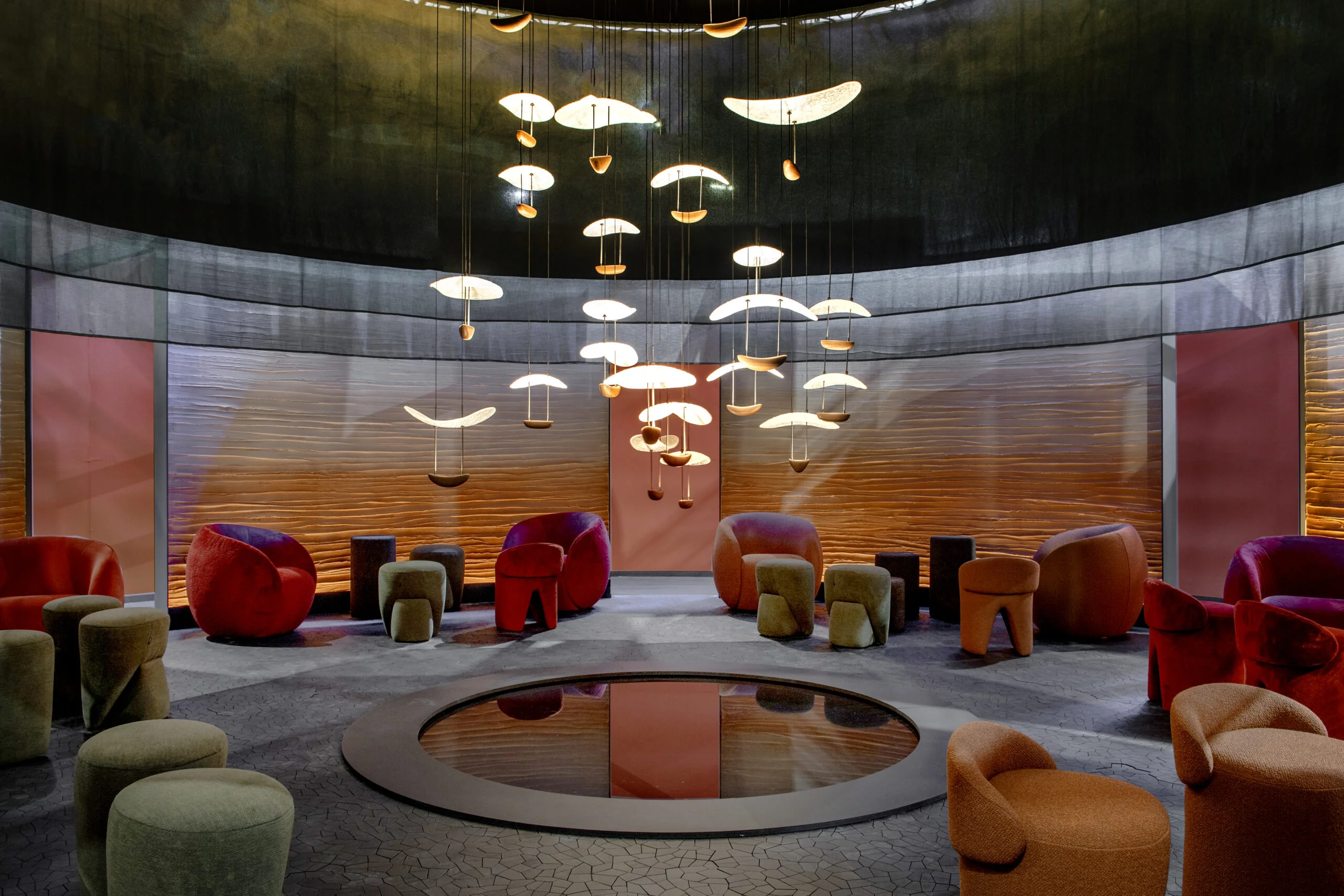
At Maison&Objet 2023, a lounge was laid in Opus, an endgrain oak paving in Black, charred in the shou sugi ban tradition, under a whole room of upholstered furniture and lights.
3daysofdesign in Copenhagen
3daysofdesign takes place each June across Copenhagen. Rather than one exhibition hall, brands open their own showrooms and temporary spaces around the city, which gives it a calmer, more personal pace than Milan and makes it the place to see Scandinavian furniture and lighting in settings close to real rooms.
Collectible design: Design Miami and its peers
Design Miami runs each December in Miami Beach, alongside Art Basel Miami Beach, and is devoted to collectible design: limited editions, studio pieces and historic work shown by galleries. Fairs of this kind, PAD among them, are where design meets the art market. The stands are built like small galleries, so the floor is part of how the work is presented.
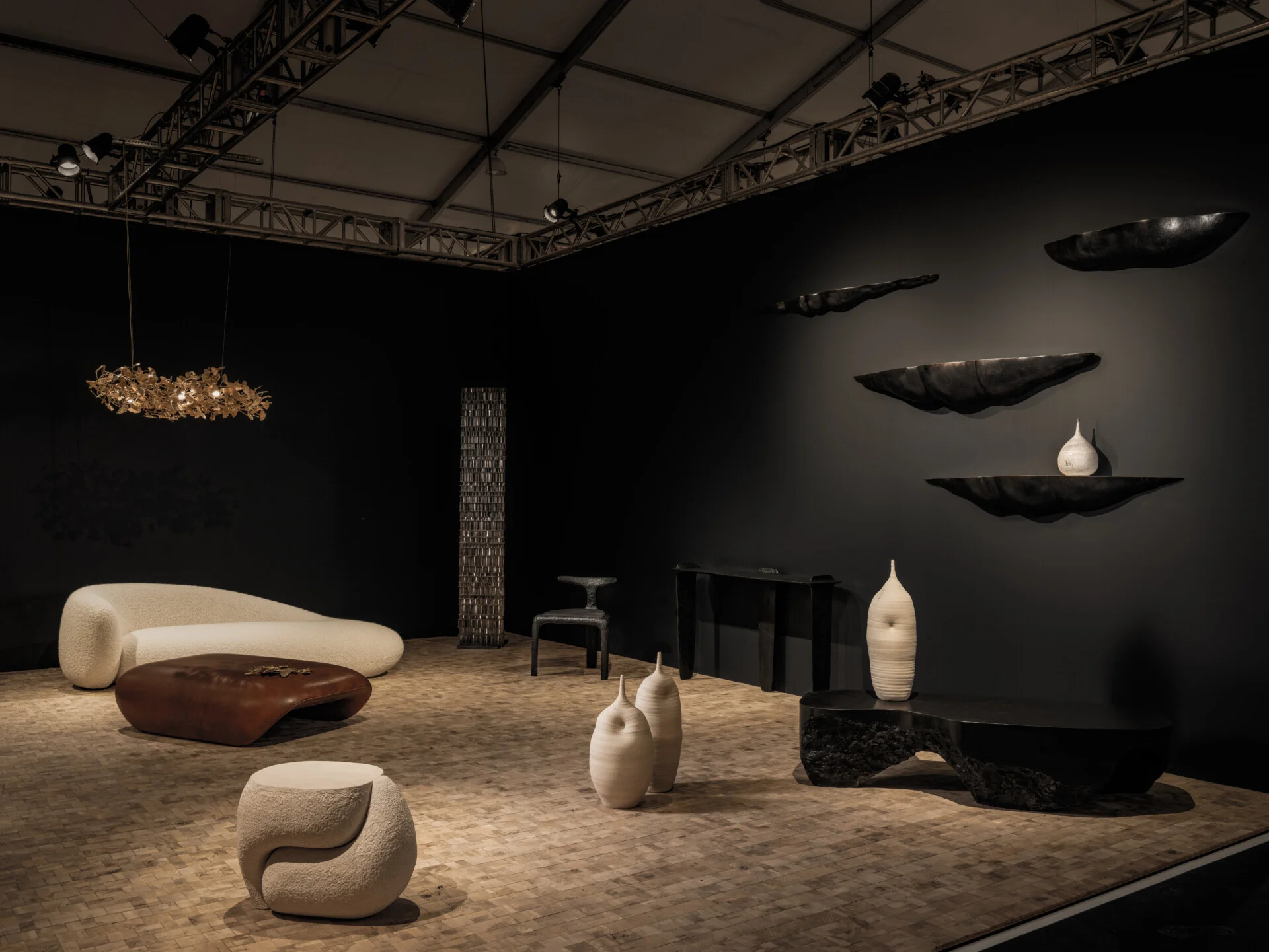
At Design Miami 2023, a gallery stand of sculptural furniture stood on Cube, endgrain oak blocks in Natural, set in an even grid.
Craft biennales and show houses
Craft biennales such as Révélations in Paris and Homo Faber in Venice focus on the hand: makers working in wood, stone, glass, metal and textile, often in demonstrations. They are less about launches and more about technique, and they are the best place to understand how a material is actually worked.
Show houses work differently again. At Casa Decor in Madrid and CASACOR in Brazil, designers fit out whole rooms in a real building, so you see materials combined the way they would be in a home or hotel, at full scale.
Design fair calendar
| Fair | City | Usually held | Best for |
|---|---|---|---|
| Maison&Objet | Paris | January and September | Decor, objects, furniture, craft |
| Domotex | Hannover | January | Floor coverings, trade |
| Stockholm Furniture Fair | Stockholm | February | Scandinavian furniture and lighting |
| Salone del Mobile and Milan Design Week | Milan | April | Launches across furniture, lighting, kitchens, materials |
| 3daysofdesign | Copenhagen | June | Showroom visits, Scandinavian design |
| London Design Festival | London | September | Citywide installations and talks |
| Dutch Design Week | Eindhoven | October | Young designers, research, materials |
| Design Miami | Miami Beach | December | Collectible design and galleries |
Dates move from year to year, so confirm on each fair's own site before booking.
How to get the most from a design fair
- Decide why you are going. Sourcing, research and inspiration need different routes through the same fair.
- Register early. Trade days, press days and some city events need registration in advance.
- Look at how stands are built. Joints, edges and transitions show the quality of a material better than the center of a display. Ask how the stand will be taken down and what happens to it afterward.
- Touch and walk. For floors and surfaces, judge texture underfoot and finish in raking light, not from the aisle.
- Leave with specifics. Collect the product name, finish and a spec sheet, and ask for samples, so what you saw can be checked back at the office.
Frequently asked questions
What is the most important design fair in the world?
Salone del Mobile in Milan is generally seen as the most important. It is the largest furniture and design fair, and the citywide events of Milan Design Week around it make April the moment most new furniture, lighting and materials are launched.
When is Milan Design Week?
Usually in April, in the same week as Salone del Mobile. The fair itself is at Fiera Milano Rho, outside the center, while the Fuorisalone events take place in showrooms, galleries and courtyards across the city.
How often does Maison&Objet take place?
Twice a year in Paris, traditionally in January and September. The September edition coincides with Paris Design Week, when showrooms and galleries across the city open their own events.
Is there a design fair for flooring?
Domotex in Hannover is the main international trade fair for floor coverings. At the design fairs, floors are seen differently: on stands and installations, where you can walk on them, which is often the best way to judge a pattern or finish.
Can anyone visit a design fair?
It depends on the fair. Some are open only to trade visitors, some open to the public on certain days, and city design weeks are largely free and open. Check each fair's registration rules before you travel.
OscarOno Paris at the fairs, and after
OscarOno Paris floors have been laid on stands and installations from Milan to Miami, including Salone del Mobile in Forêt, built from six planks and six patterns in endgrain oak, in Black. Like Opus and Cube, it is rated usage class 34 for very heavy commercial traffic and carries a Cfl-s1 fire rating, which is what a floor needs to survive a week of fair visitors and then a hotel lobby. All three come in Natural, Smoke and Black, and all are FSC and PEFC certified. If you saw one at a fair and want to see it again in your own light, order samples, and find spec sheets, CAD and 3D files in the library.
More from the Atelier
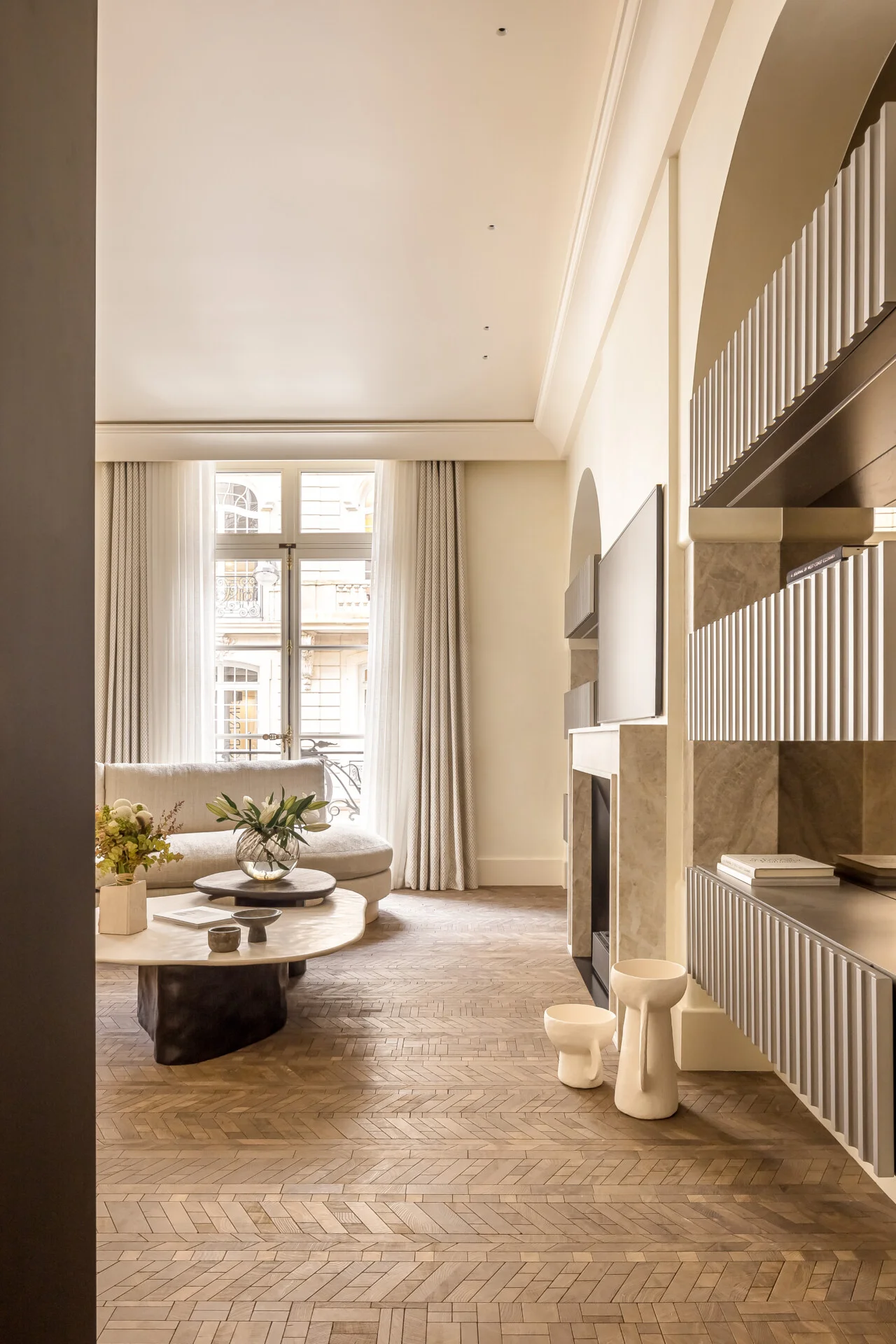
What Is Wood Terrazzo Flooring? An Architectural Guide
Wood terrazzo flooring unites reclaimed endgrain oak offcuts and mineral ground, creating continuous, tactile surfaces designed for circular luxury interiors.

Modern Versailles Parquet: The Classic Panel in Today's Interiors
The woven oak panel first laid in a palace still works in a contemporary room. What changes is the color, the construction and how freely the weave is drawn.
Wood Floor Interior Design: Pairing Oak with Linen, Stone and Brass
Start with the floor, then balance it: stone for weight, linen for softness, brass for light. A practical guide to designing a room around wood.