
Walnut Flooring: Color, Hardness, Care and an Oak Alternative
A beautiful, softer wood that mellows in the light, and when dark oak is the better choice.
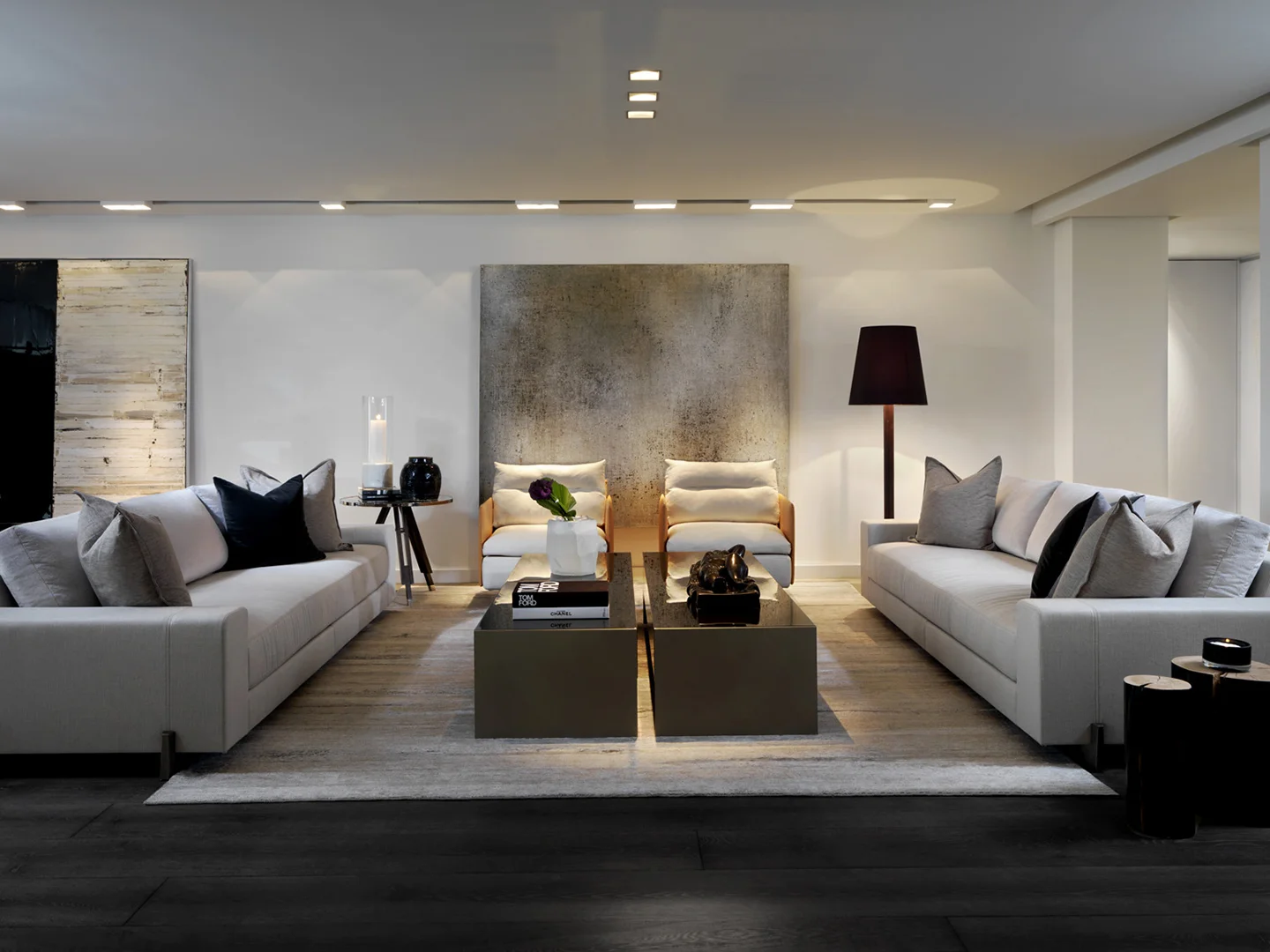
Walnut flooring is made from walnut, most often American black walnut (Juglans nigra), and is chosen for its chocolate-brown heartwood and soft, flowing grain. It is noticeably softer than oak, so it marks more easily, and unlike most woods it gets lighter with daylight, mellowing toward a warmer, golden brown. It suits quieter rooms; where a dark floor has to take heavy wear, dark or smoked oak is the usual alternative.
What is walnut flooring?
Most walnut floors are American black walnut, a North American hardwood. European walnut (Juglans regia) is used too, but is more often seen in furniture and veneer. The heartwood runs from mid to dark chocolate brown, sometimes with a gray or purplish cast when freshly cut; the sapwood near the bark is pale, almost cream.
How much sapwood a floor shows depends on the grade. Select grades keep to heartwood for an even, dark floor. Character grades keep the pale sapwood streaks, knots and color swings, for a livelier, high-contrast look. The grain is usually straight to gently wavy, with a finer, smoother texture than oak.
How hard is walnut flooring?
Walnut is a medium-hard wood. On the Janka hardness scale, black walnut is usually given at around 1,000 lbf, against roughly 1,300 lbf for oak. In practice that means a walnut floor dents sooner under a dropped object or a stiletto heel, and grit under shoes leaves fine scratches faster.
It is still a perfectly serviceable floor in a home. It is happiest in bedrooms, studies and living rooms, and less so in kitchens, entrances and anywhere with heavy traffic, pets or commercial use.
How does walnut change color over time?
Walnut is one of the few common flooring woods that lightens with age. Daylight breaks down the dark compounds in the heartwood, and over the first few years the floor mellows from deep brown toward a warmer, more golden tone, while the contrast between boards softens. Oak does the opposite: it deepens and warms slightly.
Because the change follows the light, anything that shades the floor leaves a darker patch behind. Moving rugs and furniture now and then in the early years keeps the color even. A clear finish with UV protection slows the change but does not stop it.
Solid or engineered walnut?
Solid walnut boards are one piece of wood throughout. Engineered boards have a walnut top layer on a more stable base, which makes them move less with changes in humidity, a real advantage for wide boards, patterned layouts and floors over underfloor heating. The thickness of the top layer decides how many times the floor can be sanded, so check it on the spec sheet, along with the manufacturer's guidance on underfloor heating.
Caring for a walnut floor
- Keep grit out. Mats at the door and regular dry sweeping or vacuuming with a hard-floor head do most of the work. Grit is what scratches a softer floor.
- Clean damp, not wet. A well-wrung mop with a cleaner made for the floor's finish. Avoid standing water and steam cleaners.
- Protect from dents. Felt pads under chairs and tables, and care with heavy furniture.
- Expect dust to show. Like any dark floor, walnut shows dust, footprints and pale scratches more than a mid-tone floor does.
Walnut vs oak at a glance
| Black walnut | Oak | |
|---|---|---|
| Color | Chocolate brown heartwood, pale sapwood | Pale to honey, unless finished darker |
| Hardness (Janka) | Around 1,000 lbf | Around 1,300 lbf |
| In daylight | Lightens and turns more golden | Deepens and warms slightly |
| Grain | Fine, smooth, flowing | More open, with visible rays when quartersawn |
| Best suited to | Bedrooms, studies, quiet living rooms | Any room, including heavy-traffic and commercial spaces |
The walnut look in oak
OscarOno Paris does not make walnut floors. The two floors below are oak, and are named here as oak. But many people who search for walnut want a deep brown floor rather than the species itself, and oak can give that color with more hardness.
Droit, a straight oak plank, comes in twelve lacquered colors, including deep browns, in 150 mm or 190 mm widths. The color comes from the lacquered finish rather than from the species, so it does not lighten the way walnut heartwood does. It is flatgrain select oak, 12 mm with a 4 mm oak top layer, rated usage class 33 for heavy commercial traffic.
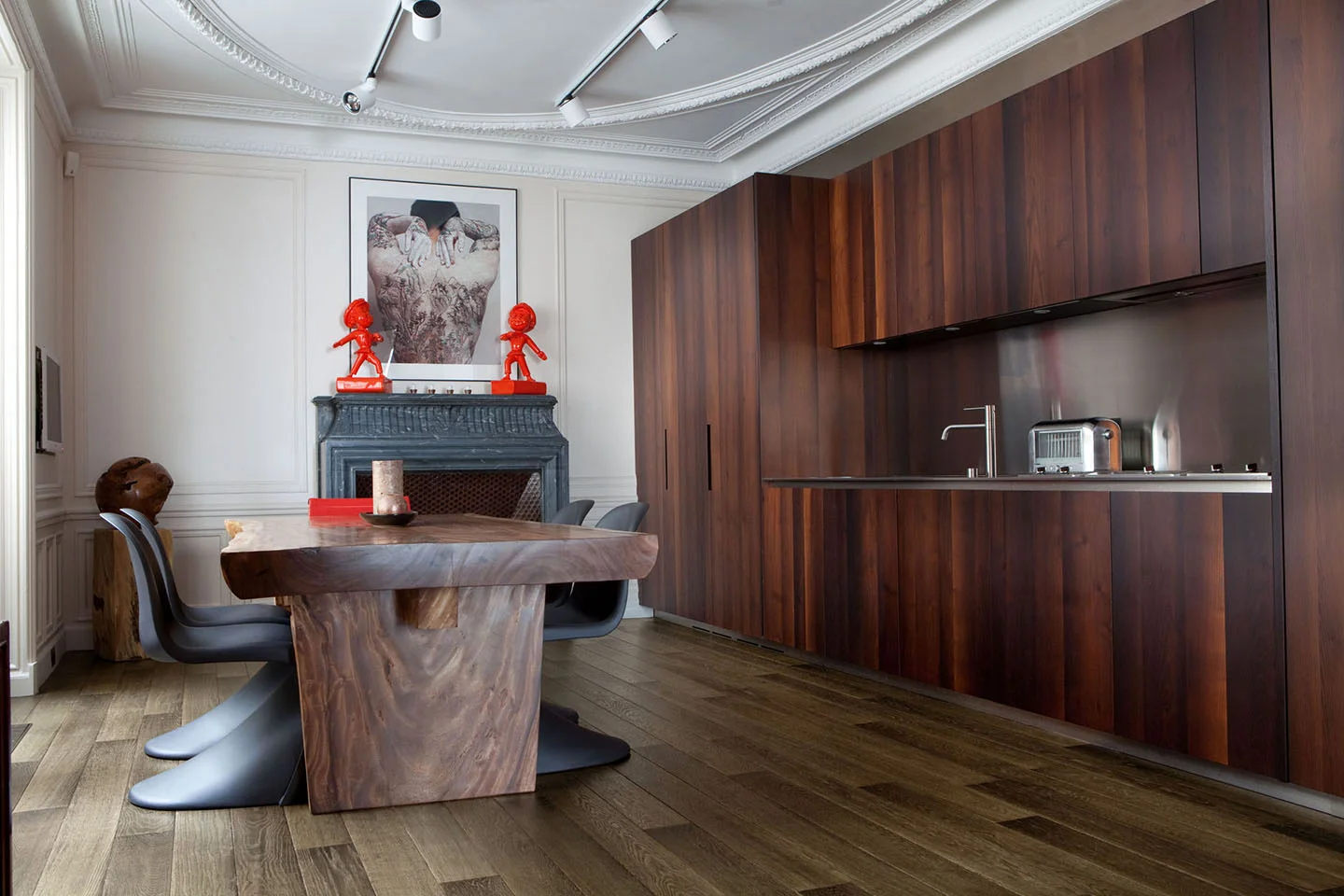
In this Paris apartment laid in Droit, a dark brown oak plank sits under a slab table and dark wood cabinetry: the warmth people look for in walnut, on a harder floor.
For brown that goes into the wood itself, Opus in Smoke is endgrain oak smoked through its full depth, never stained. Smoking darkens oak by reacting with its natural tannins, so the color does not sit on the surface. Opus is rated usage class 34 for very heavy commercial traffic.
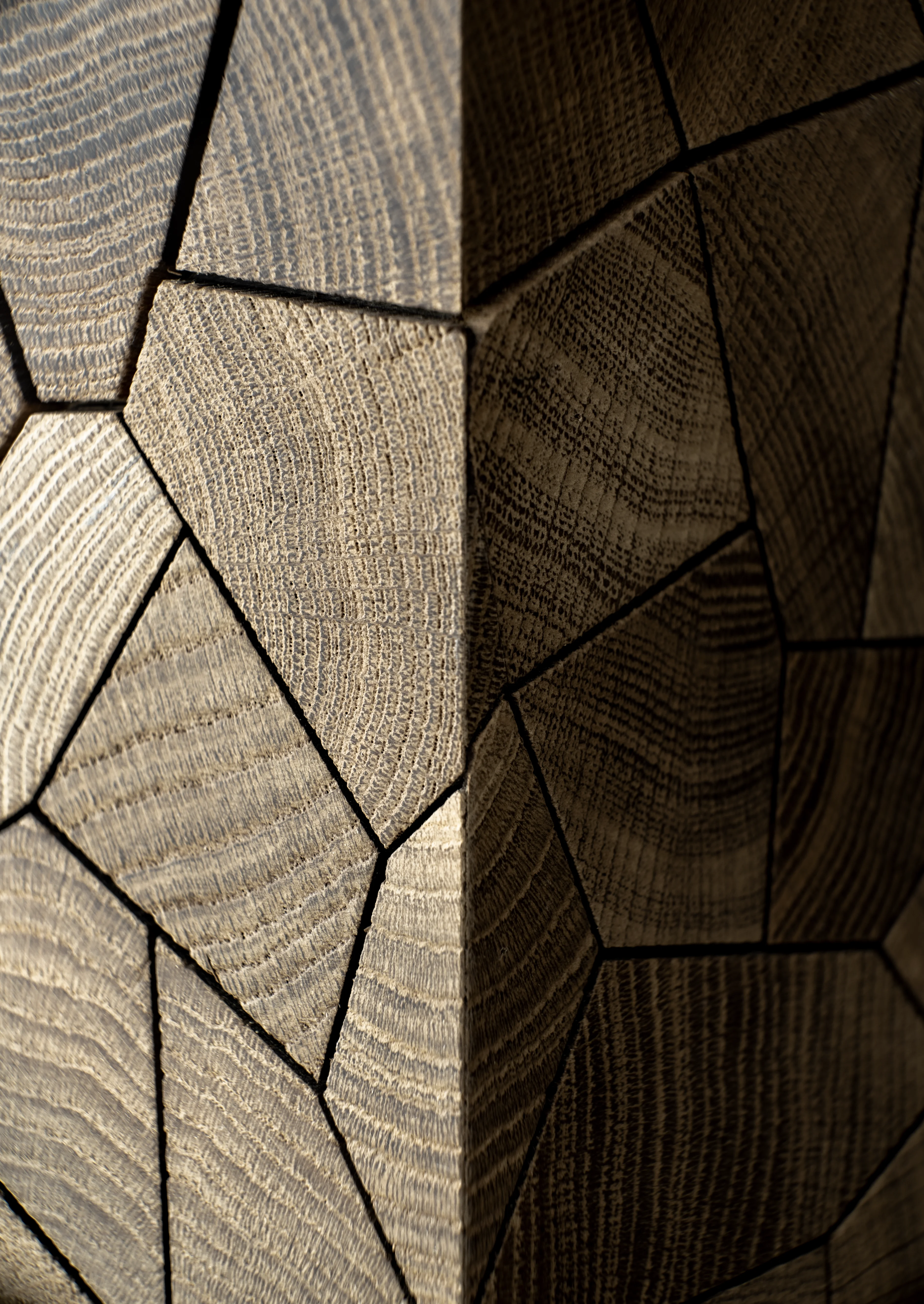
The close-up from this private residence in Miami shows Opus in Smoke: the brown runs through each endgrain block, with the growth rings still visible.
Frequently asked questions
Is walnut flooring a good choice?
For the right room, yes. Walnut has a rich brown color and a flowing grain that few other woods match. It is softer than oak, though, so it dents and marks more easily, which makes it better suited to bedrooms, studies and quiet living rooms than to kitchens, hallways or commercial spaces.
Does walnut flooring scratch easily?
More easily than oak. Walnut is noticeably softer, so heels, dropped objects and grit underfoot leave marks sooner, and on a dark floor scratches and dust show more. Felt pads, entrance mats and regular sweeping make a real difference.
Why does walnut flooring get lighter over time?
Daylight slowly breaks down the dark compounds in walnut heartwood, so the wood mellows from deep chocolate toward a warmer, more golden brown. Most woods, oak included, go the other way and deepen. Moving rugs and furniture now and then in the first years keeps the change even.
Is walnut flooring more expensive than oak?
Usually, yes. Walnut is a smaller tree than oak, so it yields fewer long, wide, clear boards, and a select grade of even, dark heartwood is in limited supply. Character grades with pale sapwood cost less.
What is a good alternative to walnut flooring?
Dark oak. A dark-finished or smoked oak floor gives a deep brown color with the hardness of oak, and smoked oak keeps its color through the wood rather than only on the surface. It will not have walnut's grain, so judge it from a sample rather than a photo.
Dark oak floors by OscarOno Paris
If you like walnut's color but need a floor that takes more wear, compare Droit in its darker lacquered colors with Opus in Smoke. Both are FSC and PEFC certified and carry a Cfl-s1 fire rating. Brown changes a great deal with the light, so order samples and look at them in the room, and find spec sheets, CAD and 3D files in the library.
More from the Atelier
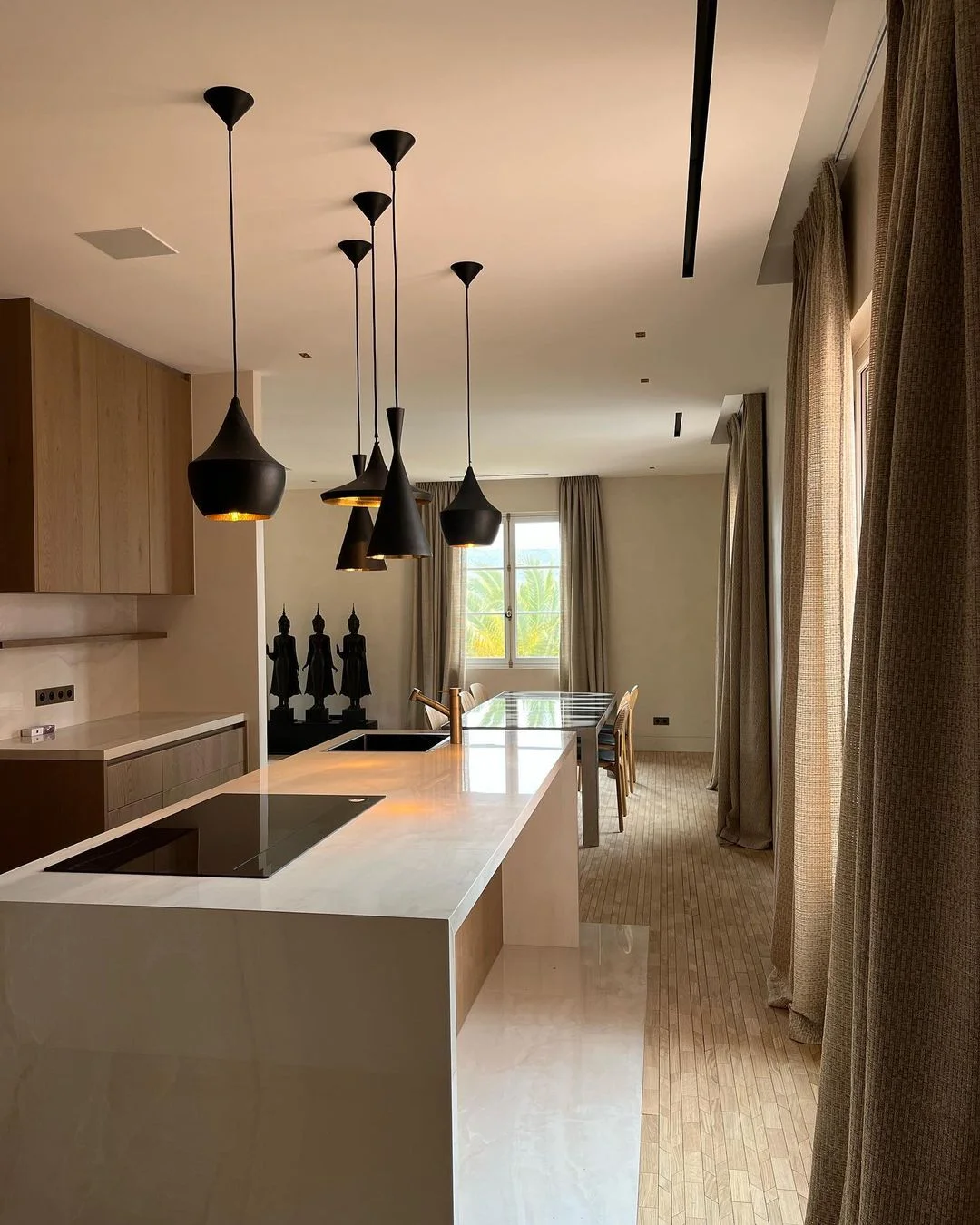
Reclaimed Teak Flooring: End-Grain Strength and Resilience
Explore how reclaimed teak flooring and end-grain timber provide extraordinary durability, natural silica protection, and stability for demanding spaces.
How to Prevent Fading on Hardwood Floors: Design Guide
An architectural approach to managing sun exposure on wood floors, from spectrally selective glazing to finish choices and uniform patina development.
The Craft of Marquetry Parquet Flooring and Panels
Marquetry parquet flooring bridges historical French palace geometry with contemporary minimalism, bringing architectural structure to luxury interiors.