
What Is Bog Oak? How Morta Wood Turns Black Over Millennia
Ordinary oak, a waterlogged bog, iron in the water and a few thousand years.
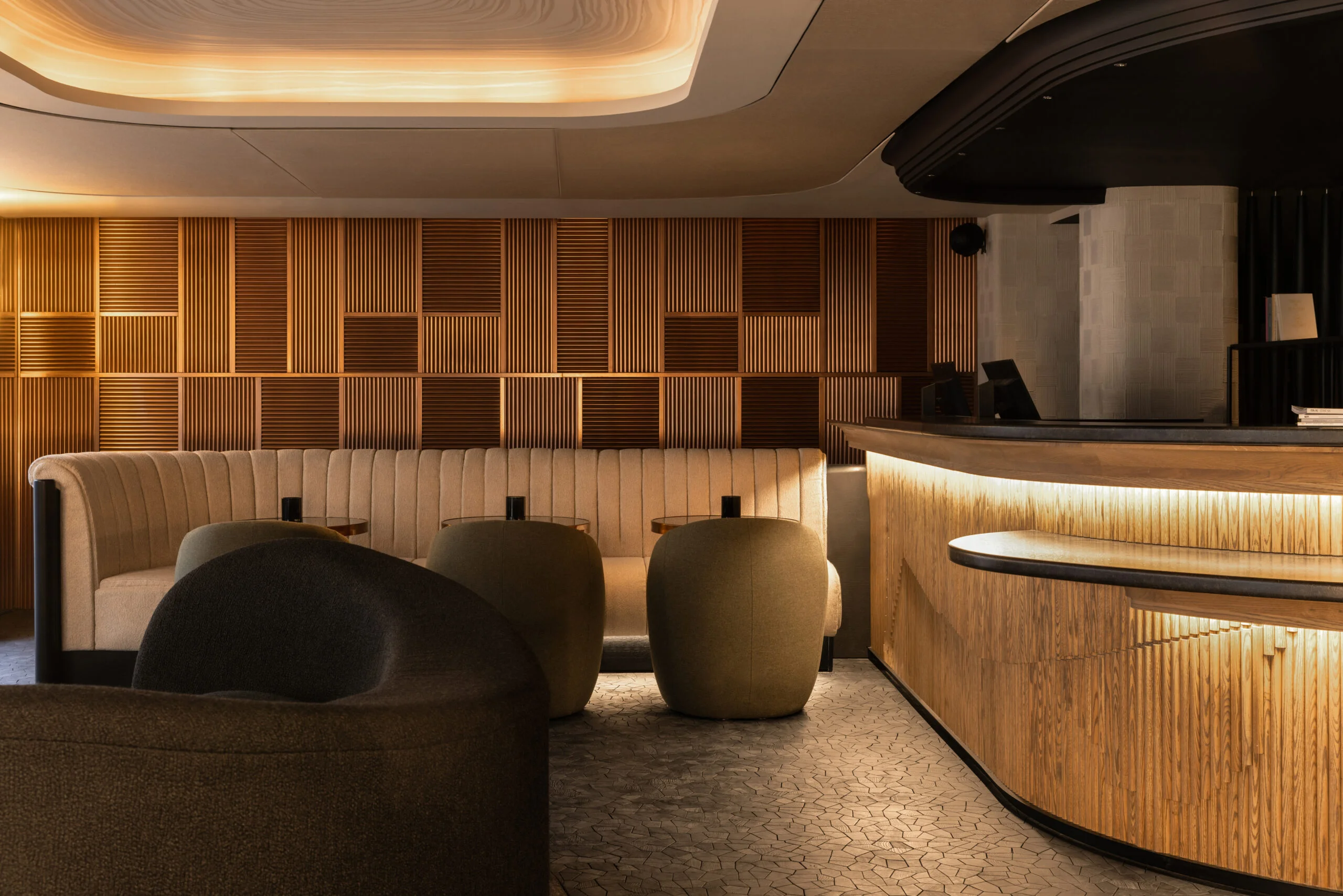
Bog oak is oak that fell into a peat bog, river or marsh and lay there, sealed from oxygen, for thousands of years. Instead of rotting, the wood slowly darkened as iron dissolved in the water reacted with the tannins in the oak, turning it brown, gray and finally close to black. It is also called morta, and it is rare, slow to dry and expensive.
How does bog oak form?
When oak forests grew on low, wet ground, trees that fell into waterlogged peat or river silt were buried quickly. Without oxygen, the fungi and bacteria that normally break wood down cannot work, so the trunk survives. Over a very long time, water carrying dissolved minerals soaks the wood through.
The result is a subfossil: no longer fresh timber, but not stone either. The cell structure of the oak is still there, which is why bog oak can be sawn, planed and finished like wood. Most pieces found are several thousand years old. They come from the peat bogs and river valleys of northern and eastern Europe, from Ireland and the fens of eastern England to Poland and Ukraine, and are usually turned up by drainage, farming or digging rather than searched for.
Why is bog oak black?
Oak is rich in tannins. When tannin meets iron in water, the two form dark compounds, the same chemistry as the iron-gall inks of medieval manuscripts and the iron solutions woodworkers still use to ebonize oak. In the bog, that reaction runs for millennia and reaches deep into the trunk, so the color goes through the wood rather than sitting on its surface.
The color is never quite uniform. Depending on how long the tree lay buried and on the water around it, bog oak ranges from deep brown to slate gray to near black, often with lighter streaks. That variation is part of its appeal, and the reason no two boards match exactly.
Bog oak vs petrified wood, smoked oak and charred oak
Several materials give a dark wood surface, by very different routes.
| Material | How it gets dark | How deep the color goes | Still wood? |
|---|---|---|---|
| Bog oak (morta) | Tannins reacting with iron in bog water over thousands of years | Deep into the trunk, uneven | Yes, a subfossil that can be worked like wood |
| Petrified wood | Wood replaced by minerals over millions of years | Throughout | No, it has become stone and is cut like stone |
| Smoked or fumed oak | Ammonia reacting with the tannins in fresh oak | Into the wood, not just on it | Yes |
| Charred oak (shou sugi ban) | The surface burned with flame, then brushed and sealed | The surface layer | Yes |
| Stained or ebonized oak | Pigment, dye or an iron solution applied to the surface | Near the surface | Yes |
Smoked oak works on the same principle as bog oak, a reaction with the oak's own tannins, but it takes days instead of millennia and the color is far more even.
What is bog oak like to work and live with?
When it comes out of the ground, bog oak is completely waterlogged and surprisingly fragile. Dried too fast, it shrinks unevenly, cracks and splits, so it has to be dried very slowly, over months or longer, and a good share of what is recovered never becomes usable timber.
Once dried and stabilized, it is generally denser than fresh oak and pleasant to work, but it can also be more brittle. That, and its scarcity, explain how it is used: furniture, veneers, inlays, small objects and the occasional floor. Where bog oak floors exist, they are usually a thin layer of bog oak on a stable base rather than solid boards, and they cost far more than any ordinary oak floor.
Is bog oak sustainable?
Partly. No living tree is felled for it, which is its strongest argument. But it comes out of wetlands and peat, which are valuable habitats and carbon stores, and in many places digging in them is restricted. If you buy bog oak, ask where and how it was recovered, and whether that is documented.
Dark oak floors that are not bog oak
OscarOno Paris does not make bog oak floors. What we make are dark endgrain floors where the color is part of the wood rather than painted on. Opus, our endgrain oak paving, comes in Natural, Smoke and Black. Smoke is smoked through the full depth of the oak, so, as with bog oak, the color comes from a reaction with the wood's own tannins rather than from a stain. Black is charred, in the shou sugi ban tradition. Neither is stained.

In this private apartment in Paris by Real Design Paris, Opus is laid in Black.
The other part of bog oak's appeal is its story: a wood that was never cut down. Réserve answers that in a different species. It is the Opus pattern cut in Zambezi teak (Baikiaea plurijuga), a southern African wood that is never planted and never felled, recovered only after the tree has fallen. Each tree is geolocated, documented and certified, and each floor is made from a single season of fallen trees. It is far harder than oak, about 2,990 lbf on the Janka scale against roughly 1,300 for oak, and it comes in Smoke. It is teak, not oak, and not bog oak.
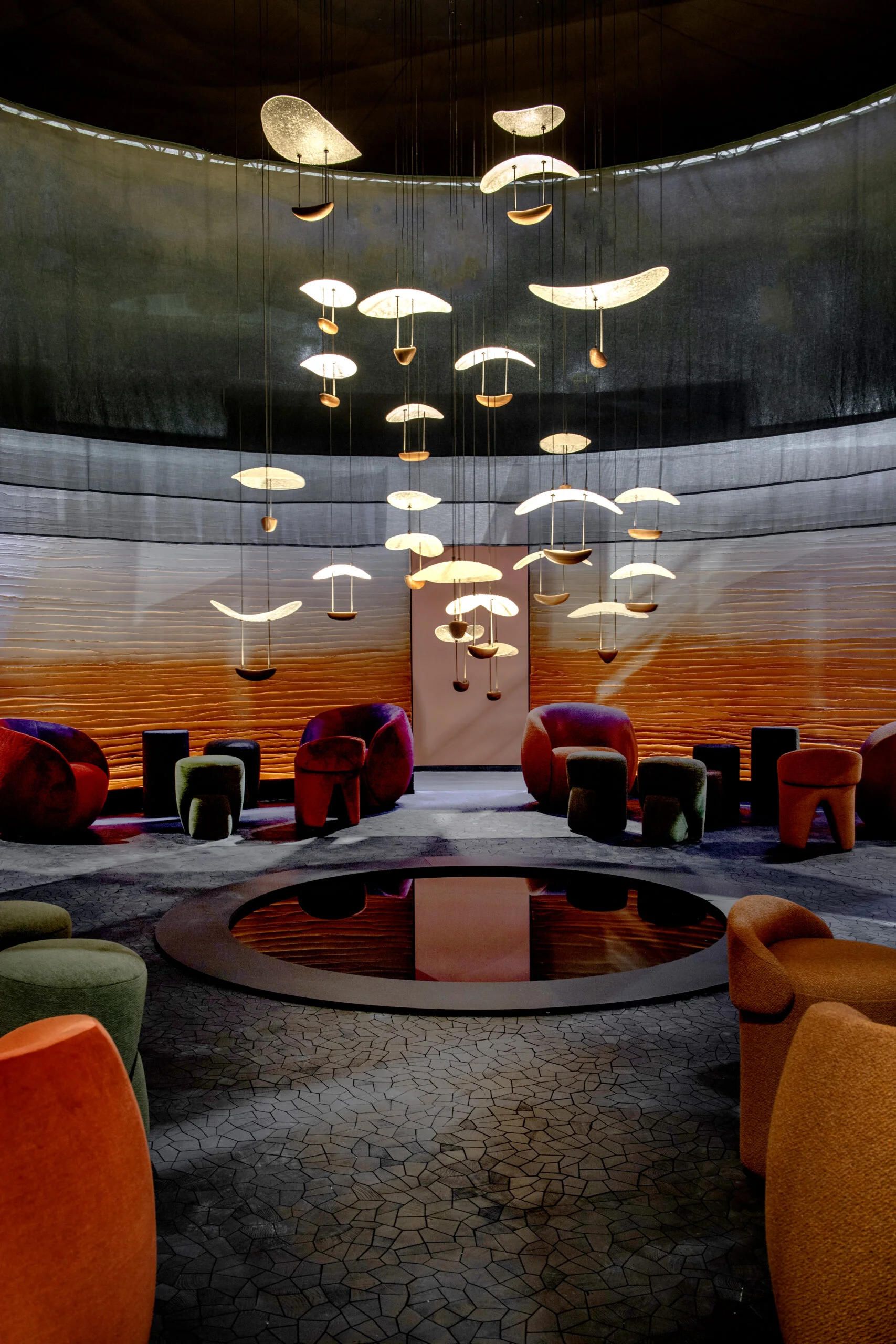
At Maison et Objet 2023 in Paris, Opus was shown in Black.
Frequently asked questions
What is the difference between bog oak and morta?
None. Morta is another name for bog oak: oak that lay for thousands of years in a peat bog, river or marsh, sealed from oxygen, and was darkened by iron in the water reacting with its tannins.
How old is bog oak?
Most bog oak is several thousand years old. The exact age varies from piece to piece and can be established by radiocarbon dating or by counting and matching its growth rings.
Why is bog oak black?
Oak contains tannins, and tannins react with dissolved iron to form dark compounds. In a bog, that reaction runs for thousands of years and reaches deep into the wood, so the color goes through it. The result ranges from deep brown to near black.
Is bog oak harder than normal oak?
Once properly dried it is generally denser than fresh oak, but it can also be more brittle. It is fragile when first recovered and cracks easily if dried too fast, which is one reason usable bog oak is scarce.
Can you have a bog oak floor?
Yes, but it is rare and expensive, and usually made as a thin bog oak layer on a stable base. For a dark floor whose color is part of the wood, smoked oak and charred oak are the practical alternatives. They are oak, not bog oak.
Dark endgrain floors by OscarOno Paris
Opus is endgrain oak, 12 mm birch plywood under an 8 mm oak top layer, rated usage class 34 for very heavy commercial traffic, Cfl-s1 for fire, and FSC and PEFC certified. Joints are under 1 mm and can be filled with LignoFusion in brown or black. Réserve is the same pattern in smoked Zambezi teak.
Dark finishes change most with light, so judge them in your own room. Order samples of Opus in Smoke and Black, and find spec sheets, CAD and 3D files in the library.
More from the Atelier

Wood Floors in the Bedroom: How to Choose a Calm, Quiet Floor
Wood is warm underfoot, easy to keep dust-free and lasts for decades in a low-traffic room. How to choose the color, finish, layout and acoustics of a bedroom floor.
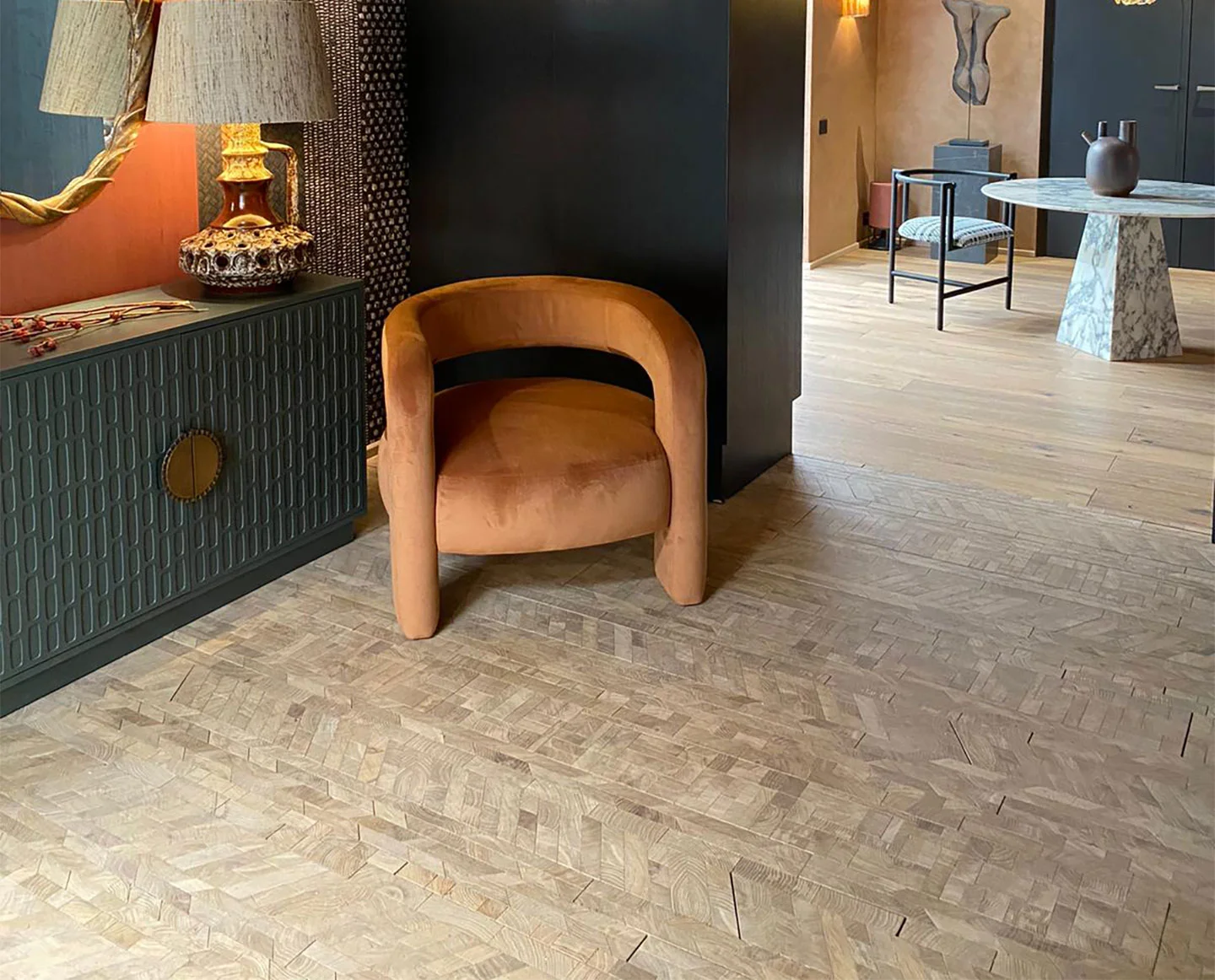
Light Oak Flooring for Bright, Sunlit and Coastal Rooms
Pale oak suits sunlit and seaside rooms, if you get the finish right. How light oak changes in the sun, and what sand, humidity and glare mean for it.

Wide Plank Oak Flooring for a Minimalist Interior
Fewer joints, a clean grade, a low sheen and one direction through the house: how to choose wide plank oak for a minimalist interior, and when an end grain grid does the job better.