
What Is End Grain Flooring, and Why Does It Last?
How a block cut across the trunk becomes the hardest-wearing face of a wood floor.
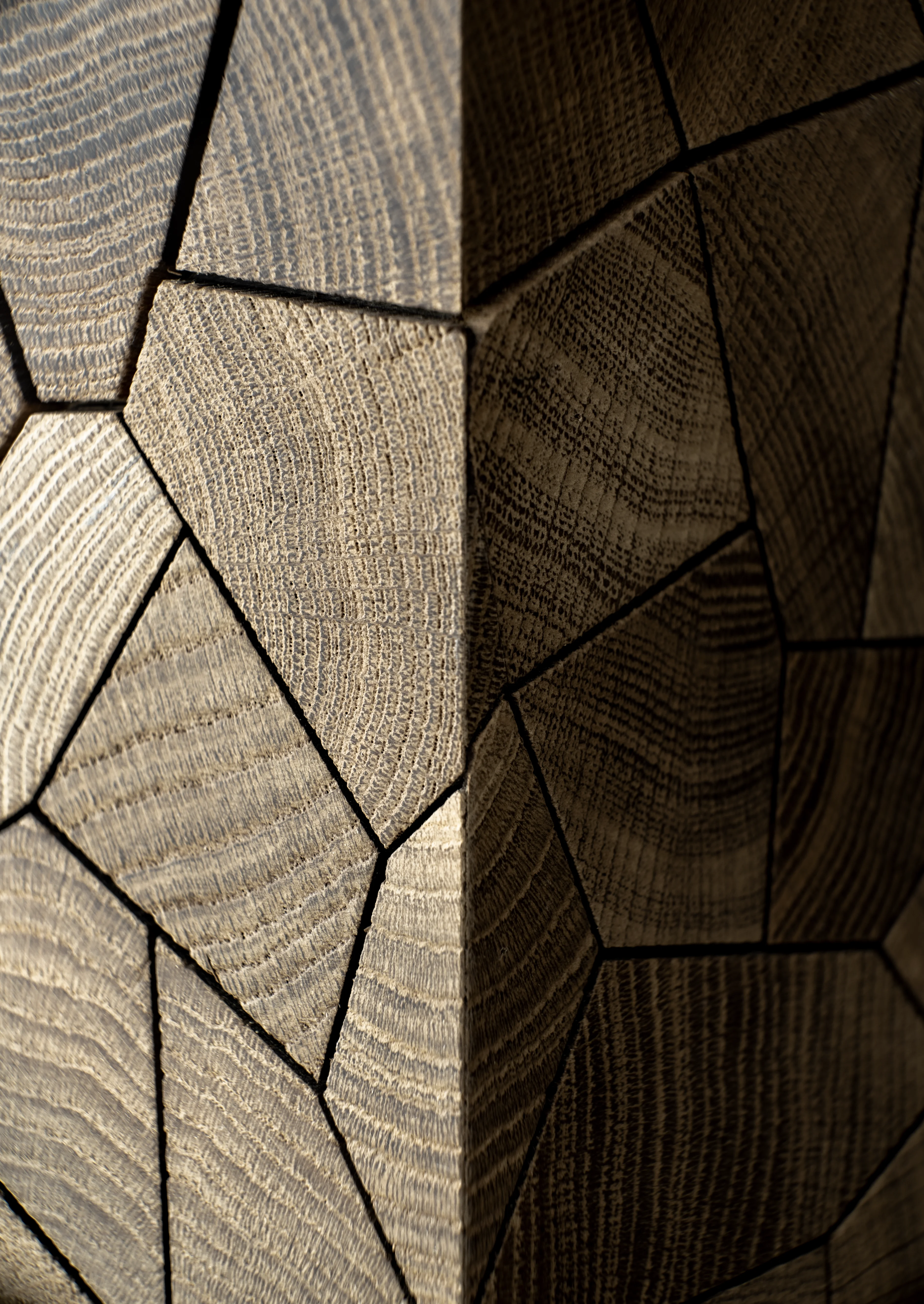
End grain flooring is a wood floor made of blocks cut across the trunk, so you walk on the ends of the wood fibers and see the growth rings, not the long grain of a plank. That face is the hardest-wearing part of the timber, which is why end grain floors were once used to pave streets and line factory floors, and why they still last for generations indoors.
What is end grain flooring?
A normal floorboard is sawn along the length of the log, so its top face shows long lines of grain. An end grain block is cut the other way, crosswise, like a slice from a log. Its top face shows the rings, the rays and the color change between heartwood and sapwood.
Laid side by side, these blocks form a mosaic in which no two pieces match. Light catches the rings differently across the floor, so an end grain surface looks deeper and more textured than a plank floor in the same wood and finish.
Why does end grain flooring last so long?
Think of wood as a bundle of drinking straws. A plank shows the sides of the straws, and a heavy point load crushes or tears them. An end grain block shows the ends of the straws standing upright, and weight pushes down along their length, which is the direction wood is strongest.
In practice this means three things. End grain wears slowly and evenly, because traffic grinds against fiber tips rather than peeling fibers away. It resists denting from furniture legs and heels better than side grain of the same species. And the marks it does pick up blend into the rings and the variation between blocks instead of standing out on a smooth, uniform surface.
That is why OscarOno Paris's endgrain oak floors, Opus, Forêt, Cube and Rosace, are rated usage class 34, the class for very heavy commercial traffic, one step above the class 33 of its plank and panel floors. All four carry a Cfl-s1 fire rating.
End grain vs plank flooring: how do they compare?
| End grain blocks | Planks (side grain) | |
|---|---|---|
| Fiber direction | Upright, ends at the surface | Lying flat along the board |
| Wear and dent resistance | Higher; load runs along the fibers | Lower; fibers can crush or tear |
| Sound | Quieter, softer footfall | Livelier, depends more on the subfloor |
| Look | Growth rings, mosaic of blocks | Long grain lines, cathedral figure |
| Moisture | Absorbs and releases moisture quickly through open ends | Slower to react |
| Installation | Fully glued to a flat, dry subfloor by a specialist | Glued, nailed or floating, tongue and groove |
Where does end grain wood block flooring come from?
In the nineteenth century, many European and American cities, Paris and London among them, paved busy streets with wood blocks set end grain up. They were quieter under hooves and iron wheels than stone, and they stood up to heavy traffic. The same blocks moved indoors into workshops, mills and warehouses, where floors had to carry machinery and carts.
Opus, our endgrain oak floor inspired by Parisian wood paving, revives that craft: oak cut on its end grain face into an organic pattern whose joins disappear into one continuous surface.
Which patterns does end grain flooring come in?
The simplest end grain floor is a grid of square blocks. Cube, a grid of square endgrain oak blocks, is exactly that, built from solid European oak offcuts the atelier would otherwise set aside. It shows the hardness and acoustic calm of end grain with nothing added.
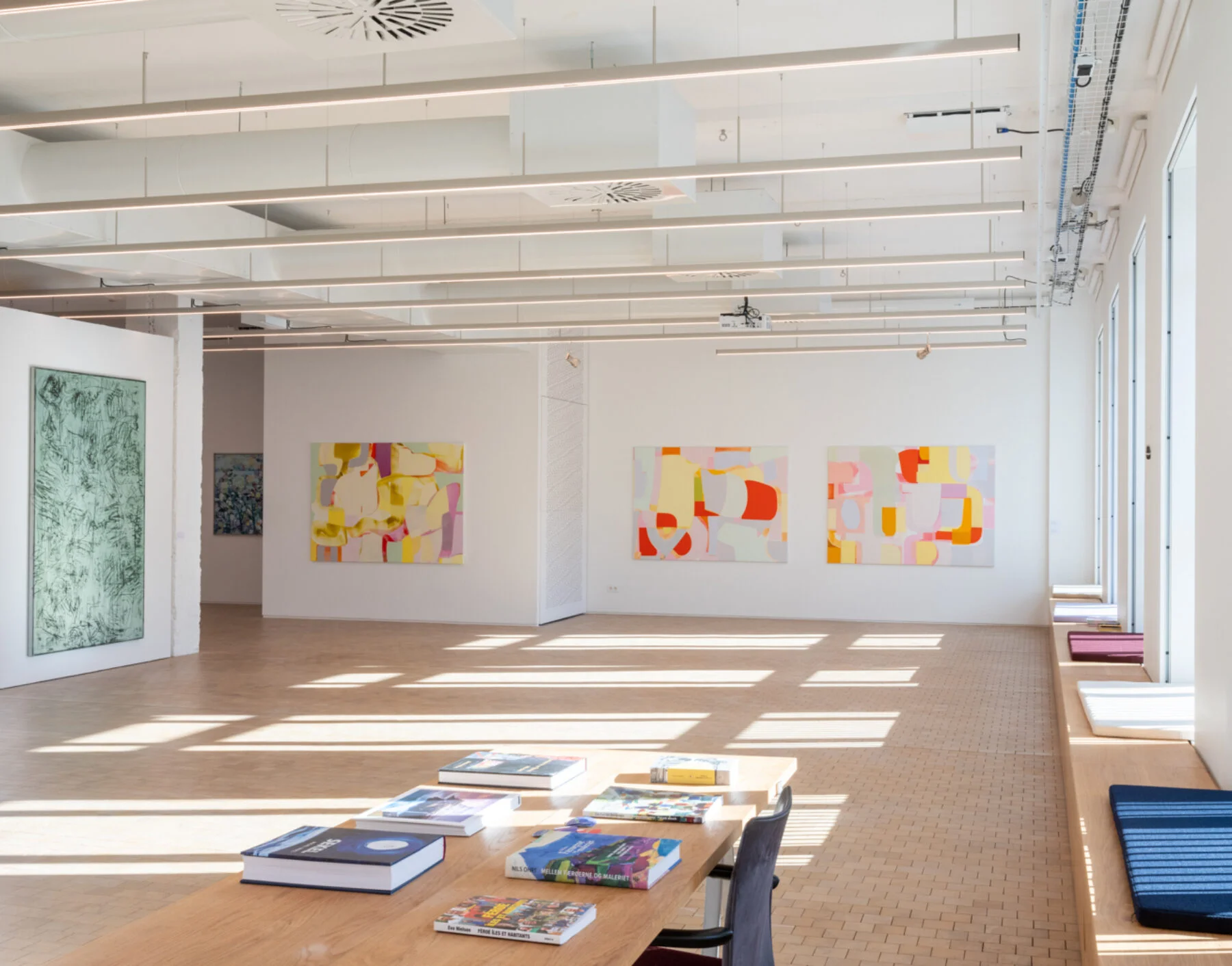
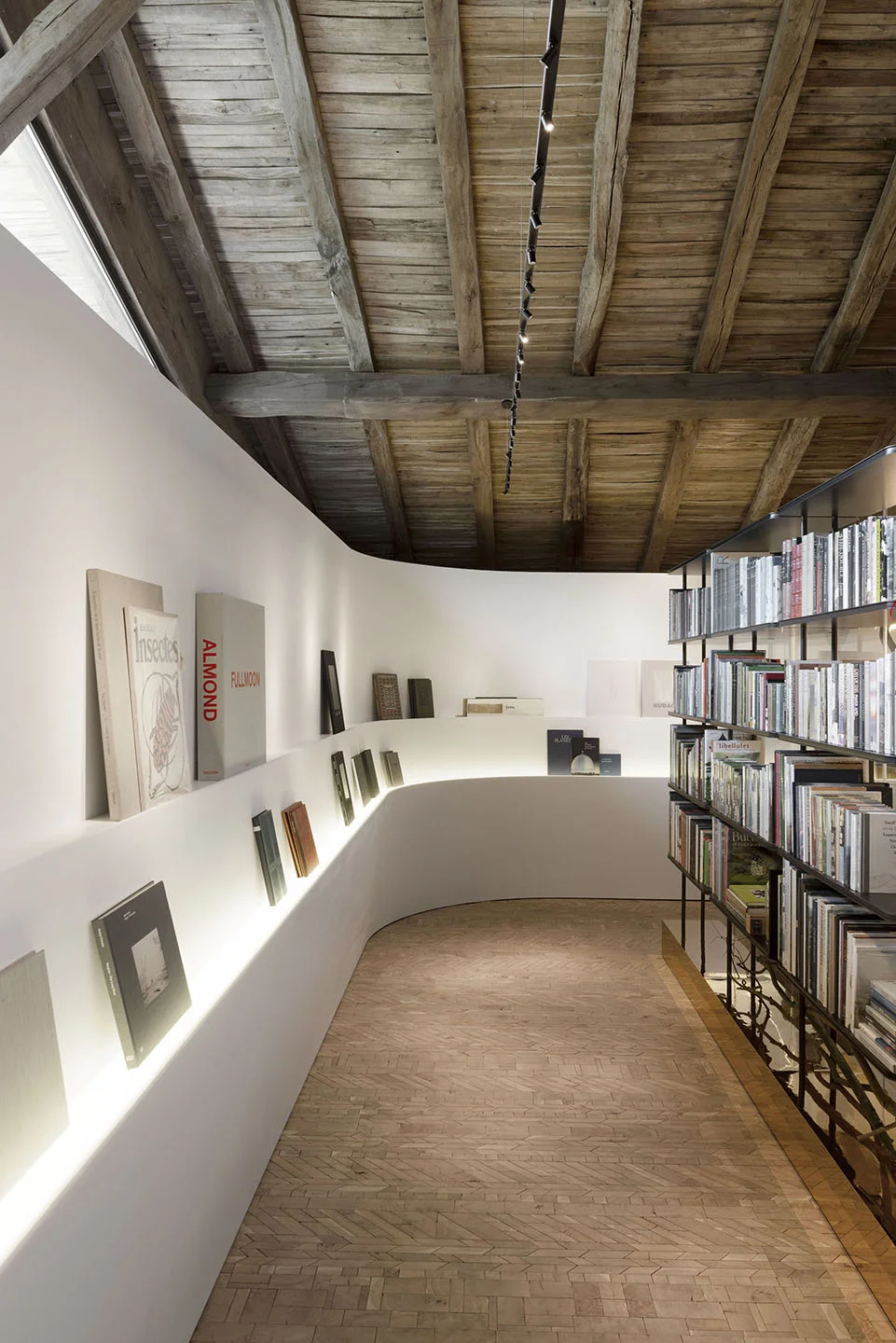
From there the geometry can loosen. Forêt combines six planks and six patterns in endgrain oak, which the architect arranges freely so the floor never repeats. At Domaine des Etangs in Massignac, France, Forêt in a natural finish runs the length of a curved library, under an old timber ceiling, and quiets the room.
At the far end is the spiral. Rosace, a spiral end grain oak floor, is bent from straight planks into a circle four meters across and becomes the piece a room is arranged around.
Which finish suits an end grain floor?
End grain soaks up finish far more than side grain, because the open fiber ends draw it in. Penetrating oils and hardwax oils suit it well: they protect from inside the wood, keep the texture of the rings visible, and can be refreshed locally. A thick film finish hides the very surface you chose end grain for.
Color works the same way. Smoking darkens the rings and the softer wood between them differently, so the pattern reads more strongly. OscarOno Paris's endgrain floors come in three finishes and none of them is a stain. Natural is the oak as it is. Smoke is smoked through the full depth of the oak, so the color is not a layer on the surface. Black is charred, in the shou sugi ban tradition; it is the finish of black Opus floors in Paris apartments.
What should you know about installation and moisture?
Because the fiber ends are open, end grain takes up and gives off moisture faster than a plank. The blocks need to acclimatize on site, the subfloor must be flat, dry and stable, and the indoor climate should stay reasonably steady through the year. The floor is fully glued down, then sanded and finished in place, which makes it a job for an experienced installer.
OscarOno Paris's endgrain floors are engineered rather than solid blocks: an 8 mm endgrain oak top layer on 12 mm birch plywood for Opus, Forêt and Rosace, and a 6 mm oak top layer on 10 mm birch plywood for Cube. Joints between pieces are under 1 mm, and can be left open or filled with LignoFusion in brown or black.
Like any wood floor, end grain does not want standing water. Kitchens and well-ventilated rooms are fine with a good oil finish; wet rooms and heated floors need a specific check against the product's technical sheet rather than a general yes or no.
Frequently asked questions
Is end grain flooring harder than regular hardwood flooring?
The wood is the same, but the face you walk on is not. End grain is the hardest-wearing face of a piece of timber, so an end grain oak floor resists wear and denting better than oak planks laid with their side grain up; OscarOno Paris's endgrain floors are rated usage class 34, for very heavy commercial traffic. It is still wood: a sharp point heavy enough will mark it.
How do you clean and maintain an end grain wood floor?
Sweep or vacuum regularly to remove grit, which is what wears any floor, and clean with a well-wrung mop and a soap made for oiled wood. Never leave water standing on it. Oiled end grain is refreshed from time to time with a maintenance oil rather than sanded back.
Can end grain flooring be installed over underfloor heating?
Often, yes, as long as the heating runs within the surface temperature the flooring maker allows and the subfloor is dry before laying. End grain responds to heat and humidity quickly, so check the technical sheet for the specific product rather than relying on a general rule.
Does end grain wood flooring scratch easily?
Less than plank flooring. A scratch across end grain runs over the tips of the fibers instead of tearing along them, and the rings and color shifts from block to block hide fine marks well. Gravel and grit under shoes will still dull any finish, so a mat at the door helps.
End grain flooring at OscarOno Paris
OscarOno Paris makes endgrain oak floors in four characters: the grid of Cube, the composed planks of Forêt, the paving pattern of Opus and the spiral of Rosace. All are FSC and PEFC certified, and Opus, Forêt and Cube have plain boards in the same finish for adjoining rooms and transitions. To see the rings and finishes in your own light, order samples. Spec sheets, CAD and 3D files are in the library.
More from the Atelier
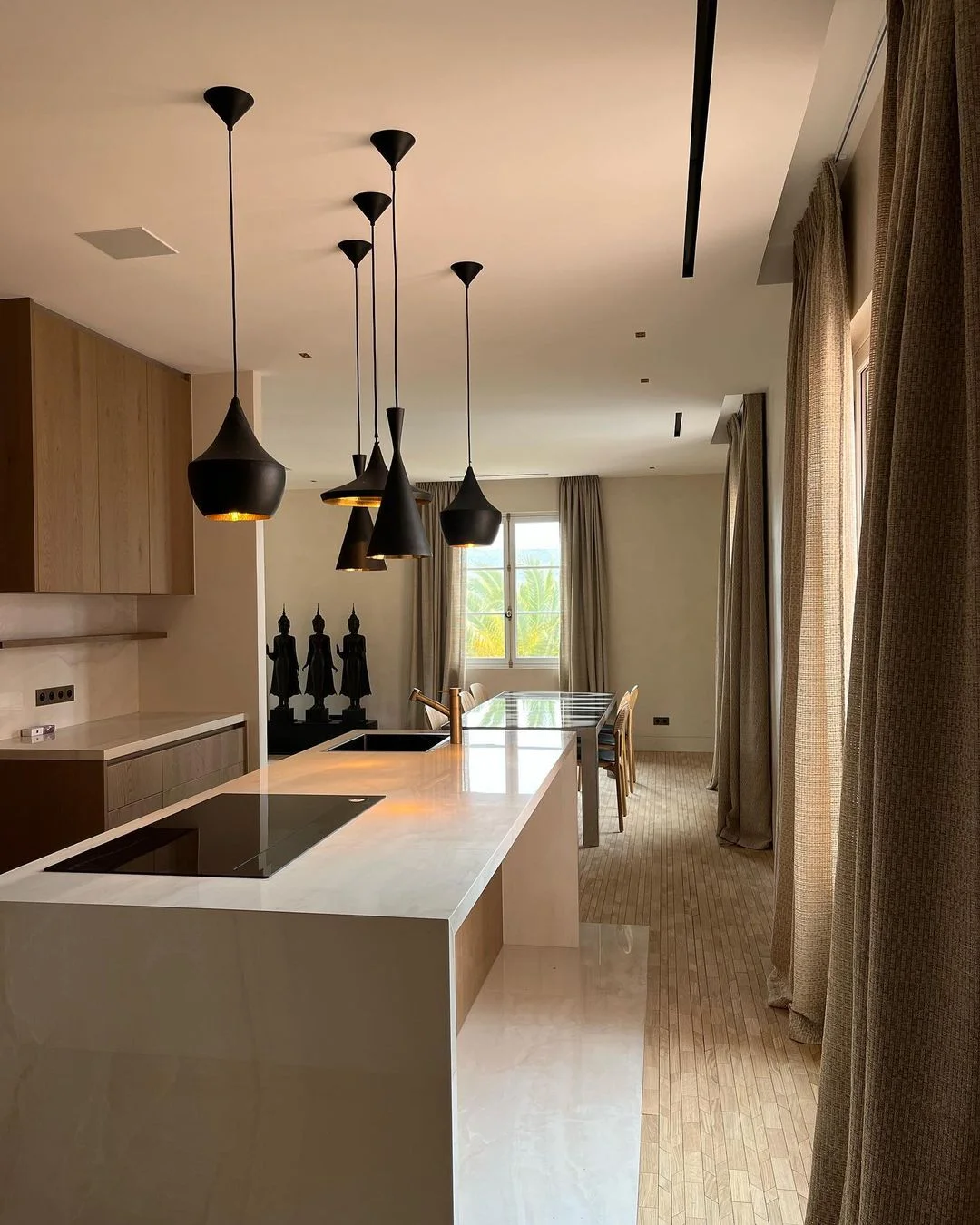
Reclaimed Teak Flooring: End-Grain Strength and Resilience
Explore how reclaimed teak flooring and end-grain timber provide extraordinary durability, natural silica protection, and stability for demanding spaces.
How to Prevent Fading on Hardwood Floors: Design Guide
An architectural approach to managing sun exposure on wood floors, from spectrally selective glazing to finish choices and uniform patina development.
The Craft of Marquetry Parquet Flooring and Panels
Marquetry parquet flooring bridges historical French palace geometry with contemporary minimalism, bringing architectural structure to luxury interiors.