
What Is Hardwax Oil and How Does It Protect a Wood Floor?
A finish that sits in the wood rather than on it, and can be mended in patches.

Hardwax oil is a wood floor finish made from natural oils and waxes. The oils soak into the top of the wood and harden there, and the waxes stay at the surface, so the floor gets a thin, matte, water-repellent layer instead of a plastic-like film. It keeps wood looking and feeling like wood and can be repaired in patches; in return it needs more regular care than lacquer.
What is hardwax oil made of?
Most hardwax oils combine two groups of ingredients:
- Drying oils, such as linseed, sunflower, soy or thistle oil. They are thin enough to soak into the open pores of the wood and harden once they meet the air.
- Hard waxes, usually carnauba and candelilla, which are plant waxes. They stay near the surface and give the finish its water repellence and soft sheen.
Products also contain driers to speed up curing and, in many cases, a solvent to help the oil flow. Some are colored with pigment, which is how many oiled floors get a white, gray or brown tone. Two-component versions add a hardener in a separate can.
How does hardwax oil protect a wood floor?
Hardwax oil works in two layers. The oil penetrates the top fraction of a millimeter of the wood and cures there by reacting with oxygen, turning from a liquid into a tough, flexible solid inside the fibers. That stiffens and seals the surface of the wood itself. The wax then sits in a very thin layer on top, so water and spills bead up long enough to be wiped away.
Because there is no thick film, there is nothing to peel, flake or crack. Light passes through to the grain and scatters off a matte surface rather than reflecting as glare. The trade-off is that the protection is thinner than a lacquer: it resists everyday spills, not standing water, and it wears down gradually where people walk most.
How long does hardwax oil take to dry and cure?
Two different things are happening. A hardwax-oiled floor is usually dry enough to walk on carefully within a day. Full cure, when the finish reaches its final hardness and water resistance, takes much longer: typically one to a few weeks for a standard one-component oil. Two-component oils, mixed with a hardener just before use, cure in days rather than weeks, which is why they are often chosen for shops, restaurants and hotels.
Until the finish is fully cured, keep rugs off the floor, wipe up any liquid at once and clean only with a dry mop. Drying and curing times depend on the product, the temperature and the airflow, so follow the maker's data sheet.
Hardwax oil vs lacquer: which is better?
Neither is better in every room. Lacquers, including polyurethane varnishes, form a film on top of the wood; hardwax oil sits in it. That one difference decides most of the rest.
| Hardwax oil | Lacquer (polyurethane, varnish) | |
|---|---|---|
| Where it sits | In the surface of the wood, with a thin wax layer | On top of the wood, as a film |
| Look and feel | Matte, close to raw wood | From near-invisible matte to gloss, depending on the product |
| Spills and stains | Resists everyday spills if wiped up | More resistant; the film seals the wood |
| Wear | Wears gradually in traffic paths | Lasts longer, then wears through in traffic paths |
| Repairs | Spot repair: clean and re-oil the worn area | Usually a light sanding and recoat of the whole area |
| Routine care | Soap for oiled floors, maintenance oil every few years | pH-neutral cleaner, never oil or wax |
Choose hardwax oil if you want a floor that looks and feels like bare wood and you are happy to care for it. Choose a lacquer if you want the least maintenance and the most resistance to spills, as in a busy kitchen or a commercial space cleaned by a contractor.
How do you maintain a hardwax-oiled floor?
- Dry clean often. Grit is what wears any finish, so sweep or vacuum regularly and put mats at the doors.
- Mop barely damp, with the right soap. Use a soap made for oiled floors, which leaves a trace of oil behind with each wash. General household cleaners, ammonia, vinegar and steam mops strip the finish.
- Refresh, do not refinish. When traffic paths start to look dry or dull, clean them and apply a thin coat of maintenance oil or wax refresher. Most homes need it every few years, busy commercial floors more often.
- Repair locally. A scratch or a worn patch can be lightly abraded and re-oiled on its own, and it blends in once cured.
Hardwax oil on endgrain floors
Endgrain behaves differently from ordinary boards. Cut across the trunk, its fibers stand upright like a bundle of open straws, so any oil is drawn much deeper and in larger quantities than on face grain. That is part of why endgrain feels so dense and calm underfoot, and why its maintenance products and quantities are specific to it.
OscarOno Paris makes two of its endgrain collections from that cut: Opus, an endgrain oak paving, and Forêt, six endgrain planks and six patterns. Both come in Natural, Smoke and Black. Smoke is smoked through the full depth of the oak and Black is charred, in the shou sugi ban tradition; neither is stained, so the color belongs to the wood rather than to a surface coat. The care routine for each floor is on its spec sheet, and our Essentiel collections are lacquered, so they are never oiled.
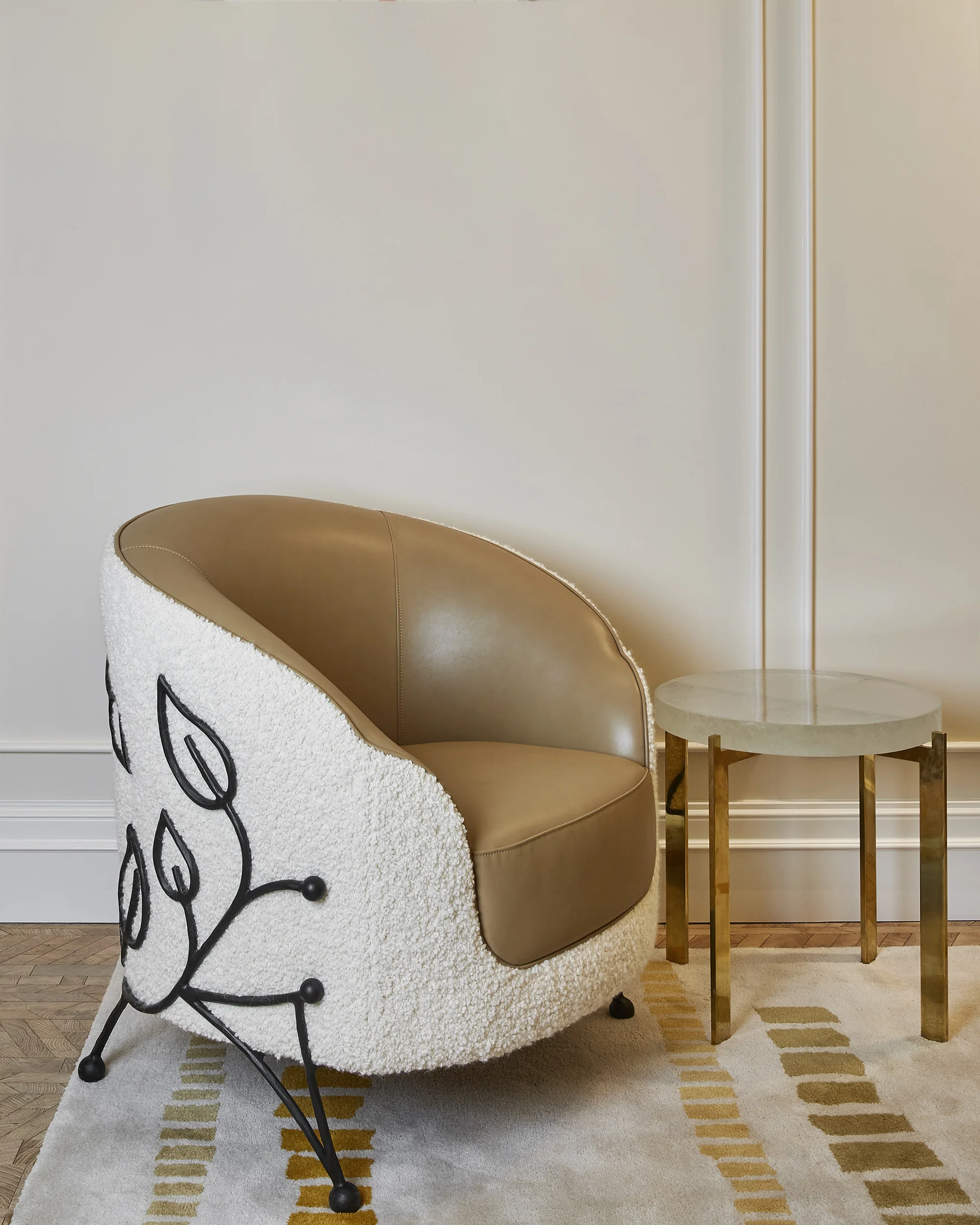
At Claridge's Hotel in London, Forêt is laid in Natural, the endgrain left in its own color.
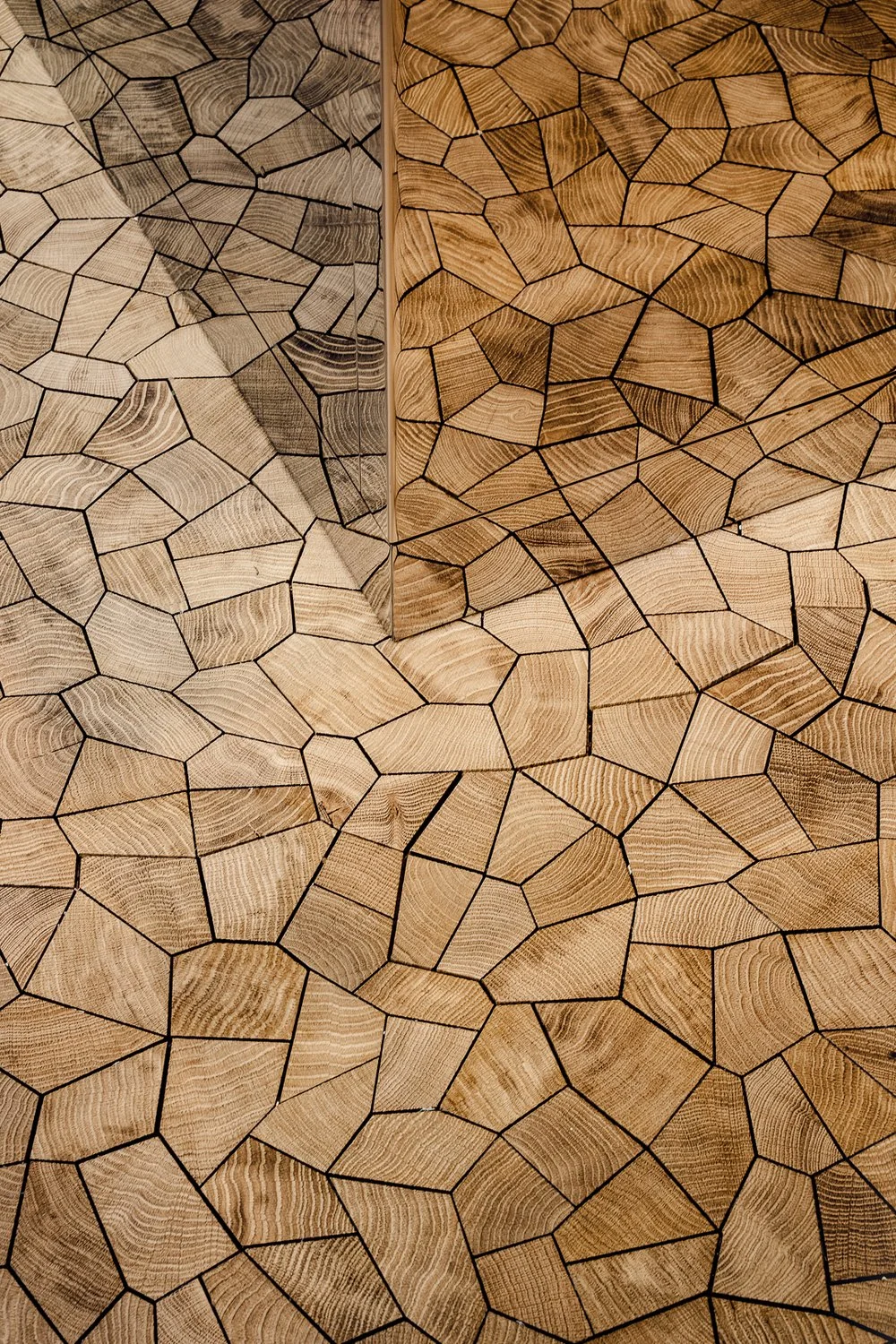
At the Butterfly Pâtisserie of the Hôtel de Crillon in Paris, Opus is laid in Natural, the pattern whose joins disappear into one continuous surface.
Frequently asked questions
How long does hardwax oil take to dry?
Usually long enough to walk on carefully within a day, but full cure takes longer: typically one to a few weeks for a standard oil, and a few days for a two-component oil mixed with a hardener. Until then, keep rugs off and wipe up liquids at once.
Is hardwax oil better than polyurethane?
It depends on the room. Hardwax oil looks and feels closer to bare wood and can be repaired in patches, but needs regular care. Polyurethane and other lacquers resist spills better and need less maintenance, but a worn area usually means sanding and recoating the whole surface.
How often does a hardwax-oiled floor need re-oiling?
Most homes need a thin coat of maintenance oil every few years, applied to a clean floor without sanding. Busy commercial floors need it more often, at least in the traffic paths.
Can you put hardwax oil over a lacquered or varnished floor?
No. Hardwax oil has to soak into bare wood, and a lacquer or varnish seals the pores. The old film must be sanded off completely first. Equally, a lacquered floor should never be oiled or waxed.
Is hardwax oil waterproof?
No. It is water-repellent: spills bead up and can be wiped away, but standing water left for a long time can mark the wood. That is why oiled floors in kitchens and bathrooms need spills wiped up promptly.
Finishes and care at OscarOno Paris
Opus and Forêt are endgrain oak on 12 mm birch plywood with an 8 mm oak top layer, rated usage class 34 for very heavy commercial traffic, Cfl-s1 for fire, and FSC and PEFC certified. Their joints are under 1 mm and can be filled with LignoFusion in brown or black.
Finish is easier to judge by hand than on a screen. Order samples in Natural, Smoke and Black, and find spec sheets, CAD and 3D files in the library.
More from the Atelier
Protecting End Grain Wood Block Flooring from UV Fading
Discover the science of oak photodegradation and how to protect end-grain wood floors from UV fading using advanced varnishes and architectural design.

Parquet Floor Restoration: Is an Old Parquet Floor Worth Saving?
Loose blocks, gaps, stains and a worn finish can all be put right. How to tell whether an old parquet floor is worth restoring, what the work involves, and when it is not.

Squeaky Wood Floors: Why They Squeak and How to Fix Them
A squeak is friction: wood on wood, wood on a nail, or a subfloor moving on its joists. Find which one it is and the fix follows.