
Marquetry Flooring: What It Is and How It Differs from Parquet
Where parquet repeats a pattern, marquetry composes a design.
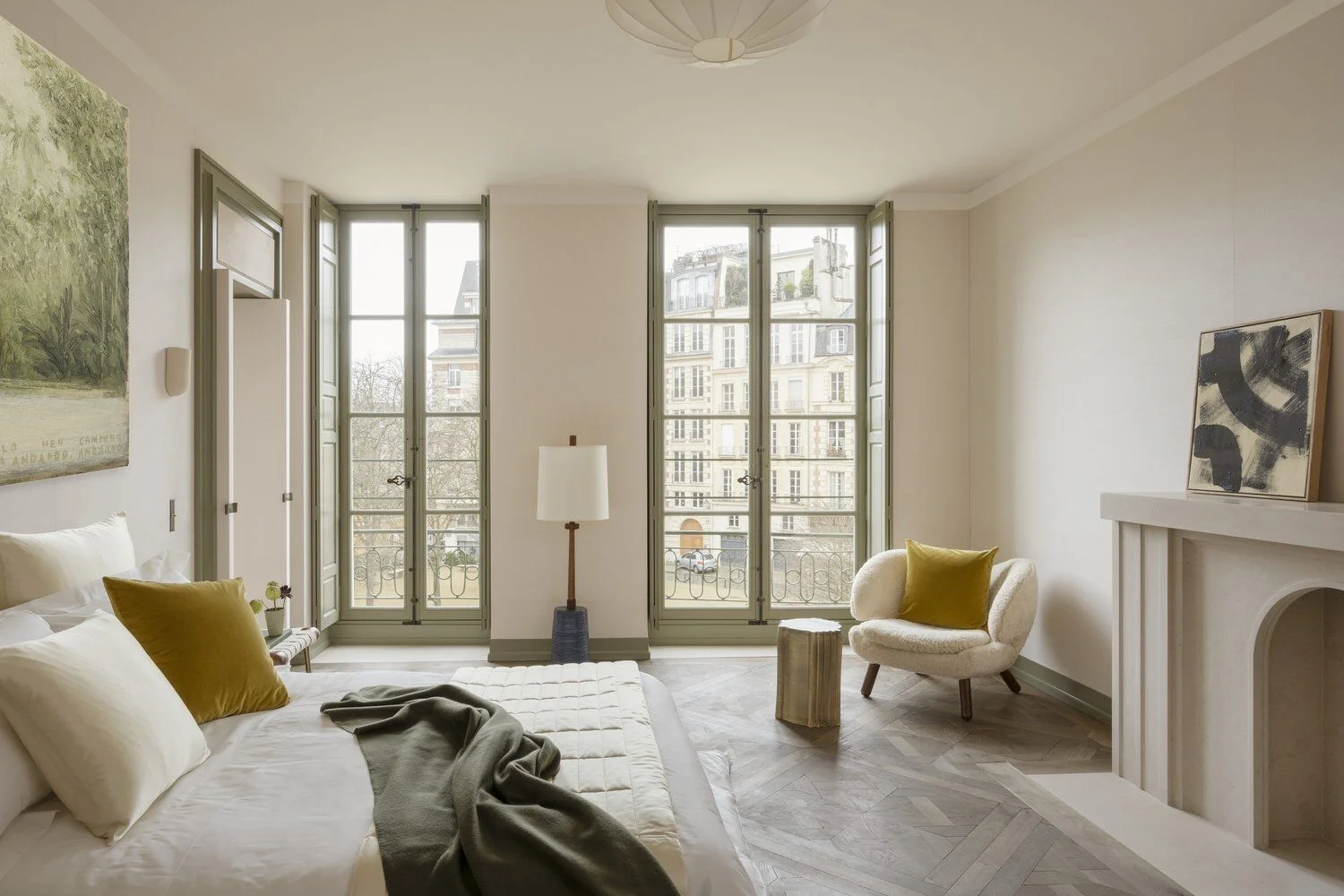
Marquetry flooring is a wood floor decorated with shapes cut from contrasting woods, or from one wood with its grain turned, and fitted together into a design: borders, stars, medallions, inlaid squares, sometimes whole pictures. Ordinary parquet repeats one geometric pattern across a room; marquetry composes. Today it ranges from a single inlaid centerpiece to workshop-made panels with contrasting inserts.
Marquetry, parquetry and inlay: what is the difference?
The three words are often used loosely, but they describe different ways of working.
| Technique | What it uses | How it is assembled | What it looks like |
|---|---|---|---|
| Marquetry | Shaped pieces of wood (thin veneers on furniture, thicker pieces on floors) | Cut and fitted together into one sheet or panel, then glued to a backing | A composed design: motifs, borders, pictures |
| Parquetry | Straight-edged pieces of wood | Laid in a repeating geometric pattern | Herringbone, chevron, squares, panels |
| Inlay | Wood, metal, stone or shell | Set into a recess cut in a solid surface | Lines, bands or accents in an otherwise plain surface |
On floors the line blurs. A herringbone is parquetry. A herringbone room framed by a contrasting border with a star at the center is usually called marquetry flooring, and the border itself may well be inlaid.
What does marquetry flooring look like?
- Borders and bands. A strip of contrasting wood, often with a repeating motif, that frames a room or marks a threshold.
- Medallions and rosettes. A centerpiece, round or square, set into a plainer field, typically in an entrance hall or under a chandelier.
- Inserts in panels. Small squares or lozenges of a darker or lighter wood set where panels meet, which gives a geometric floor a second, finer rhythm.
- Multi-wood panels. Panels in which every piece is chosen for its color, the classic floor of palaces and grand houses.
- Pictorial floors. Figurative scenes in wood, rare on floors because a picture is only seen properly from one side.
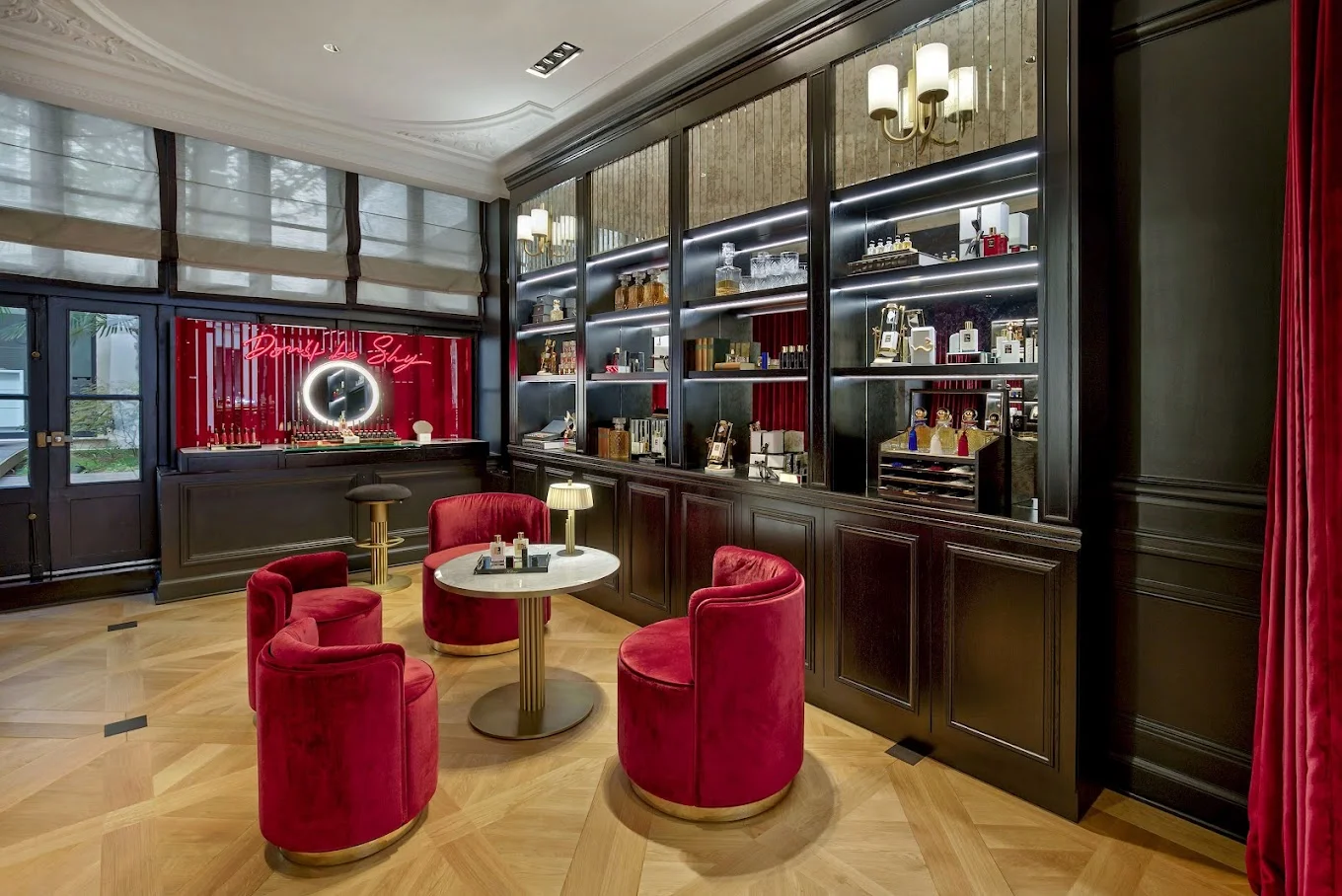
The By Kilian boutique in Paris is laid in Dalle, OscarOno Paris's oak panel parquet, with small dark squares set where the panels meet: a quiet example of the inserts that mark marquetry flooring.
How is a marquetry floor made?
The craft began on furniture and walls, and its classic techniques come from there. Marquetry cutters worked at a chevalet de marqueterie, a sawing frame that holds the veneer while a fine saw follows the drawing. Several veneers can be stacked and cut at once, so that the pieces of each layer fit the gaps in the others. Pale pieces are shaded by dipping their edges in hot sand, which scorches them into a gradient and gives a flat picture depth.
Floor marquetry needs thicker pieces, because it has to survive feet and later sanding. Today most of it is cut by machine, with CNC routers, lasers or waterjets following a digital drawing, then assembled by hand into panels in the workshop, glued to a stable backing, finished and laid like any other panel floor. The hand work lies in choosing and matching the wood, and in fitting the pieces so the joints close.
Where does marquetry come from?
Marquetry grew out of the inlaid wood panels of Renaissance Italy, where craftsmen built perspective views of shelves, instruments and architecture entirely from wood. It reached its height in France in the seventeenth and eighteenth centuries, when cabinetmakers such as André-Charles Boulle combined wood with brass and tortoiseshell. Floors followed in palaces and grand houses: borders, centerpieces and panels in several woods, alongside the plainer geometric parquets that were laid room after room.
Can a single wood make a marquetry floor?
Yes, and some of the most refined ones do. Wood reflects light differently along the grain and across it, so two pieces of the same oak, one turned at right angles to the other, look like two different tones. As you walk across the floor or the light moves through the day, the two swap places: the pale square goes dark and the dark one goes pale.
That is how panel parquet works in a single species. A panel floor such as Tresse, a Versailles panel loosened into strips that cross over and under like a basket, needs no second wood: the grain running in different directions draws the pattern. OscarOno Paris makes Tresse in oak, in Natural, Smoke and Black.
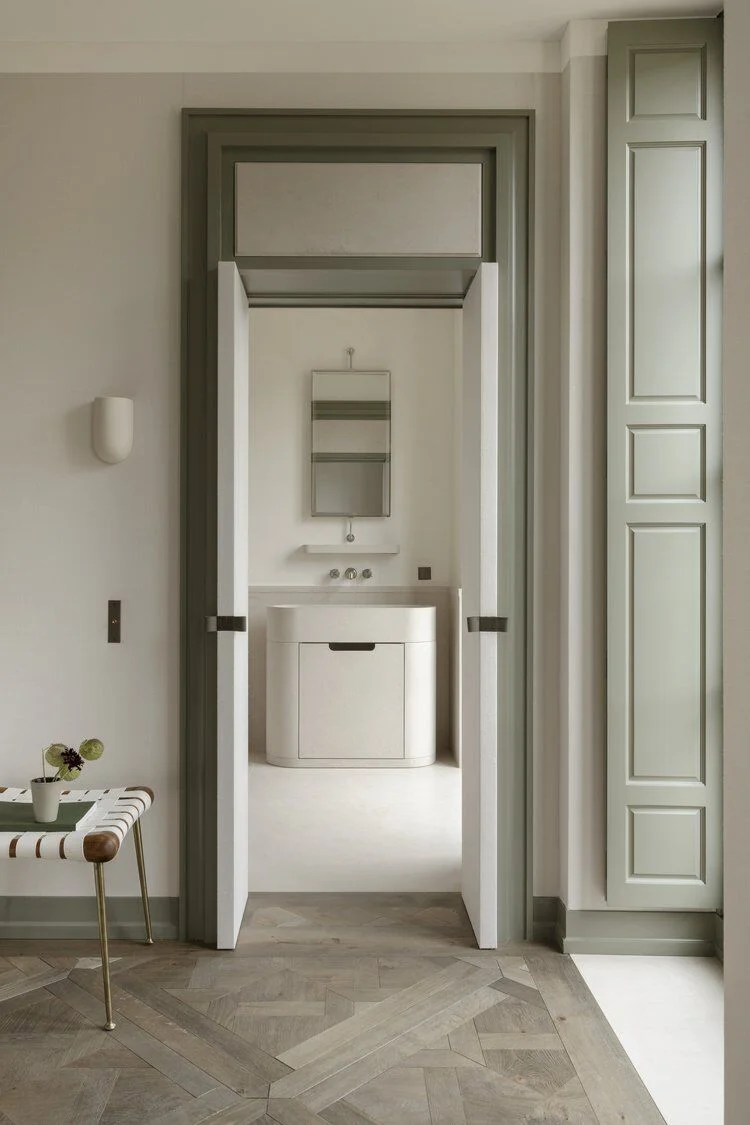
In this private residence in Paris, laid in Dalle, the crossing strips of each panel read in two tones from one oak.
Is marquetry flooring practical?
Made well, it lasts as long as any good parquet, with three things to keep in mind:
- Woods move and wear differently. A soft wood next to a hard one wears faster, and two species can shrink and swell by different amounts. Good makers pair woods with similar behavior, or keep the contrasting parts small.
- Colors change at different rates. Light darkens some woods and lightens others, so the contrast of a multi-wood floor shifts in its first years.
- Repairs are specialist work. Sanding has to respect the thickness of the decorative layer, and replacing a damaged motif means cutting a matching piece.
Frequently asked questions
What is the difference between marquetry and parquetry?
Parquetry repeats a geometric pattern of straight-edged pieces, such as herringbone, chevron or panels, across a floor. Marquetry composes a design from shaped pieces: borders, medallions, motifs or pictures. Many decorative floors combine both, with a parquetry field framed by a marquetry border.
Is marquetry flooring durable?
Yes, when it is made with pieces thick enough for a floor and with woods that move and wear alike. A soft wood next to a hard one wears faster, so durable marquetry floors keep contrasting woods similar in hardness or keep the contrasting parts small.
Can marquetry be made from a single type of wood?
Yes. Wood looks lighter or darker depending on the direction of its grain, so pieces of the same oak turned at different angles read as different tones, and the effect shifts as the light moves.
Is marquetry flooring expensive?
It costs more than plain or patterned parquet, because every motif has to be cut, fitted and matched, and installation takes longer. The price depends mostly on how complex the design is and how many woods it uses.
Can a marquetry floor be sanded and refinished?
Usually, provided the decorative layer is thick enough. Sanding should be done by a specialist who knows the floor, because different woods sand differently and a thin layer leaves little room for error.
Panel floors by OscarOno Paris
OscarOno Paris does not make pictorial marquetry. Our panel floors are geometric and cut from one wood, oak, with the pattern and the grain doing the work. Dalle is oak composed into 800 x 800 mm panels in the craft of the great Parisian floors, offered in the twelve lacquered Essentiel colors. Tresse loosens the Versailles panel into crossing strips, in Natural, Smoke (smoked through the full depth of the oak) or Black (charred, in the shou sugi ban tradition). Both are flatgrain select oak, 12 mm with a 4 mm top layer, rated usage class 33 for heavy commercial traffic, Cfl-s1 for fire, and FSC and PEFC certified.
Panels are best judged at full size. Order samples, and find spec sheets, CAD and 3D files for both collections in the library.
More from the Atelier
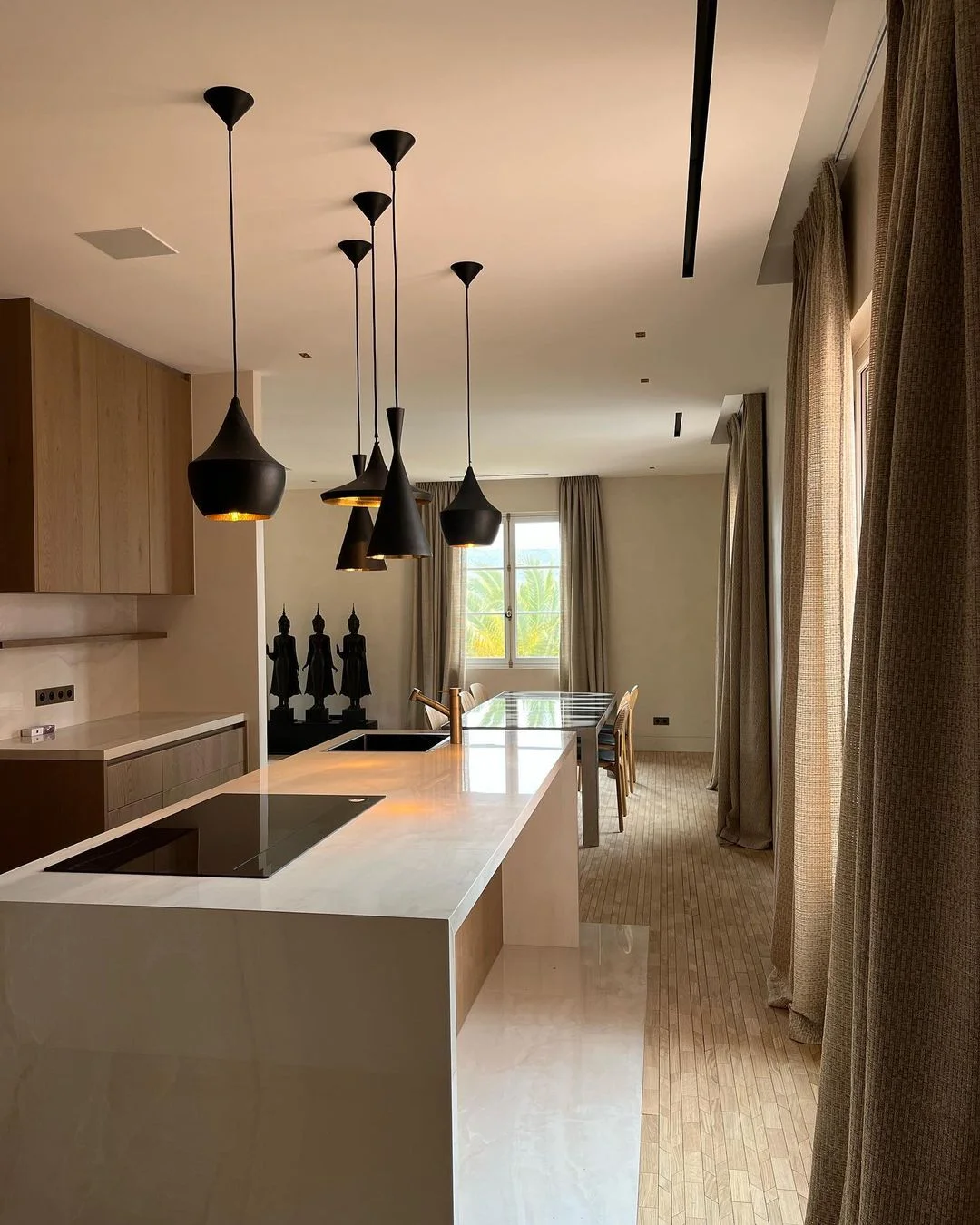
Reclaimed Teak Flooring: End-Grain Strength and Resilience
Explore how reclaimed teak flooring and end-grain timber provide extraordinary durability, natural silica protection, and stability for demanding spaces.
How to Prevent Fading on Hardwood Floors: Design Guide
An architectural approach to managing sun exposure on wood floors, from spectrally selective glazing to finish choices and uniform patina development.
The Craft of Marquetry Parquet Flooring and Panels
Marquetry parquet flooring bridges historical French palace geometry with contemporary minimalism, bringing architectural structure to luxury interiors.