
Reclaimed Wood Flooring: What It Is and Whether It Suits Your Home
Wood with a past: what it brings to a floor, and what it asks of you.
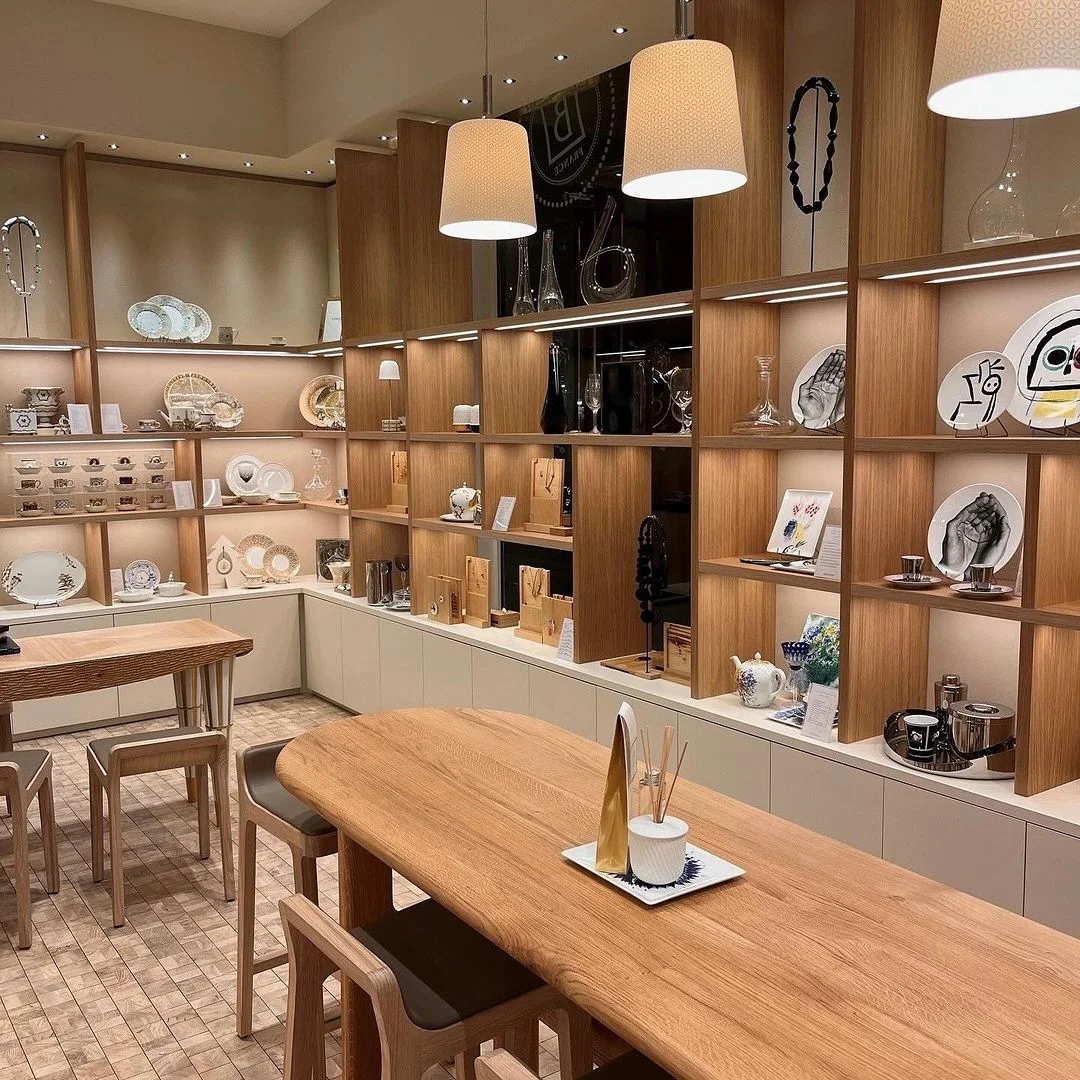
Reclaimed wood flooring is made from timber that has already been used once: beams, joists, boards and old floors recovered from barns, factories, warehouses and houses, then cleaned, dried and milled again. It brings color, wear and character that new wood does not have. In return it usually costs more, varies more from board to board, and needs a careful supplier and installer.
Where does reclaimed wood come from?
- Beams and joists from old barns, mills and warehouses, resawn into boards. They often carry nail holes, bolt marks and dark mineral stains where iron touched the wood.
- Old floorboards lifted from houses and public buildings, cleaned up and relaid, often with their worn surface kept.
- Parquet and wood blocks recovered from schools, churches, offices and factories, the classic source of reclaimed herringbone.
- Barn siding and cladding, weathered gray by sun and rain, more often used on walls than on floors because it is thin and uneven.
"Salvaged" is sometimes used as a wider term that also covers wood that was never in a building: trees that have fallen, been cleared or been recovered from rivers.
Reclaimed vs new vs faux-aged wood
| Reclaimed | New wood | Faux-aged new wood | |
|---|---|---|---|
| Source | Timber from old structures | Freshly felled trees | Freshly felled trees, distressed |
| Character | Genuine wear, nail holes, color from age | Clean, consistent | Brushing, scraping and stain imitate age |
| Consistency | Varies from board to board and batch to batch | Graded and predictable | Predictable |
| Waste when laid | Higher: splits, holes and defects are cut out | Standard | Standard |
| Cost | Usually higher, because of the labor of recovery | Depends on species and grade | Usually below reclaimed |
Some reclaimed timber comes from slow-grown old trees and has tighter growth rings than wood from younger forests, which makes it attractive and stable. That is a quality of particular batches, not a rule, so judge the boards in front of you.
What should you check before buying reclaimed flooring?
- Provenance. Ask where the wood came from and what the building was used for. Timber from industrial sites or old painted surfaces can carry oils, chemicals or lead paint, which you do not want sanded in your home.
- Processing. Good suppliers remove every nail and screw, check with a metal detector, and kiln-dry the wood, which also kills insects and their larvae. Ask how it was dried and to what moisture content.
- Milling. Boards should be milled to a consistent thickness and width with proper tongues and grooves, or they will be hard to lay flat.
- Grading and samples. Ask to see a large sample or a laid panel, not a single hand-picked board, so you know how much variation to expect.
- Quantity. Order extra. Reclaimed boards lose more to defects and cutting than new ones, and a matching top-up order is often impossible later.
- Acclimation and installer. Let the wood settle in the room before laying, as the supplier specifies, and use a fitter who has laid reclaimed boards before.
Can reclaimed wood go over underfloor heating?
Solid reclaimed boards move with heat and humidity like any solid wood, and old, wide boards can cup or open up over a heated floor. Reclaimed wood made into layered boards, with an old-wood top layer on a stable base, is the usual answer where there is underfloor heating. Ask for the supplier's heating guidance in writing.
How do you look after a reclaimed floor?
The point of reclaimed wood is its surface, so protect it gently. Oiled and matte finishes keep the texture open to the touch; a thick, glossy lacquer can make old wood look new. Clean as you would any wood floor: dry clean often, mop barely damp with a cleaner made for the finish, and never leave standing water. Think twice before a full sanding, which removes in a day the color and wear the boards took decades to gain.
Is reclaimed wood the sustainable choice?
Often it is: reusing timber avoids felling new trees and keeps old wood out of landfill. But recovery, transport, drying and remilling all have a cost, and a floor shipped across the world from a demolished barn is not automatically greener than a certified local one. Ask for documentation either way.
Wood that would otherwise be lost: OscarOno Paris's approach
OscarOno Paris does not sell reclaimed boards from old buildings. Three of our floors start from the same idea, using wood that would otherwise be wasted, and they come with the consistency, specification and certification of a new floor.
Cube is endgrain in its simplest form: square blocks of European oak set side by side in an open grid, built entirely from the solid offcuts the atelier would otherwise set aside. It comes in Natural, Smoke (smoked through the full depth of the oak) and Black (charred, in the shou sugi ban tradition), on 10 mm birch plywood with a 6 mm oak top layer, and is rated usage class 34 for very heavy commercial traffic.
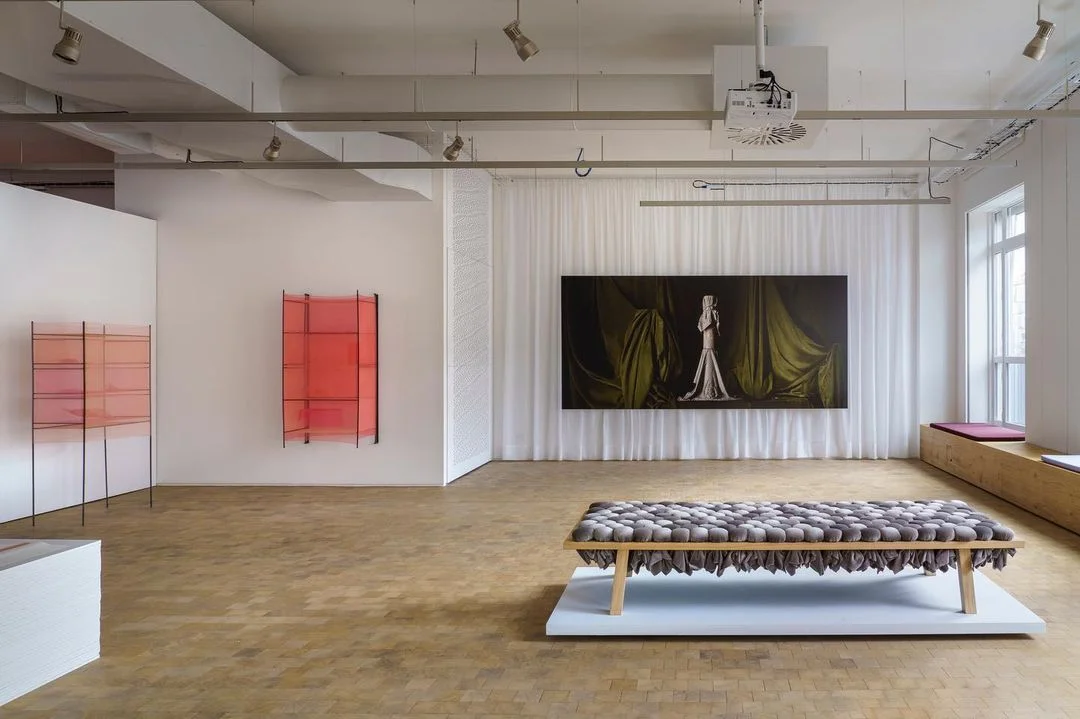
At the Maison du Danemark in Paris, Cube in Natural runs across the exhibition rooms as a fine, even grid of endgrain squares.
Terra is a wood terrazzo set entirely by hand from the endgrain oak fragments left over from our Opus and Forêt floors. Each fragment is placed, turned and separated by a clean line, then the surface is ground. It comes in Sable, with Noir coming soon, and is rated usage class 33.
Réserve is the closest to salvage in the wider sense: our Opus pattern cut in Zambezi teak, a southern African wood that is never planted and never felled, recovered only after the tree has fallen. Each tree is geolocated, documented and certified, and each floor is made from a single season of fallen trees. It is far harder than oak, about 2,990 lbf on the Janka scale against roughly 1,300 for oak, and comes in Smoke.
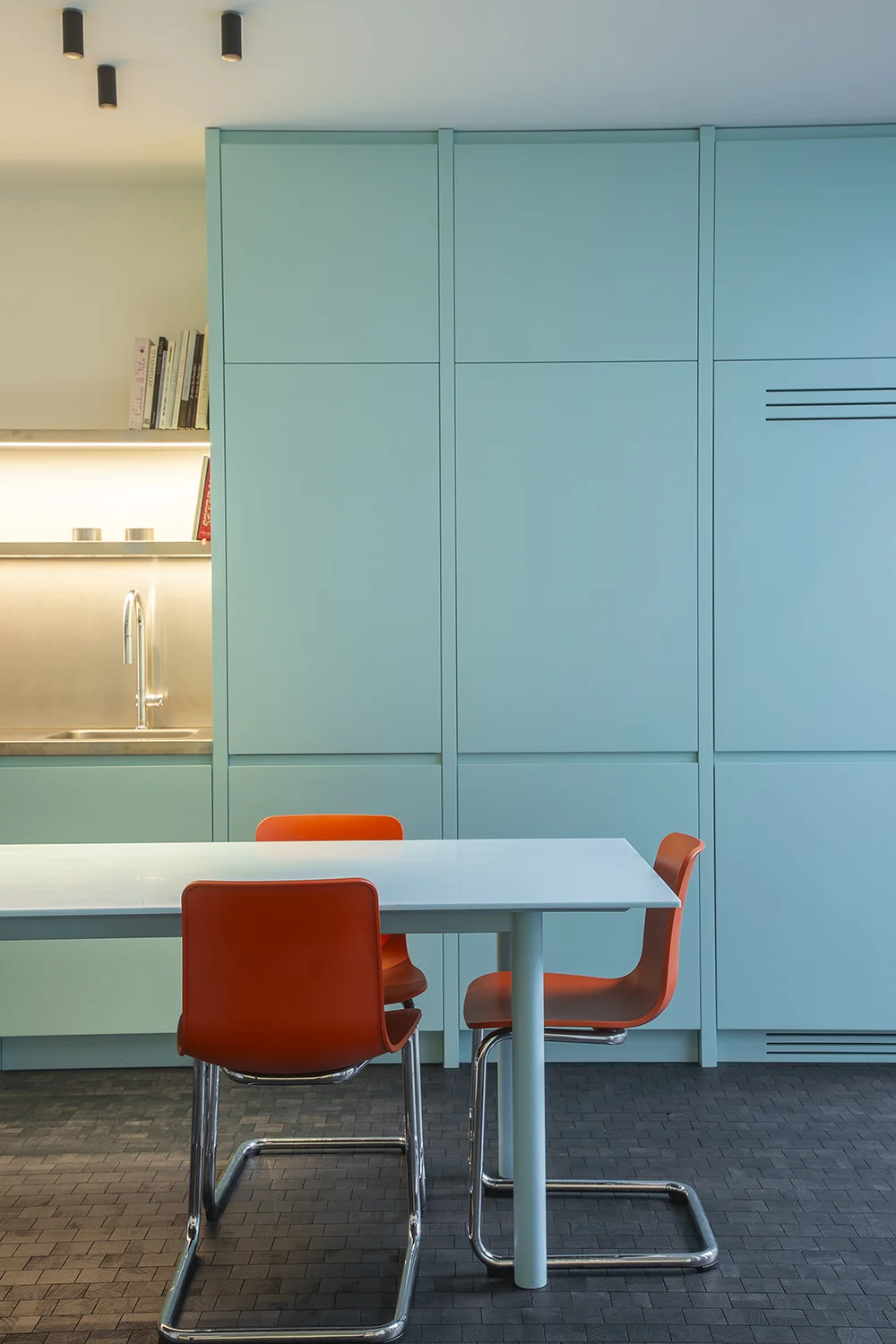
At Galerie d'Art Carole Lambert in Paris, Cube is laid in Black.
Frequently asked questions
Is reclaimed wood flooring more expensive than new wood?
Usually, yes. Recovering it means dismantling old structures by hand, removing metal, drying and remilling every board, and more of it is lost to defects. Prices vary widely with the species, the source and how much character the boards carry.
What is the difference between reclaimed and salvaged wood?
Reclaimed wood has already been used, in a building, a floor or another structure. Salvaged is often used more widely, to include wood that was never used, such as fallen trees, cleared timber or logs recovered from rivers.
Can reclaimed wood flooring go over underfloor heating?
Usually only as layered boards, with an old-wood top layer on a stable base. Solid reclaimed boards, especially wide ones, can cup or open up over a heated floor. Ask the supplier for written heating guidance.
How can you tell real reclaimed wood from faux-aged wood?
Real reclaimed boards vary from one to the next: old nail holes with iron staining around them, saw marks, color that goes into the wood and wear that follows how the wood was used. Faux-aged boards repeat the same brushing, scraping and stain pattern across a batch. Ask for the provenance in writing.
Is reclaimed wood flooring sustainable?
Often, because it reuses timber instead of felling new trees. But recovery, drying, remilling and long-distance transport all add to its footprint, so ask where it came from and compare it with a certified new floor before assuming it is the greener choice.
See the offcut floors in person
Cube and Terra are rated Cfl-s1 for fire and are FSC and PEFC certified; Réserve is traced tree by tree. The way a floor made from offcuts or fallen trees catches the light is hard to judge on a screen. Order samples, and find spec sheets, CAD and 3D files in the library.
More from the Atelier
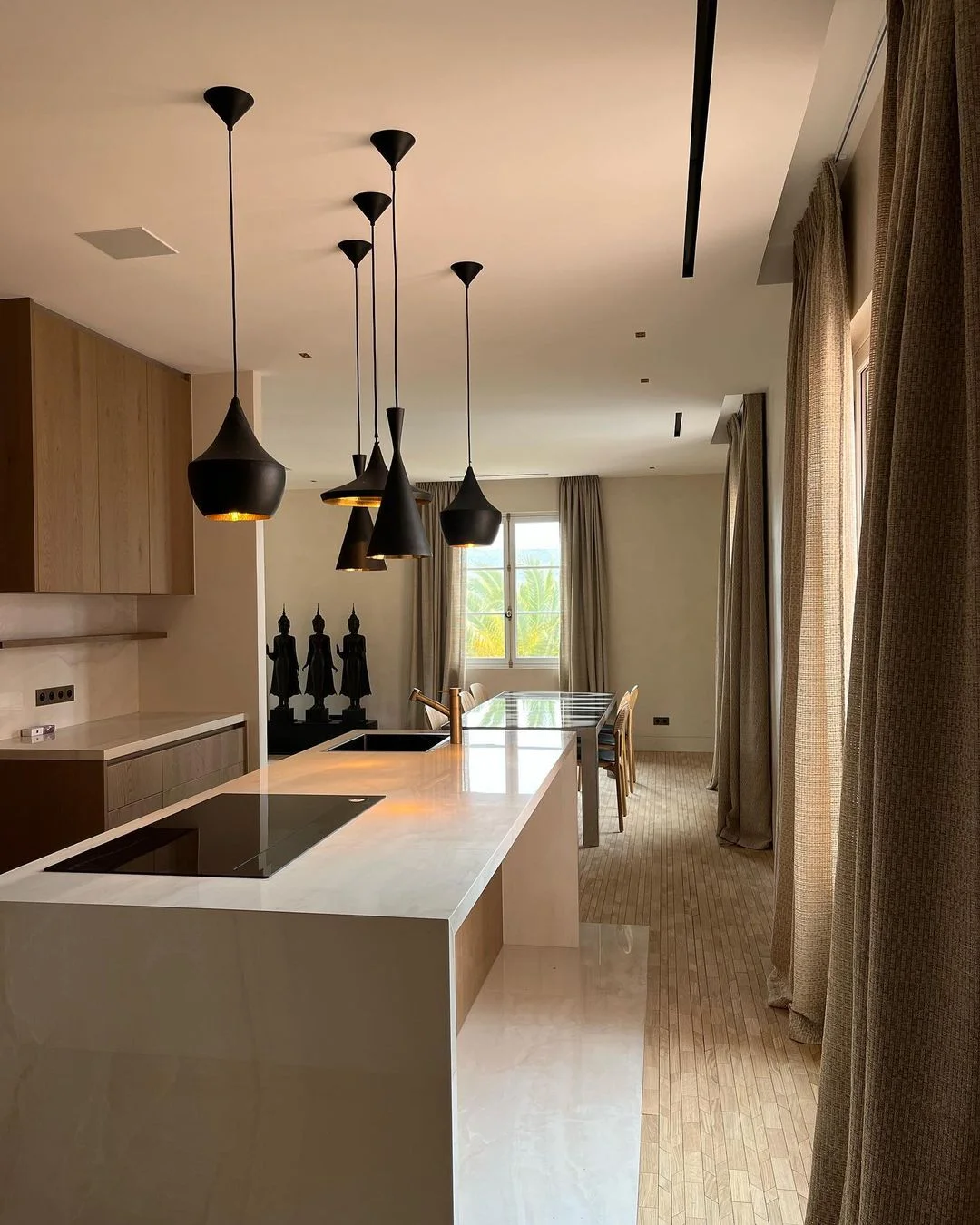
Reclaimed Teak Flooring: End-Grain Strength and Resilience
Explore how reclaimed teak flooring and end-grain timber provide extraordinary durability, natural silica protection, and stability for demanding spaces.
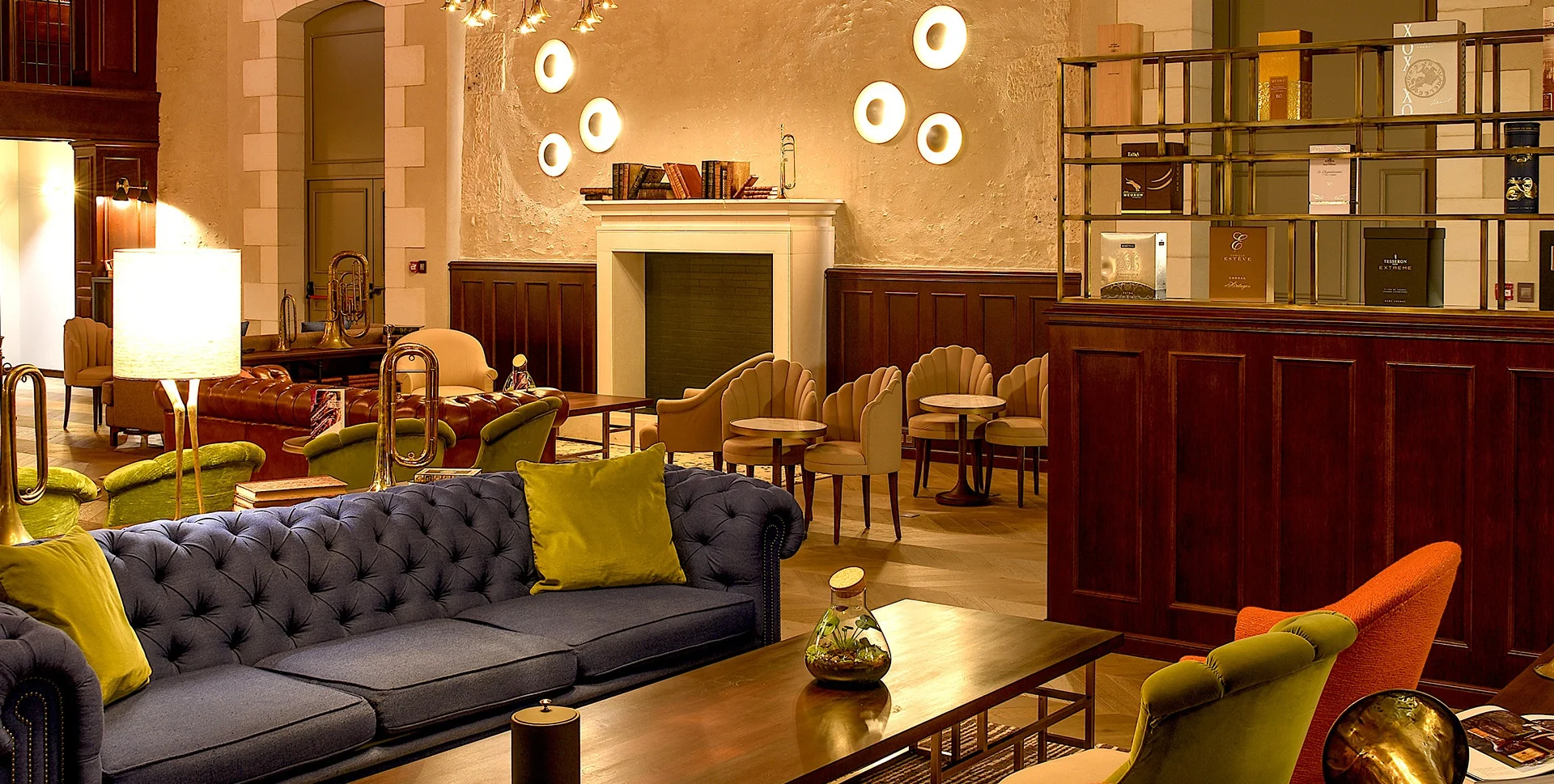
How to Prevent Fading on Hardwood Floors: Design Guide
An architectural approach to managing sun exposure on wood floors, from spectrally selective glazing to finish choices and uniform patina development.
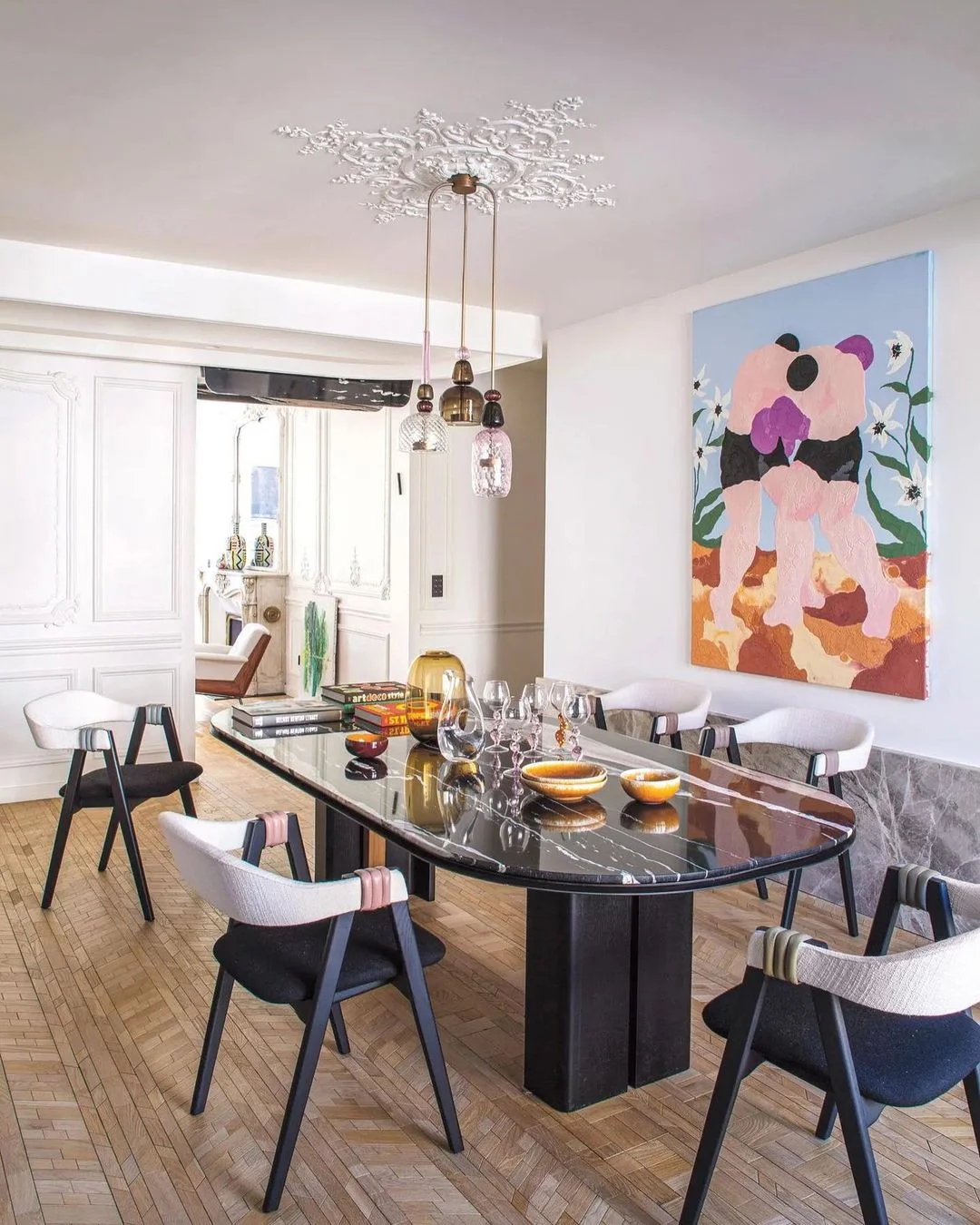
The Craft of Marquetry Parquet Flooring and Panels
Marquetry parquet flooring bridges historical French palace geometry with contemporary minimalism, bringing architectural structure to luxury interiors.