
What Is the Best Wood Flooring for a Family Home?
Hardness matters less than you think. Construction, finish and color decide how a floor copes with family life.
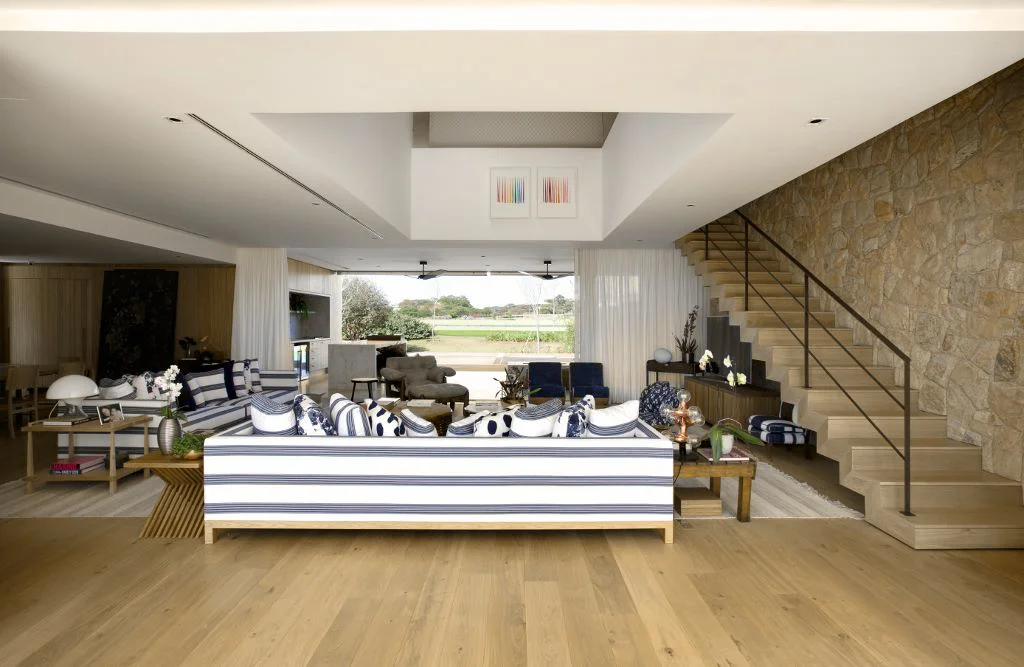
For most family homes, the best wood flooring is oak in a layered construction, with a finish you are happy to maintain and a mid tone that forgives scratches and dust. Hardness matters, but less than how a floor hides wear and how easily it can be put right. If you want the hardest-wearing surface wood can offer, look at end grain.
What makes a wood floor good for family life?
Four things decide how a floor copes with children, pets and heavy daily use:
- The species. Oak is the benchmark for floors because it is hard, close-grained and predictable. It sits around 1,300 lbf on the Janka hardness scale: harder than walnut or cherry, softer than the densest tropical woods.
- The construction. A stable board stays flat and tight through dry winters, humid summers and underfloor heating.
- The finish. It decides what a spill or a scratch does to the surface, and how you repair it.
- The color and texture. They decide whether everyday marks show at all.
Treat hardness numbers as a guide, not a promise. Every wood floor dents under a dropped cast-iron pan and every finish scratches under grit. The aim is a floor whose marks blend in and age well, not one that never marks.
Solid or engineered wood: which is better for a busy household?
For most homes, a layered (engineered) board is the safer choice. A solid plank is one piece of wood and moves noticeably as the humidity changes, which shows up as gaps in winter and cupping in summer. A layered board bonds an oak top layer to a stable base, so the floor moves far less. That matters in kitchens, in rooms with large windows and over underfloor heating.
What you walk on is still real oak. Droit, a straight oak plank floor, is a 12 mm board with a 4 mm oak top layer, cut from flatgrain oak in select grade, in widths of 150 mm or 190 mm.
How durable a floor do you need? Usage classes explained
In Europe, floors are graded by usage class. Classes in the 20s are for homes; classes in the 30s are for commercial spaces, from offices up to the busiest public areas. A floor rated for commercial traffic has plenty in reserve for a family hallway.
Droit is rated usage class 33, heavy commercial traffic, the same class as a shop or hotel floor. OscarOno Paris's endgrain floors go one step further, to class 34.
Is end grain flooring the toughest choice for kids and pets?
End grain blocks are cut across the trunk, so the wood fibers stand upright and you walk on their ends. Weight presses along the length of the fibers, which is the direction wood is strongest, so the surface wears slowly and resists denting better than a plank of the same oak. The rings and the variation from block to block also hide small marks that would show on a smooth, uniform board.
Opus, an endgrain oak floor that revives nineteenth-century Parisian wood paving, is rated usage class 34, very heavy commercial traffic. It is built as an 8 mm endgrain oak top layer on 12 mm birch plywood, in Natural, Smoke (smoked through the full depth of the oak) or Black (charred, in the shou sugi ban tradition).
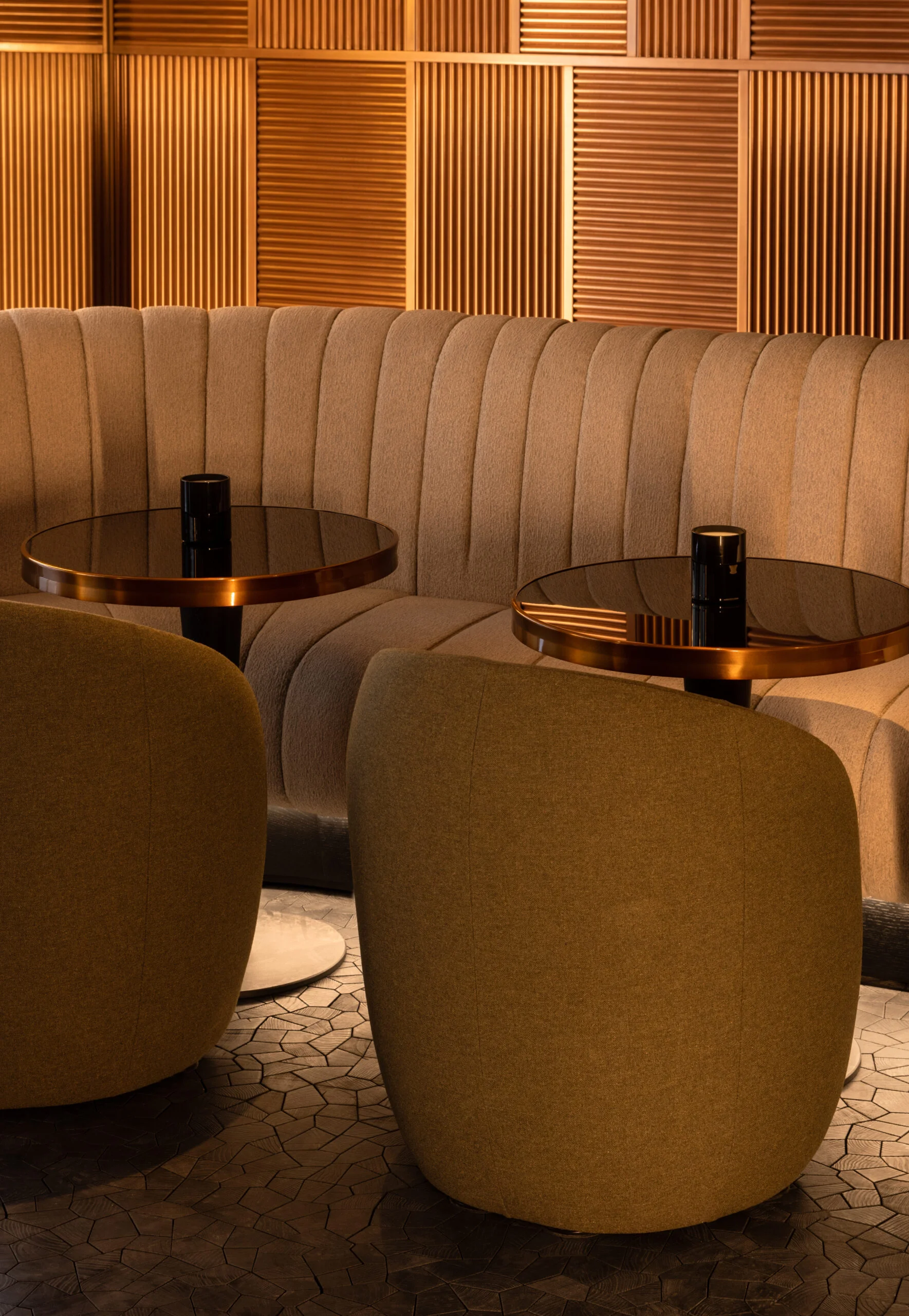
At Hotel Dame des Arts in Paris, Opus in Black carries the traffic of a hotel lounge and bar, which is a harder life than any family kitchen.
Oil or lacquer: which finish is better with children and pets?
Neither is right for everyone. The choice is about which kind of upkeep you prefer.
| Lacquer | Oil or hardwax oil | |
|---|---|---|
| How it protects | A sealed film on the surface | Soaks into the wood |
| Spills and stains | Wipe off easily | Need wiping up quickly |
| Daily cleaning | Very easy | Easy, with a suitable soap |
| Scratches | Deep ones show in the film | Blend in, can be touched up locally |
| Repair | Recoat an area or a room | Re-oil the worn spot |
| Upkeep | Low | Regular re-oiling |
A busy kitchen with toddlers often favors lacquer, because spills wipe away. A household that likes a matte, open-grain look and does not mind regular care may prefer oil. Droit, like the other Essentiel collections, is lacquered, in twelve colors.
Which color and texture hide scratches best?
Mid tones hide the most: natural oak, honey and soft brown. Very dark floors show dust, pet hair and every light scratch. Very pale, uniform floors show dark grit and pet hair from darker animals. Visible grain helps too, because it gives the eye something to read other than the marks.
Sheen matters as much as color. A matte or satin surface scatters light, so fine scratches do not catch it. A high gloss acts like a mirror and makes every mark visible from across the room.
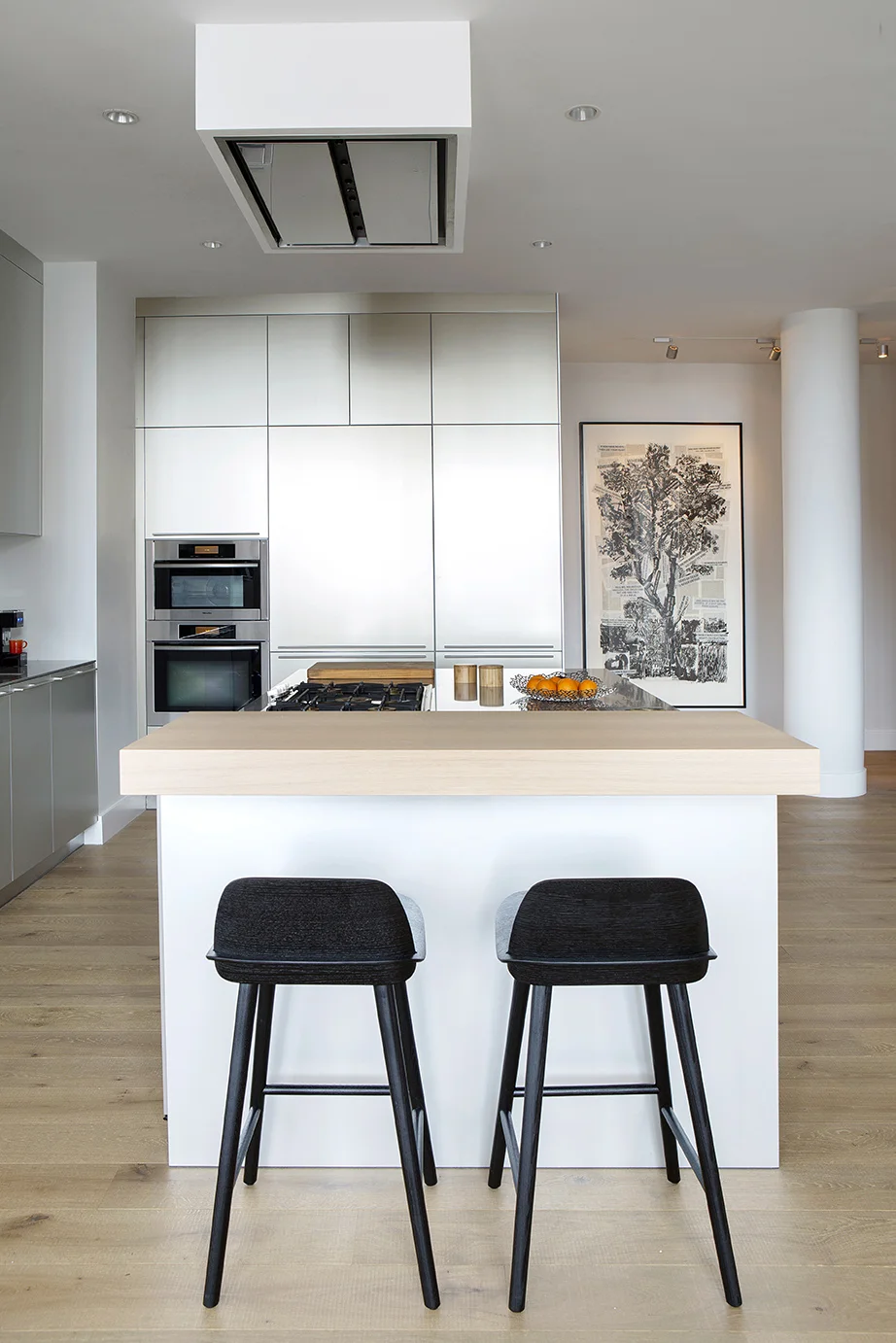
In the Tribeca Loft in New York, Droit in a natural finish runs through the kitchen and living space: a light, even tone where crumbs and paw prints do not stand out against the grain.
Frequently asked questions
What is the most durable wood flooring for a family home?
For planks, oak is the usual benchmark: hard enough for daily traffic and stable when it comes as a layered board. For the toughest surface wood can offer, choose end grain, where the fibers stand upright and carry weight along their length. OscarOno Paris's endgrain floors are rated usage class 34, the class for very heavy commercial traffic.
How do you protect a wood floor from dog claws?
Keep nails trimmed, put mats at the doors where grit comes in, and choose a matte or textured surface in a mid tone, which hides fine claw marks far better than a dark, glossy one. No wood floor is scratch-proof, so pick one whose marks blend in and whose finish you can maintain.
Can you put a wood floor in a family kitchen?
Yes. A layered oak board glued to the subfloor copes well with a kitchen's changes in heat and humidity. Wipe spills up promptly rather than leaving water standing, and use felt pads under chairs and stools.
Is oil or lacquer better for a floor with children and pets?
Each has a trade-off. Lacquer seals the surface, so spills wipe off and daily cleaning is easy, but a deep scratch through the film is repaired by recoating a whole area. Oil keeps a matte look and can be touched up locally, but needs regular maintenance and marks more easily from spills.
Family-proof oak floors by OscarOno Paris
For a hard-working family floor, Droit straight oak planks come in twelve lacquered colors, 150 mm or 190 mm wide, rated usage class 33 with a Cfl-s1 fire rating. For the most demanding rooms, Opus endgrain oak is rated class 34. Both are FSC and PEFC certified.
The best test is a sample on your own floor, under your own light, with your own family walking on it. Order samples, and find spec sheets, CAD and 3D files in the library.
More from the Atelier
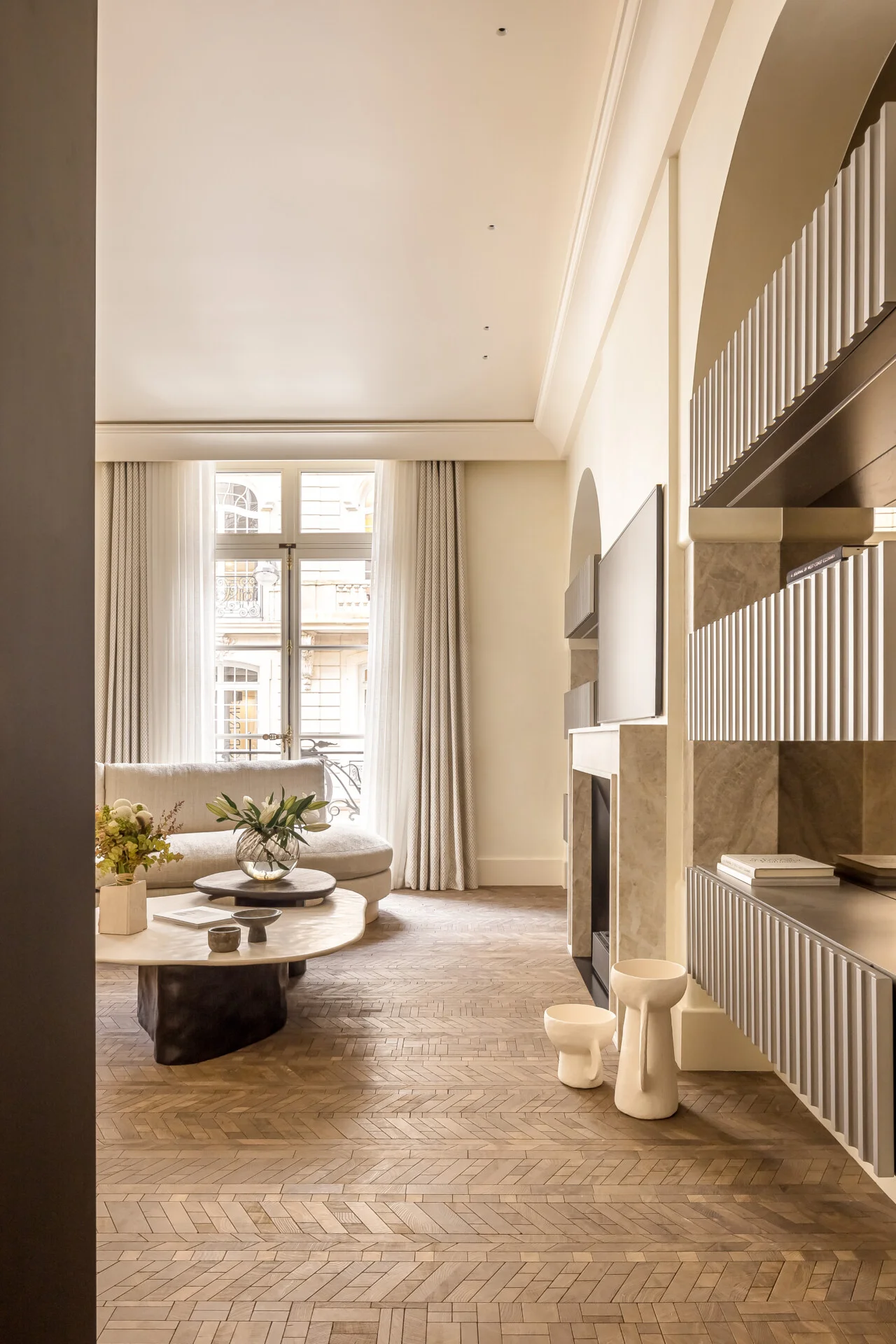
What Is Wood Terrazzo Flooring? An Architectural Guide
Wood terrazzo flooring unites reclaimed endgrain oak offcuts and mineral ground, creating continuous, tactile surfaces designed for circular luxury interiors.

Modern Versailles Parquet: The Classic Panel in Today's Interiors
The woven oak panel first laid in a palace still works in a contemporary room. What changes is the color, the construction and how freely the weave is drawn.
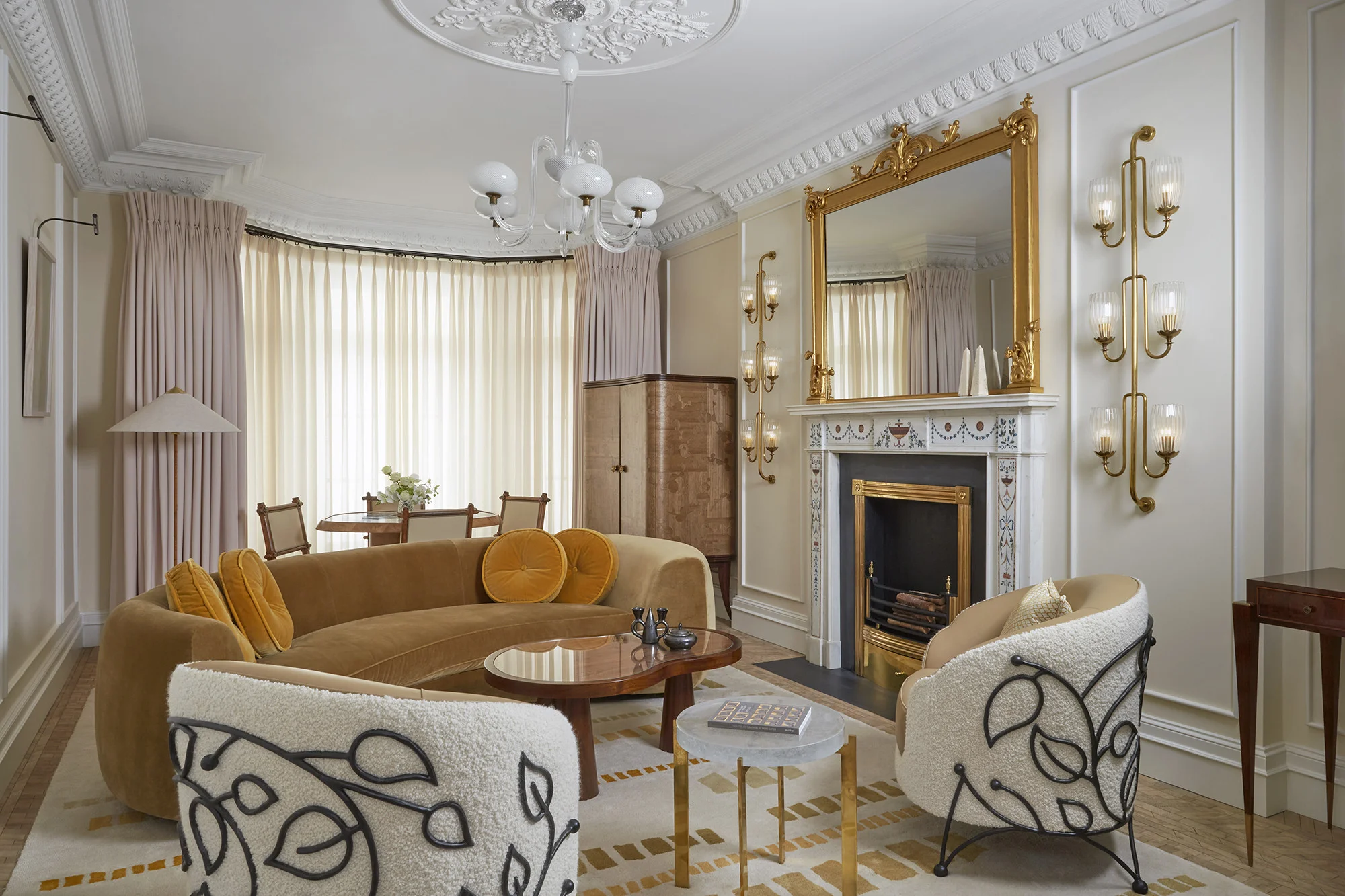
Wood Floor Interior Design: Pairing Oak with Linen, Stone and Brass
Start with the floor, then balance it: stone for weight, linen for softness, brass for light. A practical guide to designing a room around wood.