
What Is Wood Floor Patina, and Why Is It Desirable?
Light, air and footsteps slowly change a wood floor. That change is the patina, and it is the reason old floors look the way they do.
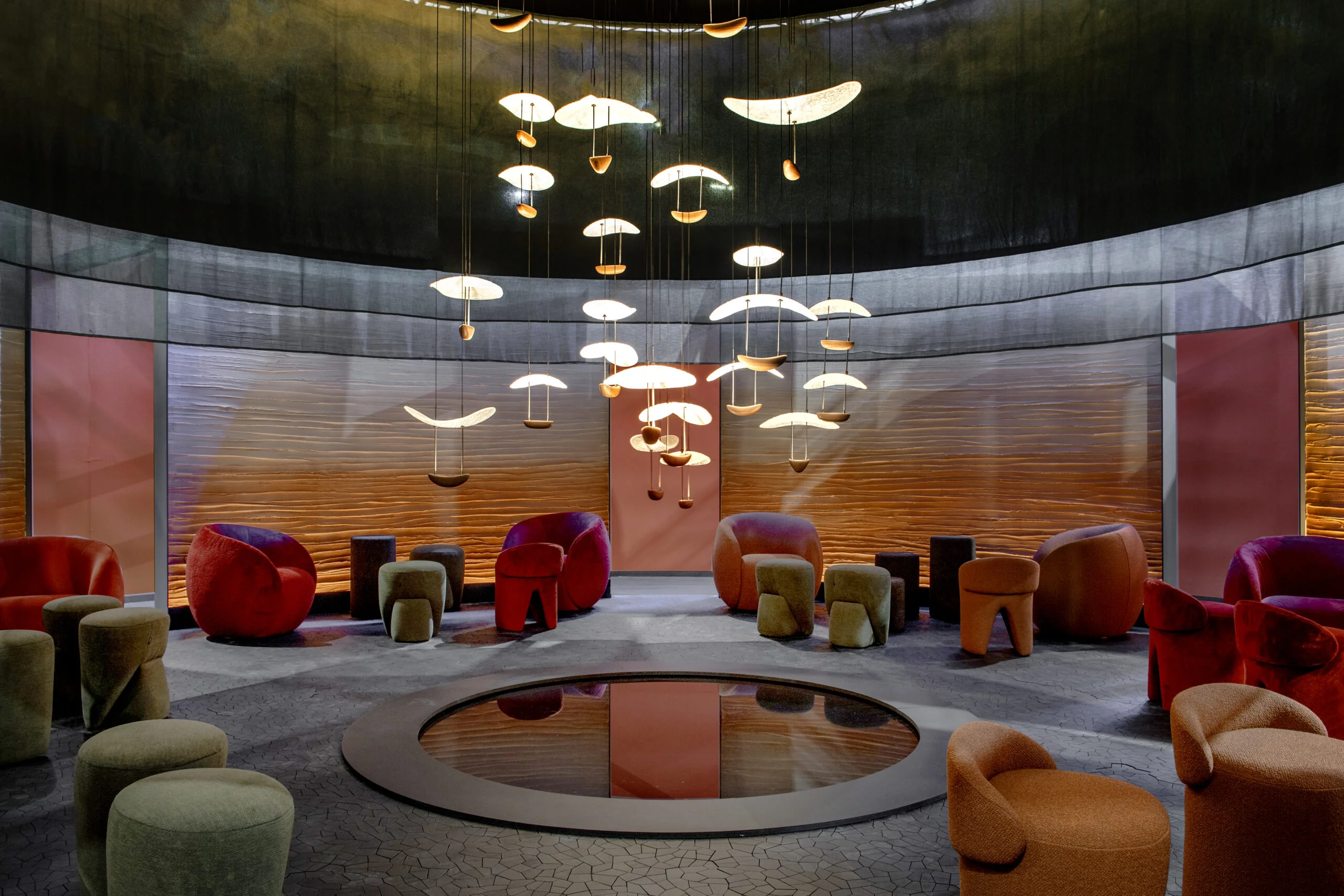
Wood floor patina is the slow change in color and surface that a wood floor goes through as light, air and daily use act on it. New oak turns warmer and more golden, and the most walked areas take on a soft, low sheen. People value it because it cannot be faked: it shows that a floor is real wood and that it has been lived on.
What causes wood patina?
Two processes work at once.
- Light and air change the color. Daylight, and ultraviolet light in particular, reacts with the lignin and natural extractives in the wood. The change is fastest in the first months and then slows down, which is why a floor near a window ages faster than one in a corridor.
- Use changes the surface. Feet, chair legs and cleaning slowly polish the top of the wood and the finish. Over years the busy paths take on a softer sheen than the corners of the room.
The effect is easiest to see when a rug or a piece of furniture is moved after a few years: the wood underneath is visibly paler, with a sharp outline. That is patina in action, and it evens out once the area sees light again.
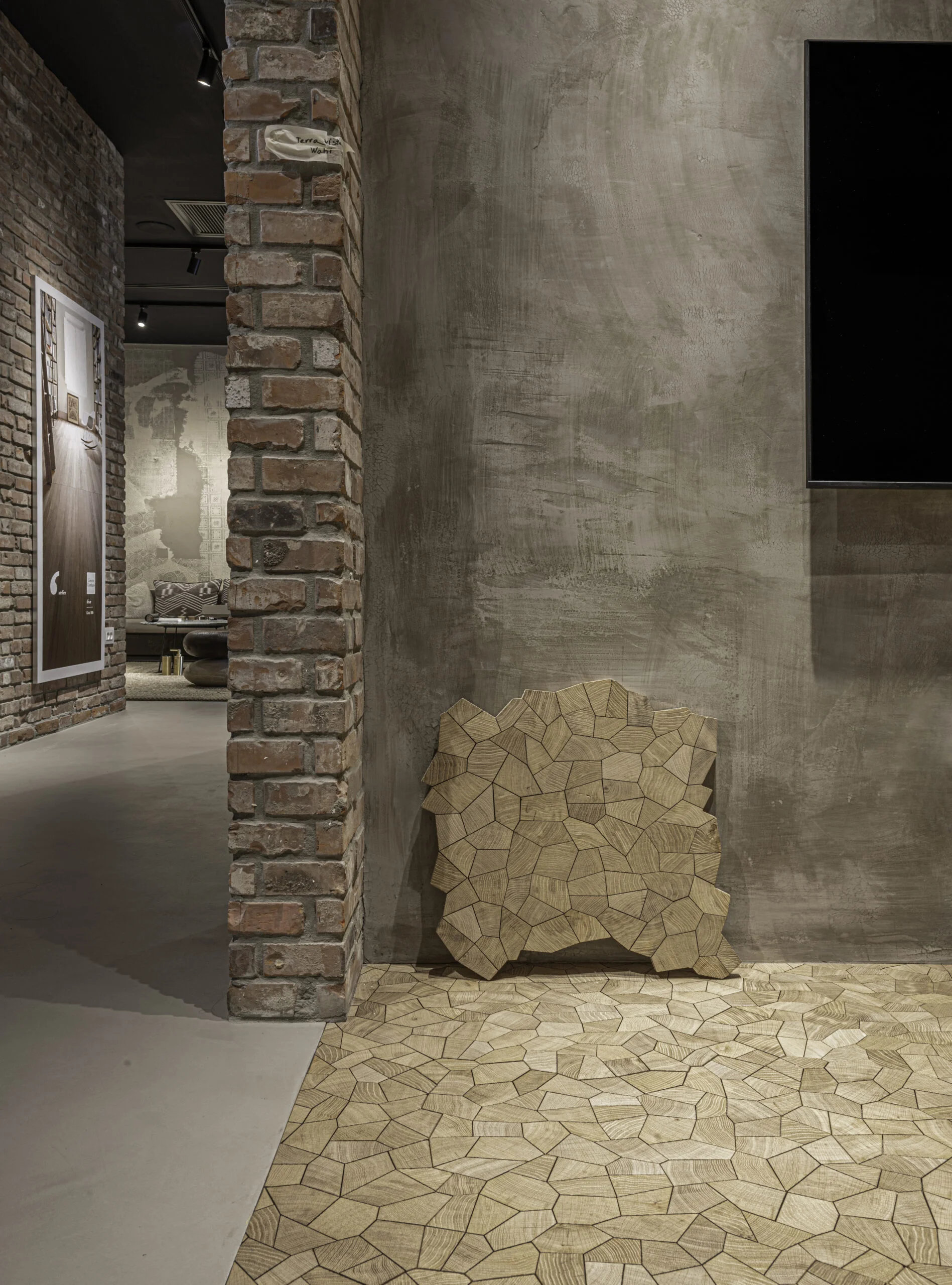
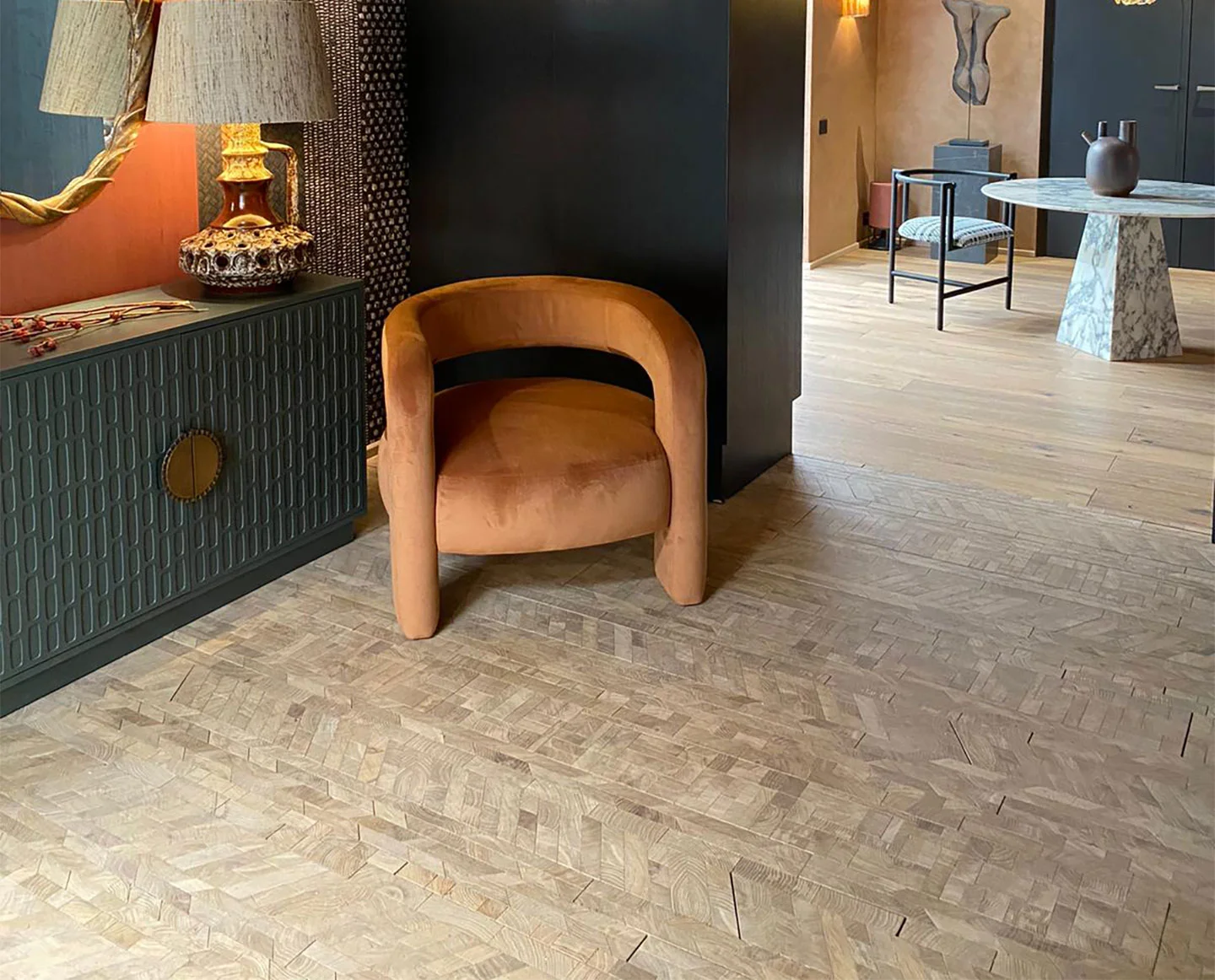
On end grain the patina shows in the rings. At Showroom Parqueteam in Israel, Opus endgrain oak in Natural shows the open end of every fiber, and light and wear act on each block slightly differently, so the floor gains depth as it ages.
How do different woods age?
Each species changes in its own direction, because each has different natural chemicals in it.
| Species | When new | With age |
|---|---|---|
| Oak | Pale straw to light tan | Warmer, golden to honey |
| Walnut | Dark chocolate brown | Lighter, warmer brown |
| Cherry | Pale pinkish brown | Deep reddish brown, quickly |
| Maple | Creamy white | Soft yellow |
OscarOno Paris works in oak, so oak is the patina its floors develop. If you like the deeper tones that walnut or cherry reach with age, a darker oak finish gives a comparable warmth from the start, and it is still oak.
Why are aged wood floors desirable?
A floor with patina looks settled. The color is richer and less even than new wood, the sheen follows the way people move through the room, and small marks have blended into the whole. That is the quality people look for in old Paris apartments, and the reason many owners restore an old parquet rather than replace it.
It is also honest. Printed and synthetic floors do not age; they wear out. Real wood ages and keeps its character, which is part of what you pay for.
How does the finish affect patina?
The wood ages under any clear finish, because light passes through it. What the finish changes is the surface.
- Oil and hardwax oil soak into the wood, so the surface itself burnishes with use. Worn spots are re-oiled locally and blend back in.
- Lacquer forms a sealed film. The wood beneath still mellows in color, but the sheen comes from the film, which wears in the busiest paths. When that shows, the floor is cleaned and recoated rather than sanded back to bare wood.
Droit straight oak planks are lacquered, in twelve colors, so they age the second way: easy to keep clean, with the oak warming slowly under the finish.
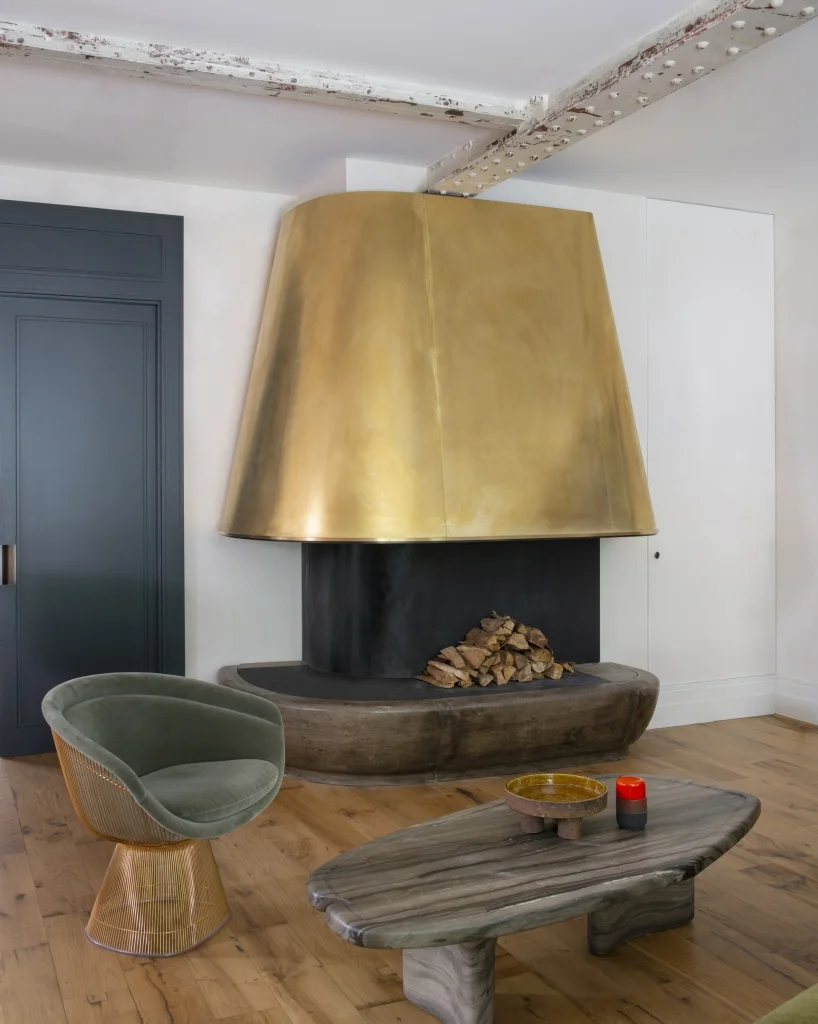
In this private residence in Saint-Germain, Paris, Droit in the warm Miel Doux color already has the honey tone that pale oak only reaches after years of light.
Color that goes all the way through also ages better. A stain sits near the surface, so a worn spot shows paler wood underneath. OscarOno Paris's endgrain floors use no stain: Smoke is smoked through the full depth of the oak and Black is charred in the shou sugi ban tradition, so wear reveals the same wood, not a different color.
How do you care for a floor so it ages well?
- Sweep or vacuum often. Grit is what scratches a floor, not feet.
- Clean with a barely damp mop and a cleaner made for the floor's finish. Avoid steam mops and harsh or ammonia-based products.
- Move rugs and furniture now and then in the first year, while the color changes fastest, so no sharp outlines form.
- Maintain rather than sand: re-oil an oiled floor where it is worn, recoat a lacquered one when the sheen fades.
Frequently asked questions
Does an oak floor darken or lighten over time?
Oak darkens. Pale new oak turns warmer and more golden as light acts on it, quickly at first and then more slowly. Walnut is the common exception: it lightens toward a softer, warmer brown.
Can you speed up the patina of a wood floor?
Not the polish that comes from years of use, but you can start with the color. Smoking darkens oak by reacting with its natural tannins, which is how aged-looking oak floors are made without stain. Daylight will then keep working on the floor as it would on any oak.
How do you tell patina from damage?
Patina is a shallow, even change of color and sheen, often with sharp outlines where a rug or furniture once shaded the wood. Damage is local and deeper: gray or black water stains, soft or lifting wood, gouges through the finish, cupped or split boards.
Does sanding a floor remove its patina?
Yes. Sanding cuts back to fresh wood, so the color and polish built up over years go with it, and the new surface starts aging again from the beginning. Where the floor allows it, a light clean and recoat keeps the patina and still renews the protection.
Oak floors that age well, by OscarOno Paris
Every OscarOno Paris floor is oak, so every one develops an oak patina. Opus is endgrain oak in Natural, Smoke or Black, rated usage class 34 for very heavy commercial traffic. Droit is flatgrain select oak in twelve lacquered colors, rated class 33. Both carry a Cfl-s1 fire rating and FSC and PEFC certification.
To see how a finish looks in your light, order samples. Spec sheets, CAD and 3D files are in the library.
More from the Atelier
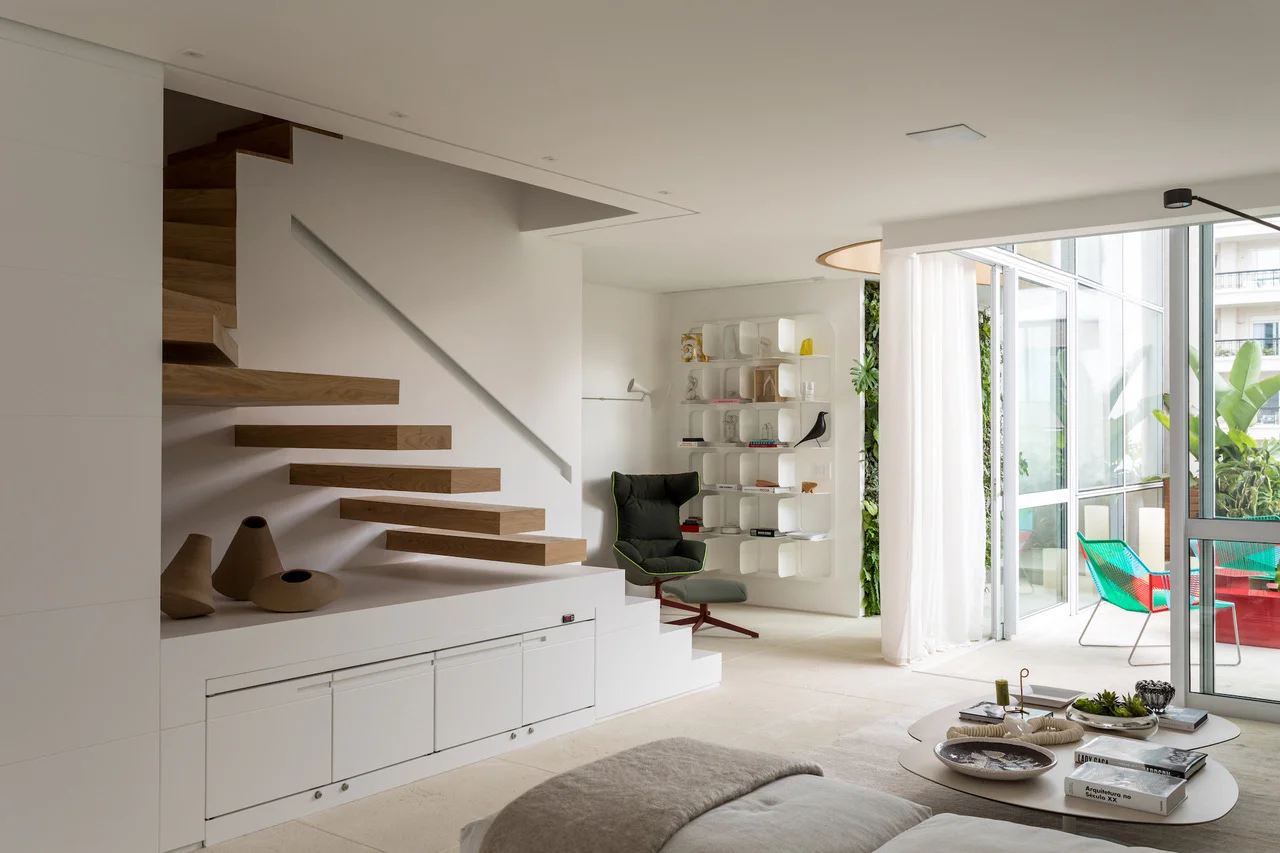
Wood Floors in the Bedroom: How to Choose a Calm, Quiet Floor
Wood is warm underfoot, easy to keep dust-free and lasts for decades in a low-traffic room. How to choose the color, finish, layout and acoustics of a bedroom floor.
Light Oak Flooring for Bright, Sunlit and Coastal Rooms
Pale oak suits sunlit and seaside rooms, if you get the finish right. How light oak changes in the sun, and what sand, humidity and glare mean for it.
Wide Plank Oak Flooring for a Minimalist Interior
Fewer joints, a clean grade, a low sheen and one direction through the house: how to choose wide plank oak for a minimalist interior, and when an end grain grid does the job better.