
What Tree Rings Tell Us About Time and Climate
How dendrochronology decodes centuries of environmental history within growth rings of wood.
Growth rings in wood are more than chronological markers; they are nature's most precise climate registries. Through the science of dendrochronology, scientists, art historians, and designers can read these concentric circles to reconstruct centuries of climate patterns, atmospheric conditions, and historical events. Every millimeter of timber holds a documented history of rain, drought, frost, and fire, waiting to be decoded.
- Dendrochronology uses variations in growth rings to date wood and reconstruct past climates with annual precision.
- Growth rings consist of light earlywood (rapid spring growth) and dark latewood (slow late-summer growth).
- Environmental anomalies such as pointer years, frost rings, and fire scars leave permanent, visible stamps in the timber.
- Art historians analyze Baltic oak panel paintings to determine felling dates and trace the trade routes of Flemish masters.
- End-grain wood design exposes these circular records fully, transforming architectural surfaces into tangible historical archives.
What is dendrochronology and what do tree rings mean?
Dendrochronology is the scientific method of dating tree rings to analyze historical environmental conditions and archaeological artifacts. What tree rings mean at a fundamental level is the physical record of a tree's vascular cambium activity over its lifespan. Each ring represents one calendar year of growth, composed of light earlywood cells and dense, dark latewood cells.
During the spring, rapid water transport and cellular division create wide, thin-walled cells known as earlywood. As autumn approaches, the tree's growth slows, producing dense, thick-walled cells known as latewood. The stark contrast between the pale earlywood of one spring and the dark latewood of the preceding autumn creates the visible boundary of a growth ring. By measuring the width and cellular density of these rings, scientists can trace precise temporal indices that extend back thousands of years.
How do growth rings in wood record climate history?
Growth rings in wood record climate history by altering their physical width and cellular structure in response to temperature, precipitation, and ecological stress. In favorable, wet years, trees produce wide, healthy rings; in periods of severe drought or cold, rings shrink to narrow, compressed bands. These patterns serve as high-resolution paleoclimate archives that span millennia.
Dendroclimatologists study specific anomalies within these sequences to map historical weather events. "Pointer years" represent regional extreme weather events that cause uniform ring constriction across entire forests. Microscopic "frost rings" occur when unexpected freezing temperatures damage active cambial cells, often linked to historic volcanic eruptions that temporarily cooled the global climate. Furthermore, "fire scars" appear as dark, carbonized seams where a tree survived and healed over a local forest fire, preserving the exact year of the event. Studies of tree-ring density indices, documented in climate databases like those referencing paleoclimate reconstructions, allow researchers to map global temperature shifts over millennia.
How does art history use tree rings to authenticate masterpieces?
Art history uses tree rings to authenticate historical panel paintings by matching the ring patterns of wooden canvases to established master dendrochronological chronologies. By measuring the growth rings in Baltic oak panels, researchers can determine the exact year the tree was felled and trace its geographic origin. This process verifies whether a panel dates to a master painter's active lifetime.
This forensic wood science is highly utilized by major museums. For example, researchers cataloging historical panel paintings analyze the tight growth rings of slow-grown Baltic oak, which was highly prized by 17th-century Flemish and Dutch artists. By comparing these rings against regional reference databases, such as those analyzed in dendrochronological art portals, experts can determine if panels used by artists like Rembrandt or Rubens originated from the same old-growth forests. This wood-dating methodology bridges the gap between material culture, art conservation, and environmental history.
How does Penone's art reveal the hidden history of timber?
Italian sculptor Giuseppe Penone reveals the hidden history of timber by carving away industrial wood beams to expose the original sapling preserved at their core. His renowned series, Alberi (Trees), treats wood not as a static building material, but as a slow-moving liquid that has solidified around its own chronological growth rings over decades.
Working within the philosophical framework of the Arte Povera movement, Penone meticulously carves along a single growth ring, peeling back layers of latewood and earlywood. In doing so, he bypasses the squared, industrial geometry of modern timber to reveal the organic, slender branch structure of the tree as it existed years prior. This artistic intervention reminds us that every piece of timber, no matter how heavily processed, retains the memory of its original form and the atmosphere that shaped it.
Comparison of wood ring features and their climate meanings
The structural features found within growth rings are classified by specific scientific terms that describe environmental shifts. This table outlines the primary ring anomalies studied in dendrochronology and what they reveal about historical climates.
| Feature Name | Scientific Term | Environmental Cause | Visual Appearance |
|---|---|---|---|
| Wide Ring | Compliant Ring | Abundant moisture, warm temperatures, optimal growth. | Broad, pale band of earlywood with a distinct latewood boundary. |
| Narrow Ring | Sensitive Ring | Severe drought, cold summer, or canopy competition. | Thin, highly compressed band of wood cells. |
| Frost Ring | Traumatic Frost Ring | Sudden unseasonal freeze damaging active cambial cells. | Microscopic layer of distorted, collapsed cell walls. |
| Fire Scar | Cambial Trauma | Survival of a forest fire that scorched but did not kill the tree. | Dark, carbonized charcoal seam healed over by subsequent rings. |
Why does end-grain wood design celebrate these historic archives?
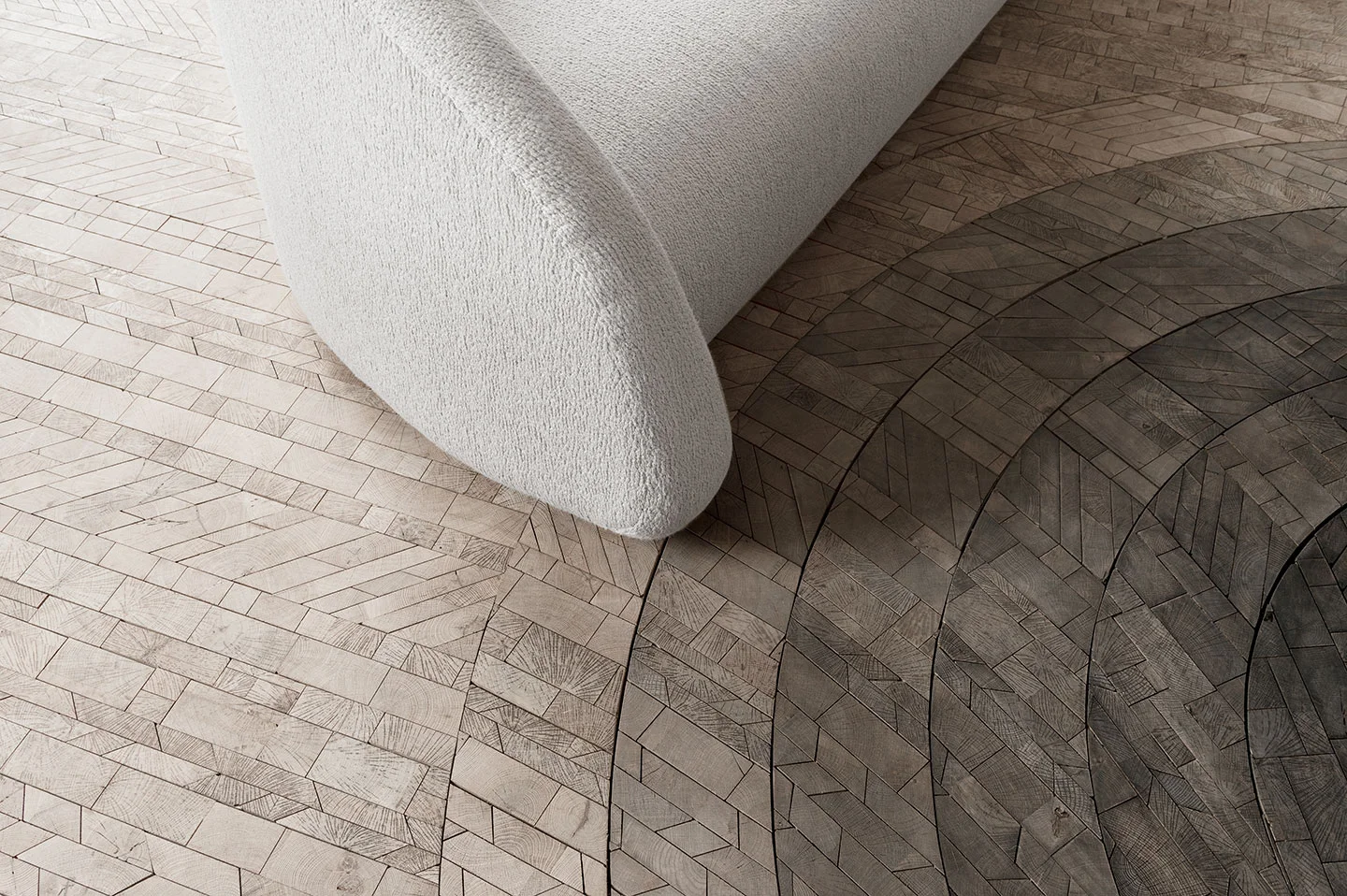
End-grain wood design celebrates these historic archives by slicing timber perpendicular to the trunk, fully exposing the circular growth rings that traditional flat-grain planks conceal. In architectural applications, this orientation transforms structural timber into a visual mosaic underfoot. Each end-grain block acts as a unique, unrepeatable environmental fingerprint, celebrating the raw passage of time.
While traditional long planks slice parallel to the grain, highlighting linear fibers, end-grain cuts lay bare the entire life cycle of the tree. The visual density of these blocks creates a floor surface of exceptional graphic richness, where concentric circles ripple across the room. Tactilely, end-grain provides a natural, highly durable surface that absorbs sound and responds beautifully to shifting daylight. This design methodology turns a simple interior floor into a silent, living library of the forest, where every step crosses decades of climate history.
Frequently Asked Questions About Tree Rings and Climate
What is the difference between earlywood and latewood?
Earlywood is the lighter, wider section of a growth ring formed during rapid spring growth, consisting of thin-walled cells optimized for water transport. Latewood is the darker, narrower section formed in late summer or autumn, containing thick-walled cells that provide structural support to the tree.
Can tree rings predict future climate trends?
Yes, by comparing historical tree-ring data with modern meteorological records, climate scientists build predictive models. These long-term reconstructions help researchers understand natural climate variability, such as drought cycles, and project how forests might respond to future environmental changes.
Why are growth rings only visible in certain types of wood?
Growth rings are most distinct in trees that grow in regions with pronounced seasonal climates, where a dormant winter period is followed by a productive spring. Trees in tropical rainforests, where the climate remains warm and wet year-round, often grow continuously and do not produce clearly defined rings.
How does end-grain flooring show growth rings differently than normal planks?
Traditional flat-grain planks are sliced parallel to the trunk, which shows the longitudinal grain as wavy lines. End-grain flooring is cut perpendicular to the trunk, exposing the complete, circular cross-section of the log, which reveals the full concentric geometry of every growth ring.
More from the Atelier
Calm Bedroom Design: How Wood Floors Create Restful Interiors
Learn how natural wood bedroom floors, acoustic balancing, and soft timber textures combine to transform your bedroom into a quiet, restorative sanctuary.
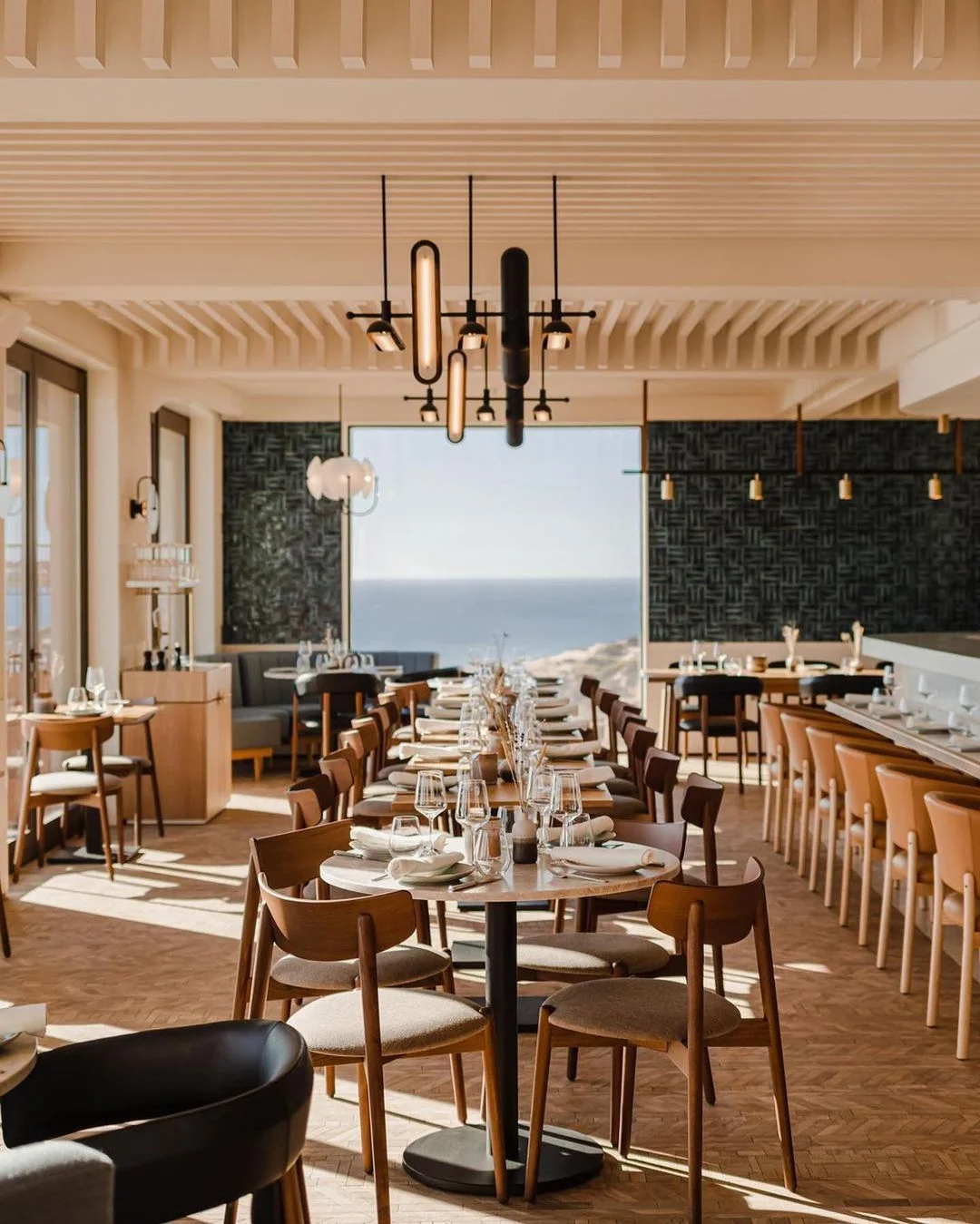
Summer Light & Organic Grids: Coastal Sanctuaries
Discover how the raw, organic grids of end-grain wood and pale timber tones ground bright, modern seaside properties into peaceful sensory retreats.
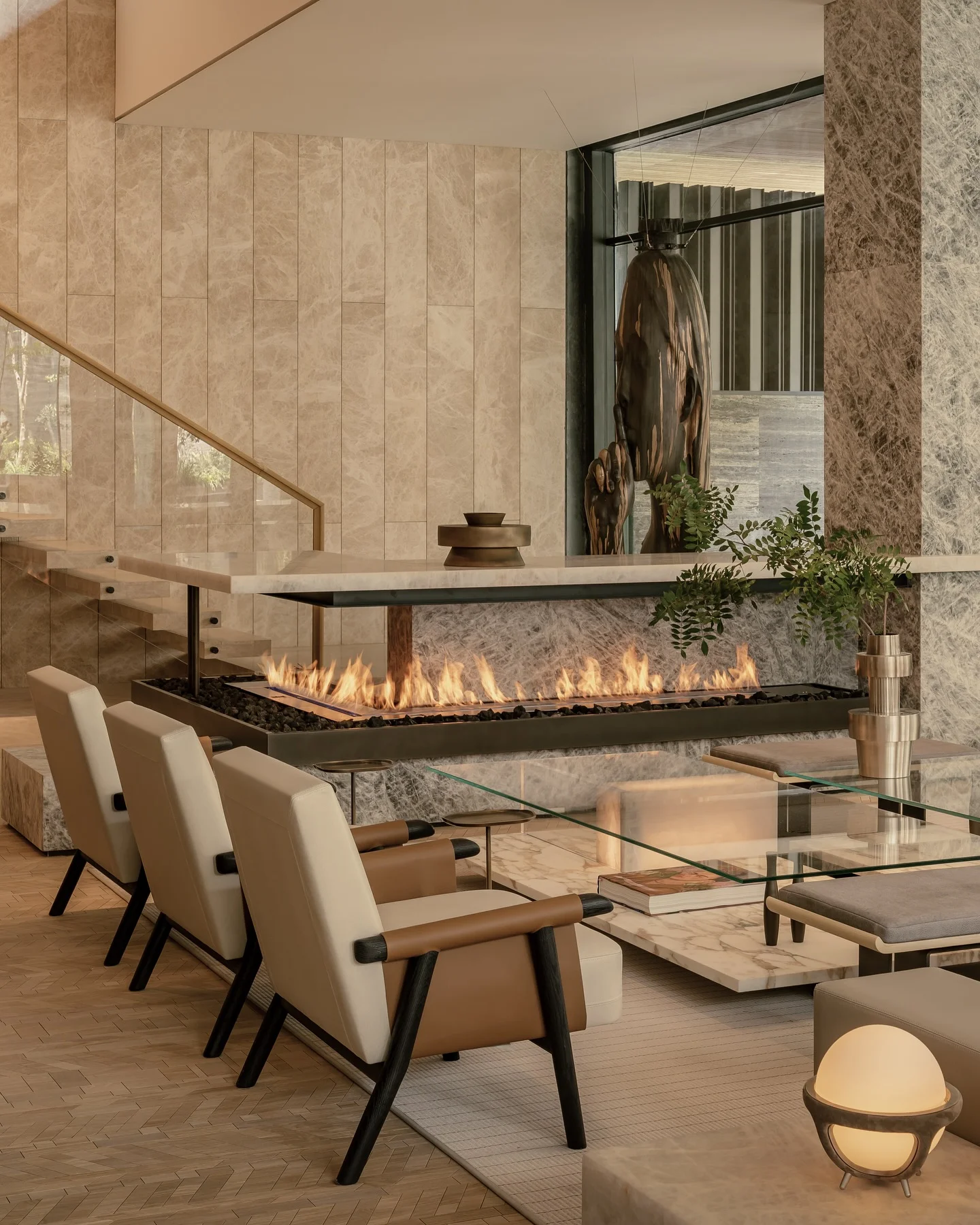
Minimalism and Wood: Doing More with Less Material in Design
Discover how warm minimalism replaces stark white spaces with tactile timber. Learn how a monomaterial approach creates serene, acoustically quiet luxury.