
Why Wood Floors Move, and How Engineered Wood Flooring Helps
Humidity, the cut of the wood and the build of the board decide how much a floor moves.
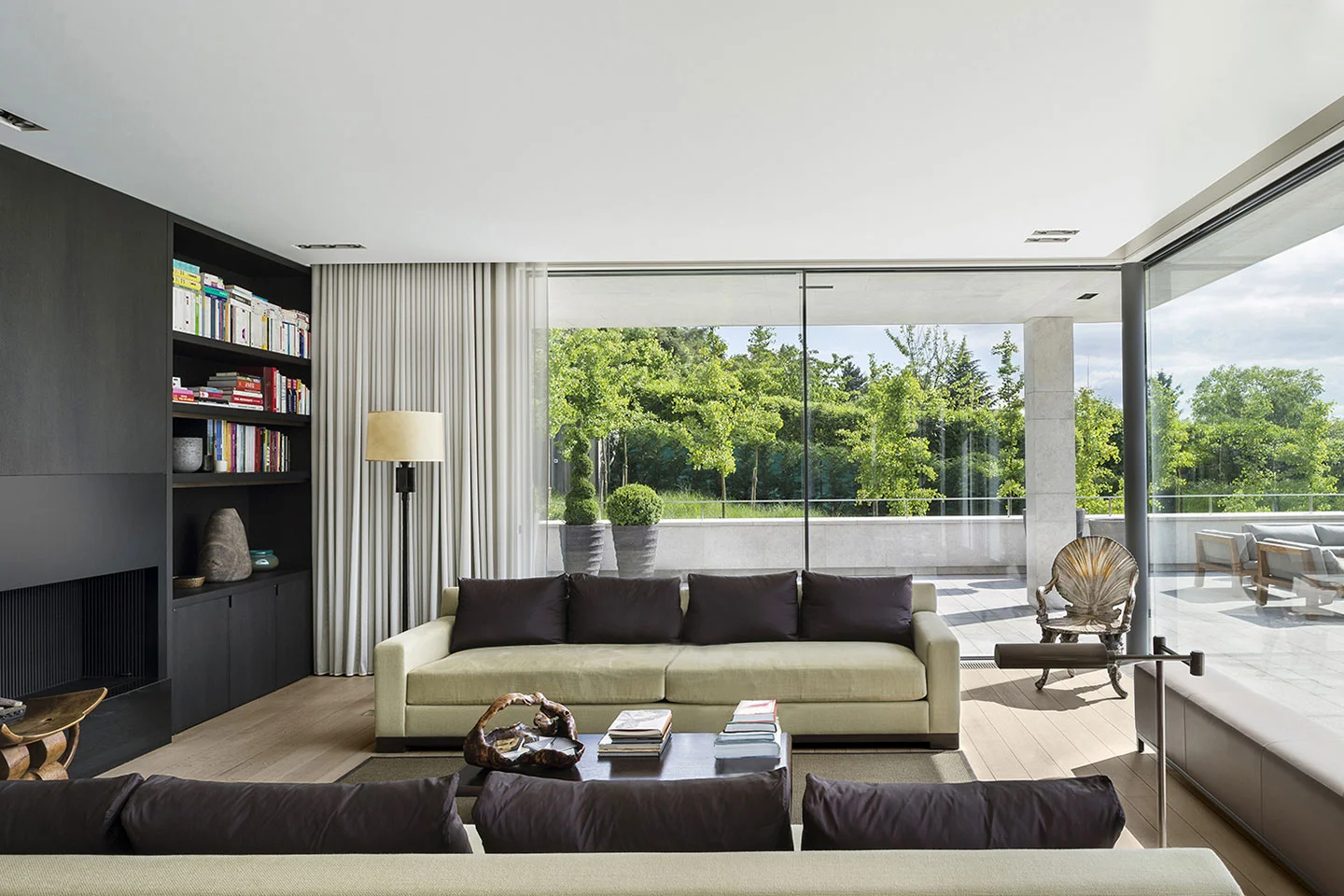
Wood floors move because wood takes up moisture from the air when it is humid and gives it back when it is dry, swelling and shrinking as it does. Engineered wood flooring moves far less than solid boards: a layer of real wood is bonded to a cross-laid core, usually plywood, that holds it flat through the seasons.
Movement can be managed but never switched off. The cut of the wood, the construction of the board and the climate of the room decide how much of it you will see.
Why does wood move when humidity changes?
Wood is hygroscopic: its cell walls absorb and release water vapor until the wood reaches a balance with the air around it, called its equilibrium moisture content. When the air is humid, the cell walls take on water and the wood swells. When the air dries, they give it up and the wood shrinks.
This never stops. A floor laid perfectly flat in spring will still respond to the dry air of a heated winter and the damp of late summer. The aim is not to stop the wood breathing but to keep the swings small and the floor built to absorb them.
Does the way the wood is cut change how much it moves?
A great deal. Wood moves differently along its three directions:
- Along the grain, the length of the tree, movement is so small it can be ignored.
- Across the growth rings (radial), as on a quarter-sawn board, movement is moderate.
- Along the growth rings (tangential), as on a flat-sawn board, movement is roughly twice the radial figure.
That is why a wide flat-sawn plank shows more seasonal movement than a narrow one: the same percentage change adds up across a broader face.
Endgrain flooring turns the wood on its end. Each block stands with its grain vertical, so the thickness of the floor barely changes, and the movement across the surface is shared out over many small blocks and joints rather than gathered into a few wide boards. Opus, endgrain oak paving is built this way, with an 8 mm endgrain oak top layer on 12 mm birch plywood, joints under 1 mm wide.

At Hotel Dame des Arts in Paris, laid in Opus Black, the blocks read as one continuous surface because each joint carries only a tiny share of the movement.
Why do wood floors gap in winter?
Heating dries indoor air. As the relative humidity falls, the wood gives up moisture and shrinks, and small, even gaps can open between boards or blocks. When the air turns humid again in summer, the wood swells and the joints close. On a well-laid floor this is normal and reversible.
Trouble starts when conditions stay at an extreme for weeks, or when water reaches the floor from below or above:
- Cupping: the edges of a board rise above its center, usually because the underside is wetter than the top, often from a damp subfloor.
- Crowning: the center rises above the edges, often after a cupped floor was sanded flat before it had dried out.
- Large gaps: very dry air over a long period, or wood that was laid too wet.
A cheap hygrometer in the room tells you more than guesswork. If the reading sits very low through the heating season, a humidifier protects both the floor and the people living on it.
What is engineered wood flooring, and why does it move less?
Engineered wood flooring is made in layers. The top layer is real wood, the surface you see and walk on. Under it sits a core of thinner layers, often birch plywood, each laid with its grain across the one above. When the top layer tries to swell across its width, the layer beneath, running the other way, resists it. The result is a board that stays flatter and moves much less than solid wood.
That stability is why engineered boards are the usual choice over underfloor heating, on concrete slabs and for wide or patterned floors. A solid board has one advantage: it can be sanded many times over its life. An engineered board can be sanded as often as its top layer allows, which is why the thickness of that layer is worth asking about.
| Feature | Solid wood boards | Engineered wood flooring |
|---|---|---|
| Construction | One piece of wood throughout | Real wood top layer bonded to a cross-laid core |
| Seasonal movement | Greater, nothing restrains it | Much smaller, the core holds the top layer |
| Underfloor heating | Often not recommended | Generally suitable, glued down |
| Wide boards and patterns | More gapping and cupping risk | Better suited |
| Sanding | Many times | Limited by the top layer |
Board width plays its part too. Droit, a straight oak plank, comes in 150 mm or 190 mm widths, cut from flatgrain select oak, 12 mm thick with a 4 mm oak top layer.
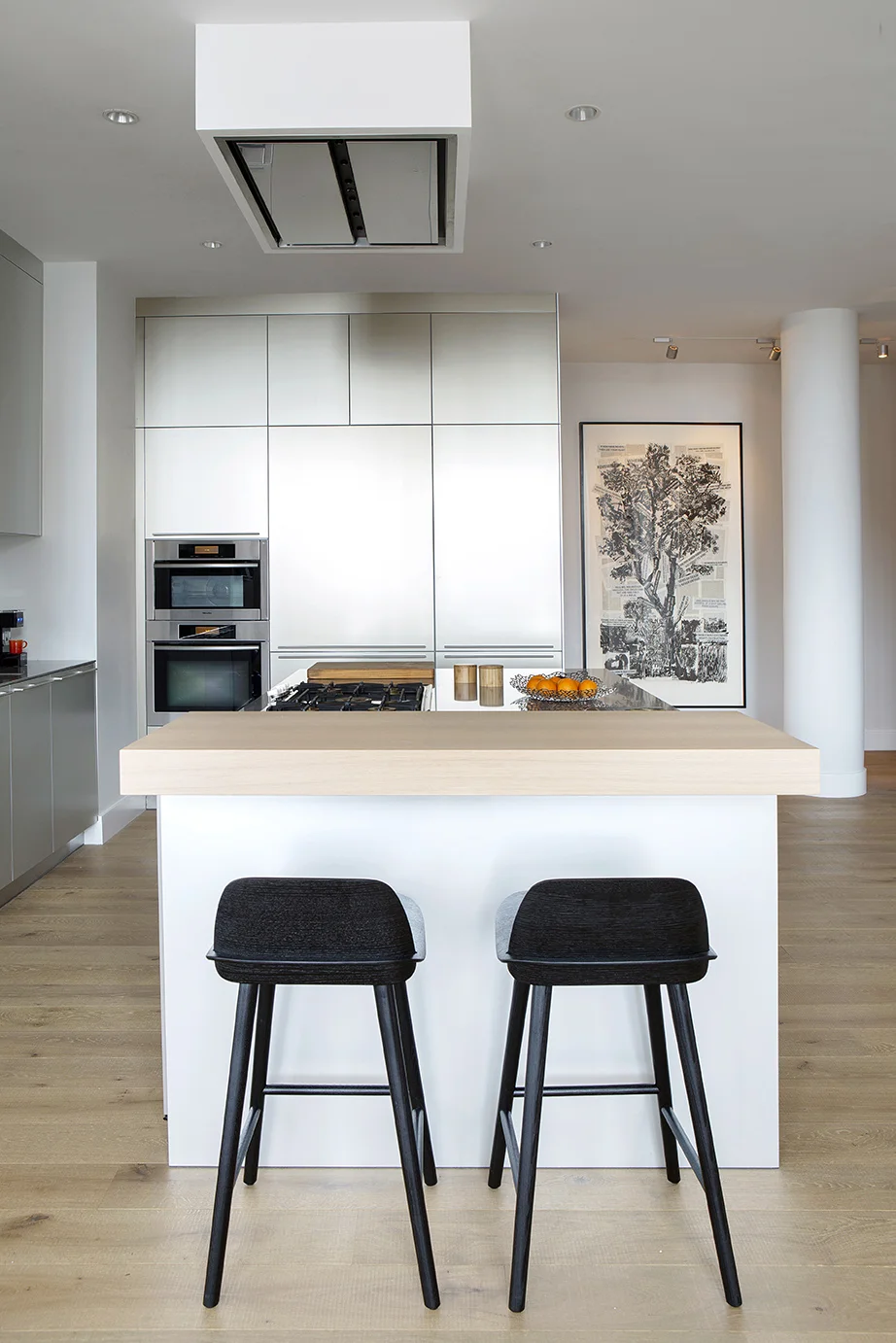
In the Tribeca Loft in New York, laid in Droit Natural, the long boards run the length of the space with tight, even joints.
How do you keep a wood floor stable?
- Wait for the building to dry. Plaster, screed and paint put a lot of water into a room. The floor should go in after the wet trades, with the windows in and the heating working.
- Check the subfloor. A concrete screed can hold moisture long after it looks dry. Installers measure it before laying wood on it.
- Acclimate as the product guide says. Solid wood usually needs several days in the room; many engineered floors need less. Follow the manufacturer, not a rule of thumb.
- Keep the climate steady. Most wood floors are happiest in a middle band of relative humidity, roughly 35 to 65 percent depending on the guidance, without long spells at either end.
- Leave room at the edges. An expansion gap around the walls, hidden by the skirting, lets the whole floor move without pushing against anything.
Frequently asked questions
What is engineered wood flooring?
A floor made in layers: a top layer of real wood, the part you walk on and see, bonded to a core of cross-laid layers such as birch plywood. The core holds the top layer flat, so the floor moves much less with humidity than a solid board of the same wood.
Does engineered wood flooring move less than solid wood?
Yes. In a solid board nothing stops the wood swelling and shrinking across its width. In an engineered board each layer of the core runs across the one above it, so the layers restrain one another and seasonal movement is much smaller. It is reduced, not eliminated, so humidity still matters.
Is it normal for a wood floor to gap in winter?
Small, even gaps in a dry, heated winter are normal and usually close again as the air gets more humid in summer. Wide gaps, boards lifting at the edges (cupping) or arching in the middle (crowning) point to a moisture problem that should be looked at.
How long should wood flooring acclimate before installation?
Follow the installation guide for the product. Solid boards usually need several days in the room with the heating or air conditioning running; many engineered floors need less and some are laid straight from sealed packs. What matters most is that the building is dry and the subfloor has been checked for moisture.
Can engineered wood flooring go over underfloor heating?
Engineered floors are generally better suited to underfloor heating than solid boards, because they move less as the slab warms and cools. They are normally glued down to the screed. Check the product's spec sheet for its heating compatibility and the maximum surface temperature before you commit.
Stable floors by OscarOno Paris
OscarOno Paris's floors are built in layers. Opus sets an 8 mm endgrain oak top layer on 12 mm birch plywood, in Natural, Smoke or Black, rated usage class 34 for very heavy commercial traffic. Droit is a straight flatgrain oak board, 12 mm with a 4 mm top layer, 150 mm or 190 mm wide, in twelve lacquered colors, rated usage class 33. Both carry a Cfl-s1 fire rating and are FSC and PEFC certified.
To see how a floor behaves in your own rooms, order samples, and find spec sheets, CAD and 3D files in the library.
More from the Atelier
Protecting End Grain Wood Block Flooring from UV Fading
Discover the science of oak photodegradation and how to protect end-grain wood floors from UV fading using advanced varnishes and architectural design.

Parquet Floor Restoration: Is an Old Parquet Floor Worth Saving?
Loose blocks, gaps, stains and a worn finish can all be put right. How to tell whether an old parquet floor is worth restoring, what the work involves, and when it is not.
Squeaky Wood Floors: Why They Squeak and How to Fix Them
A squeak is friction: wood on wood, wood on a nail, or a subfloor moving on its joists. Find which one it is and the fix follows.